

Unleashing Automotive Vision: The Complete Unreal Engine Workflow for High-Fidelity 3D Car Models
The automotive industry is in a perpetual state of innovation, not just in vehicle design and engineering, but also in how cars are presented, experienced, and marketed. Real-time rendering, powered by engines like Unreal Engine, has revolutionized automotive visualization, moving beyond static renders to immersive, interactive experiences. From hyper-realistic marketing assets and virtual showrooms to advanced design reviews and configurators, Unreal Engine offers an unparalleled toolkit for automotive professionals.
This comprehensive guide will take you through the entire workflow of leveraging Unreal Engine for automotive visualization. We’ll explore everything from project setup and importing high-quality 3D car models – like those readily available on platforms such as 88cars3d.com – to crafting photorealistic materials, dynamic lighting, and interactive experiences. Whether you’re a seasoned Unreal Engine developer, a 3D artist specializing in automotive assets, or a professional aiming to elevate your visualization game, prepare to unlock the full potential of real-time rendering to bring automotive designs to life with breathtaking fidelity and performance. Let’s dive into the technical intricacies that make Unreal Engine the industry’s go-to for cutting-edge automotive visualization.
1. Setting Up Your Unreal Engine Project for Automotive Excellence
The foundation of any successful automotive visualization project in Unreal Engine lies in a meticulously configured project. A well-structured setup ensures optimal performance, scalability, and ease of collaboration throughout development. This initial phase dictates the efficiency of subsequent steps, from asset integration to final rendering.
Configuring Project Settings for Automotive Performance
Before importing any assets, it’s crucial to adjust Unreal Engine’s project settings to suit the demanding nature of automotive visualization. Navigate to Edit > Project Settings. Here, you’ll want to focus on several key areas. Under Engine > Rendering, ensure that features like Lumen Global Illumination and Lumen Reflections are enabled for cutting-edge dynamic lighting and realistic reflections, which are paramount for vehicle surfaces. For superior visual quality and advanced lighting, it’s also highly recommended to enable Hardware Ray Tracing if your target hardware supports it. This significantly enhances global illumination, reflections, and shadows, delivering unparalleled photorealism. Furthermore, consider enabling Nanite for Static Meshes under Engine > Rendering > Nanite to efficiently handle extremely high-polygon vehicle models without performance degradation, a game-changer for detailed car assets. For consistent visual fidelity across different scenes, it’s good practice to set a default post-process volume and adjust settings like exposure, bloom, and ambient occlusion to automotive industry standards.
Establishing a Robust Project Structure and Naming Conventions
A clean project structure and consistent naming conventions are vital for maintaining order, especially when dealing with numerous assets like car models, materials, textures, and blueprints. Create logical folders within your Content Browser, such as “Cars” (with subfolders for individual car models), “Materials,” “Textures,” “Blueprints,” “Maps,” and “Cinematics.” For naming, adopt a clear prefix system (e.g., “SM_” for Static Meshes, “M_” for Materials, “T_” for Textures, “BP_” for Blueprints, “VC_” for Vehicle Classes). For example, a car model could be `SM_AudiR8_Body`, its material `M_AudiR8_Paint_Red`, and its texture `T_AudiR8_Paint_Red_BaseColor`. This organizational discipline saves countless hours during development, debugging, and asset management, allowing artists and developers to quickly locate and understand the purpose of each asset. Consistency is key, and adhering to these guidelines from the outset will streamline your entire automotive visualization workflow, providing a solid foundation for the complex assets you’ll integrate.
2. Importing and Optimizing High-Fidelity 3D Car Models
The visual quality of your automotive visualization hinges on the fidelity and optimization of your 3D car models. Sourcing or creating models that meet stringent quality standards and then correctly integrating them into Unreal Engine is a critical step. Marketplaces like 88cars3d.com provide an excellent resource for high-quality, pre-optimized 3D car models specifically designed for real-time applications.
Best Practices for Importing 3D Car Models
When importing a 3D car model, such as an FBX file, into Unreal Engine, several considerations ensure a smooth transition and optimal performance. First, verify that the model’s pivot point is at the origin (0,0,0) in your 3D modeling software, centered at the base of the vehicle. This simplifies placement and manipulation within Unreal. When importing into Unreal Engine, utilize the FBX Import Options window. Key settings include:
* Skeletal Mesh / Static Mesh: For static vehicle bodies, choose “Static Mesh.” For vehicles with complex animations (e.g., doors opening, wheels turning, suspension), you might consider importing parts as separate Static Meshes or a Skeletal Mesh if physics and complex deformation are required.
* Import Textures: Deselect this if you plan to create PBR materials from scratch in Unreal Engine, or if your textures are already organized.
* Import Materials: Often, it’s better to uncheck this and build your PBR materials directly in Unreal for full control over shaders and real-time features like clear coat layers.
* Transform: Ensure “Combine Meshes” is unchecked if you want to maintain individual parts (body, wheels, interior) as separate Static Meshes. This allows for individual material assignments, LODs, and potential animations.
* Normal Import Method: Set to “Import Normals and Tangents” to preserve custom normal data from your modeling software, crucial for smooth shading.
After importing, double-check the mesh scale and orientation. Unreal Engine typically works best with models scaled correctly in centimeters (1 unit = 1cm). Incorrect scaling can lead to issues with lighting, physics, and visual consistency.
Optimizing High-Poly Models with Nanite and LODs
Automotive models are inherently high-polygon due to their complex curvature and intricate details. Unreal Engine’s **Nanite** virtualized geometry system is a game-changer for handling these assets efficiently. To enable Nanite on an imported Static Mesh:
1. Open the Static Mesh Editor by double-clicking your car mesh.
2. In the Details panel, under Nanite Settings, check Enable Nanite.
3. Adjust the Fallback Percent to control the quality of the non-Nanite mesh used when Nanite is not supported or for lower LODs.
Nanite intelligently renders only the necessary detail, allowing you to import models with millions of polygons without a significant performance hit, preserving crucial design details.
Even with Nanite, **Level of Detail (LOD)** management remains a vital optimization strategy, especially for interactive experiences or when Nanite is not enabled for all meshes (e.g., for smaller, less prominent parts). LODs allow Unreal Engine to swap out high-detail meshes for simpler versions when the object is further away from the camera, significantly reducing draw calls and polygon count.
* In the Static Mesh Editor, under LOD Settings, you can configure automatic LOD generation or manually import pre-made LODs.
* For car models, a good strategy is to have at least 3-4 LOD levels:
* LOD0: Full detail, Nanite enabled for core body, high-res textures.
* LOD1: Reduced poly count (e.g., 50-70% of LOD0), slightly lower texture resolution, simplified interior.
* LOD2: Further reduced (e.g., 20-30% of LOD0), merged small meshes, significantly lower texture resolution.
* LOD3: Very low poly, potentially a billboard or highly simplified proxy for extreme distances.
Proper LOD implementation ensures that your automotive scene maintains high visual quality up close while performing optimally across diverse hardware and viewing distances. You can learn more about asset optimization on the official Unreal Engine documentation at https://dev.epicgames.com/community/unreal-engine/learning.
3. Crafting Realistic Automotive Materials with PBR and Unreal Engine
The allure of automotive visualization lies in the photorealism of its materials. From the glossy sheen of car paint to the intricate textures of leather interiors, achieving believable surfaces requires a deep understanding of Physically Based Rendering (PBR) principles and Unreal Engine’s Material Editor.
Understanding PBR for Automotive Surfaces
PBR is a crucial concept that simulates how light interacts with surfaces in a physically accurate manner, leading to more consistent and realistic results under various lighting conditions. For automotive materials, the core PBR texture maps you’ll work with are:
* Base Color (Albedo): Defines the diffuse color of the surface, excluding any lighting information. For car paint, this would be the base color pigment.
* Normal Map: Adds surface detail by manipulating how light reflects, simulating bumps and grooves without adding actual geometry. Essential for subtle panel lines or textured plastics.
* Roughness Map: Controls the microscopic surface irregularities. A low roughness value results in a highly reflective, glossy surface (like polished chrome or clear coat), while a high value leads to a matte, diffused look (like rubber or unpolished plastic). This is perhaps the most critical map for defining distinct automotive materials.
* Metallic Map: Differentiates between dielectric (non-metal) and metallic surfaces. A value of 1 (white) indicates a metal, 0 (black) indicates a non-metal. Car paint is typically non-metallic (a dielectric with a clear coat), but chrome trim or alloy wheels are metallic.
* Ambient Occlusion (AO): Simulates soft shadows where light struggles to reach, enhancing depth and realism in crevices and corners.
* Emissive Map: Defines parts of the surface that glow, such as headlights or dashboard displays.
Understanding these maps and how they influence light interaction is fundamental to creating convincing car materials.
Building Complex Automotive Shaders in the Material Editor
Unreal Engine’s Material Editor is a node-based system that allows you to construct sophisticated shaders. For automotive applications, particularly car paint, you’ll often go beyond simple PBR setups.
Car Paint Material Example:
A truly realistic car paint shader often involves a multi-layered approach:
1. **Base Layer (Metallic Flake):** Start with a base color, perhaps driven by a tint parameter. For metallic paints, you’ll need to simulate metallic flakes. This can be achieved by blending a subtly noisy texture (like a Perlin noise or Voronoi pattern) with a small normal map and modulating its roughness and metallic values based on viewing angle (Fresnel effect) or even using a custom function.
2. **Clear Coat Layer:** This is essential for virtually all modern car paints. Unreal Engine’s standard material has a dedicated “Clear Coat” input.
* Connect a value of 1 to the **Clear Coat** input to enable it.
* Adjust **Clear Coat Roughness** (typically a low value like 0.05-0.15) for the glossy finish.
* The **Clear Coat Normal** input allows for micro-scratch details on the surface, which can add subtle realism.
3. **Reflectance:** Control the reflectiveness. For car paint, this is generally tied to the clear coat layer, but for other materials like chrome, you’d use a high metallic value and very low roughness.
4. **Parameters:** Convert frequently adjusted values (like Base Color tint, Roughness values, Clear Coat Roughness, Flake intensity) into **Material Parameters**. This allows you to create **Material Instances** from your master material, quickly changing attributes without recompiling the entire shader. This is crucial for creating car configurators or iterating on design options.
Tire Rubber, Glass, and Interior Materials:
* **Tires:** High roughness, low metallic, a slightly desaturated dark base color, and a detailed normal map for tread patterns. Consider adding a small amount of specular color for a subtle sheen.
* **Glass:** Utilize the **Refraction** and **Opacity** inputs. A low roughness value (near 0) is key for clear reflections. **Refraction Index** (IOR) for glass is typically around 1.5. Tint can be applied via the Base Color. Ensure the material’s blend mode is set to “Translucent” and the Shading Model to “Default Lit” or “Clear Coat.”
* **Leather/Fabric:** Detailed normal maps for grain, combined with roughness maps that vary slightly to simulate natural imperfections. Base Color should reflect the material’s hue.
Adhering to PBR principles and utilizing Unreal Engine’s robust Material Editor and its specific automotive shading models (if available in future versions, currently clear coat is a key feature) allows for an incredibly realistic and versatile material library for your 3D car models.
4. Dynamic Real-Time Lighting: Lumen, Ray Tracing, and Environment Setup
Lighting is the ultimate sculptor of realism in any 3D scene, and for automotive visualization, it’s paramount. Unreal Engine offers a suite of powerful lighting tools, including the revolutionary Lumen global illumination system and real-time Ray Tracing, enabling artists to create stunning, dynamic environments that bring vehicles to life.
Leveraging Lumen and Ray Tracing for Photorealism
**Lumen** is Unreal Engine’s fully dynamic global illumination and reflections system, providing immediate indirect lighting updates as light sources, geometry, or camera views change. This is invaluable for automotive visualization, where vehicles often move through environments or respond to dynamic lighting conditions (e.g., changing time of day).
* Enable Lumen: In Project Settings > Engine > Rendering, set Global Illumination and Reflections to “Lumen.”
* Lumen Scene: Lumen automatically generates a representation of your scene. Ensure your geometry is suitable for Lumen, meaning it’s reasonably scaled and doesn’t have extremely thin or distant meshes that Lumen might struggle with.
* Performance: Lumen is powerful but can be demanding. Adjust settings like Lumen Quality and Lumen Scene Detail in the Post Process Volume for a balance between visual fidelity and performance.
**Real-time Ray Tracing** elevates photorealism further by accurately simulating light paths. When enabled (in Project Settings > Engine > Rendering > Hardware Ray Tracing), it dramatically improves:
* Ray Traced Global Illumination: Offers highly accurate indirect lighting, especially for complex inter-reflections off car surfaces.
* Ray Traced Reflections: Provides pixel-perfect reflections on glossy car paint, chrome, and glass, accurately reflecting off-screen geometry. This is visually stunning for vehicle renders.
* Ray Traced Shadows: Generates highly realistic, contact-hardening shadows that react accurately to light source size and distance.
Combining Lumen’s dynamic GI with Ray Traced Reflections and Shadows (where hardware permits) creates an unparalleled level of realism. For environments that require extreme precision, such as studio shots, consider using baked lightmaps for static elements, but for dynamic automotive scenes, Lumen and Ray Tracing are the kings of realism.
Crafting Compelling Environment Lighting for Vehicles
A car model, no matter how detailed, will look flat without compelling environmental lighting.
* Directional Light: Represents the sun. Use a **Directional Light** to establish the primary light source, defining harsh shadows and bright highlights. Adjust its rotation to control the time of day and the angle of incidence on the car’s body. For more realistic sun behavior, connect its rotation to a blueprint that follows a real-world solar arc.
* Sky Light: Captures the ambient light from the sky, providing soft, even illumination and crucial global reflections. Ensure your Sky Light is set to “Stationary” or “Movable” for dynamic scenes. For highest quality, capture a **Sky Atmosphere** or a **High Dynamic Range Image (HDRI)** as the source for your Sky Light. A good HDRI provides both accurate lighting and reflections from a real-world environment.
* Sky Atmosphere: Unreal Engine’s **Sky Atmosphere** system generates a physically-based sky, sun, and clouds. It interacts seamlessly with your Directional Light, creating realistic atmospheric scattering, haze, and volumetric clouds. This is excellent for outdoor automotive scenes.
* Exponential Height Fog: Adds depth and atmospheric perspective to your scene, crucial for large outdoor environments.
* Reflections: Beyond Lumen/Ray Tracing, strategically placed **Sphere Reflection Captures** and **Box Reflection Captures** can fill in gaps or enhance specific areas, especially for static scene elements. For automotive, these are often less critical if Lumen Reflections are active, but can still be useful for fine-tuning.
* Post-Processing Volume: This is your final artistic control. Adjust parameters like **Exposure**, **Bloom** (for headlight glows), **Chromatic Aberration** (subtle effect for realism), **Color Grading** (to set the mood), and **Ambient Occlusion** (Screen Space AO can complement Lumen GI). Pay close attention to white balance to ensure your car’s colors appear accurate under the chosen lighting. By carefully orchestrating these lighting elements, you can create environments that not only illuminate your 3D car models beautifully but also evoke specific moods and contexts, elevating your automotive visualization to cinematic levels.
5. Building Interactive Automotive Experiences with Blueprints and UI
Beyond static renders, Unreal Engine excels at creating dynamic, interactive experiences. Blueprints, Unreal Engine’s visual scripting system, combined with intuitive UI, enable the creation of powerful automotive configurators, virtual showrooms, and engaging product demonstrations.
Designing Automotive Configurator Logic with Blueprints
Blueprints empower artists and designers to create complex gameplay and interactive functionalities without writing a single line of code. For an automotive configurator, Blueprints are indispensable.
* Component-Based Setup: Your imported car model should ideally be broken down into individual components (body, wheels, interior trim, paint, headlights, etc.). Each of these can be a separate Static Mesh component within a master “Vehicle Blueprint” Actor.
* Material Swapping: The core of a configurator is often material swapping.
1. Create multiple **Material Instances** for different paint colors (e.g., `MI_CarPaint_Red`, `MI_CarPaint_Blue`) from a single master car paint material.
2. In your Vehicle Blueprint, create a custom event, for example, `ChangePaintColor`.
3. This event would take a **Material Instance** asset reference as input.
4. Use a **Set Material** node, targeting the car body mesh component, and connect the input Material Instance.
5. Expose an array of these Material Instances as a variable in your Blueprint, allowing UI buttons to reference them.
* Mesh Swapping: For changing wheels, spoilers, or interior packages, you’d use a similar approach with mesh swapping.
1. Create a custom event `ChangeWheelMesh`.
2. This event would take a **Static Mesh** asset reference as input.
3. Use a **Set Static Mesh** node, targeting the wheel mesh components, and connect the input Static Mesh. Remember to update all four wheels if applicable.
* Animating Components: Use **Timeline** nodes in Blueprints to animate door openings, trunk lifts, or window movements. A Timeline can control a float value over time, which can then be used to drive a component’s relative rotation or location. For example, a “OpenDoor” event could trigger a Timeline that smoothly rotates the door mesh from closed to open.
* Input Handling: Use **Event Begin Play** to set up initial states and **Input Actions** (e.g., keyboard presses, mouse clicks) to trigger configurator options or camera movements.
Blueprint scripting provides a flexible and powerful way to bring interactivity to your automotive models, allowing users to explore different configurations in real-time.
Implementing User Interface (UI) with UMG and Widgets
A configurator isn’t complete without a user-friendly interface. Unreal Engine’s **Unreal Motion Graphics (UMG) UI Designer** allows you to create interactive menus, buttons, and sliders.
* Widget Blueprints: Create a new **User Interface > Widget Blueprint**. This is where you design your UI layout.
* Layout: Drag and drop common widgets like **Buttons**, **Text Blocks**, **Images**, and **Sliders** onto your canvas. Arrange them using **Canvas Panel**, **Horizontal Box**, and **Vertical Box** containers for responsive scaling.
* Event Binding: Select a button widget, and in the **Details** panel, scroll down to **Events**. Click the “+” next to “On Clicked.” This will create an event graph for that button.
* Connecting UI to Blueprint Logic: In the button’s “On Clicked” event graph:
1. Get a reference to your Vehicle Blueprint (e.g., using `Get All Actors Of Class` and then `Get` the first element).
2. Call the custom events you created earlier (e.g., `ChangePaintColor`, `ChangeWheelMesh`) on that Vehicle Blueprint reference.
3. Pass the appropriate Material Instance or Static Mesh asset as the input parameter to these events.
* Displaying Information: Use **Text Blocks** to display the currently selected color or model name. Bind the text content to variables in your Vehicle Blueprint or the Widget Blueprint itself.
* Adding the UI to Viewport: In your Level Blueprint or Game Mode Blueprint, use the `Create Widget` node to instantiate your Widget Blueprint, then use `Add to Viewport` to display it on screen at the start of the experience.
For AR/VR applications, optimize your UI for 3D interaction. Consider “world space” UI that exists within the 3D environment, potentially snapping to the user’s view or attached to the car itself. This approach often requires custom interaction components that translate VR controller inputs into UI interactions. By combining the visual scripting power of Blueprints with the intuitive design tools of UMG, you can develop compelling, interactive automotive configurators and demos that truly engage your audience.
6. Advanced Visualization Techniques: Nanite, Sequencer, and Virtual Production
Unreal Engine’s capabilities extend far beyond real-time interaction, offering advanced features that push the boundaries of visual fidelity and production workflows for automotive content. Nanite, already discussed for optimization, also serves as a backbone for these high-end applications.
Leveraging Nanite for Unprecedented Detail in Automotive Cinematics
While Nanite’s primary benefit is performance for high-poly meshes, its impact on cinematic quality is equally profound. By allowing artists to import models with millions of polygons – preserving every curve, panel gap, and intricate detail of a vehicle – Nanite ensures that even the closest camera shots in a cinematic sequence maintain absolute fidelity. No longer are artists forced to compromise on mesh detail or create complex LODs manually for hero assets. When rendering cinematics, the ability to work with source geometry directly translates to:
* **Superior Visuals:** Every facet of the car, from subtle body lines to detailed interior components, renders with pristine clarity, without the need for normal map tricks to fake detail.
* **Faster Iteration:** Artists can focus on aesthetic choices and camera work rather than polygon budgeting, accelerating the creative process for high-end marketing renders or design reviews.
* **Seamless Transitions:** With Nanite, there’s no visible pop-in or detail reduction as cameras zoom in, providing a smoother, more believable visual experience.
Crafting Cinematic Sequences with Sequencer
Unreal Engine’s **Sequencer** is a non-linear editor that enables artists to create stunning cinematics, product showcases, and animated camera movements. For automotive marketing, Sequencer is an invaluable tool.
* Timeline-Based Editing: Drag and drop actors (your car model, lights, cameras, effects) into Sequencer.
* Keyframing: Animate properties like location, rotation, scale, material parameters (e.g., paint color transitions), light intensity, and post-process effects over time using keyframes.
* Camera Animation: Create realistic camera movements, dynamic tracking shots, and sweeping reveals of the vehicle. Use **Cine Camera Actors** for film-like controls (focal length, aperture, depth of field).
* Audio Integration: Add sound effects (engine sounds, ambient music) and synchronize them with visual events.
* Virtual Scouting: Use Sequencer in conjunction with a VR headset or an editor camera to scout locations and frame shots, as if on a real film set.
* Rendering: Export high-quality video files directly from Sequencer, with options for resolutions up to 8K, support for movie render queue, and various output formats. This workflow is ideal for producing marketing videos, virtual advertisements, or technical showcases of car features.
Virtual Production and LED Wall Integration for Automotive
The convergence of real-time rendering and traditional filmmaking has given rise to **Virtual Production**, with LED walls being a prominent application. For automotive visualization, this means placing a physical car (or a prop car) on a stage surrounded by LED screens displaying a real-time Unreal Engine environment.
* **In-Camera VFX:** The LED wall acts as a dynamic backdrop, providing physically accurate reflections on the car’s surface and correct lighting interaction, all rendered live from Unreal Engine. This eliminates the need for green screens and complex compositing.
* Real-Time Adjustments: Directors can change environments, lighting conditions, or camera angles in real-time, seeing the final composite directly on set. This offers unprecedented creative flexibility and significantly reduces post-production time.
* Precision Tracking: Camera tracking systems synchronize the physical camera’s movement with the virtual camera in Unreal Engine, ensuring perfect parallax and perspective on the LED wall.
* Automotive Applications: Used for car commercials, product launches, and virtual showrooms. Imagine showcasing a new vehicle model “driving” through a bustling city or serene countryside, with realistic reflections and lighting, all without leaving the studio. This cutting-edge approach delivers highly authentic visuals and streamlines complex production pipelines, making it a cornerstone for future automotive marketing and media creation.
7. Performance Optimization for Flawless Real-Time Automotive Rendering
Achieving photorealistic automotive visualization in real-time requires careful optimization to maintain smooth frame rates and responsiveness across various target platforms, from high-end workstations to AR/VR headsets. Without a strategic approach to performance, even the most beautiful scenes can become unusable.
Implementing Level of Detail (LODs) and Culling Techniques
While Nanite effectively handles the polygon budget for high-detail meshes, a broader optimization strategy is crucial.
* **Manual LODs:** For meshes where Nanite isn’t enabled or appropriate (e.g., smaller props, specific animated parts), manually created or automatically generated LODs are essential. Ensure that LOD transitions are visually seamless to avoid distracting pops. Aim for significant polygon reductions at each LOD level. For instance, an LOD1 might be 50% of the base mesh, LOD2 25%, and so on.
* **HLODs (Hierarchical LODs):** For very large environments or cities where multiple cars might be present, HLODs consolidate many small meshes into a single, optimized mesh at a distance, drastically reducing draw calls.
* **Occlusion Culling:** Unreal Engine automatically culls (stops rendering) objects that are hidden behind other objects. Ensure your scene geometry is reasonably closed and solid to facilitate efficient occlusion culling.
* **Frustum Culling:** Objects outside the camera’s view frustum are automatically culled. This is a fundamental optimization that Unreal handles automatically but is worth understanding.
* **Distance Culling:** Configure maximum draw distances for less critical objects (e.g., small pebbles, distant foliage) to prevent them from rendering when they are too far away to be seen effectively. This can be set on individual Static Mesh components in their details panel under Rendering > LOD > Max Draw Distance.
Optimizing Materials, Textures, and Lighting for Real-Time Performance
Materials and textures, while key to visual fidelity, can be significant performance hogs if not managed correctly.
* **Material Complexity:** Keep your Unreal Engine materials as efficient as possible. Complex materials with many instructions or expensive operations (e.g., multiple custom UV calculations, extensive pixel shader work) can slow down rendering. Use **Material Attributes** and **Material Functions** to consolidate common logic and improve reusability and performance. Always check the **Shader Complexity** viewmode (Alt+8) to identify overly complex materials (red indicates high complexity).
* **Texture Resolutions and Streaming:** Use appropriate texture resolutions. A 4K texture for a small bolt might be overkill. Utilize texture streaming settings (Max Texture Size, LOD Bias) to allow Unreal Engine to load lower-resolution versions of textures when they are far away or not critical, saving memory. Ensure your textures are correctly set to `Texture` or `Normal Map` asset types in the content browser.
* **Draw Calls:** Minimize the number of distinct materials and meshes. Batching similar meshes or combining materials can reduce draw calls, a major performance bottleneck. Consider using a **Master Material** with instancing for all car paints to reduce material overhead.
* **Lighting Optimization:**
* Light Types: Use **Directional Lights** and **Sky Lights** as primary sources. Limit the number of complex **Point Lights** or **Spot Lights**, especially with shadows enabled, as they are computationally expensive. Use **IES Profiles** for realistic light distribution with Spot Lights.
* Shadows: Optimize shadow settings. Reduce **Shadow Map Resolution** for distant lights, or use **Contact Shadows** for fine details. For static elements, **Baked Lighting** (Lightmass) is still the most performant, even if combined with dynamic Lumen for the car itself.
* Lumen/Ray Tracing Settings: As mentioned, fine-tune Lumen and Ray Tracing quality settings in the Post Process Volume. Lowering `Lumen Global Illumination > Quality` or `Ray Tracing Reflections > Samples Per Pixel` can yield significant performance gains with minimal visual impact, depending on the scene.
* Visibility Culling: Ensure **Cast Shadow** is off for tiny objects that won’t contribute significantly to shadows.
AR/VR Specific Optimizations and Scalability
Targeting AR/VR platforms introduces unique performance challenges due to the need for very high frame rates (e.g., 90 FPS or more) and dual-eye rendering.
* **Aggressive LODs:** Implement even more aggressive LOD strategies. Smaller details might be simplified or removed at closer distances than for traditional desktop applications.
* **Reduced Overdraw:** Minimize transparent materials where possible. Stacked transparent layers (like multiple glass panels) are very expensive.
* **Post-Processing:** Limit expensive post-processing effects. Heavy bloom, screen-space reflections, and complex depth-of-field can be performance killers in VR.
* **Forward Renderer:** Consider using the Forward Renderer in Unreal Engine (under Project Settings > Engine > Rendering > Default Settings) for VR projects. It can offer better performance for scenes with many lights and transparencies, albeit with some feature limitations compared to the Deferred Renderer.
* **Stereo Instancing:** Ensure **Instanced Stereo** is enabled in your VR project settings for optimal rendering performance with VR headsets.
* **Scalability Settings:** Utilize Unreal Engine’s **Scalability Settings** (accessed via the editor’s Settings menu) to create different quality presets. This allows users to choose settings that match their hardware, ensuring a wider audience can experience your automotive visualization project fluidly. By meticulously managing assets, optimizing materials, and fine-tuning lighting and rendering settings, you can deliver stunning real-time automotive experiences that run smoothly and look incredible on your chosen target hardware.
Conclusion
Unreal Engine has firmly established itself as the leading platform for cutting-edge automotive visualization, offering an unmatched suite of tools for creating photorealistic, interactive, and highly optimized experiences. From the foundational project setup and the intelligent integration of high-fidelity 3D car models (like those you can acquire from 88cars3d.com) to the nuanced art of PBR material creation and dynamic real-time lighting with Lumen and Ray Tracing, every step contributes to the final masterpiece.
We’ve explored how Blueprint visual scripting empowers the creation of immersive automotive configurators, allowing users to customize vehicles in real-time. We delved into advanced techniques like leveraging Nanite for unprecedented detail in cinematics and the revolutionary potential of virtual production with LED walls. Crucially, we covered comprehensive optimization strategies, from meticulous LOD management and efficient material creation to tailored AR/VR performance enhancements, ensuring your projects run flawlessly.
The journey from a raw 3D model to a captivating interactive automotive experience in Unreal Engine is a detailed one, demanding a blend of artistic vision and technical prowess. By embracing these workflows and best practices, you’ll not only meet the evolving demands of the automotive industry but also push the boundaries of what’s possible in real-time visualization. Dive in, experiment, and transform your automotive concepts into breathtaking digital realities.
Featured 3D Car Models

The Italian Legends Bundle 5 Ultimate Supercar 3D Models STL Optimized
Texture: Yes | Material: Yes | 3D Printable: Yes. Download the Italian Thoroughbreds Bundle featuring 5 iconic 3D models: Lamborghini Huracán Performante, Ferrari 458 Italia, Lamborghini Urus, Diablo SV, and Maserati GT. Optimized for 4K rendering and 3D printing (STL included). Save 50% with this ultimate Italian vehicle collection.
Price: $199.99

Elite Future Mobility: EV & Autonomous SUV Bundle (4 High-End 3D Models)3D Printable STL
Download the Elite Future Mobility Bundle featuring 4 highly optimized 3D models: Tesla Model S, Avatr 11, Li L9, and Zoox Robotaxi. Perfect for ArchViz, Smart City renders, and game dev. Optimized for Unreal Engine and Blender. Includes .fbx, .obj, and .max formats.
Price: $99

German Luxury & Performance Bundle – High-End 3D Vehicle Collection3D Printable STL
🚗 5 Iconic German Cars (BMW M4 G82, M5 CS, X3, 1 Series & Mercedes E-Class). ✅ Optimized for ArchViz: Ready for Corona & V-Ray. 💰 Save €71 with this limited-time collection! 🚀 Instant Download after purchase.
Price: $119

Extreme Off-Road & Survival 3D Models Bundle (4-in-1 Pack)3D Printable STL
Download the Extreme Off-Road & Survival 3D Models Bundle! Includes the Brabus 800 Adventure, Dodge Ram Bigfoot, Spec Truck, and a Caravan. Save over €210 on this premium 4-in-1 off-grid vehicle pack for ArchViz and game development.
Price: $149.99

Heavy Duty & Commercial Logistics 3D Models Bundle (4-in-1 Pack)3D Printable STL
Download the Heavy Duty & Commercial Logistics 3D Models Bundle! Includes the Ford Sterling, Caterpillar CT680, Mercedes Citaro Bus, and Vito Van. Save over €130 on this massive, game-ready 4-in-1 industrial vehicle pack.
Price: $109.99

The Ultimate Garage Props & Custom Motorcycles 3D Models Bundle 3D Printable STL
Download the Ultimate Custom Motorcycles 3D Models Bundle. Includes a Custom Chopper, Ducati 916 Café Fighter, Harley XR1200X, and BMW K100. Perfect premium props for luxury ArchViz garages. Save over €250 today!
Price: $159.99

Japanese Legends: JDM Street Racing 3D Models Bundle (5-in-1 Pack) Nissan Mitsubishi Honda Mazda Toyota 3D Printable STL
Download the ultimate JDM Street Racing 3D Models Bundle! Includes the Nissan GT-R, Toyota Supra, Mazda RX-7, Lancer Evo IX, and Honda NSX. Save big on this highly optimized, game-ready 5-in-1 Japanese legend car pack.
Price: $129.99

American Muscle & Classics Pack 4 in 1 Ford Dodge Chevrolet 3D Printable STL
Download the ultimate American Muscle & Cinematic Classics 3D Models Bundle! Includes the Dodge Charger ’68, Mustang Eleanor GT500, Camaro Z28 ’79, and a custom ’69 Mustang. Save over €240 on this game-ready, premium 4-in-1 pack.
Price: $149.99

Everyday City Traffic Essentials pack 5in1 Hyundai Kia Volkswagen Toyota Ford 3D Printable STL
Download the Everyday City Traffic 3D Models Bundle. Includes the VW Golf, Kia Picanto, Hyundai Tucson, Toyota Yaris, and a DHL Ford Transit Van. Save big on this 5-in-1 pack, perfectly optimized for realistic ArchViz streets and game traffic.
Price: $99.99
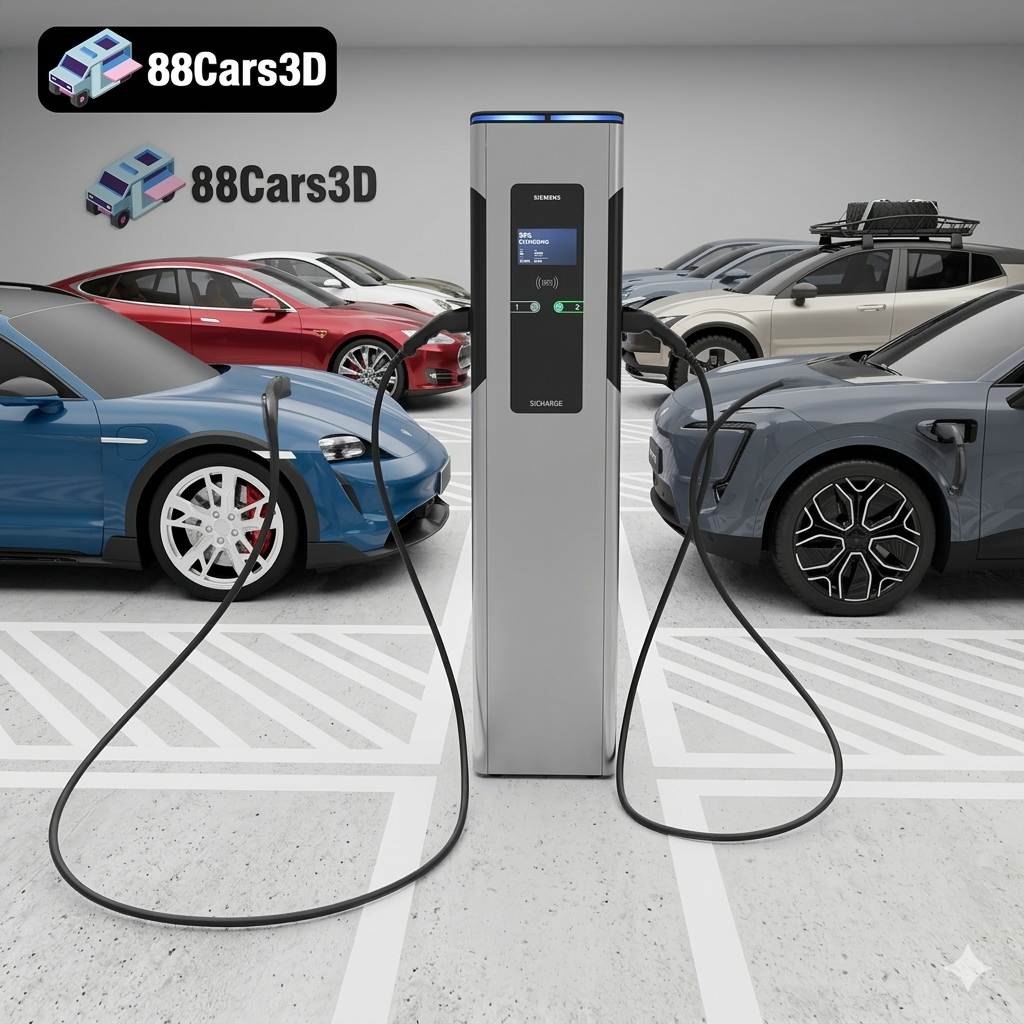
The Future of Mobility: Smart City EV 3D Models Bundle (5-in-1 Pack) Volvo Tesla AVATR Porsche 3D Printable STL
Download the Future of Mobility EV 3D Models Bundle. Includes the Volvo EX30, Tesla Model S, AVATR 11, Porsche Taycan, and a Siemens EV Charger. Save big on this highly optimized 5-in-1 pack for ArchViz and game development!
Price: $89.99
