

In the dynamic world of 3D visualization, automotive design, and game development, the demand for high-quality, meticulously detailed 3D car models is ever-present. From captivating marketing renders to immersive virtual reality experiences and engaging game environments, the core of any successful project often hinges on the fidelity and flexibility of its assets. Today, we’re diving deep into an exemplary piece of digital craftsmanship: the BMW 8-Series Mk2 G15 Coupe M850i 2019 3D Model. This particular model stands out as a versatile foundation for a multitude of creative and technical endeavors, offering an accurate representation of BMW’s luxury grand tourer, brimming with aggressive performance styling and executive-level refinement. Whether you’re an automotive designer, a game developer, or an architectural visualizer, understanding the intricacies of such an asset is crucial for maximizing its potential in your workflow. We will explore how this exceptional 3D model, available on platforms like 88cars3d.com, empowers professionals to achieve stunning realism and integrate seamlessly into complex pipelines.
Understanding 3D Model File Formats
The utility of a 3D model often begins with its supported file formats. Each format serves a specific purpose, catering to different software, pipelines, and end uses. The BMW 8-Series Mk2 G15 Coupe M850i 2019 3D Model comes packed with a comprehensive array of formats, ensuring broad compatibility and utility across the industry. Understanding these is key to making informed decisions for your projects.
.blend – Fully Editable Blender Scene with Materials
The .blend format is the native file type for Blender, a powerful open-source 3D creation suite. When you receive a .blend file, you’re getting the complete scene, including the model’s geometry, materials, textures, lighting, camera setups, and even animation data if present. For the BMW M850i 3D model, this means access to its clean topology, meticulously crafted PBR materials, and organized hierarchy directly within Blender. It’s ideal for artists who prefer Blender for their primary modeling, texturing, rendering, or animation work, offering maximum editability and full control over every aspect of the asset.
.fbx – Ideal for Unreal, Unity, and Real-time Pipelines
The .fbx (Filmbox) format is an industry-standard proprietary format developed by Autodesk, widely used for exchanging 3D data between different software applications. It excels in preserving key data such as geometry, materials (with texture references), animations, and rigging information. For real-time applications like game development in Unreal Engine or Unity, .fbx is often the go-to format due to its robust support for mesh data, UVs, and animation. The BMW M850i in .fbx format is perfectly suited for direct import into these engines, ready for setting up physics, interactive elements, and optimized rendering.
.obj – Universal Format for Cross-Software Compatibility
The .obj (Wavefront OBJ) format is one of the oldest and most universally supported 3D file formats. It’s an excellent choice for straightforward geometry exchange between almost any 3D software. While it handles geometry and UV coordinates very well, its material definition (.mtl file) is basic and less robust than .fbx or .blend. However, for artists needing just the clean mesh and UVs of the BMW M850i to apply custom materials in their preferred renderer or DCC application, .obj provides a highly compatible and reliable foundation.
.glb – Optimized for AR, VR, and Browser-based Display
.glb is the binary version of the GL Transmission Format (glTF), which is rapidly becoming the “JPEG of 3D.” It’s an open-standard, royalty-free format designed for efficient transmission and loading of 3D scenes and models by applications. .glb files are self-contained, including geometry, materials, textures, and animation in a single file, making them incredibly efficient for web-based 3D viewers, augmented reality (AR), and virtual reality (VR) applications. The BMW M850i in .glb format would be perfect for interactive online car configurators or immersive virtual showrooms, offering lightweight yet visually rich experiences.
.stl – Suitable for 3D Printing Output
The .stl (STereoLithography) format is the standard for 3D printing. It represents a 3D model as a series of connected triangles, describing only the surface geometry of an object without color, texture, or material information. For designers looking to 3D print a physical scale model of the BMW M850i, the .stl format is essential. It requires the model to be “manifold” (watertight, with no gaps or intersecting geometry) to ensure a successful print. The availability of this format directly supports the creation of collectible miniatures or prototypes.
.ply – Precision Mesh Format for CAD or Analysis
The .ply (Polygon File Format) is another format for storing 3D data, often used in scientific and engineering applications, especially with 3D scanners. It can store not only geometry but also color, transparency, and normal vectors per vertex or face. While less common for general asset exchange than .fbx or .obj, it offers precision for complex mesh data, making it suitable for reverse engineering or integrating the BMW M850i into CAD environments or specific analysis tools.
.unreal – Engine-Ready Asset for Real-time Environments
The .unreal designation typically implies an asset that has been specifically prepared, optimized, and perhaps even packaged for direct use within Unreal Engine. This could mean it has optimized meshes, properly configured materials (using Unreal’s PBR workflow), LODs (Levels of Detail), and potentially even collision meshes or basic blueprints ready for real-time interaction. For game developers or real-time visualization artists using Unreal Engine, this format or a specifically tailored .fbx ensures minimal setup time and maximum performance, making the integration of the BMW M850i seamless.
.max – Editable 3ds Max Project for Animation and Rendering
The .max format is the native file type for Autodesk 3ds Max, a leading software for 3D modeling, animation, rendering, and compositing. Like .blend, it contains the entire scene, including geometry, modifiers, materials, textures, lighting, cameras, and animation. For professionals whose primary workflow revolves around 3ds Max, the .max file provides the highest level of detail and editability, allowing for complex scene setups, advanced material configurations with V-Ray or Corona, and sophisticated animation sequences for the BMW M850i.
Crafting Realism: The BMW M850i in Automotive Rendering
Automotive rendering demands an unparalleled level of detail and material accuracy to truly convince the viewer. The BMW 8-Series Mk2 G15 Coupe M850i 2019 3D Model provides an exceptional foundation for creating photorealistic imagery, a critical requirement for luxury automotive marketing and high-end advertising visuals.
High-Fidelity Geometry and Material Science
The product description highlights “accurate G15 M850i 2019 body proportions,” “detailed large kidney grille design,” and “high-detail performance alloy wheels with brake calipers.” These aren’t just aesthetic claims; they point to a robust underlying mesh with optimized polygon flow. For rendering, this means smooth surfaces without visible faceting, even in close-up shots. Paired with realistic PBR (Physically Based Rendering) materials – think metallic flakes in the paint, anisotropic reflections on brushed metals, and subsurface scattering for translucent plastics like headlights – the model can perfectly mimic real-world light interaction. The “transparent glass materials and mirror detailing” further enhance realism, ensuring reflections and refractions behave correctly. Furthermore, proper UV mapping is indispensable. It dictates how textures (color, roughness, normal maps, etc.) are applied to the model, preventing stretching or distortions, and ensuring the M850i’s digital instrument cluster and premium leather seat geometry with stitching detail appear authentic.
Lighting and Environment Setup
Achieving photorealism extends beyond the model itself to the environment it inhabits. With a high-quality 3D model like the BMW M850i, artists can leverage sophisticated renderers like V-Ray, Corona Renderer, Arnold, or KeyShot. An essential technique is using High Dynamic Range Images (HDRIs) to light the scene, accurately simulating real-world lighting conditions and reflections. Placing the car in a virtual studio, urban night scene, or scenic highway requires careful consideration of ambient light, direct light sources, and how they interact with the car’s surfaces. The “customization options” for configuring lighting for “studio, city night, or highway sunset scenes” directly speaks to this flexibility, allowing artists to tell a compelling visual story.
Post-Production Techniques for Stunning Visuals
Even the most perfect render benefits from post-production. Software like Adobe Photoshop or Blackmagic Fusion allows artists to add final touches such as lens flares, depth of field adjustments, chromatic aberration, color grading, and subtle atmospheric effects like haze or dust. Integrating the rendered M850i into a real photographic backplate, for instance, requires careful matching of perspective, lighting, and color temperatures, all of which are significantly aided by a high-fidelity 3D car model that holds up under intense scrutiny. The goal is to make the digital indistinguishable from reality for luxury automotive marketing and high-end advertising.
Driving Innovation: Integrating the M850i into Game Development & Real-time Engines
The interactive nature of game development and AR/VR experiences presents a unique set of challenges compared to static rendering. Performance is paramount, yet visual quality cannot be sacrificed. The BMW 8-Series Mk2 G15 Coupe M850i 2019 3D Model is designed with these considerations in mind, making it an excellent game asset.
Optimization for Performance
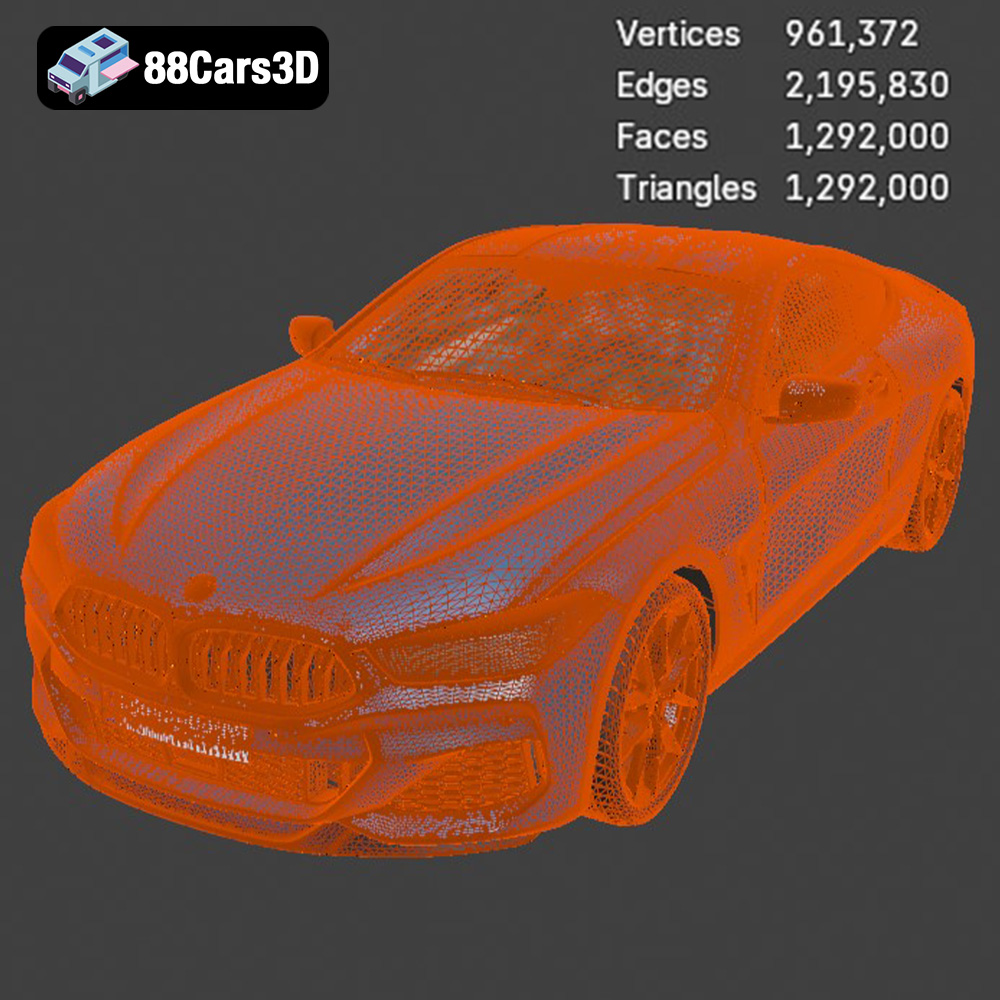
Game engines require models to be optimized for real-time rendering. This often involves judicious polygon reduction, creating multiple Levels of Detail (LODs) that swap in simpler meshes as the car moves further from the camera, and efficient texture atlasing. The product’s “optimized geometry for real-time engines” suggests it is well-suited for these techniques. While the description doesn’t give specific poly counts, a professional-grade automotive game asset typically ranges from 50,000 to 200,000 triangles for a hero vehicle, with lower LODs going down to a few thousand. Clean mesh structure, as noted, is vital for efficient LOD generation and smooth deformation if the model is to be damaged in-game.
Unreal Engine and Unity Workflows
With its .fbx and .unreal file formats, the BMW M850i 3D model is primed for integration into Unreal Engine and Unity. Once imported, artists and developers can set up PBR materials using the engine’s node-based editors, leveraging the model’s clean UVs and texture maps. “Proper pivot setup for steering and wheel rotation” is a critical technical advantage for animation, allowing for realistic driving mechanics and character interaction in simulations. Blueprints (Unreal) or scripts (Unity) can then be used to add interactive elements, physics simulations, sound effects, and even customizable features like changing exterior color or modifying wheel designs in real-time. This model is suitable for “open-world driving games, racing simulators, and premium vehicle systems.”
The Rise of AR/VR Showrooms
Augmented Reality (AR) and Virtual Reality (VR) are transforming how consumers interact with products, especially in the automotive sector. The BMW M850i 3D model, particularly with its .glb format, is “perfect for interactive car configurators and immersive virtual showroom experiences.” Imagine a potential buyer exploring the car in full 3D, changing colors, opening doors, and even sitting virtually inside the premium cockpit, all rendered in real-time. The optimized geometry and clean structure ensure smooth performance even on less powerful AR/VR devices, delivering a compelling and engaging preview of the luxury vehicle.
Beyond the Screen: 3D Printing the BMW M850i
The versatility of a well-crafted 3D model extends beyond digital screens into the physical world through 3D printing. The BMW 8-Series Mk2 G15 Coupe M850i 2019 3D Model is explicitly stated to be “3D Printable STL,” opening up exciting possibilities for physical collectibles and prototypes.
Preparing the Model for Physical Output
For 3D printing, the model needs to be “manifold geometry”—meaning it must be a completely enclosed, watertight mesh without any gaps, holes, or intersecting faces. This ensures the printer understands what is solid and what is empty space. The .stl format is designed specifically for this. The “recommended scale: 1:32 / 1:24 / 1:18 / 1:14” and other specific print settings provided (layer height, wall thickness, infill) are invaluable guidelines for ensuring a successful print, whether you’re creating a desk ornament or a larger, detailed display piece. The mention of separate wheels and steering components also implies that these parts can be printed individually for better detail and articulation.
Material Considerations and Print Technologies
Different 3D printing technologies offer various levels of detail and material properties. FDM (Fused Deposition Modeling) printers, common for hobbyists, are good for larger, robust prints, but may show layer lines. For finer details, especially at smaller scales, SLA (Stereolithography) or DLP (Digital Light Processing) resin printers are highly recommended, as they can achieve much smoother surfaces and intricate features like the “Thor’s Hammer headlights” (though this is a Volvo reference, the principle applies to the M850i’s detailed LED signatures). The choice of material—PLA, ABS, PETG for FDM, or various resins for SLA—will affect the final strength, flexibility, and finish of your 3D printed BMW M850i.
Post-Processing for a Flawless Finish
3D printing is often just the first step. “Post-processing: sanding, primer, gloss automotive paint finish, optional chrome detailing” is crucial to transform a raw print into a professional-looking scale model. Sanding removes layer lines and imperfections, primer creates a smooth base for paint, and a multi-layer automotive paint finish can perfectly replicate the M850i’s luxurious sheen. Details like brake calipers or window trim can be hand-painted or foiled for chrome effects. The ability to achieve this level of physical realism underscores the quality of the initial 3D car model from 88cars3d.com.
Professional Workflows: Leveraging the BMW M850i 3D Model
The true value of a premium 3D asset like the BMW 8-Series Mk2 G15 Coupe M850i 2019 3D Model lies in its ability to streamline and elevate professional workflows across various industries. Its ready-to-use nature saves countless hours of modeling and texturing, allowing experts to focus on creativity and project execution.
Accelerating Design Visualization
For automotive designers and architectural visualization studios, integrating a pre-made, accurate vehicle model drastically speeds up project timelines. Instead of spending weeks modeling a car, designers can immediately place the BMW M850i into a new building render or urban scene, instantly adding scale, context, and a touch of luxury. This rapid prototyping and iteration capability is invaluable for client presentations, allowing quick visual adjustments and scenario exploration without getting bogged down in asset creation. The model’s “real-world scale accuracy” is particularly critical here, ensuring it fits perfectly within real-world environments.
Enhancing Marketing and Advertising Campaigns
Luxury automotive brands, and even affiliated businesses, constantly require stunning visuals for marketing. This 3D model is “ideal for luxury automotive marketing, high-end advertising visuals, and showroom presentations.” Agencies can use it to create breathtaking stills for print ads, dynamic animations for television commercials, or interactive web experiences. The ability to customize aspects like color, trim, and lighting allows for consistent branding and tailored campaigns across different media, all stemming from a single, high-fidelity 3D car model. This level of detail and versatility makes it an indispensable tool for impactful visual storytelling.
Educational and Simulation Applications
Beyond commercial use, precise 3D models like the BMW M850i are incredibly useful in educational and simulation settings. Automotive engineering students can study its proportions and design principles. Driving simulators, which require highly accurate vehicle models, can use this asset for realistic physics and visual feedback, offering “performance vehicle simulation projects.” For training scenarios, visualizing specific car models in virtual environments provides a safe and cost-effective way to learn about vehicle dynamics and control, reinforcing the technical advantages of having such a detailed and well-prepared model.
Customization and Future-Proofing Your Assets
A truly professional 3D asset is not just a static object; it’s a flexible foundation for endless creative possibilities. The BMW 8-Series Mk2 G15 Coupe M850i 2019 3D Model offers significant scope for customization, making it a future-proof investment for any serious 3D artist or studio.
Modifying Appearance and Stance
The included file formats like .blend and .max give artists full control to “change exterior color and trim accents,” “add M Performance styling package elements,” and “modify wheel designs and brake caliper colors.” This means the base model can be transformed to represent various trim levels, custom builds, or even concept variations. Adjusting the “suspension stance” allows for dynamic scene setups, from a sleek, low-slung look for a cinematic render to a more practical stance for a simulation environment. This adaptability extends the model’s lifespan and relevance across numerous projects.
Expanding Functionality with Animation and Interaction
With “separate wheels and steering components for animation” and “proper pivot setup for steering and wheel rotation,” the BMW M850i is not just a static display piece. It’s built for motion. Artists can rig and animate door openings, trunk lifts, or even intricate engine bay details if desired. For interactive applications, these separated components are essential for real-time physics and user-driven controls. Imagine a user in VR being able to open the car door, adjust the seat, and even start the engine animation – all facilitated by the model’s thoughtful construction.
The Value of a Versatile Base Model
Investing in a high-quality 3D car model like the BMW M850i from 88cars3d.com means acquiring a versatile base asset that can be continually adapted and integrated into future projects. Its clean topology and real-world scale ensure that any modifications or additions will integrate seamlessly. This future-proofing aspect is invaluable, as it means the initial investment continues to pay dividends across a broad spectrum of creative and technical demands, from the latest game engine updates to evolving AR/VR technologies. It’s more than just a model; it’s a reliable building block for your digital automotive library.
Conclusion
The landscape of 3D modeling and visualization is constantly evolving, driven by the insatiable demand for realism and immersion. Assets like the BMW 8-Series Mk2 G15 Coupe M850i 2019 3D Model stand as testament to the meticulous craftsmanship and technical expertise required to meet these demands. From its high-fidelity geometry and accurately represented features to its comprehensive range of file formats, this model offers unparalleled versatility. It empowers artists and developers to create breathtaking automotive renders, integrate seamlessly into demanding game development pipelines, and even bring luxury vehicles into the physical realm through 3D printing.
Whether you’re crafting cinematic animations, building interactive AR/VR experiences, or designing compelling marketing visuals, the M850i 3D model provides a robust and flexible foundation. Its technical advantages, including clean mesh structure, real-world scale, and optimized polygon flow, ensure it performs exceptionally in any professional workflow. Explore the potential of this exceptional asset and many other high-quality 3D car models for your next project by visiting 88cars3d.com, where precision meets performance in the world of digital automotive design.
Featured 3D Model
BMW 8-Series Mk2 G15 Coupe M850i 2019 3D Model 3D Printable STL
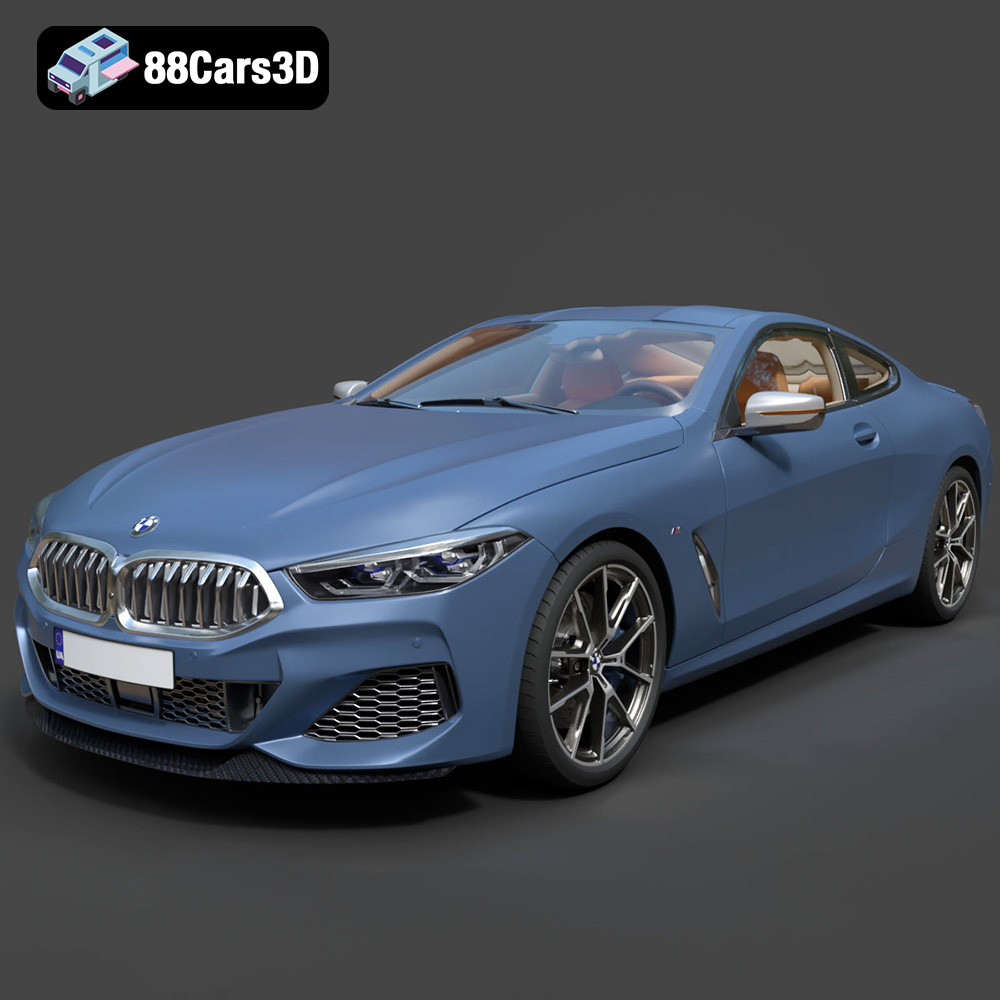
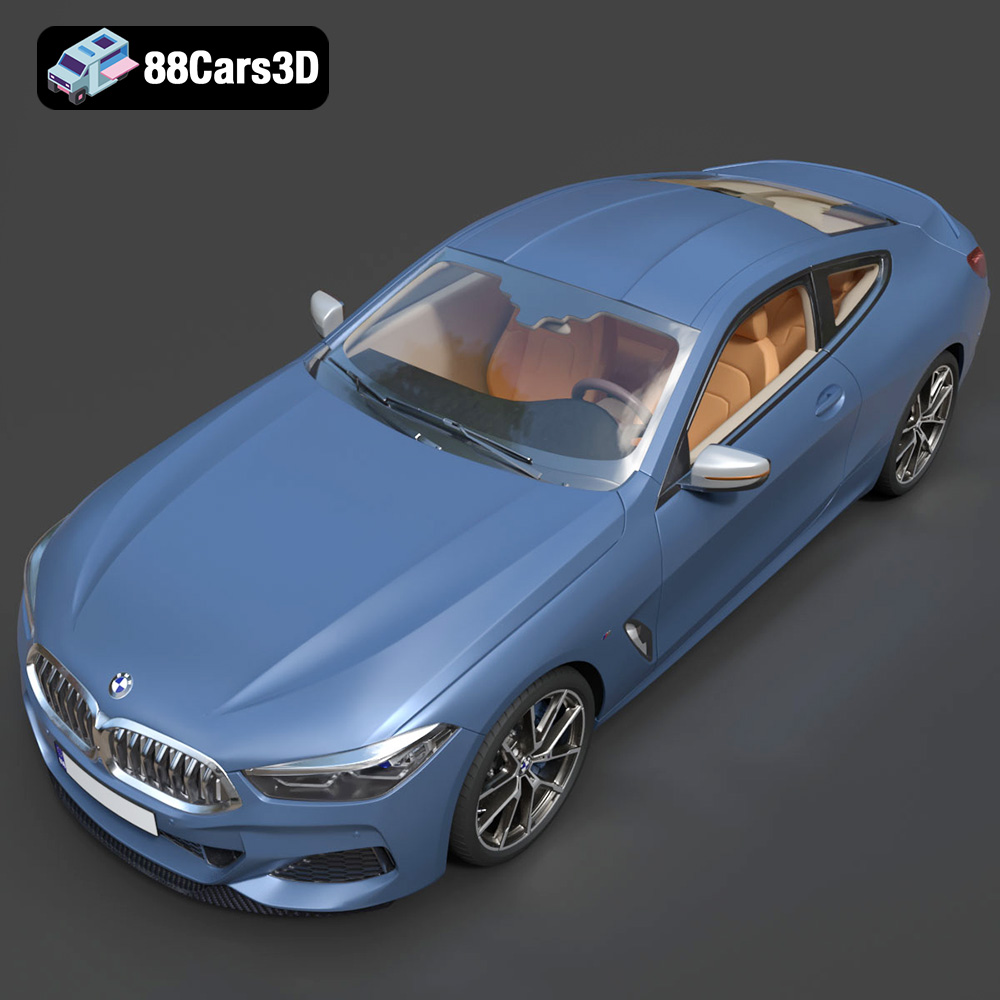
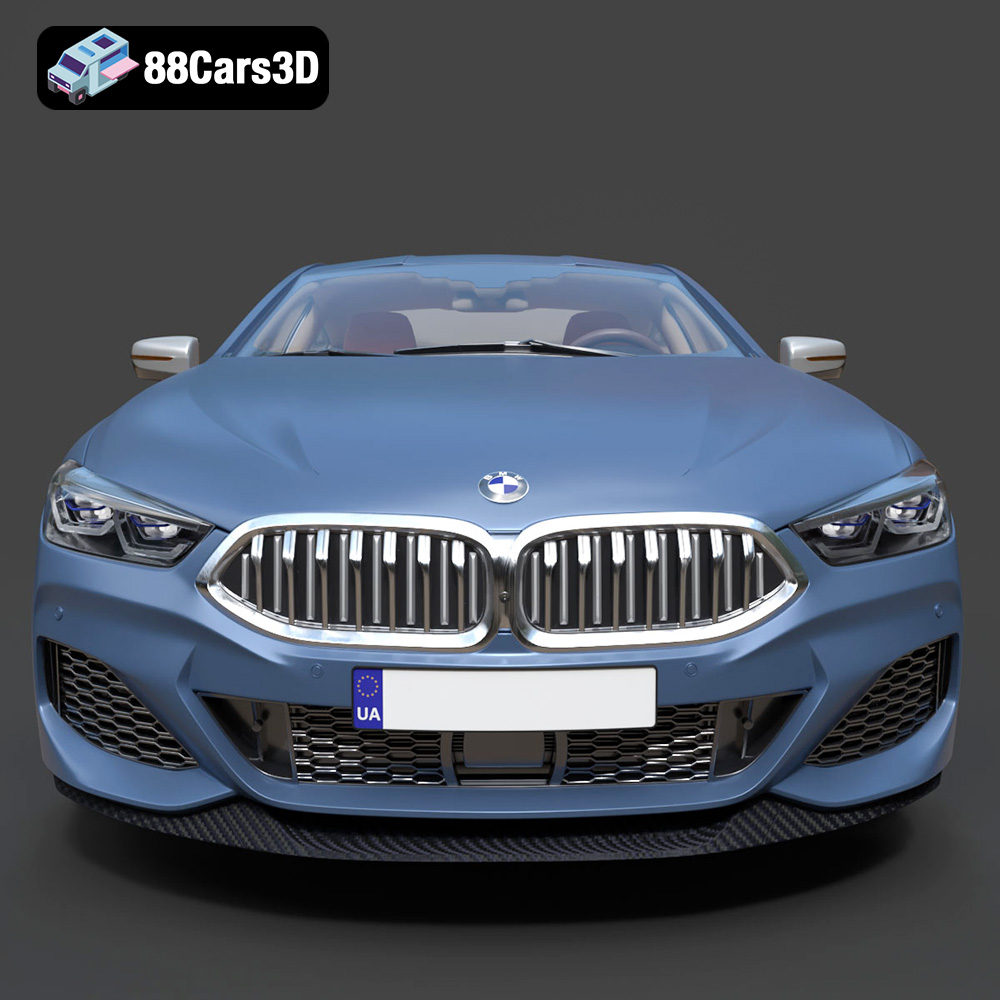
The BMW 8-Series Mk2 G15 Coupe M850i 2019 3D Model is a high-detail digital recreation of the luxury grand tourer that blends aggressive performance styling with executive-level refinement. The G15 generation M850i features a powerful V8 configuration, sculpted aerodynamic bodywork, and advanced digital interior technology. This 3D model accurately represents the wide kidney grille, sharp LED headlight signature, aerodynamic front bumper, muscular side profile, quad exhaust system, performance alloy wheels, and premium cockpit layout. Built with clean topology and real-world scale accuracy, it is ideal for rendering, animation, automotive visualization, game development, and AR/VR showroom applications. Perfect for luxury showroom scenes, urban night renders, cinematic automotive projects, promotional campaigns, and high-performance driving simulations.
$59.99
Product Image Gallery



Related Tags
.8series
.arvr
.automotive
.blend
.bmw
.car3dmodel
.fbx
.g15
.gameasset
.glb
.luxurycoupe
.m850i
.max
.obj
.ply
.rendering
.simulation
.sportsCar
.stl
.unreal
