

Recreating Automotive Legends: The Buick Wildcat 1963 in the Digital Realm
The allure of classic cars transcends generations, representing a blend of engineering prowess, timeless design, and cultural impact. For automotive enthusiasts and digital artists alike, these iconic vehicles offer an endless source of inspiration. Imagine the roar of a V8, the gleam of chrome, and the unmistakable silhouette of a 1960s American cruiser. This vision is now perfectly captured in the digital world, allowing creators to integrate such automotive heritage into modern projects. One prime example is the Buick Wildcat Convertible 1963 3D Model, a stunning digital recreation that brings this vintage masterpiece to life for rendering, game development, and even 3D printing.
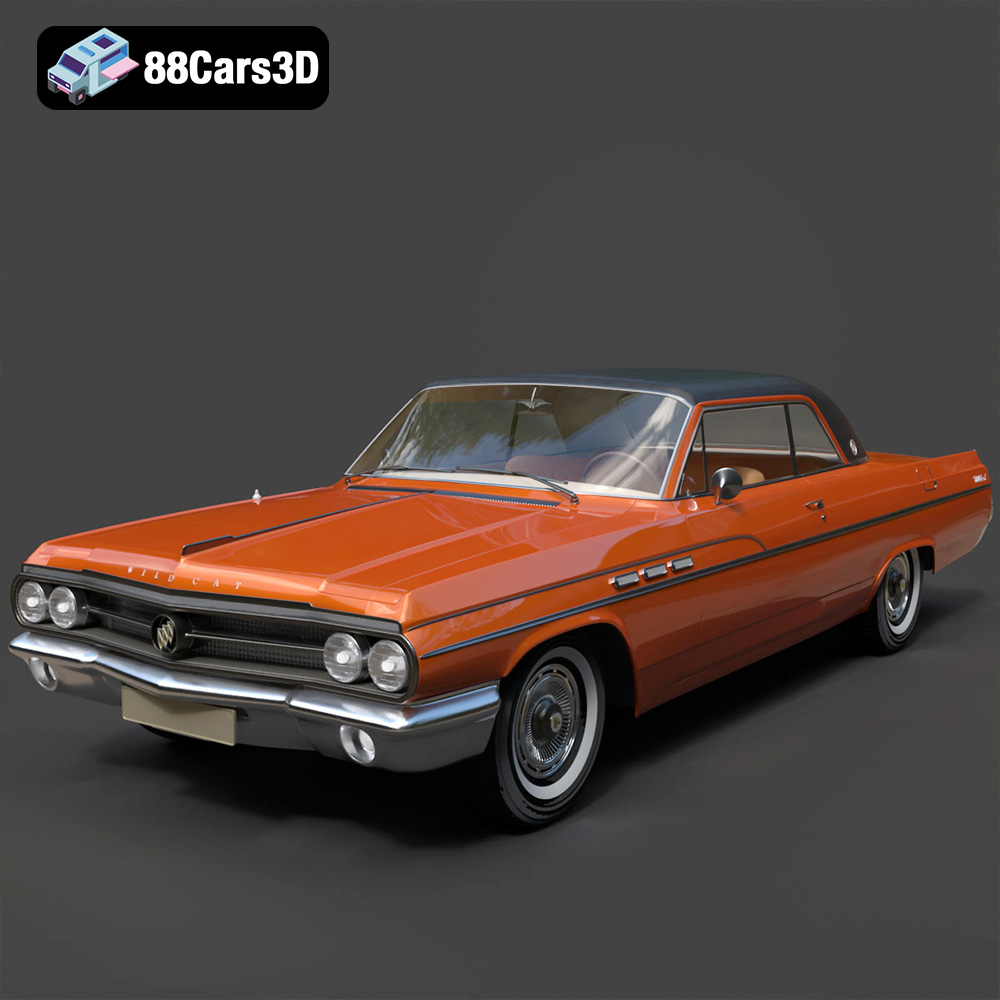
The 1963 Buick Wildcat Convertible, known for its bold styling and powerful V8 engine heritage, epitomizes the golden age of American motoring. It flawlessly blended luxury comfort with muscle-era presence, making it a true standout. This meticulously crafted 3D model accurately represents every curve and detail, from its distinctive dual headlight fascia to its sculpted side lines and period-correct wheel design. Whether you’re a seasoned professional in automotive visualization or an indie game developer looking to add authentic vintage flair, the availability of such a high-quality 3D car model from marketplaces like 88cars3d.com streamlines your workflow and elevates your output.
Understanding 3D Model File Formats: The Digital Toolkit
When working with 3D assets, especially detailed models like the Buick Wildcat Convertible 1963, understanding the various file formats is crucial. Each format serves specific purposes, offering different levels of compatibility, data retention, and optimization for various workflows, from high-fidelity rendering to real-time game engines and physical production via 3D printing. The Buick Wildcat Convertible 1963 3D Model is exemplary in its broad format support, ensuring its versatility across professional pipelines.
.blend – The Blender Native Format
The .blend file format is Blender’s native project file. It’s a powerhouse for artists who work within the Blender ecosystem, as it stores everything related to a Blender scene: the 3D mesh data, materials (including complex PBR setups), textures, lighting, cameras, animations, physics simulations, and even custom scripts. This format offers maximum editability, allowing users to dive deep into the model’s construction, modify its topology, adjust materials, or re-rig components with complete freedom. For professionals, receiving a .blend file means having the full source project, which is invaluable for intricate customization and integration into existing Blender-based pipelines.
.fbx – The Industry Standard for Interchange
.fbx (Filmbox) is a proprietary file format developed by Autodesk, widely recognized as the industry standard for 3D data interchange. Its strength lies in its ability to store not just mesh data, but also complex animations, rigged characters, materials, and textures in a single file. This makes it ideal for transferring assets between different 3D software packages like 3ds Max, Maya, and Blender, and crucially, for importing into real-time engines such as Unreal Engine and Unity. For game development and AR/VR applications, .fbx files ensure that the Buick Wildcat Convertible 1963 3D Model can be imported with its hierarchy, pivots, and basic material assignments largely intact, significantly speeding up the integration process.
.obj – The Universal Geometry Carrier
The .obj (Object) format is one of the oldest and most universally supported 3D formats. It’s a simple, text-based format primarily used for transferring 3D geometry data (vertices, normals, texture coordinates) between applications. While it doesn’t typically store animation or advanced material properties within the .obj itself (materials are often defined in an accompanying .mtl file), its widespread compatibility makes it a safe bet for cross-software portability. For the Buick Wildcat Convertible 1963 3D Model, an .obj file provides a clean, raw mesh that can be imported into virtually any 3D software for further texturing and shading.
.glb – Optimized for Web and Immersive Experiences
.glb (GL Transmission Format Binary) is a relatively newer format optimized for WebGL, AR, and VR applications. It’s a binary version of the glTF (GL Transmission Format) and bundles all necessary assets—geometry, textures, animations—into a single, compact file. This “all-in-one” characteristic makes .glb incredibly efficient for streaming 3D models online and displaying them in browser-based viewers or mobile AR experiences with minimal loading times. For showcasing the classic Wildcat in an interactive web application or an augmented reality car configurator, .glb offers superior performance and ease of use.
.stl – The Standard for 3D Printing
.stl (STereoLithography) is the de facto standard file format for 3D printing. It represents a 3D model as a series of connected triangles, describing only the surface geometry without color, texture, or other CAD attributes. Its simplicity makes it universally compatible with 3D printers and slicing software. The Buick Wildcat Convertible 1963 3D Model‘s availability in .stl format means enthusiasts can transform the digital asset into a physical collectible or scale model, suitable for display or miniature dioramas, directly from their 3D printer.
.ply – Precision Mesh for Analysis and Archiving
The .ply (Polygon File Format) is a versatile format for storing 3D data, particularly useful for scanned data and models where precision and vertex-level information are critical. It can store various properties for each vertex, face, and edge, including color, transparency, and normals. While not as common for general asset exchange as .fbx or .obj, .ply is often used in scientific visualization, CAD, and archival purposes where detailed mesh integrity and specific attribute retention are paramount.
.unreal – Engine-Ready for Real-Time Environments
The mention of .unreal implies an asset specifically packaged or optimized for direct use within Unreal Engine. This could refer to a .uasset file or a set of files pre-configured within an Unreal project structure. These assets often come with pre-set materials, collision meshes, LODs (Levels of Detail), and sometimes even basic Blueprint functionalities. This format significantly reduces the setup time for game developers, allowing the classic Wildcat to be dropped into a scene with minimal adjustments required to achieve high-quality results in a real-time environment.
.max – The 3ds Max Project File
Finally, the .max file is the native project format for Autodesk 3ds Max, one of the most powerful and widely used 3D modeling, animation, and rendering software packages in the industry. Similar to .blend for Blender, a .max file contains all scene data—geometry, materials, textures, lighting, cameras, animation, and modifiers. Providing the Buick Wildcat Convertible 1963 3D Model in .max format ensures that users of 3ds Max have full access to the original scene, enabling them to dissect, modify, and render the model with the software’s extensive toolset, particularly beneficial for high-end automotive rendering and animation studios.
The comprehensive range of file formats available for the Buick Wildcat Convertible 1963 3D Model demonstrates a strong commitment to professional utility and versatility, making it a valuable asset for almost any digital creative workflow.
Capturing Automotive Heritage: The Buick Wildcat in 3D
The meticulous recreation of a classic like the 1963 Buick Wildcat Convertible in 3D is a testament to the skill involved in digital automotive design. It’s not merely about replicating shapes; it’s about capturing the essence, the presence, and the nuanced details that define an icon. The Buick Wildcat Convertible 1963 3D Model stands out as a prime example of this dedication, offering a highly detailed digital asset ready for diverse professional applications.
Exterior Authenticity and Design Language
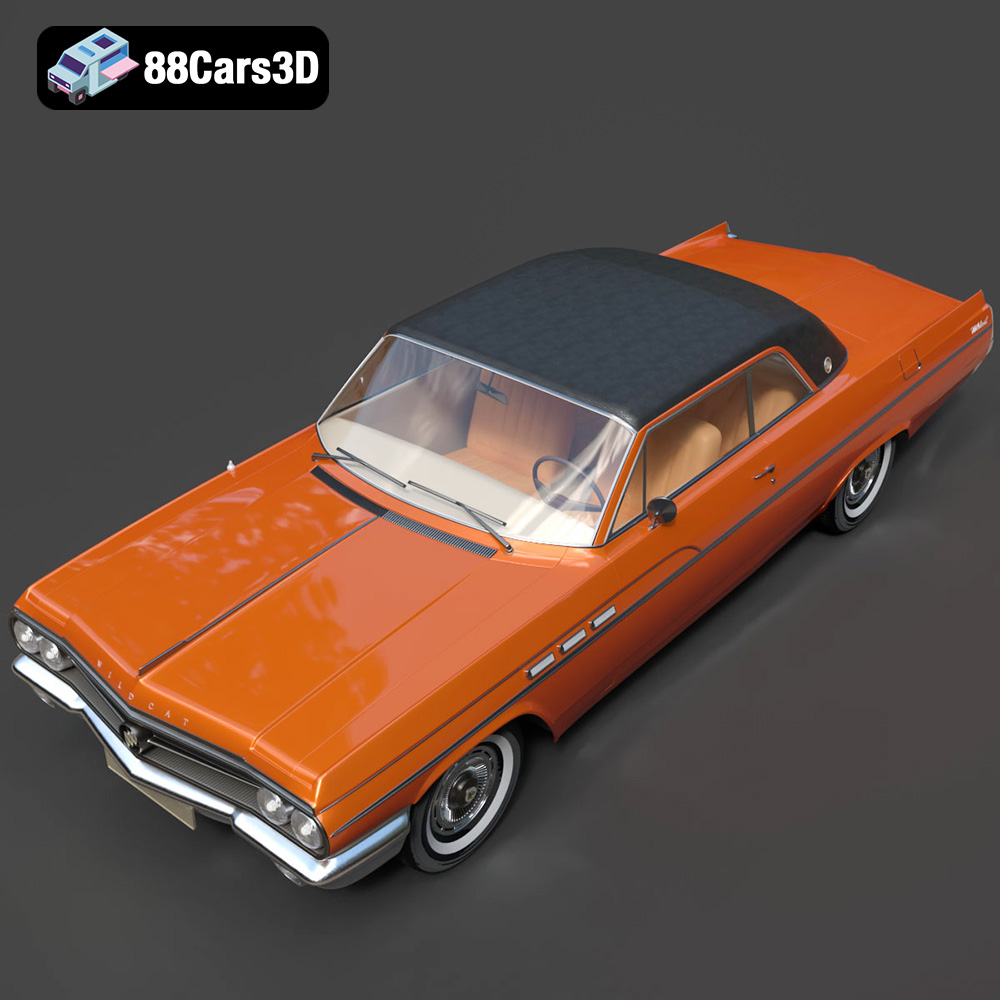
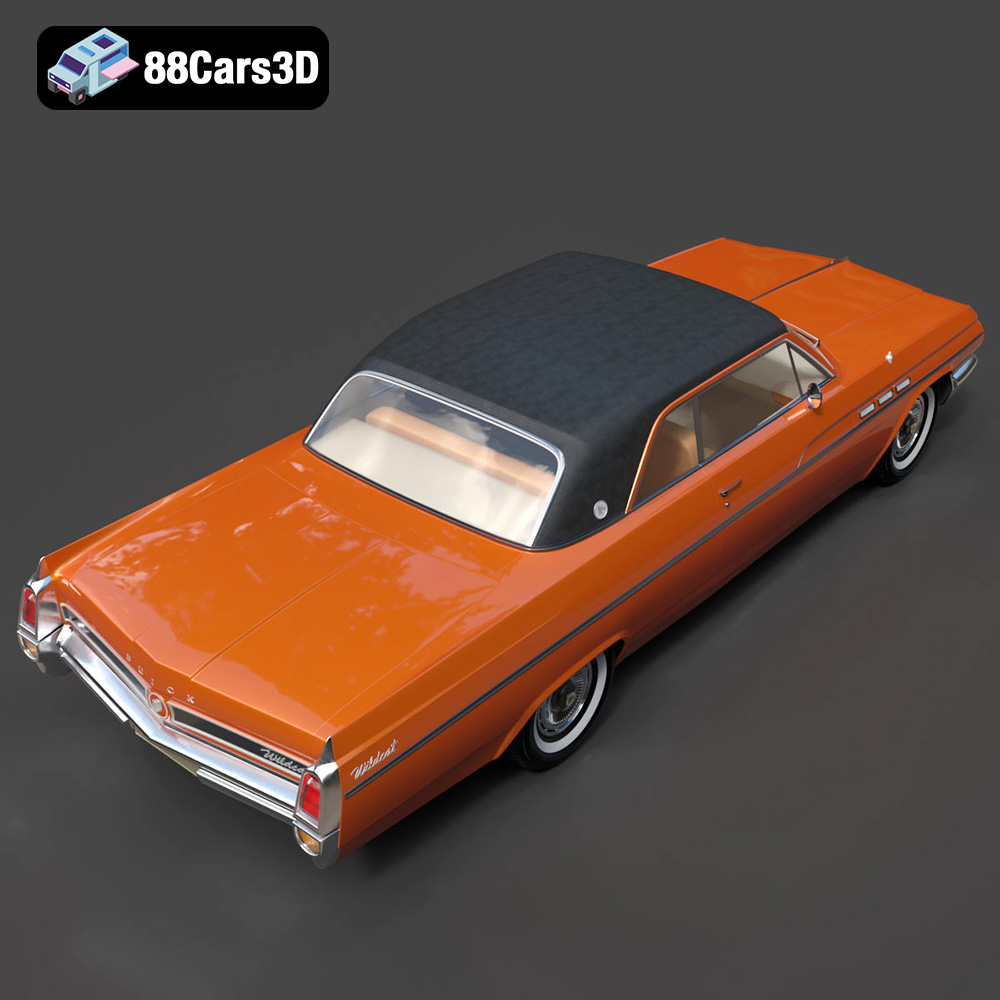
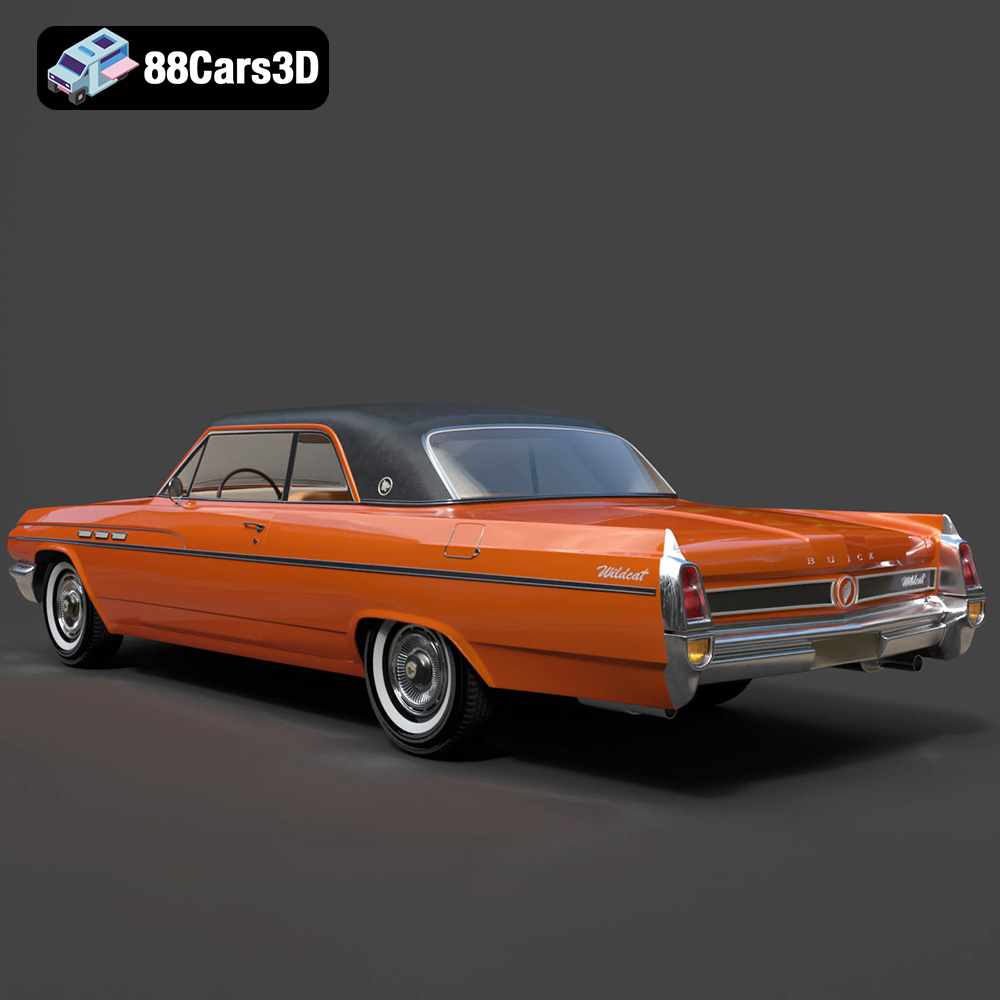
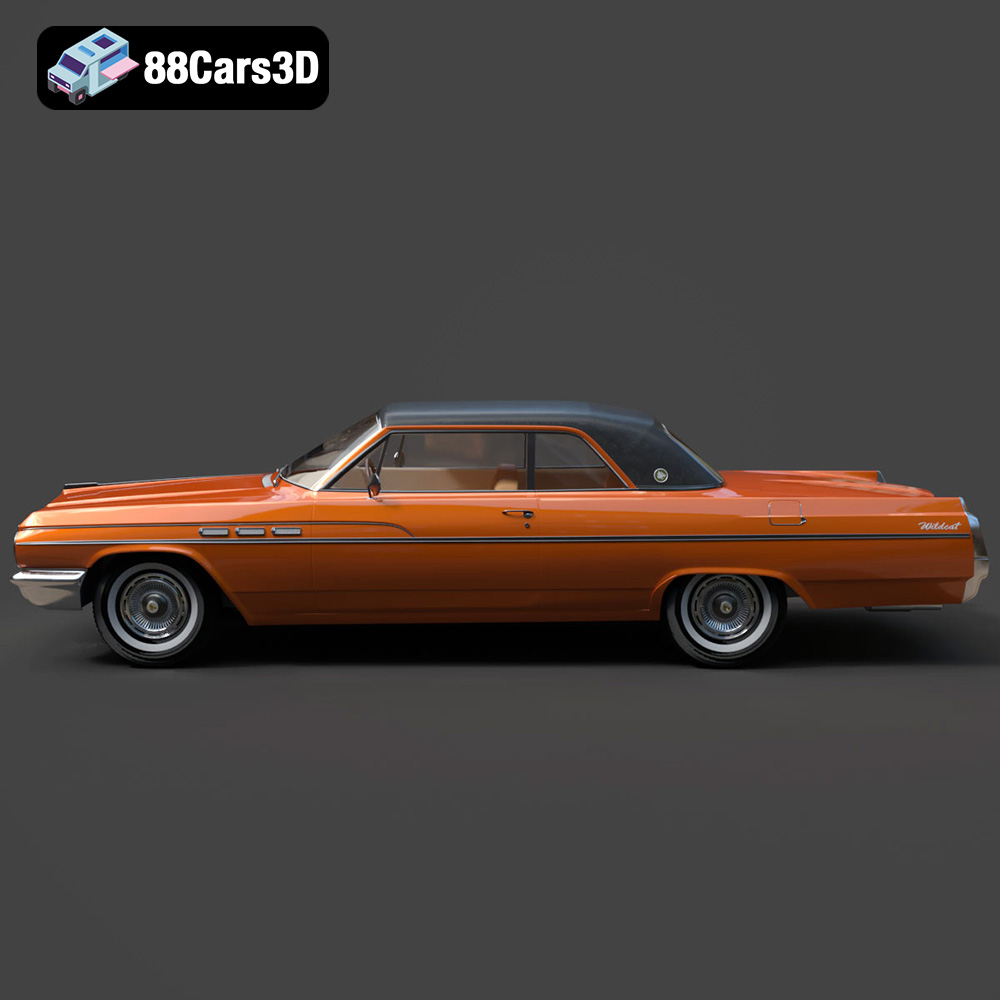
From the moment you inspect the model, the accuracy of the 1963 Wildcat’s long and wide body proportions is evident. The distinctive dual headlight front fascia, a hallmark of its era, is faithfully reproduced, complemented by gleaming chrome grilles and bumpers that reflect light just as they would on a real-world vehicle. The sculpted side lines and emblem detailing are precisely modeled, conveying the car’s bold yet elegant design language. Crucially, the convertible soft-top is ready for both ‘up’ and ‘down’ configurations, adding significant flexibility for various scene setups – whether depicting a breezy beach cruise or a garage showcase. Even the period-correct chrome wheels and whitewall tire styling are replicated with an eye for historical detail, making this 3D car model a superb choice for authenticity.
Interior Detailing and Animation Readiness
The attention to detail extends beyond the exterior. The interior features a vintage dashboard with its analog gauge cluster, a classic steering wheel, and options for either a front bench or bucket seat configuration. These elements are not just static visuals; the model includes separate wheels and steering components with proper pivot setups, making it primed for animation. This means the car can realistically navigate virtual environments, whether for a cinematic sequence, a driving simulation, or an interactive game. This level of preparation is a hallmark of high-quality 3D car models, ensuring they are immediately usable in complex production pipelines.
Bringing the Wildcat to Life: Professional Workflows
A high-quality 3D model like the Buick Wildcat Convertible 1963 is only as valuable as its ability to integrate seamlessly into professional workflows. Artists and developers leverage a range of software to achieve stunning renders, immersive game environments, and compelling visualizations. The versatility of this model, with its clean topology, real-world scale, and optimized polygon flow, makes it an ideal asset across multiple platforms.
High-End Rendering with 3ds Max and Blender
For cinematic quality rendering, 3ds Max users can fully exploit the included .max file. This grants access to the native scene setup, allowing for easy integration with renderers like V-Ray or Corona. Artists can fine-tune materials, adjust lighting, and create intricate camera animations to showcase the Wildcat in its best light. The clean mesh structure and proper UVs mean that applying advanced PBR (Physically Based Rendering) materials is straightforward, yielding realistic reflections on chrome and subtle nuances in paintwork. Similarly, Blender artists using the .blend file can leverage Cycles or Eevee, utilizing the pre-setup materials as a starting point, then customizing them to fit their project’s specific aesthetic, from photorealistic daylight scenes to moody, neon-lit retro environments.
Real-Time Immersion in Unreal Engine and Unity
Game developers and AR/VR creators will find the .fbx and .unreal formats particularly beneficial for integrating the Buick Wildcat Convertible 1963 3D Model into real-time engines. In Unreal Engine, the .unreal file or a well-prepared .fbx can be imported with its hierarchy and pivot points intact. Developers can then quickly set up material instances based on the provided textures, ensuring optimal performance without sacrificing visual fidelity. The separated wheels and steering components are crucial here, enabling realistic vehicle physics and player-controlled driving mechanics. For AR/VR, the .glb format offers a lightweight, optimized version perfect for immersive classic car showrooms or interactive historical experiences, delivering high visual quality with minimal performance overhead.
Beyond the Screen: 3D Printing the Classic Wildcat
The utility of high-quality 3D car models extends beyond digital screens. The ability to physically manifest these digital assets through 3D printing opens up new avenues for collectors, model makers, and automotive enthusiasts. The Buick Wildcat Convertible 1963 3D Model is explicitly designed with 3D printing in mind, providing an .stl file and detailed recommendations for physical production.
Preparing for Physical Production
The inclusion of the .stl format makes this model directly compatible with virtually any 3D printer. However, achieving an exquisite physical model requires careful consideration of print settings. The recommended scales (1:32, 1:24, 1:18, 1:12) offer flexibility for different display needs, from intricate tabletop miniatures to larger, more detailed collectibles. Specific recommendations like a layer height of 0.08–0.16 mm and a wall thickness of 1.2–2.0 mm are crucial for capturing the fine details of the Wildcat’s chrome trim, sculpted body lines, and interior components while ensuring structural integrity. Supports are advised for elements like mirrors, bumper overhangs, and the windshield frame, highlighting the model’s complex geometry that requires careful handling during fabrication.
Post-Processing and Customization for Collectibles
3D printing is often just the first step in creating a truly museum-quality physical model. The guide recommends an angled print orientation for the body to ensure a smooth surface finish, with wheels printed separately for optimal detail. Post-processing is where the model truly shines: sanding, priming, and a meticulous paint job in gloss pastel or metallic finishes, paired with careful chrome detailing, will transform the raw print into a stunning miniature. Enthusiasts can even experiment with adding custom whitewall or wheel variations, configuring the soft-top in either up or down positions, and adding vintage license plates for a personalized touch. This blend of digital precision and physical craftsmanship makes the Buick Wildcat Convertible 1963 3D Model a unique offering for collectors.
The Value of High-Quality 3D Assets for Professionals
In today’s fast-paced digital content creation landscape, the demand for high-quality, production-ready 3D assets is paramount. Professionals across automotive design, entertainment, and interactive media rely on meticulously crafted models to meet tight deadlines and exceed visual expectations. Sourcing assets from reputable marketplaces like 88cars3d.com ensures that these demands are met, providing significant advantages to creators.
Efficiency and Cost-Effectiveness
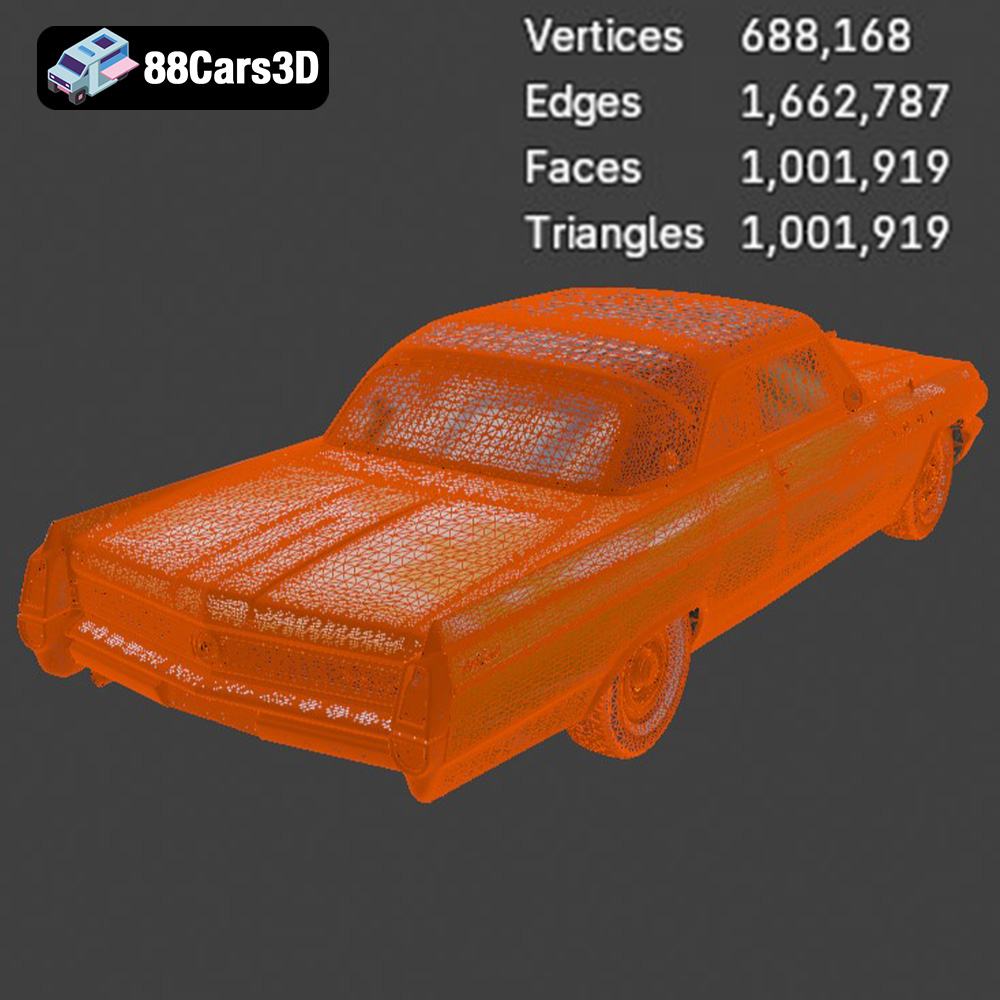
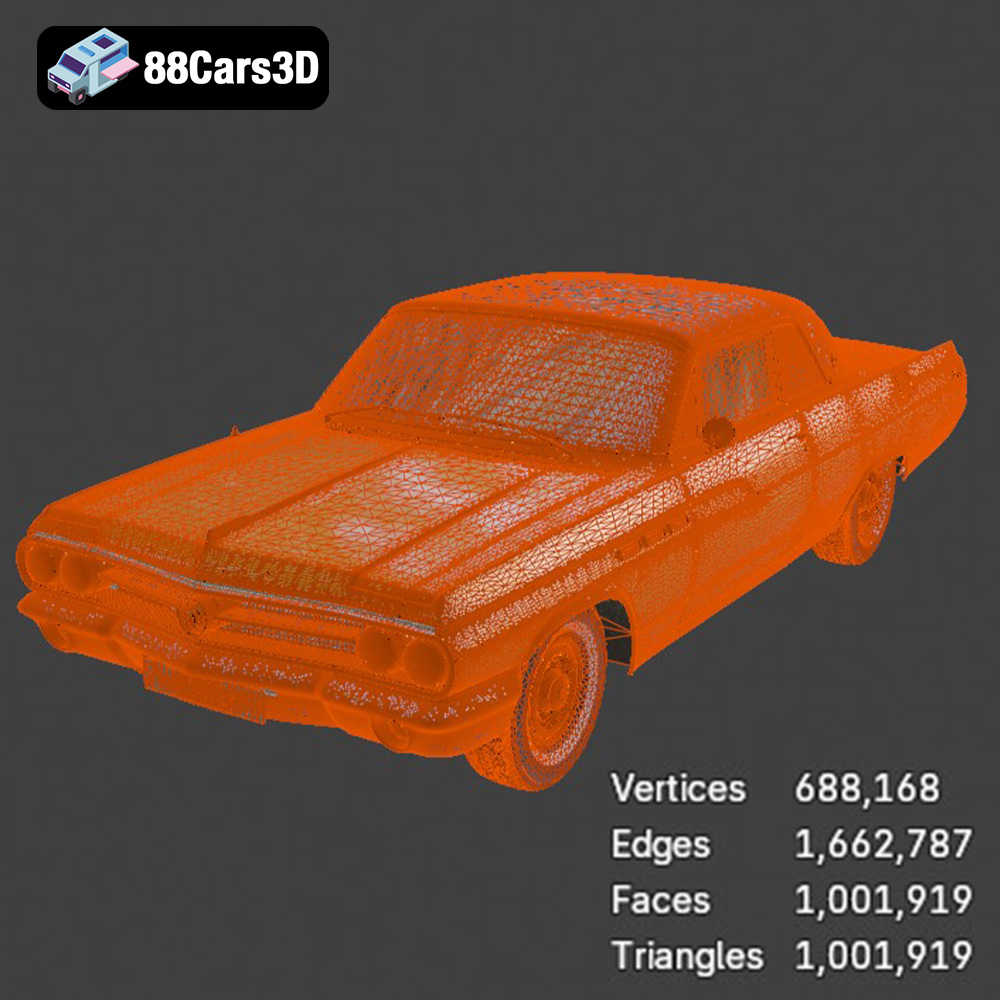
Developing a complex 3D car model from scratch, with the level of detail seen in the Buick Wildcat Convertible 1963, is an incredibly time-consuming and expensive endeavor. It requires specialized skills in modeling, texturing, UV mapping, and optimization. By purchasing a pre-made, high-quality 3D car model, studios and individual artists can drastically reduce development time and costs. This allows them to allocate resources to other critical aspects of their projects, such as scene composition, animation, or interactive logic, without compromising on the visual fidelity of their core assets. The “clean and well-organized mesh structure” and “optimized polygon flow” of the Wildcat model mean less time spent on clean-up and more time on creative implementation.
Consistency and Scalability Across Projects
High-quality 3D models come with a promise of consistency. The real-world scale accuracy and proper pivot setup for steering and wheel rotation ensure that the model behaves predictably across different software and engine environments. This consistency is vital for projects requiring multiple vehicles or for establishing a unified aesthetic. For example, a game studio developing a 1960s-themed open-world driving game can quickly integrate this Buick Wildcat Convertible 1963 3D Model, confident that its technical specifications align with other game assets. Furthermore, its compatibility with major 3D software platforms and engines makes it a scalable solution, adaptable for future updates or entirely new projects, securing its long-term value as an asset.
Enhancing Visual Storytelling and Immersion
Ultimately, the goal of any 3D asset in visualization, games, or AR/VR is to enhance storytelling and create immersive experiences. The detailed features of the Wildcat, from its accurate body proportions to its vintage interior, provide the rich visual data necessary to build believable environments. Whether used for a retro boulevard scene, a classic car showcase, or a cinematic production, the model’s inherent quality elevates the overall visual impact. This meticulous attention to detail transforms a simple 3D object into a character within the narrative, resonating with audiences and providing a deeper connection to the digital world presented.
Conclusion
The journey from a classic automotive masterpiece to a versatile digital asset is complex, yet products like the Buick Wildcat Convertible 1963 3D Model demonstrate how successfully it can be achieved. This model not only faithfully captures the spirit and intricate details of a true American legend but also provides the technical versatility required by today’s demanding digital workflows. With its robust support for various file formats—from .blend and .max for comprehensive editing, to .fbx and .unreal for real-time applications, and .stl for physical 3D printing—it stands as an exemplary asset for any professional or enthusiast.
Whether your project demands photorealistic automotive rendering, an immersive game asset, a detailed visualization for AR/VR, or even a tangible scale model, this 1963 Wildcat offers an unparalleled foundation. It embodies the precision, flexibility, and production-readiness that creators seek, enabling them to bring their visions to life with efficiency and stunning fidelity. Explore the possibilities and elevate your next project with this exceptional 3D car model, available on 88cars3d.com, where quality meets creative potential.
Featured 3D Model
Buick Wildcat Convertible 1963 3D Model
The Buick Wildcat Convertible 1963 3D Model is a high-detail digital recreation of the classic American full-size performance convertible known for its bold styling, powerful V8 engine heritage, and open-top cruising appeal. The 1963 Wildcat combined luxury comfort with muscle-era presence, making it a standout of early 1960s American automotive design. This 3D model accurately represents the long and wide body proportions, dual headlight front fascia, chrome grille and bumpers, sculpted side lines, convertible soft-top configuration, rear deck detailing, and period-correct wheel design. Built with clean topology and real-world scale accuracy, it is ideal for rendering, animation, automotive visualization, game development, and AR/VR experiences. Perfect for retro boulevard scenes, beach environments, classic car showcases, cinematic productions, and vintage driving simulations.
$29.9
Product Image Gallery

Related Tags
.1960scar
.americanclassic
.arvr
.automotive
.blend
.buick
.car3dmodel
.classiccar
.convertible
.fbx
.gameasset
.glb
.max
.obj
.ply
.rendering
.simulation
.stl
.unreal
.vintagecar
.wildcat1963
