

Driving Digital Realism: The Art and Science of High-Fidelity 3D Car Models
In the dynamic world of 3D visualization, automotive design, and game development, the demand for realistic and technically precise 3D car models has never been higher. From cinematic-quality renders to immersive virtual experiences and even tangible 3D prints, these digital assets form the backbone of countless creative and professional endeavors. Achieving true-to-life representation requires a deep understanding of modeling techniques, material science, and file format intricacies.
Today, we’re taking a deep dive into the engineering and artistry behind these crucial assets, highlighting how a meticulously crafted model can elevate any project. We’ll explore the technical specifications that define quality, the workflows that bring these models to life, and the diverse applications they serve. To illustrate these concepts, we’ll feature an exemplary asset: the Ford Sterling A9500 Tractor Truck 2006 3D Model, a testament to industrial realism available through resources like 88cars3d.com.
Understanding 3D Model File Formats
The choice of a 3D model’s file format is far more than a technicality; it dictates compatibility, optimizes for specific uses, and often influences the ease of integration into your chosen software pipeline. For complex 3D car models like the Ford Sterling A9500, understanding each format’s strengths is paramount.
.blend – The Blender Powerhouse
The .blend format is Blender’s native file type, offering a complete scene package. When you download a .blend file, you’re not just getting the mesh; you’re typically receiving the full Blender project, including materials, textures, lighting setups, cameras, animations, and even physics simulations. This makes it incredibly powerful for users already familiar with Blender, providing a fully editable and render-ready asset right out of the box. For those seeking to dissect the model’s construction, understand material node networks, or make extensive modifications, the .blend file offers unparalleled access and flexibility.
.fbx – The Industry Standard for Interoperability
.fbx (Filmbox) is arguably the most ubiquitous format in 3D production. Developed by Autodesk, it’s designed for maximum interoperability between different 3D software applications and real-time engines like Unreal Engine and Unity. An .fbx file can encapsulate a wide array of data, including geometry, materials, textures, animations, rigging, and even blend shapes. Its robust nature makes it the go-to choice for exporting assets from a modeling package to a game engine or another DCC application, ensuring that most critical data transfers smoothly, making it ideal for robust automotive rendering and game assets pipelines.
.obj – The Universal Geometry Carrier
The .obj (Wavefront OBJ) format is a simple, universal geometry format that has stood the test of time. It primarily stores geometric data (vertices, normals, UV coordinates, and faces) and can reference external material (.mtl) files for basic color and texture information. While it doesn’t support advanced features like animation or rigging, its simplicity ensures near-universal compatibility across virtually all 3D software. For scenarios where pure mesh data is needed, or as a reliable fallback for cross-software compatibility, .obj remains a solid choice.
.glb – Optimized for Web, AR, and VR
.glb (GL Transmission Format Binary) is the binary version of glTF, a royalty-free specification for 3D scenes and models. It’s designed for efficient transmission and loading of 3D content, especially in web-based applications, augmented reality (AR), and virtual reality (VR). A .glb file packages all necessary data (geometry, materials, textures, animations) into a single, compact file, making it incredibly convenient for quick previews or deployment in performance-critical environments like mobile AR apps or browser-based configurators.
.stl – The Backbone of 3D Printing
The .stl (Stereolithography) format is the standard for 3D printing. It represents a 3D model as a series of connected triangles (a triangulated surface mesh), defining only the surface geometry of an object without color, texture, or other CAD attributes. For physical fabrication of the Ford Sterling A9500, the .stl file is what your slicing software will interpret to generate toolpaths for your 3D printer, making it a critical format for hobbyists and professionals looking to create physical scale models or prototypes.
.ply – Precision Mesh for CAD or Analysis
.ply (Polygon File Format) is another format for storing 3D data, particularly suited for scanner-generated data or scientific applications. It can store a wider range of properties than .obj, including color, transparency, normals, and texture coordinates, per vertex or per face. While less common for general 3D asset exchange compared to .fbx or .obj, it’s valued in fields requiring precise mesh data for CAD, reverse engineering, or analytical purposes.
.unreal – Engine-Ready for Immersive Experiences
The .unreal format signifies an asset specifically optimized and ready for direct import and use within Unreal Engine. This often implies that the model has undergone specific optimizations, material setups, and possibly LOD (Level of Detail) generation within an Unreal context. While .fbx is the common import path, an .unreal file might represent a fully configured asset, saving significant setup time for developers working within the engine’s ecosystem.
.max – The 3ds Max Project
Finally, the .max format is the native file type for Autodesk 3ds Max. Like .blend, it contains a complete scene, including all geometry, materials, lights, cameras, animations, and modifiers specific to 3ds Max. For artists who use 3ds Max for high-end automotive rendering, architectural visualization, or cinematic work, the .max file provides the full project context, allowing for intricate adjustments, custom rigging, and leveraging the extensive toolset of this powerful DCC application.
Dissecting the Ford Sterling A9500: A Masterclass in Automotive 3D Detail
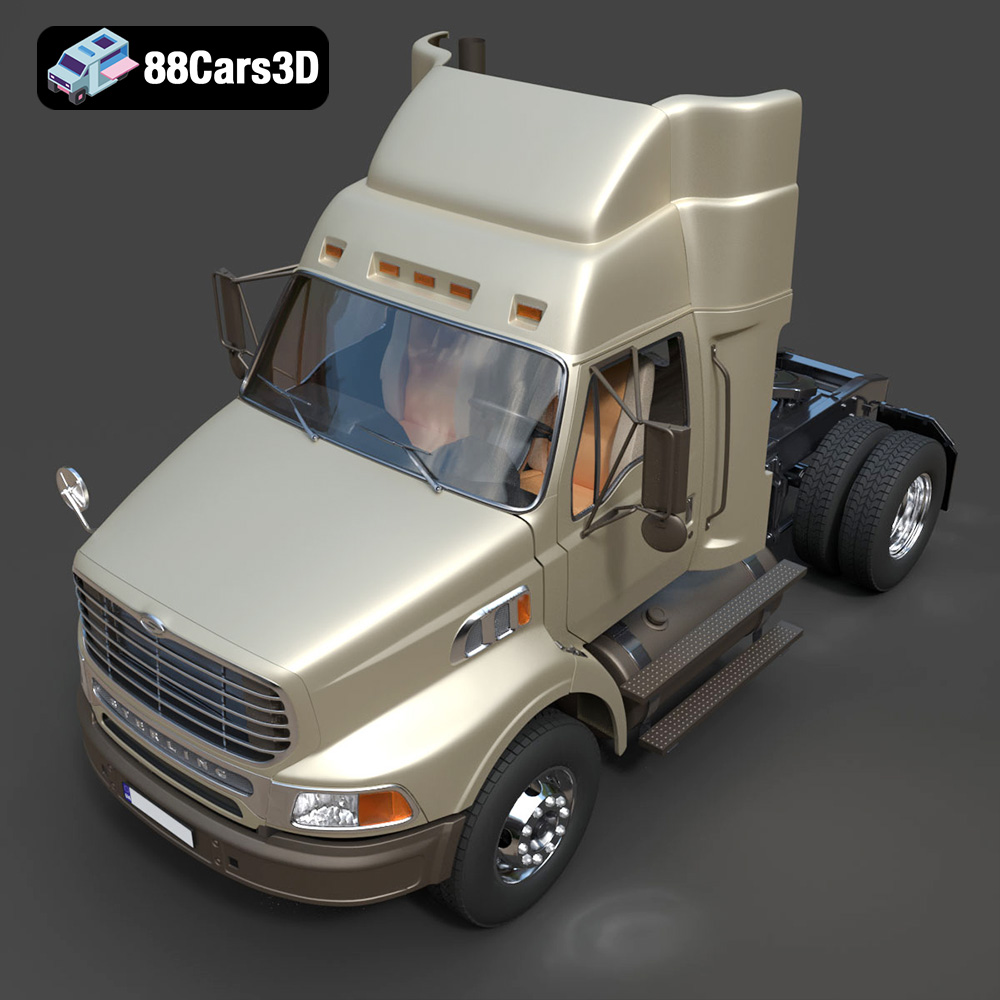
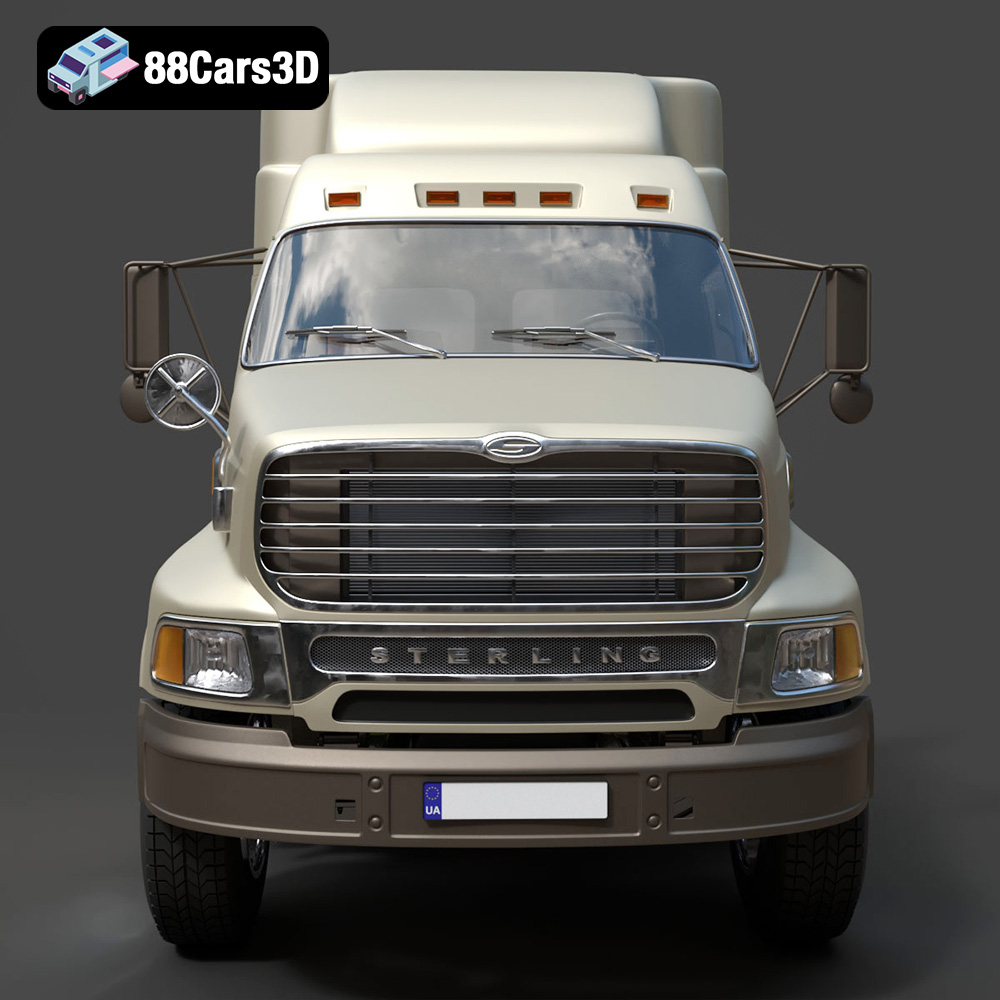
The Ford Sterling A9500 Tractor Truck 2006 3D Model from 88cars3d.com stands as a prime example of a meticulously engineered digital asset. This isn’t just a generic semi-truck; it’s a faithful recreation of an iconic heavy-duty Class 8 commercial vehicle, designed to meet the rigorous demands of professional 3D artists and developers. Its high polygon count and comprehensive detailing make it an invaluable resource for projects demanding the utmost in visual fidelity.
Exterior Authenticity and Rugged Precision
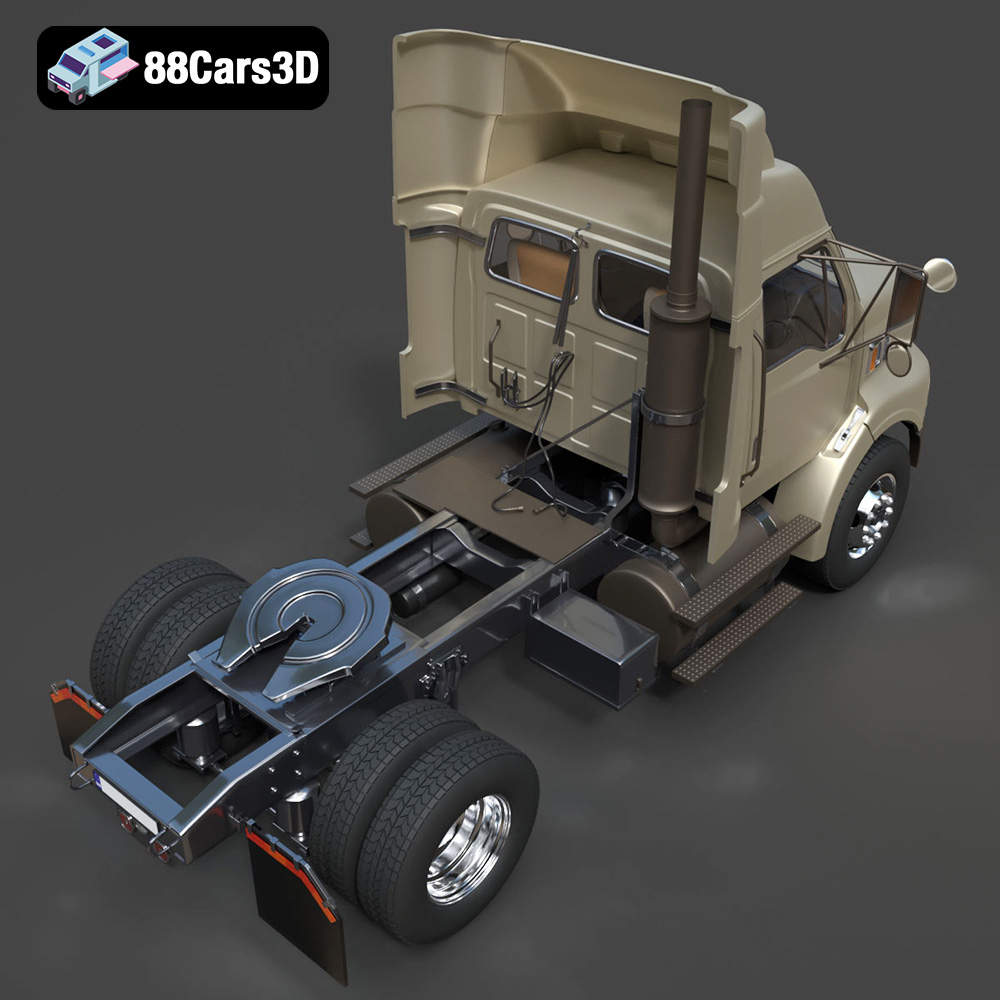
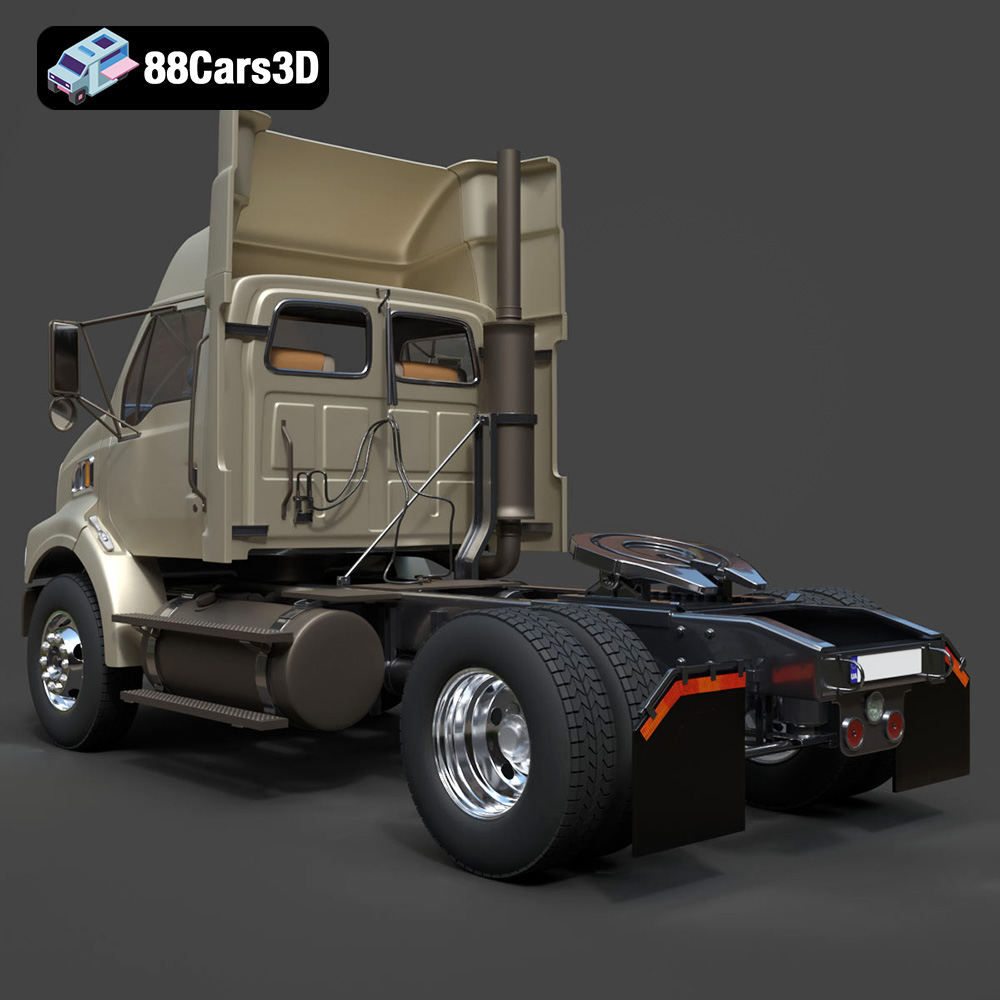
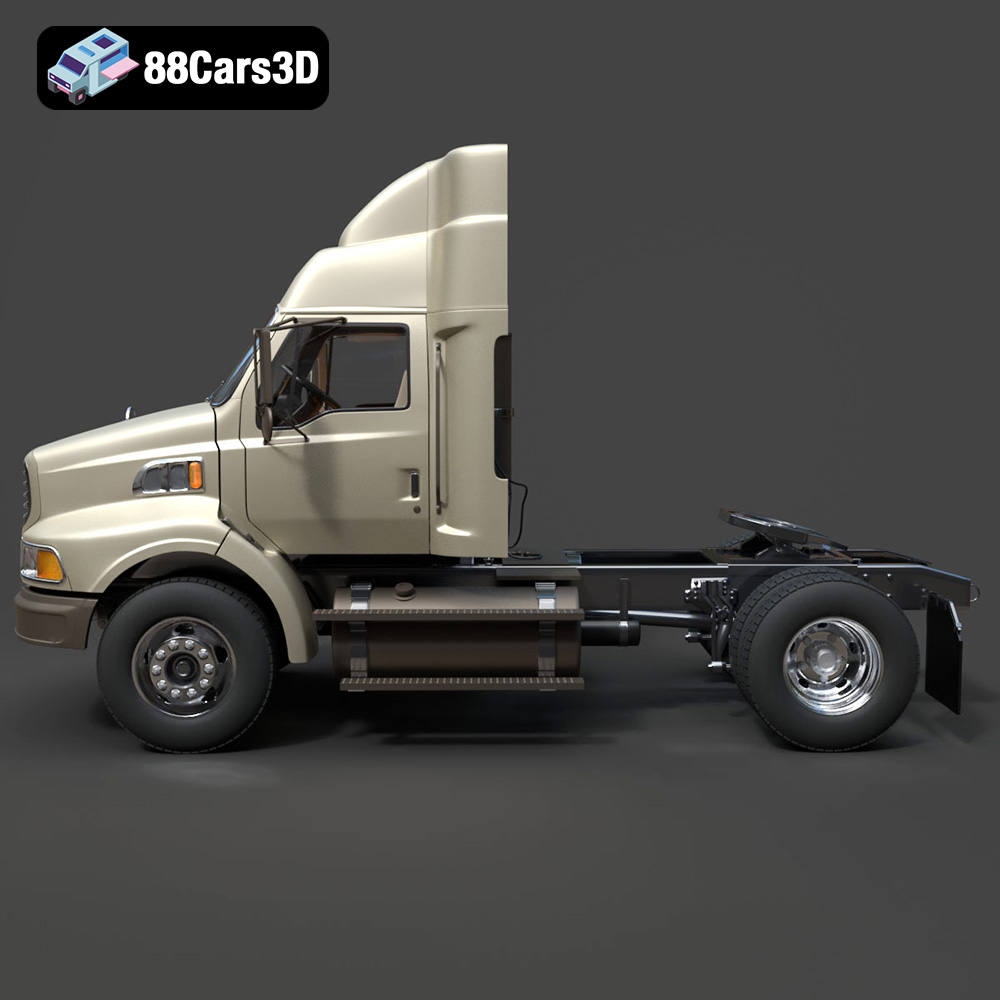
The exterior of the Sterling A9500 model is where its high-fidelity really shines. Capturing the rugged durability and commanding presence of the original vehicle, the model boasts accurate 2006 Sterling A9500 Class 8 tractor proportions and heavy-duty chassis geometry. Details like the distinctive bold chrome front grille, the aerodynamic sloped hood design, and large cylindrical diesel fuel tanks are all faithfully recreated. The presence of heavy-duty rear tandem axles with detailed suspension and air brake components, along with an accurate industrial fifth-wheel coupling, underscores the model’s suitability for realistic scenes. Furthermore, separate components like wheels, steering, doors, and the fifth-wheel pivot are set up for animation, providing immense flexibility for dynamic visualizations or interactive applications.
Interior Immersion: A Driver’s Perspective
Beyond the impressive exterior, the Sterling A9500 offers a detailed and authentic commercial driver’s cabin. The wrap-around dashboard with analog gauge clusters and heavy-duty switches, air-ride driver and passenger seating with authentic upholstery textures, and the industrial steering wheel with a heavy-duty transmission shifter create an immersive experience. This level of interior detail is crucial for projects requiring first-person point-of-view (POV) rendering, virtual training simulations, or even intricate cinematic shots where the camera might sweep through the cabin. The optimized geometry ensures high-resolution rendering without sacrificing quality, even in extreme close-ups.
Technical Specifications for Peak Performance
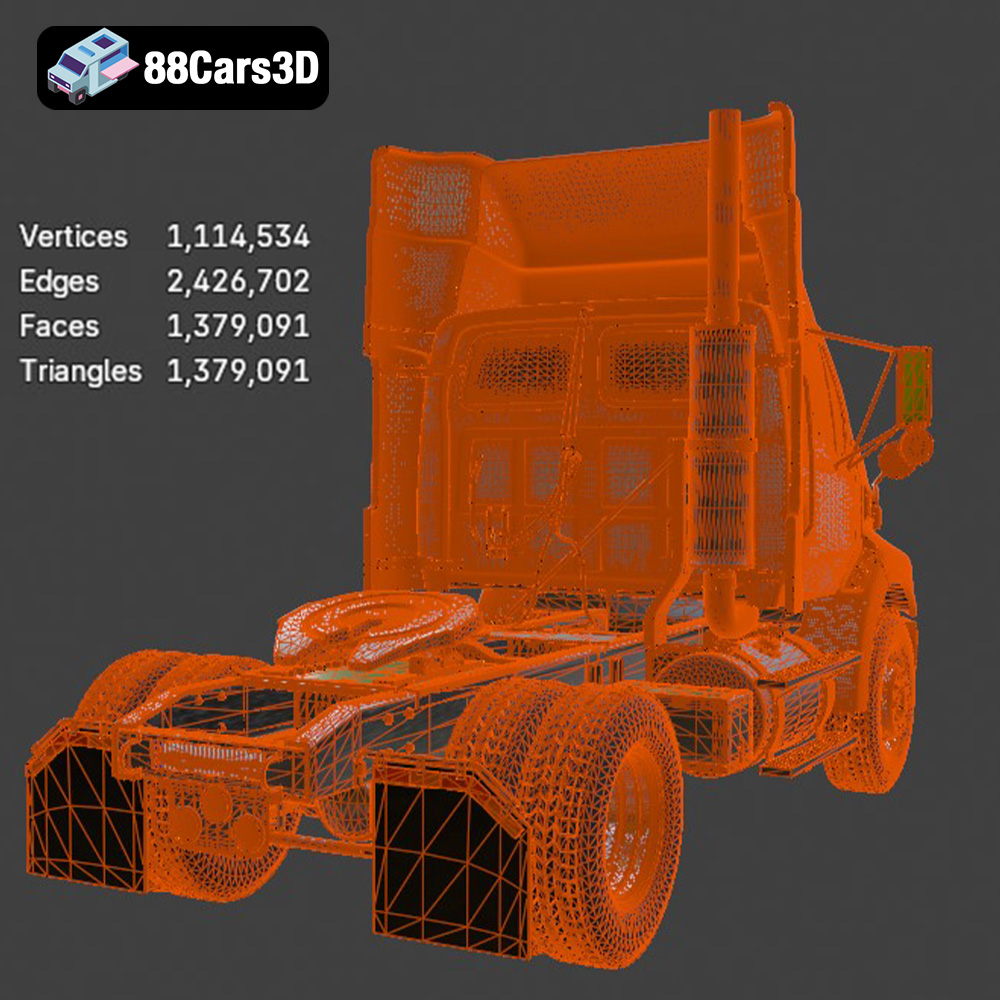
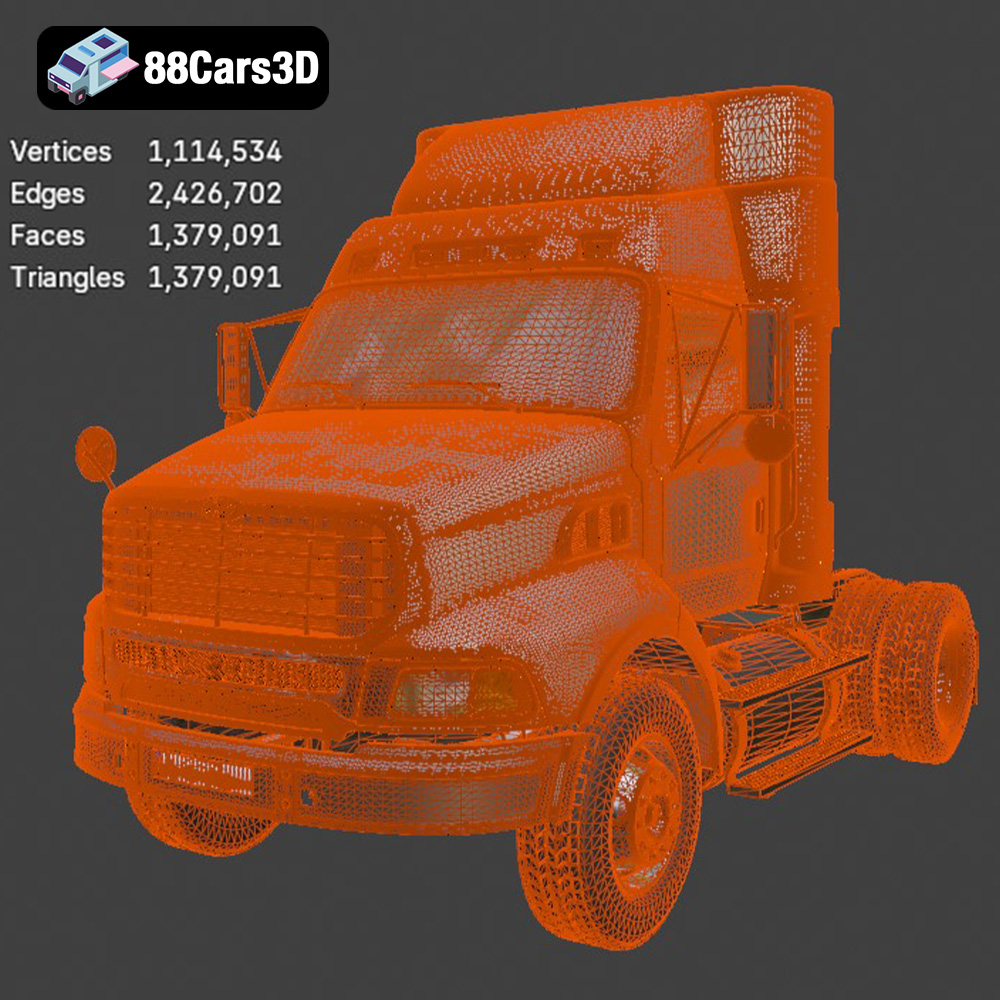
At its core, the Ford Sterling A9500 model is a high-poly asset, designed for maximum realism. With approximately 1.1 million vertices, 2.4 million edges, and nearly 1.6 million triangles, it offers an uncompromising level of detail. This dense mesh structure is optimized for high-resolution studio rendering and commercial visualization, where every curve and component must withstand intense scrutiny. Real-world scale accuracy, based on factory commercial dimensions, ensures that the truck fits seamlessly into any scene without requiring scale adjustments. Proper pivot setups for steer, wheel rotation, and trailer coupling articulation further enhance its utility for animation and interactive applications, making it a robust solution for detailed automotive rendering.
Professional Workflows: Integrating the Sterling A9500 into Your Projects
The versatility of high-quality 3D car models like the Ford Sterling A9500 extends across various professional pipelines. Whether your focus is photorealistic rendering, real-time game development, or physical prototyping, understanding how to integrate such an asset efficiently is key.
High-End Rendering and Visualization
For cinematic productions, advertising campaigns, or architectural visualization projects where a heavy-duty truck needs to feature prominently, the Sterling A9500 is a “hero” asset. In software like 3ds Max, Blender, or Maya, artists can leverage its high poly count for stunning close-ups. The workflow typically involves:
- Material Refinement: Applying advanced PBR (Physically Based Rendering) materials for paint, chrome, rubber, glass, and interior fabrics. Utilizing shader networks to simulate grime, scratches, or wear and tear for added realism.
- Lighting Scenarios: Setting up complex lighting environments, from realistic HDRI (High Dynamic Range Image) skies for outdoor scenes to intricate studio lighting rigs for product showcases.
- Animation: Utilizing the pre-set pivots for wheels, steering, and fifth-wheel coupling to create dynamic animations of the truck in motion, navigating highways, or coupling with a trailer.
- Post-Processing: Integrating the rendered truck into a scene using compositing software, adding effects like motion blur, depth of field, and color grading to achieve the desired cinematic look.
The dense topology ensures that even extreme close-ups on the grille, suspension, or interior dashboard will hold up, making it perfect for industrial fleet branding mockups or commercial logistics showcases.
Game Development and Real-Time Applications
While the Ford Sterling A9500 is presented as a high-poly model, its inclusion of formats like .fbx and .unreal signifies its potential for game development and real-time environments (AR/VR). However, direct integration of a 1.58 million triangle model into a game engine like Unreal or Unity requires careful consideration:
- Retopology and LODs: The primary step is often retopology to create a lower-poly mesh while preserving visual detail, coupled with the generation of multiple Levels of Detail (LODs). This ensures optimal performance without sacrificing quality at varying distances from the camera.
- UV Mapping and Texturing: Creating efficient UV maps is crucial for baking high-resolution details from the original model onto normal maps, ambient occlusion maps, and other PBR textures. This allows a low-poly mesh to appear highly detailed.
- Engine Integration: Importing the optimized .fbx or .unreal asset into the engine, setting up materials using the engine’s shader graph (e.g., Unreal’s Material Editor), and configuring collision meshes, physics assets, and interactive elements.
For simulators or high-fidelity AR/VR experiences, a “hero” asset like the Sterling A9500, once optimized, can provide unparalleled realism, making it a valuable addition to game assets libraries.
3D Printing and Physical Prototyping
The inclusion of an .stl format for the Ford Sterling A9500 opens up a tangible dimension for this digital asset. Its high level of detail makes it an excellent base for creating physical scale models, custom RC semi-truck bodies, or diecast hobbyist displays. The recommended print settings (1:32 / 1:24 / 1:14 scale, specific layer height, infill, and support requirements) guide users towards successful physical reproduction. This application extends beyond hobbyists to industrial design and prototyping, where physical models can be used for ergonomic studies, display models, or proof-of-concept for custom truck modifications. The ability to print components like the cab and chassis separately for structural integrity highlights the model’s thoughtful design for physical output.
Optimizing for Performance and Realism: Techniques and Best Practices
Working with detailed 3D car models, especially heavy-duty vehicles like the Sterling A9500, involves a balancing act between visual fidelity and performance. Professional artists employ various techniques to achieve stunning realism while ensuring efficient scene management.
Polygon Density and Level of Detail (LOD)
The Ford Sterling A9500’s nearly 1.6 million triangles are excellent for up-close rendering, but this density can be prohibitive for real-time applications or scenes with many vehicles. This is where Level of Detail (LOD) becomes critical. Creating multiple versions of the model—a high-poly for close-ups, a medium-poly for mid-range, and a low-poly for distant views—allows rendering engines to swap models based on distance. This drastically reduces the computational load without noticeable visual degradation. Tools within Blender, 3ds Max, or dedicated decimation software can help generate these LODs while preserving essential silhouette and form.
Effective Material and Texture Management
Photorealistic rendering relies heavily on well-crafted materials and textures. PBR (Physically Based Rendering) workflows are standard, utilizing maps like Albedo (color), Normal (surface detail), Roughness (shininess), Metallic (reflectivity), and Ambient Occlusion. For the Sterling A9500, this would mean distinct material sets for the chrome grille, painted body panels, rubber tires, glass, and the various interior components. Efficient UV mapping, which comes standard in professional 3D car models, is crucial for applying these textures accurately. Utilizing texture atlases (combining multiple smaller textures into one larger image) can also optimize memory usage and draw calls in real-time engines.
Rigging and Animation Preparation
For any dynamic scene, the model needs to be ready for animation. The Sterling A9500’s separate components (wheels, steering, doors, fifth-wheel) and proper pivot setups are a huge advantage. This means artists don’t have to spend valuable time detaching parts or manually setting pivots. Instead, they can directly link these components to control rigs, allowing for realistic vehicle dynamics, opening doors, or articulated trailer coupling. This attention to animation readiness is a hallmark of high-quality automotive 3D models.
Beyond the Screen: The Tangible Benefits of 3D Printable Models
The digital realm often exists as an end in itself, but with assets like the Ford Sterling A9500, the line between virtual and physical blurs beautifully. The provision of a 3D printable STL format unlocks a host of opportunities for creators, collectors, and professionals alike.
From Pixels to Prototypes: Industrial Applications
For engineers and product designers, a 3D printable model of a commercial vehicle like the Sterling A9500 isn’t just a toy; it’s a valuable tool. It allows for rapid prototyping of custom accessories, vehicle modifications, or even entire scaled-down models for display or functional testing. Imagine designing a new aerodynamic fairing or a custom sleeper cabin extension in CAD, then printing a scaled version of the Sterling A9500 to test the fit and aesthetic before committing to full-scale fabrication. This significantly reduces design cycles and costs, making 3D printable automotive models an indispensable asset in the manufacturing and logistics industries.
The Hobbyist’s Dream: Custom Scale Models
For the avid hobbyist, the Sterling A9500 STL offers a canvas for endless creativity. Model truck enthusiasts can print highly detailed bodies for RC semi-truck builds, creating unique customs that would be impossible to find off-the-shelf. The ability to choose specific scales (1:32, 1:24, 1:14) caters to popular RC and static display sizes. Post-processing steps—sanding, priming, painting with authentic fleet colors, and adding chrome accents—transform the raw print into a museum-quality replica or a robust competition-ready RC vehicle. This blend of digital precision and hands-on craftsmanship elevates the hobby to a new level.
Educational and Archival Value
3D printable models also serve an important educational and archival purpose. Schools and museums can print accurate representations of historic or iconic vehicles for study or display. As digital archives, these models preserve the intricate details of vehicles like the 2006 Sterling A9500 for future generations, ensuring that their design and engineering can be physically replicated long after the real-world counterparts have ceased operation. The detailed nature of the Sterling A9500 model makes it particularly valuable for studying the mechanics and design principles of heavy-duty trucks.
Choosing the Right 3D Car Models for Your Needs
When sourcing 3D car models for your projects, whether for cinematic automotive rendering, interactive game assets, or precise 3D prints, quality and technical specification are paramount. Platforms like 88cars3d.com specialize in providing high-quality assets that meet these professional standards. Consider the following when making your selection:
Detail Level vs. Performance Requirements
Always evaluate whether a high-poly “hero” asset, like the Ford Sterling A9500 with its nearly 1.6 million triangles, is necessary for your project. For close-up renders and detailed visualizations, high poly counts are ideal. For real-time applications, however, expect to perform optimization steps like retopology and LOD generation. Reputable marketplaces will often clarify the intended use and technical density of their models.
File Format Availability and Compatibility
As discussed, the included file formats dictate your workflow. Ensure the model you choose offers formats compatible with your primary 3D software (e.g., .blend for Blender, .max for 3ds Max, .fbx for universal transfer) and your target application (e.g., .stl for 3D printing, .glb for web AR/VR). The Ford Sterling A9500, with its comprehensive suite of .blend, .fbx, .obj, .glb, .stl, .ply, .unreal, and .max, offers exceptional versatility.
Technical Rigor and Animation Readiness
Look for models that demonstrate technical rigor: accurate real-world scaling, well-organized mesh structures, and correctly set up pivot points for animation. These details save countless hours in production and ensure that the model behaves realistically in any animated sequence or interactive environment. Check if the model features separate, articulated parts for wheels, doors, and steering, which is a key indicator of quality for 3D car models.
Conclusion
The journey from a blank canvas to a photorealistic or tangible 3D vehicle is one of intricate detail, technical mastery, and creative vision. High-fidelity 3D car models are more than just digital representations; they are fundamental tools that empower artists, developers, and designers to push the boundaries of realism in automotive rendering, game development, visualization, and even physical manufacturing. The Ford Sterling A9500 Tractor Truck 2006 3D Model exemplifies this synthesis of detail and utility, offering an unparalleled asset for a diverse range of professional applications.
Whether you’re crafting a cinematic masterpiece, developing an immersive simulation, or bringing a scaled replica to life on a 3D printer, the quality of your base assets dictates the final outcome. By understanding the technical specifications, file formats, and integration workflows, you can harness the full potential of these powerful 3D car models. Resources like 88cars3d.com continue to provide the foundation for these creative endeavors, ensuring that professionals have access to the highest caliber of digital assets to drive their projects forward.
Featured 3D Model
Ford Sterling A9500 Tractor Truck 2006 3D Model 3D Printable STL
The Ford Sterling A9500 Tractor Truck 2006 3D Model is a highly detailed digital recreation of the iconic heavy-duty Class 8 commercial semi-truck. Born from the legacy of Ford’s heavy truck division, the Sterling A-Line series is renowned for its rugged durability, versatile chassis, and commanding presence on the highway. This model captures the classic aerodynamic yet muscular styling that made it a staple of regional hauling, vocational fleets, and industrial logistics across North America. Built with incredibly dense, uncompromising topology (nearly 1.6 million triangles), it provides maximum visual fidelity for extreme close-up rendering, cinematic industrial visualization, commercial fleet mockups, and high-end 3D printing.
$79.99
Product Image Gallery
Related Tags
.automotive
.blend
.fbx
.obj
.rendering
.stl
3d printing
a9500
big-rig
car-3d-model
class-8
commercial-vehicle
ford-trucks
heavy-duty
high poly
semi-truck
sterling-truck
tractor-truck
