

Driving Digital Dreams: The Genesis G70 2018 3D Model and the Power of Premium Automotive Assets
In the dynamic world of 3D visualization, the demand for photorealistic and technically robust assets is constantly accelerating. From cutting-edge automotive rendering campaigns to immersive game environments and precise architectural visualizations, the quality of a 3D model can define the success of an entire project. Artists, designers, and developers understand that time is precious, and starting with a meticulously crafted foundation is paramount.
Enter the Genesis G70 2018 3D Model, a stunning digital recreation that encapsulates the aggressive athleticism and refined elegance of the acclaimed Korean luxury sports sedan. This isn’t just another car model; it’s a testament to superior craftsmanship, designed to meet the rigorous demands of professional pipelines. Whether you’re aiming for extreme close-up renders that capture every sculpted line, building a sophisticated virtual showroom, or even preparing a detailed model for 3D printing, this asset provides the fidelity and flexibility needed to bring your creative vision to life. Let’s delve into how such a premium 3D car model can elevate your projects and explore the technical nuances that make it an indispensable tool.
Understanding 3D Model File Formats: The Backbone of Digital Assets
When acquiring a 3D model, especially one as detailed as the Genesis G70 2018, understanding the various file formats included is crucial for seamless integration into your workflow. Each format serves a specific purpose, catering to different software, pipelines, and end-use applications. The Genesis G70 2018 3D Model from 88cars3d.com comes equipped with a comprehensive suite of formats, ensuring maximum compatibility and utility for diverse creative needs.
.blend – The Native Blender Powerhouse
The .blend format is Blender’s native file type, offering a complete and editable scene with all materials, textures, lighting, and animation data preserved. For artists working within the Blender ecosystem, this is the most powerful format, providing full control over every aspect of the model. You can modify the mesh, adjust shaders, re-rig components, or integrate it directly into your existing Blender projects without any loss of information. It’s ideal for those who wish to deeply customize the Genesis G70 2018 or use it as a base for further artistic development within Blender.
.fbx – The Industry Standard for Interoperability
.fbx (Filmbox) is arguably the most widely adopted 3D exchange format, especially popular in game development and real-time visualization. It’s excellent for transferring 3D models, complete with animation, bone information, textures, and material assignments, between different software applications like 3ds Max, Maya, Blender, Unity, and Unreal Engine. The .fbx version of the Genesis G70 2018 3D Model is specifically optimized for smooth import into real-time pipelines, making it an indispensable asset for game developers and AR/VR creators. Its robust nature ensures that even complex hierarchies, like the separate wheels and doors of the G70, are maintained.
.obj – The Universal Workhorse for Geometry
The .obj (Wavefront Object) format is a universal standard for storing 3D geometry data. While it’s more basic than .fbx, typically only containing mesh data (vertices, faces, normals, UVs) and referencing external material files (like .mtl), its widespread support makes it incredibly versatile. Almost every 3D software application can import .obj files. This format is perfect when you need clean geometry for sculpting, retopology, or when you intend to rebuild materials from scratch in a new environment. For the Genesis G70 2018, the .obj provides a solid, cross-compatible base.
.glb – Optimized for Web and Immersive Experiences
.glb (GL Transmission Format Binary) is an increasingly important format for web-based 3D, augmented reality (AR), and virtual reality (VR) applications. It’s a compact, self-contained file that includes geometry, materials, textures, and animations, all optimized for fast loading and efficient rendering in browsers and on mobile devices. If your project involves showcasing the Genesis G70 2018 3D Model on a website, in an AR experience, or within a lightweight VR environment, the .glb format is your go-to for delivering high-quality visuals with minimal overhead.
.stl – The Standard for 3D Printing
The .stl (Stereolithography) format is the de facto standard for 3D printing. It represents a 3D model as a series of connected triangles, defining only the surface geometry without color, texture, or material information. For designers looking to transform the digital Genesis G70 2018 into a physical collectible or prototype, the .stl file is essential. The model’s dense topology makes it an excellent base for highly detailed, large-scale luxury diecast hobbyist displays, ensuring intricate details like the Crest Grille and LED headlight assemblies are faithfully reproduced in plastic or resin.
.ply – Precision Mesh for CAD and Analysis
The .ply (Polygon File Format) is another widely supported format, often used in scientific and engineering applications, as well as with 3D scanning data. It can store a wider range of properties than .obj, including color per vertex, transparency, and range data, making it suitable for more precise mesh representation or when dealing with complex datasets. For applications requiring a high level of precision or those bridging into CAD environments, the .ply format for the Genesis G70 2018 provides a robust, detailed mesh.
.unreal – Engine-Ready for Real-Time Environments
The .unreal format signifies an asset specifically prepared and optimized for direct import into the Unreal Engine. This typically means pre-configured materials, collision meshes, and potentially LODs (Levels of Detail) tailored for Unreal’s rendering pipeline. While the Genesis G70 2018 model is noted as a “heavy hero asset” for real-time engines, providing an .unreal version means that the groundwork for integration has been laid, potentially saving valuable setup time even if further optimization like retopology is needed for a drivable in-game asset.
.max – The 3ds Max Project File
The .max format is the native file type for Autodesk 3ds Max, one of the leading digital content creation software for modeling, animation, and rendering. Similar to .blend, it contains the complete scene, including all geometric data, modifiers, camera setups, lighting, materials, and animations. For 3ds Max users, this format offers the ultimate flexibility for modifying, animating, and rendering the Genesis G70 2018 within their preferred professional environment, ensuring full control over every creative aspect.
The provision of all these formats with the Genesis G70 2018 3D Model highlights a commitment to professional usability, allowing artists to select the best option for their specific project needs and software ecosystem.
Crafting Automotive Realism: The Genesis G70 2018 3D Model’s Technical Deep Dive
Achieving truly photorealistic automotive renders and engaging real-time experiences demands more than just a recognizable shape; it requires an obsessive attention to technical detail. The Genesis G70 2018 3D Model exemplifies this philosophy, engineered for maximum fidelity.
Exterior Design Fidelity and Topology
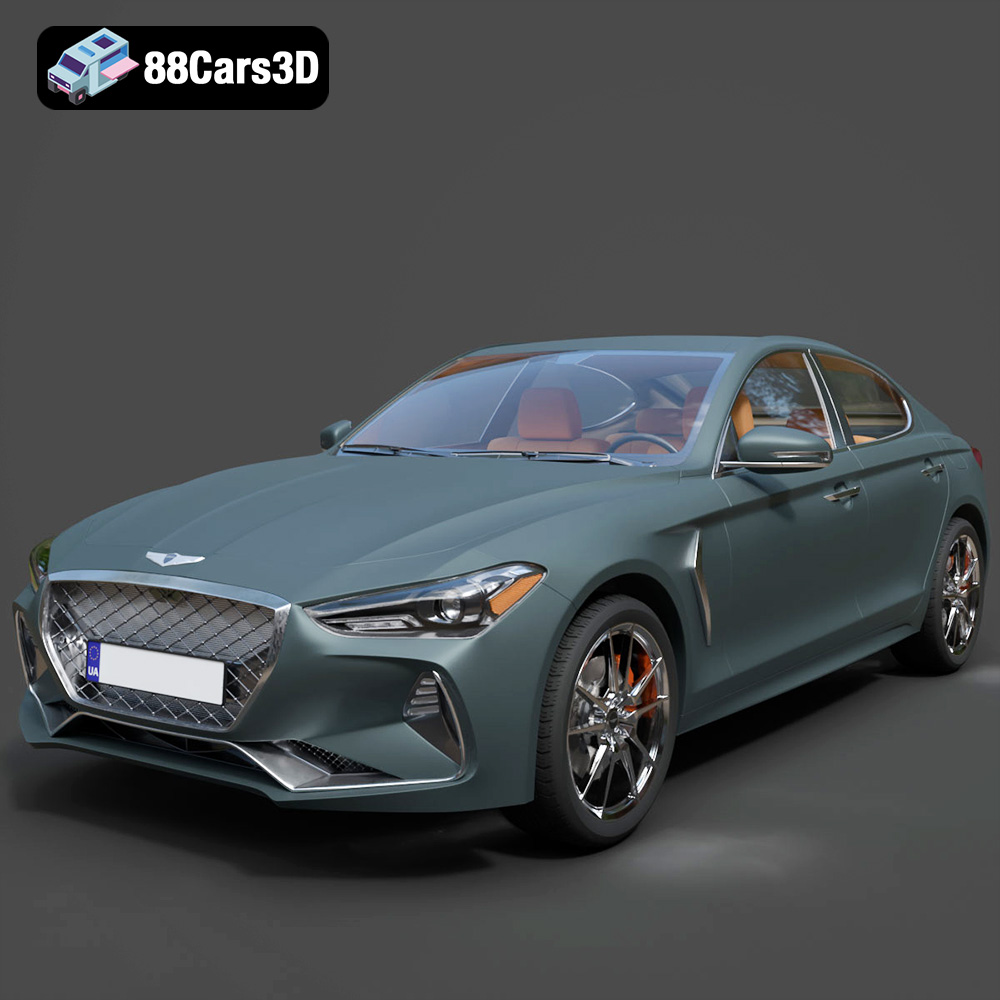
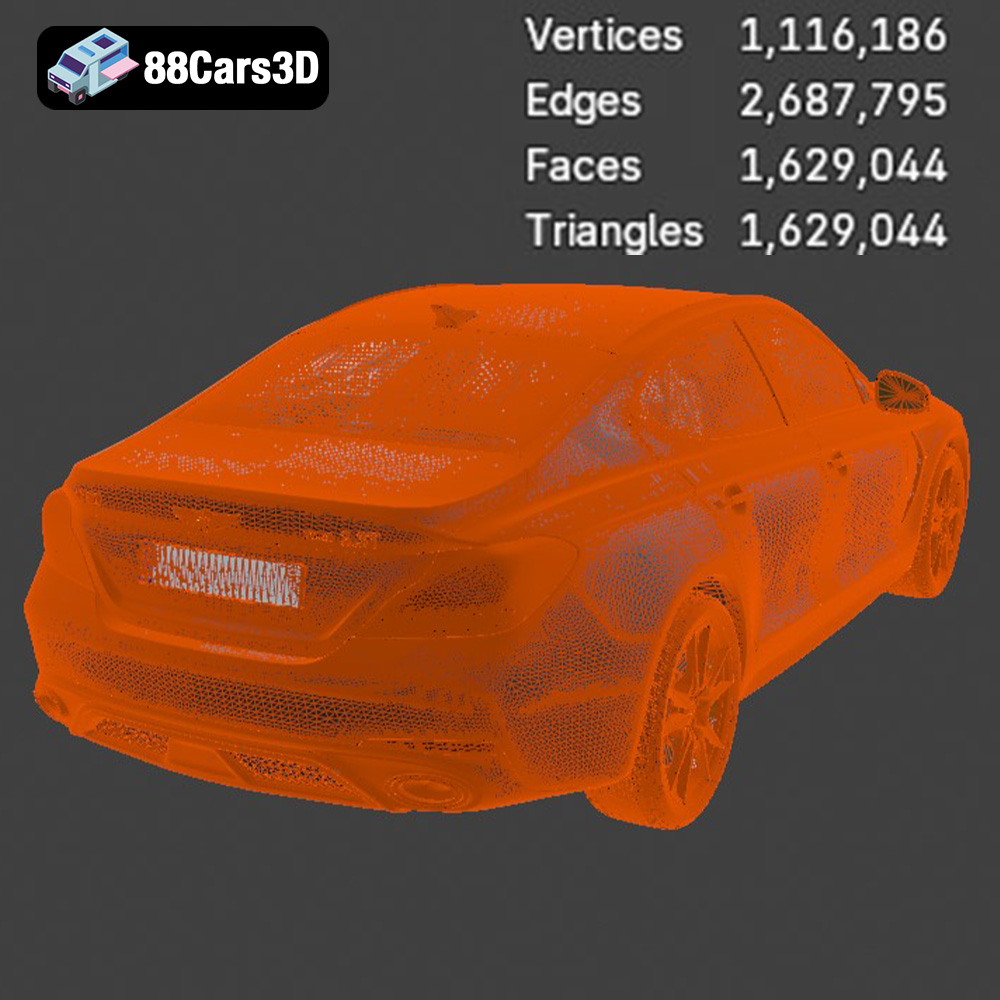
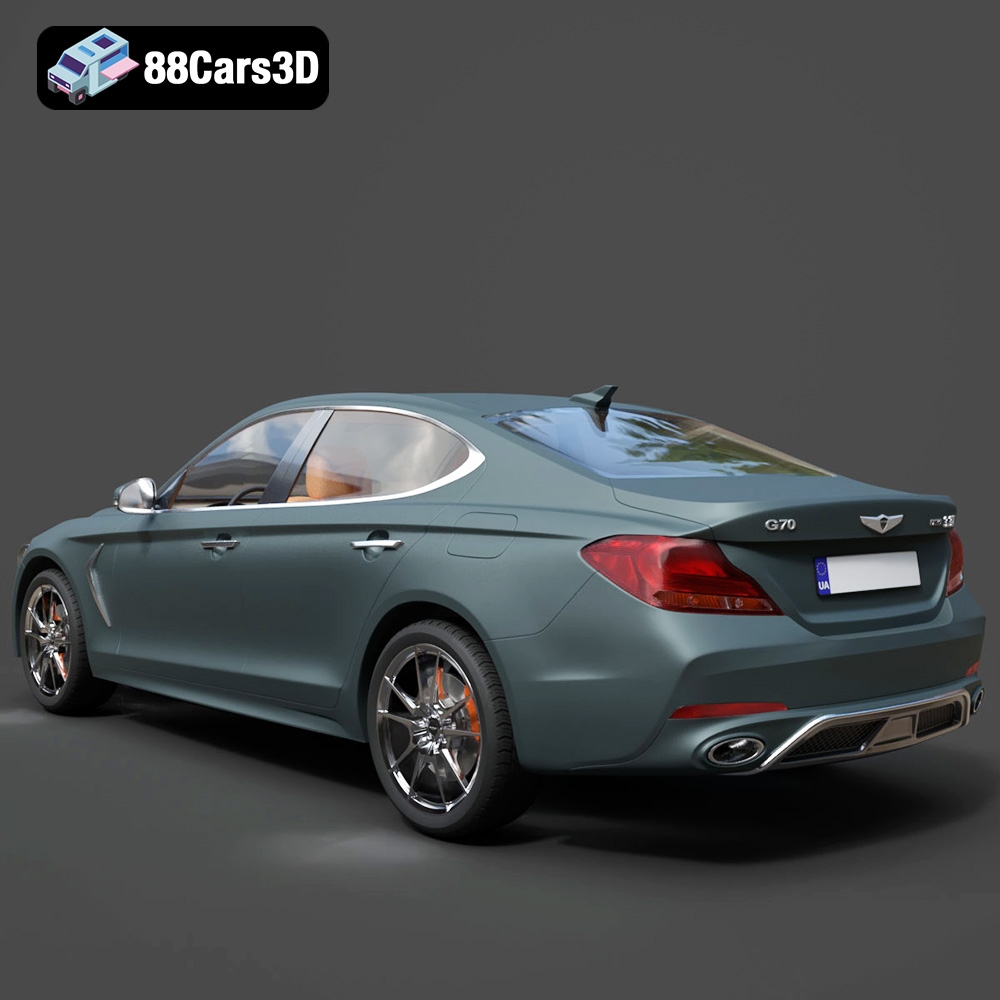
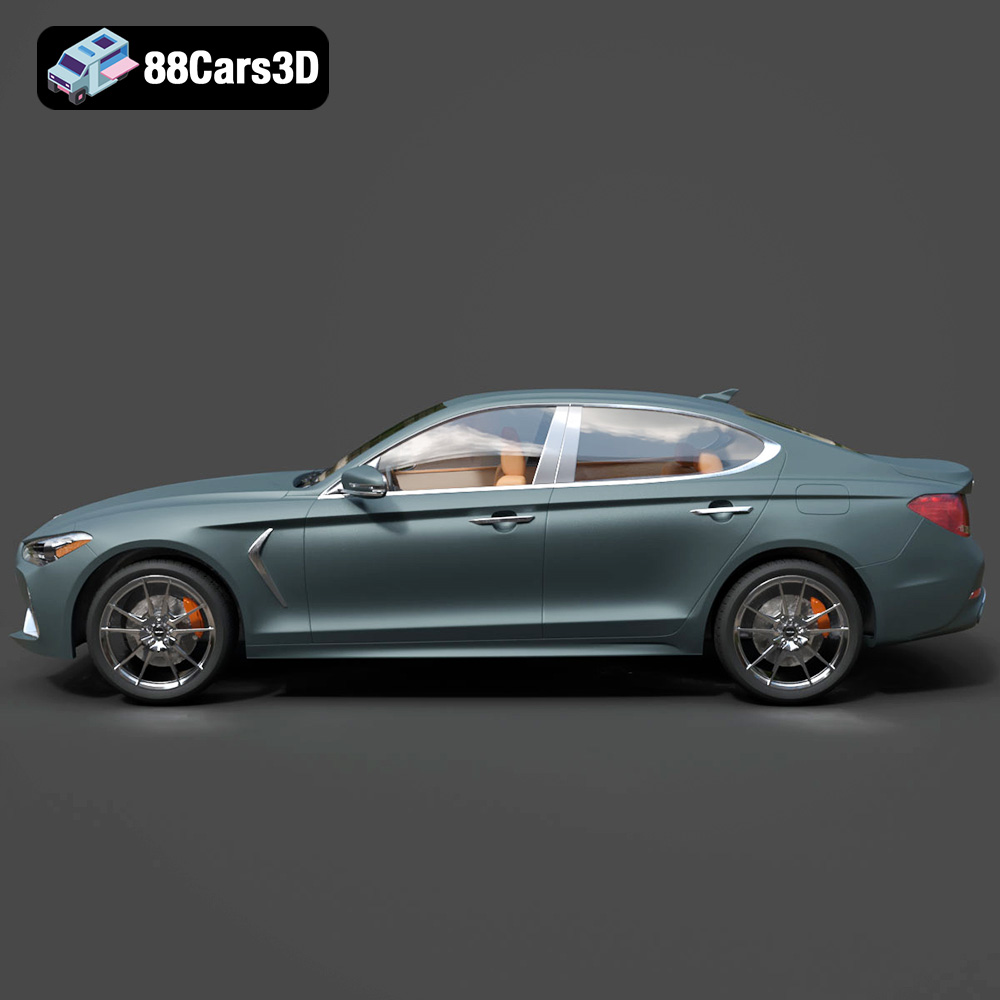
The most striking aspect of this 3D car model is its uncompromising detail, reflected in its polygon count. With over 1.6 million triangles (1,629,044 triangles to be exact, derived from 1,116,186 vertices and 1,629,044 faces/polygons), this is a truly high-poly asset. This dense, well-organized mesh structure is critical for several reasons: it eliminates faceting even in extreme close-up renders, allows for intricate surface reflections, and accurately captures the subtle curvatures and sharp lines of the G70’s athletic chassis geometry. Details like the signature Genesis Crest Grille, the sharp LED headlight and taillight assemblies with their intricate internal detailing, sporty front fender vents, and the sculpted hood are all rendered with exceptional precision. Every curve, every panel gap, and the exact proportions of the 2018 model are painstakingly recreated, ensuring real-world scale accuracy based on Genesis factory dimensions.
Interior Detail and Animation Readiness
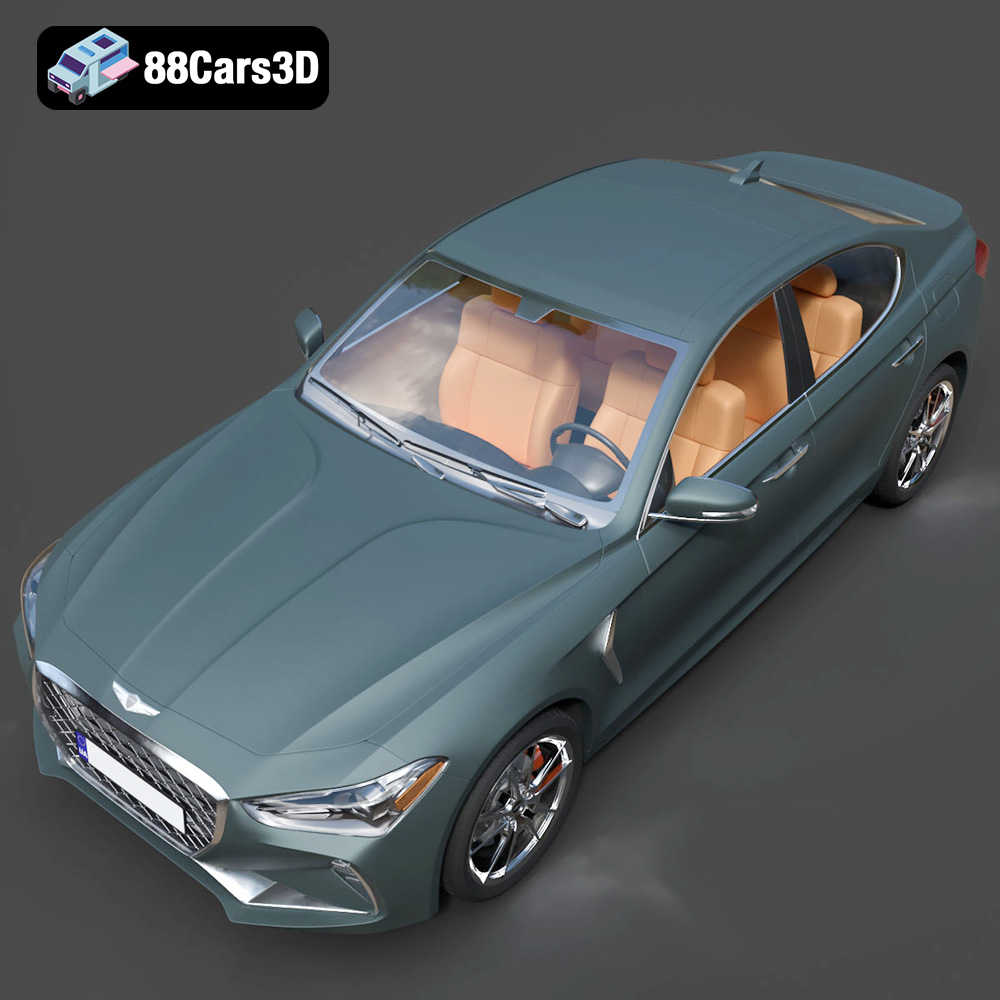
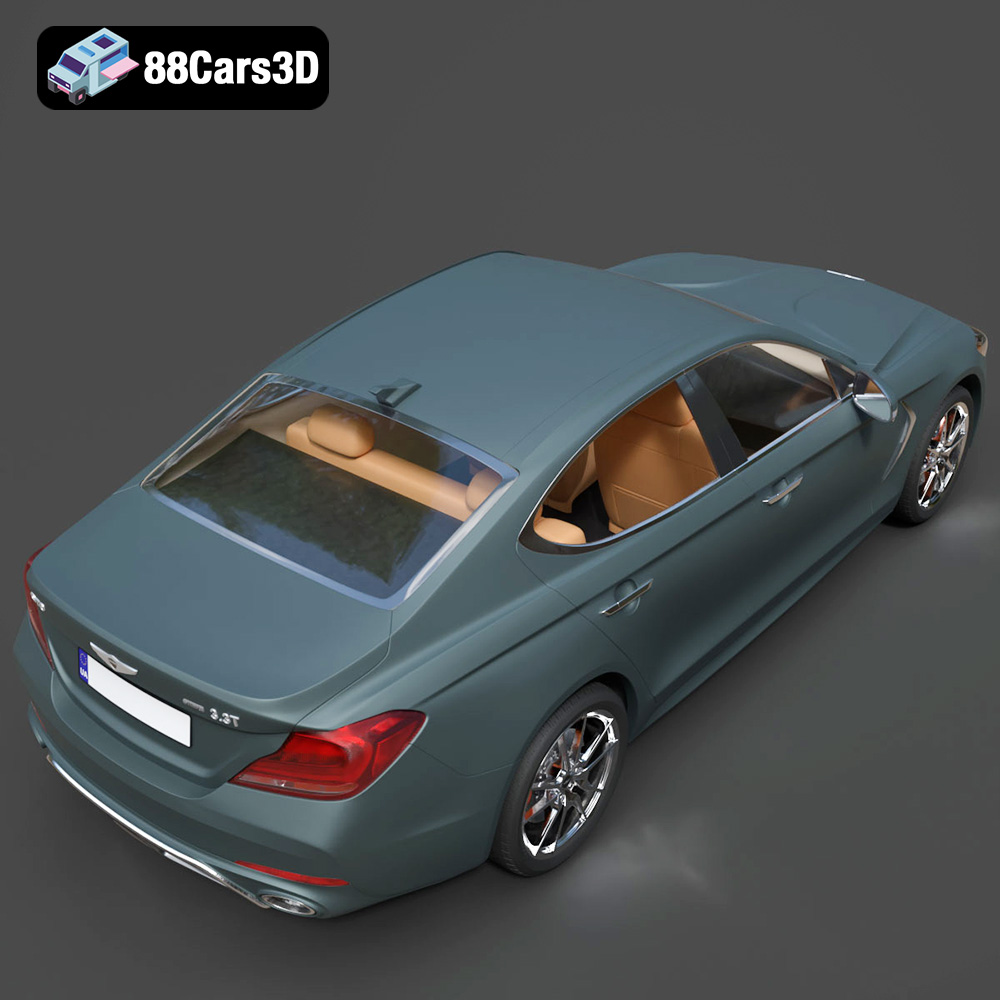
Beyond the impressive exterior, the Genesis G70 2018 3D Model extends its meticulous detail to the interior. It features an authentic, luxury driver-focused cabin layout, complete with a premium dashboard, a central infotainment screen, and a detailed center console. The intricate seating geometry, featuring classic luxury quilted/perforated leather textures, is specifically optimized for high-resolution interior close-up renders, making it suitable for virtual tours or commercial showcases that require a peek inside. Furthermore, a crucial technical advantage for animators and interactive designers is the inclusion of separate wheels, steering components, and doors, all with proper pivot setup for articulation. This means the model is production-ready for animations, allowing for realistic wheel rotations, steering maneuvers, and door openings without tedious manual setup or rigging.
Professional Workflows: Integrating Premium 3D Car Models
The versatility of the Genesis G70 2018 3D Model makes it a powerful asset across various professional 3D disciplines. Its high fidelity and diverse file formats ensure it integrates seamlessly into complex pipelines, empowering artists to focus on creativity rather than reconstruction.
High-End Rendering and Visualization with 3ds Max / Blender
For artists working in architectural visualization, automotive advertising, or cinematic production, premium 3D car models are non-negotiable. Using the .max or .blend format, designers can import the Genesis G70 2018 directly into 3ds Max or Blender, leveraging powerful rendering engines like V-Ray, Corona, Cycles, or Eevee. The model’s high-poly nature, combined with robust material definitions (often PBR-ready, even if not explicitly stated, it’s standard for such quality), allows for breathtaking photorealistic results. Imagine the G70 elegantly parked in front of a sprawling modern mansion in an arch-viz scene, or featured prominently in a luxury brand campaign, bathed in dramatic studio lighting. The accurate geometry means reflections behave correctly on the body panels, and subtle details like tire tread patterns or brake calipers contribute to the overall realism, giving designers the tools to create visuals that are indistinguishable from reality.
Game Development and Real-Time Applications (Unreal Engine / Unity)
While the product description accurately notes that at 1.62 million triangles, this Genesis G70 2018 model is a “heavy ‘hero’ asset” requiring manual retopology or decimation for efficient use as a drivable vehicle in real-time game engines like Unreal or Unity, its inclusion of .fbx and .unreal formats is still incredibly valuable. For game cinematics, interactive showrooms, or high-fidelity cutscenes, this model can shine as a central hero vehicle, where its polygon count is acceptable. For actual gameplay, a skilled technical artist can utilize the high-poly model as a baking source for normal maps and ambient occlusion, creating a lower-polygon game-ready mesh that retains the visual fidelity. This workflow is a common practice for AAA game development, where high-detail source assets are essential for generating optimized in-game versions. The pivot setup for wheels and doors also simplifies the animation and rigging process for game mechanics.
The Art of 3D Printing: From Digital to Tangible
The inclusion of the .stl format, alongside detailed 3D print settings, opens up an exciting avenue for this digital asset: physical production. Hobbyists, collectors, and automotive enthusiasts can transform the Genesis G70 2018 into a tangible, high-detail scale model. The recommended scales of 1:24, 1:18, or 1:12 allow for significant detail retention, especially when paired with recommended layer heights of 0.08–0.16 mm. Printing considerations like wall thickness (1.2–2.0 mm), infill (15–25%), and specific support requirements for elements like side mirrors, door handles, and bumper overhangs are clearly outlined, guiding users toward successful prints. Post-processing, involving sanding, primer, and applying standard factory paint colors like Siberian Ice, Mallorca Blue, or Havana Red, turns a raw print into a stunning miniature luxury sedan, a testament to the versatility of premium 3D assets from 88cars3d.com.
Customization and Adaptability: Unleashing Creative Potential
A truly professional 3D model offers more than just fidelity; it provides a canvas for boundless creativity. The Genesis G70 2018 3D Model is designed with customization in mind, allowing artists to tailor it precisely to their project’s unique narrative and aesthetic.
Aesthetic Modifications for Unique Scenes
The ability to easily modify the Genesis G70 2018 allows for seamless integration into diverse visual contexts. Artists can effortlessly change exterior paint colors to match classic Genesis factory options, perfectly suiting the mood of a scene – perhaps a sleek Siberian Ice for a wintery urban landscape or a vibrant Mallorca Blue for a sunny coastal drive. Beyond color, the model allows for modifications to wheel setups, enabling users to swap the high-end factory alloy wheels for aggressive aftermarket forged alloys, completely changing the vehicle’s character. Interior materials can also be adjusted, switching from standard black leather with red stitching to more elegant beige or ivory layouts, reflecting different luxury tiers or personal preferences. This level of aesthetic flexibility means the same core model can be endlessly repurposed, saving artists the immense effort of creating variations from scratch.
Lighting and Environmental Integration
Effective lighting is the soul of any compelling render. The Genesis G70 2018 3D Model is built to respond beautifully to various lighting scenarios, enabling dramatic studio reflections or vibrant, sunny outdoor exposures. Its detailed surfaces and accurate topology ensure that light interacts realistically, enhancing the metallic sheen of the paint, the gleam of chrome accents, and the intricate textures of the interior. By adapting lighting for dramatic reflections, or integrating the car into high dynamic range imagery (HDRIs) or custom scene lighting, artists can evoke specific moods and atmospheres. This adaptability allows the G70 to become a focal point in a high-contrast cinematic shot or a subtle, elegant addition to a bustling cityscape, underscoring its versatility as a premium automotive asset.
Why Choose Premium 3D Car Models from 88cars3d.com?
In a saturated market, the choice of a 3D asset supplier can make a significant difference in project quality and efficiency. Websites like 88cars3d.com specialize in providing the kind of meticulously crafted 3D car models that professionals demand, exemplified by the Genesis G70 2018 3D Model.
Time Savings and Production Efficiency
The most immediate and tangible benefit of investing in premium 3D car models is the substantial time savings. Modeling a vehicle like the Genesis G70 from scratch, with its complex curves, intricate interior, and detailed undercarriage, can take hundreds of hours for an experienced 3D artist. This translates directly into significant costs and extended project timelines. By purchasing a ready-to-use, meticulously crafted asset from 88cars3d.com, artists and studios can bypass the labor-intensive modeling phase entirely. This allows them to allocate their resources and focus directly on creative aspects such as scene composition, lighting, texturing, and animation, dramatically accelerating production workflows and delivering projects faster without compromising quality.
Uncompromised Quality and Detail
The difference between a generic, low-detail model and a professional-grade asset like the Genesis G70 2018 is immediately apparent. Premium models are built with an understanding of production requirements: clean topology, accurate scaling, proper pivot setups, and often optimized UVs and materials. This commitment to quality ensures that the model will hold up under intense scrutiny, from extreme close-up renders to interactive real-time experiences. 88cars3d.com prides itself on offering models that meet these high standards, providing assets that are not only visually stunning but also technically robust and easy to work with. This reliability and consistency across their library mean professionals can trust that they are acquiring tools that will perform as expected in their demanding production environments.
Conclusion
The Genesis G70 2018 3D Model stands as a prime example of a premium automotive asset, offering unparalleled detail, technical accuracy, and workflow versatility. From its dense topology ensuring photorealistic renders to its animation-ready components and adaptability for 3D printing, it addresses the diverse needs of modern 3D artists and developers. Whether your project demands high-fidelity automotive rendering, intricate game assets, or a precise physical scale model, this G70 model provides a robust and flexible solution.
By offering a comprehensive suite of file formats – .blend, .fbx, .obj, .glb, .stl, .ply, .unreal, and .max – this 3D model ensures seamless integration into virtually any professional pipeline, empowering creators to achieve their artistic and technical goals with efficiency. Investing in high-quality 3D car models from trusted sources like 88cars3d.com is not just about acquiring an asset; it’s about investing in a foundation that accelerates creativity, streamlines production, and elevates the final visual output to a professional standard. Dive into the world of premium automotive visualization and bring your digital dreams to life.
Featured 3D Model
Genesis G70 2018 3D Model 3D Printable STL
The Genesis G70 2018 3D Model is a premium, high-detail digital recreation of the acclaimed Korean luxury sports sedan. As the vehicle that firmly established Genesis as a serious competitor in the compact executive segment, the 2018 G70 combines an aggressive, athletic stance with refined elegance and world-class luxury design. This 3D model accurately represents the original pre-facelift styling, featuring the signature wide Crest Grille, sharp LED headlight assemblies with intricate detailing, sporty front fender vents, dynamic character lines, and a sleek, aerodynamic rear profile with dual exhausts. Built with dense, uncompromising topology (over 1.6 million triangles), it provides maximum visual fidelity for extreme close-up rendering, cinematic automotive visualization, commercial mockups, and high-end 3D printing. Perfect for upscale urban street scenes, luxury automotive galleries, high-end commercial pitches, and architectural visualizations needing modern, elegant traffic.
$59.00
Product Image Gallery


Related Tags
.automotive
.blend
.fbx
.g70
.genesis
.obj
.rendering
.stl
2018-g70
3d printing
car-3d-model
compact-executive
high poly
korean-auto
luxury car
sports-sedan
