

The Digital Roar: Crafting and Utilizing High-Fidelity 3D Motorcycle Models in Modern Production
In the fast-paced world of digital content creation, the demand for exceptionally detailed and production-ready 3D models continues to accelerate. From hyper-realistic automotive rendering that graces advertising campaigns to immersive open-world environments in the latest video games, the foundation of any compelling visual experience lies in the quality of its assets. Capturing the essence of iconic machinery, especially a legendary motorcycle like the Harley-Davidson FXDR 114, presents a unique set of challenges and opportunities for 3D artists and developers alike.
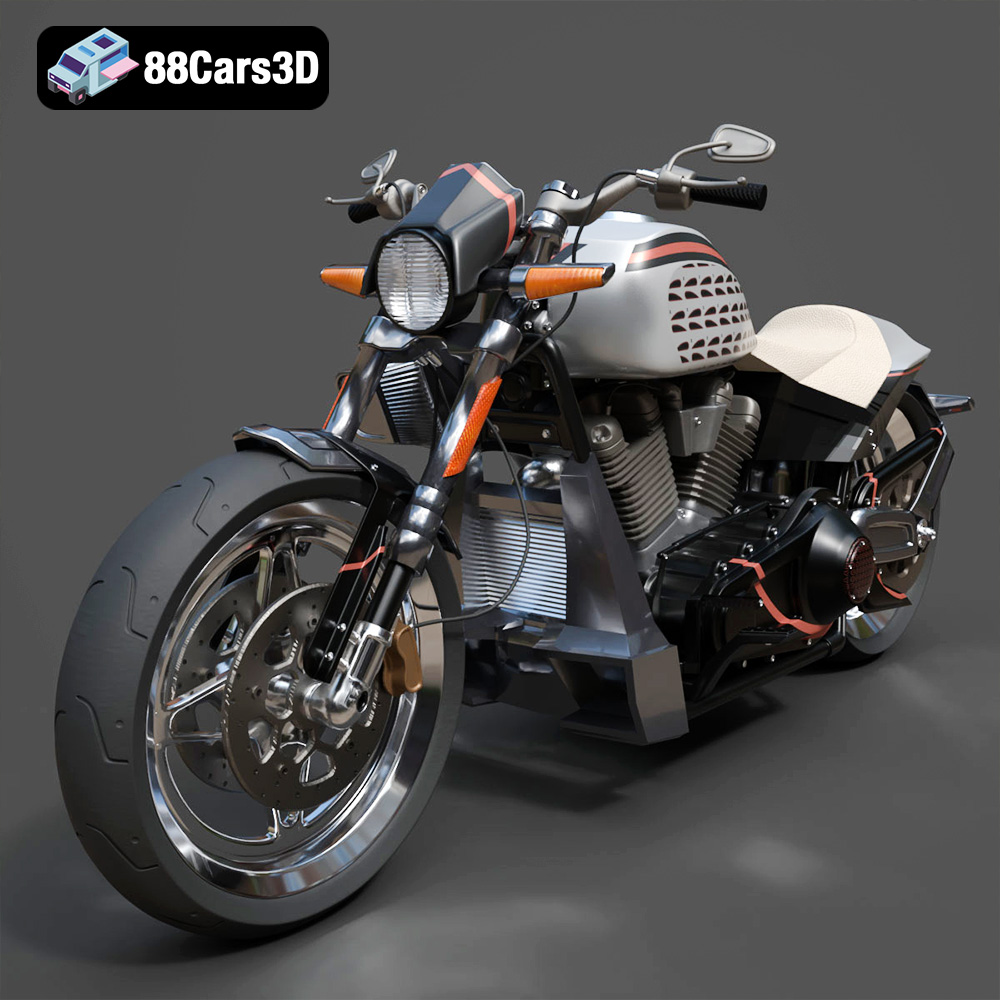
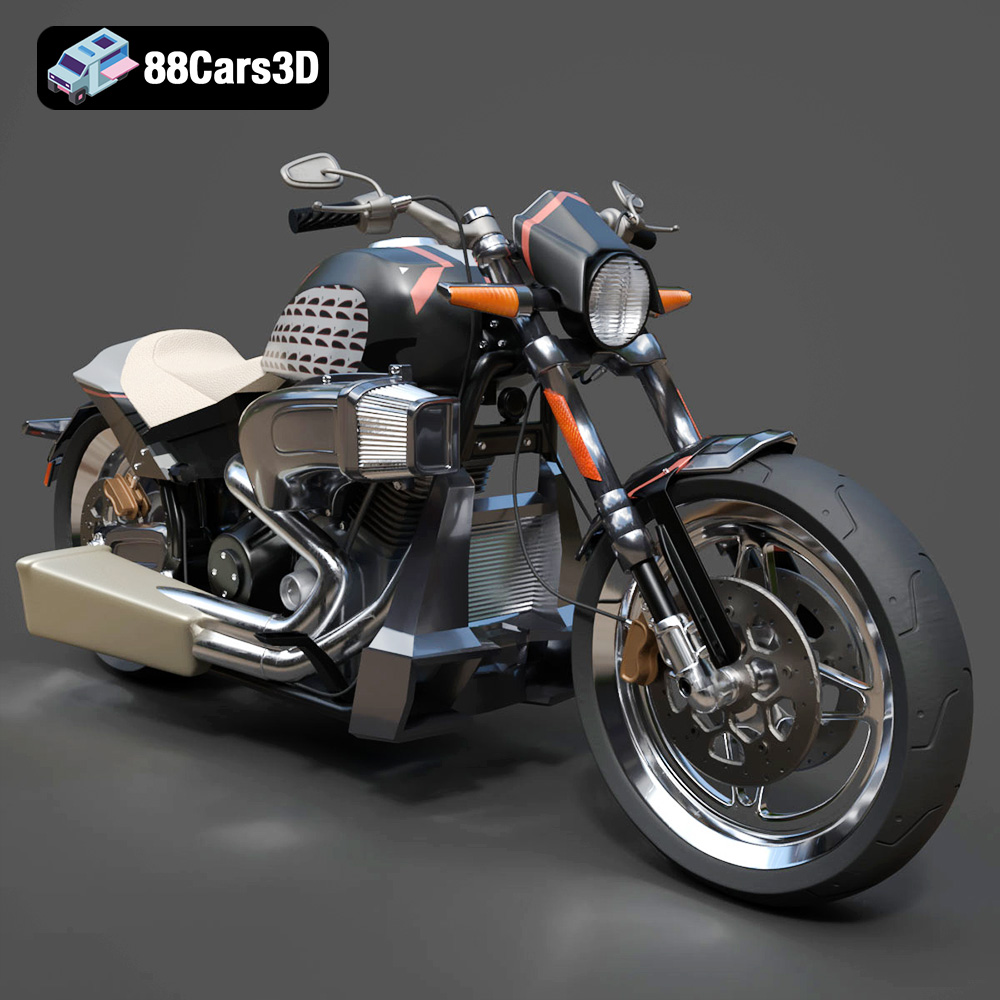
The Harley-Davidson FXDR 114 isn’t just a motorcycle; it’s a statement. Its aggressive, drag-inspired stance, the formidable Milwaukee-Eight 114 V-Twin engine, and the distinctive 240mm rear tire all combine to create a machine synonymous with raw power and unapologetic style. Translating this visceral experience into a high-fidelity 3D model requires meticulous attention to detail, a deep understanding of topology, and a pragmatic approach to file formats and optimization. This article delves into the technical intricacies involved in utilizing such a sophisticated 3D asset, showcasing how a model like the Harley-Davidson FXDR 114 3D Model from 88cars3d.com can become a cornerstone of various professional workflows, from cinematic rendering to game development and even intricate 3D printing projects.
The Art and Engineering of High-Fidelity 3D Vehicle Models
Creating a truly exceptional 3D vehicle model is a blend of artistic vision and engineering precision. It’s about more than just replicating shapes; it’s about capturing the spirit and functional design of the original object, ensuring it performs flawlessly across diverse digital platforms.
Capturing Automotive Essence in Digital Form
The first hurdle in any high-fidelity automotive modeling project is accurately translating real-world aesthetics into the digital realm. For the Harley-Davidson FXDR 114, this means meticulously recreating its distinctive drag-bike proportions, the robust Softail chassis geometry, and every intricate component of the Milwaukee-Eight 114 V-Twin engine. From the forward-reaching air intake to the signature 2-into-1 tuned exhaust system, each element contributes to the bike’s iconic silhouette and aggressive attitude. Artists must scrutinize reference images, technical drawings, and even physical models to ensure dimensional accuracy and faithful representation of surface details. This foundational attention to realism is what elevates a good model to an outstanding one, allowing it to hold up under extreme close-up renders and detailed lighting scenarios.
Balancing Detail and Performance: The Topology Challenge
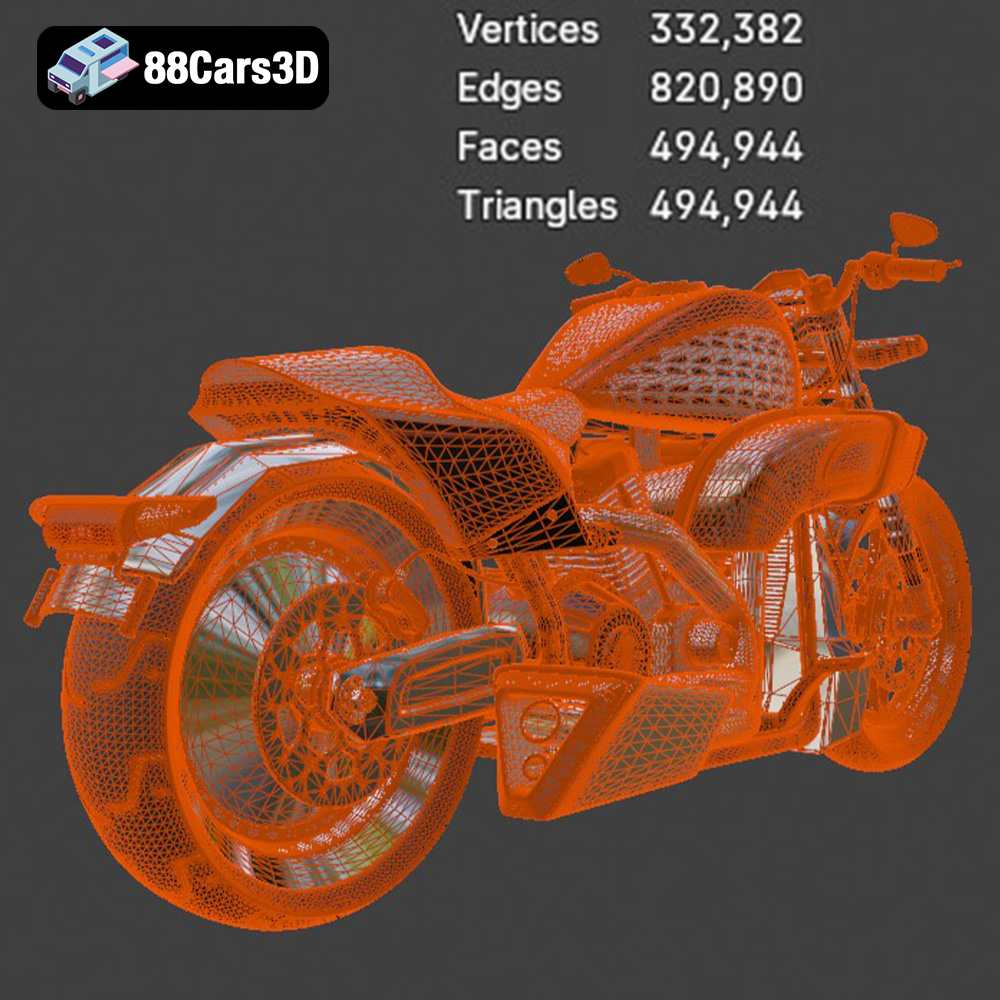
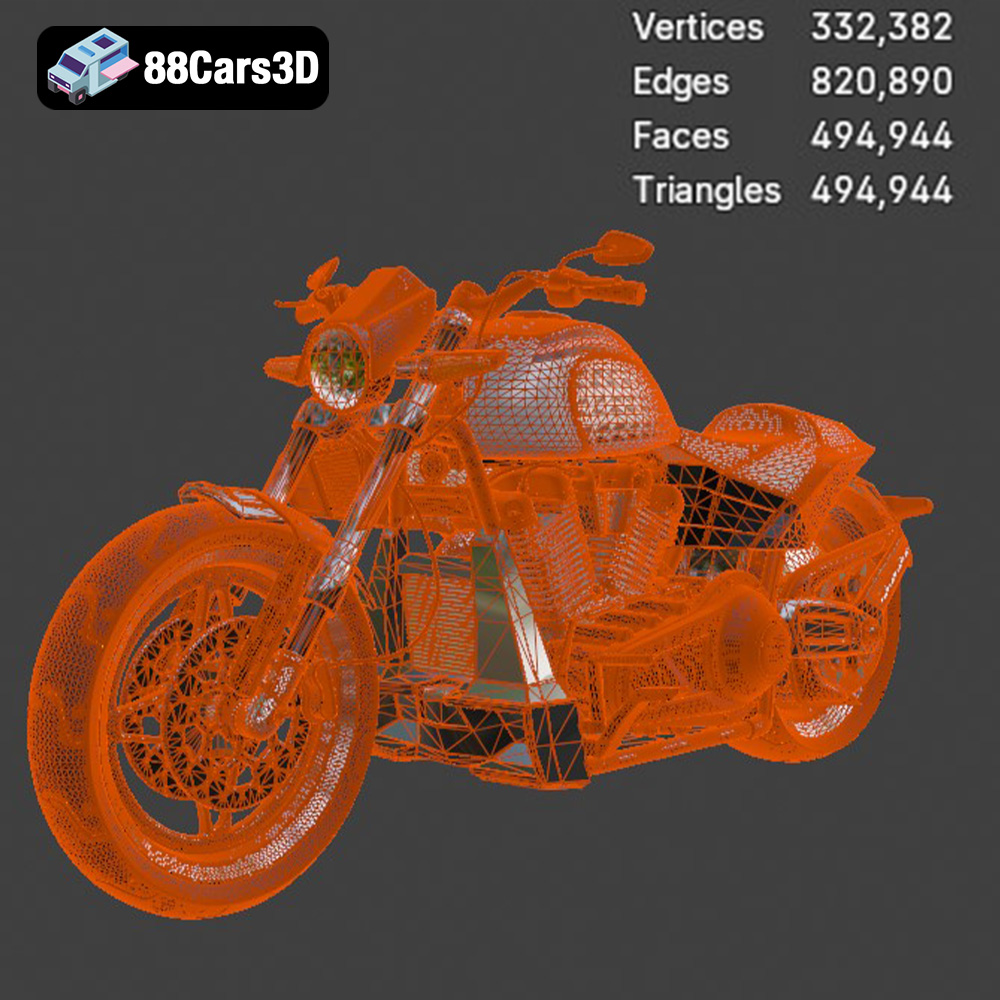
Once the form is established, the technical challenge shifts to optimizing the model’s topology. A common misconception is that “more polygons” always equals “better quality.” In reality, a truly professional 3D model achieves a perfect balance between visual fidelity and performance efficiency. The Harley-Davidson FXDR 114 3D Model exemplifies this principle with a mid-to-high polygon count of just under 500k triangles (494,944 to be precise). This vertex and face count (332,382 vertices, 494,944 faces) is strategically chosen to provide:
- Premium Visual Fidelity: Enough density to showcase extreme close-up details like the cooling fins on the V-Twin engine, the intricate spokes of the cast aluminum wheels, and the fine curves of the LED Daymaker headlamp surround without appearing faceted.
- Manageable Performance: Despite its detail, the model remains optimized for modern current-gen game engines. This means it can function as a “hero” asset in real-time environments without excessively burdening rendering pipelines, allowing for smoother frame rates and richer interactive experiences. The proper pivot setup for steering, wheel rotation, and kickstand articulation further enhances its utility for animation and dynamic simulations.
Achieving this balance involves careful edge loop placement, clean quad-based geometry where possible, and efficient triangulation, ensuring the mesh deforms predictably and renders cleanly with various shading techniques. It’s a testament to expert craftsmanship that a model can appear photorealistic while still being robust enough for interactive applications.
Understanding 3D Model File Formats
The versatility of a 3D model is often determined by the range and quality of its included file formats. Each format serves specific purposes, catering to different software ecosystems, project requirements, and delivery platforms. Understanding their nuances is crucial for any professional working with 3D assets. The Harley-Davidson FXDR 114 3D Model from 88cars3d.com includes a comprehensive suite of formats, ensuring maximum compatibility and utility.
Blender’s Native Powerhouse: .blend
The .blend format is Blender’s native file type, offering a complete and editable scene with materials, textures, lighting, cameras, and animation data all encapsulated within a single file. For artists working primarily in Blender, this is the most convenient and powerful format. It allows for direct manipulation of the mesh, modifications to the shader networks, and easy adaptation of the scene for new renders or integrations. When you download the FXDR 114 3D Model in .blend format, you gain access to the full project file, enabling deep customization, from adjusting the motorcycle’s paint shader to re-posing it for a specific cinematic shot, or even extracting individual components for other projects.
Universal Interoperability: .fbx and .obj
.fbx (Filmbox) is an Autodesk-developed format that has become an industry standard for interoperability, particularly between different 3D software packages and game engines. It supports not only geometry but also materials, textures, animation, rigging, and camera data. This makes the .fbx version of the FXDR 114 ideal for exporting into Unreal Engine, Unity, 3ds Max, Maya, or Cinema 4D, ensuring that all crucial asset information is retained. Its robust support for skeletal animations and blend shapes is critical for real-time pipelines, making it the go-to choice for game developers.
.obj (Wavefront OBJ) is another widely recognized and highly compatible format, often considered the “universal” choice for static 3D geometry. While it supports geometry and UV coordinates, its material support is limited (usually handled by an accompanying .mtl file), and it does not store animation or rigging data. Despite these limitations, .obj is incredibly stable and supported by virtually every 3D application on the market. For scenarios where you primarily need the mesh data of the FXDR 114 for static renders, CAD integration, or as a base for further modeling in a non-FBX-centric application, the .obj format is an excellent, reliable choice.
Real-Time and Web-Optimized: .glb and .unreal
.glb (GL Transmission Format Binary) is gaining significant traction, especially for web-based 3D applications, AR (Augmented Reality), and VR (Virtual Reality) experiences. It’s a binary format that bundles models, textures, and animations into a single, compact file, making it highly efficient for streaming and display in browsers or mobile AR/VR viewers. The .glb version of the Harley-Davidson FXDR 114 3D Model is optimized for quick loading and efficient rendering in these interactive, real-time contexts, perfect for virtual showrooms or immersive product configurators.
The .unreal format, or more accurately, assets packaged directly for Unreal Engine, represents engine-ready assets specifically tailored for real-time environments within Epic Games’ powerful platform. This means the model would typically come pre-configured with materials, collision meshes, LODs (Levels of Detail), and potentially even basic blueprints for immediate integration into an Unreal project. For developers looking to drop the FXDR 114 directly into their game or visualization scene without extensive setup, this format offers a significant workflow advantage, ensuring optimal performance and visual quality within Unreal Engine’s rendering pipeline.
Precision for Fabrication: .stl and .ply
.stl (Stereolithography) is the de-facto standard for 3D printing. It represents a 3D model as a series of connected triangles, describing only the surface geometry of an object without color, texture, or material information. The FXDR 114 3D Model, being convertible to .stl, opens up avenues for physical creation. Hobbyists and professionals can print display-scale models of this iconic motorcycle, adhering to specific print settings like those recommended: 1:12 scale, 0.04–0.08 mm layer height (resin printing for intricate details), and careful support placement for complex overhangs like the air intake and handlebars.
.ply (Polygon File Format or Stanford Triangle Format) is a less common but highly robust format for storing 3D data, particularly useful in scientific, CAD, and scanning applications. It can store not only vertex coordinates but also color, transparency, surface normals, and other attributes for each polygon. While not as universally used for general 3D model exchange as .fbx or .obj, the .ply format offers precision mesh data that can be valuable for complex analysis or for converting the FXDR 114 model into different CAD/CAM environments.
3ds Max: The Industry Workhorse: .max
Finally, the .max format is Autodesk 3ds Max’s native project file. Similar to .blend for Blender, it contains the entire scene data, including geometry, modifiers, materials, textures, lighting, cameras, and animation. For professionals whose pipelines are centered around 3ds Max, having the FXDR 114 3D Model in .max format provides the highest level of editability and direct integration. It allows for advanced rendering setups with V-Ray or Corona, complex animation sequences, and seamless adaptation into existing 3ds Max projects, making it a critical format for high-end automotive rendering and visualization studios.
Mastering Automotive Rendering with the FXDR 114
The allure of automotive rendering lies in its ability to present vehicles in their most idealized form, whether for marketing, conceptual design, or artistic expression. The Harley-Davidson FXDR 114 3D Model, with its high detail and accurate geometry, is a prime candidate for breathtaking visual projects.
Studio Lighting and Material Setup in 3ds Max/Blender
Achieving photorealistic renders begins with a solid understanding of Physically Based Rendering (PBR) principles and meticulous material setup. In 3ds Max (with renderers like V-Ray or Corona) or Blender (with Cycles or Eevee), artists would approach the FXDR 114 by:
- Material Creation: Developing PBR materials for each component. The bike’s iconic Vivid Black or Industrial Gray Denim tank would require carefully balanced diffuse, roughness, and metallic maps to simulate real-world paint finishes, complete with subtle orange peel textures and clear coat reflections. Engine components, exhausts, and chrome accents demand specialized metallic shaders with appropriate anisotropic reflections and subtle grunge maps to convey wear.
- Texture Application: Leveraging UV unwrapping to accurately apply textures, ensuring no stretching or distortion. While the product description implies textures are included (“Texture: Yes”), understanding how to enhance or create custom textures for baked normal maps can further push the visual fidelity, simulating even higher-poly engine casing details without adding geometric complexity.
- Lighting Scenarios: Employing traditional studio lighting techniques – often using a three-point lighting setup or High Dynamic Range Image (HDRI) environments for realistic reflections and ambient light. For a “gritty urban street-racing scene,” dynamic streetlights, neon signs, and subtle volumetric fog could enhance the atmosphere, highlighting the bike’s aggressive stance.
The ability to adjust fuel tank and tail cowl colors (e.g., Vivid Black, Rawhide Denim, Black Denim) directly within the rendering software adds immense value for client presentations and diverse campaign needs.
Creating Dynamic Scenes for Lifestyle Campaigns
Beyond static renders, the Harley-Davidson FXDR 114 3D Model excels in dynamic, narrative-driven visualizations. Imagine a cinematic sequence where the FXDR 114 tears through rain-slicked city streets, its LED Daymaker headlight cutting through the gloom. Such scenes require:
- Environmental Storytelling: Crafting rich environments that complement the bike’s personality. This could involve highly detailed street assets, atmospheric effects (rain, smoke, dust), and dynamic camera movements.
- Animation Integration: Leveraging the model’s separate wheels, steering components, and suspension, animators can bring the bike to life. Wheel rotation, suspension compression over bumps, and nuanced steering movements add crucial realism to any animated sequence. The proper pivot setup simplifies this rigging process significantly.
- Post-Production: Enhancing raw renders with color grading, depth of field, motion blur, and lens flares to achieve a polished, high-impact final image or video suitable for high-end lifestyle brand campaigns or promotional content.
The model’s robust construction and optimized topology ensure it performs admirably, even under the heavy demands of complex rendering pipelines.
Integrating the FXDR 114 as a Game Asset
The gaming industry constantly pushes the boundaries of visual realism, and high-quality 3D car models and motorcycle models are paramount to creating believable worlds. The Harley-Davidson FXDR 114 3D Model is specifically designed with game development in mind, striking a balance between visual fidelity and real-time performance.
Optimizing for Current-Gen Game Engines
As a “hero” drivable vehicle, the FXDR 114 3D Model is ideally suited for current-gen console and PC games developed with engines like Unreal Engine 5 or Unity HDRP. Its just under 500k triangle count is perfect for a primary player vehicle, allowing for rich detail that holds up during close-ups and in-game cinematics, while still being manageable for rendering. Key optimization steps for game integration include:
- LODs (Levels of Detail): While the primary model is optimized, implementing additional LODs (lower polygon versions) is crucial for objects viewed from a distance. The game engine can then swap between these models based on camera proximity, significantly reducing render load without a noticeable drop in quality for the player.
- Collision Meshes: Creating simplified collision meshes (often using convex hulls or basic primitives) ensures accurate physics interactions without adding unnecessary poly complexity to the physics simulation.
- Material & Texture Optimization: Converting PBR materials to engine-specific shader graphs and optimizing texture maps (e.g., packing multiple grayscale maps into a single RGBA texture) improves memory efficiency and draw calls. The “Texture: Yes” and “Material: Yes” specified in the product description indicate a solid foundation for this process.
- Rigging and Animation: The model’s separate components (wheels, steering, suspension) are essential for setting up a robust vehicle rig in the game engine. This allows for realistic physics simulations, wheel rotation, steering input, and suspension compression, providing an immersive driving experience.
For modern open-world video games, having a diverse library of high-quality motorcycle 3D models and 3D car models, like those found on 88cars3d.com, is invaluable for populating environments and providing engaging player vehicles.
Immersive First-Person Experience
The “Cockpit & Rider Interface Features” of the FXDR 114 3D Model are specifically designed to enhance first-person player experiences in gaming or VR. The deep, drag-style solo saddle geometry, forward-reaching aluminum clip-on style handlebars, and minimalist digital riser gauge cluster are all meticulously modeled. This attention to interior detail is critical for:
- Player Immersion: When a player is “on” the bike, seeing accurately rendered controls and a detailed cockpit makes the experience far more believable and engaging.
- VR Fidelity: In virtual reality, where players can scrutinize details up close, high-fidelity interior geometry is non-negotiable. The optimized geometry ensures a smooth VR experience without compromising visual quality.
- Interactive Elements: These detailed components can be easily wired up for interactive elements, such as working gauges, handlebar controls, and functional mirrors, further enhancing gameplay.
The model’s real-world scale accuracy further contributes to a sense of realism, making it feel “right” within the game world.
Beyond the Screen: AR/VR and 3D Printing Applications
The utility of a high-quality 3D model extends far beyond traditional rendering and gaming. Advanced applications like Augmented Reality (AR), Virtual Reality (VR), and 3D printing are increasingly becoming crucial avenues for digital assets, and the Harley-Davidson FXDR 114 3D Model is perfectly positioned for these emerging technologies.
Interactive Showrooms and Virtual Experiences
AR/VR offers transformative potential for showcasing vehicles. Imagine a virtual motorcycle showroom where prospective buyers can walk around a full-scale Harley-Davidson FXDR 114, inspect its details up close, and even customize its colors in real-time. The .glb format, optimized for AR/VR, makes this a seamless reality. The FXDR 114 3D Model is perfect for:
- High-End Virtual Showrooms: Allowing customers to explore the bike’s features in an immersive, interactive 3D space, either through VR headsets or via AR on their smartphones.
- Interactive Part Configurators: Users could swap out the massive 2-into-1 exhaust for custom aftermarket pipes, change the fuel tank and tail cowl colors, or view different wheel options – all in real-time within an AR or VR environment. This enhances engagement and facilitates purchase decisions.
- Training and Simulation: For mechanics or enthusiasts, a high-detail 3D model in VR could provide an invaluable tool for understanding the bike’s mechanics, engine components, and assembly processes in a risk-free virtual setting.
The model’s balanced topology ensures these experiences are not only visually rich but also performant on a variety of AR/VR hardware.
Bringing Digital to Life: The Power of 3D Printing
One of the most exciting applications for a highly detailed 3D model is its conversion into a physical object via 3D printing. The Harley-Davidson FXDR 114 3D Model is “3D Printable,” specifically recommending conversion to .stl format for hobbyists and collectors. This transforms the digital asset into a tangible collectible.
- Recommended Scales and Layer Height: For optimal detail, scales of 1:12, 1:10, or 1:8 are recommended. Crucially, a fine layer height of 0.04–0.08 mm is suggested, particularly with resin printing, to faithfully capture intricate details like the engine cooling fins and delicate wheel spokes. FDM printing, while possible, might struggle with these finer elements without careful calibration.
- Structural Considerations: Recommendations for wall thickness (1.2–2.0 mm) and infill (20–30%) ensure the printed model has sufficient strength. Printing orientation is also key; printing the frame angled for structural integrity and printing wheels and exhaust separately allows for cleaner results and easier assembly.
- Support Structures: Complex geometries, such as the forward air intake, handlebars, exhaust pipes, and kickstand, necessitate support structures during printing to prevent warping or collapse. Thoughtful support placement minimizes post-processing work.
- Post-Processing for Realism: Once printed, the physical model can be brought to life with sanding, primer, and paint. Applying classic Harley colors like Vivid Black or Industrial Gray Denim for the tank, along with bronze or matte metallic finishes for the engine and exhaust accents, transforms a raw print into a stunning scale replica. This process allows for immense personalization, making each printed model unique.
This capability adds another dimension to the value of the Harley-Davidson FXDR 114 3D Model, appealing to a broad audience of digital artists and physical model enthusiasts alike.
Customization and Future-Proofing Your 3D Assets
In a dynamic industry, the ability to customize and adapt 3D assets is paramount. A truly professional model offers flexibility, allowing artists and developers to tailor it to specific project needs and ensure its longevity within evolving pipelines.
Unleashing Creative Freedom
The Harley-Davidson FXDR 114 3D Model is built with customization in mind, providing multiple avenues for creative expression:
- Color Customization: Easily changing the fuel tank and tail cowl colors (e.g., Vivid Black, Rawhide Denim, Black Denim) is fundamental for brand consistency or creating unique vehicle variants within a game.
- Aftermarket Modifications: The possibility to swap the massive 2-into-1 exhaust for custom aftermarket pipes allows for extensive personalization. This is invaluable for game mods, creating unique character vehicles, or simply exploring design variations for visualization.
- Lighting and Environment Adaptation: The model’s robust material setup means it can be adapted to vastly different lighting conditions. Whether it’s rendered under moody, neon-lit cyberpunk streets, or in bright, sun-drenched canyon carving runs, the materials will react realistically, enhancing the overall atmosphere of the scene.
This level of creative freedom ensures that the asset remains fresh and relevant across multiple projects and aesthetic requirements.
Scalability and Asset Pipeline Longevity
Investing in a high-quality 3D asset like the Harley-Davidson FXDR 114 3D Model from 88cars3d.com is an investment in a future-proof component for your asset library. Its technical specifications and included file formats ensure it can be adapted for new technologies and workflows:
- Texture Baking: The ability to add custom baked normal maps allows artists to simulate even higher-poly engine casing details without increasing the actual polygon count. This is a crucial technique for optimizing performance while maintaining visual fidelity, especially for mobile AR/VR or less powerful game platforms.
- LOD Generation: While the model is already optimized, procedural or manual generation of additional LODs ensures its scalability for projects with tighter performance budgets or for displaying many instances of the bike simultaneously.
- Compatibility: Its compatibility with major 3D software platforms and modern real-time engines (Unreal Engine 5, Unity HDRP) guarantees that it will integrate smoothly into existing pipelines and remain usable as software evolves.
A well-constructed 3D asset provides a flexible foundation that can be updated, modified, and re-purposed for years to come, making it a valuable addition to any professional’s toolkit.
Conclusion
The creation and utilization of high-fidelity 3D models are central to modern digital production across various industries. The Harley-Davidson FXDR 114 3D Model stands as a prime example of an expertly crafted asset, offering an unparalleled blend of visual detail and technical optimization. From its meticulously recreated drag-bike aesthetics and powerful Milwaukee-Eight engine to its perfectly balanced topology of just under 500k triangles, this model is engineered for peak performance in diverse applications.
Whether you are an automotive renderer seeking photorealistic results for lifestyle campaigns, a game developer in need of a compelling “hero” vehicle for current-gen titles, or a hobbyist eager to bring a digital design to life through 3D printing, the versatility of this model is undeniable. Its extensive range of included file formats – .blend, .fbx, .obj, .glb, .stl, .ply, .unreal, and .max – ensures seamless integration into virtually any professional workflow. With robust customization options and a design philosophy that prioritizes both beauty and efficiency, this Harley-Davidson FXDR 114 3D Model is more than just a digital object; it’s a powerful tool ready to accelerate your creative projects. Explore this exceptional asset and many other high-quality 3D car models and game assets at 88cars3d.com, where excellence meets accessibility.
Featured 3D Model
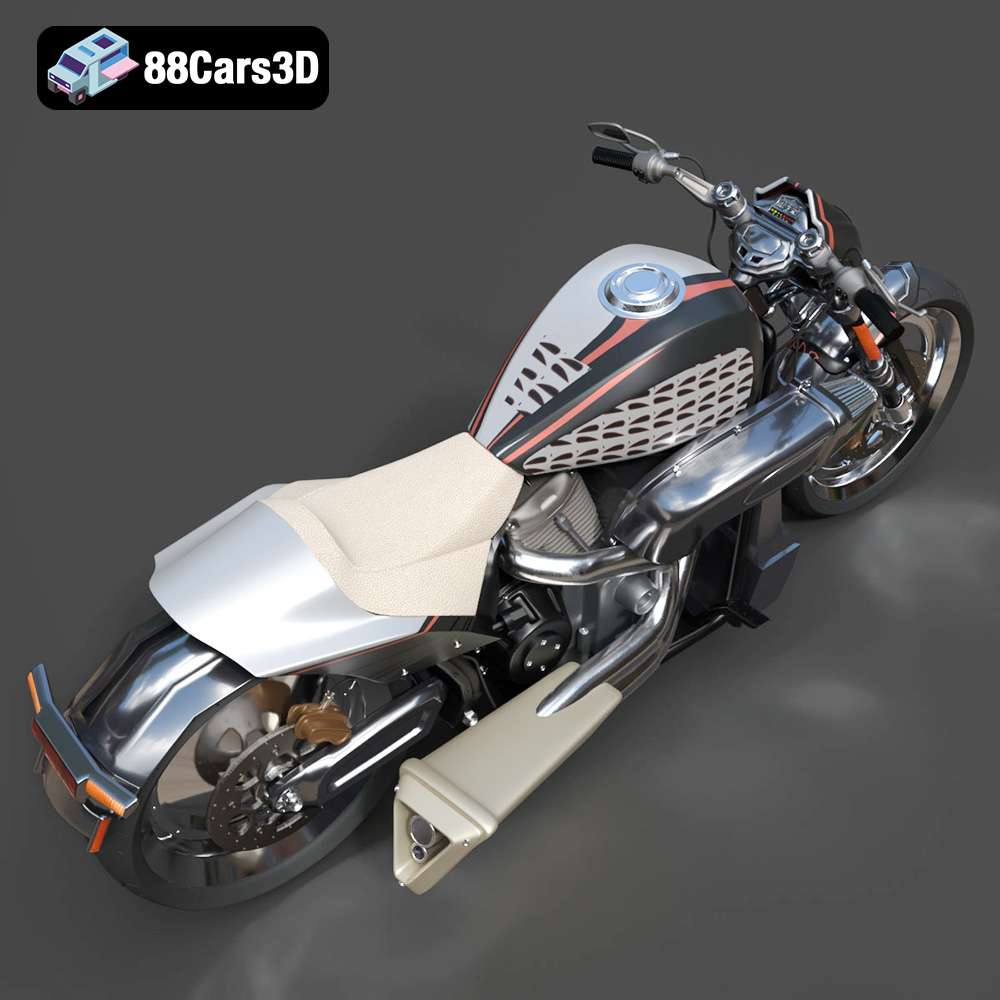
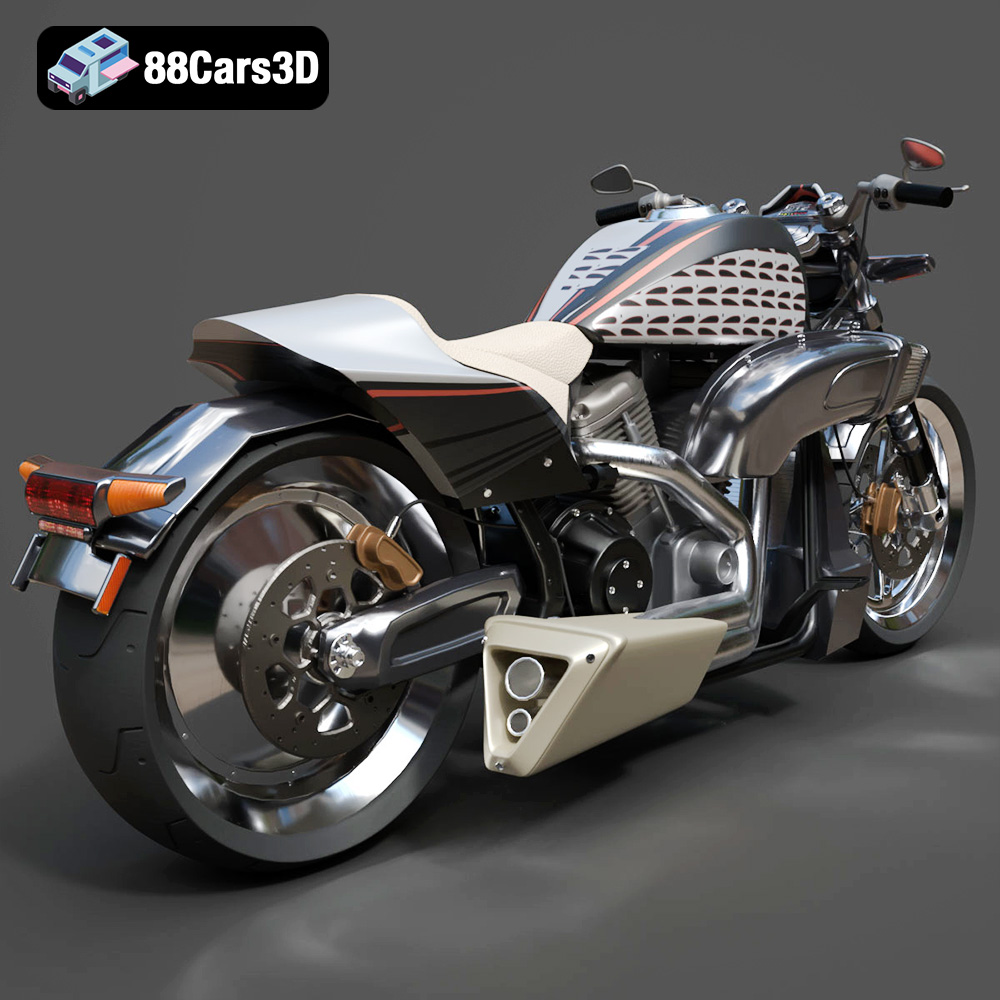
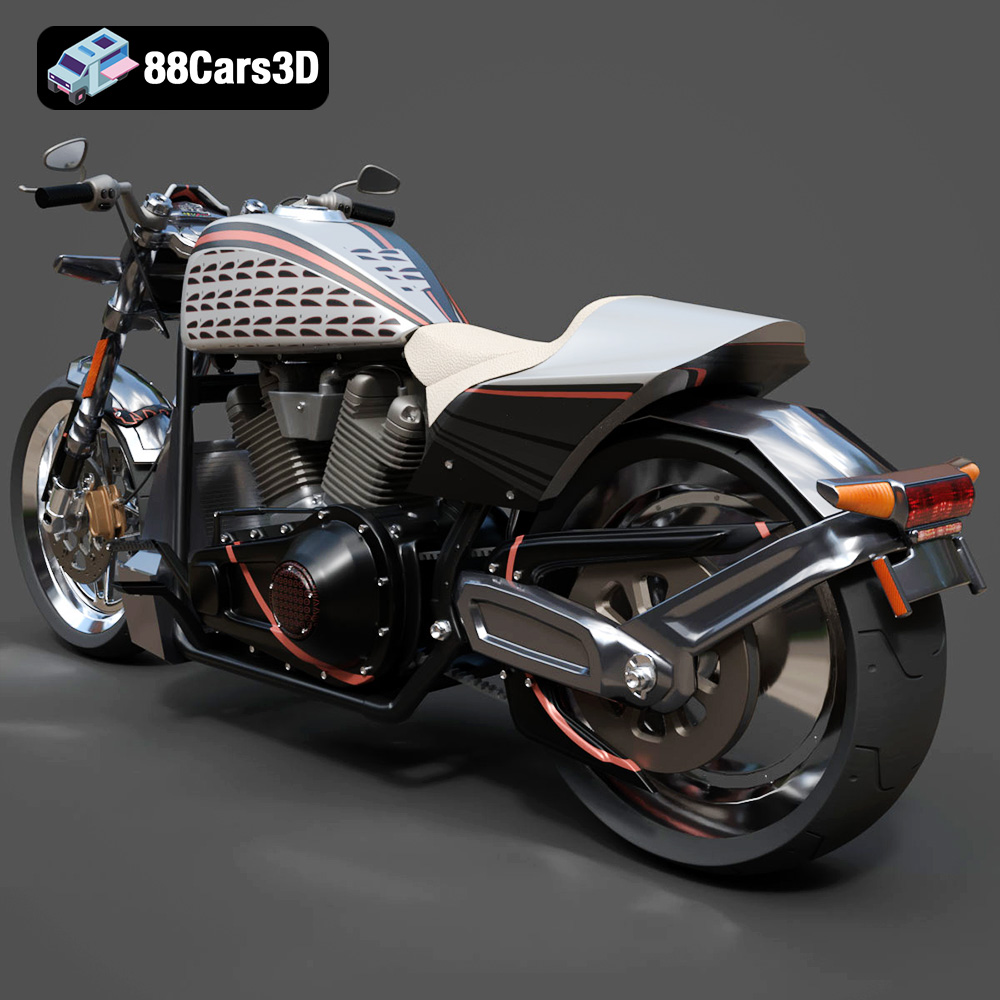
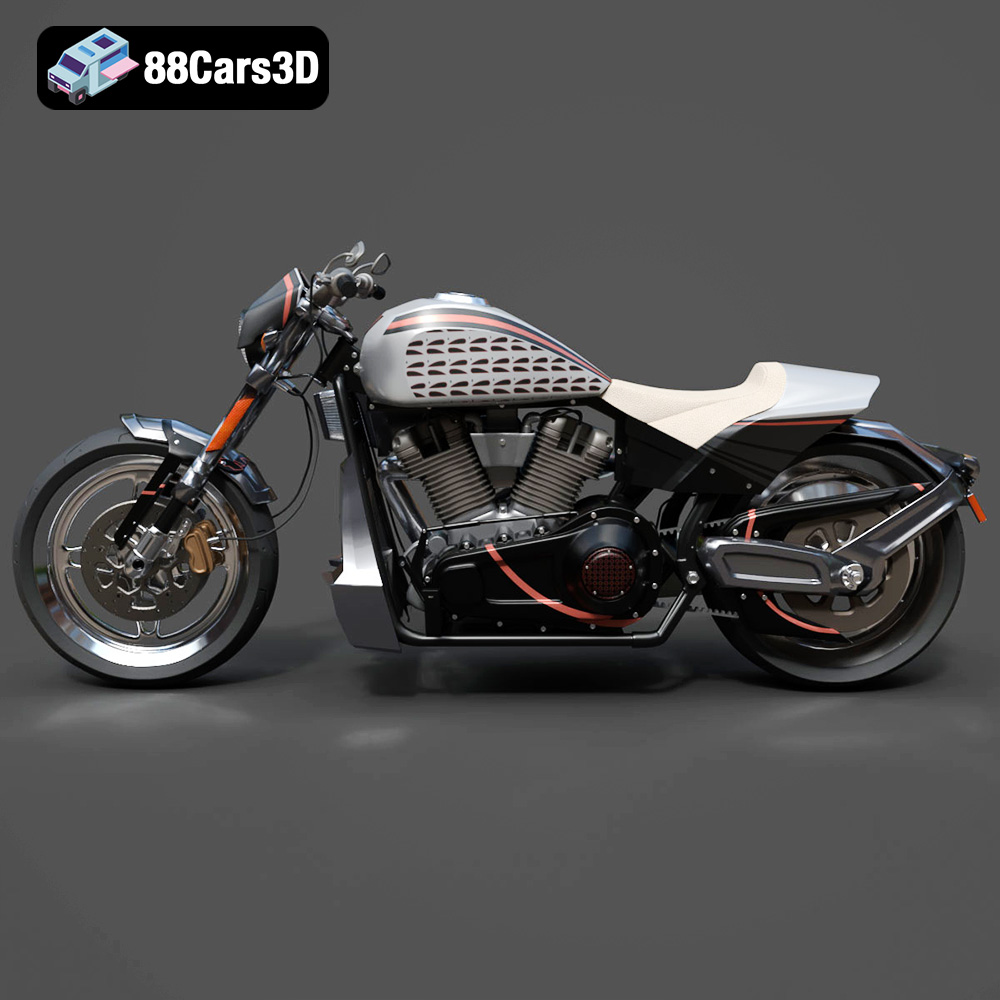
Harley-Davidson FXDR 114 3D Model 3D Printable STL
The Harley-Davidson FXDR 114 3D Model is a high-detail digital recreation of the aggressive, drag-inspired power cruiser. Built to represent raw, unapologetic muscle, the FXDR 114 combines the massive torque of the Milwaukee-Eight 114 V-Twin engine with weight-saving aluminum components, a clipped tail, and a massive 240mm rear tire. This 3D model accurately captures the drag-strip attitude of the original bike, featuring the signature forward-reaching air intake, 2-into-1 tuned exhaust, lightweight cast aluminum swingarm, and the sleek LED Daymaker headlamp surround. Built with an optimized mid-to-high polygon topology (just under 500k triangles), it strikes a fantastic balance between premium visual fidelity for close-up rendering and manageable performance for modern current-gen game engines as a hero asset. Perfectly balanced for rendering, modern game development, and 3D printing. Includes .blend, .fbx, .obj, .glb, .stl, .ply, .unreal, and .max formats.
$44.99
Product Image Gallery
Related Tags
.blend
.fbx
.obj
.rendering
.stl
car-3d-model
drag-bike
fxdr
fxdr-114
game asset
harley-davidson
mid-poly
milwaukee-eight
motorcycle-3d-model
power-cruiser
softail
VR/AR
