

The Land Rover Defender 110 is more than just a vehicle; it’s a testament to enduring design, unparalleled ruggedness, and a spirit of adventure that has spanned decades. From challenging expeditions across continents to serving essential roles in agriculture and military operations, the Defender 110 has cemented its place as a global icon. For 3D artists, game developers, architects, and product designers, bringing such a revered vehicle into the digital realm requires a 3D model that honors its legacy with impeccable detail and technical precision. This is where a high-quality asset truly shines, offering an authentic foundation for a myriad of creative and professional applications.
Imagine recreating a dramatic safari scene, developing an immersive off-road simulation, or even prototyping a unique accessory for a classic Defender. Each scenario demands a 3D model that is not only visually accurate but also technically robust. The Land Rover Defender 110 3D Model delivers precisely that, providing a digital recreation built with meticulous attention to detail. This model, available through platforms like 88cars3d.com, serves as an invaluable resource for anyone looking to integrate the Defender’s iconic presence into their projects, from stunning automotive rendering to dynamic game assets and even physical 3D prints.
The Iconic Land Rover Defender 110: A Digital Recreation for Every Need
The Land Rover Defender 110 stands as a symbol of go-anywhere capability and utilitarian design. Its long-wheelbase proportions, distinctive boxy silhouette, and functional aesthetics are instantly recognizable. When translating such an iconic vehicle into a 3D car model, maintaining this authenticity is paramount. A truly professional 3D asset goes beyond mere visual resemblance, delving into the structural and mechanical elements that define the vehicle.
Capturing Authenticity in 3D
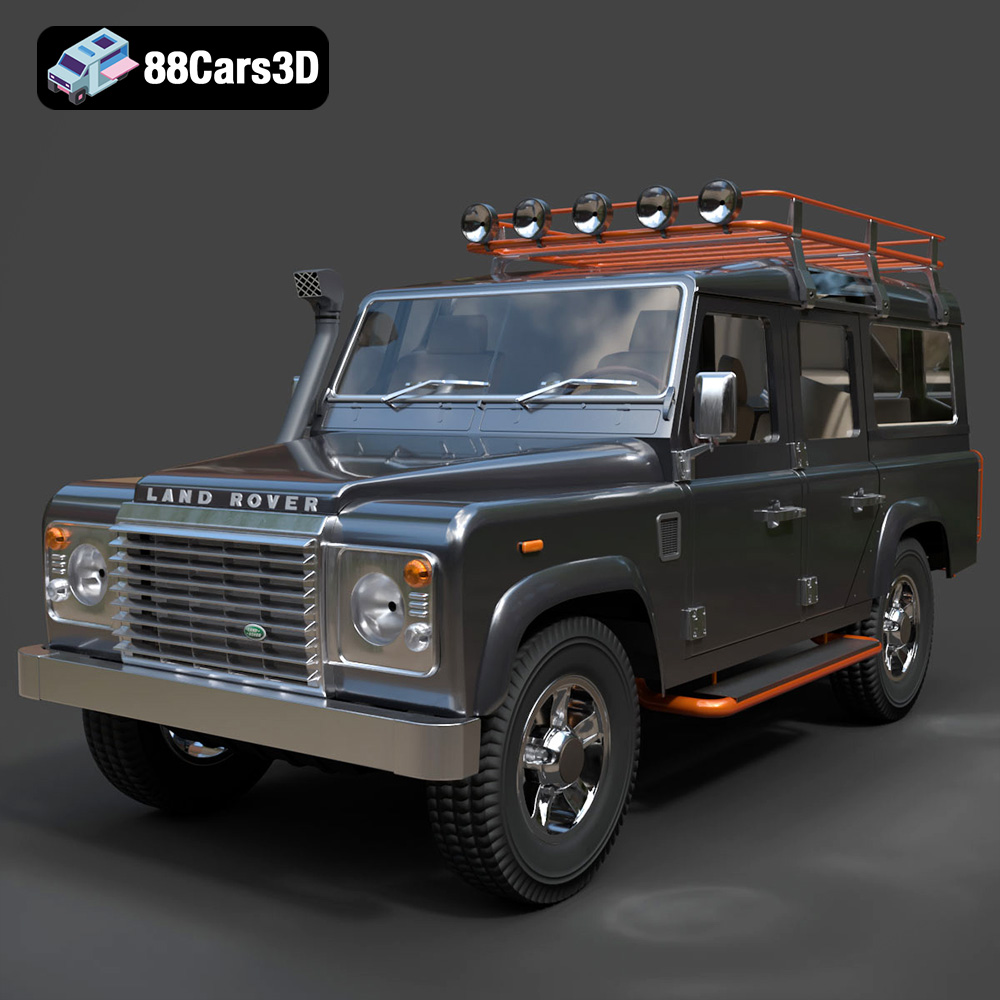
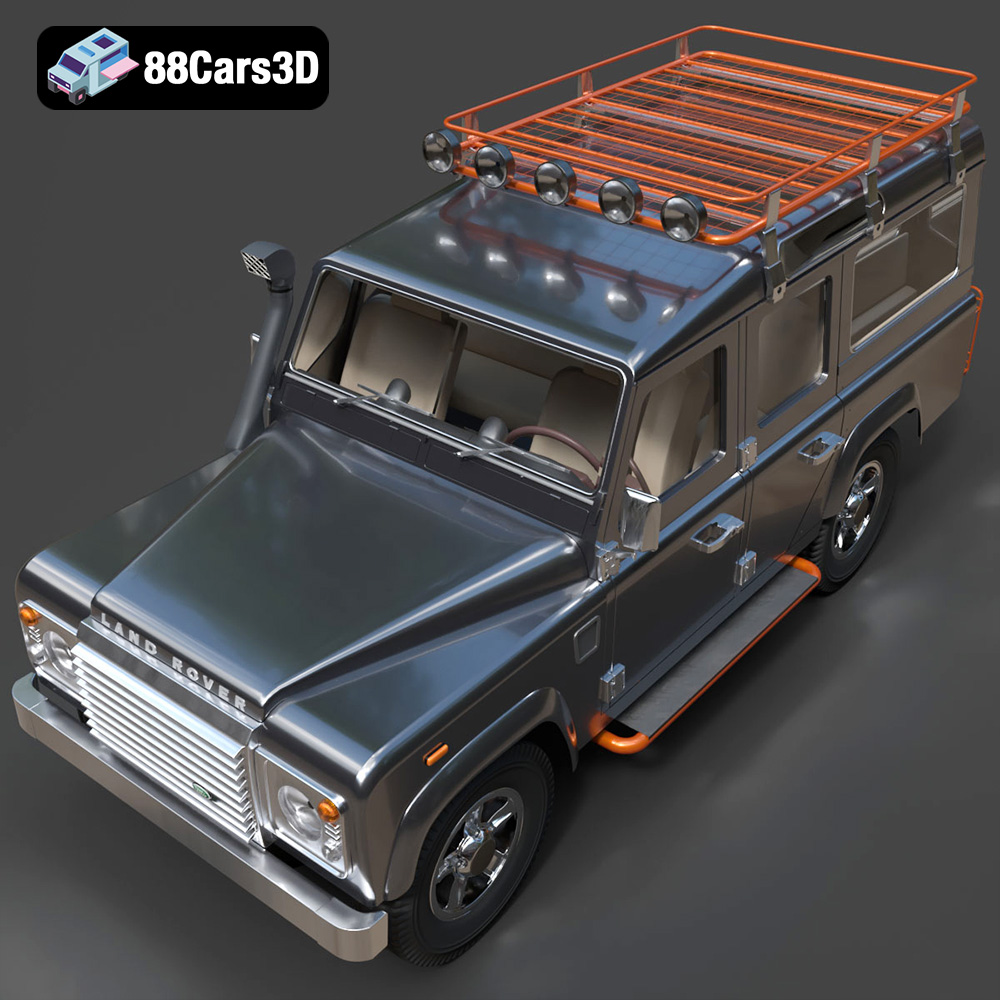
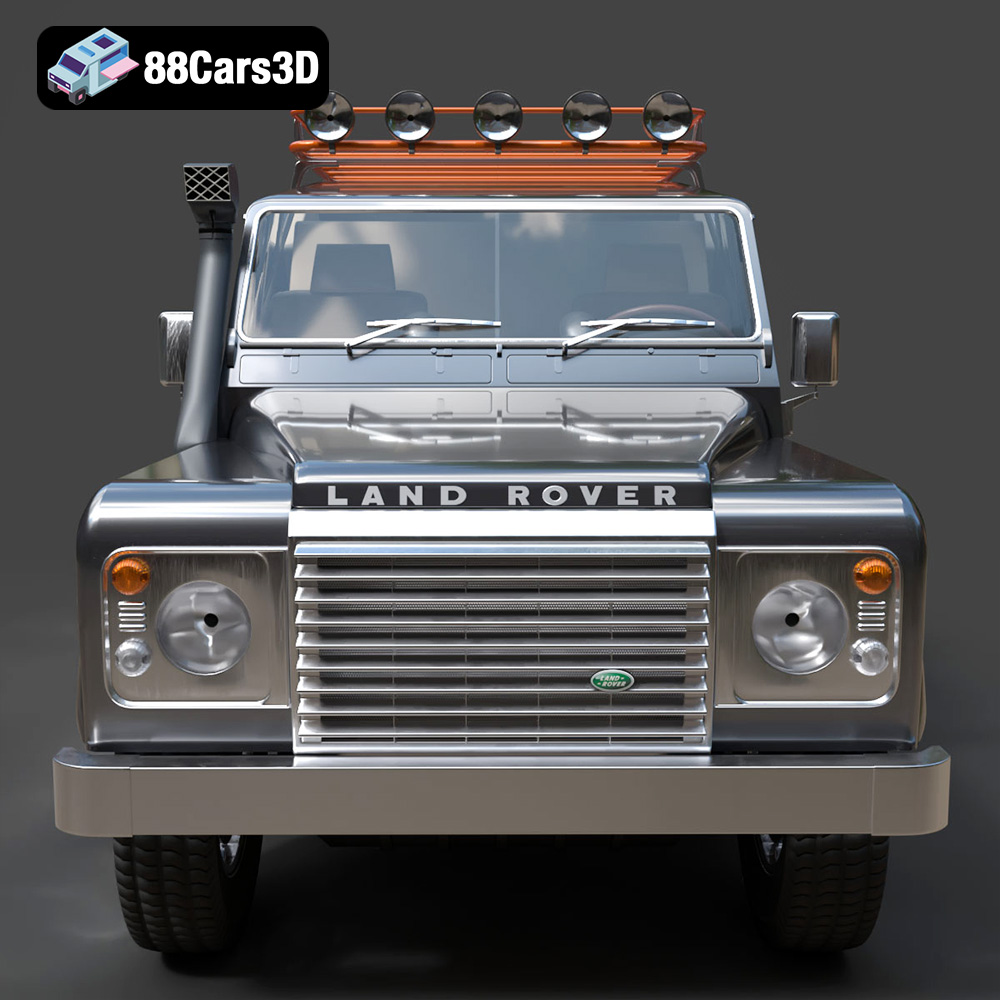
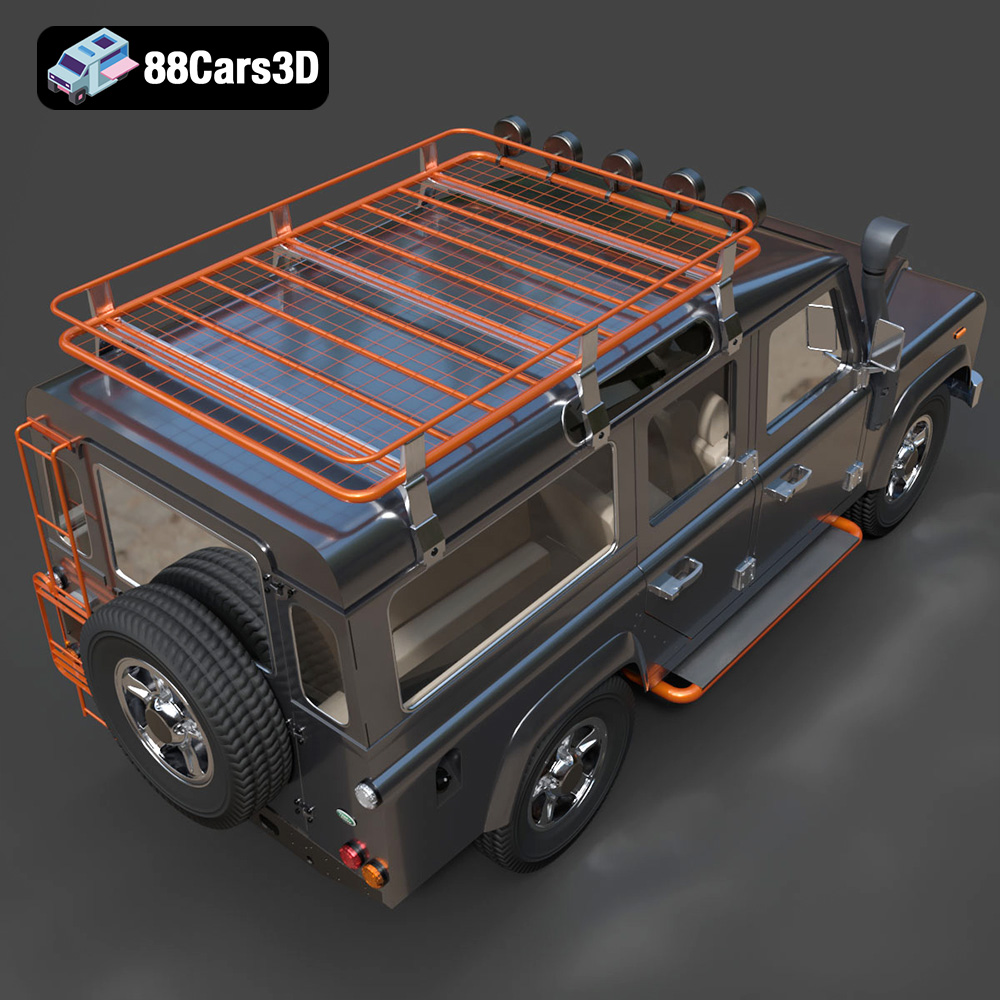
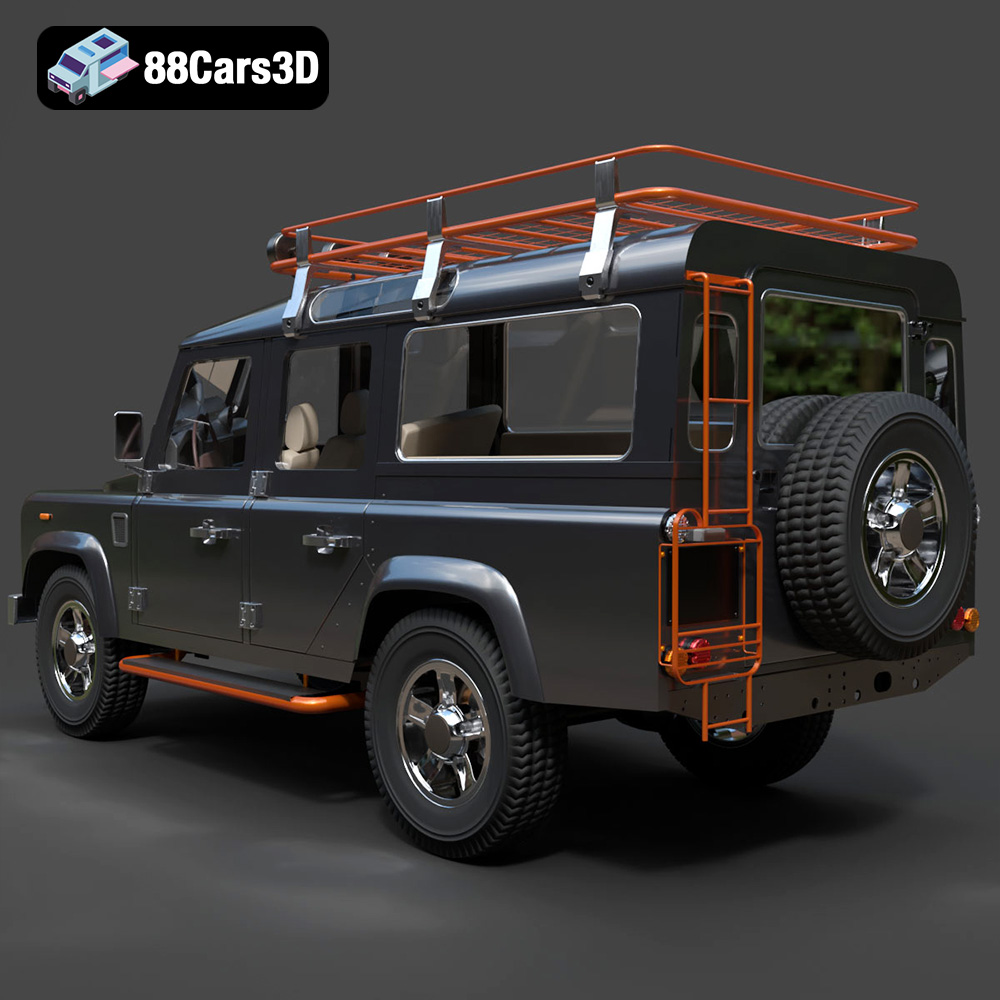
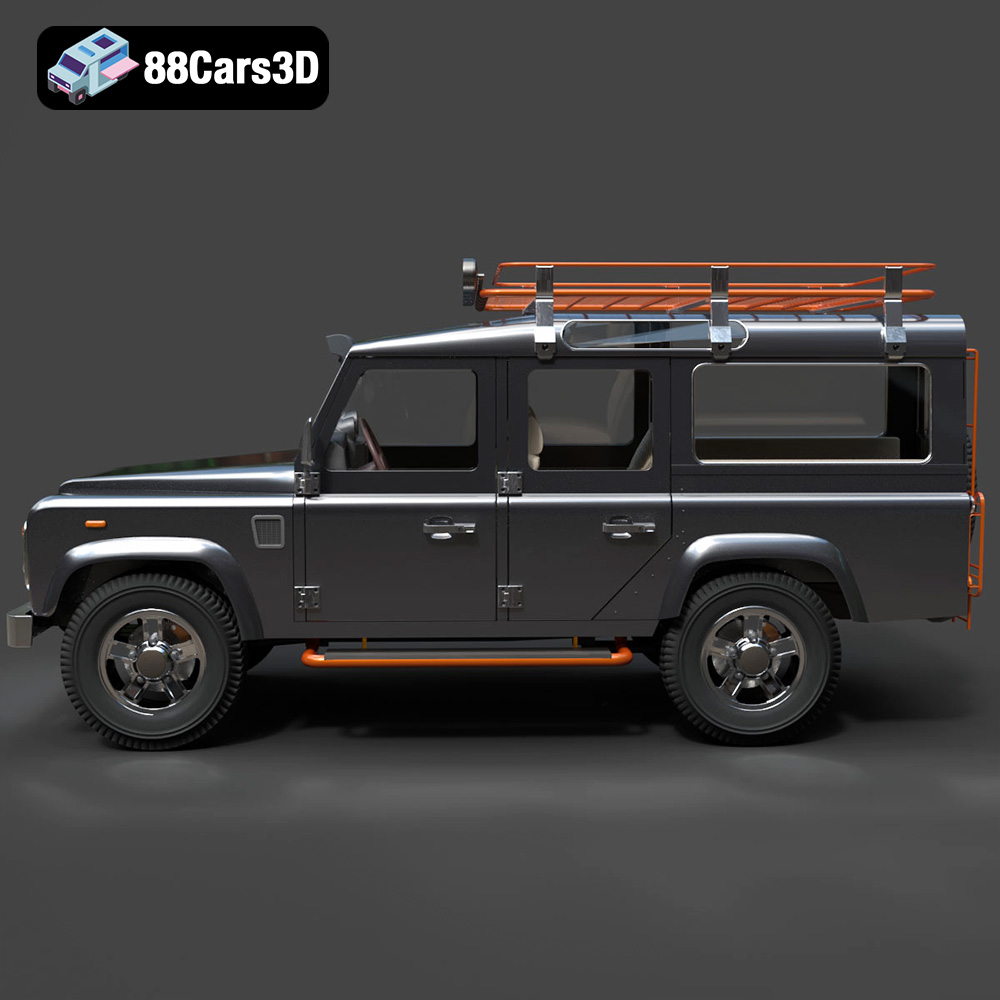
A premium Land Rover Defender 110 3D Model meticulously captures every signature element. This includes the flat hood design, the classic front grille with its round headlamps, reinforced bumpers that hint at its off-road prowess, and the extended wheelbase that gives the 110 its commanding presence. Details like the roof configuration, exposed hinges, and the rear-mounted spare wheel are not just cosmetic additions but are integral to the Defender’s character. The model’s exterior features include accurate body proportions, aluminum body panel styling, and even hood-mounted air vents. For dynamic scenes, separate wheels and steering components are crucial, allowing for realistic animation and interactive control.
Beyond Visuals: The Technical Foundation
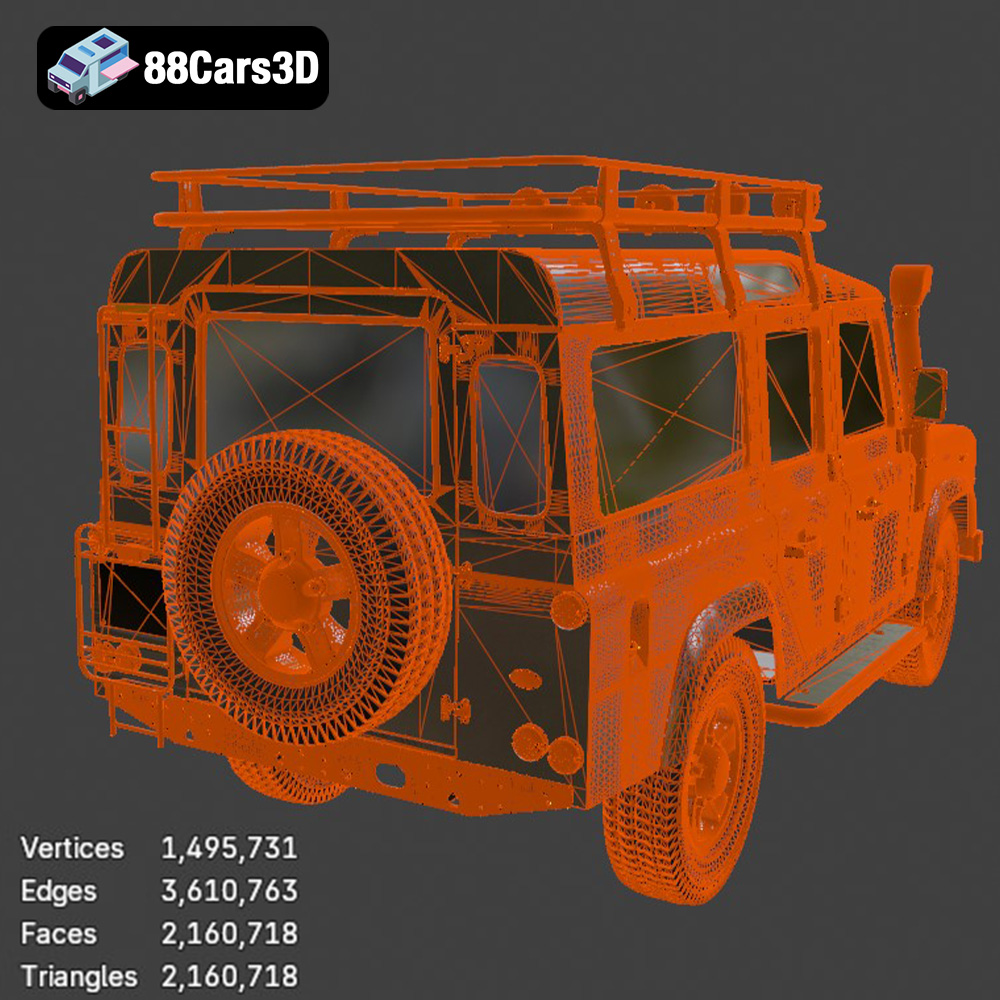
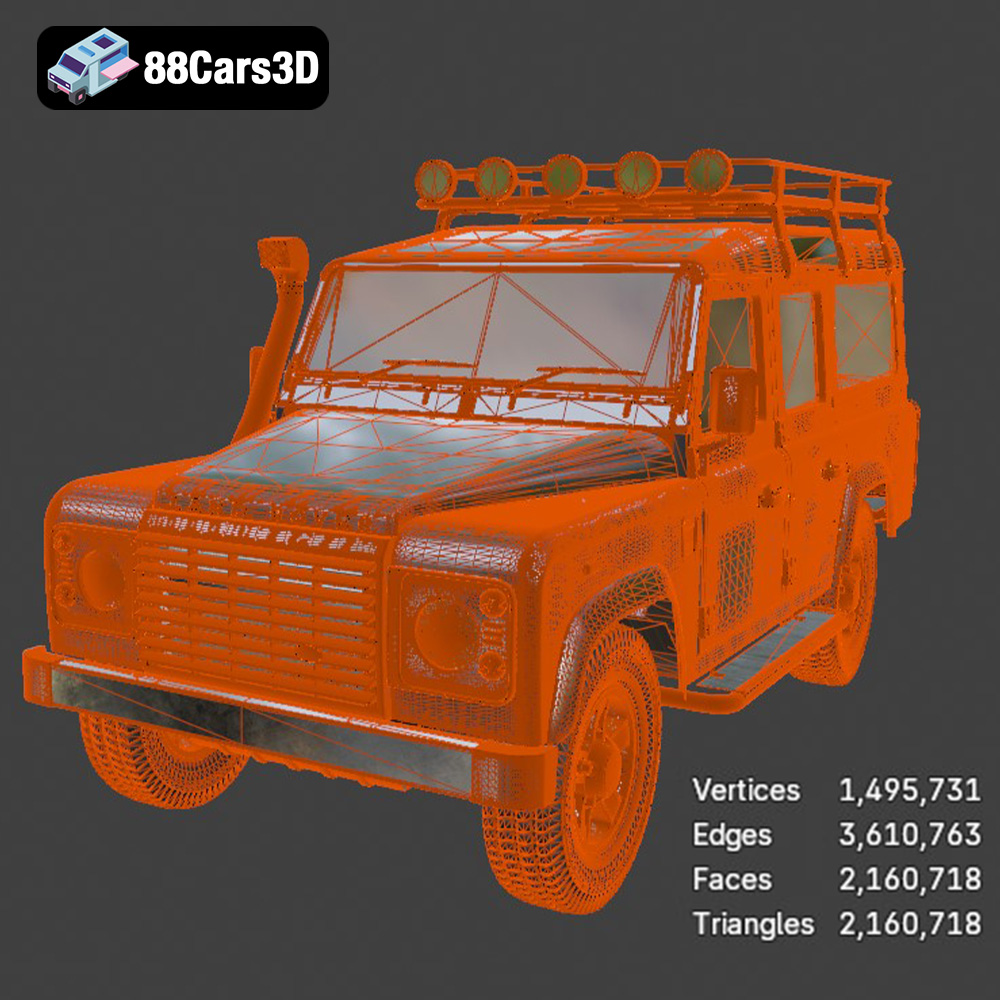
Beyond its striking resemblance, the true value of this 3D car model lies in its technical advantages. A clean and well-organized mesh structure ensures smooth subdivision and deformation, critical for high-resolution renders and detailed animations. Real-world scale accuracy is a non-negotiable for integrating the model into existing scenes or ensuring correct proportions in simulations. Furthermore, proper pivot setup for steering and wheel rotation simplifies animation workflows, saving countless hours for animators. An optimized polygon flow is essential for performance, whether the model is destined for a photorealistic still image or a real-time game engine. These technical underpinnings ensure that the Land Rover Defender 110 3D Model is not just a pretty face but a versatile and production-ready asset.
Understanding 3D Model File Formats
The choice of 3D model file format is often as crucial as the model itself. Different formats serve distinct purposes, offering varying levels of compatibility, data retention, and optimization for specific applications. The Land Rover Defender 110 3D Model, for instance, comes in a comprehensive suite of formats, ensuring its adaptability across virtually any professional workflow. Understanding each format’s strengths is key to leveraging the model to its fullest potential.
.blend – Fully Editable Blender Scene with Materials
The .blend format is Blender’s native file type. When you purchase a .blend file, you’re getting a complete Blender scene, often including materials, textures, lighting setups, and even animation rigs. This offers unparalleled flexibility for users of Blender, a powerful open-source 3D software. Artists can directly open the scene, inspect the modifier stack, adjust material nodes, modify topology, or repurpose components without any loss of data that might occur during conversion. For detailed automotive rendering or animation within Blender, having the native scene is invaluable for deep customization and iteration.
.fbx – Ideal for Unreal, Unity, and Real-Time Pipelines
FBX (Filmbox) is a proprietary file format owned by Autodesk, widely regarded as the industry standard for exchanging 3D data between various applications, especially in game development. It can store a wide range of data, including geometry, materials, textures (though often referenced externally), animations, and even rigging. For engines like Unreal and Unity, .fbx is the go-to format for importing 3D car models and game assets, providing robust support for animation, instancing, and LOD (Level of Detail) setups. Its binary nature makes it efficient for real-time applications.
.obj – Universal Format for Cross-Software Compatibility
OBJ (Object) is one of the oldest and most widely supported 3D file formats, making it a truly universal choice. It’s a simple, text-based format that primarily stores geometric data: vertices, UV coordinates, and normals. While it doesn’t typically store advanced material properties or animation data directly within the file (it usually references external .mtl files for basic material assignments), its broad compatibility means almost every 3D software can import and export .obj files reliably. It’s an excellent choice when you need a clean mesh for sculpting, retopology, or simply moving geometry between disparate software packages.
.glb – Optimized for AR, VR, and Browser-Based Display
.glb (GL Transmission Format Binary) is the binary version of glTF, a royalty-free specification for the efficient transmission and loading of 3D scenes and models by applications. It packages textures, animations, and geometry into a single, compact file, making it perfectly suited for web-based 3D, augmented reality (AR), virtual reality (VR), and mobile applications. Its optimization for real-time rendering and smaller file sizes makes it an increasingly popular format for interactive experiences, allowing users to showcase the Land Rover Defender 110 3D Model directly in a web browser or an AR app with minimal loading times.
.stl – Suitable for 3D Printing Output
STL (STereoLithography) is the most common file format used for 3D printing. It represents a 3D model as a series of connected triangles, describing only the surface geometry of a 3D object without any color, texture, or material information. The Land Rover Defender 110 3D Model, when converted to .stl, becomes a watertight mesh ready for slicing and printing. This format is crucial for users looking to bring the digital Defender into the physical world, whether as a scale model, a prototype, or a collectible miniature. Ensuring manifold geometry in the original model is vital for a successful .stl conversion.
.ply – Precision Mesh Format for CAD or Analysis
PLY (Polygon File Format or Stanford Triangle Format) is another format that can store 3D data, similar to .obj and .stl. However, .ply is more versatile in terms of the properties it can store, including color, transparency, surface normals, texture coordinates, and even data reliability for each vertex. It’s often used in scientific and engineering applications, particularly for scanned 3D data, CAD, and geometric analysis. For precision tasks or when dealing with complex data sets derived from reality capture, the .ply format offers a robust solution for the Defender model.
.unreal – Engine-Ready Asset for Real-Time Environments
While not a standalone file format in the same way .fbx or .obj are, an “.unreal” asset typically refers to a model that has been specifically prepared and perhaps even bundled for direct import into Unreal Engine. This might involve pre-configured materials, LODs, collision meshes, and even blueprints to get the model running quickly within the engine. Such assets save significant development time, as many of the optimization and setup steps required for real-time performance have already been completed. For game developers or architectural visualization specialists using Unreal Engine, this pre-optimized asset can be a massive time-saver for integrating the Land Rover Defender 110.
.max – Editable 3ds Max Project for Animation and Rendering
The .max format is the native file format for Autodesk 3ds Max, a powerful 3D modeling, animation, rendering, and compositing software. Like .blend, a .max file provides a complete scene, including geometry, materials, textures, lighting, cameras, and animation curves. For professionals who primarily work within 3ds Max for high-end architectural visualization, automotive rendering, or complex animation sequences, having the model in its native .max format offers the highest degree of editability and integration into their existing workflows. It allows for advanced shader creation, V-Ray or Corona renderer setups, and intricate animation controls.
Mastering Automotive Rendering with the Land Rover Defender 110 3D Model
Automotive rendering is an art form that blends technical proficiency with an eye for photorealism. Using a high-quality 3D car model like the Land Rover Defender 110 from 88cars3d.com provides an excellent starting point for creating stunning visualizations, whether for marketing, conceptual design, or personal projects.
Workflow in 3ds Max: From Scene Setup to Photorealism
In 3ds Max, achieving photorealistic renders involves several critical steps. First, the Land Rover Defender 110 model, ideally in .max or .fbx format, is imported and positioned within a virtual studio environment or a detailed outdoor scene. High-dynamic-range imaging (HDRI) maps are crucial for realistic lighting and reflections, often combined with targeted area lights to emphasize specific contours. Materials, such as car paint (with metallic flakes and clear coat), glass, rubber for tires, and various plastics for interior elements, are meticulously crafted using advanced render engines like V-Ray or Corona. Post-processing in tools like Photoshop enhances depth of field, color grading, and bloom effects to bring the final image to life.
Achieving Visual Fidelity in Blender Cycles/Eevee
Blender offers two powerful rendering engines: Cycles for photorealistic ray tracing and Eevee for real-time rendering. For Cycles, the .blend file of the Defender provides a complete package. Artists can refine the PBR (Physically Based Rendering) materials, adjusting roughness, metallic, and normal maps for unparalleled realism. Procedural textures can add subtle wear and tear. Lighting is key; a combination of HDRI backgrounds and mesh lights can simulate natural or studio environments. Eevee, while real-time, can also produce stunning results with careful material setup, Screen Space Reflections, and Volumetric effects, making it ideal for quick previews or animations where speed is critical.
Crafting Realistic Environments for the Defender
A great automotive render is incomplete without a compelling environment. For the Defender 110, this often means rugged landscapes, off-road trails, or vast open plains. Creating these environments involves combining detailed terrain models, scattering vegetation (trees, bushes, grass) using tools like Forest Pack in 3ds Max or geometry nodes in Blender, and populating the scene with appropriate props like rocks, mud puddles, or even other vehicles. Atmospheric effects like volumetric fog, dust, or rain can significantly enhance the mood and realism, making the Land Rover Defender 110 truly belong in its digital habitat.
Integrating the Defender 110 into Game Development & Real-Time Applications
The demand for high-quality game assets is ever-growing, and a vehicle as iconic as the Land Rover Defender 110 is a prime candidate for virtual worlds. Integrating such a complex 3D car model into game engines like Unreal or Unity requires careful optimization and adherence to specific pipeline practices to ensure both visual fidelity and performance.
Optimizing for Unreal Engine: Performance and Playability
For Unreal Engine, the .fbx or .unreal formats are ideal. Optimization is paramount. This involves creating multiple Levels of Detail (LODs) for the Defender 110 model, allowing the engine to swap lower-polygon versions at a distance, saving GPU resources. Collision meshes are essential for realistic physics interactions. Materials should be set up using Unreal’s PBR workflow, taking advantage of instance materials for efficient material management. Rigging the vehicle’s suspension, steering, and wheels allows for dynamic gameplay, providing players with a true off-road experience. The Land Rover Defender 110 3D Model’s “proper pivot setup for steering and wheel rotation” is a significant head start here.
Leveraging the Model for AR/VR Experiences
Augmented Reality (AR) and Virtual Reality (VR) offer immersive ways to experience 3D car models. The .glb format is particularly well-suited for AR/VR due to its efficiency and single-file nature. For AR, the Defender 110 can be placed into real-world environments via a smartphone or headset, allowing users to “see” the vehicle as if it were truly there. In VR, the model can be the centerpiece of an interactive experience, perhaps a virtual showroom, an off-road driving simulator, or an educational tool demonstrating its mechanical features. Optimization for real-time performance is even more critical in AR/VR to maintain high frame rates and prevent motion sickness.
Essential Considerations for Game Asset Pipelines
Beyond technical formats, a professional game asset pipeline involves several key considerations. Consistent naming conventions, organized folder structures, and clear documentation are vital for team collaboration. Baking high-resolution details from the original model onto lower-polygon game meshes using normal maps can achieve visual richness without a heavy poly count. Efficient UV mapping is necessary for texture atlases, minimizing draw calls. The Land Rover Defender 110 3D Model’s “optimized polygon flow for performance and realism” and “clean and well-organized mesh structure” directly contribute to a smoother integration into these demanding pipelines.
The Versatility of the Land Rover Defender 110 for 3D Printing and Physical Models
The digital world offers immense creative freedom, but sometimes, the desire to hold a physical manifestation of a 3D model is irresistible. The Land Rover Defender 110 3D Model’s suitability for 3D printing opens up a fascinating avenue for collectors, hobbyists, and professionals alike, allowing them to transform digital data into tangible scale models and prototypes.
Preparing the STL for Flawless Prints
For 3D printing, the model needs to be converted into an .stl format. The product description emphasizes that the Land Rover Defender 110 3D Model is “convertible to .stl format,” which is crucial. Before printing, the .stl file must be checked for manifold geometry (no holes or non-watertight surfaces) using software like Netfabb or Meshmixer. The recommended scales (1:32 / 1:24 / 1:18 / 1:10) suggest flexibility, but scaling requires careful consideration of wall thickness and detail preservation. Supports will be necessary for overhangs like mirrors, the spare wheel, and wheel arches, as highlighted in the product’s 3D print settings. Proper print orientation, such as printing the body angled or upright, can significantly impact surface quality and minimize visible layer lines.
Post-Processing and Finishing Techniques
After printing, post-processing is essential to achieve a professional finish. This typically involves removing supports, sanding down any rough spots or layer lines, and applying a primer to create an even surface for painting. For a vehicle like the Defender, a matte or satin paint finish often suits its rugged aesthetic, though a gloss finish can also be applied for a ‘factory fresh’ look. Weathering effects—such as dry brushing for dust, washes for grime, or chipping effects for paint wear—can add incredible realism, transforming a clean print into a battle-hardened expedition vehicle. The options for “classic green, sand, black, or custom tones” for body color customization directly influence the final look.
Case Studies: From Tabletop to Custom Prototypes
Imagine a tabletop gaming scenario where miniature Land Rover Defender 110 models serve as essential expedition vehicles or even military assets. With the provided 3D print settings and recommended scales, hobbyists can create a fleet of Defenders. Beyond gaming, industrial designers might 3D print parts of the Defender to test specific accessory designs or create physical mock-ups of custom modifications like roof racks, snorkels, or alternative wheel configurations. This hands-on prototyping capability underscores the versatility of a well-prepared 3D car model, bridging the gap between digital design and physical realization.
Technical Deep Dive: Topology, UVs, and Scalability
The quality of a 3D model, especially for complex subjects like automotive vehicles, is fundamentally defined by its underlying technical structure. The Land Rover Defender 110 3D Model’s claims of “clean and well-organized mesh structure,” “optimized polygon flow,” and “proper pivot setup” point to a robust foundation essential for professional applications.
Understanding Polygon Flow and Mesh Optimization
Polygon flow refers to the direction and distribution of edge loops and faces across a 3D model. Good polygon flow ensures that surfaces deform smoothly during animation and that subdivision surfaces (like those created by a Turbosmooth or Subdivision Surface modifier) yield clean, organic curves without pinching or artifacts. For the Defender 110, this means that details like the fender flares, door creases, and hood lines will maintain their crispness and realism even when rendered at high resolutions. Mesh optimization, on the other hand, is about achieving the desired visual quality with the fewest possible polygons, crucial for maintaining performance in real-time engines and reducing file sizes without sacrificing detail. The model’s “optimized polygon flow” suggests a careful balance has been struck, making it suitable for both high-end rendering and efficient game asset deployment.
The Importance of Clean UV Mapping and Texturing
UV mapping is the process of unwrapping a 3D model’s surface into a 2D layout, allowing 2D textures (like diffuse color, normal maps, roughness maps, etc.) to be applied accurately. Clean UVs are invisible to the end user but are paramount for high-quality texturing. They prevent texture stretching, facilitate efficient texture atlas creation, and make it easier for artists to paint directly onto the model in software like Substance Painter. While the product description for the Land Rover Defender 110 specifies “Texture: Yes” and “Material: Yes,” well-executed UVs are the silent heroes that make those textures look superb. They ensure that details like expedition decals or military markings can be applied seamlessly, enhancing the model’s customization potential.
Scalability Across Different Project Demands
A truly versatile 3D car model is scalable, meaning it can adapt to different project demands, from a distant background prop in a game to the star of a close-up cinematic render. This scalability is achieved through a combination of clean topology (which allows for easy LOD generation), well-defined material IDs (for quick material swaps), and often, a modular design where components like wheels or accessories are separate objects. The Land Rover Defender 110 3D Model, with its “separate wheels and steering components for animation” and “roof configuration options,” embodies this modularity. This allows users to “add roof rack, snorkel, or off-road accessories” or “modify wheel and tire configurations” with ease, making it a flexible asset for a wide range of creative challenges and ensuring its value across various industries, from automotive rendering to immersive simulations.
Conclusion
The Land Rover Defender 110 is more than just a vehicle; it’s a narrative of exploration and resilience. Translating such an icon into a high-quality 3D model requires a deep understanding of both its aesthetic and technical intricacies. The Land Rover Defender 110 3D Model stands as a testament to this commitment, offering artists, developers, and designers an incredibly versatile and robust asset. With its meticulous detail, optimized topology, and compatibility across a spectrum of essential file formats—from .blend for native Blender workflows to .fbx for game engines and .stl for 3D printing—it equips professionals with the tools needed to bring their automotive visions to life.
Whether you are creating stunning automotive renders, developing immersive game assets, designing AR/VR experiences, or fabricating physical scale models, this 3D model provides a solid, dependable foundation. Its technical advantages, including real-world scale, clean mesh, and proper pivot setups, streamline complex workflows and ensure reliable results. For those seeking premium 3D car models that combine historical accuracy with modern technical excellence, platforms like 88cars3d.com offer an invaluable resource. The Land Rover Defender 110 3D Model is not just a digital asset; it’s a gateway to endless creative possibilities, ready to conquer any digital terrain you imagine.
Featured 3D Model
Land Rover Defender 110 3D Model
The Land Rover Defender 110 3D Model is a high-detail digital recreation of the legendary long-wheelbase off-road SUV known for its rugged durability, utilitarian design, and global expedition heritage. Built to conquer extreme terrains, the Defender 110 has become an icon of adventure, military service, agriculture, and exploration worldwide. This 3D model accurately captures the boxy body structure, flat hood design, signature front grille, round headlamps, reinforced bumpers, extended wheelbase proportions, roof configuration, exposed hinges, and rear-mounted spare wheel. Designed with clean topology and real-world scale accuracy, it is ideal for rendering, animation, simulation, game development, and AR/VR environments. Perfect for off-road trails, safari landscapes, military scenes, rural environments, expedition visuals, and cinematic productions.
$29.99
Product Image Gallery
Related Tags
.4×4
.arvr
.automotive
.blend
.car3dmodel
.defender110
.expeditionvehicle
.fbx
.gameasset
.glb
.landrover
.max
.obj
.offroadvehicle
.ply
.rendering
.simulation
.stl
.unreal
.utilityvehicle
SUV
