

The automotive industry is in constant motion, not just on the roads, but also in how it showcases its innovations. Traditional brochures and static renders are being rapidly replaced by immersive, interactive experiences that allow customers and designers alike to engage with vehicles in unprecedented ways. At the heart of this revolution lies Unreal Engine, a powerful real-time rendering platform that empowers developers and artists to create stunningly photorealistic and dynamic product demonstrations.
For automotive designers, marketers, and game developers, Unreal Engine offers an unparalleled toolkit to build everything from detailed configurators to virtual showrooms and cinematic presentations. Imagine exploring every angle of a new car model, changing its paint color, inspecting the intricate interior, or even “driving” it in a virtual environment – all in real-time, with breathtaking fidelity. This post will serve as your comprehensive guide to harnessing Unreal Engine’s capabilities, from initial project setup and model import to advanced lighting, interactivity, and optimization strategies. We’ll delve into the technical nuances of creating compelling automotive visualizations that captivate audiences and deliver a truly engaging experience, leveraging high-quality assets like those found on platforms such as 88cars3d.com.
Laying the Foundation: Project Setup and Model Integration
Embarking on an interactive automotive demo project in Unreal Engine requires a robust foundation. Proper project setup and efficient model integration are critical steps that influence everything from visual fidelity to performance. Understanding the recommended configurations and best practices from the outset will save countless hours down the line and ensure a smoother development pipeline.
Unreal Engine Project Configuration for Automotive Visualization
When starting a new project, selecting the right template and configuring key settings is paramount. While a ‘Blank’ project offers maximum flexibility, templates like ‘Games > Vehicle Advanced’ or ‘Film/Television/Live Events’ can provide a useful starting point with pre-configured inputs or cinematic tools. For automotive visualization, we typically recommend a custom setup with specific features enabled. Navigate to your project settings (Edit > Project Settings) and ensure the following are configured:
- Rendering > Ray Tracing: Enable ‘Ray Tracing’ and ‘Support Hardware Ray Tracing’ for cutting-edge reflections, shadows, and ambient occlusion. This is crucial for photorealistic automotive surfaces.
- Rendering > Lumen: Set ‘Global Illumination’ and ‘Reflections’ to ‘Lumen’. Lumen provides dynamic global illumination and reflections in real time, essential for realistic lighting scenarios and material responses on vehicles.
- Rendering > Virtual Shadow Maps: Enable ‘Virtual Shadow Maps’ as the ‘Shadow Map Method’. VSMs offer incredibly detailed and performant shadows, which are vital for capturing the intricate forms and occlusions of a car.
- Engine > General Settings > Frame Rate: Consider capping the frame rate during development (e.g., 60 FPS) to get a more accurate sense of in-game performance.
Organizing your project with a logical folder structure (e.g., Models, Materials, Textures, Blueprints, Maps) from the beginning helps maintain order, especially when dealing with the high volume of assets typical in automotive projects. Consistent naming conventions for assets are also invaluable for team collaboration and project scalability. For more detailed insights into Unreal Engine’s project settings and feature configurations, refer to the official Unreal Engine documentation at dev.epicgames.com/community/unreal-engine/learning.
Importing and Optimizing High-Quality 3D Car Models
The quality of your 3D car models directly impacts the final visual outcome. When sourcing automotive assets, platforms like 88cars3d.com provide meticulously crafted models optimized for real-time applications. These models typically feature clean topology, proper UV mapping, and realistic PBR texture sets, which significantly streamline the import and setup process within Unreal Engine.
Most 3D car models are imported as FBX files. When importing, pay attention to these settings:
- Skeletal Mesh vs. Static Mesh: For a non-interactive static showcase, a Static Mesh is sufficient. However, for interactive elements like opening doors, rotating wheels, or full vehicle dynamics, you’ll need a Skeletal Mesh setup with a proper bone hierarchy, allowing individual parts to be animated or controlled via physics.
- Import Materials and Textures: Enable ‘Import Materials’ and ‘Import Textures’. Unreal Engine will attempt to create basic PBR materials and link textures automatically. While a good starting point, these often require further refinement.
- Combine Meshes: For modular cars, disable ‘Combine Meshes’ to retain individual parts (e.g., body, wheels, interior) as separate meshes, enabling granular control over materials and interactivity.
- Scale: Ensure your model’s scale matches Unreal Engine’s default unit (1 Unreal Unit = 1 cm). Models from 88cars3d.com are usually correctly scaled, but always verify to avoid issues with lighting, physics, and world interaction.
Upon import, always perform an initial review of the mesh. Check for inverted normals (which can cause lighting artifacts), correct pivot points for parts that will rotate or animate, and overall mesh integrity. While models from reputable sources like 88cars3d.com are pre-optimized, you might still need to consider creating Level of Detail (LOD) meshes for non-Nanite components, or apply Nanite to high-poly hero assets, which we’ll discuss in a later section. A typical high-fidelity car model might have a polygon count ranging from 200,000 to 1 million triangles for a hero asset (LOD0), but Nanite can handle far more.
Achieving Photorealism: Materials and Lighting Dynamics
The visual impact of an automotive demo hinges on its materials and lighting. Unreal Engine’s Material Editor and advanced lighting systems allow artists to craft truly photorealistic vehicle representations, capturing the subtle nuances of paint, glass, metal, and interior fabrics. Understanding these tools is paramount to bringing your 3D car models to life.
Mastering PBR Materials for Automotive Surfaces
Physically Based Rendering (PBR) is the cornerstone of realism in Unreal Engine. It simulates how light interacts with surfaces in the real world, requiring specific maps for Base Color (Albedo), Metallic, Roughness, Normal, and Ambient Occlusion. Automotive materials, however, often demand more sophisticated setups to capture their unique properties.
- Car Paint: This is arguably the most complex and critical material. A typical car paint shader involves multiple layers: a base layer (metallic or non-metallic) for the primary color and reflectivity, and a clear coat layer for gloss and reflections. In Unreal Engine, this can be achieved using a blend of the standard PBR workflow and specialized nodes. You’ll often use a dedicated ‘Clear Coat’ input on the material node, controlling its intensity and roughness. Flake effects, common in metallic paints, can be simulated using a subtly textured normal map or custom shader logic that reacts to camera angle.
- Glass: Car glass requires transparency, accurate reflections, and sometimes refraction. A standard approach involves setting the material’s blend mode to ‘Translucent’ or ‘Masked’ (for simpler glass) and enabling ‘Screen Space Reflections’ or ‘Ray Tracing Reflections’ for realistic mirror-like quality. The ‘Refraction’ input can simulate how light bends through the glass.
- Tires and Rubber: These materials are generally non-metallic with low roughness values, often featuring detailed normal maps for tread patterns and subtle grunge textures for realism.
- Chrome and Metal Trims: These are high-metallic, low-roughness materials, often benefiting greatly from ray-traced reflections to accurately capture the environment.
- Interior Materials: Leather, fabric, plastic, and carbon fiber all have distinct PBR properties. Leather might use a normal map for grain and varying roughness based on wear. Carbon fiber requires a complex normal map to simulate its woven structure and a metallic value for reflectivity.
To facilitate dynamic changes (e.g., color configurators), always convert static material parameters into ‘Material Parameters’ and create ‘Material Instances’ of your master material. This allows for runtime modification via Blueprint without recompiling shaders, leading to better performance and flexibility. Texture resolutions are crucial here; 2K or 4K maps for hero assets are standard, ensuring sharp details even in close-ups.
Dynamic Real-time Lighting with Lumen and Virtual Shadow Maps
Unreal Engine 5’s Lumen global illumination and reflection system, combined with Virtual Shadow Maps (VSM), revolutionizes real-time lighting for automotive visualization. These technologies allow for incredibly realistic light bounce and sharp shadows, critical for showcasing the subtle curves and forms of a vehicle.
- Lumen Setup: Ensure Lumen is enabled for both Global Illumination and Reflections in your project settings and Post Process Volume. Adjust the ‘Lumen Scene Lighting Quality’ and ‘Reflection Quality’ to balance fidelity and performance. Lumen excels at dynamically recalculating light bounce as lights or objects move, providing highly accurate indirect lighting.
- Primary Lighting: A Directional Light simulates the sun, providing strong primary shadows and direct illumination. Pair it with a Sky Light to capture ambient light from the environment (e.g., an HDRI background).
- Studio Lighting: For controlled product shots, use Rect Lights, Spot Lights, and Point Lights to simulate studio softboxes, rim lights, and accent lighting. Position them carefully to highlight key design features and create appealing reflections on the car’s surfaces. Emissive materials can be used for interior dashboard lights or exterior headlights/taillights, contributing to Lumen’s global illumination.
- Environment HDRIs: High Dynamic Range Image (HDRI) backdrops are essential for realistic outdoor or studio lighting. Import an HDRI cubemap and assign it to your Sky Light. This will bathe your scene in realistic environmental light and reflections, grounding your vehicle within the virtual space.
- Virtual Shadow Maps (VSM): VSMs provide highly detailed, crisp shadows without the performance cost of traditional high-resolution shadow maps. They are especially beneficial for complex geometry like car grills, tire treads, and interior details, preventing shadow aliasing and enhancing realism.
Adjusting light intensity (often in Lumens or Lux), color temperature, and shadow bias are continuous processes. Experiment with different lighting scenarios – from bright sunny days to moody twilight or professional studio setups – to find what best complements your car model and desired aesthetic. A well-lit scene can truly make your automotive assets, especially high-quality ones from 88cars3d.com, shine.
Crafting Interactive Experiences with Blueprint
The true power of an interactive automotive demo lies in its ability to respond to user input. Unreal Engine’s Blueprint visual scripting system empowers artists and designers, even without extensive coding knowledge, to create complex interactivity, from changing car colors to simulating driving mechanics. This section explores how to leverage Blueprint for engaging product configurators and dynamic vehicle interactions.
Crafting Interactive Configurators with Blueprint Visual Scripting
Automotive configurators are a cornerstone of modern car showcases, allowing users to customize a vehicle in real-time. Blueprint makes creating such systems approachable:
- Material Instance Dynamics (MID): The core of changing car paint colors or interior trims involves MIDs. When a user selects a new color from a UI, you create a Dynamic Material Instance from your car paint master material. Then, use Blueprint to set the ‘Vector Parameter Value’ (for color) or ‘Scalar Parameter Value’ (for roughness, clear coat amount, etc.) on this MID. This dynamically updates the material on the car mesh without needing to load new textures or compile new shaders.
- Swapping Car Parts: For changing wheels, spoilers, or even interior layouts, you can use Blueprint to control the visibility of different Static Mesh Components or even swap them out entirely. For example, you might have multiple wheel options hidden in the scene. When a button is clicked, one set of wheels is hidden, and another is made visible. For more robust systems, consider using Blueprint Data Assets or Data Tables to manage lists of available parts and their properties, making it easier to scale your configurator.
- User Interface (UI) with Widget Blueprints: The user interface is the gateway to your configurator. Create Widget Blueprints (UMG) to design buttons, sliders, text blocks, and image displays. Use the ‘OnClicked’ event for buttons to trigger Blueprint logic that changes car parameters. For instance, a “Change Color” button would call a custom event in your car Blueprint, passing the new color value.
To tie it all together, you’ll need a central Blueprint Actor (e.g., ‘BP_CarConfigurator’) that references your car model. This actor would contain all the logic for changing materials, swapping meshes, and handling UI interactions. Using Blueprint Interfaces can also help create clean communication channels between your UI widgets and the car configurator logic.
Implementing Vehicle Dynamics and Camera Controls
Beyond static customization, giving users control over a vehicle enhances the immersive experience. Unreal Engine’s Chaos Vehicle system and camera tools facilitate this interactivity.
- Chaos Vehicle System: For basic driving mechanics, the Chaos Vehicle system provides a robust framework. Start with a Skeletal Mesh of your car that has a proper bone hierarchy for wheels and suspension. Then, add a ‘Chaos Vehicle Component’ to your car Blueprint. Configure its wheel setup, suspension, engine torque curves, and differential settings to simulate realistic vehicle physics. Input mappings (Edit > Project Settings > Input) will then connect user keyboard/gamepad inputs (e.g., ‘W’ for throttle, ‘A/D’ for steering) to the vehicle component’s functions.
- Interactive Camera Controls: A dynamic camera is crucial. A common setup involves a ‘Spring Arm Component’ attached to your car, with a ‘Camera Component’ attached to the Spring Arm. The Spring Arm allows the camera to follow the car while maintaining a distance and avoiding collision with obstacles. Blueprint can then be used to:
- Orbit Camera: Allow users to click and drag to orbit around the car, inspecting it from all angles.
- Interior Camera: Teleport the camera to a predefined location inside the car for an interior view.
- Walkaround Camera: For a more immersive experience, implement a standard first-person camera controller that allows users to walk around the car and interact with hotspots.
- Basic Animations with Blueprint & Sequencer: For simple interactions like opening doors or the trunk, you can create short animations in Sequencer. Then, use Blueprint to play these Sequencer tracks when a user interacts with a hotspot or UI button. For example, a ‘Begin Overlap’ event on a trigger volume near a door could prompt a UI widget to appear, asking the user to press ‘E’ to open the door, which then triggers the door-open animation.
Remember that complex vehicle dynamics and highly precise physics can be resource-intensive. Optimize your collision meshes, simplify physics assets where possible, and continuously profile your game (using ‘Stat Unit’, ‘Stat FPS’, ‘Stat RHI’ console commands) to ensure smooth performance. Refer to the Unreal Engine documentation for in-depth guides on the Chaos Vehicle system and UI best practices on dev.epicgames.com/community/unreal-engine/learning.
Optimizing for Performance and Scalability Across Platforms
High-fidelity automotive models, detailed environments, and complex interactivity can quickly push hardware to its limits. Optimizing your Unreal Engine project for performance and scalability is not just a best practice; it’s a necessity for delivering smooth, responsive, and truly interactive demos across various platforms, including desktop, AR, and VR.
Leveraging Nanite and LODs for High-Fidelity Assets
Unreal Engine 5 introduces revolutionary technologies like Nanite and refines traditional LOD management, offering powerful tools to handle immense geometric detail.
- Nanite Virtualized Geometry: Nanite allows you to import and render movie-quality assets with billions of polygons directly into your scene without manual LOD creation or performance loss. For your hero car model and critical environment assets, enabling Nanite is a game-changer. Simply select your Static Mesh in the Content Browser, right-click, and enable ‘Nanite’. Nanite automatically handles streaming, culling, and LODs at the pixel level, allowing you to focus on artistic detail rather than polygon budgets. A high-quality car model from 88cars3d.com, with its detailed geometry, is an ideal candidate for Nanite.
- Strategic Use of Traditional LODs: While Nanite handles geometric complexity for static meshes, it’s not universally applicable. Skeletal Meshes (used for dynamic vehicles with physics), translucent meshes, and Niagara particle systems don’t currently support Nanite. For these, traditional Level of Detail (LOD) management remains crucial. Create multiple versions of your mesh with decreasing polygon counts (e.g., LOD0: 500k tris, LOD1: 200k tris, LOD2: 50k tris) that switch based on distance from the camera. Unreal Engine’s ‘Mesh Editor’ can automatically generate LODs, or you can import custom, pre-made LODs. This ensures distant objects consume fewer resources.
- Decimation Strategies: When creating manual LODs or optimizing existing non-Nanite meshes, decimation tools (found in 3D modeling software or Unreal Engine’s Mesh Editor) can reduce polygon count while preserving visual integrity. Aim for significant polycount drops between LODs (e.g., 50-75% reduction) to ensure measurable performance gains.
The key is to use Nanite for your primary, highly detailed static meshes and traditional LODs for everything else that requires optimization. This hybrid approach ensures optimal visual quality where it matters most, while maintaining performance across the scene.
Performance Best Practices for Real-time Automotive Demos
Even with Nanite and LODs, several other optimization strategies are essential for a smooth interactive experience:
- Draw Call Reduction: Every unique mesh rendered contributes to draw calls, which can quickly bottleneck performance. Use ‘Instance Static Meshes’ or ‘Hierarchical Instanced Static Meshes’ for repeated objects like trees, rocks, or even components within a modular car assembly, significantly reducing draw calls.
- Texture Optimization:
- Resolutions: Use appropriate texture resolutions. 4K for hero assets like the car body, 2K for interior details and wheels, 1K or 512 for less critical elements or distant environment props.
- Compression: Ensure textures are compressed correctly (e.g., DXT1 for diffuse, DXT5 for opacity, BC5 for normal maps).
- Mipmaps: Enable mipmaps for all textures, allowing Unreal Engine to use lower-resolution versions for objects further from the camera, saving VRAM and improving performance.
- Streaming: Utilize texture streaming to only load textures into memory as needed, rather than all at once.
- Material Complexity: Keep your material instruction count as low as possible. Complex shaders with many instructions can be a significant performance drain. Use material functions to reuse common logic, and profile your materials using the ‘Shader Complexity’ view mode.
- Lighting Optimization:
- Minimize the number of dynamic lights. Bake static lights using Lightmass (for non-Lumen scenes or specific scenarios) where appropriate.
- Use ‘Lightmass Importance Volumes’ to focus lighting calculation accuracy on key areas.
- Adjust Lumen’s quality settings and screen-space reflections for a balance between fidelity and performance.
- Profiling Tools: Unreal Engine offers powerful profiling tools. Use ‘Stat Unit’ (frame time, game, draw, GPU), ‘Stat FPS’, ‘Stat RHI’, and the ‘GPU Visualizer’ (Ctrl+Shift+,) to identify performance bottlenecks. These tools provide invaluable insights into where your project is spending its resources.
- Scalability Settings: Leverage Unreal Engine’s built-in scalability settings (e.g., Cinematic, Epic, High, Medium, Low) and allow users to adjust them, or use them to tailor your demo for different hardware configurations.
- AR/VR Specific Optimizations: For AR/VR automotive experiences, aggressive optimization is key due to strict frame rate requirements (e.g., 90 FPS). Consider enabling ‘Forward Shading’ and ‘Single Pass Stereo’ in Project Settings for improved VR performance. Further reduce polygon counts, texture resolutions, and material complexity. Be mindful of post-processing effects, as they can be very costly in VR.
By systematically applying these optimization strategies, you can ensure your interactive automotive demo runs smoothly and looks stunning, regardless of the target platform.
Elevating Demos: Cinematics, Virtual Production, and Advanced Visuals
Once your interactive automotive demo is technically sound and visually stunning, the next step is to elevate its presentation through cinematic storytelling, advanced rendering techniques, and potentially leveraging cutting-edge virtual production workflows. These elements transform a functional demo into a truly engaging and professional experience.
Cinematic Storytelling with Sequencer
Unreal Engine’s Sequencer is a powerful non-linear editor that allows you to create cinematic sequences, animations, and even interactive cutscenes within your project. For automotive demos, Sequencer is invaluable for:
- Product Reveal Animations: Craft dynamic camera fly-throughs that highlight the car’s design features, unique angles, and interior details. Animate the car itself – perhaps revealing it from under a virtual sheet, or having its lights turn on in sequence.
- Keyframe Animation: Animate nearly any property of an actor in your scene, from transforms (position, rotation, scale) to material parameters (e.g., a dynamic paint fade) and light intensities. This allows for precise control over motion and visual effects.
- Camera Management: Sequencer allows you to create and manage multiple Cine Camera Actors, each with adjustable focal length, aperture (for depth of field), and filmback settings. This mimics real-world cinematography, giving your renders a professional, filmic quality.
- Integration with Blueprint: You can trigger Sequencer sequences from Blueprint (e.g., clicking a “Play Cinematic” button in your UI) or integrate Blueprint events directly into your Sequencer tracks. For instance, you could play a sound effect or change a material parameter at a specific point in your cinematic.
- Rendering High-Quality Output: Sequencer integrates with the Movie Render Queue, enabling you to export high-resolution (4K, 8K) videos and image sequences (EXR, PNG) with advanced features like anti-aliasing, motion blur, and cinematic depth of field, perfect for marketing materials or high-end presentations.
By carefully choreographing camera movements, lighting changes, and subtle animations, Sequencer transforms static views into compelling narratives, guiding the viewer’s eye and emphasizing the car’s most impressive attributes.
Immersive Experiences: AR/VR and Virtual Production Considerations
Beyond traditional screen-based demos, Unreal Engine excels at creating highly immersive AR/VR experiences and integrating into virtual production pipelines, offering new frontiers for automotive visualization.
- AR/VR for Automotive:
- AR Configurators: Imagine placing a full-scale 3D car model directly into your real-world environment using a smartphone or tablet. Unreal Engine’s AR capabilities (ARCore, ARKit) enable this, allowing customers to visualize a car in their driveway or garage before buying. Optimization is critical here: simplified meshes, baked lighting, and efficient materials ensure smooth performance on mobile devices.
- VR Showrooms & Test Drives: VR headsets can transport users into fully immersive virtual showrooms or even allow them to experience a simulated test drive. The key challenge in VR is maintaining a high, consistent frame rate (e.g., 90 FPS) to prevent motion sickness. Aggressive LODs, optimized shaders, and sometimes switching to a forward renderer are essential.
- Virtual Production and LED Wall Workflows:
- Real-time Marketing Shoots: Virtual production, utilizing large LED walls as dynamic backgrounds, is revolutionizing how commercials and marketing content are created. Instead of shooting against a green screen and adding environments in post-production, a physical car can be placed on a stage in front of an LED wall displaying a photorealistic environment rendered in Unreal Engine. This allows for immediate, in-camera final pixel images, complete with real-time reflections and lighting interactions between the physical car and the virtual background.
- nDisplay: Unreal Engine’s nDisplay framework is central to driving these large LED volumes, distributing the render workload across multiple GPUs and synchronizing content across numerous screens to create a seamless, immersive environment. For detailed setup and configuration of nDisplay, the Unreal Engine documentation on dev.epicgames.com/community/unreal-engine/learning is an indispensable resource.
These advanced applications extend the utility of your interactive automotive assets from 88cars3d.com far beyond simple demonstrations. They enable new forms of marketing, design review, and customer engagement that are both groundbreaking and highly effective, positioning your brand at the forefront of technological innovation.
Conclusion: Drive Your Automotive Vision Forward with Unreal Engine
Creating interactive product demos with Unreal Engine is a journey that blends technical expertise with artistic vision. From the moment you initiate your project and integrate high-quality 3D car models, such as those meticulously prepared for real-time applications by 88cars3d.com, to the final polish of cinematic sequences and advanced optimizations, every step contributes to an unforgettable user experience. We’ve explored the critical aspects of project setup, achieving photorealism through PBR materials and Lumen, crafting compelling interactivity with Blueprint, and optimizing for performance across diverse platforms including AR/VR and virtual production pipelines.
The power of Unreal Engine lies in its ability to transform static design concepts into dynamic, explorable realities. By embracing features like Nanite, Lumen, and the Chaos Vehicle system, you can produce automotive visualizations that not only look stunning but also respond intelligently to user input. Whether you’re an automotive designer seeking to visualize concepts, a marketer aiming to engage customers with a cutting-edge configurator, or a game developer integrating realistic vehicles into your titles, the principles outlined here provide a robust framework for success.
The landscape of automotive visualization is rapidly evolving, and real-time rendering is at its forefront. By continuously learning, experimenting, and applying best practices, you can leverage Unreal Engine to create immersive, interactive experiences that drive innovation, captivate audiences, and ultimately, bring your automotive visions to life with unparalleled realism and engagement.
Featured 3D Car Models

The Italian Legends Bundle 5 Ultimate Supercar 3D Models STL Optimized
Texture: Yes | Material: Yes | 3D Printable: Yes. Download the Italian Thoroughbreds Bundle featuring 5 iconic 3D models: Lamborghini Huracán Performante, Ferrari 458 Italia, Lamborghini Urus, Diablo SV, and Maserati GT. Optimized for 4K rendering and 3D printing (STL included). Save 50% with this ultimate Italian vehicle collection.
Price: $199.99

Elite Future Mobility: EV & Autonomous SUV Bundle (4 High-End 3D Models)3D Printable STL
Download the Elite Future Mobility Bundle featuring 4 highly optimized 3D models: Tesla Model S, Avatr 11, Li L9, and Zoox Robotaxi. Perfect for ArchViz, Smart City renders, and game dev. Optimized for Unreal Engine and Blender. Includes .fbx, .obj, and .max formats.
Price: $99

German Luxury & Performance Bundle – High-End 3D Vehicle Collection3D Printable STL
🚗 5 Iconic German Cars (BMW M4 G82, M5 CS, X3, 1 Series & Mercedes E-Class). ✅ Optimized for ArchViz: Ready for Corona & V-Ray. 💰 Save €71 with this limited-time collection! 🚀 Instant Download after purchase.
Price: $119

Extreme Off-Road & Survival 3D Models Bundle (4-in-1 Pack)3D Printable STL
Download the Extreme Off-Road & Survival 3D Models Bundle! Includes the Brabus 800 Adventure, Dodge Ram Bigfoot, Spec Truck, and a Caravan. Save over €210 on this premium 4-in-1 off-grid vehicle pack for ArchViz and game development.
Price: $149.99

Heavy Duty & Commercial Logistics 3D Models Bundle (4-in-1 Pack)3D Printable STL
Download the Heavy Duty & Commercial Logistics 3D Models Bundle! Includes the Ford Sterling, Caterpillar CT680, Mercedes Citaro Bus, and Vito Van. Save over €130 on this massive, game-ready 4-in-1 industrial vehicle pack.
Price: $109.99

The Ultimate Garage Props & Custom Motorcycles 3D Models Bundle 3D Printable STL
Download the Ultimate Custom Motorcycles 3D Models Bundle. Includes a Custom Chopper, Ducati 916 Café Fighter, Harley XR1200X, and BMW K100. Perfect premium props for luxury ArchViz garages. Save over €250 today!
Price: $159.99

Japanese Legends: JDM Street Racing 3D Models Bundle (5-in-1 Pack) Nissan Mitsubishi Honda Mazda Toyota 3D Printable STL
Download the ultimate JDM Street Racing 3D Models Bundle! Includes the Nissan GT-R, Toyota Supra, Mazda RX-7, Lancer Evo IX, and Honda NSX. Save big on this highly optimized, game-ready 5-in-1 Japanese legend car pack.
Price: $129.99

American Muscle & Classics Pack 4 in 1 Ford Dodge Chevrolet 3D Printable STL
Download the ultimate American Muscle & Cinematic Classics 3D Models Bundle! Includes the Dodge Charger ’68, Mustang Eleanor GT500, Camaro Z28 ’79, and a custom ’69 Mustang. Save over €240 on this game-ready, premium 4-in-1 pack.
Price: $149.99

Everyday City Traffic Essentials pack 5in1 Hyundai Kia Volkswagen Toyota Ford 3D Printable STL
Download the Everyday City Traffic 3D Models Bundle. Includes the VW Golf, Kia Picanto, Hyundai Tucson, Toyota Yaris, and a DHL Ford Transit Van. Save big on this 5-in-1 pack, perfectly optimized for realistic ArchViz streets and game traffic.
Price: $99.99
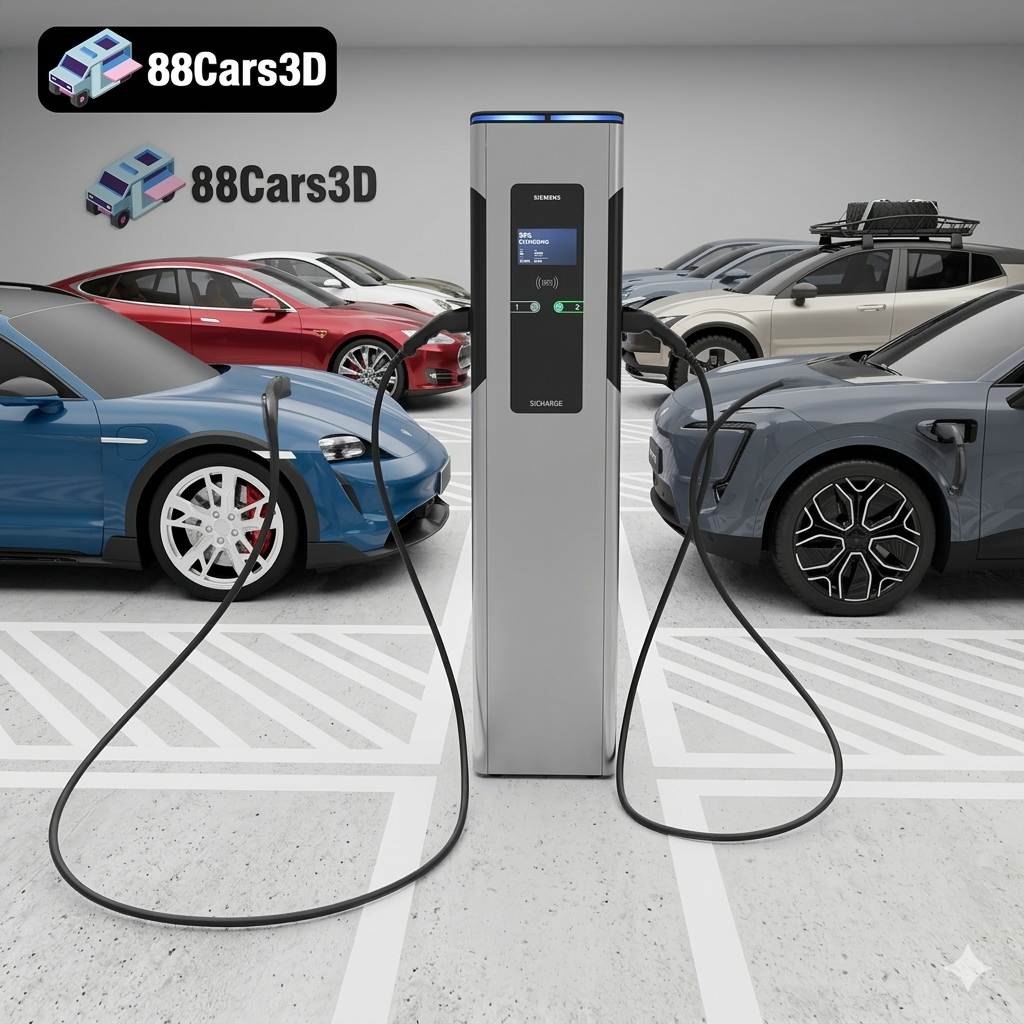
The Future of Mobility: Smart City EV 3D Models Bundle (5-in-1 Pack) Volvo Tesla AVATR Porsche 3D Printable STL
Download the Future of Mobility EV 3D Models Bundle. Includes the Volvo EX30, Tesla Model S, AVATR 11, Porsche Taycan, and a Siemens EV Charger. Save big on this highly optimized 5-in-1 pack for ArchViz and game development!
Price: $89.99
