

“`html
Mastering Model Making: Key 3D Printer Features for Exquisite Printable Car Models
The allure of bringing a beloved car to life in miniature, with intricate details and perfect proportions, is a driving force for many hobbyists and professional model makers. For those leveraging the power of 3D printing, the choice of printer can be the pivotal factor between a rough prototype and a show-stopping replica. At 88cars3d.com, we understand the nuances of creating high-fidelity printable car models in STL format, and we know that the journey from digital file to physical object requires the right tools. This article delves deep into the essential features that truly matter when selecting a 3D printer for your model-making endeavors, particularly for intricate projects like those found in our collection of high-quality car models. We’ll explore everything from print resolution and build volume to material compatibility and user experience, equipping you with the knowledge to make an informed decision and unlock the full potential of your 3D printing projects.
Whether you’re meticulously crafting scale replicas for display, prototyping custom car parts, or building educational models, understanding these critical printer specifications will empower you to achieve stunning results. We’ll cover the technical aspects of FDM and resin printing, slicing strategies, support generation, and post-processing, providing actionable insights to elevate your model-making game. Get ready to discover what truly separates a good 3D printer for model makers from a great one.
Precision and Resolution: The Cornerstone of Detail
For model makers, especially those focused on the intricate details of automotive design, the printer’s ability to reproduce fine features is paramount. This directly relates to its precision and resolution capabilities. High-resolution prints mean sharper edges, smoother curves, and the capacity to capture subtle design elements that define a car model’s authenticity. When evaluating printers, look beyond marketing hype and focus on quantifiable metrics that impact the final output.
Layer Height: The Building Blocks of Smoothness
Layer height is arguably the most significant factor influencing print resolution. It refers to the thickness of each individual layer of material deposited by the printer. For Fused Deposition Modeling (FDM) printers, which build objects by extruding melted filament, common layer heights range from 0.1mm to 0.3mm. However, for detailed model making, printing at lower layer heights, such as 0.05mm to 0.1mm, is often necessary. This dramatically increases print time but results in significantly smoother surfaces and finer details, reducing the visible “stair-stepping” effect common on curved or angled surfaces. Many modern FDM printers can achieve these finer layers, but it often requires a smaller nozzle diameter (e.g., 0.2mm instead of the standard 0.4mm) and slower print speeds. Conversely, Stereolithography (SLA) and Digital Light Processing (DLP) resin printers excel in this area, with typical layer heights ranging from 0.025mm to 0.1mm, offering inherently higher detail capture suitable for miniatures and highly intricate parts.
XY Resolution: Capturing Fine Features
While layer height dictates vertical detail, XY resolution refers to the printer’s ability to resolve features in the horizontal plane. For FDM printers, this is primarily determined by the diameter of the nozzle and the precision of the stepper motors controlling the print head’s movement. A smaller nozzle diameter (e.g., 0.2mm or 0.25mm) allows for finer extrusion lines and sharper detail. However, smaller nozzles are more prone to clogging and require slower print speeds. For resin printers, XY resolution is determined by the pixel size of the UV light source (for DLP) or the laser spot size (for SLA). Smaller pixel sizes or laser spot sizes translate to higher XY resolution, enabling the printer to create extremely fine lines and intricate surface textures that are critical for realistic car models, especially when replicating grilles, emblems, or panel gaps.
Software and Slicer Influence
The best hardware is only as good as the software controlling it. A powerful slicer, such as Cura, PrusaSlicer, or specialized resin slicing software, allows users to fine-tune settings related to resolution. Features like adaptive layer height, which automatically reduces layer height in areas requiring more detail, and precise control over retraction settings (for FDM) to prevent stringing, are crucial. When using models from platforms like 88cars3d.com, which are designed for printability, the slicer settings become your primary tool for achieving the desired level of detail. Experimentation with different “resolution” or “quality” presets within your slicer is essential. For instance, using a 0.08mm layer height for a car body with a 0.05mm layer height for smaller, intricate parts like wheels can optimize both quality and print time.
Build Volume and Print Orientation: Scale and Strategy
The size of the objects you intend to print, and how you position them on the build plate, are critical strategic considerations in model making. The build volume dictates the maximum dimensions of a single print, while print orientation affects structural integrity, support requirements, and surface finish. For automotive models, especially larger scale replicas or components, these factors play a significant role in your workflow.
Understanding Build Volume Limitations
Build volume is simply the maximum size (X, Y, and Z dimensions) of an object that a 3D printer can create. For large-scale car models, a generous build volume is highly desirable. For example, a printer with a 250x210x210mm build volume might be sufficient for many 1:24 scale models, but a larger build volume, such as 300x300x300mm or more, would be necessary for printing larger scale models or multiple components simultaneously. If your desired model exceeds the build volume, you’ll need to split it into smaller parts using 3D modeling software (like Blender or Meshmixer) and then assemble them post-printing. This adds complexity to the process, requiring precise alignment features (often designed into the STL file) and careful gluing. When downloading models from marketplaces such as 88cars3d.com, check the recommended scale and consider if it fits within your printer’s capabilities, or if splitting the model will be necessary.
Print Orientation for Optimal Results
The way an object is oriented on the print bed has a profound impact on its print quality, strength, and the amount of support material required. For car models, this is especially true for aerodynamic shapes, sharp edges, and detailed surfaces. Generally, you want to orient models to minimize overhangs and avoid printing large, flat surfaces directly against the build plate (which can lead to warping or poor adhesion) or directly facing upwards (which can result in less detail on the top surfaces). For example, a car body might be best printed at a slight angle (e.g., 15-30 degrees) to reduce the need for extensive supports on the underside and improve surface finish on the roof and hood. Wheels are often best printed flat on the bed to maximize detail on the sidewalls and spokes, but this requires good bed adhesion to prevent detachment. Experiment with different orientations in your slicer to find the best balance between support minimization, surface quality, and printability.
Minimizing Supports and Maximizing Detail
Supports are temporary structures printed to hold up overhanging parts of a model during printing. While essential, they can leave marks on the model surface after removal, requiring significant post-processing. Strategic print orientation can dramatically reduce the amount and complexity of supports needed. For example, printing a car body upside down might require supports for the wheel arches and undercarriage, but could leave the roof and hood surfaces cleaner. Conversely, printing it upright might require supports for the entire undercarriage, but could lead to better detail on the interior if printing with the top off. Some advanced slicer features, like tree supports or custom supports, offer more efficient and less intrusive support structures. For resin printers, the orientation is critical for minimizing peel forces during layer separation, which can prevent print failures and preserve fine details, especially on delicate elements like spoiler fins or antennas.
Material Versatility and Printer Technology: FDM vs. Resin
The choice between FDM and resin printing technology, and the range of materials each can handle, fundamentally influences the type of model you can produce, its properties, and the required post-processing. Both technologies have their strengths and weaknesses for model making, and understanding these differences is key to selecting the right printer for your needs.
FDM Printing: Versatility and Affordability
FDM printers are the most common type for hobbyists and makers due to their affordability, wide range of available materials, and relatively large build volumes. They work by extruding thermoplastic filament layer by layer. For car models, FDM is excellent for larger prototypes, functional parts, or models where extreme fine detail isn’t the absolute priority. Common FDM materials include:
- PLA: Easy to print, low warp, good for beginners, but can be brittle and has a lower temperature resistance. Ideal for general display models.
- PETG: More durable and temperature resistant than PLA, with good layer adhesion. A good balance for functional parts or models that might experience some stress.
- ABS: Strong, durable, and temperature resistant, but prone to warping and requires good ventilation due to fumes. Often used for more robust prototypes.
- TPU: A flexible filament, useful for printing tires or other flexible components of a car model.
The layer lines inherent to FDM printing can be a drawback for achieving a perfectly smooth finish. However, with careful slicing, lower layer heights (0.05mm-0.1mm), and post-processing techniques like sanding and priming, excellent results can be achieved. Nozzle size also plays a role; a smaller 0.2mm nozzle can significantly improve detail but requires slower print speeds.
Resin Printing: Unmatched Detail and Smoothness
Resin printers (SLA/DLP/MSLA) use a liquid photopolymer resin that is cured by UV light layer by layer. They offer significantly higher resolution and smoother surface finishes compared to FDM printers, making them ideal for highly detailed miniatures, intricate components, and prototypes where visual fidelity is paramount. Resin printers excel at:
- Intricate Details: Capturing fine panel lines, small emblems, and delicate features that FDM printers struggle with.
- Smooth Surfaces: Producing virtually no visible layer lines, resulting in a “ready-to-paint” finish straight off the printer.
- Material Variety: While most users stick to standard resins, specialized resins exist for increased toughness, flexibility, or even castable properties.
However, resin printers typically have smaller build volumes, require more involved post-processing (washing in IPA or an equivalent, and UV curing), and involve handling potentially hazardous chemicals. The cost of resin can also be higher than filament. For collectors of highly detailed 1:43 or 1:18 scale car models, a resin printer is often the preferred choice.
Choosing the Right Technology for Your Project
The decision between FDM and resin hinges on your priorities. If you need to print large-scale models, functional parts, or are on a tighter budget, an FDM printer offers greater versatility. If your primary goal is achieving the highest possible level of detail and a smooth, paint-ready surface for intricate scale models, a resin printer is likely the better investment. Many serious hobbyists find value in having both technologies to leverage their respective strengths. For example, an FDM printer could be used for a larger, less detailed car body, while a resin printer handles the incredibly detailed wheels, interior, and exterior trim pieces.
User Experience and Software Integration: Workflow Efficiency
Beyond the core printing capabilities, the user experience and how well the printer integrates with your existing software workflow significantly impact productivity and satisfaction. A printer that is intuitive to set up, easy to operate, and plays well with your favorite slicing and modeling tools can save countless hours and reduce frustration.
Ease of Setup and Calibration
For beginners and even experienced users, the initial setup and ongoing calibration of a 3D printer can be daunting. Printers that offer features like automatic bed leveling, guided first-layer calibration, and straightforward filament loading/resin vat assembly reduce the learning curve. A reliable auto-leveling system, for instance, ensures consistent first-layer adhesion, which is critical for print success and reduces the manual tweaking required. Similarly, easy-to-access calibration tests and clear instructions for adjustments (e.g., for extrusion multiplier or resin exposure times) contribute to a smoother operational experience. Printers designed with user-friendliness in mind often have intuitive touchscreens and well-organized menus, making adjustments and print management straightforward.
Slicer Compatibility and Software Ecosystem
The printer’s ability to work seamlessly with popular slicing software is crucial. While most FDM printers are compatible with slicers like Cura and PrusaSlicer, some manufacturers offer their own optimized slicers or profiles that can fine-tune settings for their specific hardware. For resin printers, proprietary slicers are more common, but compatibility with industry standards is still important. Beyond slicing, consider how the printer interacts with your 3D modeling software (e.g., Blender, Meshmixer, Fusion 360) for tasks like model repair, scaling, or splitting models for larger prints. Some printers offer cloud connectivity or app-based control, allowing you to monitor prints remotely or upload files wirelessly, adding a layer of convenience to your workflow. When dealing with complex STL files from a curated source like 88cars3d.com, seamless integration with your chosen slicer ensures that the intended printability and detail are preserved.
Reliability and Maintenance
A printer that consistently produces good prints with minimal intervention is invaluable. Reliability is built on robust hardware, quality components, and well-tested firmware. Look for printers with a track record of durability and good customer support. Routine maintenance, such as cleaning the build plate, lubricating Z-axis rods, replacing nozzle (FDM), or cleaning the resin vat and FEP film (resin), is inevitable. A printer that makes these maintenance tasks accessible and straightforward will save you time and effort in the long run. For example, a removable magnetic build plate on an FDM printer makes print removal and cleaning much easier. Similarly, a resin printer with a user-replaceable FEP film or a well-designed vat drainage system simplifies maintenance.
Support Structures and Post-Processing: Refining the Masterpiece
The journey from a raw 3D print to a finished model involves crucial steps in managing support structures and executing effective post-processing. The printer’s capabilities and the design of the STL files themselves play a significant role in how these steps are approached. Achieving a professional-looking automotive model often requires meticulous attention to these finishing touches.
Intelligent Support Generation and Removal
As discussed, print orientation greatly influences support needs. However, the printer’s ability to handle supports effectively, and the slicer’s tools for generating them, are also key. For FDM printers, the settings for support density, contact points, and interface layers are critical. Too few supports, and the overhang will fail; too many, or with poor interface settings, and removal becomes a nightmare, potentially damaging the model. Slicers offer various support types, including standard, tree, and custom supports. Tree supports, for example, often use less material and are easier to remove than traditional supports. For resin printers, supports are typically much finer but equally critical. They prevent suction forces from detaching prints from the FEP film and ensure delicate features are accurately reproduced. The strength and placement of these fine supports require careful consideration in the slicing software to balance print success with ease of removal without damaging delicate parts like mirrors or spoilers.
Sanding, Filling, and Priming for Surface Perfection
For FDM prints, especially those with visible layer lines, a significant amount of post-processing is often required to achieve a smooth, paint-ready surface. This typically involves:
- Support Removal: Carefully removing support structures using pliers, scalpels, or flush cutters.
- Sanding: Starting with a coarser grit sandpaper (e.g., 150-220 grit) to remove support marks and major imperfections, then progressing to finer grits (e.g., 400, 800, 1000, and even higher) to achieve a smooth finish.
- Filling: Using modeling putty or fillers to fill any remaining gaps, layer lines, or imperfections.
- Priming: Applying a coat of primer helps to reveal any remaining imperfections and provides a uniform base for painting. Multiple light coats are better than one heavy coat.
Resin prints generally require less sanding due to their inherently smoother finish, but support removal marks will still need attention. The process typically involves sanding with progressively finer grits, followed by priming.
Painting, Assembly, and Finishing Touches
Once the surface is prepared, the model is ready for painting. Achieving realistic automotive finishes often requires airbrushing techniques, using automotive-grade paints or high-quality acrylics. For complex models, assembly is the final step. This might involve gluing multiple printed parts together, adding aftermarket decals, or incorporating non-printed components. The design of the STL files plays a crucial role here; models from reputable sources like 88cars3d.com often include features like keyed joints or alignment pins to simplify assembly. Post-processing is where the true artistry of model making comes to life, transforming a raw print into a stunning replica.
Advanced Considerations: Printer Calibration and File Preparation
To consistently achieve the best results, especially with complex models like printable car models, going beyond basic settings and understanding advanced calibration and file preparation is essential. These aspects ensure your printer is performing optimally and that your digital models are ready for flawless replication.
Printer Calibration for Peak Performance
Regular and thorough calibration is the bedrock of reliable 3D printing. For FDM printers, this includes:
- E-Step Calibration: Ensures the printer extrudes the correct amount of filament.
- PID Tuning: Stabilizes nozzle and bed temperatures, preventing fluctuations that can affect print quality.
- Flow Rate/Extrusion Multiplier Tuning: Fine-tunes the amount of filament extruded for each specific filament type and brand.
- Bed Leveling: Ensuring a perfect first layer across the entire build surface is critical.
For resin printers, calibration typically involves printing test patterns to determine the optimal exposure time for different resin types and ensuring the Z-axis is properly calibrated. Manufacturers often provide specific calibration models and procedures. Investing time in these calibration steps pays dividends in print success rates and the quality of the final output, especially when working with detailed models where even minor inaccuracies can be noticeable.
STL File Integrity and Mesh Repair
The quality of the STL file you print from is as important as the printer itself. STL files represent a 3D model’s surface geometry as a collection of triangles. Issues within this mesh topology can lead to printing errors. Common problems include:
- Non-Manifold Geometry: Edges shared by more than two faces, or faces inside the model.
- Holes: Gaps in the mesh that create openings.
- Inverted Normals: Faces pointing inward, confusing the slicer.
- Intersecting Faces: Triangles overlapping each other.
Software like Meshmixer, Netfabb, or even built-in tools in some slicers can be used to repair these mesh errors. Many marketplaces, including 88cars3d.com, strive to provide clean, manifold STL files optimized for 3D printing. However, it’s always a good practice to run a mesh check in your preferred software before slicing, especially if you encounter unexpected issues during printing. Understanding the structure of an STL file helps in diagnosing and resolving print problems related to the model geometry itself.
Optimizing Print Settings for Specific Models
Beyond general calibration, print settings should be tailored to the specific model and material. For intricate car models:
- Wall Thickness: Ensure a minimum wall thickness is set in the slicer (e.g., 1-2mm for FDM) to provide structural integrity.
- Infill Density and Pattern: For display models, low infill (5-15%) is often sufficient, saving material and print time. For functional parts, higher infill might be needed. Patterns like gyroid can offer good strength and reduce material usage compared to rectilinear.
- Print Speed: Slower speeds generally result in better quality, especially for detailed areas. Consider reducing speed for outer walls and small features.
- Cooling Fan Speed (FDM): Proper cooling is essential for FDM prints to solidify layers quickly, preventing sagging on overhangs and improving detail.
Fine-tuning these settings, often through trial and error on smaller test prints, allows you to maximize the detail and quality of your printable car models.
Conclusion: Choosing Your Ideal Model-Making 3D Printer
Selecting the right 3D printer for model making, particularly for the intricate world of printable car models, is a decision that requires careful consideration of several key factors. The pursuit of detail and realism demands a printer that excels in precision and resolution, whether through fine layer heights on an FDM machine or the inherent sharpness of a resin printer. Understanding the trade-offs between layer height, print time, and XY resolution will guide you toward the settings that best suit your projects.
The build volume will dictate the scale and complexity of single-part prints, influencing whether you need to master model splitting and assembly techniques. Material versatility and the fundamental choice between FDM and resin technologies will determine the final properties and visual fidelity of your models. For those prioritizing extreme detail and smooth finishes, resin printers are often the superior choice, while FDM printers offer broader material options and larger build volumes for more versatile applications. Furthermore, the user experience, including ease of setup, software integration, and overall reliability, plays a critical role in ensuring a smooth and productive workflow. Finally, mastering support structures, post-processing techniques, and advanced calibration ensures that your raw prints are transformed into polished, professional-quality replicas.
When embarking on your 3D printing journey for automotive models, remember that platforms like 88cars3d.com offer expertly prepared STL files designed for optimal printability. By pairing these high-quality digital assets with a printer that meets your specific needs in resolution, build volume, and technology, you’ll be well on your way to creating breathtaking scale replicas and prototypes. Invest wisely, calibrate diligently, and embrace the post-processing that brings your miniature automotive masterpieces to life.
“`
Featured 3D Car Models

The Italian Legends Bundle 5 Ultimate Supercar 3D Models STL Optimized
Texture: Yes | Material: Yes | 3D Printable: Yes. Download the Italian Thoroughbreds Bundle featuring 5 iconic 3D models: Lamborghini Huracán Performante, Ferrari 458 Italia, Lamborghini Urus, Diablo SV, and Maserati GT. Optimized for 4K rendering and 3D printing (STL included). Save 50% with this ultimate Italian vehicle collection.
Price: $199.99

Elite Future Mobility: EV & Autonomous SUV Bundle (4 High-End 3D Models)3D Printable STL
Download the Elite Future Mobility Bundle featuring 4 highly optimized 3D models: Tesla Model S, Avatr 11, Li L9, and Zoox Robotaxi. Perfect for ArchViz, Smart City renders, and game dev. Optimized for Unreal Engine and Blender. Includes .fbx, .obj, and .max formats.
Price: $99

German Luxury & Performance Bundle – High-End 3D Vehicle Collection3D Printable STL
🚗 5 Iconic German Cars (BMW M4 G82, M5 CS, X3, 1 Series & Mercedes E-Class). ✅ Optimized for ArchViz: Ready for Corona & V-Ray. 💰 Save €71 with this limited-time collection! 🚀 Instant Download after purchase.
Price: $119

Extreme Off-Road & Survival 3D Models Bundle (4-in-1 Pack)3D Printable STL
Download the Extreme Off-Road & Survival 3D Models Bundle! Includes the Brabus 800 Adventure, Dodge Ram Bigfoot, Spec Truck, and a Caravan. Save over €210 on this premium 4-in-1 off-grid vehicle pack for ArchViz and game development.
Price: $149.99

Heavy Duty & Commercial Logistics 3D Models Bundle (4-in-1 Pack)3D Printable STL
Download the Heavy Duty & Commercial Logistics 3D Models Bundle! Includes the Ford Sterling, Caterpillar CT680, Mercedes Citaro Bus, and Vito Van. Save over €130 on this massive, game-ready 4-in-1 industrial vehicle pack.
Price: $109.99

The Ultimate Garage Props & Custom Motorcycles 3D Models Bundle 3D Printable STL
Download the Ultimate Custom Motorcycles 3D Models Bundle. Includes a Custom Chopper, Ducati 916 Café Fighter, Harley XR1200X, and BMW K100. Perfect premium props for luxury ArchViz garages. Save over €250 today!
Price: $159.99

Japanese Legends: JDM Street Racing 3D Models Bundle (5-in-1 Pack) Nissan Mitsubishi Honda Mazda Toyota 3D Printable STL
Download the ultimate JDM Street Racing 3D Models Bundle! Includes the Nissan GT-R, Toyota Supra, Mazda RX-7, Lancer Evo IX, and Honda NSX. Save big on this highly optimized, game-ready 5-in-1 Japanese legend car pack.
Price: $129.99

American Muscle & Classics Pack 4 in 1 Ford Dodge Chevrolet 3D Printable STL
Download the ultimate American Muscle & Cinematic Classics 3D Models Bundle! Includes the Dodge Charger ’68, Mustang Eleanor GT500, Camaro Z28 ’79, and a custom ’69 Mustang. Save over €240 on this game-ready, premium 4-in-1 pack.
Price: $149.99

Everyday City Traffic Essentials pack 5in1 Hyundai Kia Volkswagen Toyota Ford 3D Printable STL
Download the Everyday City Traffic 3D Models Bundle. Includes the VW Golf, Kia Picanto, Hyundai Tucson, Toyota Yaris, and a DHL Ford Transit Van. Save big on this 5-in-1 pack, perfectly optimized for realistic ArchViz streets and game traffic.
Price: $99.99
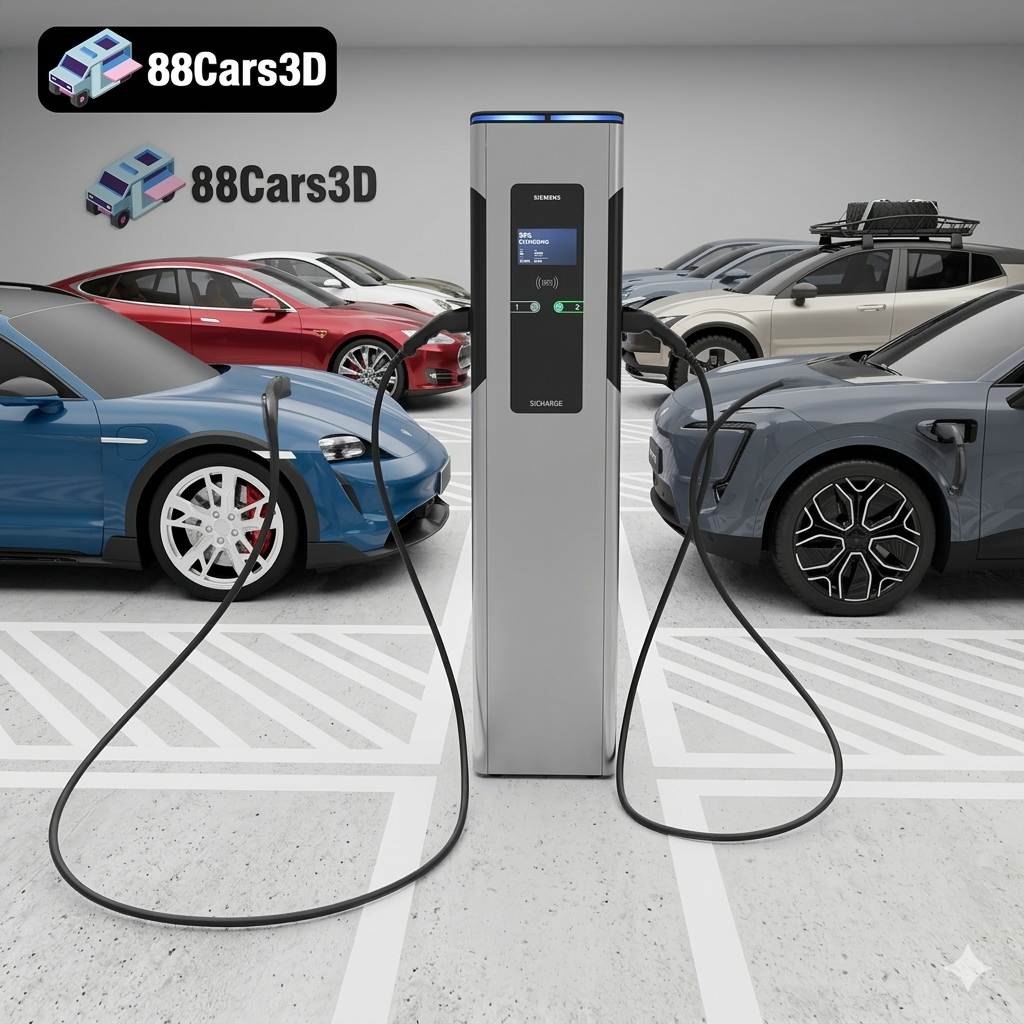
The Future of Mobility: Smart City EV 3D Models Bundle (5-in-1 Pack) Volvo Tesla AVATR Porsche 3D Printable STL
Download the Future of Mobility EV 3D Models Bundle. Includes the Volvo EX30, Tesla Model S, AVATR 11, Porsche Taycan, and a Siemens EV Charger. Save big on this highly optimized 5-in-1 pack for ArchViz and game development!
Price: $89.99
