Mastering the Digital Garage: The Art and Science of 3D Car Models for Rendering and Game Development
In the vibrant intersection of art and engineering, 3D car models stand as pivotal assets across a multitude of industries. From captivating automotive advertisements and immersive video games to cutting-edge architectural visualizations and advanced simulations, the demand for high-quality, meticulously crafted digital vehicles is ever-growing. These aren’t just simple polygon meshes; they are intricate digital sculptures, engineered for specific purposes and optimized for peak performance within their target environments. Whether you’re an automotive designer showcasing a new concept, a game developer building a realistic racing simulator, or an architect integrating a vehicle into a scene, the fidelity and technical integrity of your 3D car models are paramount to achieving truly professional results.
At 88cars3d.com, we understand the critical nuances that elevate a good 3D car model to an exceptional one. This deep dive explores the technical foundations, diverse applications, and advanced workflows involved in utilizing 3D car models, providing insights into how these digital assets power next-generation visuals and interactive experiences. We’ll uncover the technical specifications, file formats, and best practices that define excellence in this specialized field, ensuring your projects not only look stunning but also perform flawlessly.
The Foundation of Automotive 3D: Why Quality Matters
The journey of a 3D car model begins long before it’s dropped into a scene. Its inherent quality, defined by meticulous modeling, precise texturing, and intelligent optimization, directly dictates its utility and visual impact. Without a solid foundation, even the most sophisticated rendering engines or game pipelines will struggle to produce convincing results.
Precision in Modeling: From CAD to Mesh
High-quality 3D car models often start their life as NURBS (Non-uniform rational B-spline) surfaces, typically generated in CAD software like SolidWorks, Rhino, or CATIA. These mathematically precise surfaces are ideal for industrial design, ensuring perfect curves and manufacturing accuracy. However, game engines and most rendering software prefer polygon meshes (triangles or quads). The conversion from NURBS to polygons is a critical step, requiring careful tessellation to maintain the original design intent without creating excessive polygon counts or artifacts. The goal is to achieve a balance: enough polygons to capture the vehicle’s intricate curves and details, but not so many that it becomes unmanageable for real-time applications or unwieldy for rendering.
Material Fidelity and Texturing for Realism
Beyond the raw geometry, the realism of a 3D car model largely hinges on its materials and textures. Modern physically based rendering (PBR) workflows are essential here. This involves creating textures that simulate real-world material properties such as albedo (base color), roughness, metallic, normal maps (for fine surface detail), and ambient occlusion. Car paint, in particular, is complex, often requiring layered materials to simulate clear coat, metallic flakes, and subtle reflections. Tire treads, headlight lenses, dashboard leathers, and interior fabrics each demand unique material setups and high-resolution textures to achieve photorealistic results. The quality of these textures, including their resolution (e.g., 4K or 8K) and seamlessness, directly impacts the visual fidelity of the final render or in-game asset.
The Impact of Topology and UV Mapping
Good topology – the arrangement of polygons – is crucial for clean deformations, smooth subdivisions, and efficient UV mapping. Ideally, polygons should be mostly quads, flowing along the natural contours of the vehicle. This makes editing easier and helps subdivision surfaces (like those used in 3ds Max or Blender) produce smoother results. UV mapping is the process of unwrapping the 3D model’s surfaces onto a 2D plane, allowing 2D textures to be applied accurately. Well-executed UVs are organized, minimize stretching, and utilize texture space efficiently. Overlapping UVs, common for identical parts like wheels, can save texture memory, but unique UVs are necessary for specific details or baked lighting. Clean UVs are non-negotiable for high-quality texturing and lighting workflows.
Understanding 3D Model File Formats
The world of 3D modeling is rich with diverse file formats, each designed for specific purposes, software compatibility, and optimization goals. Choosing the correct format for your 3D car model is paramount to ensuring smooth workflows, data integrity, and optimal performance across different applications. Understanding these distinctions is a fundamental skill for anyone working with digital assets.
Native and Editable Formats (.blend, .max)
.blend – Fully Editable Blender Scene with Materials: The native file format for Blender, .blend files encapsulate an entire Blender scene, including geometry, materials, textures (packed within the file or linked), animations, cameras, lights, and even physics simulations. This format is ideal for Blender users who need full editability and access to all aspects of the original scene. When you acquire a .blend file, you’re getting the complete working project, allowing for extensive modifications, re-texturing, animation adjustments, or custom scene setups. It’s the most flexible option for Blender-centric workflows, preserving all non-destructive modifiers and complex node-based materials.
.max – Editable 3ds Max Project for Animation and Rendering: Similarly, .max is the native file format for Autodesk 3ds Max. It stores a complete 3ds Max scene, including all model data, materials, textures, lighting, cameras, animation keyframes, and scene settings. For users deeply integrated into the Autodesk ecosystem, a .max file offers unparalleled flexibility for further development, rendering in Arnold or V-Ray, complex character rigging (if applicable), and detailed scene assembly. Like .blend, it’s the go-to for full artistic control within its native environment, allowing for parametric modifications and access to modifier stacks.
Interchange and Real-time Optimized Formats (.fbx, .obj, .glb, .unreal)
.fbx – Ideal for Unreal, Unity, and Real-time Pipelines: Developed by Autodesk, FBX (Filmbox) is arguably the most widely adopted interchange format in the 3D industry, particularly for game development and animation. It’s highly versatile, capable of storing not just geometry and UVs, but also materials (though often simplified), textures, animations (including skeletal animations and blend shapes), cameras, and lights. Its robust support for animation data makes it indispensable for bringing animated 3D car models (e.g., opening doors, suspension movement) into game engines like Unreal Engine and Unity. FBX files often require careful export settings to ensure compatibility and correct data interpretation across different software, but their comprehensive data support makes them a cornerstone of many professional workflows.
.obj – Universal Format for Cross-software Compatibility: OBJ (Object) is a simpler, more universal format, widely supported across virtually all 3D software. It primarily stores geometric data (vertices, normals, UVs, and faces) and can link to an accompanying .mtl (Material Template Library) file for basic material properties and texture references. While it doesn’t support animation, rigging, or complex scene data, its simplicity and widespread compatibility make it an excellent choice for straightforward mesh transfer between different applications. When you need to move just the raw 3D car model geometry with its UVs and texture assignments, .obj is a reliable, lightweight option.
.glb – Optimized for AR, VR, and Browser-based Display: GLB (GL Transmission Format Binary) is a relatively newer format, an evolution of the glTF (GL Transmission Format) specification. GLB packages all assets – geometry, materials, textures, animations – into a single binary file, making it incredibly efficient for web-based 3D applications, augmented reality (AR), virtual reality (VR), and online viewers. It’s designed for fast loading and rendering, leveraging PBR material definitions to ensure consistent visual quality across platforms. For visualizing 3D car models interactively in web browsers or AR apps, .glb offers an optimized, compact solution.
.unreal – Engine-ready Asset for Real-time Environments: While not a direct export format like FBX or OBJ, an “.unreal” file (or more accurately, an asset imported and optimized within Unreal Engine’s content browser, represented as .uasset files) signifies a 3D car model that has been fully processed and prepared for use in Unreal Engine. This means the mesh has been imported, materials have been set up using Unreal’s robust material editor, textures have been properly compressed, LODs (Levels of Detail) generated, collision meshes added, and possibly even physics assets created. An “Unreal-ready” model is not just geometry; it’s a complete, optimized game asset designed for performance and visual fidelity within the engine’s ecosystem.
Specialized Formats for Manufacturing and Analysis (.stl, .ply)
.stl – Suitable for 3D Printing Output: STL (Stereolithography) is the de facto standard format for 3D printing. It represents a 3D model as a series of connected triangles, describing only the surface geometry without color, texture, or material information. For preparing a 3D car model for physical fabrication, an .stl file is essential. The model must be “watertight” – meaning it has no holes or gaps in its mesh – to ensure a successful print. This format is purely for manufacturing output, not for rendering or interactive applications.
.ply – Precision Mesh Format for CAD or Analysis: PLY (Polygon File Format) is another format for storing 3D data, often used in scientific and engineering applications, as well as some CAD workflows. It can store not only geometry but also color, transparency, surface normals, and other attributes per vertex or per face. While less common for general 3D model exchange compared to FBX or OBJ, PLY is valued for its ability to preserve detailed mesh information, making it useful for high-precision models, scanned data, or when intricate per-vertex attributes need to be maintained for analysis or specific rendering pipelines.
Selecting the right file format is a critical decision that impacts workflow efficiency, data integrity, and the ultimate success of your 3D car model’s application. A robust marketplace like 88cars3d.com often provides models in multiple formats to cater to these diverse needs, ensuring professionals have the right tools for their specific projects.
Automotive Rendering: Crafting Photorealistic Visuals
Photorealistic rendering of 3D car models is an art form that blends technical mastery with an acute eye for detail. It’s about convincing the viewer that what they’re seeing is indistinguishable from a photograph, often surpassing physical photography in flexibility and control.
Lighting Techniques for Studio and Environment Shots
Lighting is arguably the most crucial element in achieving photorealism. For studio shots, a combination of area lights, dome lights (often with HDRI maps), and targeted spot or strip lights is used to highlight contours, reflections, and paint qualities. A classic three-point lighting setup (key, fill, back) forms the foundation, with additional lights strategically placed to emphasize design features. For environment shots, Image-Based Lighting (IBL) using high-dynamic-range images (HDRIs) is paramount. An HDRI not only provides realistic ambient illumination but also serves as a believable reflection source, crucial for metallic and glossy car surfaces. Placing virtual lights to augment the HDRI, mimicking real-world sun or streetlights, further enhances the realism in software like V-Ray for 3ds Max or Cycles in Blender, or Unreal Engine’s path tracer.
Advanced Materials: Paint, Glass, and Chrome
The realism of a 3D car model hinges heavily on its materials. Car paint is a multi-layered shader incorporating a base metallic or non-metallic layer, often with iridescent flakes, topped by a clear coat that provides depth, gloss, and specific reflections. Achieving the subtle fresnel reflections and accurate specular highlights is key. Glass materials require careful attention to refraction, transparency, and absorption, often with subtle grime or fingerprint textures to break up perfect reflections. Chrome and other metallic surfaces rely on accurate metallic values in PBR shaders, combined with highly detailed reflection maps or high-resolution environment maps from HDRIs to capture sharp, clear reflections. These material complexities demand powerful rendering engines and skilled material artists.
Post-Processing and Compositing for the Final Touch
Even the most stunning raw render benefits immensely from post-processing and compositing. This stage, often performed in software like Adobe Photoshop or After Effects, involves color grading to set the mood, adding subtle atmospheric effects (depth of field, lens flare, bloom), and integrating the car into a background plate or CGI environment. Render passes (e.g., diffuse, specular, reflection, ambient occlusion, depth) are exported from the 3D software and then layered and manipulated in compositing to achieve maximum control over the final image. This fine-tuning is where the render truly comes alive, transforming a technically accurate image into a compelling visual narrative.
3D Car Models for Game Development: Performance and Immersion
Integrating 3D car models into game environments presents a unique set of challenges, prioritizing real-time performance and interactive fidelity. Unlike static renders, game assets must be lightweight, efficient, and responsive to player input while maintaining visual quality.
Optimizing Poly Counts and LODs (Levels of Detail)
Performance in games is directly tied to polygon count. High-detail models suitable for cinematic rendering are often too heavy for real-time engines. Game-ready 3D car models require meticulous optimization, often involving retopology to reduce polygon count while preserving visual integrity. The use of LODs (Levels of Detail) is standard practice. This means creating multiple versions of the same car model, each with a progressively lower polygon count. The game engine automatically switches between these LODs based on the car’s distance from the camera, displaying the highest detail when close and simpler versions when far away, significantly reducing rendering overhead without a noticeable loss in quality for the player. This is a crucial step in preparing assets for engines like Unreal Engine and Unity.
Collision Meshes and Physics Integration
For interactive vehicles, a simple visual mesh isn’t enough. Game engines require a separate, much simpler collision mesh (often a convex hull or a series of primitive shapes) to handle physical interactions with the environment and other objects. This collision mesh determines how the car responds to impacts, drives over terrain, and interacts with game physics. Beyond simple collisions, integrating a car into a game’s physics system involves setting up wheel colliders, suspension parameters, engine torque curves, and braking forces. This complex setup, often handled within the game engine’s blueprint or scripting systems (e.g., Unreal Engine’s Vehicle blueprint or Unity’s Wheel Collider component), dictates the driving feel and realism of the vehicle.
Implementing Car Models in Game Engines (Unreal Engine & Unity Workflow Specifics)
Once a 3D car model (typically an FBX) is imported into Unreal Engine or Unity, the real work begins. In Unreal, materials are recreated using the PBR workflow, often leveraging Master Materials and Material Instances for efficiency and consistency across multiple vehicles. Texture maps are imported and assigned. LODs are generated or imported, and collision meshes are set up. For drivable cars, developers use Unreal Engine’s Vehicle blueprint, connecting the skeletal mesh to the physics system, defining suspension, gearing, and input controls. Unity follows a similar process, utilizing its own PBR Standard Shader, creating prefabs, and attaching scripts for wheel colliders and vehicle physics. Both engines offer powerful tools for bringing these digital vehicles to life, demanding a deep understanding of their respective pipelines for optimal results.
Beyond Rendering and Games: AR/VR, Simulation, and 3D Printing
The utility of high-quality 3D car models extends far beyond traditional rendering and game development, venturing into cutting-edge fields that are redefining how we interact with digital content.
Real-time Interactive Experiences (AR/VR)
Augmented Reality (AR) and Virtual Reality (VR) environments are becoming increasingly important platforms for automotive visualization. Imagine configurating a new car in AR, placing it realistically in your driveway, and exploring its features before you even visit a dealership. Or test-driving a concept car in a fully immersive VR experience. For these applications, 3D car models must be highly optimized for real-time performance, often even more so than for traditional games, due to the demanding frame rates required to prevent motion sickness in VR. The .glb format is particularly well-suited for web-based AR/VR viewers, providing a compact, PBR-ready asset that loads quickly. This allows for interactive showrooms, virtual car launches, and immersive training simulations.
High-Fidelity Simulation and Digital Twins
In engineering and research, 3D car models are central to sophisticated simulations. Autonomous vehicle development, for instance, relies heavily on digital simulations to test AI algorithms in a vast range of scenarios without physical prototypes. These simulations require extremely accurate 3D car models, often derived directly from CAD data, to precisely mimic real-world physics, sensor interactions, and environmental responses. The concept of a “digital twin” – a virtual replica of a physical vehicle – uses these high-fidelity models for predictive maintenance, performance optimization, and virtual testing throughout a car’s lifecycle. These models demand not just visual accuracy but also precise measurements and mechanical integrity for functional simulation.
Preparing Models for 3D Printing
While often starting as high-detail meshes, 3D car models can also be prepared for physical output through 3D printing. This involves converting the model into an .stl or .obj format, ensuring it is “watertight” (no gaps or non-manifold geometry) and appropriately scaled for the desired print size. Complex details might need to be simplified or thickened to be printable, and internal structures might be hollowed out to save material. From creating small-scale prototypes for design review to producing custom parts or unique collectibles, 3D printing provides a tangible bridge between the digital and physical worlds. The quality of the initial digital model directly influences the success and fidelity of the printed object.
Workflow Integration and Best Practices
Successful utilization of 3D car models across diverse pipelines requires an understanding of integrated workflows and adherence to best practices, ensuring efficiency, consistency, and scalability.
Bridging Between Software: Exporting and Importing Strategies
Working with 3D car models often means moving them between different software packages – perhaps modeling in Blender or 3ds Max, texturing in Substance Painter, and rendering in Unreal Engine or a dedicated offline renderer. Strategic export and import settings are critical. For instance, when exporting an FBX from Blender to Unreal, ensuring that the scale is correctly set (usually 0.01 for Blender to Unreal), tangent space is calculated, and desired elements like animations or cameras are included, prevents common import issues. Standardized naming conventions for meshes, materials, and textures are also vital for maintaining organization across software and teams, particularly when dealing with complex assets like entire vehicles.
Maintaining Consistency Across Projects
For studios and individual artists working on multiple projects, maintaining consistency in asset quality, material libraries, and optimization standards is paramount. This involves developing internal guidelines for polygon budgets, texture resolutions, and PBR material setups. Creating master materials in game engines or shared material libraries in renderers allows for efficient iteration and ensures that all vehicles adhere to a uniform visual style. Regular asset reviews and technical audits help to catch inconsistencies early, preventing costly rework down the line. A curated source like 88cars3d.com can be invaluable, providing models that adhere to high standards, thereby reducing the overhead of quality control.
The Value of Pre-Made, High-Quality Assets
Developing a high-quality 3D car model from scratch is an incredibly time-consuming and skill-intensive process. It requires expertise in industrial design, polygonal modeling, sculpting, UV mapping, texturing, rigging, and optimization. For many projects, particularly those with tight deadlines or budget constraints, leveraging pre-made, high-quality 3D car models is a strategic advantage. A marketplace like 88cars3d.com provides access to a meticulously curated collection of professional-grade models, ready for immediate integration into various workflows. These assets are often optimized for different use cases (e.g., high-poly for rendering, game-ready with LODs), coming complete with PBR materials and clean topology, saving countless hours of development time and ensuring a consistent level of excellence in your projects.
Conclusion
The world of 3D car models is a fascinating blend of artistic expression and technical precision. From the initial polygonal mesh to the final rendered image or interactive game asset, every step in the pipeline demands a deep understanding of specialized tools, formats, and best practices. Whether you’re aiming for breathtaking photorealism in an advertisement, seamless performance in a cutting-edge video game, or an immersive experience in AR/VR, the quality of your 3D car models is the bedrock of your success.
We’ve explored the critical importance of foundational modeling, the nuances of various file formats for different applications, the intricate art of automotive rendering, and the essential optimizations required for real-time game development. We’ve also touched upon the expanding horizons of AR/VR, simulation, and 3D printing, underscoring the versatility and growing demand for these digital assets. By embracing these technical insights and leveraging resources that prioritize quality and flexibility, like the extensive collection available at 88cars3d.com, you empower your projects to achieve unparalleled visual fidelity and performance, driving innovation in your respective fields.
Featured 3D Car Models







Japanese Legends: JDM Street Racing 3D Models Bundle (5-in-1 Pack) Nissan Mitsubishi Honda Mazda Toyota 3D Printable STL
Price: $129.99

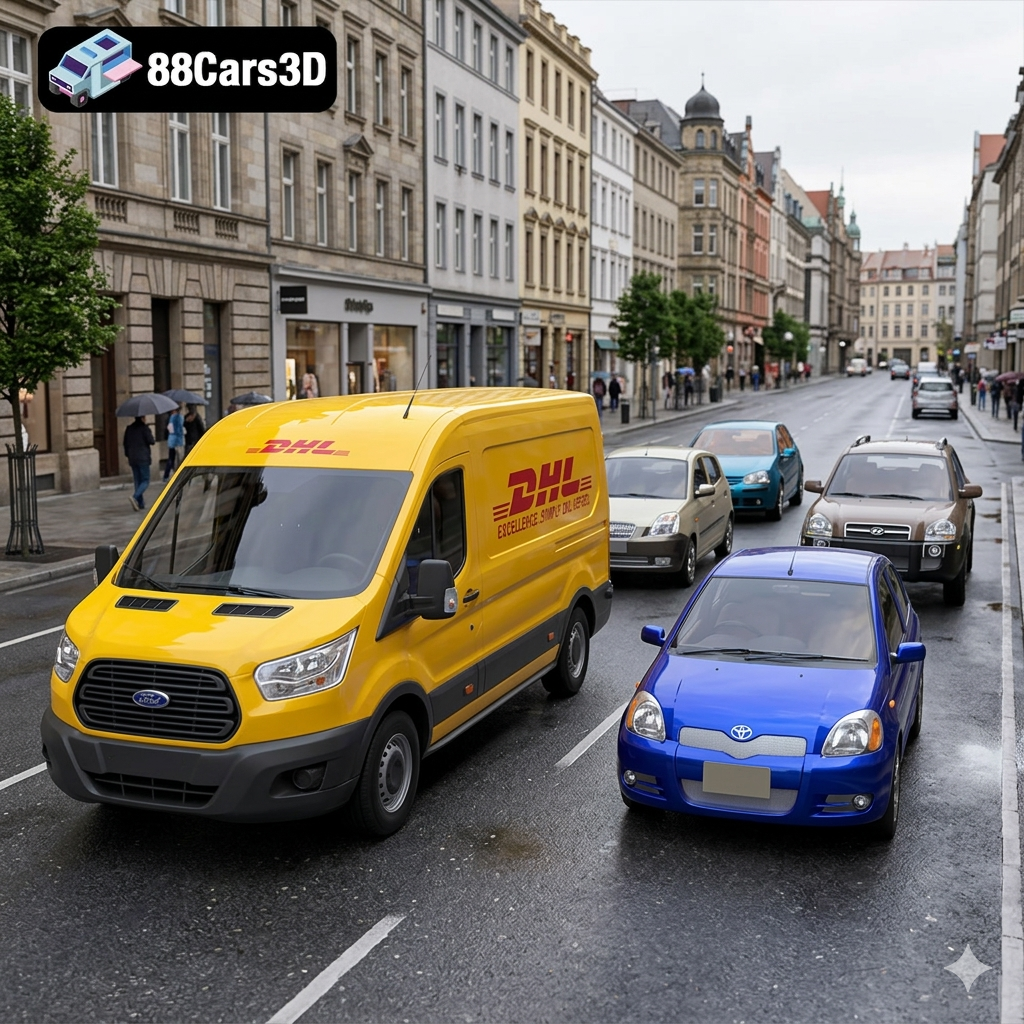
Everyday City Traffic Essentials pack 5in1 Hyundai Kia Volkswagen Toyota Ford 3D Printable STL
Price: $99.99
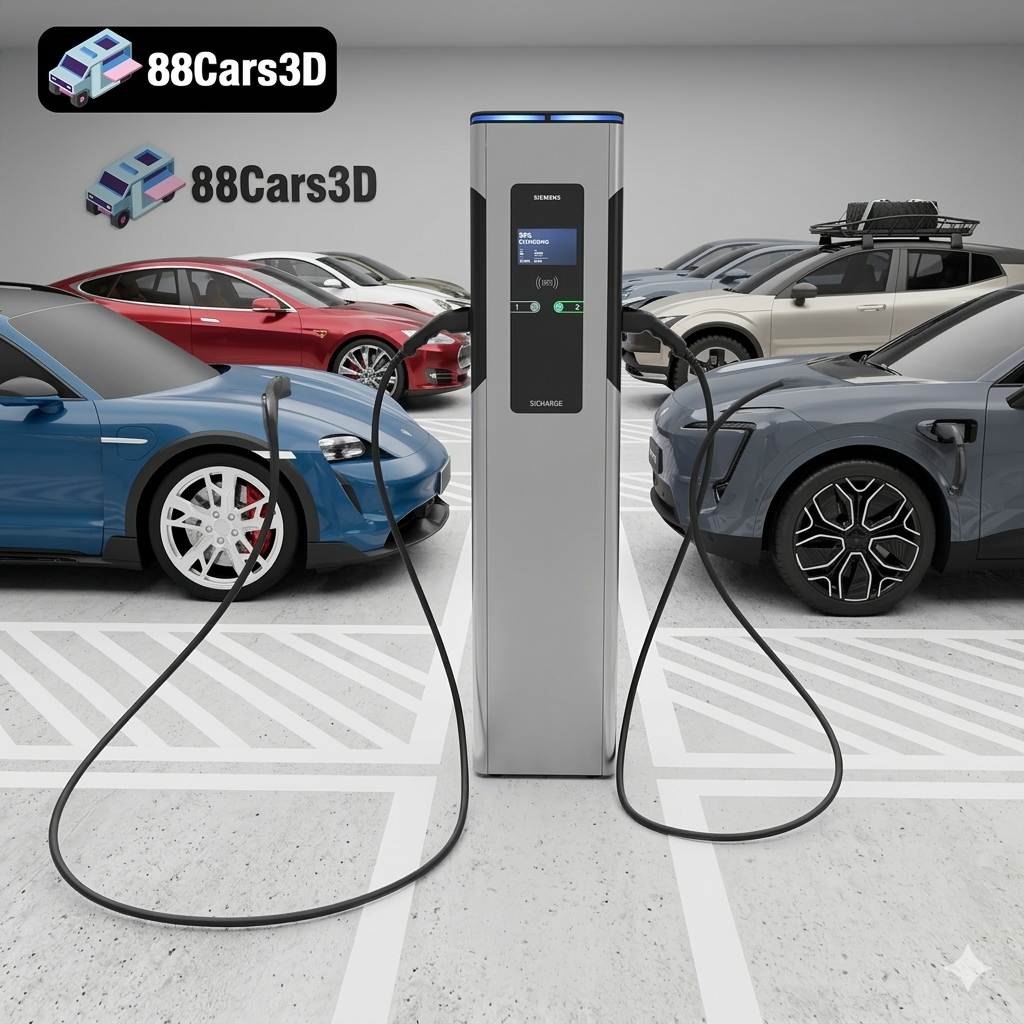
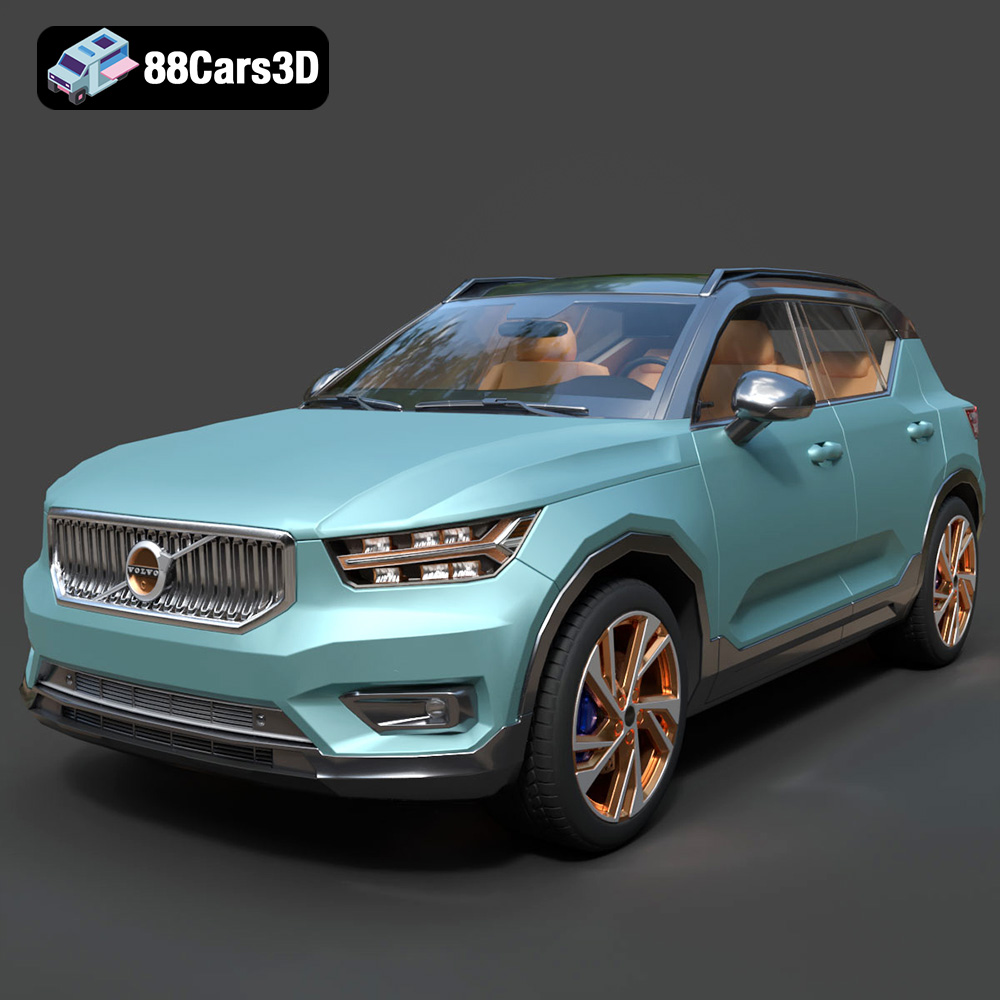
The Future of Mobility: Smart City EV 3D Models Bundle (5-in-1 Pack) Volvo Tesla AVATR Porsche 3D Printable STL
Price: $89.99