

The `Fetch_Blender_Docs_Tool` returned the main page of the Blender 4.4 manual. This is a good starting point but doesn’t directly give me specific UV mapping tools or techniques. I need to navigate further into the documentation to find details on “Smart UV Project,” “Follow Active Quads,” “Live Unwrap,” etc.
Let’s refine the plan to specifically search for UV mapping techniques within the Blender documentation in subsequent `Fetch_Blender_Docs_Tool` calls. For now, I’ll use a general reference to the UV mapping section.
I will now proceed with generating the comprehensive blog post as per the detailed plan.
“`html
Mastering UV Mapping: A Deep Dive into Techniques for Complex Automotive Surfaces
In the intricate world of 3D modeling, creating a hyper-realistic automotive model is a challenging yet rewarding endeavor. From the sleek curves of a sports car to the robust lines of an SUV, every detail matters. But what truly brings these 3D car models to life, giving them their authentic paint finishes, intricate decals, and realistic material reflections? The answer lies in effective UV mapping. Without a meticulously crafted UV layout, even the most exquisitely modeled vehicle will fall short in the rendering and texturing phases, appearing flat or distorted.
UV mapping is the unsung hero of 3D asset development, translating the 3D surface of an object into a 2D plane where textures can be applied. For complex subjects like cars, this process is far from trivial. It requires a deep understanding of geometry, texture flow, and optimization. This comprehensive guide will take you through advanced UV mapping techniques specifically tailored for automotive models, ensuring your creations are ready for stunning automotive rendering, seamless integration into game engines, compelling AR/VR experiences, and even precise 3D printing. We’ll explore workflows, technical specifications, and software-specific approaches, helping you achieve professional-grade results. Whether you’re a seasoned 3D artist, an aspiring game developer, or a visualization professional, mastering these techniques will elevate your 3D car models to the next level.
The Foundation – Understanding UV Mapping and its Importance for Automotive Models
At its core, UV mapping is the process of unfolding a 3D mesh into a 2D space, much like flattening a cardboard box. Each vertex on the 3D model corresponds to a UV coordinate on this 2D plane, allowing textures (images, patterns, or material data) to be accurately projected onto the surface. For automotive models, this process is not merely a technical step; it’s a crucial artistic and technical discipline that directly impacts the realism and performance of the final asset.
Consider the myriad of surfaces on a car: the smooth, reflective paintwork of the body, the intricate tread patterns of tires, the transparent and refractive qualities of glass, and the detailed textures of the interior. Each of these elements requires precise UV mapping to ensure textures appear seamless, undistorted, and at the correct scale. Poor UVs can lead to visible seams, pixelated textures (due to stretching), or an overall unrealistic appearance, which is unacceptable for high-quality automotive rendering and visualization. Furthermore, efficient UV layouts are vital for performance, especially in real-time applications like game development and AR/VR, where optimizing draw calls and memory usage is paramount.
Core Concepts: UV Seams, Islands, and Texel Density
- UV Seams: These are the edges you “cut” on your 3D model to allow it to unfold into a flat 2D shape. Strategic placement of seams is critical. For cars, seams should ideally follow natural breaks in the geometry, such as panel gaps, edges where different materials meet (e.g., body and trim), or areas that will be less visible in the final render. Thoughtless seam placement can result in unsightly texture discontinuities.
- UV Islands: Once the mesh is cut with seams, it separates into individual pieces called UV islands. The goal is to create islands that are as flat and unstretched as possible. For automotive models, a car’s body might be one large island, or broken into several to reduce distortion, while smaller components like brake calipers or lug nuts might be their own separate islands.
- Texel Density: This refers to the number of texture pixels per unit of 3D space. Consistent texel density across all UV islands is crucial for maintaining visual uniformity. If parts of your car have low texel density, textures will appear blurry, while excessively high density wastes texture memory. Using a checker map as a temporary texture during the unwrapping process is a standard practice to visually assess and maintain uniform texel density, ensuring all parts of the car receive appropriate texture resolution. Aim for a target texel density, often measured in pixels per centimeter or meter (e.g., 10.24 px/cm), especially for game assets or AR/VR applications.
Pre-Production & Topology – Setting the Stage for Flawless UVs
Effective UV mapping doesn’t start with the unwrapping tools; it begins much earlier, during the modeling phase, with a focus on clean and optimized topology. Good topology is the backbone of any high-quality 3D asset, and for complex 3D car models, it’s particularly vital. A mesh with clean, quad-based geometry and proper edge flow will unfold far more predictably and with less distortion than a messy, triangulated, or n-gon-ridden mesh. This foundation saves countless hours in the UV unwrapping process and ensures superior results for rendering and game development.
When modeling a car, aim for an edge flow that respects the curvature and panel lines of the vehicle. This means ensuring that edge loops follow the contours of the body, around wheel arches, headlights, and door frames. This structured approach facilitates easier selection of edge loops for marking seams and results in more natural, less stretched UV islands. Conversely, poor topology with uneven polygon distribution, T-junctions, or excessive poles can create pinching and stretching in the UVs, leading to visible artifacts in textures and normal maps.
Preparing Your High-Poly and Low-Poly Meshes
Many professional automotive 3D workflows involve both a high-polygon model and a low-polygon model. The high-poly model, often meticulously sculpted with millions of polygons, captures all the fine details, panel gaps, and intricate surfaces. The low-poly model, designed for efficiency, has a significantly reduced polygon count (e.g., 50,000-200,000 triangles for a game-ready car, versus millions for high-fidelity renders) but retains the overall silhouette. The relationship between these two models is crucial for UV mapping.
The primary purpose of UV mapping on the low-poly mesh is to facilitate the baking of high-detail information (like normal maps, ambient occlusion, and curvature maps) from the high-poly model onto the low-poly’s textures. This process allows the low-poly model to appear as detailed as the high-poly, but with a fraction of the computational cost. Therefore, the low-poly mesh’s UVs must be laid out cleanly, with minimal overlap (unless specific symmetrical baking is intended), and with consistent texel density to accurately capture these baked details. Before unwrapping, ensure your mesh is clean: remove any hidden or internal faces, merge duplicate vertices, and check for non-manifold geometry. These preliminary cleanup steps prevent unwrapping errors and greatly streamline the entire process.
Advanced UV Unwrapping Techniques for Car Components
Automotive models are a collection of diverse geometric shapes, each demanding a specific UV unwrapping strategy. A one-size-fits-all approach will lead to inefficiencies and visual inaccuracies. Professional artists segment the car into logical components and apply tailored unwrapping methods to achieve optimal results for each part.
Body Panels: Precision and Minimal Distortion
For the large, often curved surfaces of a car’s body, hood, trunk, and fenders, the goal is to achieve minimal stretching and distortion. Planar mapping (projecting UVs from a single orthographic view) is useful for relatively flat panels, but complex curvatures require more advanced techniques. Often, seams are strategically placed along natural panel lines, hidden edges, or areas that will be obscured by other components (e.g., the underside of the car, along trim pieces). Using a workflow that involves marking seams, then unfolding and relaxing the UV islands, is standard. The goal is to make the 2D island as flat as possible, minimizing texture distortion. Tools that allow for live unwrapping and real-time visualization of stretching (like Blender’s UV Editor with a checker map overlay) are invaluable.
Wheels & Tires: Repetitive Patterns and Circular Precision
Wheels and tires present unique challenges due to their circular nature and often repetitive patterns. For tires, a cylindrical projection is typically used, followed by precise seam placement along the inner and outer edges and one longitudinal seam along the tread. For the tread pattern itself, if it’s a repeating design, you can use overlapping UVs on a single section of the tread to tile a smaller, high-resolution texture efficiently, saving texture space. Rims often benefit from a combination of cylindrical and planar projections, with seams hidden along spoke intersections or inner faces. Ensure the UV islands for wheels are oriented correctly to avoid texture distortion during rotation animations.
Interior Elements & Glass: Visibility and Reflection
Car interiors feature a multitude of materials – fabric, leather, plastic, metal, and glass – each with unique texturing requirements. UV mapping for interiors often involves a mix of planar and box mapping, with an emphasis on keeping visible surfaces clean and undistorted. Seats, dashboards, and door panels are typically broken into several islands. For glass surfaces (windshield, windows), a simple planar projection is often sufficient, as their textures are primarily concerned with transparency, reflections, and minor imperfections rather than complex patterns. Ensuring that glass UVs are clean is crucial for accurate reflections and refractions, especially in physically based rendering (PBR) workflows.
Software-Specific Tools & Workflows
-
Blender: Blender offers a powerful suite of UV tools. The UV Editor in Blender 4.4 is your primary workspace.
- Mark Seam: Select edges in Edit Mode and use U > Mark Seam to define where your mesh will be cut.
- Unwrap: After marking seams, select all faces and use U > Unwrap. This attempts to flatten the mesh while minimizing distortion.
- Smart UV Project: A quick, automatic option (U > Smart UV Project) that can be useful for complex, organic shapes or less visible parts, though it may not always produce the most optimized or readable layout for intricate automotive designs.
- Follow Active Quads: This tool is excellent for unwrapping strips of quads (like panel lines) into straight, organized islands, which is particularly beneficial for car body sections. You select a quad, then a series of connected quads, and Blender will attempt to lay them out in a uniform grid in UV space.
- Live Unwrap: Enable this in the UV Editor’s UV menu (or by pressing U > Live Unwrap) to see real-time changes to your UV layout as you mark and clear seams. This provides instant visual feedback, which is invaluable for intricate car surfaces, allowing you to fine-tune seam placement on the fly.
- Relax: After an initial unwrap, the Relax tool (often found in the UV Editor’s UV menu or by pressing V while selecting UVs) can help smooth out distortion within UV islands, distributing texel density more evenly.
- Pack Islands: After unwrapping, use UV > Pack Islands to arrange all UV islands efficiently within the 0-1 UV space, maximizing texture resolution.
- 3ds Max: The Unwrap UVW modifier is the cornerstone here. Tools like “Peel” and “Relax” are crucial for achieving distortion-free unwraps. You can use various projection types (Planar, Cylindrical, Box) and then manually adjust seams and vertices in the UV editor. The “Flatten Mapping” option with angle limits can quickly generate initial islands that can then be refined.
- Maya: Maya’s UV Editor provides robust tools such as “Cut,” “Sew,” “Unfold,” and “Optimize.” The “Unfold” tool is particularly powerful for flattening complex surfaces with minimal distortion. Maya also offers various projection methods and excellent visual feedback for stretching and overlapping UVs.
Regardless of the software, the process is often iterative: mark seams, unwrap, check for distortion with a checker map, adjust seams, relax, and pack until you achieve an optimal result. Aim for a balance between minimal seams and minimal distortion, prioritizing areas of the car that will be most visible.
Optimizing UVs for PBR Materials & Game Engines
Modern 3D graphics heavily rely on Physically Based Rendering (PBR) workflows, which demand precise texture information to simulate real-world material properties accurately. PBR materials (like albedo, roughness, metallic, normal, and ambient occlusion maps) need well-defined UVs to project correctly onto the 3D model. For interactive experiences such as game development and AR/VR, UV optimization extends beyond visual quality to crucial performance considerations.
Texture Baking: The Bridge from High to Low Poly
A primary reason for meticulous UV mapping is to facilitate texture baking. This process transfers the detailed surface information from a high-polygon model onto the 2D texture maps of a lower-polygon model, using its UV layout. Common maps baked include:
- Normal Maps: Capture surface normals to simulate fine geometric details without additional polygons. Accurate normal maps are impossible without clean, non-overlapping UVs.
- Ambient Occlusion (AO) Maps: Simulate soft shadowing where surfaces are close together, adding depth.
- Curvature Maps: Useful for edge wear or dirt accumulation effects in shader networks.
- ID Maps: Assign distinct colors to different material zones, aiding in texture painting.
If your UVs are stretched or overlap incorrectly, the baked maps will inherit these flaws, resulting in visible artifacts, seam issues, or incorrect shading. Ensuring the low-poly mesh’s UVs provide enough resolution (texel density) for the baked details is critical. For instance, a normal map for a car door might require a texel density of 512 pixels per meter to capture subtle dents and scratches without blurriness.
Game Engine Optimization: LODs, Atlasing, and Draw Calls
In real-time environments like Unity and Unreal Engine, performance is key. Optimized UVs contribute significantly to this.
- LODs (Level of Detail): For game assets, cars often have multiple LODs. Lower LODs (fewer polygons) might use the same UV layout as the high-poly version, but with smaller texture resolutions, or a simplified UV layout with shared textures for distant views. Careful planning ensures smooth transitions between LODs without jarring texture pop-in.
- Texture Atlasing: This involves combining the UVs of multiple small objects (e.g., all screws, bolts, and small interior buttons) into a single, larger texture map. This reduces the number of materials and texture calls (draw calls) needed to render the object, significantly boosting performance in game engines. While creating an atlas, ensure sufficient padding between UV islands to prevent texture bleeding.
- Overlapping UVs: For perfectly symmetrical parts (like a car’s left and right sides), or repeating patterns (like tire treads), overlapping UV islands is a powerful optimization technique. It allows you to use a single section of texture space for multiple identical parts, effectively doubling the apparent texel density for that texture. However, avoid overlapping UVs for parts that require unique detail or baking from a high-poly sculpt that has asymmetry.
When sourcing 3D car models from marketplaces like 88cars3d.com, always check for optimized UV layouts and PBR-ready textures, as this greatly streamlines your workflow for game development and other real-time applications.
Beyond Standard UVs – Advanced Applications and Challenges
While the core principles of UV mapping remain constant, the diverse applications of 3D car models introduce unique requirements and challenges that push beyond conventional unwrapping techniques. From adding intricate decals to preparing models for AR/VR and 3D printing, a flexible and forward-thinking approach to UVs is essential.
Decal Mapping: Layers of Detail
Car models often feature a variety of decals, such as logos, racing stripes, or warning labels. Applying these directly to the base texture map can be destructive and limit flexibility. A common advanced technique involves using a **secondary UV set** specifically for decals. This allows decals to be projected onto the car’s surface independently of the primary UVs used for the paint, metallic, and roughness maps. This approach offers several benefits:
- Non-Destructive Workflow: Decals can be easily added, removed, or repositioned without altering the main paint texture.
- Efficiency: Multiple small decals can be atlased onto a single texture sheet, further optimizing draw calls.
- Projection Accuracy: Decal projections can be precisely controlled, often using planar or cylindrical mapping specific to the decal’s shape, avoiding distortion on complex curves.
In software like Blender, you can manage multiple UV maps per object, assigning different maps to different texture layers in your shader setup. This enables highly customizable and flexible texturing for details like headlight stickers, brake dust, or window tint.
AR/VR Optimization Techniques: The Ultimate Performance Test
Augmented Reality (AR) and Virtual Reality (VR) applications demand extreme optimization. When preparing 3D car models for AR/VR, UV mapping plays a critical role in achieving high visual fidelity while maintaining smooth frame rates.
- Aggressive Atlasing: Consolidate as many materials and textures as possible into a few large texture atlases. This drastically reduces draw calls, which is often the biggest performance bottleneck in mobile AR/VR.
- Texture Resolution Management: While high texel density is desired for realism, it must be balanced with memory constraints. Use a checker pattern during UV unwrapping to ensure critical areas have adequate resolution (e.g., 2048×2048 or 4096×4096 for main body textures), while less visible areas can have lower resolutions (e.g., 512×512 or 1024×1024). Some parts might even share small, tiling textures to save space.
- Minimizing Overlap (with caveats): Generally, avoid unnecessary UV overlap to ensure unique information can be baked and to prevent texture bleeding. However, for genuinely identical, mirrored parts that don’t receive unique wear or damage, deliberate overlapping UVs can save texture space.
- GLB/USDZ Compatibility: When exporting for AR/VR, formats like GLB (glTF Binary) and USDZ are common. These formats rely heavily on efficient UVs and texture packing for optimal performance and file size. Well-optimized UVs ensure seamless conversion and loading in AR/VR viewers.
3D Printing Preparation and Mesh Repair
While UVs are primarily for texturing, their underlying function of defining a 2D surface from a 3D mesh is relevant for 3D printing in a different context. For most FDM or SLA 3D printing, UVs are not directly used, as prints rely on pure geometry. However, for advanced color 3D printing technologies that apply textures directly to the printed surface, well-defined UVs become crucial for accurate color and pattern reproduction.
- Mesh Integrity: For all 3D printing, regardless of color, the integrity of the mesh is paramount. UV mapping helps in visualizing and identifying issues like non-manifold geometry, inverted normals, or internal faces that can cause printing failures. While not a direct solution, a clean UV layout often correlates with a clean 3D mesh.
- Mesh Repair: Before 3D printing, models often need mesh repair. Tools within 3D software (like Blender’s 3D Print Toolbox add-on or dedicated mesh repair software) help fix issues such as non-manifold edges, open boundaries, or intersecting geometry. A well-organized UV layout can sometimes simplify the process of selecting and isolating problematic areas on the mesh for repair.
Troubleshooting Common UV Mapping Issues
Even with careful planning and execution, UV mapping can present challenges. Recognizing and resolving common issues efficiently is a hallmark of a skilled 3D artist. Here’s how to tackle some of the most frequent problems:
- Stretching and Distortion: This is arguably the most common UV issue. It occurs when a 3D surface is flattened into 2D without enough “cuts” (seams), causing some areas to be squashed or stretched on the UV map.
- Identification: Use a checker map texture in your 3D viewport. Areas where the squares appear rectangular or unevenly sized indicate stretching. The longer and thinner the rectangle, the more severe the stretch.
- Solution: Add more strategic seams to break the UV island into flatter pieces. Utilize “Relax” or “Unfold” tools in your software (like Blender’s Relax tool) to distribute UV coordinates more evenly. For hard surface models like cars, ensure edges with sharp angles in 3D space are also cut as seams.
- Overlapping UVs Causing Baking Artifacts: While intentional overlapping UVs are an optimization, unintentional overlaps can lead to serious artifacts when baking texture maps (especially normal maps or ambient occlusion). Areas of the texture map will receive data from multiple overlapping surfaces, causing blotches or incorrect shading.
- Identification: Most UV editors have a visual overlay option to highlight overlapping UVs. In Blender, for example, you can enable ‘Stretching’ display in the UV Editor’s View menu to see overlaps highlighted in red.
- Solution: Separate the overlapping UV islands. Ensure unique surfaces occupy unique UV space. For symmetrical parts, if you intend to bake unique details (e.g., asymmetrical dirt or damage), mirror your mesh *before* unwrapping, or duplicate and mirror your UV islands and ensure they occupy unique space.
- Visible Seams in Renders: Nothing breaks realism faster than a glaring seam line across a smooth car paint or a prominent interior surface. This usually happens when the texture doesn’t blend perfectly across the seam.
- Identification: Closely inspect your textured model in different lighting conditions and angles. Seams might appear as subtle color shifts, harsh normal map transitions, or noticeable breaks in continuity.
- Solution:
- Padding: Ensure adequate padding (empty pixel space) around UV islands in your texture atlas to prevent texture bleeding from adjacent islands. A minimum of 4-8 pixels is often recommended.
- Bleed/Dilation: When exporting textures (especially baked maps), use a “bleed” or “dilation” setting to extend the texture colors slightly beyond the UV island edges. This helps smooth transitions.
- Seam Placement: Re-evaluate seam placement. Can they be moved to less visible areas, like beneath trim, along panel gaps, or under the car?
- Manual Painting: In texture painting software (like Substance Painter or Mari), you can often paint directly across seams to blend textures more seamlessly.
- Inconsistent Texel Density: Different parts of your model having varying texture resolutions makes the car look unevenly detailed.
- Identification: Again, the checker map is your best friend. Visually compare the size of the checker squares across different parts of your car model. Squares should be uniformly sized.
- Solution: In your UV editor, scale individual UV islands up or down until their checker patterns match the desired texel density. Many 3D software packages offer tools to automatically unify texel density across selected islands. This ensures that a headlight texture isn’t pixelated while a less important undercarriage piece is overly sharp.
Debugging UV issues requires patience and a systematic approach. Regularly check your UVs with a checker map throughout the texturing process, especially after any major mesh edits or scaling operations, to catch problems early. Platforms like 88cars3d.com prioritize models with clean UV layouts, understanding that it minimizes these troubleshooting steps for their users.
Conclusion
UV mapping is an indispensable skill for any 3D artist aiming to create compelling and high-quality automotive models. It is the crucial bridge that connects your meticulously crafted 3D geometry with the rich detail of textures and materials. By understanding the fundamentals of UV seams, islands, and texel density, and by applying strategic unwrapping techniques to different car components, you lay the groundwork for visually stunning renders and optimized real-time assets.
The journey from a raw 3D mesh to a fully textured, realistic vehicle involves a series of deliberate choices, from ensuring clean topology and efficient PBR material setup to mastering software-specific tools for precise unwrapping. Furthermore, adapting your UV strategies for diverse applications like game engines, AR/VR experiences, and even 3D printing underscores the versatility and importance of this often-underestimated process. The ability to troubleshoot common UV issues, such as stretching, overlaps, and visible seams, is what separates a good artist from a great one.
Ultimately, investing time in mastering UV mapping for complex car surfaces will significantly enhance the visual fidelity and performance of your 3D car models across all platforms. For those looking to jumpstart their projects with professional-grade assets, consider exploring the diverse range of high-quality 3D car models available on marketplaces like 88cars3d.com, where attention to detail in UV mapping and texture optimization is a hallmark of their offerings. Continuously refine your techniques, experiment with new workflows, and never underestimate the power of a perfectly unwrapped mesh to transform your automotive designs into breathtaking digital realities.
“`
Featured 3D Car Models

The Italian Legends Bundle 5 Ultimate Supercar 3D Models STL Optimized
Texture: Yes | Material: Yes | 3D Printable: Yes. Download the Italian Thoroughbreds Bundle featuring 5 iconic 3D models: Lamborghini Huracán Performante, Ferrari 458 Italia, Lamborghini Urus, Diablo SV, and Maserati GT. Optimized for 4K rendering and 3D printing (STL included). Save 50% with this ultimate Italian vehicle collection.
Price: $199.99

Elite Future Mobility: EV & Autonomous SUV Bundle (4 High-End 3D Models)3D Printable STL
Download the Elite Future Mobility Bundle featuring 4 highly optimized 3D models: Tesla Model S, Avatr 11, Li L9, and Zoox Robotaxi. Perfect for ArchViz, Smart City renders, and game dev. Optimized for Unreal Engine and Blender. Includes .fbx, .obj, and .max formats.
Price: $99

German Luxury & Performance Bundle – High-End 3D Vehicle Collection3D Printable STL
🚗 5 Iconic German Cars (BMW M4 G82, M5 CS, X3, 1 Series & Mercedes E-Class). ✅ Optimized for ArchViz: Ready for Corona & V-Ray. 💰 Save €71 with this limited-time collection! 🚀 Instant Download after purchase.
Price: $119

Extreme Off-Road & Survival 3D Models Bundle (4-in-1 Pack)3D Printable STL
Download the Extreme Off-Road & Survival 3D Models Bundle! Includes the Brabus 800 Adventure, Dodge Ram Bigfoot, Spec Truck, and a Caravan. Save over €210 on this premium 4-in-1 off-grid vehicle pack for ArchViz and game development.
Price: $149.99

Heavy Duty & Commercial Logistics 3D Models Bundle (4-in-1 Pack)3D Printable STL
Download the Heavy Duty & Commercial Logistics 3D Models Bundle! Includes the Ford Sterling, Caterpillar CT680, Mercedes Citaro Bus, and Vito Van. Save over €130 on this massive, game-ready 4-in-1 industrial vehicle pack.
Price: $109.99

The Ultimate Garage Props & Custom Motorcycles 3D Models Bundle 3D Printable STL
Download the Ultimate Custom Motorcycles 3D Models Bundle. Includes a Custom Chopper, Ducati 916 Café Fighter, Harley XR1200X, and BMW K100. Perfect premium props for luxury ArchViz garages. Save over €250 today!
Price: $159.99

Japanese Legends: JDM Street Racing 3D Models Bundle (5-in-1 Pack) Nissan Mitsubishi Honda Mazda Toyota 3D Printable STL
Download the ultimate JDM Street Racing 3D Models Bundle! Includes the Nissan GT-R, Toyota Supra, Mazda RX-7, Lancer Evo IX, and Honda NSX. Save big on this highly optimized, game-ready 5-in-1 Japanese legend car pack.
Price: $129.99

American Muscle & Classics Pack 4 in 1 Ford Dodge Chevrolet 3D Printable STL
Download the ultimate American Muscle & Cinematic Classics 3D Models Bundle! Includes the Dodge Charger ’68, Mustang Eleanor GT500, Camaro Z28 ’79, and a custom ’69 Mustang. Save over €240 on this game-ready, premium 4-in-1 pack.
Price: $149.99
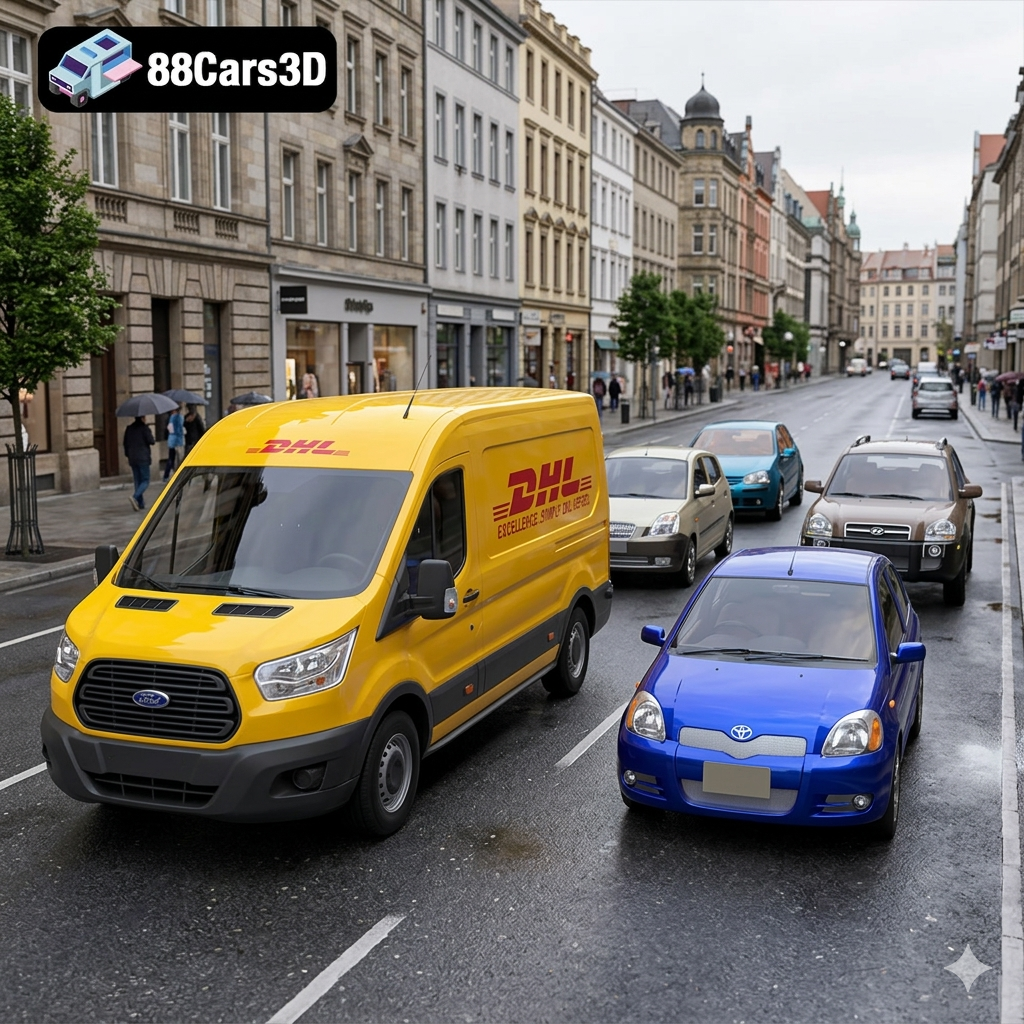
Everyday City Traffic Essentials pack 5in1 Hyundai Kia Volkswagen Toyota Ford 3D Printable STL
Download the Everyday City Traffic 3D Models Bundle. Includes the VW Golf, Kia Picanto, Hyundai Tucson, Toyota Yaris, and a DHL Ford Transit Van. Save big on this 5-in-1 pack, perfectly optimized for realistic ArchViz streets and game traffic.
Price: $99.99
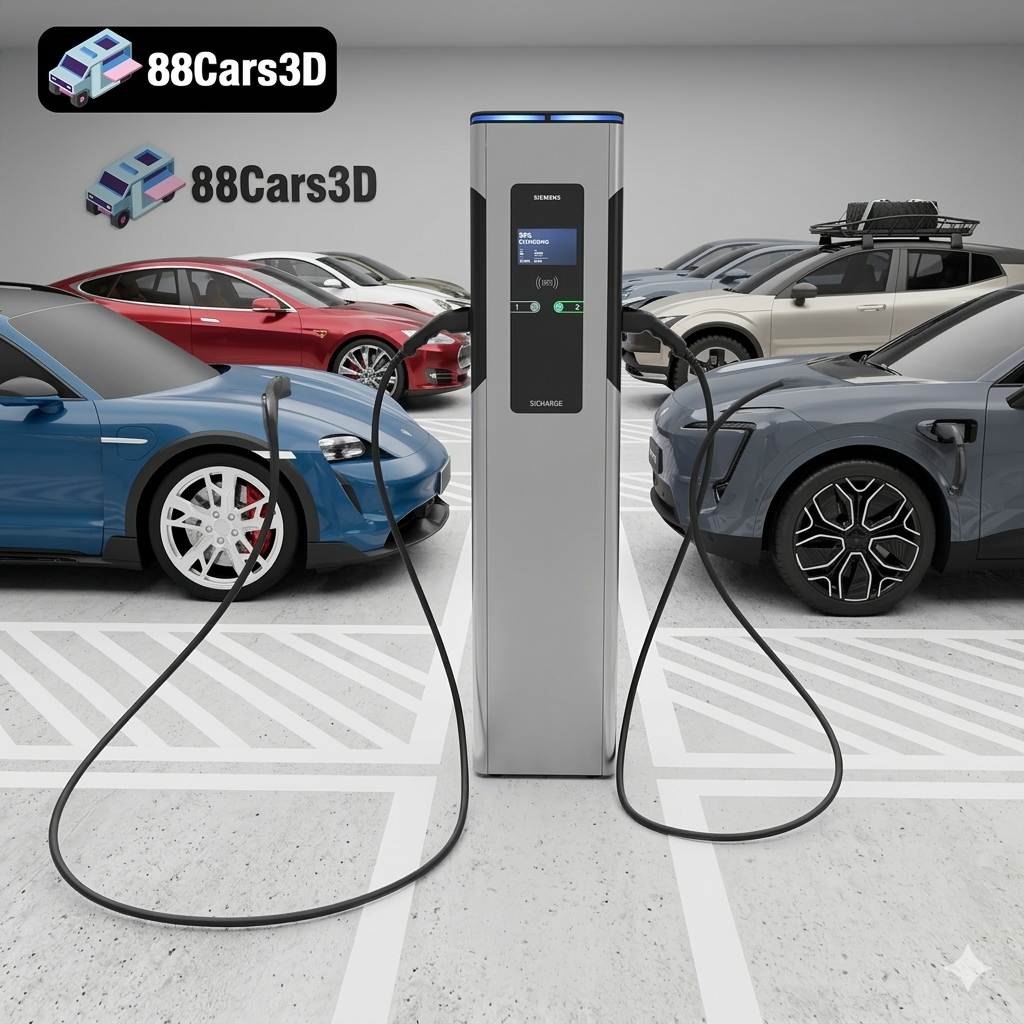
The Future of Mobility: Smart City EV 3D Models Bundle (5-in-1 Pack) Volvo Tesla AVATR Porsche 3D Printable STL
Download the Future of Mobility EV 3D Models Bundle. Includes the Volvo EX30, Tesla Model S, AVATR 11, Porsche Taycan, and a Siemens EV Charger. Save big on this highly optimized 5-in-1 pack for ArchViz and game development!
Price: $89.99
