

The world of automotive design is a captivating blend of art and engineering, constantly evolving through eras. For 3D artists, game developers, and visualization professionals, recreating these iconic machines presents a unique challenge: understanding the fundamental differences between classic and modern car designs. Beyond aesthetics, these distinctions profoundly impact 3D modeling workflows, from initial topology and UV mapping to advanced PBR material creation, rendering, and optimization for various platforms like game engines, AR/VR, and even 3D printing. Whether you’re meticulously crafting the flowing lines of a vintage automobile or capturing the sharp, aerodynamic precision of a contemporary supercar, a deep technical understanding is paramount. This comprehensive guide will dissect the key technical disparities, offering insights into best practices, software-specific techniques, and optimization strategies to elevate your automotive 3D projects. Prepare to dive deep into the nuanced art of bringing both timeless classics and cutting-edge machines to life in the digital realm.
The Art of Automotive Topology: Capturing Curves and Angles
Topology, the underlying structure of polygons and vertices, forms the backbone of any 3D model. For automotive designs, it dictates how light reflects off surfaces, how deformation occurs (if animated), and ultimately, the visual fidelity of the final render or real-time asset. The fundamental differences in design philosophies between classic and modern cars necessitate distinct topological approaches to accurately represent their unique forms.
Classic Car Topology: Organic Flow and Compound Curves
Classic cars, often characterized by their handcrafted appeal, feature an abundance of organic, flowing lines, compound curves, and distinctive paneling. Modeling these requires a topology that gracefully follows these complex surface transitions, ensuring smooth reflections and minimal pinching. The focus is on achieving impeccable surface continuity across large, often convex or concave, areas. Artists typically employ a more organic, subdivision-ready mesh, where quads are meticulously arranged to define the subtle undulations and rounded edges. For instance, the sweeping fenders of a 1960s sports car demand edge loops that run parallel to the contours, defining the crests and valleys with precision. Maintaining even quad distribution helps in achieving smooth subdivision surfaces, crucial for high-detail renders. Technical challenges often arise from intersecting or blending multiple curved surfaces, requiring careful consideration of edge flow to avoid unsightly poles or distortions. Strategies include using temporary helper edges to define complex shapes before merging, or employing bridge tools to connect disparate sections seamlessly while maintaining quad flow.
Modern Car Topology: Precision, Hard Edges, and Aerodynamics
In contrast, modern cars are products of advanced engineering, emphasizing aerodynamics, efficiency, and aggressive styling. Their designs often feature razor-sharp creases, geometric panel gaps, intricate vents, and multi-faceted surfaces. The topology for modern vehicles must accommodate these precise, hard-edged forms without relying solely on subdivision smoothing, which can soften desirable sharp details. This often involves using a denser base mesh in critical areas or employing specific hard-surface modeling techniques like bevels with supporting edge loops to hold sharp angles when subdivided. For example, a modern supercar’s air intake might be modeled with clean, tight edge loops defining its perimeter, complemented by strategically placed control loops to prevent softening under subdivision. The goal is to achieve crisp edges and flat planes where intended, while still allowing for the necessary curvature in other areas. The intricate interplay of positive and negative spaces, sharp lines meeting flowing surfaces, demands a hybrid approach that can switch between organic and hard-surface techniques. Polygon budgets can also play a significant role here; while high-polygon models for film might allow for dense meshes to capture every detail, game assets require careful optimization, often achieved through baking normal maps from high-poly models onto lower-poly versions, where the underlying topology still needs to be clean enough to receive the baked detail without artifacts.
Mastering UV Mapping: From Chrome to Carbon Fiber
UV mapping is the unsung hero of 3D modeling, bridging the gap between a 3D mesh and its 2D textures. The diverse materials and surface complexities of classic and modern cars necessitate distinct UV mapping strategies to ensure seamless texture application and optimal rendering performance. Proper UVs are critical for realistic PBR (Physically Based Rendering) materials, preventing stretching, seams, and providing accurate texture density across the model.
Classic Car UVs: Simplicity, Reflectivity, and Panel Gaps
Classic cars often feature large, relatively simpler panels with expansive areas of highly reflective materials like polished chrome or glossy paint. The UV mapping strategy for these components emphasizes minimizing seams and maintaining uniform texture density across these broad surfaces to prevent visual disruptions in reflections. For instance, a classic car’s fender might be unwrapped as one large piece to avoid seams that would be noticeable in a highly reflective surface. When seams are unavoidable, they are strategically placed in less visible areas, such as along natural panel lines or under trim pieces. Components like chrome bumpers, grilles, and intricate badges require careful unwrapping to ensure that brushed metal or engraved details align correctly. Utilizing texture atlases can be efficient for classic car interiors and smaller, repeating details, allowing multiple smaller textures to be packed into a single UV space, reducing draw calls in game engines. The goal is to maximize the texture resolution for the primary body panels and metallic elements that define the classic aesthetic, ensuring that even subtle imperfections and reflections are accurately represented.
Modern Car UVs: Complex Materials, Decals, and Layered Textures
Modern cars, with their intricate designs, often incorporate a wider array of advanced materials, complex decals, and layered textures. These include matte finishes, carbon fiber weaves, complex headlight internals, intricate grilles, and digital display screens. UV mapping for modern cars often involves a more segmented approach, with each distinct material or complex component receiving its own dedicated UV space or even its own UV tile within a UDIM (Universal Dimension Identification Map) workflow. For example, a carbon fiber hood might have a dedicated UV space to allow for high-resolution texture maps that accurately represent the weave pattern without stretching. Headlights, with their multiple lenses, reflectors, and intricate LEDs, often require careful, individualized unwrapping to allow for specific textures like anisotropic reflections or light-emitting properties. Decals, such as racing stripes, logos, or informational stickers, can be mapped using separate UV channels or by projecting them onto the main UV set, often requiring careful planning to avoid overlap with other details. UDIMs are particularly beneficial for modern cars, enabling artists to maintain high texture resolution across the entire vehicle without creating massive, unwieldy single texture maps. This allows for specific areas like the interior, engine bay, or undercarriage to have their own texture sets while still being part of a cohesive material system. For optimizing game assets, texture atlasing remains crucial, but the complexity might lead to multiple atlases for different material types or LODs.
PBR Materials & Shading: Authenticity in Every Surface
Physically Based Rendering (PBR) has revolutionized the way 3D artists create realistic materials, simulating how light interacts with surfaces in the real world. The distinct characteristics of classic and modern car materials, from weathered paint to cutting-edge composites, demand specific PBR workflows and shader network configurations to achieve true authenticity.
Classic Car PBR: Patina, Glossy Paints, and Metallic Sheen
When crafting PBR materials for classic cars, the emphasis is often on capturing the passage of time and the unique qualities of materials from a bygone era. Classic car paints typically feature a deep, glossy clearcoat that accentuates the curves. Achieving this requires precise control over roughness and metallic maps. For example, a vintage car’s paint might have slight imperfections and subtle variations in roughness, indicative of age and historical maintenance, which can be artfully introduced through grunge maps layered over the base color and roughness textures. Chrome and polished metals are paramount, demanding high metallic values and very low roughness, often with a subtle anisotropic effect to simulate brushed or polished reflections. Engine components, leather interiors, and wooden dashboards also require specific PBR treatment. For leather, a combination of normal maps for grain, roughness maps for wear, and subtle color variations can convey age and texture. Understanding the metallic/roughness workflow versus specular/glossiness is crucial; most modern renderers and game engines favor metallic/roughness. A classic car’s metallic map would highlight areas of bare metal, while the roughness map would define how diffuse or reflective each surface is. For instance, tarnished chrome would have a higher roughness value than freshly polished chrome, reflecting light in a more scattered fashion. These nuanced details are essential for invoking a sense of nostalgia and historical accuracy, making the model feel genuinely aged rather than just old.
Modern Car PBR: Advanced Clearcoats, Matte Finishes, and Digital Displays
Modern car PBR materials push the boundaries of realism, often involving multi-layered shaders and complex texture sets to represent advanced automotive finishes. Clearcoat layers, often seen on modern paints, require special attention, simulating a distinct reflective layer over a base color and metallic layer. This can be achieved through advanced shader networks that stack multiple layers of reflection and glossiness, mimicking the depth and sheen of contemporary paint. Matte finishes, a popular trend in modern automotive design, require precise control over the roughness map to achieve a uniformly diffuse, non-reflective surface while still retaining the underlying color. Carbon fiber, another staple of modern performance vehicles, necessitates a detailed normal map to capture its intricate weave pattern, coupled with specific metallic and roughness values to simulate its distinctive light interaction. For interactive elements like digital dashboards and infotainment screens, emissive maps are crucial to make them appear to glow, often combined with complex normal maps for subtle texture and reflection. Modern headlights and taillights often involve intricate lensing effects and multiple reflective surfaces, requiring a nuanced combination of transparent, reflective, and emissive PBR materials. The use of high-resolution texture maps (e.g., 4K or 8K for primary surfaces) is common to capture these minute details. When sourcing models from marketplaces such as 88cars3d.com, artists can often find models with pre-configured, high-quality PBR materials, saving significant development time and ensuring industry-standard quality.
Rendering & Visualization: Bringing Automotive Dreams to Life
The final stage for many automotive 3D projects is rendering, where all the meticulously crafted models and materials converge to produce stunning visualizations. The rendering workflow, including lighting, camera, and post-processing, significantly differs when aiming to highlight the unique attributes of classic versus modern vehicles.
Classic Car Rendering: Emphasizing Nostalgia and Craftsmanship
Rendering classic cars often focuses on evoking a sense of nostalgia, history, and the craftsmanship of a bygone era. Lighting setups typically lean towards softer, more ambient illumination to accentuate the flowing lines and less aggressive contours. A classic studio lighting setup with large softboxes can effectively highlight reflections across broad, curved panels without creating harsh specular highlights. High Dynamic Range Imagery (HDRI) environments simulating golden hour or late afternoon sun can imbue scenes with warmth and character, perfect for historical contexts. Camera angles for classic cars often emphasize their iconic profiles, distinctive grilles, and interior details, perhaps with a slightly lower vantage point to convey a sense of presence. Depth of field (DOF) can be employed to draw attention to specific ornate details like emblems or chrome trim, blurring the background to create a cinematic feel. Post-processing for classic renders might involve subtle color grading, a touch of film grain, or vignetting to achieve a vintage photographic look. Software like 3ds Max with Corona Renderer or V-Ray excels here, offering advanced material and lighting controls. Blender’s Cycles engine, too, is highly capable of photorealistic renders, allowing for intricate light paths and realistic material interactions. For more details on Cycles, artists can consult the official Blender 4.4 documentation at https://docs.blender.org/manual/en/4.4/, specifically the sections on lighting and materials.
Modern Car Rendering: Showcasing Technology and Sleekness
Conversely, rendering modern cars aims to showcase their cutting-edge design, technological prowess, and often aggressive, aerodynamic aesthetics. Lighting setups tend to be sharper and more dramatic, using spotlights or rim lights to emphasize crisp body lines, sharp angles, and intricate details like LED light strips. Studio environments with contrasting light and shadow can create a dramatic, high-tech look. HDRI environments often feature urban settings, clean studio backdrops, or dynamic race tracks to complement the vehicle’s modern appeal. Camera angles for modern cars frequently utilize low, dynamic perspectives, wide-angle shots to exaggerate speed and power, or close-ups that highlight advanced features like intricate headlight designs or carbon fiber textures. Motion blur is a popular effect for modern car renders, conveying speed and dynamism, especially in tracking shots or action sequences. Post-processing might involve higher contrast, vibrant color saturation, lens flares, and advanced color grading to achieve a polished, hyper-realistic, often commercial-ready appearance. Arnold Renderer in Maya, known for its unbiased rendering capabilities, and Blender’s Eevee for real-time visualization, are also excellent choices for modern car rendering, providing tools to achieve highly detailed and impactful visuals. Accurate reflections of light sources in modern, complex clearcoat materials are paramount, requiring high sample counts and careful environmental setup to avoid noise and achieve pristine surfaces.
Game Engine & AR/VR Optimization: Performance Meets Realism
Bringing high-quality 3D car models into real-time environments like game engines (Unity, Unreal Engine) or AR/VR applications presents a unique set of challenges. Performance optimization is paramount, and the distinct design elements of classic and modern cars influence the strategies employed.
Classic Car Game Assets: Prioritizing Distinctive Silhouettes
For classic car assets in game engines, the optimization strategy often prioritizes maintaining the distinctive, often flowing silhouettes while carefully managing polygon counts. Classic cars, with their fewer sharp edges and broader surfaces, can sometimes leverage lower polygon counts more effectively for their base mesh, relying on baked normal maps from high-poly versions to carry surface detail like panel gaps, subtle dents, or rust textures. Level of Detail (LOD) systems are critical; for distant views, a classic car might transition to a very low-poly mesh, whereas in close-up, it would reveal much finer details. Texture atlasing is widely used for classic car assets to consolidate multiple smaller textures (e.g., for interior dials, badges, or worn leather) into a single map, thereby reducing draw calls and improving rendering performance. Collision meshes should be simplified versions of the visual mesh to ensure accurate physics interactions without overburdening the engine. When creating assets for platforms like 88cars3d.com, game asset developers meticulously optimize these models, ensuring they meet strict polygon budgets (e.g., 50,000-150,000 polygons for main vehicle body depending on the game type and LOD) and use efficient texture packing for seamless integration into real-time applications. The goal is to capture the essence and recognition factor of the classic vehicle without compromising frame rates.
Modern Car Game Assets: Managing High Detail and Performance
Modern car game assets present a different optimization puzzle due to their inherent complexity—sharp creases, intricate lights, detailed interiors, and often, more aggressive geometry. While normal maps are still crucial for baking high-frequency detail, the base mesh for modern cars often requires a higher polygon count to hold those sharp edges and complex forms without looking soft. LOD strategies become even more critical, with perhaps more aggressive poly reductions for lower LODs. Texture atlasing remains important, but the sheer number of distinct materials (carbon fiber, matte paint, digital screens, complex headlights) might necessitate multiple atlases or clever use of UDIMs if the engine supports it for higher detail versions, which are then down-sampled for lower LODs. Occlusion culling is essential to prevent rendering parts of the car that are not visible to the camera, such as the engine or undercarriage when viewing from the exterior. For AR/VR applications, optimization is even more stringent. Models need to be incredibly lightweight (often below 100,000 polygons for a full vehicle, sometimes much lower for mobile AR), with highly efficient texture use (e.g., 2K textures being common max for mobile AR) and minimal draw calls. GLB and USDZ are popular file formats for AR/VR due to their ability to embed textures and PBR materials into a single, optimized file, making them ideal for quick deployment. Modern cars’ intricate designs can be particularly challenging for mobile AR, requiring significant simplification without losing their iconic features. Artists must strike a delicate balance between visual fidelity and real-time performance, a challenge that 88cars3d.com addresses by providing pre-optimized models suitable for various real-time applications.
File Formats, Compatibility & 3D Printing
The journey of a 3D car model doesn’t end with its creation; its utility depends heavily on its file format, compatibility across different software, and its potential for physical manifestation through 3D printing. Understanding these aspects is crucial for any professional working with automotive 3D assets.
Choosing the Right Format: FBX, OBJ, GLB, USDZ
Different file formats serve different purposes and offer varying levels of data preservation.
- FBX (Filmbox): Developed by Autodesk, FBX is arguably the most prevalent exchange format in the 3D industry, especially for animation and game development. It supports geometry, materials, textures, rigging, and animation data. It’s excellent for transferring complex car models between 3ds Max, Maya, Blender, Unity, and Unreal Engine. However, it’s a proprietary format, and compatibility can sometimes be an issue between different software versions.
- OBJ (Wavefront Object): A universal, open-standard format, OBJ is widely supported and excellent for transferring static mesh data. It stores geometry (vertices, faces, normals, UVs) and can reference external material (.MTL) and texture files. While it doesn’t support animation or rigging, its simplicity makes it robust for purely static automotive models, especially for models destined for rendering or basic visualization.
- GLB (Binary GL Transmission Format): GLB is the binary version of glTF, a royalty-free specification for the efficient transmission and loading of 3D scenes and models. It’s become the go-to format for web-based 3D, AR/VR, and real-time applications because it embeds all assets (mesh, textures, PBR materials, animations) into a single file, making it highly portable and optimized for fast loading. It’s an excellent choice for modern car models intended for interactive web configurators or mobile AR experiences.
- USDZ (Universal Scene Description Zip): Co-developed by Apple and Pixar, USDZ is an optimized, unencrypted, and uncompressed zip archive for the USD format. It’s specifically designed for AR experiences on Apple devices and is rapidly gaining traction in other AR/VR ecosystems. Similar to GLB, it encapsulates geometry, textures, PBR materials, and animations, providing a high-quality, efficient package for automotive AR applications.
When selecting a file format, always consider the final destination and required data. For example, if you’re selling high-quality 3D car models for diverse use cases, platforms like 88cars3d.com typically offer models in multiple formats (FBX, OBJ, GLB, USDZ) to ensure maximum compatibility and utility for their broad customer base.
Preparing for 3D Printing: Watertight Meshes and Scale
Transforming a digital car model into a physical object via 3D printing introduces a unique set of technical requirements. The most critical is ensuring the model is “watertight” or “manifold.” This means the mesh must be completely enclosed, with no open edges, intersecting faces, or inverted normals, effectively having a clearly defined inside and outside. 3D printers interpret a watertight mesh as a solid object; any holes will result in printing errors.
Steps for 3D printing preparation:
- Mesh Repair: Tools like Blender’s 3D Print Toolbox (available via add-ons) or dedicated software like Meshmixer can identify and automatically or manually fix non-manifold geometry, fill holes, and check for inverted normals. For Blender, the official documentation on mesh editing and cleanup can provide further guidance at https://docs.blender.org/manual/en/4.4/.
- Scale and Units: Ensure the model is scaled correctly to real-world units (e.g., millimeters or inches) that match your 3D printer’s settings. Incorrect scaling can lead to prints that are too small or too large.
- Wall Thickness: Check that all parts of the model have sufficient wall thickness. Thin walls (e.g., less than 1-2mm depending on the print material and printer) can break easily or not print at all. Small details like thin mirrors or antennas might need to be thickened or removed for structural integrity.
- Detail Level: Simplify overly intricate details that might be too fine for the printer’s resolution. While a render can show microscopic scratches, a 3D print often requires a more generalized surface.
- Support Structures: Consider areas that will require support structures during printing (overhangs, bridges) and design the model or orient it on the print bed to minimize their need, or make them easy to remove without damaging the model.
- File Format: Export the model in a suitable 3D printing format, typically STL (Stereolithography) or OBJ, ensuring all modifiers are applied and the mesh is triangulated (most slicers prefer triangulated meshes).
Whether it’s a meticulously scaled replica of a classic car or a prototype of a futuristic concept, meticulous preparation is the key to a successful 3D print, transforming digital artistry into tangible reality.
Conclusion
The journey from concept to a fully realized 3D automotive model, whether a classic or a modern marvel, is a testament to technical skill, artistic vision, and an acute understanding of design nuances. We’ve explored how the distinct aesthetics of classic cars—with their flowing, organic lines and emphasis on traditional craftsmanship—demand specific approaches to topology, UV mapping, and PBR material creation, often focusing on patina, glossy finishes, and authentic wear. In stark contrast, modern cars, characterized by their sharp angles, aerodynamic efficiency, and integration of advanced technology, necessitate precision in topology, complex multi-layered PBR materials for clearcoats and carbon fiber, and rigorous optimization for real-time applications.
From choosing the right topology to ensure pristine reflections, to segmenting UVs for intricate textures, and crafting PBR materials that truly capture the essence of chrome or carbon fiber, every technical decision impacts the final output. Rendering workflows must adapt to either evoke nostalgia or showcase cutting-edge design, while optimization strategies for game engines and AR/VR become critical for performance without sacrificing visual fidelity. Finally, selecting the appropriate file format and preparing models for 3D printing ensures versatility and broader application. By mastering these distinctions and employing the detailed technical workflows discussed, 3D artists and designers can unlock the full potential of automotive visualization. For high-quality, pre-optimized 3D car models spanning both eras, remember to explore resources like 88cars3d.com, which offers a diverse collection tailored for every professional need, allowing you to focus on bringing your creative visions to life.
Featured 3D Car Models

The Italian Legends Bundle 5 Ultimate Supercar 3D Models STL Optimized
Texture: Yes | Material: Yes | 3D Printable: Yes. Download the Italian Thoroughbreds Bundle featuring 5 iconic 3D models: Lamborghini Huracán Performante, Ferrari 458 Italia, Lamborghini Urus, Diablo SV, and Maserati GT. Optimized for 4K rendering and 3D printing (STL included). Save 50% with this ultimate Italian vehicle collection.
Price: $199.99

Elite Future Mobility: EV & Autonomous SUV Bundle (4 High-End 3D Models)3D Printable STL
Download the Elite Future Mobility Bundle featuring 4 highly optimized 3D models: Tesla Model S, Avatr 11, Li L9, and Zoox Robotaxi. Perfect for ArchViz, Smart City renders, and game dev. Optimized for Unreal Engine and Blender. Includes .fbx, .obj, and .max formats.
Price: $99

German Luxury & Performance Bundle – High-End 3D Vehicle Collection3D Printable STL
🚗 5 Iconic German Cars (BMW M4 G82, M5 CS, X3, 1 Series & Mercedes E-Class). ✅ Optimized for ArchViz: Ready for Corona & V-Ray. 💰 Save €71 with this limited-time collection! 🚀 Instant Download after purchase.
Price: $119

Extreme Off-Road & Survival 3D Models Bundle (4-in-1 Pack)3D Printable STL
Download the Extreme Off-Road & Survival 3D Models Bundle! Includes the Brabus 800 Adventure, Dodge Ram Bigfoot, Spec Truck, and a Caravan. Save over €210 on this premium 4-in-1 off-grid vehicle pack for ArchViz and game development.
Price: $149.99

Heavy Duty & Commercial Logistics 3D Models Bundle (4-in-1 Pack)3D Printable STL
Download the Heavy Duty & Commercial Logistics 3D Models Bundle! Includes the Ford Sterling, Caterpillar CT680, Mercedes Citaro Bus, and Vito Van. Save over €130 on this massive, game-ready 4-in-1 industrial vehicle pack.
Price: $109.99

The Ultimate Garage Props & Custom Motorcycles 3D Models Bundle 3D Printable STL
Download the Ultimate Custom Motorcycles 3D Models Bundle. Includes a Custom Chopper, Ducati 916 Café Fighter, Harley XR1200X, and BMW K100. Perfect premium props for luxury ArchViz garages. Save over €250 today!
Price: $159.99

Japanese Legends: JDM Street Racing 3D Models Bundle (5-in-1 Pack) Nissan Mitsubishi Honda Mazda Toyota 3D Printable STL
Download the ultimate JDM Street Racing 3D Models Bundle! Includes the Nissan GT-R, Toyota Supra, Mazda RX-7, Lancer Evo IX, and Honda NSX. Save big on this highly optimized, game-ready 5-in-1 Japanese legend car pack.
Price: $129.99

American Muscle & Classics Pack 4 in 1 Ford Dodge Chevrolet 3D Printable STL
Download the ultimate American Muscle & Cinematic Classics 3D Models Bundle! Includes the Dodge Charger ’68, Mustang Eleanor GT500, Camaro Z28 ’79, and a custom ’69 Mustang. Save over €240 on this game-ready, premium 4-in-1 pack.
Price: $149.99

Everyday City Traffic Essentials pack 5in1 Hyundai Kia Volkswagen Toyota Ford 3D Printable STL
Download the Everyday City Traffic 3D Models Bundle. Includes the VW Golf, Kia Picanto, Hyundai Tucson, Toyota Yaris, and a DHL Ford Transit Van. Save big on this 5-in-1 pack, perfectly optimized for realistic ArchViz streets and game traffic.
Price: $99.99
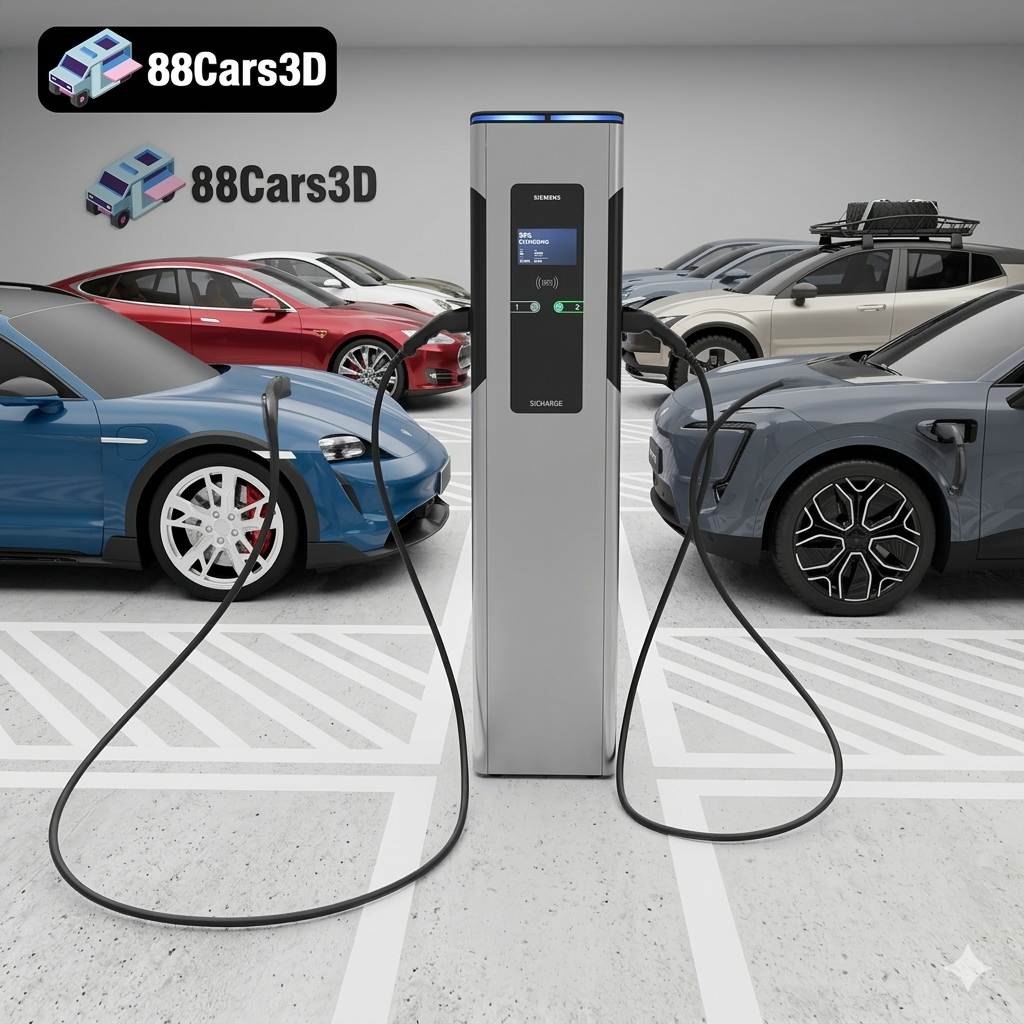
The Future of Mobility: Smart City EV 3D Models Bundle (5-in-1 Pack) Volvo Tesla AVATR Porsche 3D Printable STL
Download the Future of Mobility EV 3D Models Bundle. Includes the Volvo EX30, Tesla Model S, AVATR 11, Porsche Taycan, and a Siemens EV Charger. Save big on this highly optimized 5-in-1 pack for ArchViz and game development!
Price: $89.99
