

In the exhilarating world of 3D game development and real-time visualization, where stunning graphics meet fluid interactivity, performance is paramount. Every polygon, every texture, and every shader operation contributes to the overall load on a system’s CPU and GPU. For highly detailed assets like 3D car models – often the focal point of racing games, open-world environments, or automotive configurators – managing this complexity is a critical challenge. This is where Levels of Detail (LODs) emerge as an indispensable optimization technique, enabling developers to deliver visually rich experiences without sacrificing precious frame rates.
This comprehensive guide will delve deep into the technical intricacies of LODs, specifically within the context of automotive 3D models. We’ll explore not just what LODs are, but why they are essential, how to strategically create them, and the best practices for integrating them into various real-time applications, from game engines to AR/VR experiences. Whether you’re a seasoned 3D artist, a game developer, or an automotive designer pushing the boundaries of visualization, understanding and mastering LOD workflows is key to unlocking optimal performance and delivering a truly immersive user experience.
Understanding Levels of Detail (LODs)
At its core, a Level of Detail (LOD) system involves creating multiple versions of a 3D asset, each with varying levels of geometric complexity. The principle is simple yet powerful: objects that are closer to the camera and occupy a larger portion of the screen receive higher-detail models, while those further away or less prominent are automatically replaced with simpler, lower-polygon versions. This dynamic swapping ensures that the rendering pipeline is only processing the necessary detail at any given moment, significantly reducing computational overhead without a noticeable impact on visual quality from the user’s perspective.
What are LODs and Why are They Essential?
The primary purpose of LODs is to strike a crucial balance between visual fidelity and real-time performance. A highly detailed 3D car model, such as those found on platforms like 88cars3d.com, might boast hundreds of thousands, or even millions, of polygons to capture every curve, vent, and interior detail. While this level of detail is perfect for hero shots or close-up renders, rendering every single polygon for every car in a bustling city scene, or for a car far in the distance, would quickly bring even the most powerful gaming rig to its knees. LODs prevent this by reducing the number of triangles that the GPU has to process, the amount of memory consumed by vertex data, and the complexity of shader calculations for distant objects. This directly translates to smoother frame rates, faster load times, and a more enjoyable user experience, especially in performance-critical applications like video games and interactive simulations.
The LOD Chain: From Hero to Horizon
A typical LOD setup involves a “chain” of models, often labeled LOD0, LOD1, LOD2, and so forth, down to the simplest representation.
- LOD0 (Hero Model): This is the highest-detail version, intended for close-up views. For an automotive model, it will have intricate details for the interior, engine bay (if visible), undercarriage, brake calipers, and precise panel gaps. Polygon counts can range from 80,000 to over 300,000 triangles for a modern game-ready car, depending on the target platform and required fidelity.
- LOD1 (Medium Detail): Used when the car is a moderate distance from the camera. Significant polygon reduction occurs here, focusing on maintaining the primary silhouette and major features. Interior details might be simplified or removed, and smaller components like bolts or extreme mesh details are culled. Typical poly counts might fall between 25,000 and 70,000 triangles.
- LOD2 (Low Detail): For cars further away. The model is heavily decimated, with much of the interior removed or replaced with a simple black occlusion card. Wheel spokes might be simplified to solid discs with a texture. The focus is purely on retaining the car’s recognizable shape. Polygon counts are often in the range of 5,000 to 20,000 triangles.
- LOD3 (Very Low Detail/Proxy): Used for cars at significant distances. This version is extremely simplified, perhaps just a few thousand polygons. It’s often enough to cast a correct shadow and register as ‘a car’ in the periphery.
- LOD4+ / Imposter/Billboard: For extreme distances, a 2D image (imposter or billboard) might replace the 3D model entirely, rendering as a flat sprite that always faces the camera. This offers the ultimate performance gain for objects so far away that 3D geometry is indistinguishable.
The transition between these LOD levels is usually triggered by the object’s screen space size or its distance from the camera, managed seamlessly by the game engine to prevent jarring visual ‘popping’.
Strategic LOD Creation for Automotive Models
Creating effective LODs for automotive models is an art that blends technical precision with an understanding of visual perception. It’s not just about indiscriminately reducing polygon counts, but about intelligently simplifying the mesh while preserving the car’s iconic silhouette and crucial visual cues.
Initial Model (LOD0) Considerations
The journey begins with a robust and well-optimized LOD0. Whether you’re modeling from scratch or sourcing high-quality assets, the base mesh must have clean topology, efficient edge flow, and ideally, be game-engine ready. For professional automotive models, like those available on 88cars3d.com, this means models designed with animation, deformation, and rendering in mind, featuring proper quad topology, minimal triangles in critical areas, and often, separation of parts like doors, wheels, and interior components. A good LOD0 will have:
- Clean Topology: Predominantly quads, allowing for easier edge loop manipulation and subdivision.
- Optimized Edge Flow: Edges should follow the natural contours and creases of the car, facilitating proper smoothing and normal map baking.
- Separated Components: Doors, hood, trunk, wheels, and interior elements are often distinct meshes, enabling interactivity and specific LOD strategies for each.
- UV Mapping: A complete and non-overlapping UV map is essential for baking textures and applying materials consistently across all LODs.
Decimation and Simplification Techniques
Once the LOD0 is established, the process of creating lower LODs typically involves geometric simplification. This can be achieved through both manual and automated methods:
- Manual Reduction: This involves an artist manually dissolving edges, merging vertices, and carefully rebuilding areas of the mesh. It offers the highest control over the final result but is time-consuming. It’s often used for LOD1 to ensure critical silhouette features are perfectly preserved.
- Automated Decimation Modifiers: Most 3D software packages offer tools for automatic polygon reduction. These algorithms attempt to remove polygons while minimizing visual distortion.
- In Blender, the Decimate Modifier is a powerful tool. It offers three modes: Collapse (reduces vertices by collapsing edges), Un-Subdivide (reverts subdivision operations), and Planar (reduces faces on planar surfaces). For creating LODs, the ‘Collapse’ mode with its ‘Ratio’ setting is most commonly used to target a specific polygon reduction percentage. It’s crucial to experiment with the ratio and enable ‘Triangulate’ if the target engine primarily uses triangles. Always ensure ‘Preserve UVs’ is enabled to maintain texture mapping integrity.
- Autodesk Maya features the ‘Reduce’ command (Mesh > Reduce), which allows for percentage-based reduction and includes options to preserve UV borders, normals, and open edges.
- Autodesk 3ds Max has the ‘ProOptimizer’ modifier, offering excellent control over polygon reduction, often with good preservation of UVs and material IDs.
When using automated tools, always visually inspect the results, especially around headlights, grills, mirrors, and wheel arches, as these areas are crucial for maintaining the car’s identity.
Target Polygon Counts
Determining the ideal polygon budget for each LOD is crucial and depends heavily on the target platform (PC, console, mobile, VR), game genre, and artistic requirements. Here are general guidelines for a single detailed automotive model:
- LOD0 (Hero): 80,000 – 300,000+ triangles. Used for close-up views, interior shots, cinematic sequences.
- LOD1 (Near-Medium): 25,000 – 70,000 triangles. Visible from a moderate distance, main silhouette and larger details preserved.
- LOD2 (Medium-Far): 5,000 – 20,000 triangles. Car appears smaller on screen, major forms retained, minor details removed.
- LOD3 (Far): 1,000 – 5,000 triangles. Simple shape, often just enough to cast a correct shadow and identify as a car.
- LOD4 (Very Far/Shadow Proxy): <1,000 triangles, or even a low-res bounding box. Primarily for casting basic shadows or silhouette at extreme distances.
For mobile AR/VR, these budgets might be significantly lower, with an entire scene potentially needing to stay under 50,000-100,000 triangles, meaning a single car’s LOD0 might be closer to 20,000-50,000 triangles.
UV Mapping, Texturing, and Shading for LODs
While geometric simplification is the most visible aspect of LODs, consistent UV mapping, intelligent texturing, and optimized shading are equally vital for ensuring visual continuity and performance across all detail levels.
Consistent UVs Across LODs
One of the most critical aspects of creating effective LODs is maintaining consistent UV mapping. When simplifying a mesh, it’s paramount that the UV coordinates for corresponding surfaces remain as similar as possible across different LOD levels. This allows for:
- Texture Baking: Details like normal maps, ambient occlusion, and cavity maps, which are often baked from the high-poly LOD0, can be accurately applied to lower LODs.
- Material Consistency: Textures and materials applied to the LOD0 will appear correctly on lower LODs, preventing jarring visual shifts during LOD transitions.
- Reduced Artifacts: Inconsistent UVs can lead to texture stretching, distortion, or ‘swimming’ effects when LODs swap, breaking immersion. Modern decimation tools, like Blender’s Decimate modifier, often include options to preserve UVs to minimize these issues.
Ideally, the UV islands on all LODs should be derived from the LOD0’s UV layout, even if some islands are culled or simplified for lower LODs. This ensures a predictable and stable base for texturing.
Texture Baking for LODs
To retain the visual richness of the high-detail LOD0 on its lower-poly counterparts, texture baking is indispensable. This process captures surface details and lighting information from the high-resolution mesh and projects it onto the lower-resolution mesh as image maps. Key maps to bake include:
- Normal Maps: Essential for simulating fine surface details (like panel gaps, bolts, or subtle dents) using only a few polygons. Baked from LOD0 to LOD1, LOD2, and sometimes even LOD3.
- Ambient Occlusion (AO) Maps: Captures indirect shadowing from crevices and overlapping surfaces, adding depth and realism.
- Curvature/Cavity Maps: Highlights edges and cavities, useful for procedural texturing or wear effects.
- World Space Normal Maps: Useful in some engine contexts for specific lighting or deformation effects.
When baking, ensure that the cages or ray distances are correctly set up to prevent projection errors. Tools like Substance Painter, Marmoset Toolbag, and even Blender’s internal baking capabilities are commonly used for this process.
PBR Materials and Shaders
Physically Based Rendering (PBR) materials are the industry standard for realistic rendering, and optimizing them for LODs is crucial. While the material properties (Albedo, Roughness, Metallic, Normal, etc.) will largely remain consistent, the way they are applied and processed can be optimized:
- Streamlined Material Count: For lower LODs, try to combine multiple small material assignments into a single material using texture atlases. This reduces the number of draw calls, which is a significant performance bottleneck. For example, instead of separate materials for emblems, wipers, and window trim, they could all share a single atlas and material for LOD2 and below.
- Simplified Shaders: For very distant LODs, high-fidelity shader effects (like complex clear coat layers, advanced reflectivity, or parallax occlusion mapping) can often be simplified or removed entirely. A car that’s a pixel on screen doesn’t need a multi-layered car paint shader. Game engines often allow for different shader variants per LOD.
- Texture Resolution Scaling: Textures for lower LODs can often be scaled down in resolution (e.g., 2K textures for LOD0, 1K for LOD1, 512 for LOD2). This saves VRAM and reduces texture sampling costs.
The goal is to provide enough visual information to be convincing at the given distance, but no more, thereby maximizing rendering efficiency.
Implementing LODs in Game Engines
The true power of LODs comes to life when they are integrated and managed within a real-time game engine. Both Unity and Unreal Engine provide robust systems for handling LOD groups, allowing developers to define transition distances and configure how each LOD level behaves.
Unity Engine Workflow
Unity’s LOD Group component is the primary tool for managing Levels of Detail. Once you have your multiple LOD meshes (LOD0, LOD1, etc.) prepared, the workflow in Unity typically involves:
- Create LOD Group: Select your GameObject (e.g., the car’s parent object) and add an “LOD Group” component (Component > Rendering > LOD Group).
- Assign Meshes: Drag and drop your different LOD meshes into the respective “LOD” slots within the LOD Group inspector. Unity automatically creates slots for LOD0, LOD1, LOD2, and a “Culled” state.
- Set Transition Distances: Adjust the sliders in the LOD Group to define the screen space percentage at which each LOD transition occurs. For instance, LOD0 might be active when the car occupies 50% or more of the screen, LOD1 at 20%, LOD2 at 5%, and then culled.
- Renderer Settings: For each LOD, you can assign different Mesh Renderers. This allows you to apply simpler materials or disable certain rendering features (e.g., shadows for very distant LODs) for performance gains. Ensure consistent materials are used where possible, leveraging texture atlases for lower LODs.
- Fade Mode: Unity offers ‘Cross-fade’ or ‘SpeedTree’ fade modes to smoothly transition between LODs, preventing harsh ‘popping’ artifacts. ‘Cross-fade’ is generally preferred for gradual blending of meshes.
Testing these transitions within the Unity editor is crucial to ensure smooth visual changes and identify any unexpected artifacts. Performance profiling tools within Unity can help confirm the expected reductions in draw calls and polygon count.
Unreal Engine Workflow
Unreal Engine also provides a highly efficient LOD system, often integrated directly within the Static Mesh Editor:
- Import Meshes: Import your high-poly LOD0 mesh into Unreal Engine.
- Automatic LOD Generation (Optional): Unreal Engine can automatically generate LODs for you from within the Static Mesh Editor. Navigate to the ‘LOD Settings’ panel and specify the number of LODs, screen size thresholds, and triangle percentage reduction. While convenient, hand-crafted LODs often yield better results for complex assets like cars.
- Manual LOD Import: For maximum control, you can prepare each LOD mesh separately in your 3D software (Blender, Maya, 3ds Max) and then import them into Unreal. In the Static Mesh Editor, under ‘LOD Settings’, click ‘Import LOD’ for each level (LOD1, LOD2, etc.) and assign your pre-made meshes.
- Screen Size Thresholds: Define the ‘Screen Size’ for each LOD. This value represents the percentage of the screen the mesh occupies before transitioning to the next LOD. For example, 1.0 means it always uses LOD0; 0.5 means it uses LOD0 when it’s at least 50% of the screen.
- Material Slots & Sections: Ensure your material assignments are consistent across LODs. Unreal’s Static Mesh Editor allows you to manage material slots per LOD. For lower LODs, you can optimize by reducing material sections or assigning simpler materials.
Unreal Engine’s LODs are highly customizable, allowing for precise control over geometric reduction, material usage, and even collision mesh simplification per LOD.
Blender to Game Engine Export
When preparing your LODs in Blender for export to a game engine, the FBX format is generally the preferred choice due to its robust support for mesh, material, and animation data. According to the Blender 4.4 manual on FBX export, when exporting multiple LODs, you have a few strategies:
- Separate FBX Files: Export each LOD as its own FBX file (e.g.,
car_LOD0.fbx,car_LOD1.fbx). This gives you maximum control in the game engine to assign them to an LOD Group. - Single FBX with All LODs (Advanced): Some workflows allow embedding all LOD meshes within a single FBX file, typically as separate mesh objects within the scene, which the game engine then interprets. However, direct LOD data embedding in FBX is more common for animation data than purely geometric LODs. When exporting from Blender, ensure that ‘Selected Objects’ is checked if you only want to export specific LOD meshes. Also, under the ‘Geometry’ section, consider ‘Apply Modifiers’ to bake any decimation or other modifiers into the exported mesh, and ensure ‘Tangent Space’ is set correctly for normal map compatibility.
- Batch Exporting: For projects with many assets, scripting a batch export process in Blender can save significant time.
Always perform thorough testing of your exported LODs in the target game engine to check for correct material assignments, normal map integrity, and smooth transitions.
Advanced LOD Techniques and Best Practices
Beyond the basic setup, several advanced techniques and best practices can further refine your LOD implementation, ensuring maximum performance and visual quality.
Per-Part LODs vs. Full Mesh LODs
While often treated as a single entity, complex assets like cars can benefit from a more granular LOD approach:
- Full Mesh LODs: The standard approach, where the entire car model transitions through LOD levels simultaneously. This is simpler to manage but can be inefficient if only certain parts require detail.
- Per-Part LODs: This involves applying separate LOD groups to individual components of the car. For example, the car’s body might have a full LOD chain, but the wheels, which are often highly detailed and rotate, might have their own independent LODs. The interior, only visible from certain angles, could also have its own LOD group, appearing only when the camera is close enough to see inside. This offers extreme optimization but increases management complexity. A car model sourced from a marketplace like 88cars3d.com, often provided with separated parts, lends itself well to this strategy.
The choice depends on the asset’s complexity, its importance, and the specific game mechanics. For racing games where interiors are often visible, per-part LODs for interior components can be very effective.
Imposters and Billboards
For objects at extreme distances, even the lowest 3D LODs can be too expensive. This is where 2D representations come into play:
- Imposters: These are 2D planes with a pre-rendered texture of the 3D object, often generated from multiple angles. When the camera moves, the impostor updates to the most appropriate pre-rendered view, creating a convincing illusion of 3D at a distance.
- Billboards: The simplest form of imposter, typically a single plane that always faces the camera. Ideal for very distant, small objects where a detailed 3D representation is unnecessary.
Implementing imposters for distant cars can yield massive performance savings, effectively replacing thousands of polygons with just two triangles (a single quad).
Visibility Culling and Occlusion
LODs work in tandem with other culling techniques to ensure that only visible geometry is rendered:
- Frustum Culling: The engine automatically culls any objects that are outside the camera’s view frustum.
- Occlusion Culling: Objects completely hidden behind other objects (occluders) are not rendered. This is particularly important in complex environments. LODs reduce the cost of objects that are partially visible or near the edge of the view, while culling removes them entirely if not visible.
Combined, these techniques create a highly optimized rendering pipeline, minimizing unnecessary processing.
Challenges and Solutions
Creating LODs isn’t without its pitfalls:
- Popping Artifacts: A sudden, noticeable jump in detail when an LOD transition occurs. Solution: Use smooth blending (cross-fade in Unity, fade in Unreal), fine-tune transition distances, or use a small intermediate LOD.
- UV Distortion: Aggressive decimation can distort UVs, leading to texture stretching or pixelation. Solution: Preserve UVs during decimation, manually clean up UVs on lower LODs, and re-bake normal maps if necessary.
- Normal Map Issues: Baked normal maps might not look correct on heavily decimated meshes due to differing vertex normals. Solution: Ensure tangent space is consistent, re-bake normal maps from the LOD0 onto each lower LOD, and use correct smoothing groups/hard edges.
- Balancing Visual Fidelity: The biggest challenge is finding the sweet spot where performance gains are significant without compromising the visual experience. This requires iterative testing and profiling.
AR/VR Specific Considerations
For Augmented Reality (AR) and Virtual Reality (VR), performance demands are even more stringent. Maintaining a consistent high frame rate (e.g., 60-90 FPS per eye for VR) is crucial to prevent motion sickness and ensure immersion. LODs are absolutely vital here:
- Aggressive Reduction: VR/AR LODs will typically be more aggressively reduced than their desktop game counterparts.
- Strict Budgets: Polygon budgets for AR/VR are often significantly lower, especially for mobile AR.
- Optimized Shaders: Simpler shaders with fewer passes are preferred.
The use of highly optimized, game-ready models from professional marketplaces is critical for successful AR/VR deployments. When sourcing models from platforms like 88cars3d.com, look for assets explicitly labeled as “game-ready” or “VR/AR optimized.”
Beyond Game Development: LODs for Visualization and AR/VR
While synonymous with game development, the principles of LODs extend far beyond, proving invaluable in various real-time visualization fields, particularly where complex automotive models are involved.
High-Fidelity Architectural Visualization (Arch-Viz)
In architectural visualization, interactive walkthroughs of buildings and environments are becoming increasingly common. These often feature highly detailed elements, including cars, furniture, and landscaping. Although not always referred to as strict “LODs” in the game development sense, the concept of dynamically managing geometric complexity is directly applicable:
- Interactive Experience: For large-scale architectural projects, populating a scene with multiple high-poly car models can quickly lead to performance bottlenecks during an interactive walkthrough. By implementing LOD-like systems, distant cars or cars less central to the view can be rendered with fewer polygons.
- Asset Management: 3D artists creating these scenes often manually manage asset complexity, swapping out high-res models for simpler ones based on expected camera distance. This aligns perfectly with the manual LOD creation workflow.
- Real-time Engines: Many arch-viz studios now leverage game engines like Unreal Engine and Unity for their real-time capabilities. This inherently brings their LOD systems into play, allowing for dynamic detail management of automotive models and other assets within the scene.
The core idea remains the same: ensure that the computational resources are focused on what is most visually important at any given moment, providing a smooth and responsive experience for clients and stakeholders.
Automotive Configurator Applications
Modern automotive configurators, whether online or in dealership kiosks, demand photorealistic rendering of vehicles in real-time. Users expect to rotate the car, open doors, change colors, and swap parts with instant feedback. This is a prime application for LODs:
- Seamless Interaction: When a user is zoomed in, inspecting the intricate stitching of an interior or the detail of a wheel, the LOD0 (or a very high-detail variant) is active. As they zoom out or rotate the camera rapidly, lower LODs are seamlessly swapped in to maintain a high frame rate.
- Part-Specific LODs: Configurators often benefit from per-part LODs. For instance, the car’s body might stay at LOD0, but individual options like different wheel designs might have their own LOD groups. This ensures that only the necessary components are at their highest detail, preventing unnecessary overhead.
- Dynamic Loading: Combined with LODs, configurators often employ dynamic loading of assets. Only the parts and textures currently visible or selected by the user are loaded into memory, further optimizing performance.
The ability to handle highly detailed 3D car models efficiently is a cornerstone of a successful automotive configurator, directly impacting user satisfaction and engagement. Sourcing pre-optimized 3D car models specifically designed for real-time configurators, like those on 88cars3d.com, significantly streamlines development.
AR/VR Performance for Automotive Models
The immersive nature of AR and VR places exceptionally high demands on performance, especially when showcasing complex assets like cars. Any drop in frame rate can lead to discomfort or motion sickness, directly hindering the user experience. LODs are not just an optimization; they are often a fundamental requirement for viable AR/VR automotive experiences:
- Extreme Optimization: AR/VR applications typically have far stricter polygon and draw call budgets than traditional games. A mobile AR application displaying a car might need to keep the entire scene under 50,000-100,000 triangles total. This means that even the LOD0 of an AR car model needs to be highly optimized.
- GLB and USDZ Formats: Common file formats for AR (like GLB for Android/web and USDZ for iOS/Apple Vision Pro) implicitly encourage or even require optimized meshes and textures. These formats are designed for efficient loading and rendering on mobile devices, where LODs are often baked into the asset preparation workflow.
- Maintaining Frame Rate: In VR, maintaining a consistent 90+ frames per second (FPS) is critical. LODs allow developers to scale the visual complexity of automotive models dynamically, ensuring a smooth and comfortable experience even when multiple cars or environmental elements are present. Without robust LOD implementation, complex automotive models would be largely impractical for high-quality AR/VR.
For AR/VR, meticulous LOD creation and rigorous performance testing are not merely best practices; they are foundational to delivering compelling and comfortable user experiences.
Conclusion
The journey through the intricacies of Levels of Detail for 3D game assets, particularly automotive models, underscores their undeniable importance in modern real-time graphics. LODs are not merely an optional optimization; they are a fundamental strategy that enables developers and artists to push the boundaries of visual fidelity while maintaining crucial performance benchmarks across diverse platforms and applications.
From understanding the basic principles of an LOD chain to mastering strategic polygon reduction, consistent UV mapping, and intelligent material management, every step in the LOD creation workflow is critical. Implementing these optimized assets within game engines like Unity and Unreal, or preparing them for demanding AR/VR environments, transforms raw geometry into a scalable, high-performance experience. The iterative process of testing, profiling, and refining LOD transitions is key to eliminating visual artifacts and ensuring a seamless, immersive user journey.
As the demand for photorealistic 3D automotive models continues to grow in gaming, visualization, and extended reality, the expertise in crafting and deploying effective LODs will only become more valuable. By embracing these techniques, artists and developers can ensure their stunning 3D car models not only look incredible but also perform flawlessly. Remember, a well-optimized asset is a powerful asset, allowing your creations to shine brightly in any real-time environment.
For those looking to accelerate their projects, platforms offering high-quality, game-ready 3D car models, often with pre-built LODs, can be an invaluable resource. Exploring such marketplaces can provide a solid foundation for your next high-performance 3D endeavor.
Featured 3D Car Models

The Italian Legends Bundle 5 Ultimate Supercar 3D Models STL Optimized
Texture: Yes | Material: Yes | 3D Printable: Yes. Download the Italian Thoroughbreds Bundle featuring 5 iconic 3D models: Lamborghini Huracán Performante, Ferrari 458 Italia, Lamborghini Urus, Diablo SV, and Maserati GT. Optimized for 4K rendering and 3D printing (STL included). Save 50% with this ultimate Italian vehicle collection.
Price: $199.99

Elite Future Mobility: EV & Autonomous SUV Bundle (4 High-End 3D Models)3D Printable STL
Download the Elite Future Mobility Bundle featuring 4 highly optimized 3D models: Tesla Model S, Avatr 11, Li L9, and Zoox Robotaxi. Perfect for ArchViz, Smart City renders, and game dev. Optimized for Unreal Engine and Blender. Includes .fbx, .obj, and .max formats.
Price: $99

German Luxury & Performance Bundle – High-End 3D Vehicle Collection3D Printable STL
🚗 5 Iconic German Cars (BMW M4 G82, M5 CS, X3, 1 Series & Mercedes E-Class). ✅ Optimized for ArchViz: Ready for Corona & V-Ray. 💰 Save €71 with this limited-time collection! 🚀 Instant Download after purchase.
Price: $119

Extreme Off-Road & Survival 3D Models Bundle (4-in-1 Pack)3D Printable STL
Download the Extreme Off-Road & Survival 3D Models Bundle! Includes the Brabus 800 Adventure, Dodge Ram Bigfoot, Spec Truck, and a Caravan. Save over €210 on this premium 4-in-1 off-grid vehicle pack for ArchViz and game development.
Price: $149.99

Heavy Duty & Commercial Logistics 3D Models Bundle (4-in-1 Pack)3D Printable STL
Download the Heavy Duty & Commercial Logistics 3D Models Bundle! Includes the Ford Sterling, Caterpillar CT680, Mercedes Citaro Bus, and Vito Van. Save over €130 on this massive, game-ready 4-in-1 industrial vehicle pack.
Price: $109.99

The Ultimate Garage Props & Custom Motorcycles 3D Models Bundle 3D Printable STL
Download the Ultimate Custom Motorcycles 3D Models Bundle. Includes a Custom Chopper, Ducati 916 Café Fighter, Harley XR1200X, and BMW K100. Perfect premium props for luxury ArchViz garages. Save over €250 today!
Price: $159.99

Japanese Legends: JDM Street Racing 3D Models Bundle (5-in-1 Pack) Nissan Mitsubishi Honda Mazda Toyota 3D Printable STL
Download the ultimate JDM Street Racing 3D Models Bundle! Includes the Nissan GT-R, Toyota Supra, Mazda RX-7, Lancer Evo IX, and Honda NSX. Save big on this highly optimized, game-ready 5-in-1 Japanese legend car pack.
Price: $129.99

American Muscle & Classics Pack 4 in 1 Ford Dodge Chevrolet 3D Printable STL
Download the ultimate American Muscle & Cinematic Classics 3D Models Bundle! Includes the Dodge Charger ’68, Mustang Eleanor GT500, Camaro Z28 ’79, and a custom ’69 Mustang. Save over €240 on this game-ready, premium 4-in-1 pack.
Price: $149.99

Everyday City Traffic Essentials pack 5in1 Hyundai Kia Volkswagen Toyota Ford 3D Printable STL
Download the Everyday City Traffic 3D Models Bundle. Includes the VW Golf, Kia Picanto, Hyundai Tucson, Toyota Yaris, and a DHL Ford Transit Van. Save big on this 5-in-1 pack, perfectly optimized for realistic ArchViz streets and game traffic.
Price: $99.99
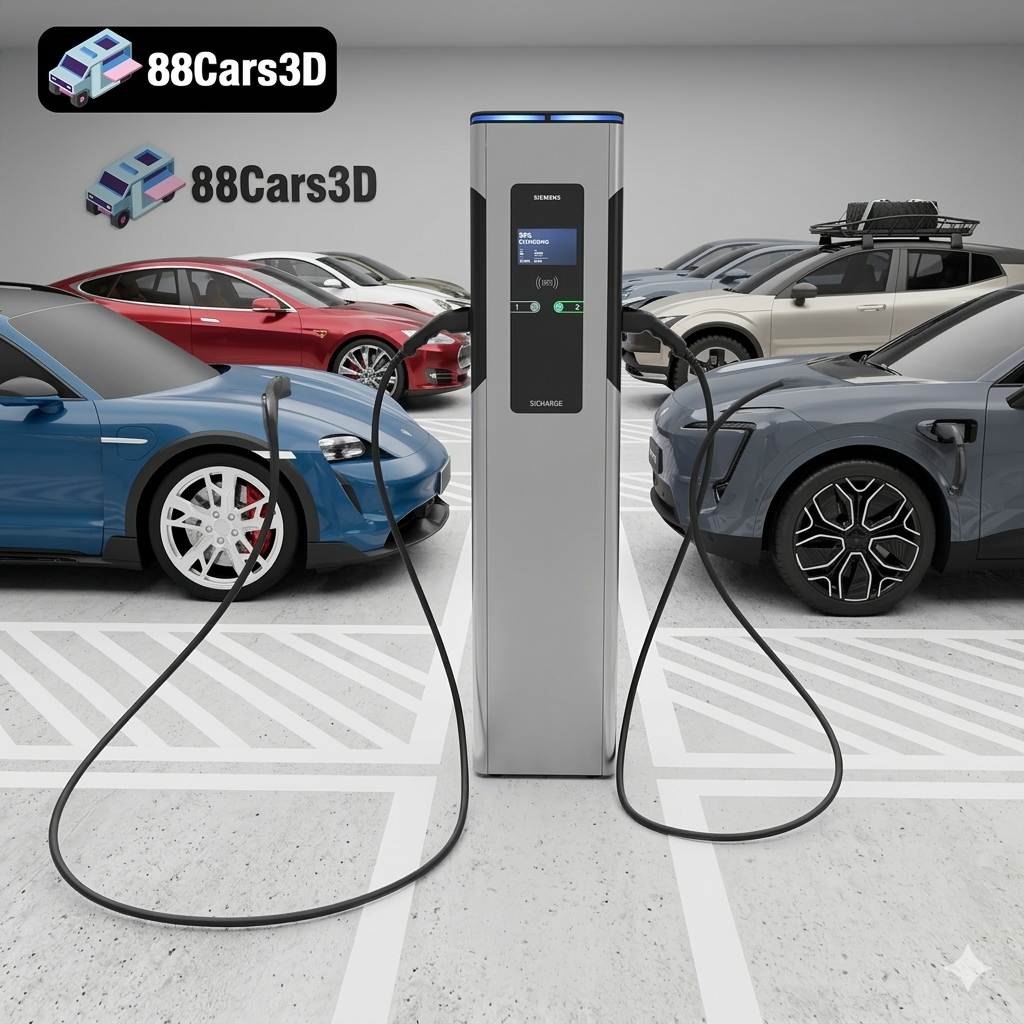
The Future of Mobility: Smart City EV 3D Models Bundle (5-in-1 Pack) Volvo Tesla AVATR Porsche 3D Printable STL
Download the Future of Mobility EV 3D Models Bundle. Includes the Volvo EX30, Tesla Model S, AVATR 11, Porsche Taycan, and a Siemens EV Charger. Save big on this highly optimized 5-in-1 pack for ArchViz and game development!
Price: $89.99
