

In the realm of real-time rendering, achieving breathtaking visual fidelity, particularly for complex assets like high-detail 3D car models, often comes with a significant challenge: memory management. As artists and developers push the boundaries of realism in Unreal Engine projects – from automotive configurators and interactive demos to virtual production and cinematic sequences – the sheer volume of texture data can quickly overwhelm system resources. This is where advanced memory optimization techniques become not just beneficial, but absolutely critical. Enter Unreal Engine’s powerful Texture Streaming and Virtual Texturing systems – two indispensable tools that empower developers to deliver stunning, high-resolution visuals without sacrificing performance.
For anyone working with premium 3D car models, like those available on platforms such as 88cars3d.com, understanding and effectively utilizing these technologies is paramount. These meticulously crafted models, featuring intricate details, realistic PBR materials, and often high-resolution textures, demand intelligent handling to shine in real-time environments. This comprehensive guide will deep dive into Texture Streaming and Virtual Texturing, explaining their mechanics, how to implement them, and most importantly, how to optimize them to bring your automotive visualizations, games, and real-time applications to life with unparalleled visual fidelity and efficiency. Prepare to unlock the full potential of your high-fidelity automotive assets in Unreal Engine.
Understanding Texture Streaming: The Foundation of Memory Management
Texture Streaming is a fundamental optimization technique in Unreal Engine designed to manage the memory footprint of textures in your projects. At its core, Texture Streaming ensures that only the necessary mipmaps (lower-resolution versions) of a texture are loaded into GPU memory at any given time, based on the camera’s distance to the object, its screen size, and other factors. This dynamic loading and unloading prevents the GPU from being flooded with data it doesn’t immediately need, significantly reducing memory consumption and improving performance, especially in large scenes with many unique textures.
For high-fidelity 3D car models, which often feature multiple 4K or even 8K textures for intricate details like paint, carbon fiber, leather interiors, and tire tread, traditional brute-force loading of all mipmaps would be catastrophic for memory. Texture Streaming intelligently handles these assets by streaming in higher-resolution mipmaps only when the car is close to the camera, or occupies a large portion of the screen. Conversely, if the car is far away, only the lower-resolution mipmaps are loaded, freeing up valuable memory for other assets. This process happens seamlessly in the background, making it an essential, often invisible, component of efficient real-time rendering in Unreal Engine.
How Unreal Engine Manages Texture Streaming
Unreal Engine provides robust automatic texture streaming, but also offers a degree of manual control for fine-tuning. By default, when you import a texture into Unreal Engine, it automatically generates a full mipmap chain. The engine then determines which mipmap level to load based on a calculated streaming distance for each object. This distance considers the object’s screen size and a global texture streaming pool budget. You can inspect streaming statistics at runtime using the stat streaming console command, which provides invaluable data on texture pool usage, mip counts, and potential streaming issues.
For more control, developers can adjust various settings. In the Texture Editor, each texture has a ‘LOD Group’ property, allowing you to categorize textures (e.g., World, Vehicle, Character) and assign them different streaming behaviors defined in the DefaultEngine.ini under the [TextureStreamer] section. Key console variables like r.TextureStreaming (to enable/disable streaming) and r.TextureStreamingPoolSize (to set the maximum memory for streamed textures) are crucial for project-wide adjustments. Understanding these settings allows you to prioritize important textures, like those on your hero car models, ensuring they always load at optimal quality while balancing memory usage across the entire scene.
Optimizing Texture Streaming for Automotive Models
Effective texture streaming starts with good asset creation. When sourcing high-quality automotive assets, such as those from 88cars3d.com, always verify they include proper mipmap chains. If you’re creating your own, ensure your textures are set to generate mipmaps upon import (which is the default behavior for most texture types). For performance, avoid using textures with ‘No Mipmaps’ enabled unless absolutely necessary for specific UI elements or tiny, non-tiling details, as this can severely impact the streaming system and memory budget.
Here are some actionable tips for optimizing texture streaming with 3D car models:
- Monitor Streaming Stats: Regularly use
stat streamingto identify textures that might be over-budget or struggling to stream. Look for high ‘Pool Used’ percentages and textures stuck at lower mip levels. - Adjust LOD Bias: In the Texture Editor, you can manually adjust the ‘LOD Bias’ to force a texture to use a lower mipmap level by default, effectively reducing its memory footprint. This is useful for background objects or less critical details.
- Texture Group Configuration: Create custom Texture Groups in
DefaultEngine.inifor specific asset types, like ‘Vehicle_HighRes’, and assign higher streaming priorities or larger pool sizes to ensure your cars get the necessary texture budget. - Check UV Layout: Ensure your UV maps are efficient. Overlapping UVs or small, scattered islands can lead to inefficient texture sampling and force higher mip levels than necessary, impacting streaming performance.
- Texture Resolution: While 8K textures look stunning, consider if they are truly necessary for every part of the car. Often, 4K or even 2K textures with well-crafted PBR materials can achieve incredible realism when viewed from typical distances, especially when combined with Nanite.
By diligently managing texture streaming, you ensure that your premium 3D car models are rendered with maximum fidelity while maintaining a smooth and responsive real-time experience.
Unveiling Virtual Texturing: Beyond Traditional Streaming
While Texture Streaming is highly effective, it has limitations when dealing with truly massive, unique textures that cover vast surfaces or incredibly detailed assets. Traditional streaming still manages individual texture assets, each with its own mipmap chain. This can lead to significant memory overhead if you have many unique, high-resolution textures. This is where Virtual Texturing (VT) steps in, offering a more advanced and flexible approach to texture memory management, especially crucial for next-generation visuals and high-fidelity automotive models.
Virtual Texturing works conceptually similarly to how a virtual memory operating system handles RAM: it breaks down extremely large “virtual” textures into smaller, fixed-size “pages” that are loaded into GPU memory only when needed. Unlike traditional streaming, which manages entire texture assets, Virtual Texturing operates at a sub-texture level, only bringing in the specific pages that are currently visible or required for rendering. This on-demand paging eliminates the memory overhead of loading entire unique textures, making it possible to use textures that are astronomically large (e.g., 16K, 32K, or even larger) without hitting memory limits, a game-changer for detailed automotive surfaces.
Unreal Engine offers two primary flavors of Virtual Texturing: Runtime Virtual Texturing (RVT) and Opaque Virtual Texturing (OVT), also known as GPU Virtual Texturing. Both serve distinct purposes but share the core benefit of vastly improved texture memory efficiency and the ability to handle colossal texture resolutions, pushing the boundaries of realism for environments and incredibly detailed assets like 3D car models.
Runtime Virtual Texturing (RVT) for Terrain and Decals
Runtime Virtual Texturing (RVT) is primarily designed for large-scale environmental blending and deferred decal application, rather than individual asset textures. RVT works by rendering scene data (like base color, normal, roughness) into a special virtual texture in real-time. This virtual texture can then be sampled by other materials, allowing for seamless blending between objects and the ground, or for placing decals that conform perfectly to the underlying surface’s properties.
For automotive visualizations, RVT can be incredibly powerful for integrating car models realistically into their environments. Imagine a detailed car model driving through a muddy track: RVT can be used to dynamically project tire tracks onto the terrain, blending the car’s material properties (e.g., mud splatter) with the ground’s texture, normal, and roughness. Setting up an RVT involves creating an RVT asset, placing an RVT Volume in your scene (which defines the bounds of the virtual texture), and then configuring materials to write to and sample from this RVT. This is achieved using specific material functions like ‘VirtualTextureOutput’ and ‘VirtualTextureSample’ in the Material Editor. RVT streamlines the process of achieving complex environmental interactions that would be cumbersome or impossible with traditional methods, making the car truly feel grounded in its world.
GPU Virtual Texturing (OVT) for Mega-Textures
Opaque Virtual Texturing (OVT), often referred to as GPU Virtual Texturing, is the heavy-hitter for individual, extremely high-resolution textures that need to be streamed efficiently. This is the technology that truly liberates artists from traditional texture size constraints for individual assets. OVT allows you to use textures far larger than GPU memory would normally allow, by breaking them into pages and loading only the necessary pages on demand directly on the GPU.
For the ultra-detailed 3D car models found on platforms like 88cars3d.com, OVT is a game-changer. Imagine an 8K texture for a car’s main body, another for its interior carbon fiber, and a 16K texture for tire tread details – with OVT, these can be managed efficiently. When combined with Nanite, Unreal Engine’s virtualized geometry system, OVT becomes even more powerful. Nanite meshes, which can have billions of polygons, often require similarly vast texture data to match their geometric detail. OVT is the underlying technology that allows Nanite to effectively stream these mega-textures, ensuring that every microscopic scratch on the car paint or weave in the carbon fiber is rendered with pixel-perfect precision when viewed up close, without blowing up your memory budget. Enabling OVT for a texture is as simple as checking a box in the Texture Editor, fundamentally altering how that texture’s data is managed and streamed.
Implementing and Optimizing Virtual Texturing for 3D Car Models
Integrating Virtual Texturing into your Unreal Engine projects, especially for high-fidelity 3D car models, is a powerful step towards achieving cinematic realism with efficient performance. While the concept might seem complex, Unreal Engine streamlines much of the implementation, particularly for Opaque Virtual Texturing. The key is understanding where and how to apply it, and what performance implications to consider.
When working with premium assets, like the meticulously detailed 3D car models from 88cars3d.com, you often encounter textures ranging from 4K to 8K or even higher for specific components. For traditional texture streaming, managing a multitude of such textures can strain the texture streaming pool. OVT offers a superior solution by decoupling the texture’s overall resolution from its GPU memory footprint. Instead of always reserving memory for all mipmaps of an entire 8K texture, OVT intelligently pages in only the visible portions, leading to a much more efficient use of memory, especially with a large number of high-res assets in a scene.
Applying OVT to High-Resolution Car Materials
Applying OVT to your car models is a straightforward process within Unreal Engine:
- Enable Virtual Texture Support: First, ensure that ‘Virtual Textures’ are enabled in your Project Settings under ‘Rendering > Virtual Textures’.
- Convert Textures: For any high-resolution texture you wish to optimize with OVT, open its Texture Editor. In the ‘Details’ panel, locate the ‘Virtual Texture’ section and check the ‘Virtual Texture’ checkbox. Unreal Engine will then process the texture into a virtual texture format.
- Material Editor Setup: Once a texture is converted to a Virtual Texture, you can use it like any other texture in your PBR materials. The Material Editor nodes for ‘Texture Sample’ will automatically recognize and sample Virtual Textures efficiently. There’s no special node or setup required within the material itself beyond using a standard ‘Texture Sample’ node, which is a testament to the seamless integration of OVT.
For car paint, which often benefits from incredibly detailed normal maps for metallic flakes or intricate clear coat imperfections, or carbon fiber with its fine weave, OVT allows you to use resolutions that were previously impractical. An 8K normal map for the main car body or a 16K texture for a racing livery becomes manageable. Always ensure your source textures are of the highest quality to take full advantage of OVT. While OVT handles the memory, the visual quality still depends on the input texture data.
Performance Considerations and Best Practices
While OVT is a powerful optimization, it’s not without its performance considerations. It shifts some of the memory management from the CPU to the GPU and introduces a slight overhead due to page table lookups. Here are some best practices:
- Targeted Use: Use OVT primarily for very large textures (e.g., 4K and above) or textures that are crucial for up-close detail. It might not be necessary for smaller, less critical textures.
- Monitor GPU Memory: Even though OVT is memory-efficient, the total page table size and the active pages still consume GPU memory. Use GPU profiling tools (e.g.,
stat GPUor the Unreal Insights tool) to monitor actual memory usage and identify bottlenecks. - Page Table Size: The page table resolution (configurable in Project Settings under ‘Rendering > Virtual Textures’) impacts both memory and performance. A larger page table supports more unique textures and finer detail, but uses more GPU memory for the table itself. Balance this based on your project’s needs.
- Texture Compression: Ensure your Virtual Textures are using appropriate compression settings (e.g., BC7 for high quality, BC5 for normal maps) to further reduce their footprint on disk and in memory.
- Batch Processing: When importing numerous assets from a library like 88cars3d.com, consider batch converting their textures to Virtual Textures if they meet the criteria for OVT benefits.
- Hardware Target: Keep your target hardware in mind. While OVT is highly efficient, it can still be demanding on older or lower-end GPUs if overused with excessively large textures across an entire scene.
By thoughtfully implementing and optimizing Virtual Texturing, you can empower your 3D car models with unprecedented texture detail, allowing every reflection, every surface imperfection, and every material nuance to shine in your real-time Unreal Engine projects without compromising frame rates or memory budgets.
Integrating Nanite and Lumen with Texture Streaming & Virtual Texturing
Unreal Engine 5 introduced two revolutionary technologies, Nanite and Lumen, that have fundamentally transformed the landscape of real-time rendering. When combined with the intelligent memory management of Texture Streaming and the unparalleled detail capabilities of Virtual Texturing, these systems form a potent synergy, enabling levels of visual fidelity and performance previously considered impossible. For automotive visualization, this integration means you can now render incredibly detailed 3D car models with billions of polygons and ultra-high-resolution PBR materials, all illuminated by realistic global illumination, in real-time.
The core idea behind this powerful combination is efficiency at scale. Nanite handles the geometric complexity, simplifying vast polygon counts into manageable data. Lumen provides realistic indirect lighting without baked lightmaps. And the texture systems (streaming and VT) ensure that the pixel-level detail on these complex meshes is delivered efficiently. Together, they allow artists and developers to focus on creative expression, bringing cinema-quality assets directly into real-time environments without arduous optimization pipelines for individual meshes or textures. This is particularly transformative for photorealistic automotive projects where every detail matters.
Nanite and Opaque Virtual Texturing: A Powerful Duo
Nanite, Unreal Engine’s virtualized geometry system, is designed to import and render movie-quality assets with billions of triangles directly into your scene. Critically, Nanite meshes are optimized for rendering efficiency, but they still require texture data. This is where Opaque Virtual Texturing (OVT) becomes an indispensable partner. Nanite effectively relies on OVT to manage the texture data for its highly detailed meshes. When you enable Nanite for a 3D car model, any textures applied to that model that are also enabled for Virtual Texturing will automatically leverage OVT for their streaming.
This combination is truly powerful. Imagine a 3D car model from 88cars3d.com, imported with its incredibly high polygon count (often several million triangles) enabled for Nanite. Simultaneously, its 8K base color, normal, roughness, and metallic maps are enabled for OVT. This setup allows Unreal Engine to render the car with astonishing geometric detail (via Nanite) and pixel-perfect texture fidelity (via OVT) simultaneously. You can zoom in incredibly close, and the detail remains sharp and crisp because OVT is efficiently streaming the necessary texture pages on demand, without loading the entire 8K texture into memory. This eliminates the traditional compromises between geometric complexity, texture resolution, and memory footprint, making it easier than ever to achieve photorealistic automotive renders and interactive experiences.
Lumen’s Global Illumination and Texture Quality
Lumen is Unreal Engine’s fully dynamic global illumination and reflections system, providing realistic indirect lighting that reacts in real-time to changes in lighting, geometry, and materials. When you have high-fidelity 3D car models with intricate PBR materials and high-resolution textures managed by OVT, Lumen ensures that all that visual detail is illuminated authentically. Lumen understands the material properties (base color, roughness, metallic) sampled from your textures and accurately calculates how light bounces and interacts with them.
Ensuring that your texture detail is preserved and accurately lit in real-time under Lumen involves a few considerations. First, ensure your PBR material setup is physically accurate, as Lumen relies on these properties for realistic light scattering and reflection. Second, the high-resolution textures enabled by OVT ensure that Lumen has accurate data to work with, preventing blurry or incorrect lighting calculations on surfaces, especially for complex materials like multi-layer car paint. Lumen’s reflections, particularly for highly reflective car bodies, will flawlessly mirror the environment and other objects, showcasing the pristine quality of your virtual textured surfaces. To properly leverage Lumen, enable it in your Project Settings (‘Rendering > Global Illumination > Lumen’) and ensure your scene is built to take advantage of its dynamic nature, allowing your automotive assets to look their absolute best under any lighting condition.
Advanced Workflows and Real-World Applications
The synergistic power of Texture Streaming and Virtual Texturing, especially when integrated with Nanite and Lumen, extends far beyond simply rendering individual high-fidelity 3D car models. These technologies are foundational to creating truly immersive and performant real-time experiences in various industry applications. From interactive automotive configurators to cutting-edge virtual production stages, efficient texture management is the silent hero enabling seamless performance and unparalleled visual quality. Embracing these advanced workflows empowers developers and artists to tackle complex projects that demand both photorealism and real-time interactivity.
The ability to handle vast amounts of texture data efficiently means that entire scenes can be built with unprecedented detail. Consider the interiors of high-end vehicles: intricate stitching on leather seats, detailed dashboard textures, microscopic imperfections on polished surfaces. Without Virtual Texturing and intelligent streaming, loading all these unique, high-resolution textures simultaneously would quickly exhaust GPU memory, leading to stuttering or crashes. With these systems in place, even the most elaborate automotive environments can be explored fluidly, maintaining crisp detail regardless of camera proximity. This is crucial for professional applications where visual fidelity directly translates to perceived product quality and user engagement.
Automotive Configurators and Interactive Demos
Automotive configurators are a prime example of where efficient texture management shines. Users expect to instantly swap paint colors, wheel designs, interior trim materials, and even see these changes reflected in real-time, often from extremely close-up views. Each of these options typically involves multiple high-resolution textures (base color, normal, metallic, roughness, etc.). Without texture streaming and virtual texturing, rapidly loading and unloading all these texture sets would be a significant performance bottleneck.
Texture streaming ensures that only the currently active and visible texture variants are loaded, while Virtual Texturing allows each of those variants to be incredibly detailed. This combination enables fluid material swaps and detailed views without hitches, providing a truly interactive and visually rich user experience. Blueprint visual scripting plays a vital role here, allowing developers to create dynamic material instances and logic for switching between different texture sets or applying procedural textures. For instance, a Blueprint script could switch a car’s paint material parameter to a new virtual texture, and the engine would efficiently stream in the necessary pages. Tips for optimizing configurators:
- Asset Grouping: Group interchangeable textures (e.g., all paint colors) into a texture group to manage streaming efficiently.
- Dynamic Material Instances: Use Dynamic Material Instances (DMIs) in Blueprint to swap texture parameters rather than creating entirely new materials for each option, which is more performant.
- Pre-loading (Strategic): For very critical elements, you might pre-load specific texture pages, but generally, rely on the streaming system.
- LODs for Textures: Ensure all texture options have proper mipmaps and are Virtual Texture enabled where appropriate, allowing the engine to adapt to viewing distance.
Virtual Production and AR/VR Considerations
In virtual production, where 3D content is displayed on massive LED walls alongside physical sets, consistent and high texture quality is non-negotiable. Any drop in resolution or lag in texture streaming is immediately visible and breaks immersion. For the incredibly detailed 3D car models used in cinematic shots, Texture Streaming and Virtual Texturing are critical to ensure that the car looks flawless from every angle and distance on the LED volume, perfectly blending with the live action elements. The high resolutions and real-time demands of virtual production benefit immensely from the on-demand page streaming capabilities of OVT, ensuring vast texture sets are always available at the necessary quality.
For AR/VR automotive applications, the challenges are even greater due to strict performance budgets and the need for high frame rates to prevent motion sickness. GPU memory on mobile VR devices or AR headsets is significantly more constrained. Here, Texture Streaming and Virtual Texturing become absolute lifesavers. They allow you to bring highly detailed 3D car models (like those from 88cars3d.com) into AR/VR experiences, delivering visual fidelity close to desktop standards, while meticulously managing the limited memory available. Optimization tips for AR/VR:
- Strict Texture Budgets: Even with VT, try to keep base texture resolutions as low as visually acceptable without compromising key details, then leverage VT for areas that truly benefit from hyper-detail.
- Shader Complexity: Combine VT-enabled textures with optimized PBR materials to keep shader complexity low, crucial for mobile platforms.
- Nanite (where available): For platforms supporting Nanite (e.g., Quest 3 with Forward+ renderer), combine it with OVT for significant performance gains on geometry and textures.
- Aggressive LODs: Implement aggressive Level of Detail (LOD) settings for your static meshes, further reducing the load on texture streaming by making objects smaller on screen.
By mastering these advanced workflows, you can leverage Texture Streaming and Virtual Texturing to push the boundaries of visual realism and interactivity across a diverse range of high-stakes real-time applications.
Conclusion
In the dynamic and ever-evolving landscape of real-time rendering, the pursuit of photorealistic visuals for complex assets like high-fidelity 3D car models inevitably leads to significant memory and performance challenges. As we’ve explored, Unreal Engine’s Texture Streaming and Virtual Texturing systems are not merely optional optimizations; they are indispensable technologies that empower artists and developers to overcome these hurdles, delivering unparalleled visual quality without compromising real-time performance.
From the foundational memory management provided by Texture Streaming, which intelligently loads mipmaps based on visibility, to the revolutionary on-demand page loading of Virtual Texturing that liberates us from traditional texture size constraints, these systems are critical. Their synergy with cutting-edge features like Nanite, allowing for billions of polygons, and Lumen, providing dynamic global illumination, creates an ecosystem where movie-quality automotive assets can thrive in interactive, real-time environments. Whether you are crafting an immersive automotive configurator, designing a game, or pushing the boundaries of virtual production, understanding and implementing these techniques will be a cornerstone of your success.
The ability to efficiently handle vast quantities of texture data means that every intricate detail – from the subtle metallic flakes in car paint to the fine stitching of an interior, or the nuanced tread of a tire – can be rendered with breathtaking clarity. This level of fidelity is what elevates good automotive visualization to truly exceptional. Platforms like 88cars3d.com provide an excellent starting point with their optimized, high-quality 3D car models, which are perfectly poised to benefit from these advanced Unreal Engine features. We encourage you to experiment with Texture Streaming and Virtual Texturing in your projects, monitor your performance with tools like stat streaming and Unreal Insights, and continually refine your approach. By mastering these powerful systems, you will unlock new possibilities, bringing your automotive visualizations to life with stunning realism and robust performance.
Featured 3D Car Models

The Italian Legends Bundle 5 Ultimate Supercar 3D Models STL Optimized
Texture: Yes | Material: Yes | 3D Printable: Yes. Download the Italian Thoroughbreds Bundle featuring 5 iconic 3D models: Lamborghini Huracán Performante, Ferrari 458 Italia, Lamborghini Urus, Diablo SV, and Maserati GT. Optimized for 4K rendering and 3D printing (STL included). Save 50% with this ultimate Italian vehicle collection.
Price: $199.99

Elite Future Mobility: EV & Autonomous SUV Bundle (4 High-End 3D Models)3D Printable STL
Download the Elite Future Mobility Bundle featuring 4 highly optimized 3D models: Tesla Model S, Avatr 11, Li L9, and Zoox Robotaxi. Perfect for ArchViz, Smart City renders, and game dev. Optimized for Unreal Engine and Blender. Includes .fbx, .obj, and .max formats.
Price: $99

German Luxury & Performance Bundle – High-End 3D Vehicle Collection3D Printable STL
🚗 5 Iconic German Cars (BMW M4 G82, M5 CS, X3, 1 Series & Mercedes E-Class). ✅ Optimized for ArchViz: Ready for Corona & V-Ray. 💰 Save €71 with this limited-time collection! 🚀 Instant Download after purchase.
Price: $119

Extreme Off-Road & Survival 3D Models Bundle (4-in-1 Pack)3D Printable STL
Download the Extreme Off-Road & Survival 3D Models Bundle! Includes the Brabus 800 Adventure, Dodge Ram Bigfoot, Spec Truck, and a Caravan. Save over €210 on this premium 4-in-1 off-grid vehicle pack for ArchViz and game development.
Price: $149.99

Heavy Duty & Commercial Logistics 3D Models Bundle (4-in-1 Pack)3D Printable STL
Download the Heavy Duty & Commercial Logistics 3D Models Bundle! Includes the Ford Sterling, Caterpillar CT680, Mercedes Citaro Bus, and Vito Van. Save over €130 on this massive, game-ready 4-in-1 industrial vehicle pack.
Price: $109.99

The Ultimate Garage Props & Custom Motorcycles 3D Models Bundle 3D Printable STL
Download the Ultimate Custom Motorcycles 3D Models Bundle. Includes a Custom Chopper, Ducati 916 Café Fighter, Harley XR1200X, and BMW K100. Perfect premium props for luxury ArchViz garages. Save over €250 today!
Price: $159.99

Japanese Legends: JDM Street Racing 3D Models Bundle (5-in-1 Pack) Nissan Mitsubishi Honda Mazda Toyota 3D Printable STL
Download the ultimate JDM Street Racing 3D Models Bundle! Includes the Nissan GT-R, Toyota Supra, Mazda RX-7, Lancer Evo IX, and Honda NSX. Save big on this highly optimized, game-ready 5-in-1 Japanese legend car pack.
Price: $129.99

American Muscle & Classics Pack 4 in 1 Ford Dodge Chevrolet 3D Printable STL
Download the ultimate American Muscle & Cinematic Classics 3D Models Bundle! Includes the Dodge Charger ’68, Mustang Eleanor GT500, Camaro Z28 ’79, and a custom ’69 Mustang. Save over €240 on this game-ready, premium 4-in-1 pack.
Price: $149.99

Everyday City Traffic Essentials pack 5in1 Hyundai Kia Volkswagen Toyota Ford 3D Printable STL
Download the Everyday City Traffic 3D Models Bundle. Includes the VW Golf, Kia Picanto, Hyundai Tucson, Toyota Yaris, and a DHL Ford Transit Van. Save big on this 5-in-1 pack, perfectly optimized for realistic ArchViz streets and game traffic.
Price: $99.99
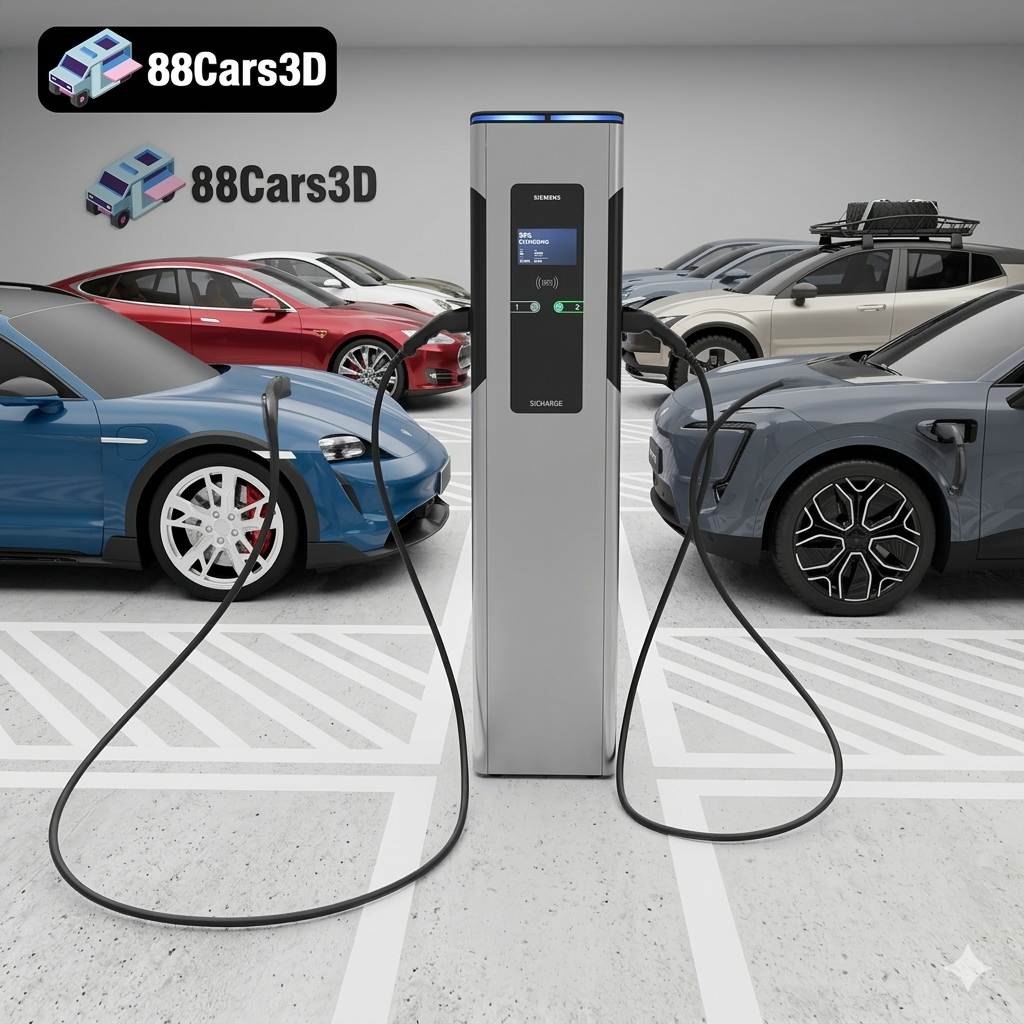
The Future of Mobility: Smart City EV 3D Models Bundle (5-in-1 Pack) Volvo Tesla AVATR Porsche 3D Printable STL
Download the Future of Mobility EV 3D Models Bundle. Includes the Volvo EX30, Tesla Model S, AVATR 11, Porsche Taycan, and a Siemens EV Charger. Save big on this highly optimized 5-in-1 pack for ArchViz and game development!
Price: $89.99
