

Unleashing Photorealism: A Deep Dive into Lumen Global Illumination for Automotive Visualization in Unreal Engine
The quest for photorealism in real-time rendering has always been a driving force in game development and professional visualization. For automotive visualization, where every curve, reflection, and material nuance must be perfect, achieving cinematic quality in real-time was once a distant dream. Enter Unreal Engine’s Lumen Global Illumination system. Lumen represents a monumental leap forward, providing dynamic global illumination and reflections that respond immediately to changes in lighting or geometry, all without the need for time-consuming lightmap baking. This groundbreaking technology empowers 3D artists, game developers, and automotive designers to create breathtakingly realistic car renders, interactive configurators, and immersive AR/VR experiences with unparalleled efficiency and visual fidelity.
In this comprehensive guide, we’ll strip back the layers of Lumen, exploring its technical underpinnings, practical implementation for 3D car models, and optimization strategies within Unreal Engine. From project setup and material creation to advanced cinematic techniques and performance tuning, you’ll discover how to leverage Lumen to elevate your automotive projects to new heights of visual realism. We’ll delve into how high-quality assets, such as those found on platforms like 88cars3d.com, are essential for maximizing Lumen’s potential, ensuring your digital vehicles look indistinguishable from their physical counterparts. Prepare to transform your real-time automotive renders from impressive to truly breathtaking.
The Revolution of Real-Time Illumination with Lumen
Lumen is Unreal Engine’s fully dynamic global illumination and reflections system, designed from the ground up to deliver believable indirect lighting and reflections in real-time. Before Lumen, achieving realistic global illumination often involved pre-calculated lightmaps or computationally expensive ray tracing, neither of which offered the responsiveness required for truly dynamic scenes. Lumen changes this paradigm entirely, bringing immediate feedback for direct lighting changes, material property adjustments, and even dynamic geometry updates. This is particularly vital for automotive visualization, where the interaction of light with complex car bodies, reflective paint, and intricate interiors needs to be both accurate and instantaneous. Imagine dynamically changing a car’s color, opening a door, or adjusting studio lighting, and seeing the light bounce and reflections update seamlessly – this is the power Lumen delivers.
The system employs a clever hybrid approach, combining software ray tracing against various scene representations. It leverages Screen Traces for high-detail, short-range global illumination, while a more robust Global Signed Distance Field (SDF) and Mesh Distance Fields handle longer-range bounces and geometry that isn’t on screen. This multi-layered strategy allows Lumen to approximate complex light transport scenarios, creating soft indirect shadows, subtle color bleeding, and accurate reflections across a vast range of surfaces. For automotive artists, this means less time spent manually faking bounces or struggling with inconsistent baked lighting, and more time focusing on artistic expression and iterative design. The result is a more immersive and visually convincing experience, whether you’re showcasing a new vehicle design or building an interactive showroom.
Understanding Lumen’s Core Components
At its heart, Lumen operates by querying scene geometry through several techniques. **Screen Traces** are the fastest, operating on the depth and normal information already available in the screen buffer. They are excellent for fine-detail bounces and reflections close to the camera, but naturally, they cannot “see” geometry outside the camera’s view. For bounces that extend beyond the screen or for off-screen geometry, Lumen primarily relies on **Signed Distance Fields (SDFs)**. Unreal Engine generates these SDFs for your meshes (Mesh Distance Fields) and combines them into a **Global SDF**, representing the overall scene. This allows Lumen to calculate bounces for objects that aren’t visible on screen, crucial for accurate global illumination where light originates from unseen sources. Understanding these components helps in debugging and optimizing Lumen’s performance and visual quality.
The Importance of Accurate Geometry for Lumen
The fidelity of your 3D models directly impacts Lumen’s ability to produce realistic results. Lumen’s software ray tracing algorithms rely on accurate geometric representations to calculate light bounces and reflections. For 3D car models, this means clean topology, watertight meshes, and appropriate detail levels are paramount. Low-quality models with intersecting geometry, inverted normals, or excessive noise will lead to artifacts like light leaks, flickering, or inaccurate reflections. When sourcing automotive assets from marketplaces such as 88cars3d.com, you benefit from models specifically designed with clean topology and proper UVs, which form a solid foundation for Lumen to work its magic. High-quality geometry ensures that light rays interact correctly with the car’s surfaces, resulting in precise indirect lighting, believable shadows, and reflections that faithfully capture the surrounding environment.
Setting Up Your Unreal Engine Project for Lumen
Integrating Lumen into your Unreal Engine project for automotive visualization is a straightforward process, but requires careful configuration to unlock its full potential. The journey begins in your project settings, where you’ll enable the core Lumen features, and continues into your scene setup, where optimal lighting and material choices are critical. Getting these foundational steps right ensures that Lumen can accurately simulate light transport, leading to stunningly realistic visuals for your 3D car models.
Before diving in, it’s worth noting that Lumen is a feature-rich system that thrives on modern hardware. Ensure your development environment meets or exceeds the recommended specifications for Unreal Engine, especially regarding GPU performance. This will provide a smooth development experience and allow you to iterate quickly on lighting scenarios. You can find detailed system requirements and further learning resources on the official Unreal Engine documentation at https://dev.epicgames.com/community/unreal-engine/learning.
Project Settings and Console Variables
To enable Lumen, navigate to **Edit > Project Settings** in Unreal Engine. Under the **Engine > Rendering** section, you’ll find the crucial settings:
- Set **Global Illumination Method** to **Lumen**.
- Set **Reflection Method** to **Lumen**.
- Ensure **Generate Mesh Distance Fields** is enabled. This is essential for Lumen’s long-range GI and reflections, as it creates the volumetric representations of your meshes that Lumen ray traces against.
After enabling these, restart the editor. Once back in your project, Lumen will be active. For further fine-tuning and debugging, console variables (CVars) are invaluable. Access these by pressing the tilde key (~) in the editor and typing commands. Some essential Lumen CVars include:
r.Lumen.DiffuseBounces [int]: Controls the number of diffuse GI bounces. A value of 1-3 is common; higher values increase realism but also performance cost.r.Lumen.Reflections.MaxRoughness [float]: Determines the maximum roughness value for surfaces that Lumen will calculate reflections for. Surfaces rougher than this value will use cheaper reflection methods. Default is often around 0.6.r.Lumen.HardwareRayTracing [int]: Set to 1 to enable hardware ray tracing for Lumen, if your GPU supports it, for potentially higher quality and performance. Set to 0 for software ray tracing.r.Lumen.Visualize [int]: A powerful debugging tool. Values like 1 (Global SDF), 2 (Screen Traces), 3 (Final GI) help you understand how Lumen is interpreting your scene.
Experimenting with these variables allows you to balance visual quality and performance for your specific automotive visualization needs.
Scene Configuration for Optimal Lumen Results
Once Lumen is enabled, your scene’s lighting setup becomes critical. Lumen thrives on physically accurate light sources.
- Directional Light: Represents sunlight and is the primary source of direct lighting. Ensure it casts dynamic shadows.
- Sky Light: Captures the ambient light from the sky, crucial for realistic outdoor and studio environments. Set its **Source Type** to **SLS Captured Scene** for dynamic updates, or **SLS Specified Cubemap** for a static environment map. Ensure **Cast Ray Traced Shadows** is enabled for accurate shadows from the sky light, especially important for car interiors.
- Emissive Materials: For car headlights, taillights, and dashboard elements, applying emissive values directly in your materials will generate light that Lumen can propagate into the scene. This eliminates the need for numerous point lights and ensures accurate light contribution from vehicle lamps.
- Post Process Volume: Add a Post Process Volume to your scene and ensure it has **Infinite Extent (Unbound)** enabled. Within this volume, you can further control Lumen’s behavior. Navigate to the **Global Illumination** section and adjust settings like **Lumen Scene Lighting Quality** and **Lumen Final Gather Quality** to refine the look and performance. Similarly, in the **Reflections** section, ensure **Method** is set to **Lumen** and tweak quality settings as needed.
By carefully orchestrating these elements, you can create an environment where Lumen can truly shine, providing nuanced and believable illumination for your high-fidelity 3D car models.
Optimizing 3D Car Models for Lumen Realism
The raw quality of your 3D car models is the bedrock upon which Lumen builds its photorealistic lighting. Models with clean topology, efficient UV mapping, and properly calibrated PBR materials are not just desirable; they are essential for Lumen to accurately simulate light interaction. Marketplaces like 88cars3d.com specialize in providing such high-fidelity assets, ensuring that your automotive projects begin with a strong technical foundation, allowing Lumen to perform at its peak. When models are optimized correctly, Lumen can generate incredibly accurate indirect lighting, reflections, and subtle light bounces that breathe life into your virtual vehicles.
A common misconception is that high polygon counts are always detrimental to performance. While true in traditional rendering pipelines, Unreal Engine, especially with features like Nanite, has revolutionized how we handle complex geometry. For automotive visualization, where intricate details and smooth surfaces are non-negotiable, leveraging these modern tools allows artists to maintain fidelity without compromising real-time performance. This synergy between high-quality assets and engine features is what truly unlocks the next level of visual fidelity for interactive car experiences.
Nanite Virtualized Geometry and Lumen
Nanite, Unreal Engine’s virtualized geometry system, is a game-changer for high-detail 3D car models. It allows artists to import and render assets with millions or even billions of polygons without significant performance bottlenecks. Crucially, Nanite works seamlessly with Lumen. When a Nanite mesh is present in a Lumen scene, Lumen can ray trace against its highly detailed geometry for diffuse global illumination and reflections. This means you can import incredibly detailed CAD data or highly tessellated models directly, enable Nanite on them, and Lumen will use that exquisite detail to calculate light bounces, resulting in exceptionally accurate indirect lighting and shadows for every panel gap, emblem, and intricate interior component of your car.
To enable Nanite for your car models:
- Import your high-poly mesh (e.g., FBX, USD).
- Open the Static Mesh Editor for your imported model.
- In the **Details** panel, under the **Nanite Settings** section, simply check **Enable Nanite**.
- Adjust **Fallback Relative Error** if necessary to control the amount of detail retained at a distance.
While Nanite handles the geometric complexity, it’s still good practice to ensure your source model has clean, manifold geometry, as issues like intersecting triangles or non-manifold edges can still cause artifacts even with Nanite. For optimal results, ensure your models from 88cars3d.com are ready for Nanite by checking for any reported errors during import, which usually points to issues that need to be fixed in your 3D modeling software.
PBR Materials and Lumen’s Interaction
Physically Based Rendering (PBR) materials are the other half of the realism equation. Lumen relies heavily on accurate PBR values – Albedo (Base Color), Roughness, Metallic, and Normal maps – to correctly simulate light interaction.
- Base Color (Albedo): Represents the diffuse color of the surface without any lighting. It should be desaturated and not contain any lighting information. Lumen uses this to determine how much light to bounce and what color that light should be.
- Metallic: A binary value (0 or 1, or interpolated for materials like rust) indicating if a material is metallic. Metallic surfaces reflect light, while non-metallic surfaces scatter it. Car paint often has a metallic flake, which needs to be carefully represented.
- Roughness: Determines how blurred or sharp reflections appear. A roughness value of 0 is perfectly smooth (mirror-like), while 1 is completely rough (matte). Accurate roughness maps are vital for car paint, chrome, glass, and interior plastics.
- Normal Map: Adds surface detail without adding actual geometry. Lumen respects normal maps for calculating both direct and indirect lighting and reflections.
Creating PBR materials in Unreal Engine’s Material Editor is an iterative process. Ensure your textures are authored correctly, with proper color space (sRGB for Base Color, Linear for Roughness/Metallic/Normal). Lumen will then use these material properties to calculate physically accurate light scattering and reflections, leading to believable car paint, realistic glass refraction, and nuanced material interactions throughout your automotive scene.
Advanced Lumen Techniques for Automotive Visualization
With your project set up and models optimized, it’s time to leverage Lumen’s advanced capabilities to push the boundaries of realism in automotive visualization. Beyond basic light bounces, Lumen enables stunning effects for car lighting systems, complex reflections, and the subtle nuances of indirect lighting that truly sell the realism of a scene. These techniques are crucial for creating marketing materials, interactive configurators, and immersive experiences where every detail of the vehicle must be impeccably rendered.
Understanding how to manipulate Lumen’s behavior through material properties and lighting setup can transform a good render into an exceptional one. The dynamic nature of Lumen means that these advanced techniques are not just for static beauty shots but also for responsive, interactive environments where light changes constantly. This flexibility is a tremendous asset for designers and artists needing to showcase vehicles in various scenarios and lighting conditions.
Emissive Materials and Car Lighting Systems
Lumen truly shines when paired with emissive materials, particularly for creating realistic car lighting systems. Instead of faking light from headlights and taillights with traditional point lights, you can apply emissive values directly to the material of the light housing or LED strips. Lumen will then treat these emissive surfaces as actual light sources, propagating light into the scene naturally.
Here’s a basic workflow in the Unreal Engine Material Editor:
- Create a Material.
- Connect your desired texture (e.g., a headlight texture) to the **Base Color** input.
- To add emission, multiply a scalar parameter (e.g., “EmissiveStrength”) by a color (e.g., white for headlights, red for taillights), and connect the result to the **Emissive Color** input.
- Adjust the “EmissiveStrength” parameter instance in your mesh’s details or via a Blueprint for dynamic control.
For more advanced effects, you can use `Light Function` materials on a Spot Light to project custom headlight beam patterns that Lumen will accurately reflect and bounce. Remember that while emissive materials contribute to Lumen’s global illumination, they generally won’t cast hard shadows themselves unless you pair them with a small, traditional light source (like a Point Light or Spot Light) set to a low intensity, primarily for casting direct shadows from the light source.
Reflective Surfaces and Lumen Reflections
Automotive exteriors are dominated by highly reflective surfaces – car paint, chrome trim, glass. Lumen’s dynamic reflections are instrumental in capturing these faithfully. Lumen Reflections use the same software ray tracing techniques as Global Illumination, providing accurate reflections of the entire scene, including indirect lighting.
Key considerations for reflective surfaces:
- Material Roughness: As discussed, accurate roughness maps are critical. A car paint material might have varying roughness depending on its clear coat, age, or dirt, and Lumen will respect these nuances.
- Metallic Value: Chrome and polished metals should have a Metallic value of 1.0, and a low Roughness value for mirror-like reflections.
- Light Source Intensity: Brighter light sources will result in more pronounced reflections. Ensure your scene’s Directional Light and Sky Light are calibrated correctly.
- Post Process Volume Reflections: Within your Post Process Volume, under the **Reflections** section, ensure **Method** is set to **Lumen**. You can adjust settings like **Lumen Reflection Quality** and **Max Bounces** to fine-tune visual fidelity and performance. For very glossy reflections (low roughness), increasing the Lumen Reflection quality can prevent noisy results.
Combining crisp Lumen reflections with physically accurate PBR materials allows you to truly showcase the aesthetic design and material quality of any 3D car model.
Indirect Lighting and Color Bleeding for Interior Renders
Lumen’s ability to simulate indirect lighting and color bleeding is particularly impactful for car interiors. The confined spaces of an automotive cabin often rely heavily on bounced light to illuminate surfaces, and the interaction between different colored materials can create subtle yet crucial color shifts.
For example, a red leather interior will subtly cast red light onto adjacent surfaces like the dashboard or ceiling. Lumen captures this **color bleeding** automatically, adding immense depth and realism.
- Ensure all interior materials have accurate Base Color values.
- Place light sources (e.g., a small rectangular light for a sunroof, or a directional light simulating sunlight through a window) that provide sufficient direct illumination to start the light bouncing process.
- For very dark interiors, consider increasing the `r.Lumen.DiffuseBounces` CVar to allow more light to propagate, or slightly increasing the overall intensity of your Sky Light.
These details contribute significantly to the perceived quality and believability of a virtual car interior, making it feel more tactile and integrated into its environment.
Performance Optimization and Troubleshooting Lumen
While Lumen delivers incredible visual fidelity, it’s a computationally intensive system. Achieving optimal performance, especially for real-time applications like interactive configurators, games, or AR/VR experiences, requires careful optimization and an understanding of common issues. Balancing visual quality with frame rate is an ongoing process that involves tweaking settings, debugging artifacts, and leveraging Unreal Engine’s profiling tools. The goal is to maximize the impact of Lumen without sacrificing the responsiveness of your automotive visualization.
Understanding the “why” behind performance bottlenecks is as important as knowing the “how” to fix them. Lumen’s complexity means that issues can arise from various sources, including geometry, materials, lighting, or even scene scale. A methodical approach to troubleshooting will save significant time and effort, allowing you to focus on iterating on your artistic vision.
Scalability and Performance Tuning
Unreal Engine provides several avenues for scaling Lumen’s quality and performance.
- Engine Scalability Settings: Under **Settings > Engine Scalability Settings**, you can globally adjust the quality presets (e.g., Cinematic, Epic, High, Medium, Low). The “Global Illumination” and “Reflections” settings here directly control Lumen’s quality. For high-end marketing renders, “Cinematic” might be acceptable, but for real-time applications, “High” or “Medium” often provide a good balance.
- Post Process Volume Settings: As mentioned, within your Post Process Volume, you have granular control over Lumen’s quality parameters, such as `Lumen Scene Lighting Quality` and `Lumen Final Gather Quality` for GI, and `Lumen Reflection Quality` for reflections. Decreasing these values can significantly improve performance at the cost of some visual fidelity.
- Console Variables (CVars): For highly specific tuning, revisit the Lumen CVars.
- `r.Lumen.ScreenTraces.MaxBounces [int]`: Reduce to lower the cost of screen traces.
- `r.Lumen.DiffuseBounces [int]`: Lowering this reduces the number of GI bounces.
- `r.Lumen.Reflections.MaxRoughness [float]`: Increasing this value means Lumen calculates reflections for rougher surfaces, which can be more expensive.
- `r.Lumen.Resolution [float]`: Adjusts the internal resolution Lumen uses for its calculations. Lower values can yield performance gains.
- View Modes: Utilize the **Lumen Overview** (Show > Visualize > Lumen Overview) or specific Lumen visualization modes (`r.Lumen.Visualize 1-5`) to understand what Lumen is doing internally. This helps identify areas where Lumen might be struggling, such as inaccurate SDFs or noisy screen traces.
Always profile your scene using Unreal Engine’s built-in profilers (e.g., `stat gpu` or `stat lumen`) to pinpoint performance bottlenecks accurately.
Common Lumen Artifacts and Solutions
Despite its sophistication, Lumen can occasionally produce visual artifacts. Knowing how to identify and resolve them is crucial:
- Light Leaks: Occur when light “leaks” through thin walls or cracks in geometry.
- Solution: Ensure your geometry is watertight and sufficiently thick. Increase the `Mesh Distance Field` resolution (in the Static Mesh Editor, under `Build Settings`) for problematic meshes. For Nanite meshes, ensure your Fallback Relative Error isn’t too high, which can simplify geometry excessively.
- Flickering/Temporal Instability: Especially noticeable on reflective surfaces or with dynamic lights.
- Solution: Increase the `Lumen Reflection Quality` in the Post Process Volume. Ensure your `Project Settings > Rendering > Lighting > Global Distance Field Voxel Density` is appropriate. For specific problematic lights, try increasing their light bounce values or ensuring they are set to `Movable`.
- Noise/Graininess: Visible in indirect lighting or reflections.
- Solution: Increase `Lumen Final Gather Quality` and `Lumen Scene Lighting Quality` in the Post Process Volume. Increase `r.Lumen.MaxTraceDistance` if you have very large scenes. Consider enabling Hardware Ray Tracing if your GPU supports it, and ensure your project’s anti-aliasing method is set to `Temporal Super Resolution (TSR)` for best results.
- Missing Reflections/GI: Objects not contributing or receiving light correctly.
- Solution: Ensure **Generate Mesh Distance Fields** is enabled in Project Settings for all relevant static meshes. Check that the object’s `Mobility` is set to `Movable` or `Stationary` (not `Static` if it needs dynamic GI). Verify that the material’s `Metallic` and `Roughness` values are correctly set for reflections.
Regularly reviewing your scene in Lumen visualization modes will help you proactively identify and fix these issues, leading to a cleaner and more stable visual experience.
Beyond Lumen: Integrating with Other Unreal Engine Features
Lumen doesn’t operate in a vacuum; its true power is realized when integrated seamlessly with Unreal Engine’s other robust features. For automotive visualization, this means combining dynamic global illumination with interactive Blueprint logic, cinematic Sequencer sequences, and the cutting-edge capabilities of virtual production workflows. By understanding how Lumen enhances and is enhanced by these systems, you can build truly immersive, high-fidelity experiences that push the boundaries of real-time automotive content.
The versatility of Unreal Engine allows artists and developers to leverage a suite of tools for diverse applications, from marketing configurators to virtual test drives and even augmented reality showcases. Lumen acts as the constant thread of realism, ensuring that regardless of the application, the vehicle always appears grounded and physically present in its environment.
Lumen, Sequencer, and Virtual Production
For creating stunning cinematic automotive content, Lumen and Sequencer are an unbeatable combination. Sequencer is Unreal Engine’s multi-track non-linear editor, allowing you to craft complex camera movements, animate props, and choreograph lighting changes over time. With Lumen enabled, every light adjustment, every material change, and every animation in your sequence will automatically propagate realistic global illumination and reflections.
This is transformative for virtual production (VP) workflows, especially those involving LED walls. In a VP setup, the LED wall displays a real-time Unreal Engine environment. When you place a physical car in front of this wall, Lumen ensures that the virtual environment’s lighting accurately affects the physical car (via projected light from the wall) and, more importantly, that the virtual car (rendered in the foreground) integrates perfectly with the virtual environment, including accurate bounce light and reflections from the LED background. This creates a seamless illusion, reducing the need for extensive green screen keying and post-production work. For high-end automotive commercials or product launches, this combination offers unparalleled creative freedom and efficiency.
Interactive Car Configurator Applications with Lumen
One of the most popular applications for 3D car models in Unreal Engine is the interactive configurator. Users can change paint colors, wheel designs, interior trims, and view the vehicle from any angle in real-time. Lumen is absolutely critical here because it ensures that every material change immediately updates the global illumination and reflections. Changing a car’s metallic flake paint color will instantly alter how light bounces off it and reflects the environment.
Blueprint visual scripting is the backbone of these configurators. You can use Blueprint to:
- Swap out Static Mesh components for different wheels or body kits.
- Dynamically change material parameters (e.g., Base Color, Roughness, Metallic) for paint, leather, or fabrics.
- Control environmental lighting conditions (time of day, studio setups).
- Add interactive elements like opening doors or turning on headlights (leveraging Lumen’s emissive light propagation).
By combining Lumen’s dynamic lighting with Blueprint’s interactivity, you can create a truly immersive and realistic customization experience, allowing potential buyers or designers to visualize every permutation of a vehicle with stunning accuracy.
AR/VR Considerations for Lumen Automotive Experiences
Augmented Reality (AR) and Virtual Reality (VR) offer unparalleled immersion for automotive showcases. Imagine walking around a life-sized virtual car in your living room (AR) or being seated inside a fully interactive car interior (VR). Lumen significantly enhances the realism of these experiences by providing dynamic, believable lighting. However, AR/VR comes with stringent performance requirements, often targeting 90+ frames per second for comfort.
Balancing Lumen’s quality with AR/VR performance requires careful optimization:
- Target Platforms: Mobile AR (e.g., iOS ARKit, Android ARCore) is highly constrained, and full Lumen might be too heavy. Consider baked lighting or highly optimized static lighting with some dynamic elements. High-end PC VR or standalone VR headsets (like Meta Quest Pro) offer more headroom for Lumen.
- Scalability Settings: Aggressively use Engine Scalability settings and Lumen CVars to find the sweet spot for your target framerate. Prioritize stable frame rates over absolute visual fidelity.
- Scene Complexity: Keep the overall scene around the car as simple as possible, while still providing enough geometry for believable reflections and GI. Use efficient meshes from 88cars3d.com, leveraging Nanite where appropriate for car detail, but keeping the environment simpler.
- Reflection Quality: Lower Lumen Reflection Quality in the Post Process Volume, or rely more on cheaper SSR (Screen Space Reflections) where acceptable.
While challenging, the combination of Lumen’s dynamic lighting with AR/VR can create incredibly compelling and realistic automotive experiences that were simply not possible a few years ago.
Conclusion
Lumen Global Illumination has irrevocably changed the landscape of real-time rendering, particularly for industries demanding absolute visual fidelity like automotive visualization. By providing fully dynamic, physically accurate indirect lighting and reflections, Lumen empowers artists and developers to create breathtakingly realistic 3D car models and immersive experiences without the performance compromises of the past. From showcasing intricate car exteriors and interiors with stunning light bounces and color bleeding to driving interactive configurators and cinematic virtual productions, Lumen is the engine that brings digital vehicles to life.
We’ve explored its technical foundations, walked through project setup and optimization for high-quality assets (such as those available on 88cars3d.com), delved into advanced techniques for car lighting systems and reflective surfaces, and discussed crucial performance considerations and troubleshooting strategies. The synergy between Lumen, Nanite, PBR materials, and Unreal Engine’s broader feature set (Blueprint, Sequencer, AR/VR) creates an unparalleled toolset for anyone working with automotive content. The future of automotive design, marketing, and entertainment is undoubtedly real-time and photorealistic, and Lumen is at the forefront of this revolution.
As you embark on your next automotive visualization project, remember that the foundation of great lighting begins with great assets. Explore the meticulously crafted 3D car models available on 88cars3d.com, designed with clean topology and PBR-ready materials, to give your Lumen-powered scenes the pristine quality they deserve. Dive into Unreal Engine, experiment with Lumen’s settings, and witness firsthand how dynamic global illumination can transform your virtual vehicles into masterpieces of digital artistry. The road to photorealism is now faster and more accessible than ever before.
Featured 3D Car Models

The Italian Legends Bundle 5 Ultimate Supercar 3D Models STL Optimized
Texture: Yes | Material: Yes | 3D Printable: Yes. Download the Italian Thoroughbreds Bundle featuring 5 iconic 3D models: Lamborghini Huracán Performante, Ferrari 458 Italia, Lamborghini Urus, Diablo SV, and Maserati GT. Optimized for 4K rendering and 3D printing (STL included). Save 50% with this ultimate Italian vehicle collection.
Price: $199.99

Elite Future Mobility: EV & Autonomous SUV Bundle (4 High-End 3D Models)3D Printable STL
Download the Elite Future Mobility Bundle featuring 4 highly optimized 3D models: Tesla Model S, Avatr 11, Li L9, and Zoox Robotaxi. Perfect for ArchViz, Smart City renders, and game dev. Optimized for Unreal Engine and Blender. Includes .fbx, .obj, and .max formats.
Price: $99

German Luxury & Performance Bundle – High-End 3D Vehicle Collection3D Printable STL
🚗 5 Iconic German Cars (BMW M4 G82, M5 CS, X3, 1 Series & Mercedes E-Class). ✅ Optimized for ArchViz: Ready for Corona & V-Ray. 💰 Save €71 with this limited-time collection! 🚀 Instant Download after purchase.
Price: $119

Extreme Off-Road & Survival 3D Models Bundle (4-in-1 Pack)3D Printable STL
Download the Extreme Off-Road & Survival 3D Models Bundle! Includes the Brabus 800 Adventure, Dodge Ram Bigfoot, Spec Truck, and a Caravan. Save over €210 on this premium 4-in-1 off-grid vehicle pack for ArchViz and game development.
Price: $149.99

Heavy Duty & Commercial Logistics 3D Models Bundle (4-in-1 Pack)3D Printable STL
Download the Heavy Duty & Commercial Logistics 3D Models Bundle! Includes the Ford Sterling, Caterpillar CT680, Mercedes Citaro Bus, and Vito Van. Save over €130 on this massive, game-ready 4-in-1 industrial vehicle pack.
Price: $109.99

The Ultimate Garage Props & Custom Motorcycles 3D Models Bundle 3D Printable STL
Download the Ultimate Custom Motorcycles 3D Models Bundle. Includes a Custom Chopper, Ducati 916 Café Fighter, Harley XR1200X, and BMW K100. Perfect premium props for luxury ArchViz garages. Save over €250 today!
Price: $159.99

Japanese Legends: JDM Street Racing 3D Models Bundle (5-in-1 Pack) Nissan Mitsubishi Honda Mazda Toyota 3D Printable STL
Download the ultimate JDM Street Racing 3D Models Bundle! Includes the Nissan GT-R, Toyota Supra, Mazda RX-7, Lancer Evo IX, and Honda NSX. Save big on this highly optimized, game-ready 5-in-1 Japanese legend car pack.
Price: $129.99

American Muscle & Classics Pack 4 in 1 Ford Dodge Chevrolet 3D Printable STL
Download the ultimate American Muscle & Cinematic Classics 3D Models Bundle! Includes the Dodge Charger ’68, Mustang Eleanor GT500, Camaro Z28 ’79, and a custom ’69 Mustang. Save over €240 on this game-ready, premium 4-in-1 pack.
Price: $149.99

Everyday City Traffic Essentials pack 5in1 Hyundai Kia Volkswagen Toyota Ford 3D Printable STL
Download the Everyday City Traffic 3D Models Bundle. Includes the VW Golf, Kia Picanto, Hyundai Tucson, Toyota Yaris, and a DHL Ford Transit Van. Save big on this 5-in-1 pack, perfectly optimized for realistic ArchViz streets and game traffic.
Price: $99.99
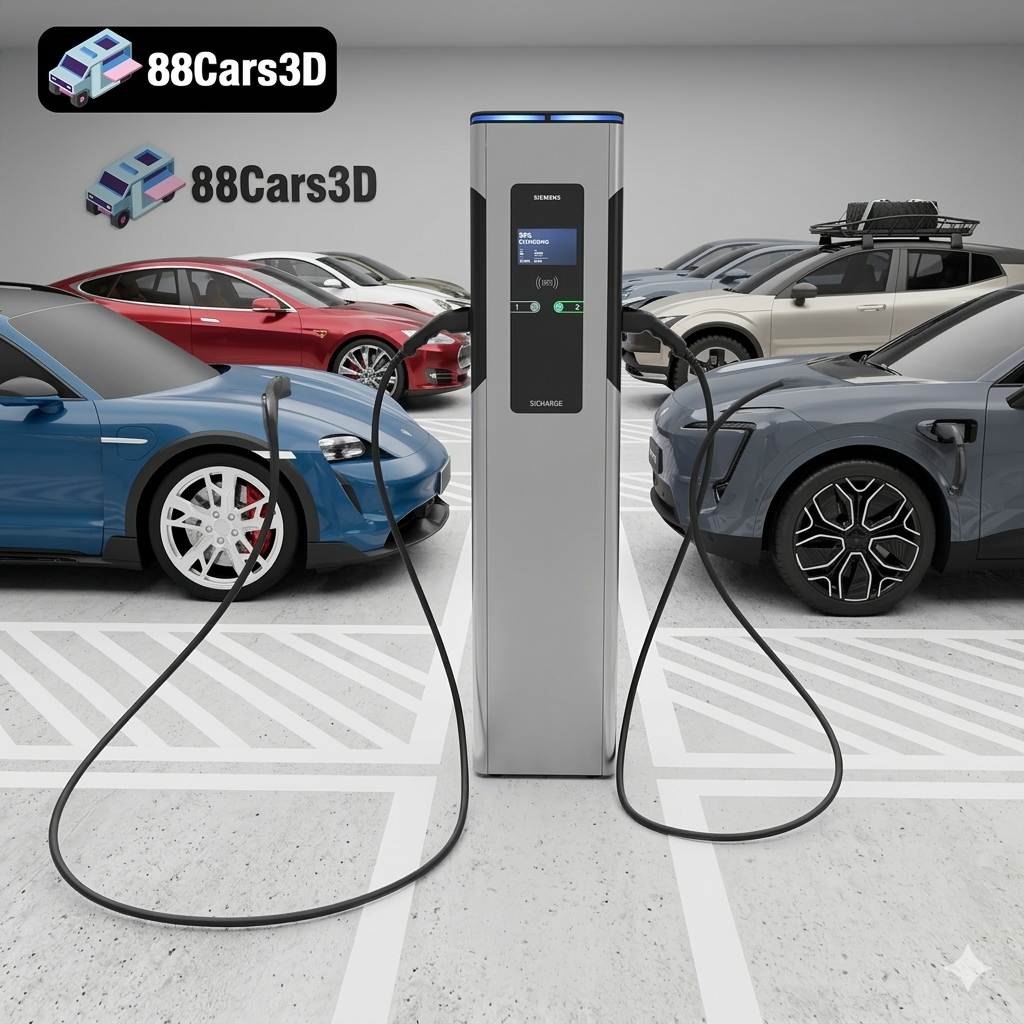
The Future of Mobility: Smart City EV 3D Models Bundle (5-in-1 Pack) Volvo Tesla AVATR Porsche 3D Printable STL
Download the Future of Mobility EV 3D Models Bundle. Includes the Volvo EX30, Tesla Model S, AVATR 11, Porsche Taycan, and a Siemens EV Charger. Save big on this highly optimized 5-in-1 pack for ArchViz and game development!
Price: $89.99
