The Timeless Elegance of the Vespa VNB 125: A Deep Dive into High-Quality 3D Automotive Models
In the vibrant world of 3D design and digital visualization, the ability to accurately and beautifully recreate iconic vehicles is paramount. Whether for cutting-edge game development, hyper-realistic automotive rendering, immersive AR/VR experiences, or even tangible 3D printed collectibles, the foundation lies in a meticulously crafted 3D model. Few vehicles capture the essence of classic design and cultural impact quite like the Vespa, and specifically, the Vespa VNB 125. This humble Italian scooter, a symbol of post-war European charm and urban freedom from the early 1960s, holds a special place in history and now, in the digital realm.
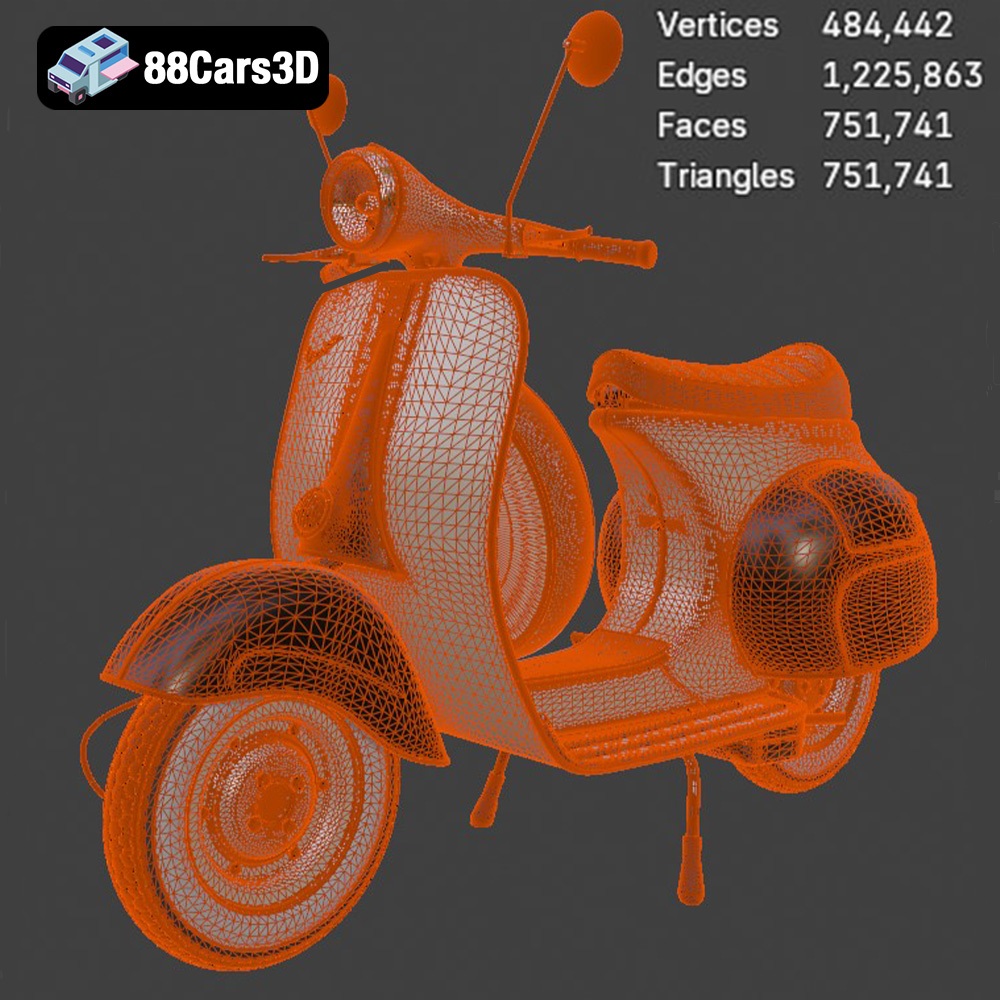
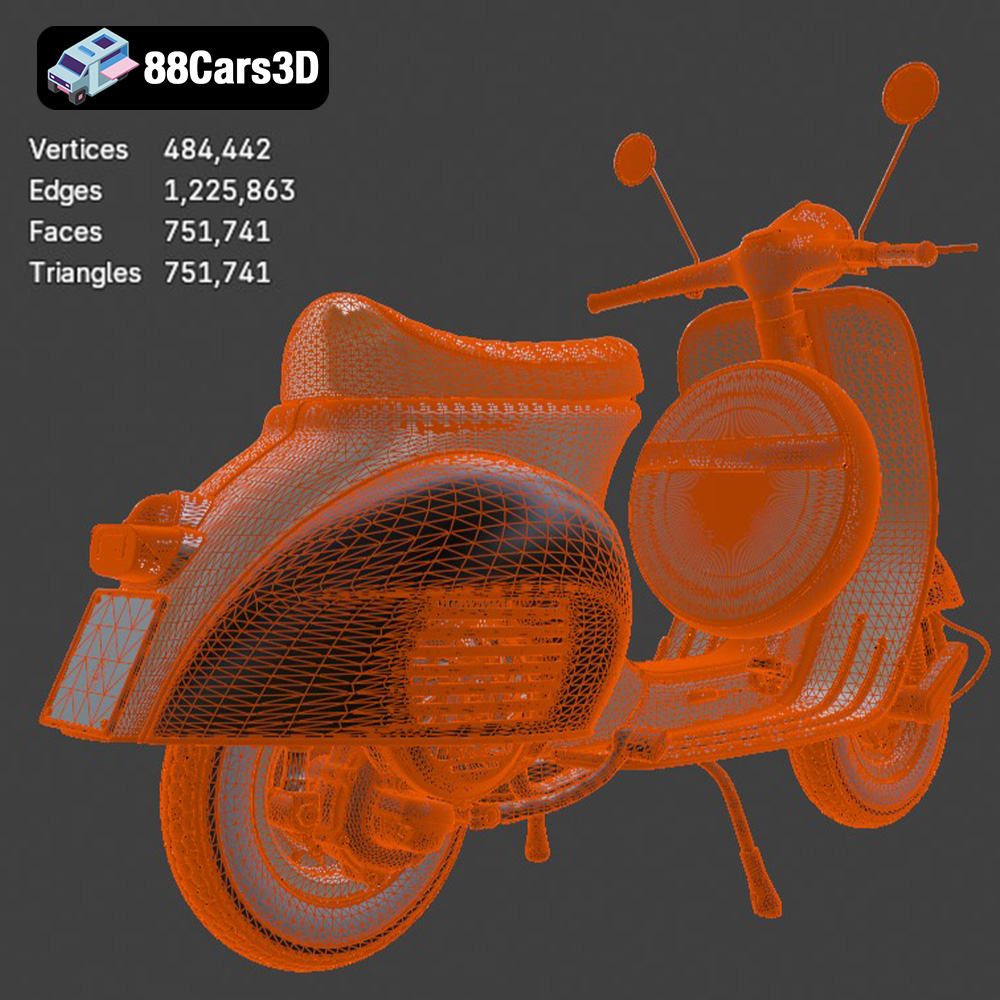
The quest for authenticity and precision drives professionals to seek out high-quality 3D car models and vehicle assets. This is precisely where a product like the Vespa VNB 125 3D Model from 88cars3d.com excels. It’s not merely a digital sculpture; it’s a detailed recreation that embodies the original’s elegant curves, monocoque steel body, and lightweight practicality. Designed with clean topology, real-world scale accuracy, and a comprehensive suite of file formats, this model is poised to become an indispensable asset for a myriad of creative projects, from vintage advertising campaigns to open-world urban games set in a bygone era. Let’s explore the technical advantages and versatile applications that make such a detailed asset so valuable in today’s demanding digital landscape.
The Anatomy of Authenticity: Capturing the Vespa’s Spirit in 3D
Creating a truly compelling 3D model of a classic vehicle like the Vespa VNB 125 requires more than just an eye for detail; it demands a deep understanding of its form, function, and historical context. Every curve, every chrome accent, and every mechanical component contributes to the scooter’s distinctive character.
Capturing Vintage Aesthetics with Precision
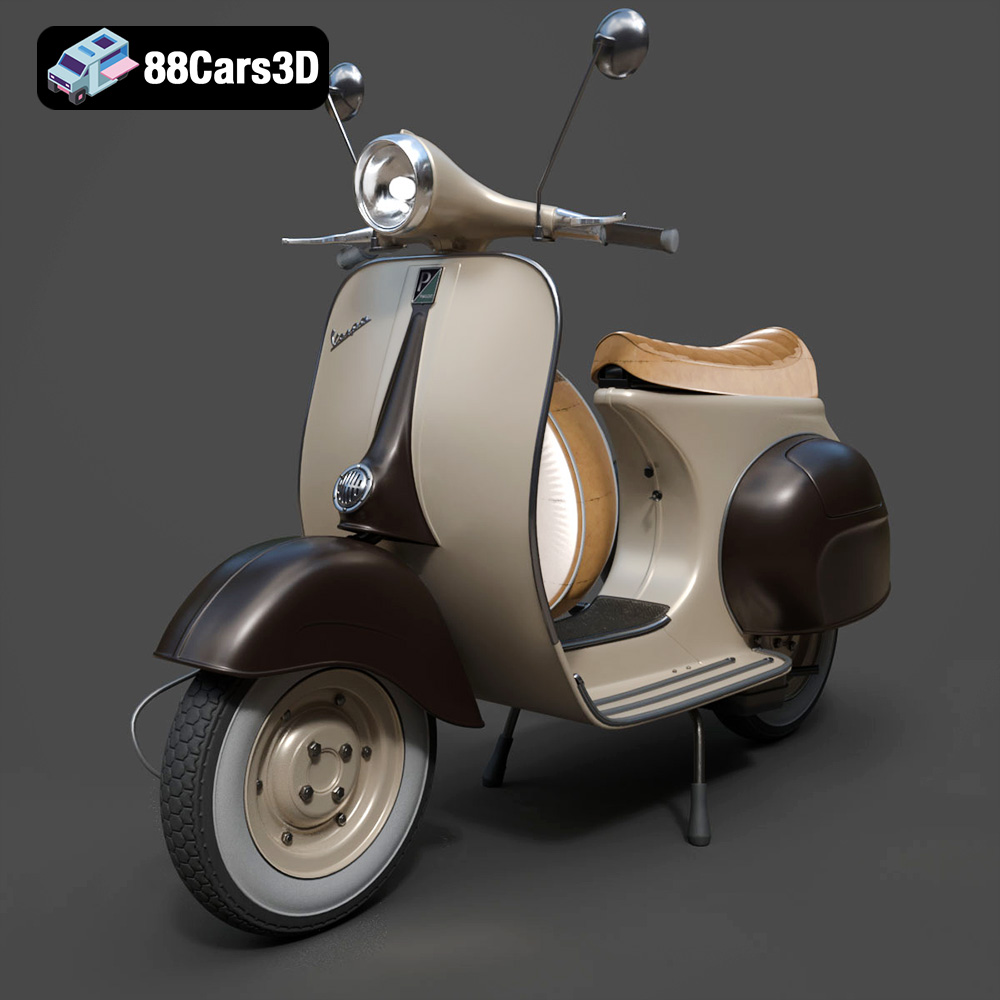
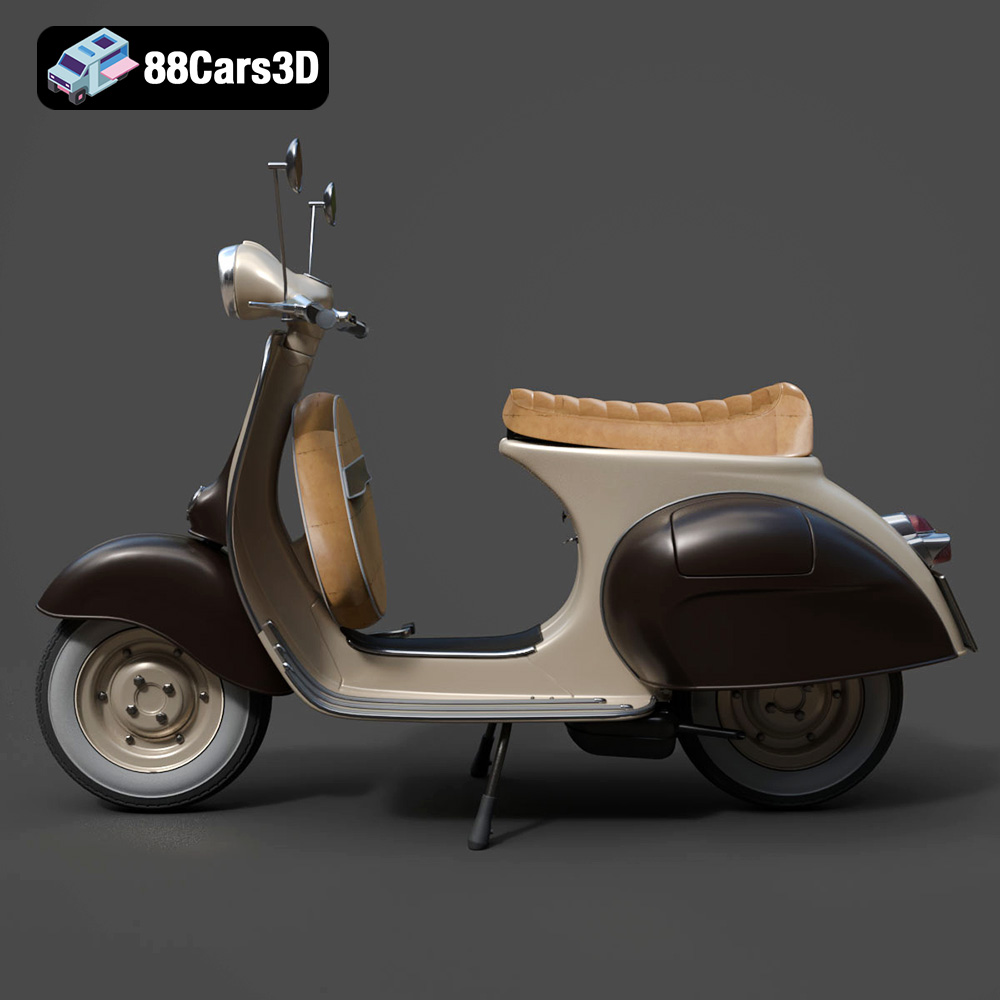
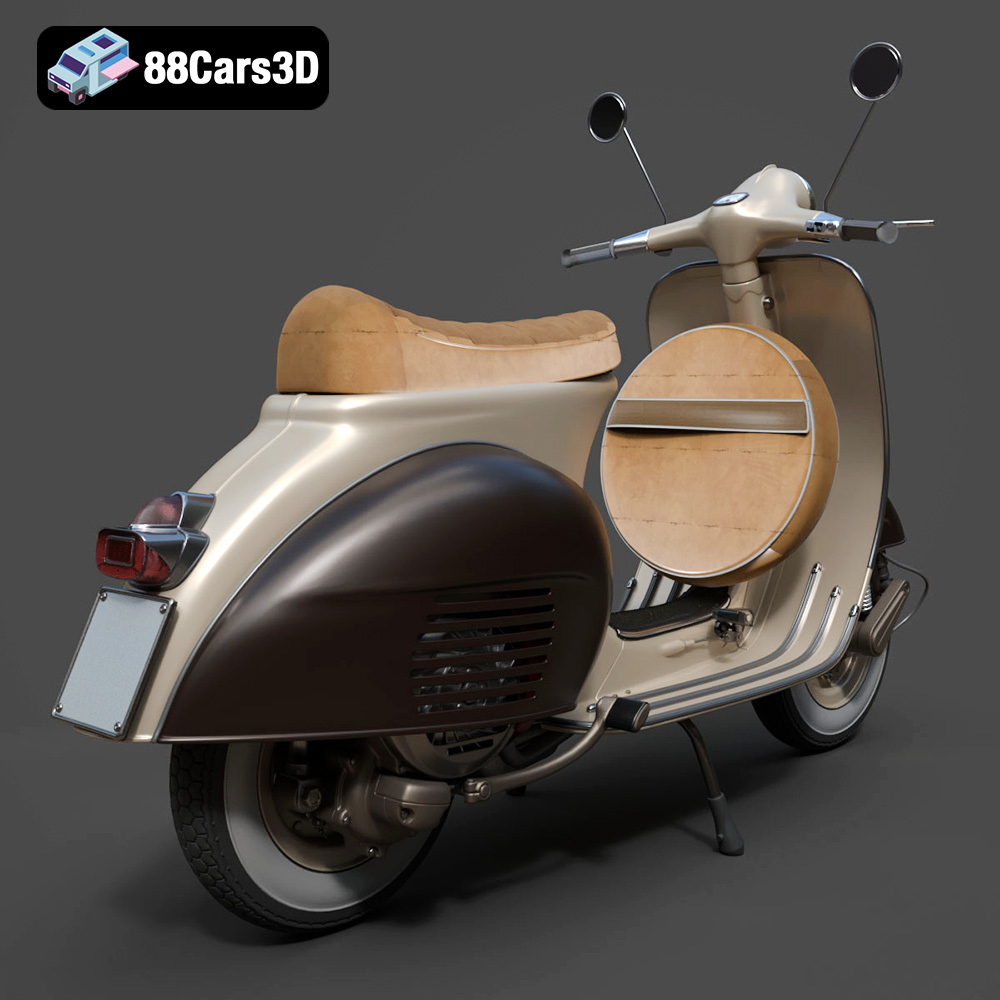
The Vespa VNB 125 3D Model is a masterclass in digital preservation. Its creators have meticulously translated the scooter’s physical attributes into a high-fidelity digital asset. This includes the instantly recognizable rounded front leg shield, the signature circular headlamp that seems to peer out with a friendly gaze, and the streamlined side panels that gracefully conceal the engine. The attention to period-correct details extends to the wheel styling, the rear-mounted engine housing structure, and even the nuances of the exhaust system and suspension components. For artists working on automotive rendering projects, this level of precision is invaluable. It ensures that reflections behave correctly across the iconic curves, and that the scooter holds up to close-up shots without losing fidelity. The geometry is optimized to accurately capture the subtle undulations and transitions of the monocoque steel body, which is crucial for achieving photorealistic results in rendering engines like V-Ray, Corona, or Cycles in Blender.
Beyond Visuals: Engineering for Animation and Interaction
A static model, no matter how beautiful, often falls short in dynamic applications. The Vespa VNB 125 3D Model is engineered for movement and interactivity. It features separate wheels and a steering assembly, each with a proper pivot setup, which is essential for realistic animation. Imagine a cinematic sequence where the Vespa navigates narrow Italian streets, its front wheel turning smoothly and its suspension subtly reacting to the terrain. This level of rigging readiness significantly reduces post-purchase setup time for animators and game developers.
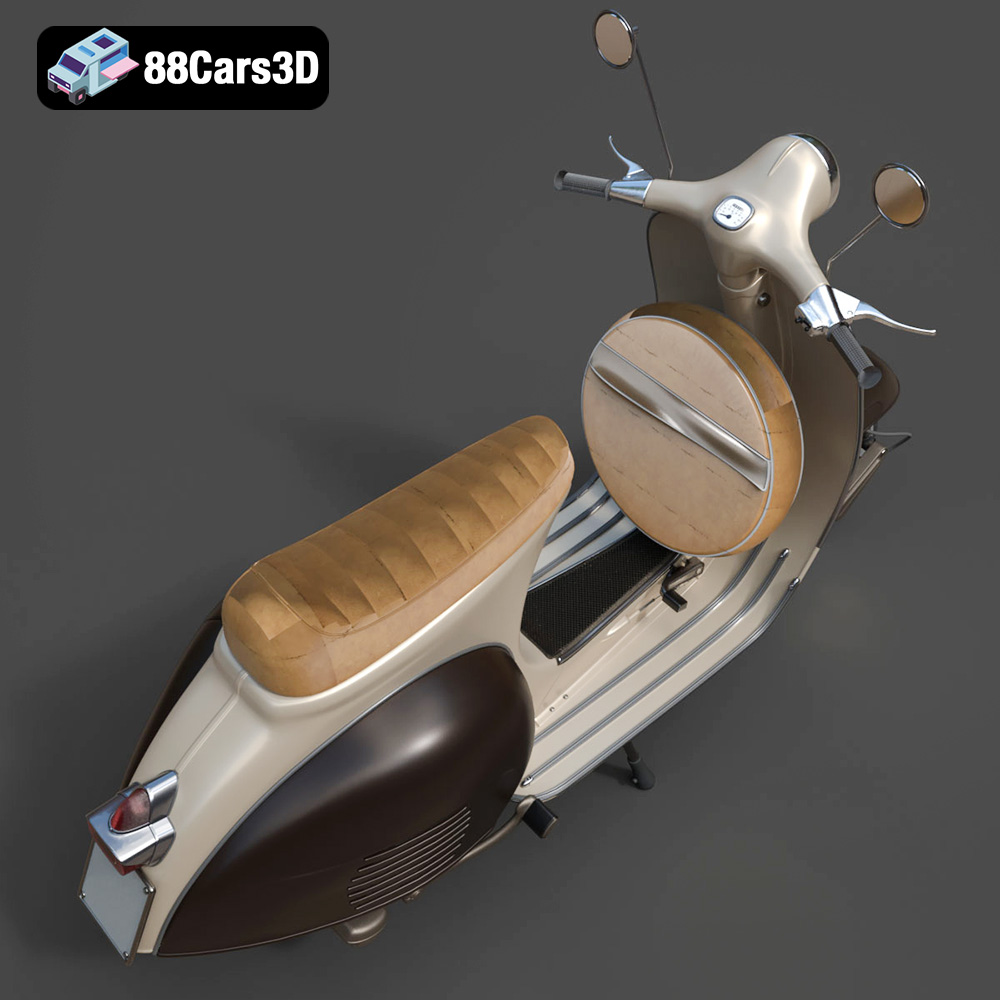
Furthermore, the model boasts a detailed handlebar assembly, complete with speedometer housing, throttle, and brake lever detailing. The footboard with its ribbed pattern and the choice between single or dual-seat configurations add layers of realism and customization. This robust internal structure makes the model highly adaptable for complex simulations or for interactive AR/VR experiences where users might want to inspect the vehicle’s controls up close. The clean and well-organized mesh structure, combined with optimized polygon flow, ensures that the model not only looks good but also performs efficiently across various demanding applications.
Understanding 3D Model File Formats
The versatility of any high-quality 3D model, such as the Vespa VNB 125 3D Model, is profoundly linked to the range of file formats it supports. Each format serves specific purposes, excelling in different stages of the 3D pipeline, from initial modeling to final deployment in games, rendering, or manufacturing. Understanding these distinctions is critical for professionals to select the right tool for their project, ensuring seamless integration and optimal performance. The inclusion of a comprehensive set of formats with the Vespa VNB 125 3D Model from 88cars3d.com underscores its professional-grade utility.
.blend – The Native Blender Ecosystem
The **.blend** file format is Blender’s native format, encapsulating a complete Blender scene. This includes not just the mesh data, but also materials, textures, lighting, cameras, animation data, physics simulations, and even custom scripts. For artists primarily working within Blender, this is the most flexible and fully editable format. It allows for immediate manipulation of all aspects of the Vespa VNB 125, from adjusting shaders to modifying geometry or extending its animation rig. Its self-contained nature makes it excellent for project archiving and collaborative work within the Blender community.
.fbx – The Industry Standard for Interoperability
**FBX (Filmbox)** is a proprietary file format owned by Autodesk, but it has become an unofficial industry standard for 3D data exchange between different software applications. It’s incredibly robust, capable of storing not only mesh and material data but also complex animation, rigging, and even basic lighting information. For game developers using Unreal Engine or Unity, or animators moving between 3ds Max, Maya, and Blender, .fbx is often the go-to format due to its excellent compatibility and ability to preserve intricate data. The Vespa VNB 125 in .fbx ensures that its separate wheels, steering assembly, and pivot points are correctly transferred, making it ideal for real-time pipelines.
.obj – Universal Mesh Data Transfer
The **.obj (Wavefront OBJ)** format is one of the oldest and most universally supported 3D file formats. It primarily stores geometric data (vertices, normals, texture coordinates, and faces) and references to external material files (.mtl). While it doesn’t support animation or rigging, its simplicity and wide compatibility make it an excellent choice for transferring raw mesh data between virtually any 3D software. For the Vespa VNB 125, an .obj file provides a clean, unadulterated mesh that can be imported into any application for further texturing or rigging from scratch if desired.
.glb – Optimized for Web and Immersive Experiences
**GLB (GL Transmission Format Binary)** is a relatively newer format designed for the efficient transmission and loading of 3D scenes and models in web and AR/VR applications. It’s a binary version of glTF (GL Transmission Format), packaging all necessary data—geometry, materials, textures, animations—into a single, compact file. Its small file size and optimized performance make it perfect for displaying the Vespa VNB 125 in browser-based configurators, interactive web presentations, or lightweight AR/VR experiences, ensuring quick load times and smooth interaction.
.stl – The Foundation for 3D Printing
The **.stl (STereoLithography)** format is the de facto standard for 3D printing. It represents a 3D model as a collection of unconnected triangular facets, defining only the surface geometry of an object without color, texture, or other CAD attributes. For the Vespa VNB 125 3D Printable STL, this format is crucial. It provides the necessary manifold (watertight) mesh data for slicing software to prepare the model for physical fabrication, making it suitable for creating collectible scale scooter models or decorative miniatures.
.ply – Precision for Technical and Scanning Applications
The **.ply (Polygon File Format or Stanford Triangle Format)** is a file format for storing 3D data from 3D scanners. It can store a variety of properties, including color, transparency, surface normals, and range data, in addition to basic geometric information. While less common for direct artistic creation than .fbx or .obj, .ply is valuable for applications requiring high precision mesh data, such as CAD integration, reverse engineering, or detailed analysis of geometric properties. The Vespa VNB 125 in .ply can be useful for certain engineering or digital heritage projects requiring highly accurate mesh representation.
.unreal – Seamless Integration into Real-Time Engines
While not a standalone file extension in the same vein as .fbx or .obj, the inclusion of **.unreal** signifies an asset specifically prepared and optimized for direct import into the Unreal Engine. This typically means the model comes with pre-configured materials, collision meshes, LODs (Levels of Detail), and potentially even skeletal meshes and animations tailored for Unreal’s pipeline. For developers leveraging the Vespa VNB 125 in an Unreal project, this ensures a streamlined workflow, minimizing setup time and maximizing engine performance. It effectively means the asset is engine-ready for real-time environments.
.max – The Power of 3ds Max Projects
The **.max** file format is the native project file for Autodesk 3ds Max. Similar to .blend for Blender, a .max file contains all elements of a 3ds Max scene, including the Vespa VNB 125’s geometry, materials, textures, lighting, cameras, and animation data. For users of 3ds Max, this format offers the highest level of editability and allows access to all modifiers, complex shaders, and scene organization within the software. It’s ideal for advanced rendering, animation, and architectural visualization projects where 3ds Max is the primary tool.
By offering this extensive range of formats, the Vespa VNB 125 3D Model maximizes its utility, allowing professionals across various disciplines to integrate this iconic vehicle into their preferred workflows with minimal friction.
Elevating Visuals: Rendering and Visualization Workflows
High-quality 3D car models are the cornerstone of compelling visual content. For the Vespa VNB 125 3D Model, its inherent detail and clean topology make it a dream asset for rendering and visualization professionals.
Crafting Cinematic Scenes in 3ds Max and Blender
In the world of advertising, film, and architectural visualization, photorealism is the ultimate goal. The Vespa VNB 125, with its accurately modeled body proportions, classic detailing, and clean mesh, provides an exceptional base for creating stunning renders. In 3ds Max, artists can leverage its powerful rendering engines like V-Ray or Corona to meticulously set up lighting, materials, and camera angles. The model’s optimized geometry ensures smooth subdivision surfacing, crucial for achieving those buttery-smooth reflections across the Vespa’s curved panels. Artists can easily apply a variety of material presets, from glossy pastel paints to chrome accents, letting the physical-based rendering (PBR) workflows shine.
Similarly, in Blender, using its native Cycles or Eevee renderers, designers can achieve comparable results. The .blend file format offers immediate access to all materials and scene setups, enabling quick customization. Imagine a scene set in a sun-drenched Italian piazza, the Vespa VNB 125 parked elegantly beside a café, its chrome glinting under the afternoon sun – such a visual narrative becomes effortlessly achievable with a model of this caliber. The proper pivot setup for steering and wheel rotation further empowers animators to create dynamic fly-throughs or product showcase videos.
Real-World Case Studies: Advertising and Architectural Visualization
The applications extend far beyond abstract art. In commercial advertising, the Vespa VNB 125 3D Model can be integrated into high-impact campaigns for vintage brands, lifestyle promotions, or even as a nostalgic element in modern product launches. Agencies can composite the 3D scooter into live-action footage or create entirely CG environments that evoke a bygone era. For example, a campaign for an artisanal coffee brand could feature the Vespa as a key element, symbolizing heritage and craftsmanship.
In architectural visualization, the addition of a classic vehicle like the Vespa VNB 125 can breathe life and character into static renders of urban landscapes, residential complexes, or commercial storefronts. Placing this iconic scooter in front of a newly designed building or within a street scene can instantly ground the visualization in a relatable, human context, adding a layer of narrative and visual interest that would otherwise be missing. It’s perfect for rendering retro city streets, European alleyways, or beach promenades, lending an authentic, lived-in feel to digital environments.
From Pixels to Play: Integrating the Vespa VNB 125 into Game Engines
The interactive entertainment industry demands 3D assets that are not only visually appealing but also highly optimized for real-time performance. The Vespa VNB 125 3D Model is meticulously crafted to meet these rigorous demands, making it a valuable asset for game developers and AR/VR creators.
Optimizing for Performance in Unreal Engine and Unity
Game development often presents a unique challenge: balancing visual fidelity with performance constraints. The Vespa VNB 125 3D Model addresses this through its clean and well-organized mesh structure and optimized polygon flow. These attributes are crucial for ensuring smooth framerates and efficient rendering within popular game engines like Unreal Engine and Unity.
For developers working in Unreal, the inclusion of the .unreal file format (or highly optimized .fbx files) means that the asset is practically ready for drag-and-drop integration. Pre-configured materials, proper collision meshes, and potentially even LODs (Levels of Detail) can significantly accelerate the development pipeline. The separate wheels and steering assembly, with correct pivot points, are essential for implementing vehicle physics and interactive driving mechanics within a game. Imagine players cruising through a 1960s-themed open-world urban game on this classic scooter, its detailed geometry and animation readiness enhancing immersion.
Similarly, in Unity, the .fbx and .glb formats allow for straightforward import and setup. Developers can easily apply custom PBR materials using Unity’s standard render pipeline or HDRP/URP, ensuring the Vespa looks fantastic while maintaining performance. This model is perfect for populating virtual European cities, adding authentic vehicle traffic, or even serving as a player’s customizable ride.
Immersive Experiences in AR/VR: A Ride Through History
Augmented Reality (AR) and Virtual Reality (VR) environments offer unparalleled opportunities for immersive experiences. The Vespa VNB 125 3D Model is ideally suited for these platforms, allowing users to interact with a piece of automotive history in new and exciting ways.
In AR, the .glb format, optimized for web and mobile display, enables developers to place a virtual Vespa VNB 125 directly into the real world via a smartphone or tablet camera. This could be used for interactive historical vehicle showcases, allowing potential buyers or enthusiasts to virtually “park” the scooter in their driveway, walk around it, and inspect its details from any angle.
For VR, the model can be incorporated into virtual museums, interactive experiences about classic Italian culture, or even driving simulations. Users could virtually sit on the Vespa, examine the detailed handlebar assembly, and even experience a simulated ride through a digitally reconstructed vintage street. The optimized geometry ensures that these experiences run smoothly, preventing motion sickness and enhancing user engagement, making the digital recreation from 88cars3d.com a gateway to truly interactive history.
The Tangible Digital: Preparing the Vespa VNB 125 for 3D Printing
Beyond the screen, 3D models have a fascinating journey into the physical world through 3D printing. The Vespa VNB 125 3D Model, with its “3D Printable STL” designation, offers a unique opportunity to own a tangible piece of digital craftsmanship.
Navigating STL for Physical Production
The journey from a digital 3D model to a physical object primarily relies on the .stl file format. STL files define the surface geometry of a 3D object using a mesh of triangles. For a model to be successfully 3D printed, its STL file must represent a “manifold” or “watertight” mesh, meaning it has no holes or internal geometry errors that would confuse the slicing software. The Vespa VNB 125 3D Model is designed with this in mind, ensuring a robust and printable geometry.
The product description outlines specific 3D print settings, which are crucial guidelines for achieving optimal results. Recommended scales like 1:18, 1:12, and 1:10 cater to various collectible preferences. Smaller scales often demand higher precision printers (like resin-based SLA/DLP), while larger scales can be achieved with FDM printers. Layer height, wall thickness, and infill settings are vital for structural integrity and detail resolution. For instance, a layer height of 0.08–0.16 mm allows for smooth curves on the Vespa’s body, while adequate wall thickness and infill ensure the printed model is robust.
Post-Processing and Finishing for Collectible Models
3D printing is often just the first step in creating a high-quality physical collectible. The raw print, especially from FDM printers, will likely require post-processing to achieve a polished finish. The product recommends supports for intricate areas like the handlebar, exhaust, and center stand, which will need careful removal.
Following support removal, sanding is typically required to smooth out layer lines and imperfections, especially on the Vespa’s elegant curved body. Applying primer helps to even out the surface and prepare it for painting. The recommendation for a gloss pastel paint finish and chrome detailing encourages users to bring the vintage aesthetic to life. Hobbyists can delve into advanced techniques like airbrushing for a factory-fresh look or weathering for a more rustic, period-accurate appearance. The result is a personalized, high-detail miniature of the iconic Vespa VNB 125, a testament to the versatility of professional 3D car models.
Customization and Creative Freedom
The beauty of a high-quality 3D model like the Vespa VNB 125 lies not only in its inherent detail but also in the boundless opportunities it offers for customization and creative adaptation.
Personalizing Your Digital Vespa
The digital nature of the Vespa VNB 125 3D Model means that its appearance is highly flexible. The product details explicitly mention several customization options. Changing the body color with classic pastel finishes is a straightforward process in any 3D software, allowing artists to match specific brand palettes or recreate historical color schemes. Adding vintage decals or country license plates can further enhance realism and contextualize the scooter within a specific time or place.
Beyond surface aesthetics, the model offers structural customization. Users can configure a single-seat or dual-seat version, impacting the overall silhouette and functionality for animations or renders. The ability to add a rear luggage rack or a spare wheel provides practical storytelling elements, suggesting adventurous journeys or everyday utility. Even environmental factors like adjusting lighting for daytime city scenes or a dramatic sunset promenade can entirely transform the mood and visual impact of the model. This level of customizable detail ensures that the Vespa VNB 125 can be seamlessly integrated into a diverse array of projects without feeling generic.
Expanding Your Automotive Digital Library with 88cars3d.com
The Vespa VNB 125 is an excellent example of the caliber of assets available, but it’s just one piece of a much larger puzzle for professionals. Building a robust digital asset library is crucial for efficiency and quality in automotive rendering, game development, and visualization. Platforms like 88cars3d.com specialize in providing a wide range of high-quality 3D car models and vehicle assets, enabling designers to quickly populate their scenes with authentic and detailed elements. From classic cars to modern supercars, utility vehicles to iconic motorcycles, a comprehensive library empowers creators to tackle any project with confidence. Investing in meticulously crafted models like the Vespa VNB 125 saves countless hours of modeling work and ensures a consistent standard of excellence across all your digital creations.
Conclusion: The Enduring Value of Precision 3D Assets
The Vespa VNB 125 3D Model stands as a testament to the power of high-fidelity digital recreation. From its accurate body proportions and intricate detailing to its optimized mesh and multi-format compatibility, this model embodies what professionals seek in top-tier 3D car models. We’ve explored how its design caters to demanding workflows in automotive rendering, game asset development, AR/VR experiences, and even the exciting realm of 3D printing. The comprehensive file format support, including .blend, .fbx, .obj, .glb, .stl, .ply, .unreal, and .max, ensures unparalleled versatility and integration across virtually any creative pipeline.
Whether you are an architect looking to add vintage charm to a visualization, a game developer crafting an immersive retro world, an advertiser seeking to evoke nostalgia, or a hobbyist eager to print a miniature masterpiece, the Vespa VNB 125 3D Model offers the technical excellence and creative freedom you need. It’s more than just a model; it’s a digital key to unlocking new creative possibilities and celebrating an automotive icon. For those serious about quality and efficiency in their 3D projects, exploring the carefully curated collection of assets at 88cars3d.com, starting with this exquisite Vespa, is a definitive step towards achieving outstanding results.
Featured 3D Model
Vespa VNB 125 3D Model 3D Printable STL
The Vespa VNB 125 3D Model is a high-detail digital recreation of the iconic Italian scooter produced during the early 1960s. Known for its elegant curves, monocoque steel body, and lightweight urban practicality, the VNB 125 represents the golden era of classic European scooter design. This 3D model accurately captures the rounded front leg shield, signature circular headlamp, streamlined side panels, single-seat or dual-seat configuration, exposed handlebar assembly, and period-correct wheel styling. Designed with clean topology and real-world scale accuracy, it is ideal for rendering, animation, game development, AR/VR environments, and historical vehicle visualization. Perfect for retro city streets, European alleyways, beach promenades, café scenes, and cinematic vintage productions.
$19.88
Product Image Gallery