Get 20% OFF All Premium 3D & STL Models!

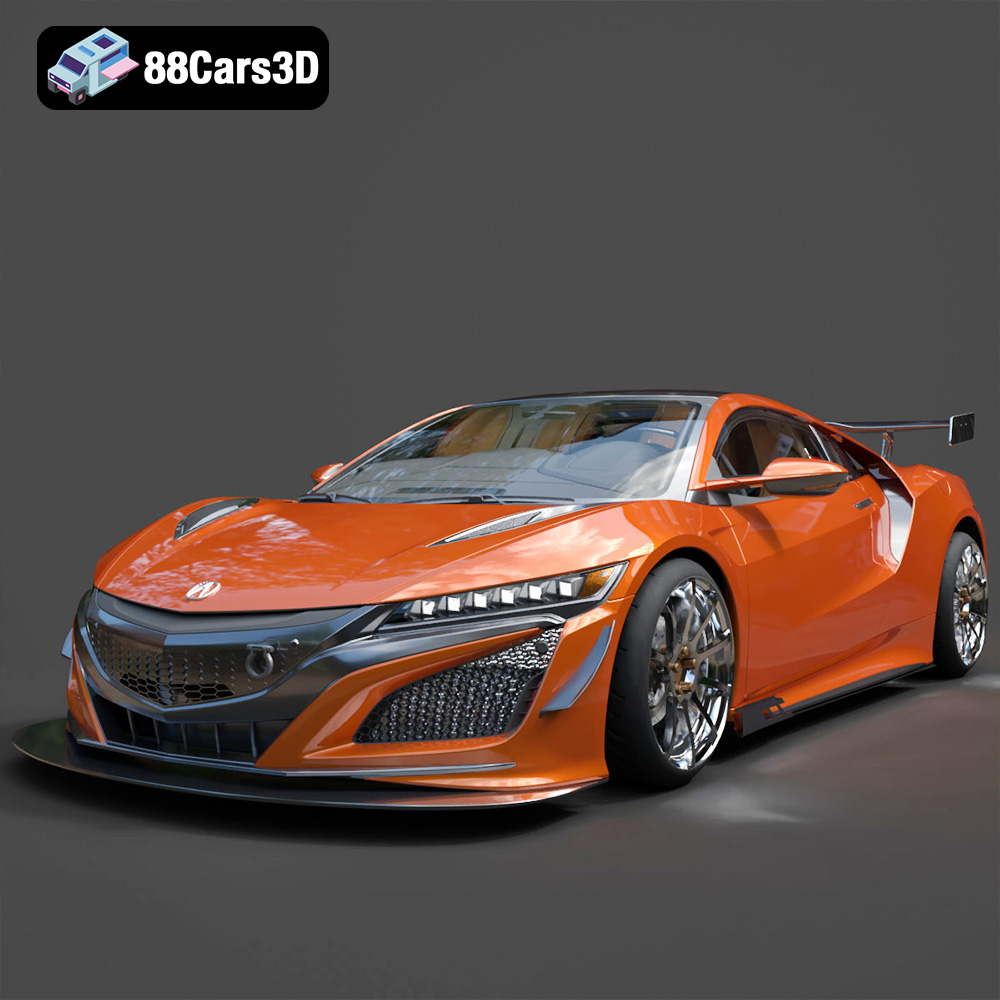
In the vibrant world of 3D visualization, few subjects captivate the imagination quite like a high-performance supercar. The Acura NSX, a machine synonymous with precision engineering, breathtaking design, and a futuristic hybrid powertrain, stands as a testament to automotive innovation. Its rebirth in 2017 marked a new era for the iconic nameplate, blending aggressive aesthetics with cutting-edge technology.
For 3D artists, game developers, architects, and product designers, the allure of digitally recreating such a vehicle is immense. It presents both a challenge and an opportunity: to capture every sculpted line, every functional air intake, and every subtle curve that defines its aerodynamic prowess. This is where a meticulously crafted 3D model becomes an indispensable tool. Imagine integrating this masterpiece into a photorealistic architectural render, featuring it as the hero vehicle in a next-generation racing simulator, or even bringing it to life as a tangible scale model through 3D printing.
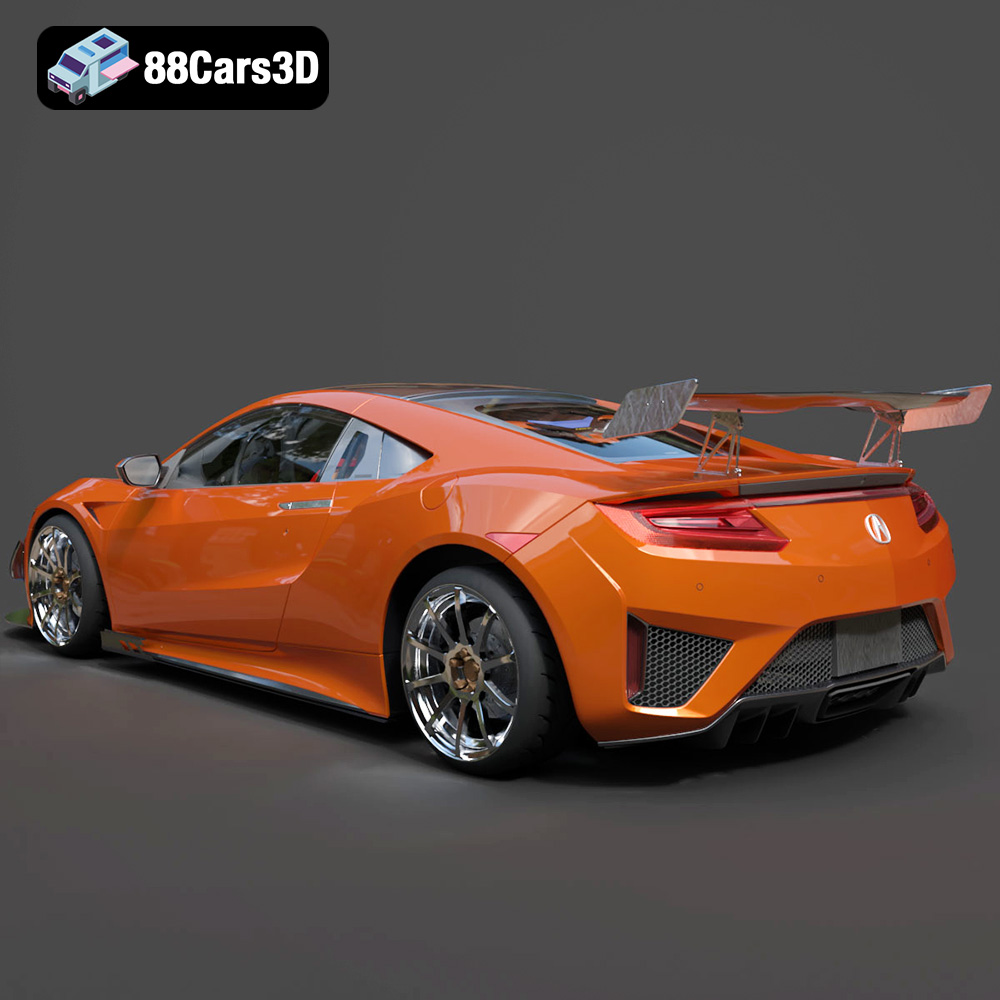
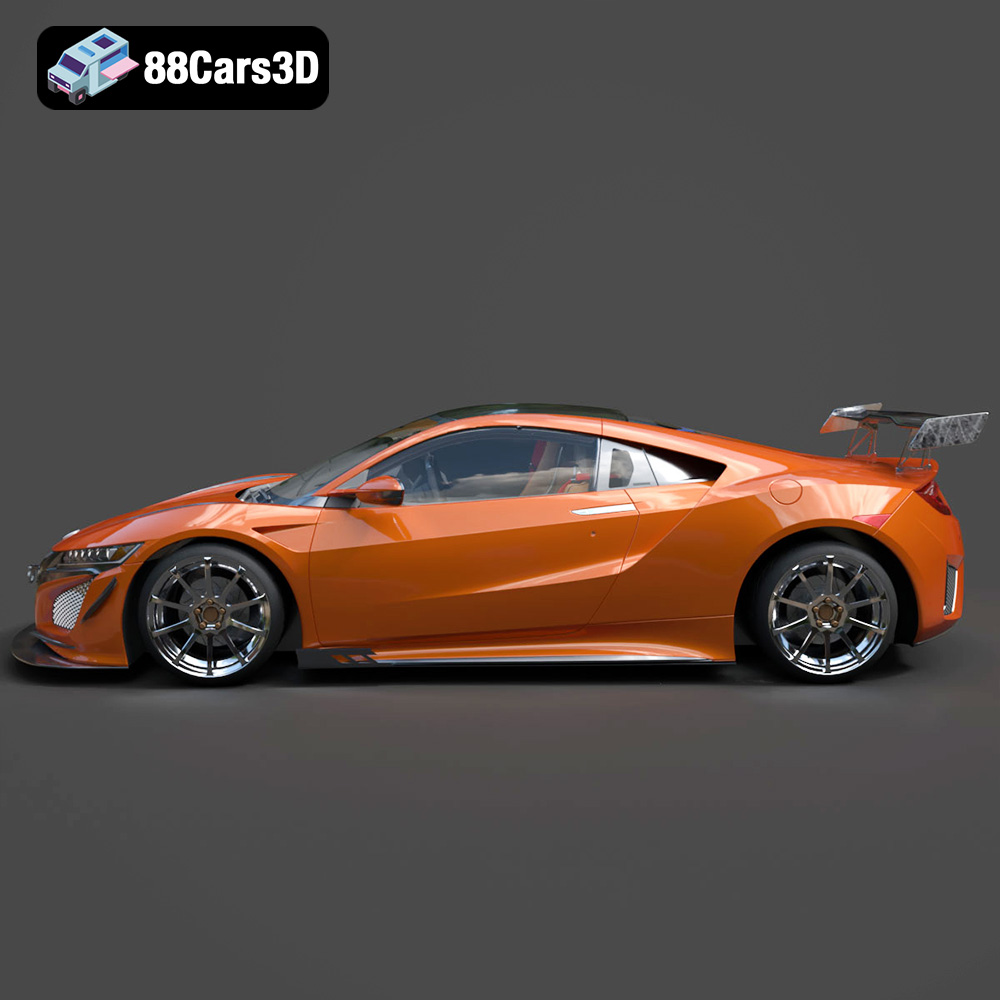
Today, we’re diving deep into the technical intricacies and creative possibilities offered by a premium digital asset: the Acura NSX 2017 3D Model available on 88cars3d.com. This asset isn’t just a collection of polygons; it’s a meticulously engineered digital twin, ready to accelerate your projects across multiple industries, from high-fidelity rendering to immersive real-time experiences and even physical prototyping.
The strength of any professional 3D asset lies not just in its visual fidelity, but also in its compatibility and adaptability across various software and platforms. The Acura NSX 2017 3D Model exemplifies this versatility by offering a comprehensive suite of file formats, each tailored for specific workflows and applications. Understanding these formats is crucial for maximizing the utility of your digital assets and streamlining your production pipeline.
The .blend file format is native to Blender, the powerful open-source 3D creation suite. When you acquire a .blend file, you’re not just getting a model; you’re gaining access to a fully editable scene, often complete with intricate material setups, lighting, and even animation rigs if applicable. For the Acura NSX 2017 model, the .blend file provides a solid foundation for artists who prefer Blender’s intuitive interface and robust toolset. You can easily modify materials, adjust lighting for custom renders, or even delve into the mesh to make specific artistic alterations. It ensures a high degree of artistic freedom and control, making it ideal for those who wish to integrate the model seamlessly into existing Blender projects or adapt it for unique visual styles.
Autodesk’s .fbx (Filmbox) format has long been the industry standard for exchanging 3D data between different software applications. Its robust support for geometry, materials, textures, animation, and even skeletal data makes it exceptionally versatile. For a model like the Acura NSX, .fbx is often the go-to choice for importing into game engines like Unreal Engine and Unity, or into other major DCC (Digital Content Creation) software such as Maya, 3ds Max, or Cinema 4D. The .fbx version of the NSX model ensures that all critical components, like the separate wheels, steering components, and doors, retain their hierarchical structure, making rigging and animation straightforward for dynamic simulations and interactive experiences.
The .obj (Wavefront OBJ) format is one of the most widely supported 3D file formats, making it a truly universal choice for static mesh data. While it might not carry complex animation or material definitions as robustly as .fbx, its simplicity and widespread compatibility mean it can be opened and worked with in virtually any 3D software. For the Acura NSX 2017, the .obj format is perfect for scenarios where you need a clean, stable mesh that can be easily imported, re-textured, or integrated into a different pipeline where .fbx might encounter specific compatibility quirks. It’s a reliable fallback and a cornerstone for cross-software collaboration.
.glb (GL Transmission Format Binary) is a modern, efficient, and increasingly popular format optimized for the web, augmented reality (AR), and virtual reality (VR) applications. It bundles the 3D model, textures, and animations into a single, compact binary file, making it incredibly easy to load and display in real-time environments, especially in browser-based viewers or mobile AR experiences. The Acura NSX 2017 model in .glb format is ideal for creating interactive digital showrooms, vehicle configurators on websites, or embedding a realistic car model directly into an AR app for a compelling “try-before-you-buy” experience. Its optimization for lightweight, real-time rendering is a significant advantage.
The .stl (Stereolithography) format is the undisputed standard for 3D printing. It represents a 3D model as a collection of interconnected triangles, defining only the surface geometry of an object without color, texture, or other CAD attributes. For hobbyists and professionals looking to create a physical replica of the Acura NSX 2017, the .stl file is essential. The model’s clean, manifold geometry, as provided by 88cars3d.com, is crucial for successful 3D printing, ensuring there are no holes or non-watertight surfaces that could cause print failures. This allows for tangible scale models, prototypes, or even custom parts.
The .ply (Polygon File Format) is another format often used for storing 3D data, particularly from 3D scanners. It can store a wider range of properties than .obj, including color, transparency, and normal data per vertex or face. For the Acura NSX 2017 model, its inclusion offers options for highly precise mesh analysis, integration into CAD software, or specific visualization pipelines that leverage .ply for its data richness. While less common for general DCC work than .fbx or .obj, it’s invaluable for engineering, scientific, or specialized architectural visualization applications.
When “.unreal” is listed, it typically refers to an asset that has been specifically prepared and optimized for Unreal Engine. This might mean the model comes with pre-configured materials, collision meshes, or even a basic Blueprint setup, saving significant time for game developers. For the Acura NSX 2017, this format signifies that the asset is not just compatible but truly “engine-ready,” potentially streamlining the import process and ensuring that it performs optimally within Unreal Engine’s real-time rendering pipeline. This could involve proper UV unwrapping for texture mapping, efficient material instancing, and appropriate scale settings for the engine.
Finally, the .max file format is native to Autodesk 3ds Max, one of the most widely used 3D modeling, animation, and rendering software packages in the industry. Like .blend, the .max file contains the complete scene data, including geometry, materials, textures, lighting, cameras, and any animation or rigging information. For 3ds Max artists, this means complete control over the Acura NSX 2017 model. They can instantly open the file, examine its construction, modify materials with V-Ray or Corona renders, set up custom animation sequences, or integrate it into complex architectural or product visualization projects with ease. It represents the highest fidelity of the model within its native creation environment.
The availability of such a diverse array of file formats for the Acura NSX 2017 3D Model underscores its professional-grade design, ensuring that artists, developers, and hobbyists alike can integrate this exceptional asset into virtually any workflow imaginable.
Automotive rendering is an exacting discipline, demanding a perfect blend of artistic vision and technical prowess. Capturing the essence of a supercar like the Acura NSX 2017 requires more than just a good model; it demands an understanding of light, materials, and composition. This is where a high-quality 3D car model, such as the one from 88cars3d.com, truly shines.
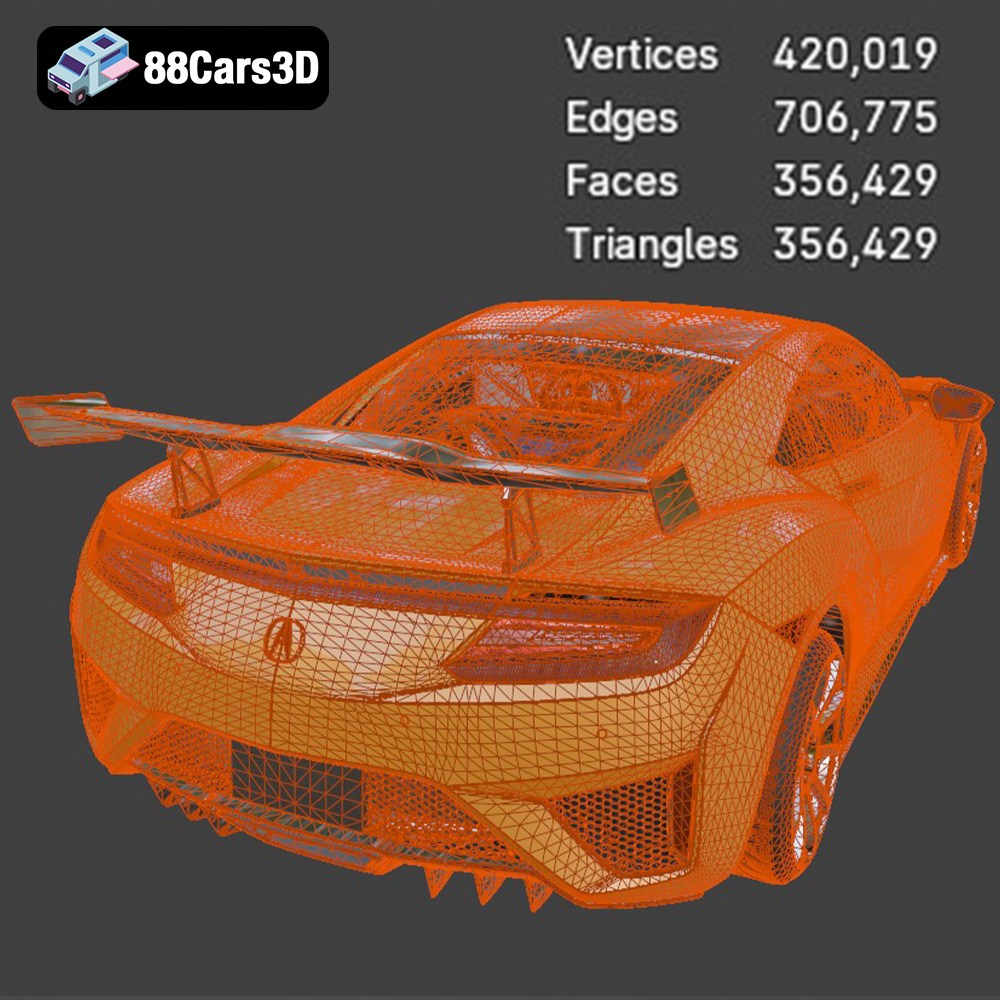
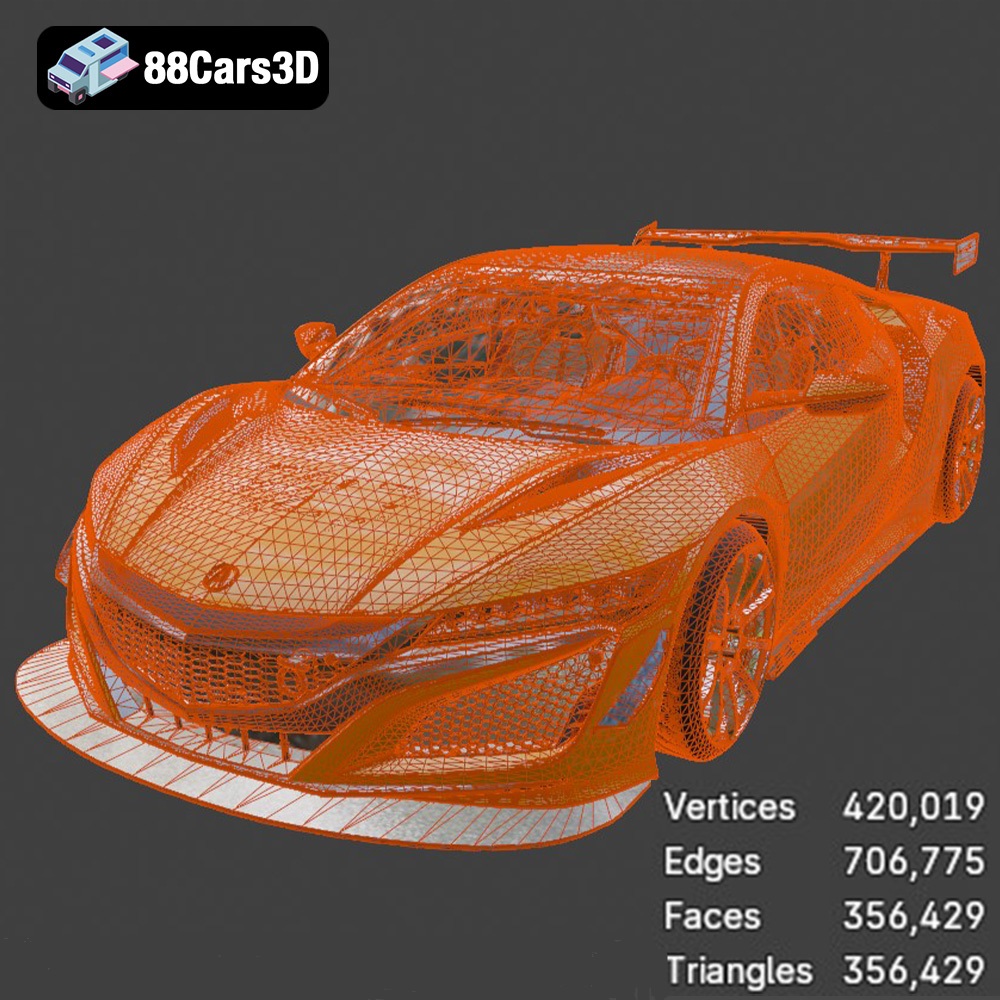
Achieving photorealism involves a meticulous approach to every element of a scene. With the Acura NSX 2017 3D Model, artists working in 3ds Max or Blender have an exceptional starting point. The model’s “perfectly balanced topology” – just over 356,000 triangles – is crucial here. This level of detail is high enough to capture the razor-sharp body lines, intricate headlight clusters, and detailed wheel assemblies without appearing faceted, yet remains manageable for rendering engines. For close-up studio renders, this means fewer compromises between detail and render times.
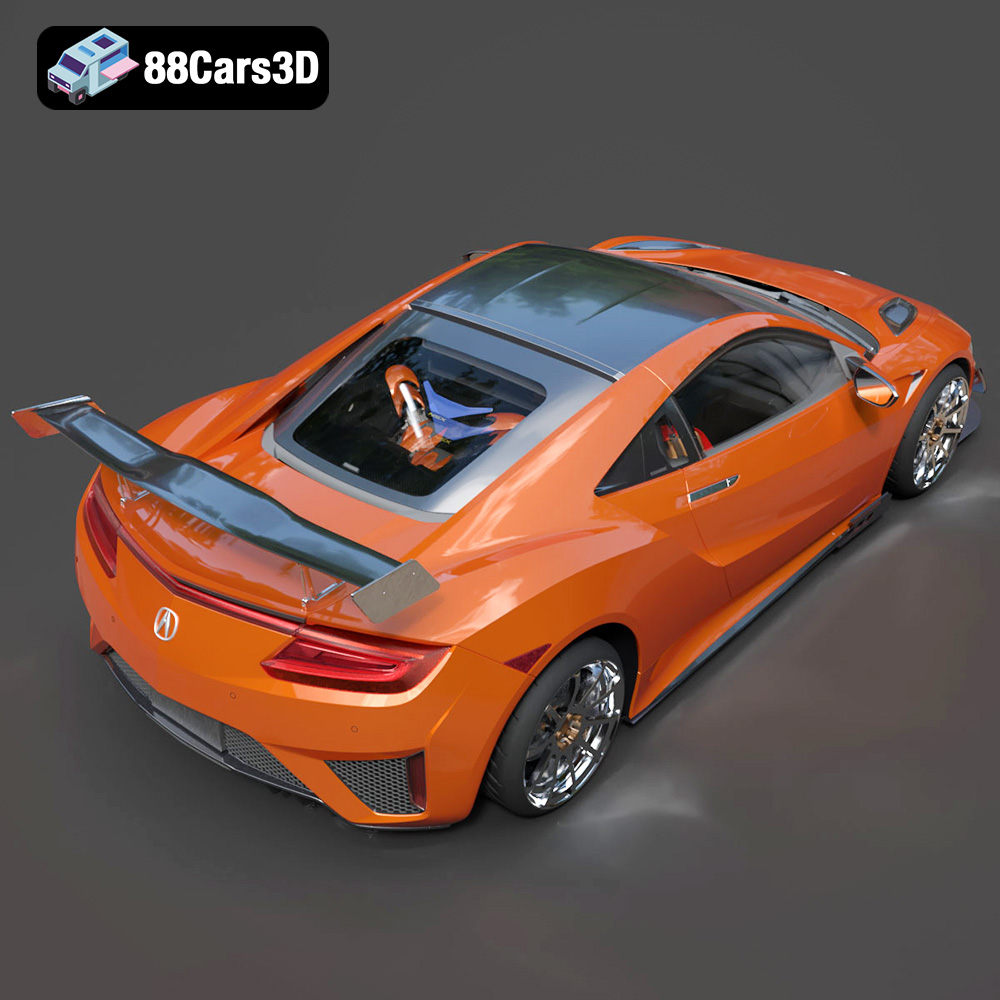
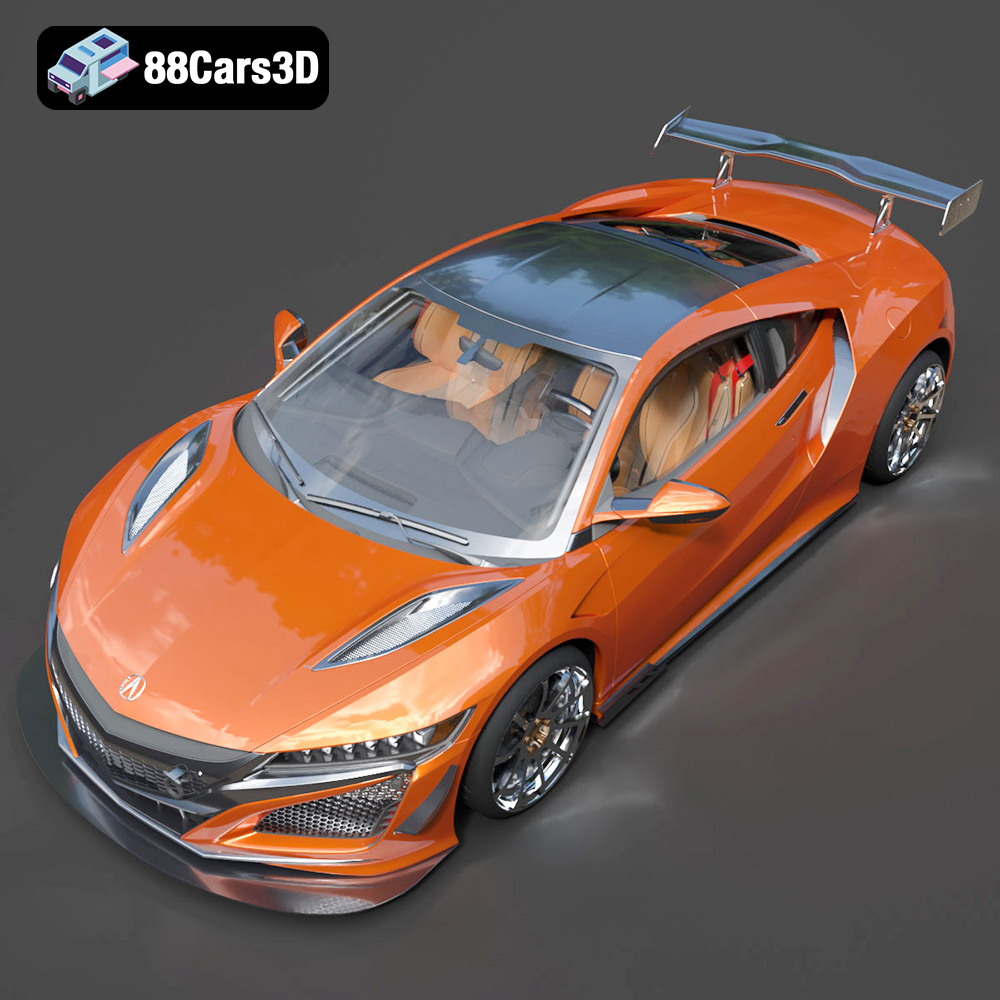
The 2017 Acura NSX is a visual feast, and the 3D model painstakingly replicates its distinctive features, allowing artists to emphasize what makes this supercar iconic.
For game developers and real-time visualization specialists, the transition from a highly detailed static render to a dynamic, interactive asset can be challenging. However, the Acura NSX 2017 3D Model is specifically designed to excel in game engine environments, making it an ideal “hero” vehicle.
Game engines like Unreal Engine and Unity demand a delicate balance between visual quality and performance. The Acura NSX 2017 3D Model’s “mid-polygon topology” (around 356,000 triangles) strikes this balance perfectly. It offers exceptional detail for close-up camera angles and high-resolution displays without being so heavy that it cripples frame rates, especially for current-gen racing games.
Augmented Reality (AR) and Virtual Reality (VR) represent the next frontier for interactive visualization. The Acura NSX 2017 3D Model is perfectly suited for these emerging platforms.
The journey of a 3D model isn’t always confined to digital screens. For many enthusiasts and professionals, the ability to bring a virtual object into the physical world through 3D printing is incredibly exciting. The Acura NSX 2017 3D Model offers this unique capability, perfect for creating display-scale supercar diecast hobbyists.
3D printing requires specific considerations that differ from rendering or game development. The .stl file format is the universal language of 3D printers, and the Acura NSX 2017 model’s inclusion of this format is a testament to its versatility.
Achieving a high-quality 3D printed supercar requires careful attention to print settings and post-processing, especially for a model as detailed as the NSX.
In today’s fast-paced digital production environment, time is a precious commodity. Relying on high-quality, pre-optimized 3D assets like the Acura NSX 2017 3D Model is no longer a luxury but a strategic necessity for professionals across various industries.
Developing 3D models from scratch, especially highly complex and accurate subjects like modern supercars, is an incredibly time-consuming and skill-intensive process. A professional model can take hundreds of hours of dedicated work by experienced artists. By leveraging production-ready assets, studios and individual artists gain a significant competitive edge.
The multifaceted design and technical attributes of the Acura NSX 2017 3D Model make it exceptionally versatile, finding application across a wide spectrum of professional fields.
The Acura NSX 2017 is more than just a car; it’s an icon of modern automotive excellence. Its digital counterpart, the Acura NSX 2017 3D Model, embodies that same spirit of precision and innovation, translating it into a versatile and indispensable asset for 3D professionals. From its meticulously balanced topology and accurate real-world scale to its comprehensive suite of file formats (including .blend, .fbx, .obj, .glb, .stl, .ply, .unreal, and .max), this model is engineered for success across every imaginable digital and even physical application.
Whether you’re crafting breathtaking photorealistic renders in 3ds Max or Blender, developing immersive, high-performance game environments in Unreal Engine, creating compelling AR/VR experiences, or bringing a tangible piece of automotive art to life through 3D printing, this model from 88cars3d.com provides the foundation for unparalleled creativity and efficiency. It’s a testament to how high-quality 3D car models can streamline workflows, inspire innovation, and ultimately, help you achieve truly outstanding results in your projects.
The Acura NSX 2017 3D Model is a stunning digital recreation of the rebirth of a legendary supercar. Combining striking, aerodynamically optimized styling with a futuristic mid-engine hybrid profile, the 2017 NSX represents the pinnacle of modern precision craftsmanship. This 3D model accurately captures the razor-sharp aesthetic of the original car, featuring the signature Jewel Eye LED headlights, aggressive front fascia, floating C-pillars, and massive side air intakes that feed the twin-turbo V6. Built with a highly efficient and perfectly balanced mid-polygon topology (just over 356k triangles), it provides excellent visual fidelity for close-up automotive rendering while remaining highly optimized for use as a hero vehicle in modern game engines and real-time applications. Perfect for high-speed racing games, luxury automotive galleries, modern urban visualizations, and cinematic automotive showcases. Exterior Features: • Accurate 2017 Acura (Honda) NSX supercar proportions and aerodynamic geometry • Distinctive Jewel Eye LED headlight clusters and sharp taillight assemblies • Mid-engine profile with massive functional side air intakes and floating C-pillars • Detailed rear diffuser and center-mounted quad exhaust setup • High-performance factory alloy wheels with detailed brake calipers and slotted rotors • Separate wheels, steering components, and doors for realistic animation and rigging Interior Features: • Driver-centric, high-performance cockpit layout • Premium sport seating geometry with detailed bolsters and stitching lines • Signature flat-bottom steering wheel with paddle shifters • Sculpted center console and digital instrument cluster representation • Optimized interior geometry tailored for smooth first-person POV in gaming or VR Technical Specifications & Advantages: • Vertices: 420,019 • Edges: 706,775 • Faces / Polygons: 356,429 • Triangles: 356,429 • Perfectly Balanced Topology: At roughly 356,000 triangles, this model is in the “Goldilocks zone”—detailed enough for gorgeous studio renders, yet optimized enough to drop right into Unreal Engine or Unity without causing severe performance drops. • Real-world scale accuracy based on the factory NSX dimensions • Proper pivot setup for steering, wheel rotation, and door articulation • Compatible with major 3D software platforms and modern real-time engines Applications: • Rendering & Visualization: Ideal for dramatic studio lighting setups, high-octane automotive commercials, and modern architectural driveway renders. • Game Development: An absolutely perfect “hero” drivable vehicle for current-gen racing games, offering high detail with fantastic engine optimization. • AR/VR: Excellent for interactive digital showrooms, car configurators, and mobile AR experiences. • 3D Printing: Convertible to .stl format for display-scale supercar diecast hobbyists. 3D Print Setting: • Recommended scale: 1:24 / 1:18 / 1:12 • Layer height: 0.04–0.12 mm (Resin printing recommended to capture the sharp aerodynamic edges and wheels) • Wall thickness: 1.2–2.0 mm • Infill: 15–25% • Supports: Required for side mirrors, the rear diffuser, and the floating C-pillars • Print orientation: Body printed angled for a smooth surface finish; wheels printed separately • Post-processing: Sanding, primer, signature NSX colors (Nouvelle Blue Pearl, Valencia Red Pearl, or Casino White), and gloss/carbon fiber detailing Customization Options: • Change exterior paint colors to match striking factory Acura options • Apply carbon fiber textures to the roof, rear spoiler, and front lip for the ‘Carbon Package’ look • Modify wheel finishes (machine-polished vs. matte black alloys) • Adapt lighting for moody, neon-lit nighttime city streets or bright race track environments Included File Formats: .blend, .fbx, .obj, .glb, .stl, .ply, .unreal, .max
$45