

Driving Digital Perfection: Exploring the BMW M7 (G12) with HQ Interior 2017 3D Model
In the rapidly evolving world of 3D visualization, the demand for exceptionally detailed and accurate automotive assets continues to grow. From cinematic renders to immersive virtual experiences and even tangible 3D prints, a high-quality 3D car model forms the bedrock of any successful project. Today, we’re diving deep into an outstanding example of digital automotive craftsmanship: the BMW M7 (G12) with HQ Interior 2017 3D Model. This isn’t just a digital representation; it’s a meticulously engineered asset that captures the essence of luxury, performance, and advanced technology inherent in BMW’s executive M-series sedan.
Professionals in automotive design, game development, advertising, and architectural visualization understand the critical role that a well-constructed 3D car model plays. It can define the realism of a scene, the responsiveness of a simulation, or the fidelity of a virtual showroom. The BMW M7 (G12) model is designed precisely to meet these rigorous standards, offering a blend of exterior aggressive styling and a richly detailed interior that makes it an indispensable asset for a wide array of applications. Whether you’re aiming for a stunning photorealistic render, integrating it into a high-octane racing game, or visualizing it in an augmented reality application, this model provides the foundational quality needed to excel.
The Art of Automotive Digital Recreation: Introducing the BMW M7 (G12) 3D Model
Creating a truly authentic 3D car model requires more than just basic modeling skills; it demands an understanding of industrial design, real-world mechanics, and an artist’s eye for detail. The BMW M7 (G12) with HQ Interior 2017 3D Model exemplifies this synthesis, bringing a digital twin of the sophisticated luxury performance sedan to your projects.
Capturing Executive Luxury and Performance
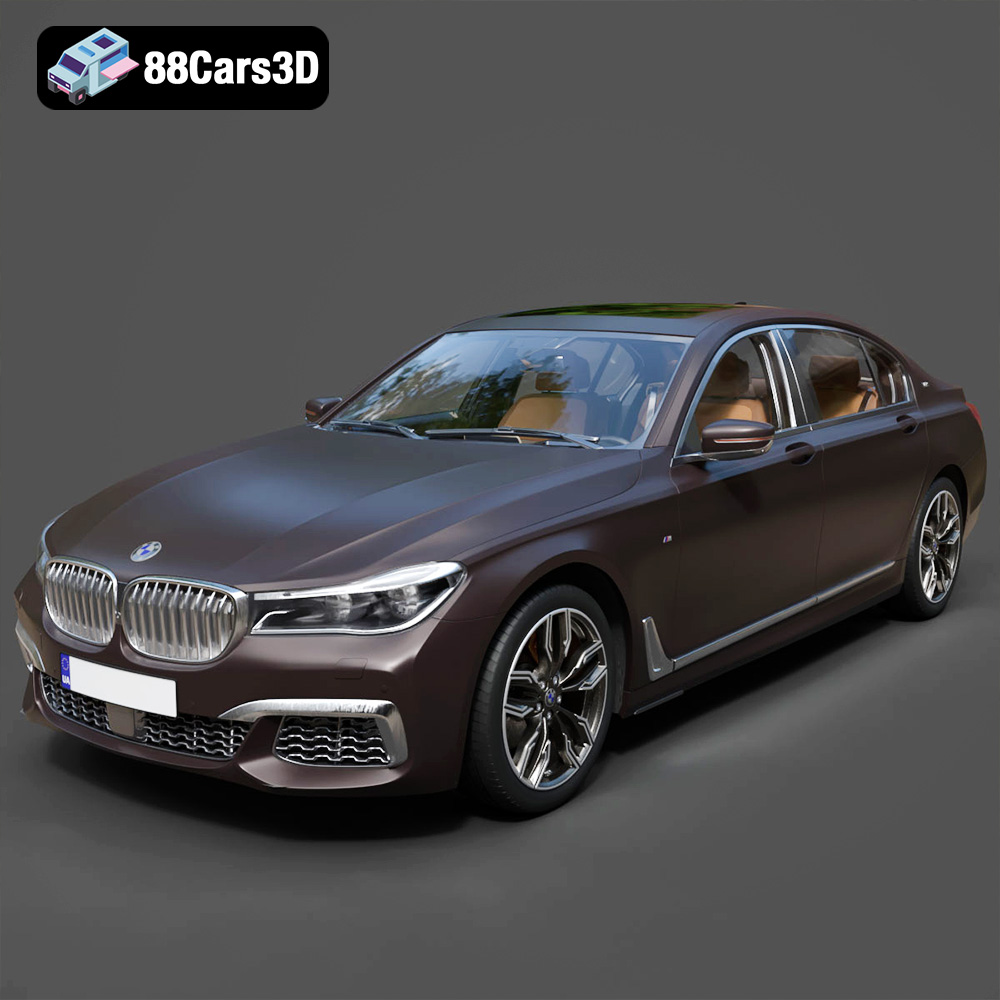
The G12 platform BMW M7 is renowned for its extended wheelbase, which translates into unparalleled rear passenger comfort while maintaining BMW’s signature dynamic driving characteristics. This 3D model faithfully reproduces these proportions, ensuring that every angle, every curve, and every subtle design language cue is present. From the powerful stance to the elegant roofline, the digital rendition mirrors the physical vehicle’s commanding presence. It’s an ideal asset for showcasing luxury and performance in any virtual setting, making it perfect for high-end automotive rendering and visualization projects that demand absolute accuracy.
Unrivaled Exterior Fidelity
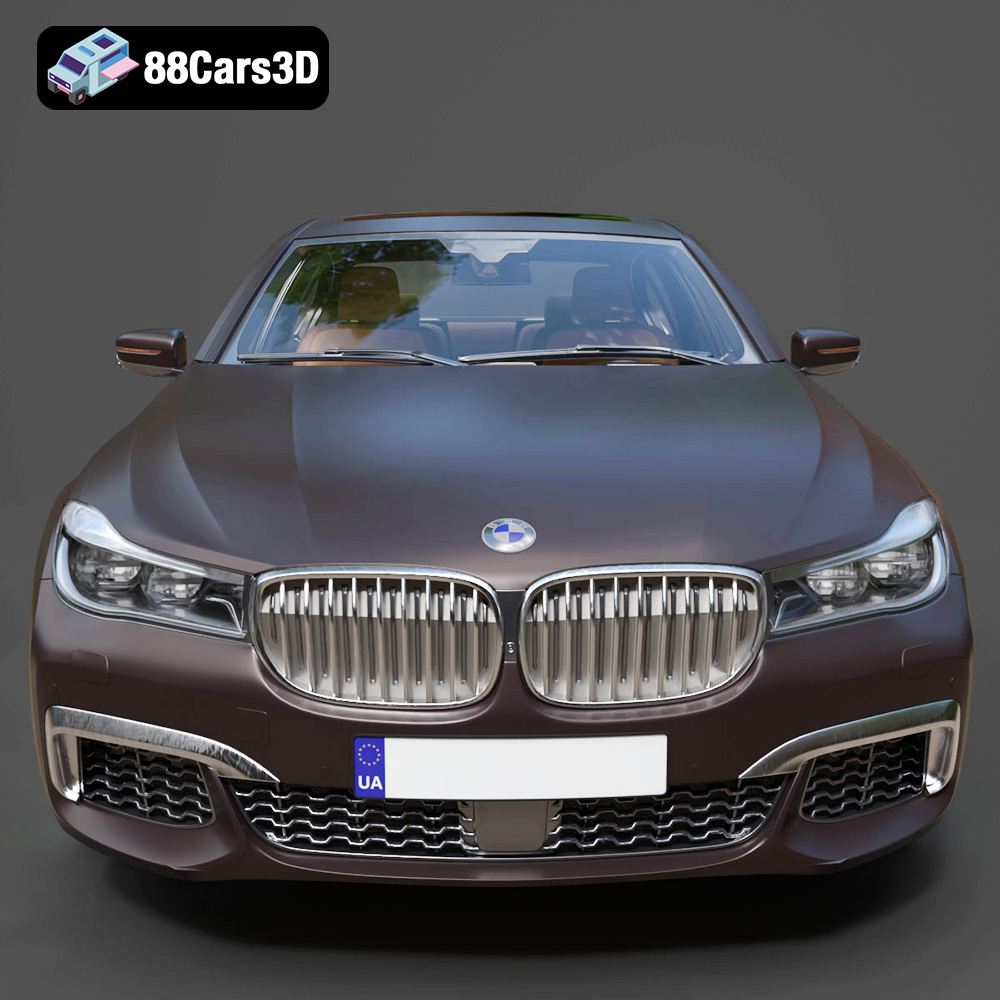
A closer look at the exterior reveals the meticulous attention to detail. The model boasts the iconic BMW kidney grille, rendered with intricate mesh patterns and chrome trim that catch the light realistically. The aggressive M-style front bumper and integrated air intakes are sculpted to perfection, hinting at the vehicle’s performance capabilities. LED headlight assemblies, crucial for modern automotive aesthetics, are accurately modeled, ready for advanced lighting setups. Furthermore, elements like the sculpted hood lines, aerodynamic side profile, and the distinctive quad exhaust system with its rear diffuser styling are all precisely replicated. Even the alloy wheel designs and performance tires are rendered with care, ensuring that from a distance or in a close-up, the exterior holds up to intense scrutiny.
The Pinnacle of Interior Detail
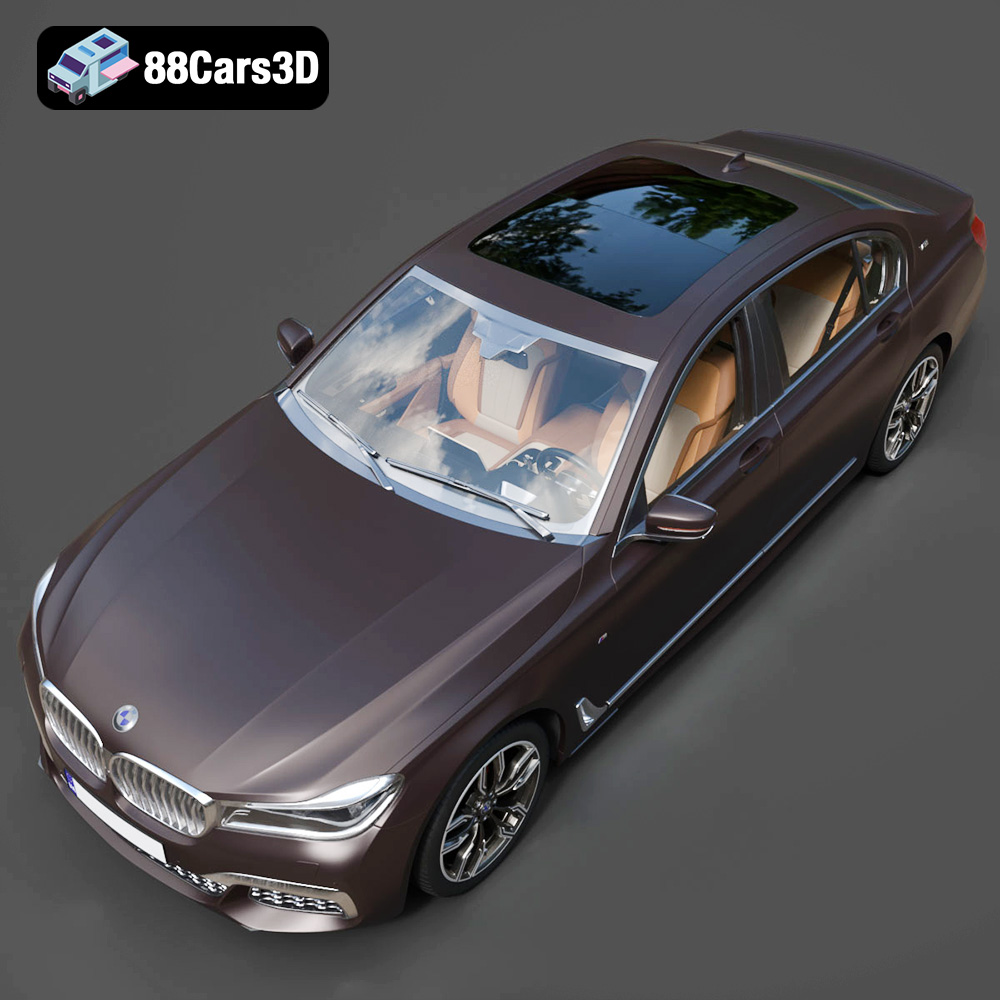
What truly sets this 3D model apart, particularly for visualization and interactive applications, is its high-quality interior. The cabin of the BMW M7 (G12) is a sanctuary of luxury, and its digital counterpart leaves no stone unturned. You’ll find a high-resolution dashboard with a digital instrument cluster, a detailed infotainment display, and a fully modeled center console. The premium steering wheel, complete with control buttons, adds to the authenticity. Leather seat modeling with intricate stitching details, rear executive seating layout, door panels, ambient lighting strips, and premium trim accents are all present. This level of interior detail is critical for cinematic close-ups, virtual showrooms, and augmented reality experiences where users can explore the car from within. It allows artists and developers to craft truly immersive and believable environments.
Understanding 3D Model File Formats
When working with professional 3D car models, understanding the various file formats is paramount. Each format serves a specific purpose, catering to different software, workflows, and end applications. The BMW M7 (G12) with HQ Interior 2017 3D Model from 88cars3d.com is provided in a comprehensive range of formats, ensuring maximum compatibility and flexibility for your projects. Let’s delve into each one.
The Blender Ecosystem: .blend for Creativity
The .blend file is Blender’s native format. It encapsulates an entire Blender scene, including the 3D model, materials, textures, lighting, camera setups, animation data, and even custom scripts. For artists and studios primarily working within Blender, this is often the preferred format. It offers full editability, allowing for seamless integration into existing Blender projects, modifications to the mesh, adjustments to shaders, or re-rigging for custom animations. The .blend file for the BMW M7 (G12) ensures that users can immediately leverage Blender’s powerful rendering engines, Cycles and Eevee, or modify any aspect of the model with ease.
Universal Interoperability: .fbx and .obj
.fbx (Filmbox) is an Autodesk-developed proprietary file format widely used for exchanging 3D data between different software applications. It supports geometry, materials, textures, animation, and more. This makes it incredibly versatile and an industry standard for game development pipelines (Unreal, Unity), animation studios, and rendering projects across various platforms. The .fbx format for the BMW M7 (G12) is often ideal for its ability to preserve hierarchical structures and animation data, making it straightforward to import into game engines or other animation software without losing crucial information. For real-time applications, .fbx is often preferred for its robust data handling.
.obj (Wavefront OBJ) is another highly universal and widely supported format. It primarily stores geometric data (vertices, normals, texture coordinates, and faces) and can reference external .mtl (material) files for basic material properties and texture maps. While it doesn’t support animation or rigging, its simplicity and broad compatibility make it excellent for static model interchange across virtually all 3D software. For the BMW M7 (G12), the .obj format is perfect when you need a clean mesh to bring into a new software environment for custom texturing, rendering, or for situations where a basic geometric import is sufficient.
Real-Time and Web-Optimized Formats: .glb and .unreal
.glb (GL Transmission Format Binary) is a fantastic format for web-based 3D, AR, and VR applications. It’s a binary version of glTF, which is optimized for efficient transmission and loading of 3D scenes and models. A .glb file packages the 3D model, textures, and animations into a single file, making it incredibly convenient for deployment on websites, social media, or lightweight AR/VR experiences. For showcasing the BMW M7 (G12) in an interactive web viewer or a mobile AR app, .glb is the go-to choice due to its optimization and ease of integration.
The .unreal format, or more specifically, assets packaged for Unreal Engine, typically implies a set of files (often derived from .fbx imports) specifically prepared and optimized for direct use within the Unreal Engine environment. This means the mesh, materials, and textures are already configured to leverage Unreal’s powerful rendering capabilities, physically based rendering (PBR) workflows, and real-time performance. For game developers or architectural visualization artists using Unreal Engine, the .unreal files for the BMW M7 (G12) offer a plug-and-play experience, significantly reducing setup time and ensuring optimal performance within the engine.
Precision for Physical and Analytical Applications: .stl and .ply
.stl (STereoLithography) is the standard file format for 3D printing. It represents a 3D model as a series of connected triangles, defining only the surface geometry of an object. The .stl format is essential when you want to bring the digital BMW M7 (G12) into the physical world as a miniature or scale model. While it doesn’t store color or material information, its universal acceptance by 3D printing software and machines makes it indispensable for additive manufacturing. The availability of the M7 in .stl format means you can directly prepare it for printing, allowing for physical prototypes or collectibles.
.ply (Polygon File Format or Stanford Triangle Format) is another format that stores 3D data, often used for scanned 3D objects or CAD/engineering models. It can store more complex information than .stl, including color, transparency, and sometimes even normals and texture coordinates per vertex or face. While less common for general 3D model exchange compared to .fbx or .obj, it’s valuable for applications requiring precise mesh data, often in academic research, 3D scanning, or specific engineering workflows. The .ply version of the BMW M7 (G12) can be beneficial for those who need a robust mesh representation for analysis or conversion to other CAD-specific formats.
3ds Max: The Powerhouse for Animation and Rendering (.max)
Finally, the .max file is the native format for Autodesk 3ds Max. Similar to .blend, it saves the entire scene with all its components – geometry, textures, materials (including V-Ray, Corona, or Arnold specific shaders), lighting, cameras, animation, and modifiers. For professionals who rely on 3ds Max for high-end automotive rendering, architectural visualization, or product animation, the .max file for the BMW M7 (G12) is invaluable. It provides a ready-to-render asset within their familiar environment, allowing for immediate customization, integration into complex scenes, and leveraging 3ds Max’s extensive toolset for production-ready results. This format ensures that all the intricate details and optimized structures of the BMW M7 are preserved and accessible within a professional production pipeline.
Mastering Automotive Rendering Workflows with High-Detail 3D Car Models
Automotive rendering is an art form that blends technical precision with creative vision. High-quality 3D car models like the BMW M7 (G12) are indispensable for achieving photorealistic results, enabling artists to create compelling visuals for marketing, design reviews, and entertainment.
Setting the Scene in 3ds Max and V-Ray/Corona
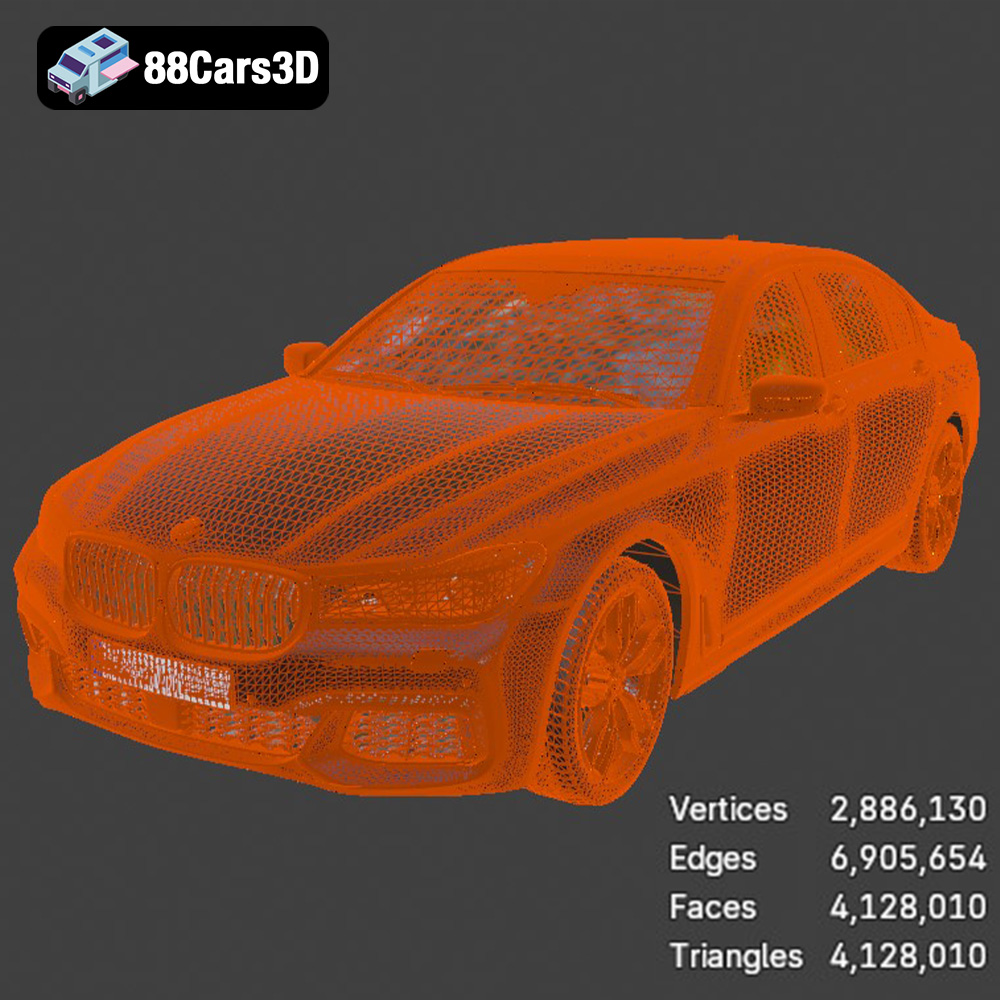
For many professionals, 3ds Max remains a cornerstone of automotive rendering, particularly when paired with powerful renderers like V-Ray or Corona Renderer. The .max file for the BMW M7 (G12) provides a seamless starting point. Artists can import the model, which often comes with pre-calibrated materials, into their scene. The workflow typically involves setting up a realistic studio environment or an outdoor HDRI (High Dynamic Range Image) lighting setup to simulate natural lighting conditions. Advanced material shaders are crucial for achieving the nuanced reflections and refractions of car paint, glass, and chrome. The HQ interior of the M7 allows for dramatic close-ups, where intricate stitching, digital displays, and ambient lighting can be highlighted, adding depth and narrative to the render. The clean topology of the model ensures smooth subdivision surfaces, crucial for flawless reflections on curved automotive panels.
Achieving Photorealism in Blender Cycles/Eevee
Blender, with its Cycles and Eevee renderers, has become an increasingly popular choice for automotive visualization due to its robust feature set and open-source nature. The .blend file for the BMW M7 (G12) allows Blender artists to jump straight into action. Cycles, being a physically based path tracer, excels at photorealism, enabling stunning renders of metallic paints, realistic tire rubber, and the soft sheen of leather interiors. Eevee, Blender’s real-time renderer, is perfect for quick iterations, animations, and interactive previews. Artists can leverage Blender’s comprehensive material node editor to fine-tune every aspect of the BMW M7’s appearance, from the subtle flecks in metallic paint to the texture of the carbon fiber trim. The separate wheels and steering components are invaluable for animating realistic turns and drives, making dynamic shots achievable.
Cinematic Visualizations and Marketing Assets
Beyond static images, the BMW M7 (G12) 3D model is perfectly suited for creating cinematic animations. Imagine a sleek camera pan revealing the car’s sculpted lines, or a dynamic shot highlighting its presence against an urban backdrop. Its real-world scale accuracy and clean mesh make it ideal for integration into complex environments, be it a futuristic city street or a serene mountain road. For marketing agencies and automotive brands, these types of high-impact visuals are critical for product launches, advertisements, and digital campaigns. The model’s versatility allows for endless customization of exterior color, interior trim, and even lighting scenarios—from a showroom spotlight to a dramatic night drive—providing unparalleled creative control for producing premium marketing assets.
Integrating Luxury Vehicles into Game Development and Real-Time Experiences
The demand for realistic and high-performance 3D car models extends significantly into game development, virtual reality (VR), and augmented reality (AR). The BMW M7 (G12) with HQ Interior 2017 3D Model is optimized to perform exceptionally in these real-time environments, offering both visual fidelity and efficiency.
Optimizing the BMW M7 for Unreal Engine and Unity
For game developers, performance is key. The .fbx format included with the BMW M7 (G12) is the standard for importing into leading game engines like Unreal Engine and Unity. While the model maintains a high level of detail, especially for its HQ interior, it also boasts optimized polygon flow, making it suitable for integration into game environments without excessive performance drain. Developers can implement techniques such as LOD (Level of Detail) systems to swap out meshes based on camera distance, ensuring that the car looks stunning up close while maintaining smooth frame rates in wider shots. The separate components for wheels and steering are crucial for proper vehicle physics and animation within game engines, allowing for realistic driving mechanics and player interaction. For a truly immersive experience, the .unreal file or pre-configured assets simplify the setup in Unreal Engine, ensuring PBR materials and textures are correctly applied, and the asset is ready for gameplay or cinematics.
Crafting Immersive AR/VR Showrooms
Augmented Reality and Virtual Reality offer powerful new ways to experience luxury products. The BMW M7 (G12) 3D model is an excellent candidate for interactive virtual showrooms or immersive executive vehicle experiences. Using formats like .glb, developers can create lightweight, interactive models viewable directly in a web browser or through a smartphone’s AR capabilities. Imagine a potential buyer exploring the M7’s exterior in their driveway through AR, then stepping into a full VR experience to examine the high-resolution dashboard, luxurious rear executive seating, and premium trim elements. The optimized yet detailed geometry of the model ensures a smooth, real-time experience without sacrificing the visual impact that defines a luxury vehicle. This capability is vital for dealerships and automotive brands looking to engage customers with cutting-edge technology.
From High-Poly to Game-Ready: A Practical Approach
The BMW M7 (G12) is provided with a clean and well-organized mesh structure, which is a significant advantage for any real-time pipeline. While the base model is detailed enough for high-quality rendering, game development often requires further optimization. This usually involves techniques like baking high-poly details onto lower-poly game meshes (normal mapping), consolidating texture atlases, and carefully reviewing material setups for real-time shaders. The initial clean topology of the BMW M7 (G12) model makes this optimization process much more straightforward, saving developers valuable time. Whether it’s for a high-fidelity driving simulator or an open-world urban game requiring multiple vehicles, the foundational quality of this 3D car model ensures it can be adapted to various performance budgets while retaining its visual integrity.
The Tangible World: 3D Printing the BMW M7 (G12) for Collectors and Prototypes
While digital visualization is powerful, the ability to convert a virtual 3D car model into a physical object opens up a new realm of possibilities. The BMW M7 (G12) with HQ Interior 2017 3D Model is provided in .stl format, making it perfectly suitable for 3D printing enthusiasts, collectors, and prototyping purposes.
Preparing the STL for Precision Printing
The .stl file format is the universal language of 3D printers, representing the geometry of the BMW M7 (G12) as a watertight mesh of triangles. Before printing, the model needs to be processed in a slicer software (e.g., Cura, PrusaSlicer, Chitubox). This software analyzes the .stl file, slices it into thin layers, and generates the G-code instructions for the 3D printer. The clean and manifold geometry of the M7 model ensures a smooth transition to this stage, minimizing errors often encountered with poorly constructed models. Users can choose to print the full model or separate components like the wheels for easier painting and assembly, reflecting the original digital asset’s separated components for animation.
Recommended Settings and Post-Processing for Scale Models
Achieving a high-quality 3D printed BMW M7 (G12) requires careful consideration of print settings. The recommended scales (1:32, 1:24, 1:18) are ideal for balancing detail retention with printability. For fine details like the kidney grille, LED headlight assembly, and interior elements, a layer height of 0.10–0.18 mm is suggested for FDM printers, or even finer for resin (SLA/DLP) printers, especially at smaller scales. Wall thickness of 1.2–2.0 mm ensures structural integrity, while an infill of 15–25% provides sufficient strength without excessive material use. Crucially, supports will be required for overhangs such as side mirrors, bumper protrusions, and the subtle rear diffuser styling. Proper print orientation—often with the body angled and wheels printed separately—is key to achieving a smooth surface finish and minimizing visible layer lines. After printing, post-processing steps like sanding, priming, and applying metallic or gloss paint finishes, along with optional chrome detailing, can elevate the printed model to a collectible display piece.
Beyond the Digital: Customization and Physical Displays
3D printing the BMW M7 (G12) transforms a digital asset into a tangible item that can be proudly displayed. This is invaluable for automotive enthusiasts, scale model collectors, or even designers needing a physical prototype. The ability to print allows for physical customization—modifying paint schemes, adding decals, or even integrating miniature lighting components. It bridges the gap between the virtual and physical, offering a unique avenue for interaction with this exceptional 3D car model. For product designers, a 3D printed model can serve as a quick prototype for concept validation or a physical representation for client presentations, showcasing the vehicle’s form factor in a real-world context.
Elevating Project Quality with 88cars3d.com’s Premium Assets
In the competitive landscape of 3D production, the quality of your assets directly correlates with the quality of your final output. Sourcing premium 3D car models like the BMW M7 (G12) with HQ Interior 2017 3D Model from a reputable marketplace like 88cars3d.com offers significant advantages for professionals across various industries.
Streamlining Workflows with Pre-Optimized Models
Time is a valuable commodity in any production pipeline. By utilizing pre-made, high-quality 3D car models, artists and developers can drastically cut down on modeling and texturing time. The BMW M7 (G12) model, for instance, comes with clean topology, real-world scale accuracy, and proper pivot setups for animation. These technical advantages mean less time spent fixing geometry, UVs, or pivot points, and more time focused on creative lighting, animation, or scene composition. For studios working on tight deadlines, the immediate usability of such an asset from 88cars3d.com is a game-changer.
The Value of Clean Topology and Real-World Scale
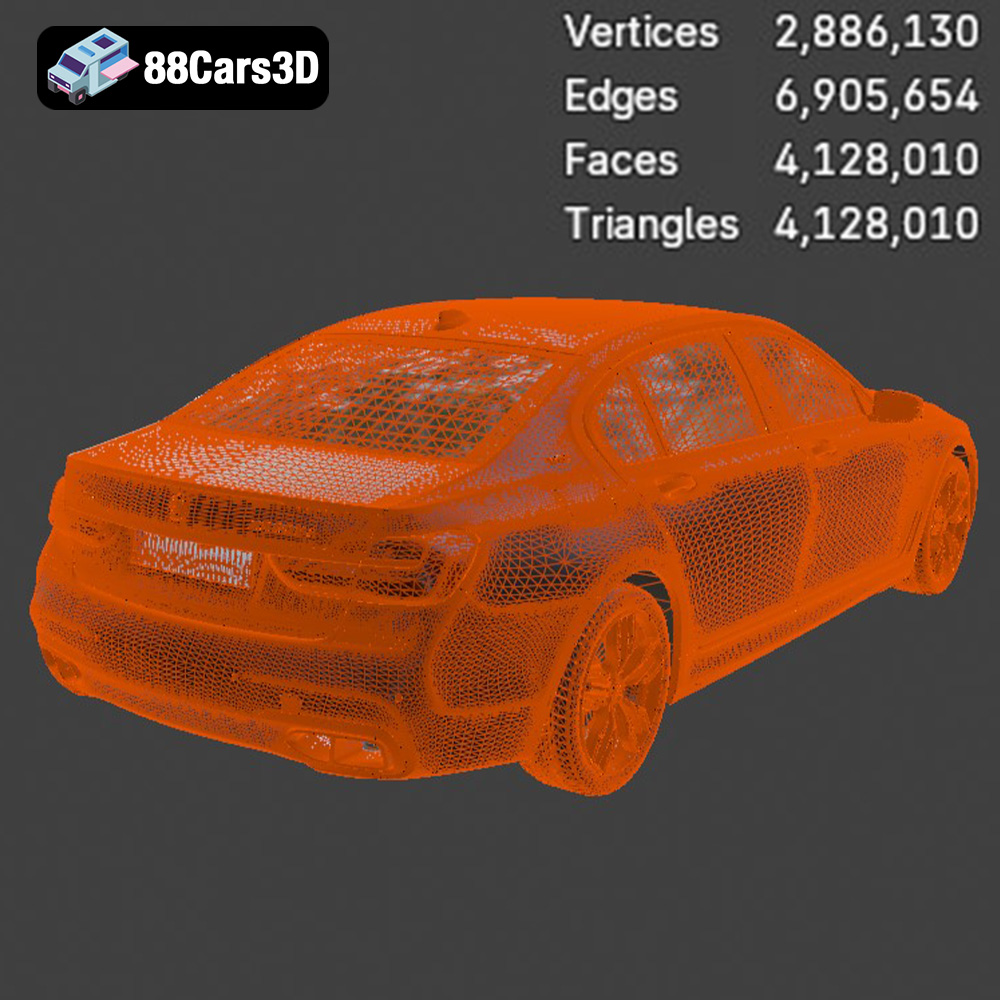
The product description highlights “clean topology” and “real-world scale accuracy.” These are not mere buzzwords; they are fundamental qualities that underpin the versatility and professional appeal of any 3D model. Clean topology ensures that the mesh deforms predictably for animation, renders smoothly without artifacts, and is easy to modify if needed. Real-world scale means the model will integrate seamlessly into scenes without requiring tedious scaling adjustments, which can impact lighting, physics, and overall scene realism. This attention to foundational quality is a hallmark of the 3D car models offered at 88cars3d.com, ensuring that assets perform reliably across different software and engines.
Broad Applications Across Industries
The BMW M7 (G12) 3D model’s comprehensive feature set and multiple file formats make it suitable for a diverse range of applications. Whether it’s for luxury automotive marketing renders, realistic driving simulators, interactive AR/VR virtual showrooms, or even 3D printed scale models for collectors, this single asset offers immense value. Its HQ interior ensures it can withstand cinematic close-ups, while its optimized polygon flow makes it adaptable for real-time environments. This broad utility means a single purchase can serve multiple project requirements, making it a cost-effective and powerful addition to any professional’s asset library, reinforcing why 88cars3d.com is a trusted source for high-end digital automotive assets.
Conclusion
The BMW M7 (G12) with HQ Interior 2017 3D Model stands as a testament to what high-quality digital automotive assets can achieve. Its meticulous attention to both exterior and interior detail, combined with technical precision like clean topology and real-world scale, makes it an invaluable resource for professionals across various fields. From photorealistic automotive rendering in 3ds Max or Blender, to integrating a luxury vehicle into immersive game development, AR/VR experiences, or even producing a tangible 3D printed model, this asset provides the foundation for exceptional results.
By offering a wide array of optimized file formats—including .blend, .fbx, .obj, .glb, .stl, .ply, .unreal, and .max—this model ensures maximum compatibility and flexibility for virtually any workflow. It empowers artists and developers to streamline their processes, focus on creativity, and deliver stunning visuals or interactive experiences that genuinely resonate. For anyone seeking premium 3D car models that combine aesthetic fidelity with robust technical execution, exploring the offerings at 88cars3d.com is a step towards elevating the quality and efficiency of your projects. The BMW M7 (G12) model is more than just a digital file; it’s a gateway to realizing complex automotive visions with unparalleled realism and performance.
Featured 3D Model
BMW M7 (G12) with HQ Interior 2017 3D Model
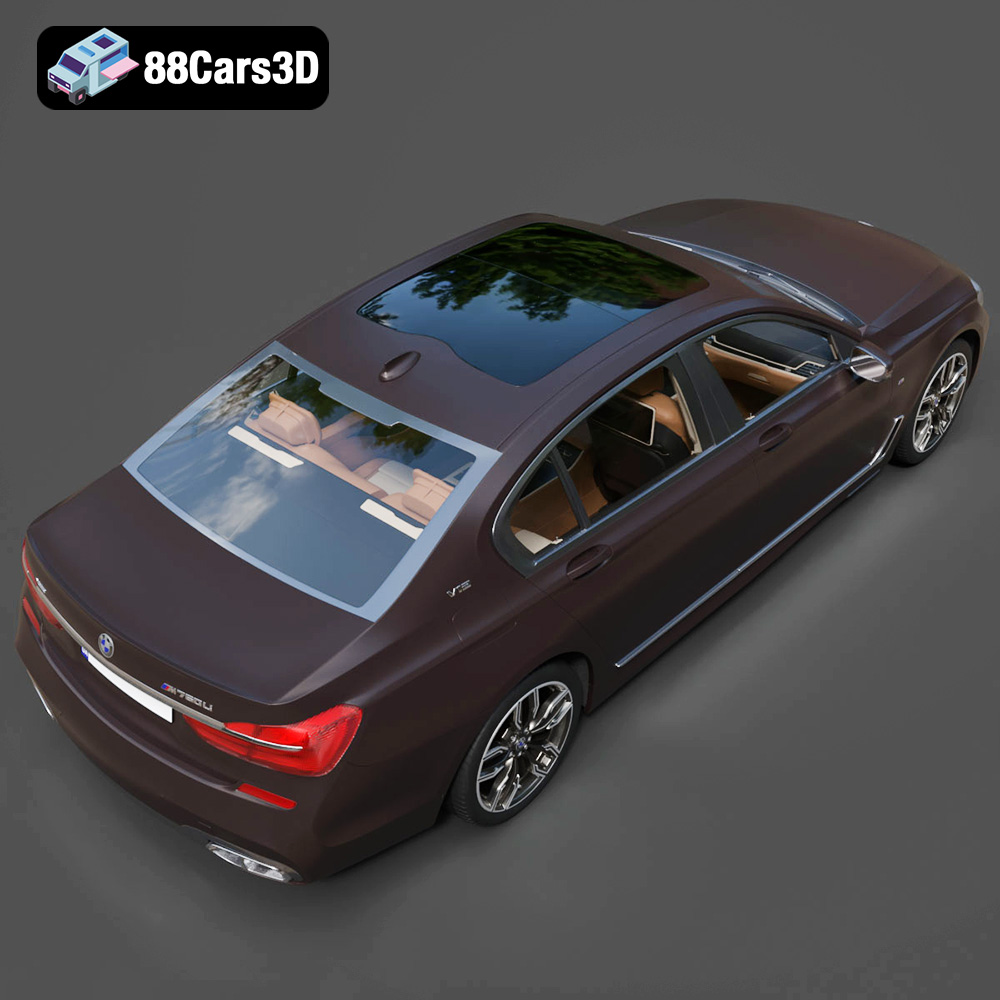
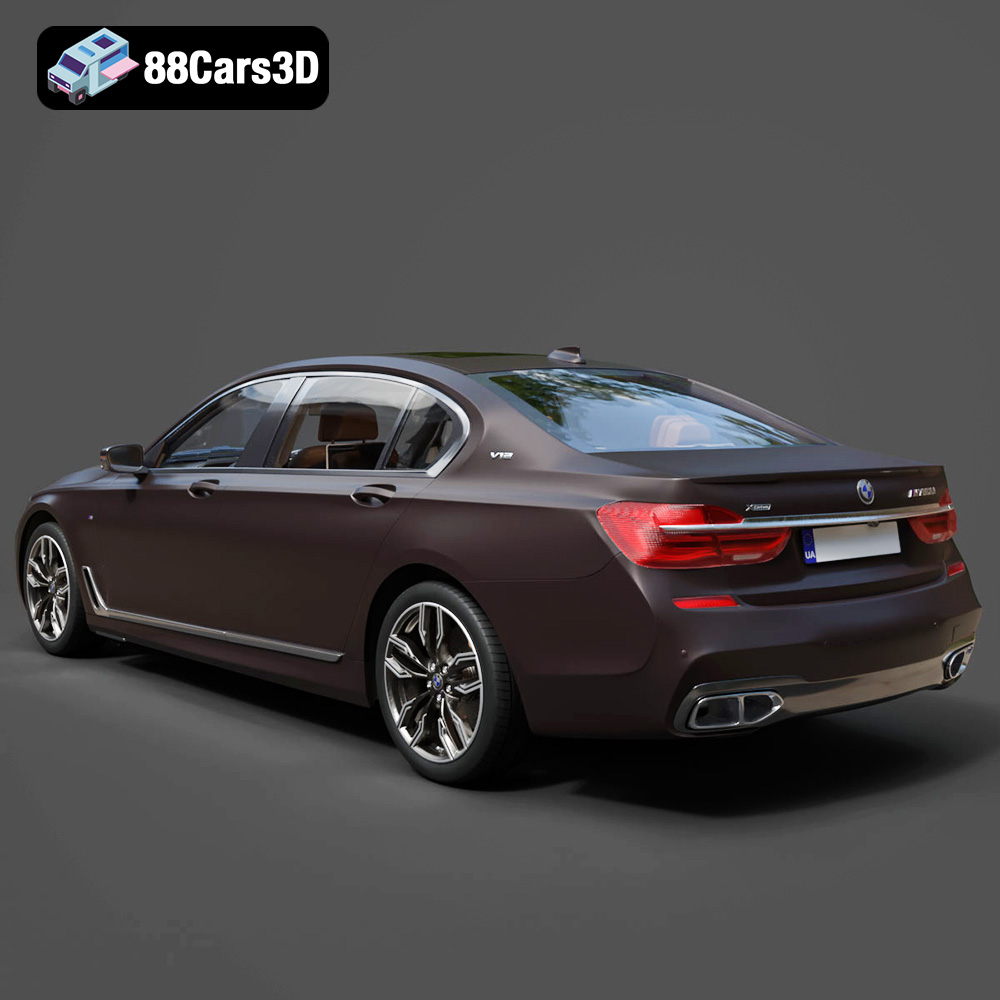
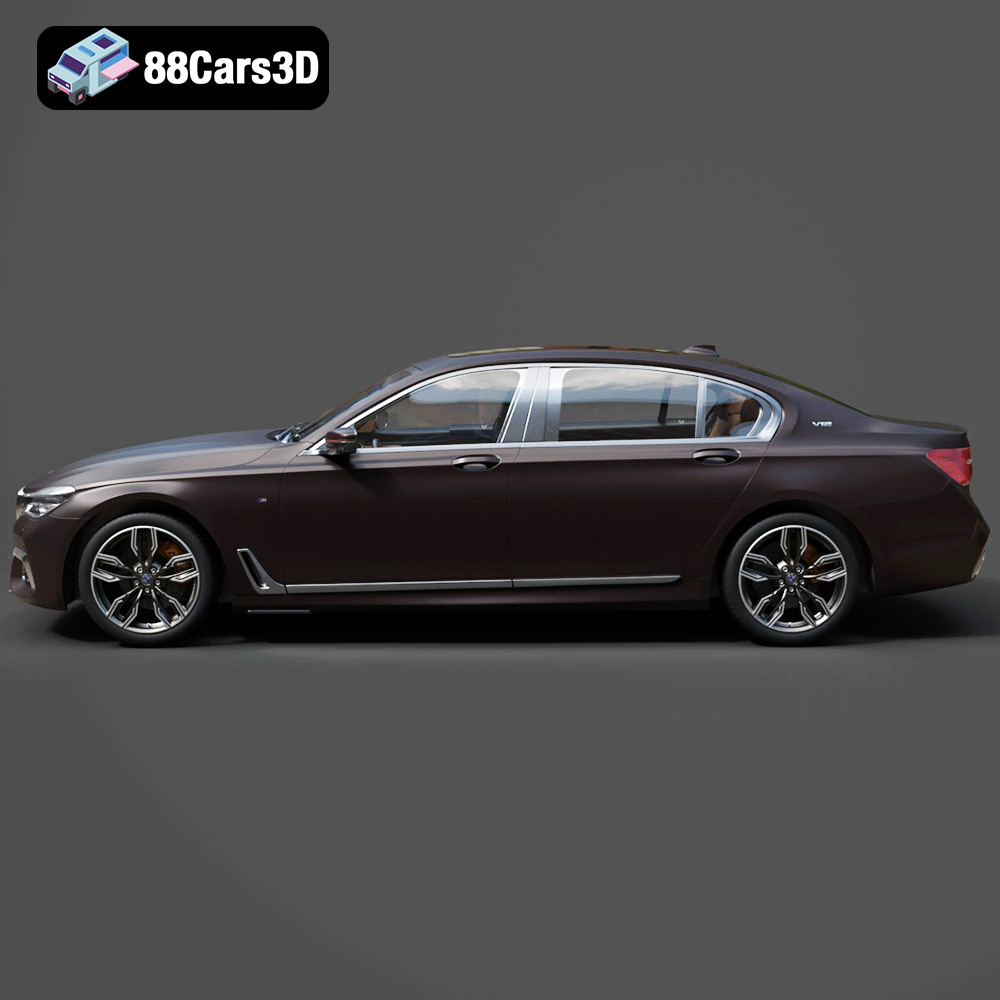
The BMW M7 (G12) with HQ Interior 2017 3D Model is a high-detail digital recreation of the luxury performance sedan based on the long-wheelbase G12 platform. Combining executive-class comfort with aggressive M styling cues, this model represents premium engineering, advanced technology, and dynamic road presence. This 3D model accurately captures the extended wheelbase proportions, signature kidney grille design, sculpted hood lines, aerodynamic front bumper, LED headlight detailing, side air intakes, quad exhaust outlets, and refined luxury cabin. The high-quality interior includes realistic materials, advanced dashboard layout, rear executive seating, and premium trim elements. Designed with clean topology and real-world scale accuracy, it is ideal for rendering, animation, automotive visualization, game development, and AR/VR luxury environments.
$59.99
Product Image Gallery
Related Tags
.7series
.arvr
.automotive
.blend
.bmw
.car3dmodel
.executivecar
.fbx
.gameasset
.glb
.hqinterior
.luxurysedan
.m7g12
.max
.obj
.performancecar
.ply
.rendering
.simulation
.stl
.unreal
