Get 20% OFF All Premium 3D & STL Models!

In the rapidly evolving landscape of digital media, the demand for high-fidelity 3D assets continues to surge. From cinematic automotive renders that blur the lines with reality, to immersive interactive experiences in games and virtual showrooms, the quality of a 3D model is paramount. A meticulously crafted 3D vehicle model serves as the cornerstone for countless creative and technical endeavors, driving engagement and delivering unparalleled realism.
Today, we delve into the intricacies of integrating such assets into diverse pipelines, examining the technical considerations and creative possibilities they unlock. We’ll explore how a premium asset, like the BMW R nineT Pure 2018 3D Model, exemplifies the standards required for professional-grade projects, and how models available at 88cars3d.com empower artists and developers to achieve stunning results across various industries.
The choice of a 3D model file format is a critical decision that dictates compatibility, functionality, and the efficiency of your workflow. Each format is designed with specific use cases and technical advantages in mind. Understanding their nuances ensures that you select the right format for your project, whether it’s for rendering, game development, AR/VR, or 3D printing. The BMW R nineT Pure 2018 3D Model, for instance, comes in a comprehensive suite of formats to cater to virtually any professional pipeline.
The .blend file format is Blender’s native file type. It’s a complete package, storing not just the mesh data but also materials, textures, animations, camera settings, lighting, and even custom scripts. This makes it ideal for Blender users who need full editability and want to share their scenes with other Blender artists without losing any project data. For complex automotive rendering or animation sequences, working directly with the .blend file allows for unparalleled control over every aspect of the BMW R nineT Pure’s setup, from its PBR materials to its skeletal rigging.
Autodesk’s .fbx format is arguably the most prevalent interchange format in the 3D industry. It excels at transferring data between different 3D software applications and, crucially, into real-time game engines like Unreal Engine and Unity. FBX supports not only mesh data but also materials, textures (though often referenced externally), animations (skeletal and blend shapes), cameras, and lights. Its robust support for animation makes it the go-to choice for importing animated 3D car models or assets with complex hierarchies into game development pipelines, ensuring that elements like the BMW R nineT Pure’s wheels and steering components maintain their proper pivot points for animation.
The .obj (Wavefront Object) format is one of the oldest and most universally supported 3D file formats. It’s a simple, text-based format primarily used for transferring static mesh data, including vertices, UV coordinates, and normals. While it doesn’t support advanced features like animation or complex material definitions (it typically references an external .mtl file for basic material properties), its widespread compatibility makes it an excellent choice for cross-software transfers or for projects where a clean, static mesh of the BMW R nineT Pure is needed without additional scene data.
The .glb (GL Transmission Format Binary) is the binary version of glTF, specifically designed for efficient transmission and loading of 3D scenes and models. It’s quickly becoming the standard for web-based 3D, AR (Augmented Reality), and VR (Virtual Reality) applications due to its compact size and self-contained nature (it embeds textures and animations directly). When showcasing the BMW R nineT Pure in an interactive web viewer or a mobile AR application, .glb offers superior performance and ease of deployment.
The .stl (Stereolithography) format is the cornerstone of 3D printing. It represents a 3D model as a series of connected triangles, defining only the surface geometry of an object. Crucially, STL files contain no color, texture, or material information. For 3D printing a collectible scale model of the BMW R nineT Pure, the .stl file ensures the physical accuracy of the form. It requires a “watertight” mesh (no holes) to be successfully printed, a common characteristic of high-quality models designed for multiple applications.
The .ply (Polygon File Format) is another widely used format for 3D data, particularly in applications involving 3D scanning, CAD, and scientific analysis. Unlike .obj, .ply can store a wider range of properties, including color per vertex or face, normals, and transparency. This precision makes it valuable for specialized tasks where additional per-vertex data is essential beyond basic geometry, offering a more robust representation for detailed inspection of the BMW R nineT Pure’s geometry.
While not a standalone file format in the traditional sense, .unreal typically refers to an asset that has been optimized and prepared specifically for Unreal Engine. This often involves an FBX file that has undergone a tailored import process, including proper material setup, collision mesh generation, LODs (Levels of Detail), and potentially blueprint integration. An “.unreal” version of the BMW R nineT Pure 3D Model would be ready for drag-and-drop use within an Unreal Engine project, streamlining the game development or real-time visualization workflow significantly.
The .max file format is native to Autodesk 3ds Max. Similar to .blend, it captures the entire scene data, including complex modifier stacks, animation curves, sophisticated rendering setups (with V-Ray or Corona Renderer), and intricate material networks. For artists working primarily in 3ds Max, having the BMW R nineT Pure in this format provides maximum flexibility for animation, highly detailed rendering, and further customization, preserving all the nuances of the original artist’s scene setup.
Creating a truly high-fidelity 3D model, especially for complex subjects like the BMW R nineT Pure motorcycle, is a blend of artistic skill and technical precision. It goes beyond simply replicating form; it involves understanding the engineering, aesthetics, and intended use of the digital asset.
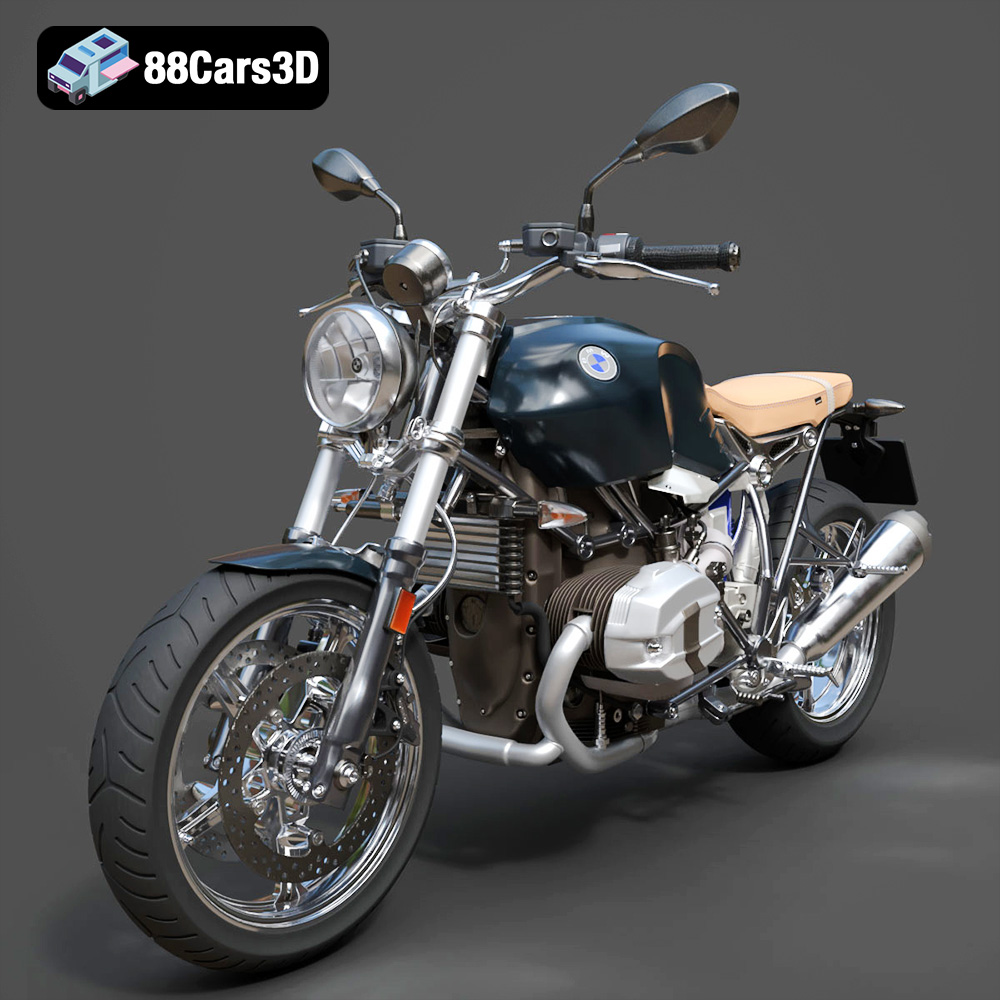
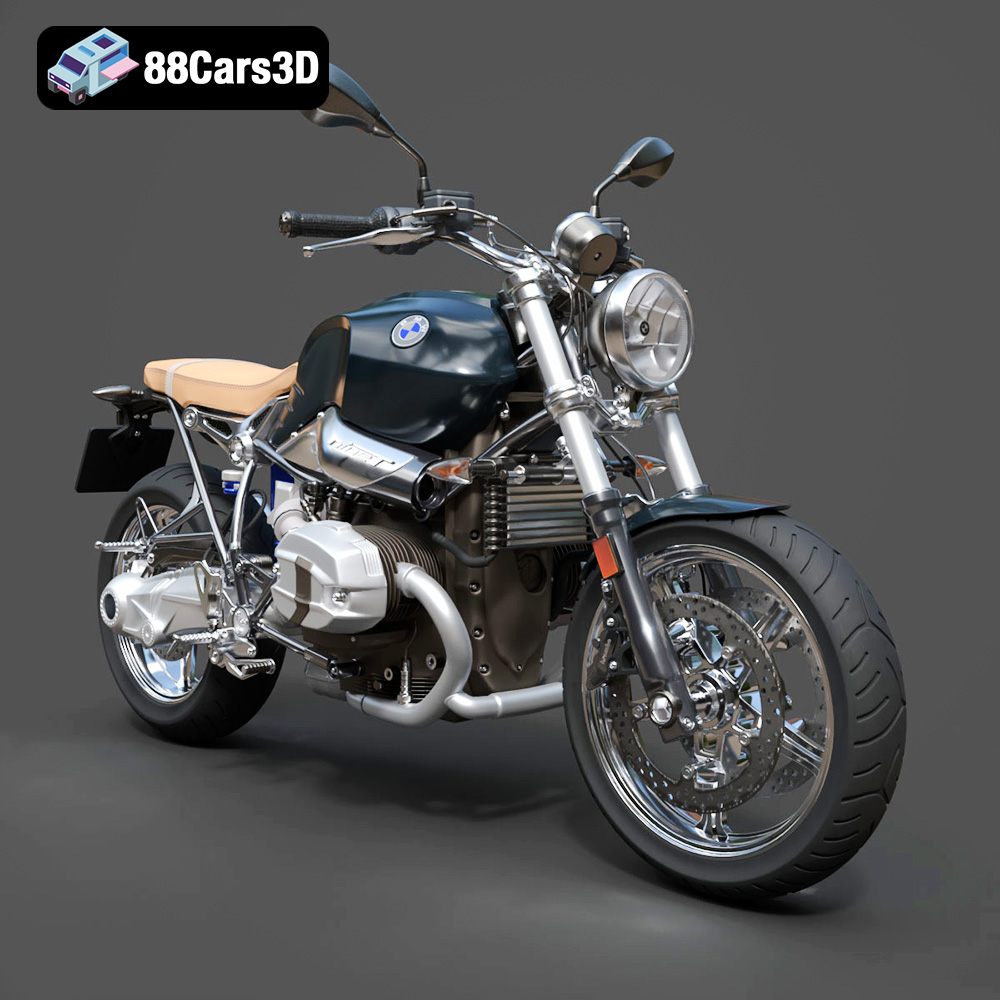
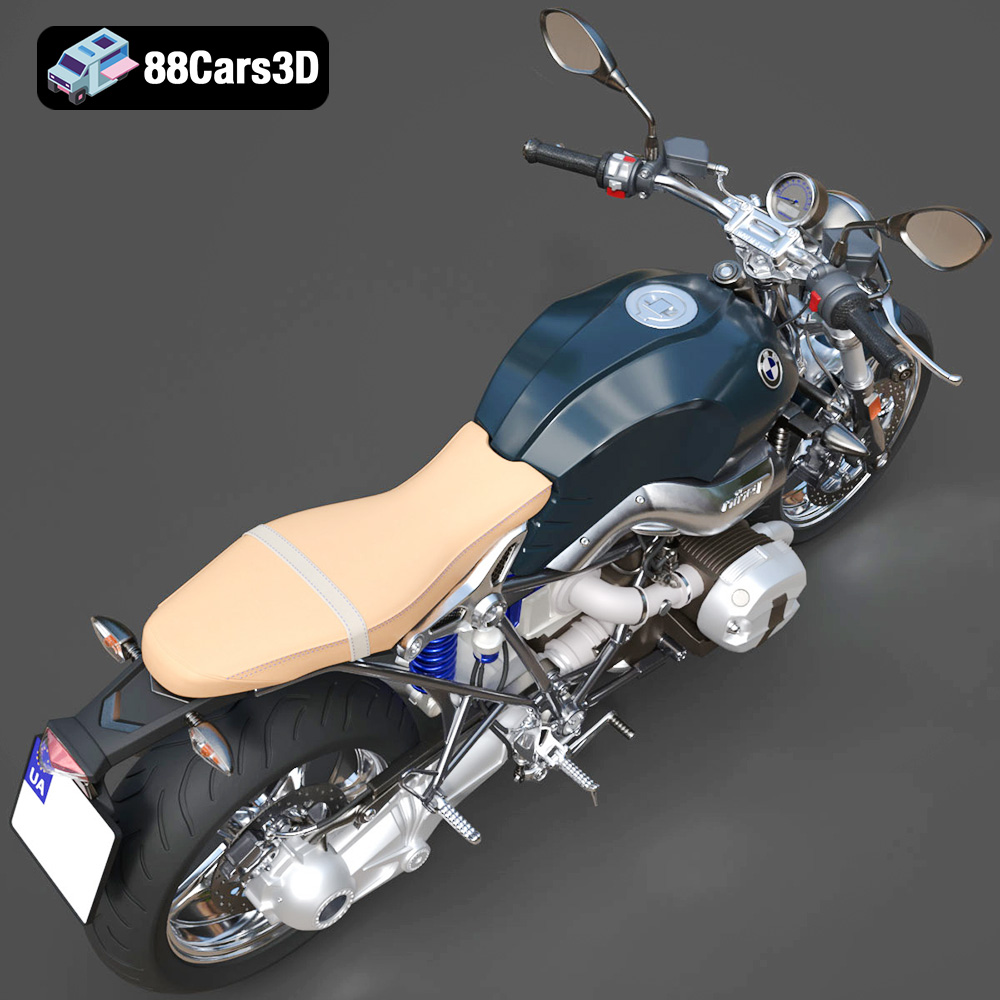
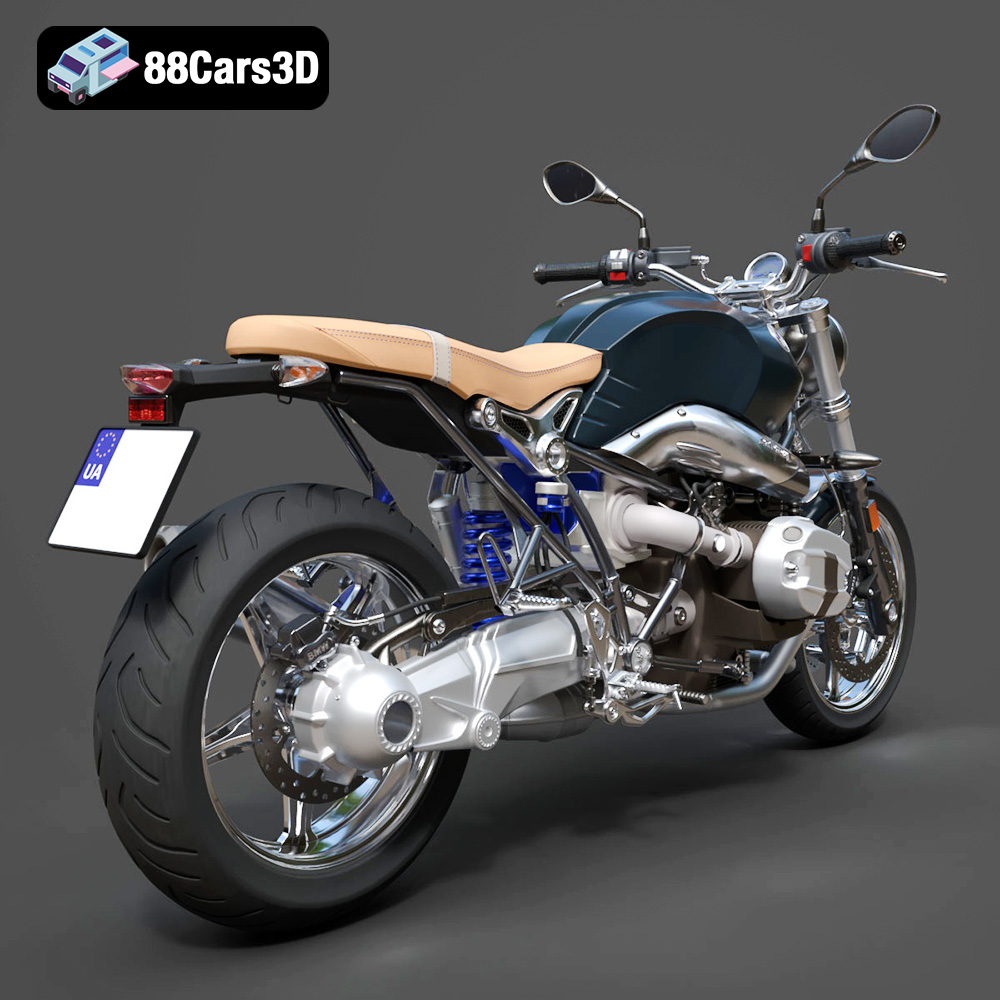
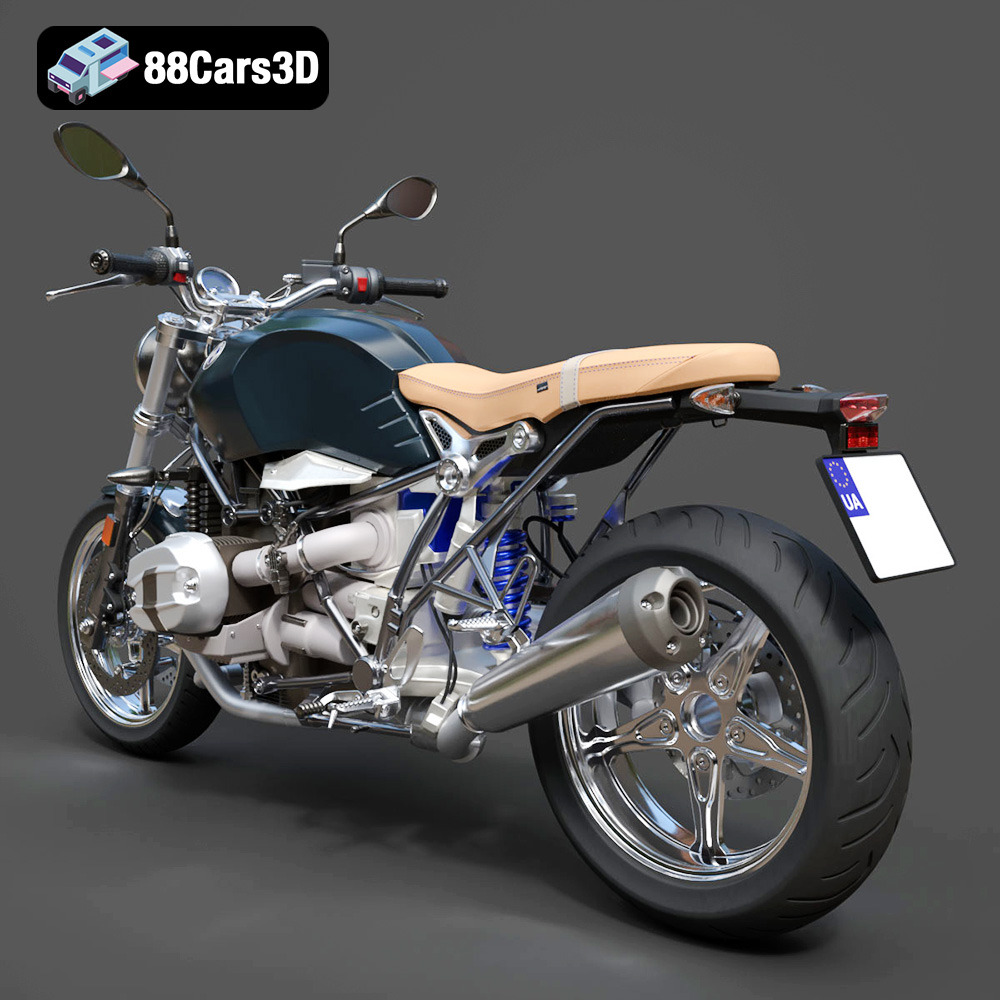
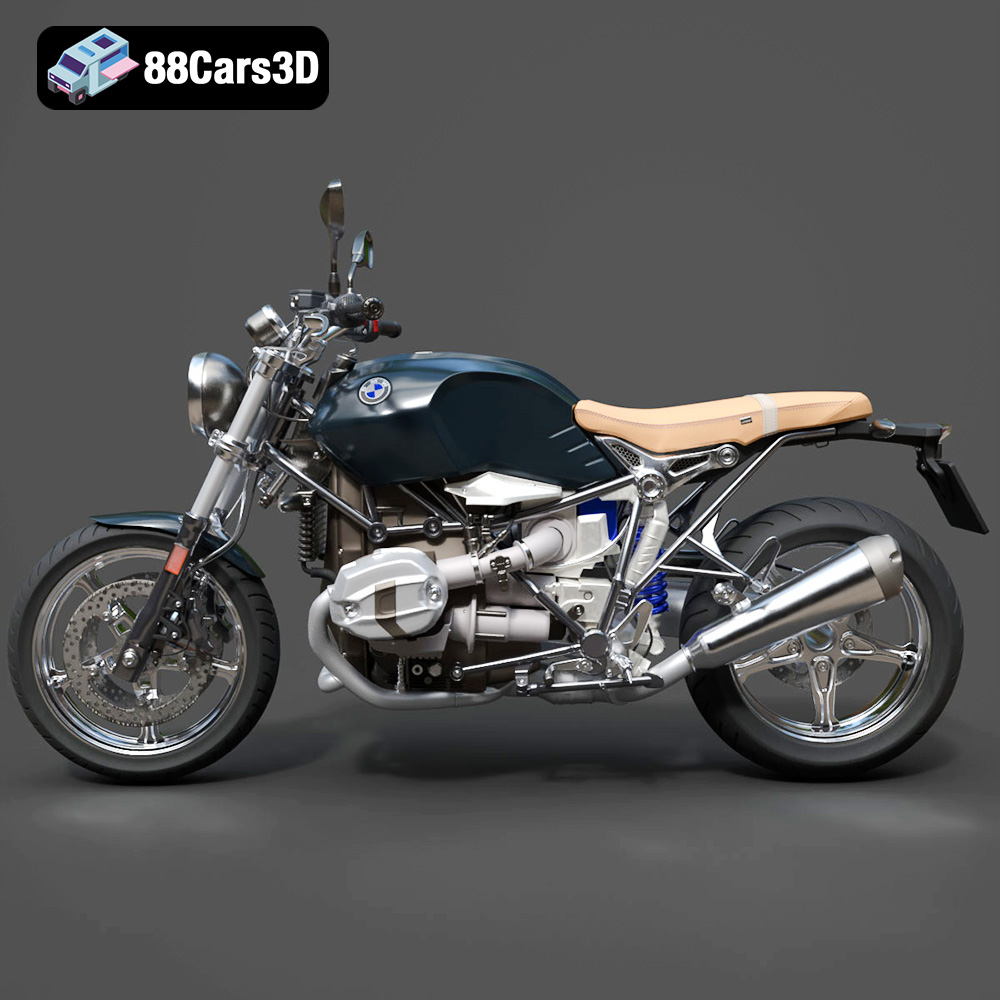
The BMW R nineT Pure 2018 is a masterclass in minimalist retro styling, and its 3D model must reflect this with impeccable accuracy. Every curve of the sculpted fuel tank, the exposed flat-twin boxer engine, the iconic round headlight with its chrome housing, and the intricate tubular steel frame must be meticulously recreated. Details such as the dual exhaust system, the classic alloy wheels with realistic tire geometry, and the subtle knee cut-outs on the fuel tank are not just aesthetic touches but crucial elements that define the bike’s character and authenticity. A high-quality model like this one from 88cars3d.com ensures that these features are perfectly represented, adhering to real-world scale for believable scenes.
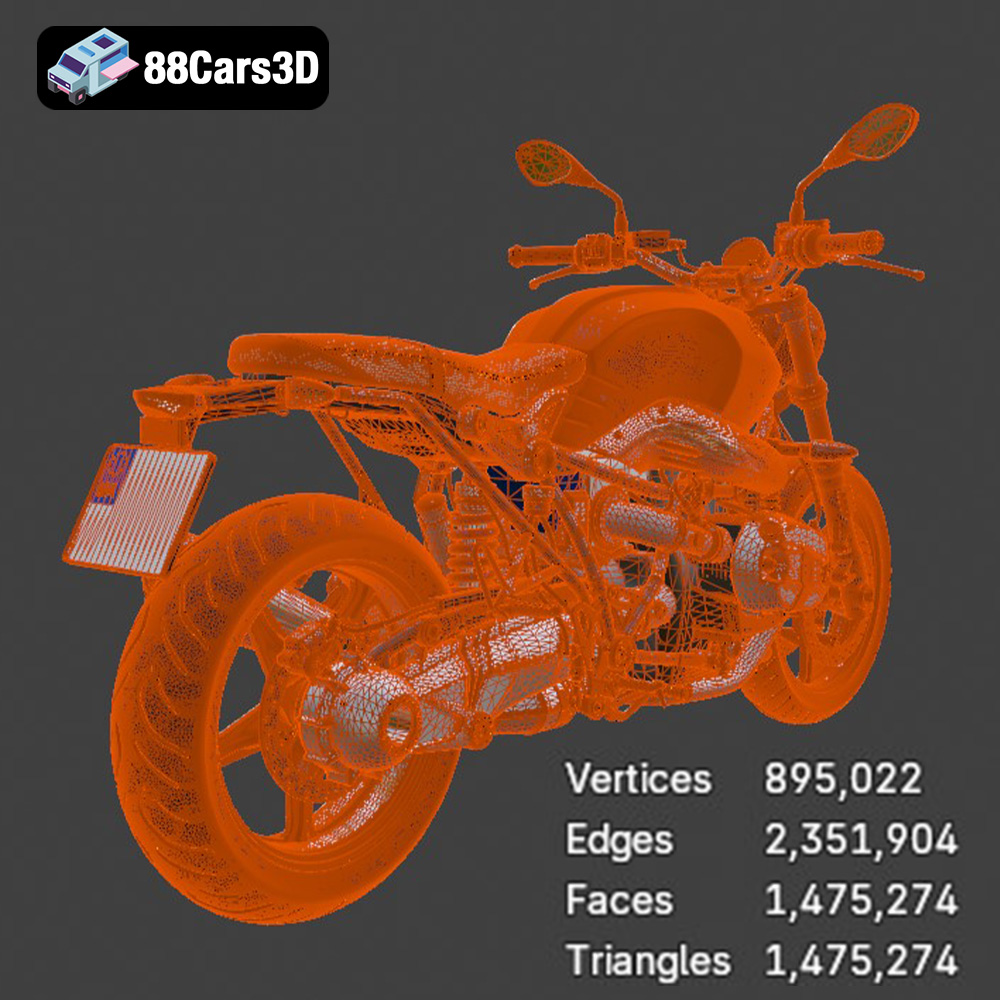
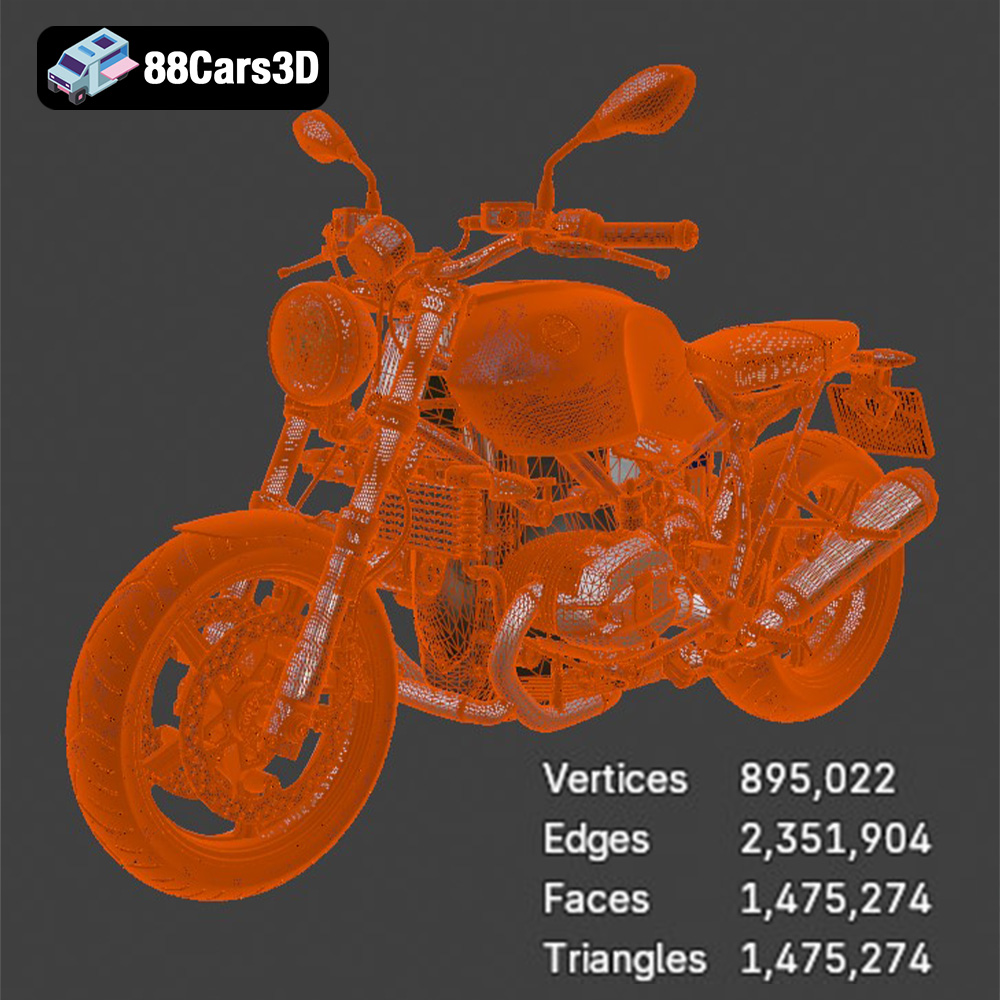
The foundation of any great 3D model lies in its geometry. For assets destined for both high-end rendering and real-time game engines, clean topology is non-negotiable. This means a well-organized mesh structure, predominantly using quads (four-sided polygons), which allows for smooth subdivision, clean deformations during animation, and optimal performance. The BMW R nineT Pure model boasts optimized polygon flow, balancing detail for stunning close-ups with efficiency for interactive applications. This careful approach prevents artifacts, ensures predictable lighting, and makes the model easy to modify or integrate into any scene without extensive cleanup.
Beyond the mesh, the materials and textures bring a 3D model to life. Photorealistic rendering relies heavily on Physically Based Rendering (PBR) workflows, where materials accurately simulate how light interacts with surfaces in the real world. For the BMW R nineT Pure, this translates to precisely calibrated materials for chrome, painted metal on the tank, the texture of the seat, the rubber of the tires, and the various engine components. Clean UV mapping is essential for applying these textures without distortion, ensuring that details like BMW logos, warning labels, or subtle surface imperfections appear exactly as intended, elevating the realism of every render.
The versatility of a well-made 3D vehicle model like the BMW R nineT Pure allows it to be a valuable asset across numerous professional pipelines, each with its own set of technical demands and creative opportunities.
For high-end automotive rendering, software like 3ds Max and Blender are industry staples. Artists use the detailed .max or .blend files of the BMW R nineT Pure to craft breathtaking promotional imagery and animations. In 3ds Max, powerful renderers like V-Ray or Corona Renderer can be leveraged with intricate studio lighting setups or realistic High Dynamic Range Image (HDRI) environments to achieve photorealism. Blender’s Cycles and Eevee renderers offer similar capabilities, providing flexibility and speed. Workflows involve setting up dynamic camera angles, adding depth of field, motion blur, and sophisticated post-production techniques to create visuals indistinguishable from professional photography or film. The model’s accurate proportions and separate animated components (wheels, steering) are crucial here for cinematic productions and marketing campaigns.
In game development, the priorities shift slightly towards performance. While realism is still key, polygon counts must be optimized, and assets need to be highly efficient. The BMW R nineT Pure 2018 3D Model is optimized for real-time engines, typically using .fbx or .unreal formats. Developers often create multiple Levels of Detail (LODs) for the model, displaying lower-polygon versions when the bike is further away from the camera. Clean UVs and efficient texture atlases are vital for memory management. Within engines like Unreal Engine or Unity, the model can be configured with physics assets for realistic handling, collision meshes for environmental interaction, and even integrate into blueprint or C# scripting for interactive elements like engine start/stop or headlight toggles. Its “proper pivot setup for steering and wheel rotation” is a significant technical advantage for seamless integration into vehicle systems.
The burgeoning fields of Augmented Reality (AR) and Virtual Reality (VR) benefit immensely from optimized 3D assets. The BMW R nineT Pure can be showcased in interactive virtual showrooms, allowing potential buyers to explore the motorcycle from every angle, customize its features, or even “sit” on it virtually. The .glb format is particularly useful here, offering efficient loading for web-based AR experiences on mobile devices. For high-fidelity VR, the model would be integrated into a real-time engine, offering a truly immersive, 1:1 scale experience of the bike in a photorealistic environment. These applications leverage the model’s clean geometry and PBR materials to create believable virtual interactions.
The utility of a high-quality 3D model extends beyond digital displays, offering tangible results through 3D printing. The BMW R nineT Pure 2018 3D Model, with its detailed structure, is an excellent candidate for creating physical collectibles, prototypes, or display miniatures.
The journey from a digital model to a physical object primarily involves converting the asset to a watertight .stl format. This ensures that the model is a solid, manifold object without gaps or intersecting geometry, which is crucial for successful 3D printing. The product description highlights that this model is “Convertible to .stl format,” signifying it’s built with clean geometry suitable for this purpose. Scales of 1:18, 1:12, 1:10, or 1:8 are recommended, allowing for a range of collectible sizes without sacrificing critical details.
Successful 3D printing of intricate models like the R nineT Pure requires attention to print settings. Recommended layer heights of 0.08–0.16 mm suggest fine detail can be captured, especially with resin printers which excel at intricate features. Wall thickness of 1.2–2.0 mm ensures structural integrity, while an infill of 15–25% provides strength without excessive material use. Supports are essential for overhanging parts such as engine protrusions, the exhaust system, and the handlebar assembly, preventing print failures. Strategic print orientation – such as printing the frame angled for detail preservation and wheels separately – further optimizes print quality. After printing, post-processing steps like sanding, priming, and applying a matte or gloss finish, along with optional tank decals, bring the physical model to life, mirroring the digital asset’s aesthetic.
The true mark of a professional-grade 3D model lies in its technical optimization. This ensures that the asset performs flawlessly across various platforms, from static renders to dynamic real-time simulations, without compromising on visual fidelity.
A “clean and well-organized mesh structure” is foundational. This implies an efficient polygon count that balances visual detail with computational performance. For high-fidelity models like the BMW R nineT Pure, the geometry is typically constructed using quads, which are more predictable for subdivision surfaces and easier to manipulate. “Optimized polygon flow for performance and realism” means that the polygons are distributed intelligently, with higher density in areas requiring fine detail (like the engine fins or headlight bezel) and lower density in simpler, flatter areas. This intelligent distribution is critical for maintaining smooth surfaces, preventing faceting, and ensuring efficient rendering cycles, whether in a static scene or a game environment.
Beyond static representation, many projects require animation. The BMW R nineT Pure 3D Model is designed with animation in mind, featuring “separate wheels and steering components for animation” and “proper pivot setup for steering and wheel rotation.” This means that the origin points (pivots) of these independent parts are correctly placed, allowing for realistic rotation around their natural axes. For advanced animation, the model could be further rigged with a suspension system or dynamic chains, enabling highly realistic motorcycle simulations. This pre-configured animation readiness saves significant time for animators and game developers, allowing them to quickly integrate the model into a dynamic scene.
A robust 3D model isn’t just a static representation; it’s a versatile canvas for creativity and a foundational asset for future innovations. The BMW R nineT Pure 2018 3D Model offers extensive customization and holds enduring value for a wide array of future applications.
The included file formats and clean topology of the BMW R nineT Pure allow for significant customization. Artists can easily “change fuel tank color and accent stripes” to match specific branding or personal aesthetics. The “exhaust finish (chrome, black, brushed metal)” can be modified to alter the bike’s character, or the “wheel styling” can be adjusted with different rim designs. Beyond these surface-level changes, the model provides a solid base to “add café racer accessories” or integrate custom components, transforming the Pure into a bespoke creation. Furthermore, configuring lighting for “urban night or daylight scenes” dramatically alters the mood and narrative of renders, offering endless possibilities for visual storytelling.
Investing in a high-quality 3D model from 88cars3d.com is an investment in future-proof assets. As technology advances, these models can be easily adapted to new rendering engines, higher-resolution displays, and emerging platforms like advanced AR/VR headsets. A clean, well-structured model like the BMW R nineT Pure serves as a reliable foundation, reducing the need for costly remodels or extensive cleanup when migrating projects. This longevity makes it an invaluable resource for studios and individual artists who prioritize efficiency and quality in their ongoing work.
The digital realm thrives on realism and precision, and the BMW R nineT Pure 2018 3D Model stands as a testament to these principles. From its meticulously recreated design details and optimized geometry to its extensive file format support, this model exemplifies the pinnacle of professional 3D asset creation. Whether your project demands breathtaking automotive rendering, seamless integration into a game engine, an immersive AR/VR experience, or a physical 3D print, this model provides the technical foundation and visual fidelity required to exceed expectations.
By understanding the nuances of 3D file formats, embracing robust modeling techniques, and leveraging smart optimization strategies, creative professionals can unlock the full potential of such high-quality assets. The BMW R nineT Pure 2018 3D Model is more than just a digital object; it’s a versatile tool that empowers artists and developers to bring their visions to life with unparalleled realism and efficiency. Explore this exceptional model and a wide range of other premium 3D car models at 88cars3d.com to elevate your next project.
The BMW R nineT Pure 2018 3D Model is a high-detail digital recreation of the minimalist retro roadster from BMW Motorrad’s Heritage lineup. Blending classic motorcycle styling with modern engineering, the R nineT Pure features a timeless naked-bike design, air/oil-cooled boxer engine, and clean mechanical aesthetics. This 3D model accurately represents the exposed flat-twin boxer engine, round headlight assembly, sculpted fuel tank, tubular steel frame, dual exhaust system, minimalist rear section, and classic alloy wheel setup. Built with clean topology and real-world scale accuracy, it is ideal for rendering, animation, game development, AR/VR environments, and motorcycle visualization projects.
$19.99
.2018motorcycle
.arvr
.blend
.bmw
.fbx
.gameasset
.glb
.heritagebike
.max
.motorcycle3dmodel
.obj
.ply
.rendering
.rninet
.rninetpure
.simulation
.stl
.twowheeler
.unreal
boxerengine