Get 20% OFF All Premium 3D & STL Models!

In the dynamic world of 3D visualization and digital content creation, the demand for high-quality, meticulously crafted 3D models is ever-present. From blockbuster game titles and cinematic sequences to cutting-edge architectural renderings and immersive AR/VR experiences, the foundation of any compelling visual project lies in the fidelity and technical integrity of its assets. Automotive models, in particular, hold a special place, requiring an intricate balance of artistic detail and engineering precision to truly capture the essence of a vehicle.
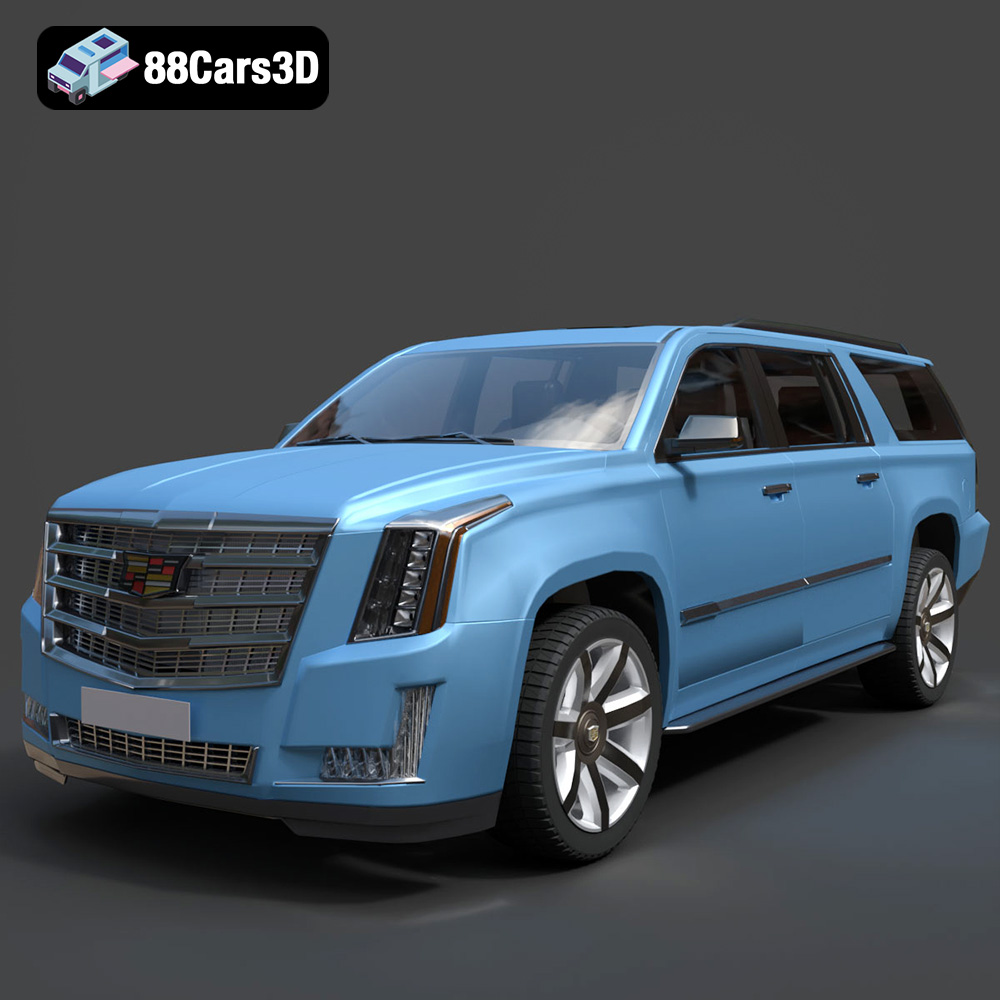
Few vehicles embody luxury and commanding presence quite like the Cadillac Escalade ESV. Its extended wheelbase, bold design, and opulent interior make it a prime candidate for any project requiring a statement of executive comfort and robust capability. Today, we’re diving deep into a stellar example of such an asset: the Cadillac Escalade ESV 3D Model, available on platforms like 88cars3d.com, and exploring how a professional-grade 3D car model can elevate diverse creative and technical workflows.
This premium digital recreation of Cadillac’s iconic SUV is not just a pretty mesh; it’s a versatile toolkit designed for artists, developers, and engineers alike. It boasts accurate proportions, detailed exterior and interior features, and a robust technical foundation that makes it suitable for everything from photorealistic renders to real-time simulations and even physical 3D prints. Let’s unbox the technical advantages and creative potential of such a sophisticated 3D asset.
Creating a believable 3D car model goes far beyond simply tracing blueprints. It involves a meticulous process of capturing the intricate curves, sharp lines, and subtle design language that define a vehicle. The Cadillac Escalade ESV, with its distinctive grille, vertical lighting, and elongated body, presents a unique challenge that this 3D model tackles with precision.
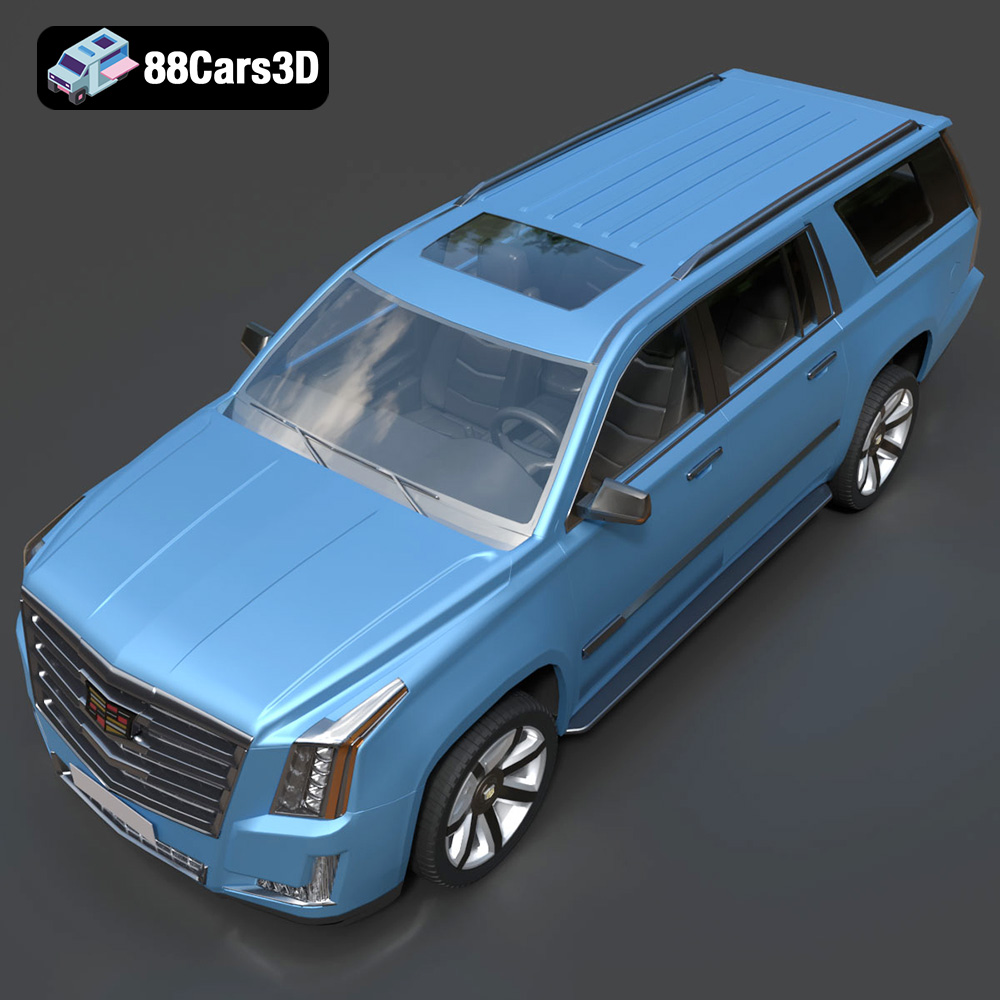
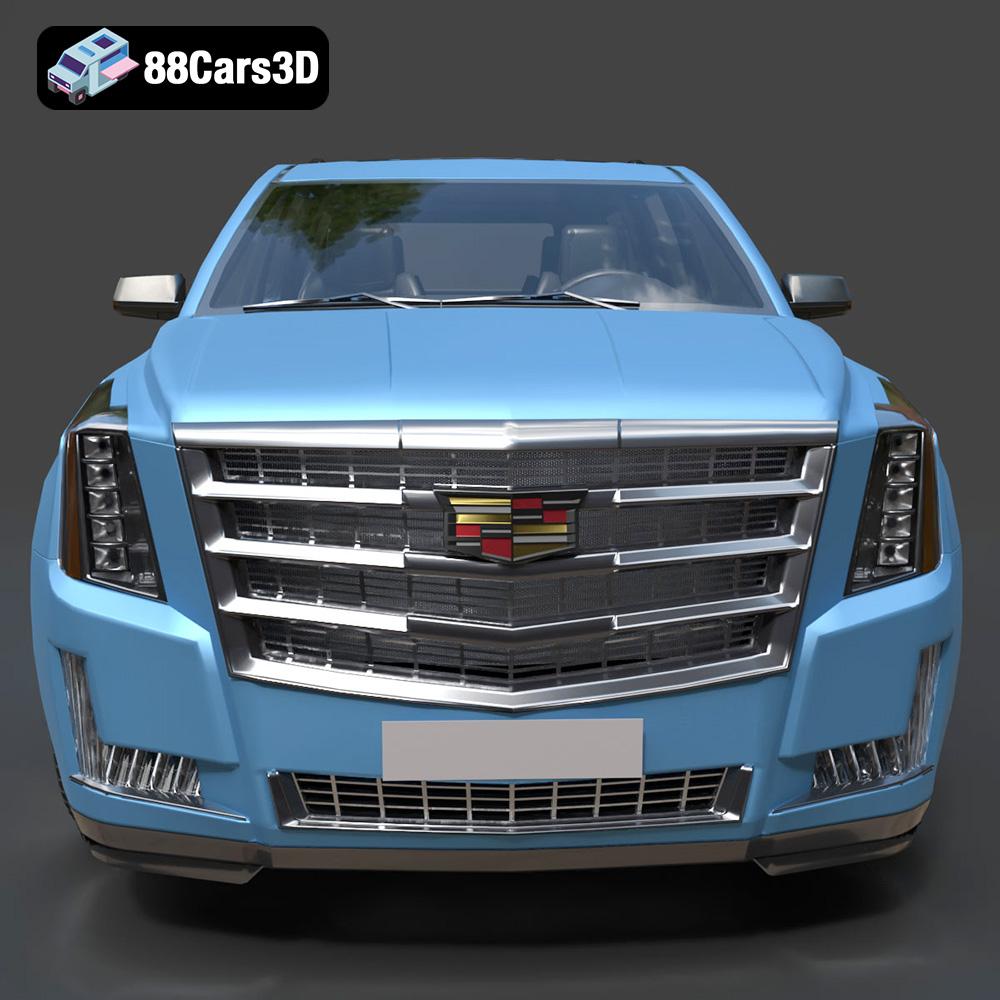
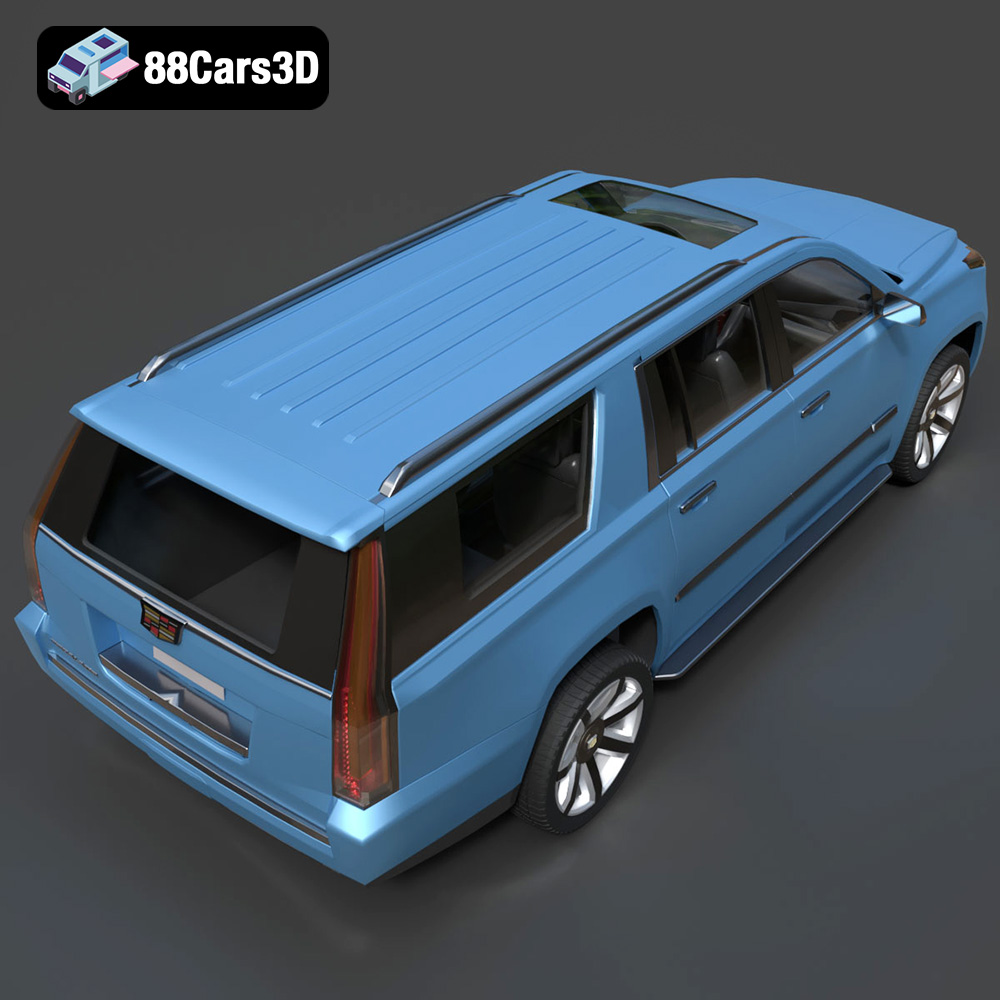
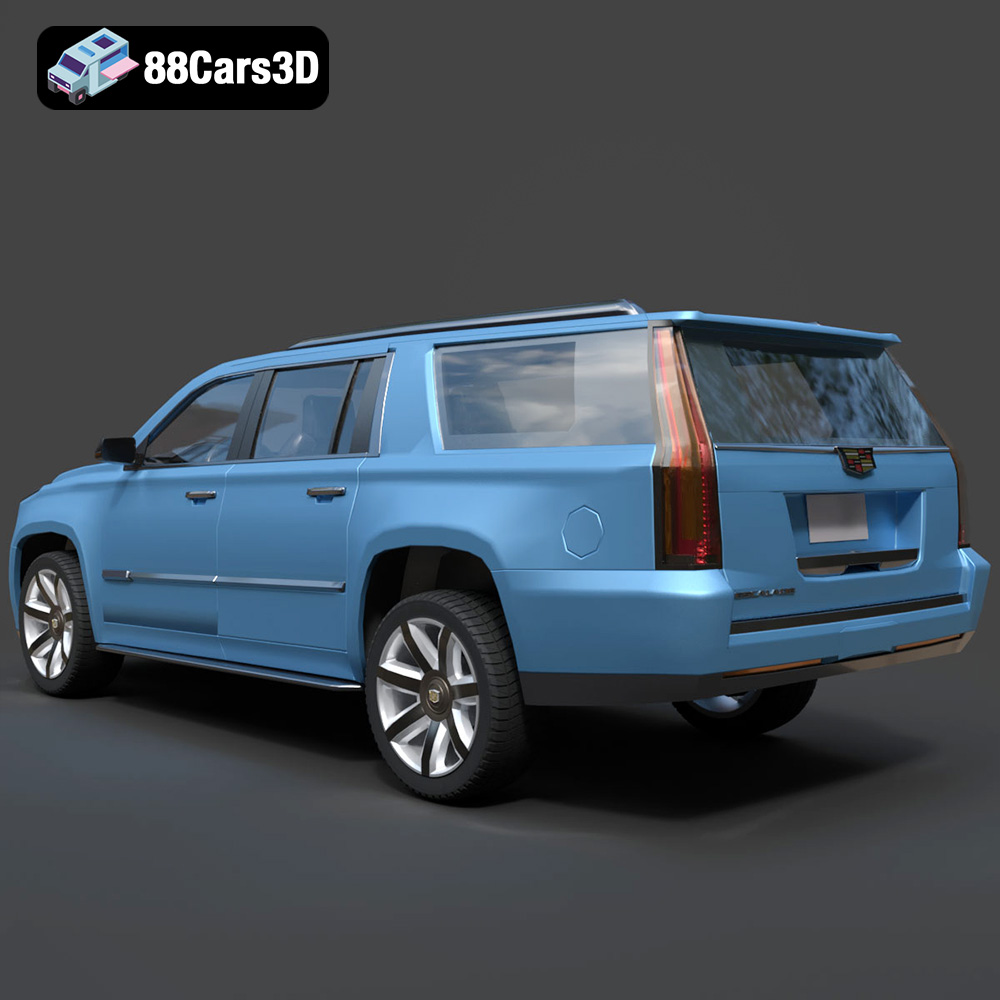
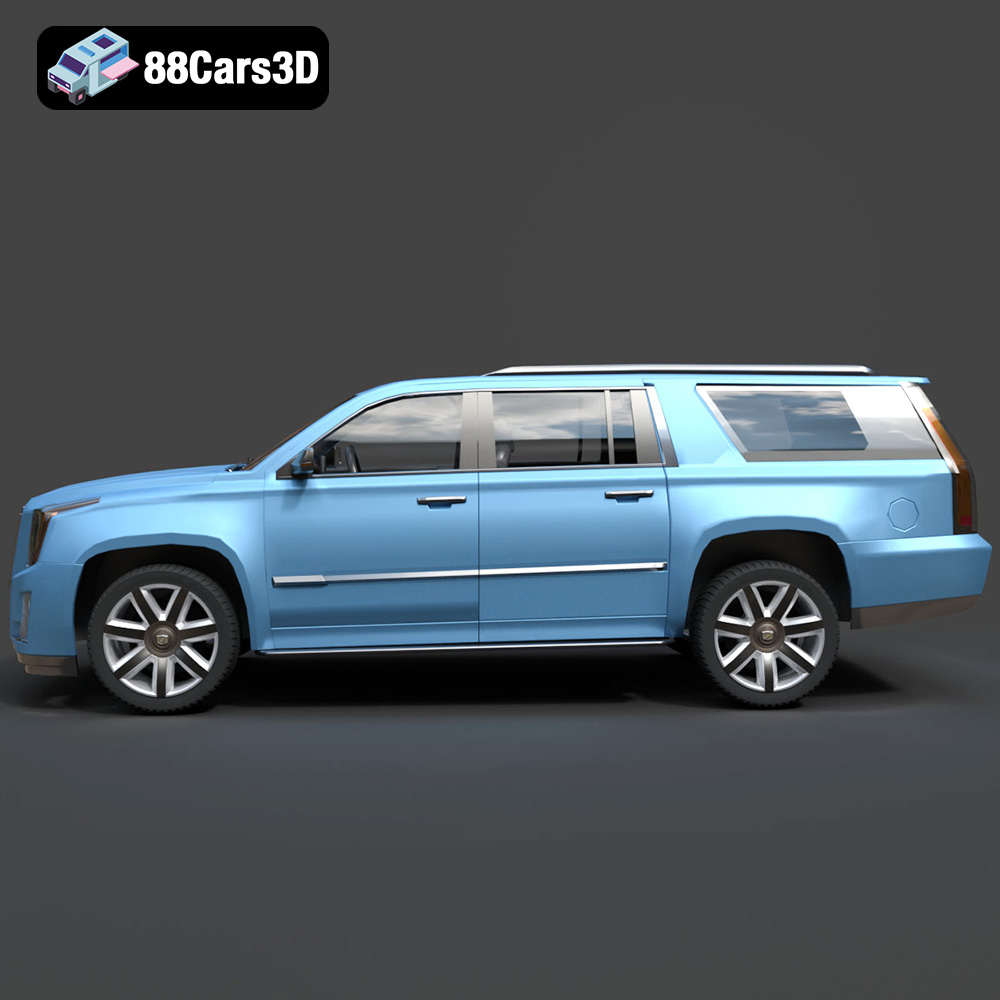
The success of any automotive 3D model hinges on its ability to accurately reflect the real-world vehicle. This particular Cadillac Escalade ESV 3D Model showcases an impressive dedication to capturing its true form. From the signature large chrome grille and bold front fascia to the detailed vertical LED headlights and taillights, every exterior element is faithfully reproduced. The extended-wheelbase proportions are crucial for the ESV variant, ensuring that its commanding stance is correctly translated into the digital realm. Furthermore, details like the sculpted body panels, chrome trim accents, and modeled premium alloy wheels with performance tires all contribute to a high-fidelity representation.
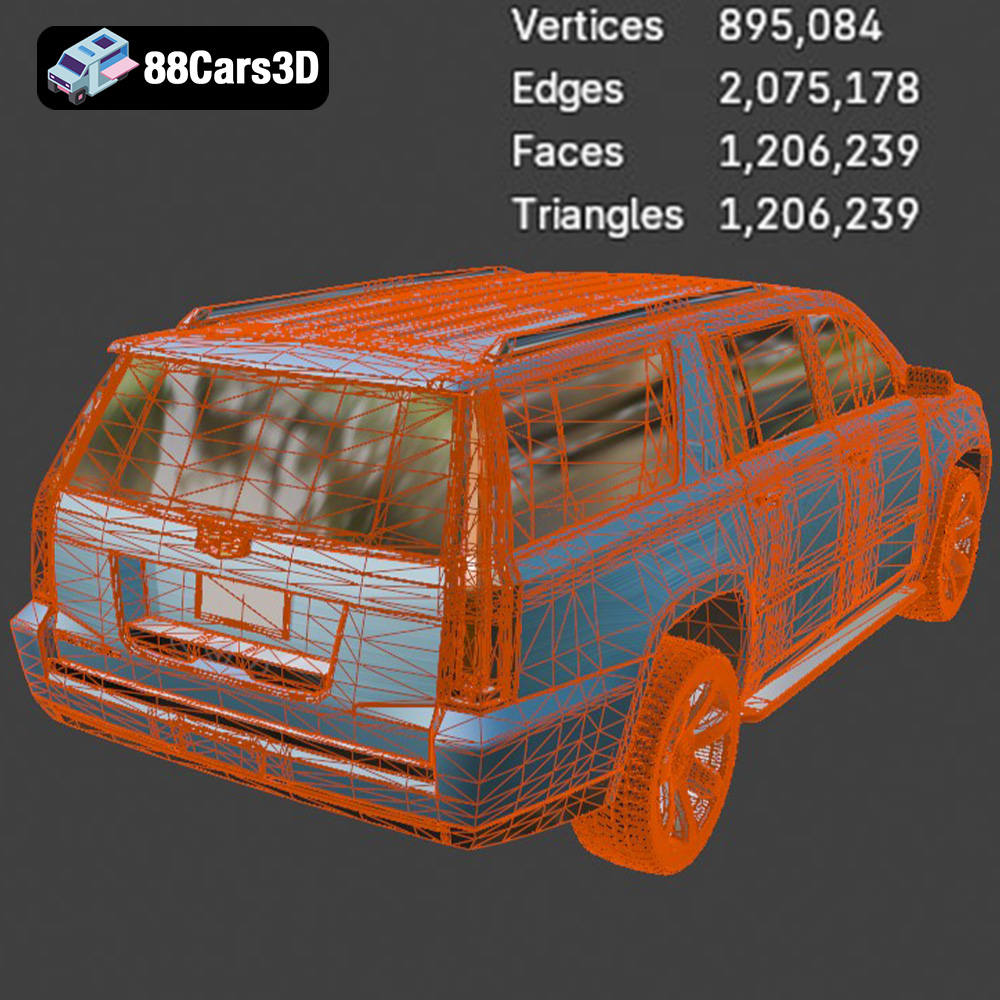
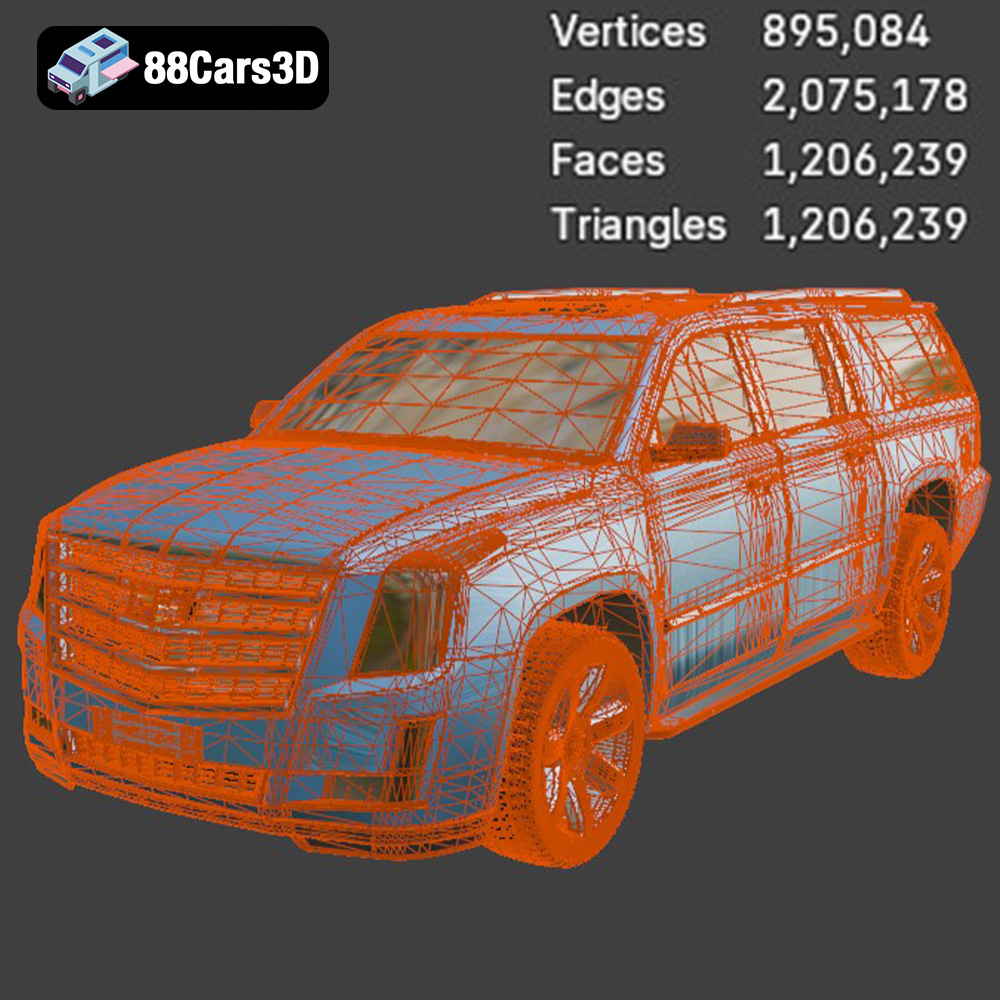
Beyond visual accuracy, technical cleanliness is paramount. A high-quality 3D model, especially for production pipelines, must feature clean and organized topology. This means a well-structured mesh without messy geometry, N-gons, or unnecessary polygons, ensuring smooth subdivisions and optimal performance. The Escalade ESV model benefits from this, offering real-world scaling which is essential for integration into any scene without manual adjustments, saving invaluable production time. This attention to detail extends to the interior, where a detailed luxury dashboard layout, large infotainment display representation, steering wheel with instrument cluster, three-row seating configuration, and intricate interior trim detailing are all optimized for both real-time performance and high-quality renders. This level of comprehensive detailing, combined with optimized mesh, truly sets it apart.
The versatility of a 3D asset is often defined by the range and quality of its supported file formats. Each format serves a specific purpose, offering unique advantages for different stages of a creative pipeline, from initial modeling to final rendering, real-time deployment, or physical production. The Cadillac Escalade ESV 3D Model is exemplary in its broad support, providing a comprehensive suite of file types to ensure maximum compatibility and utility across professional workflows. Understanding these formats is crucial for any 3D professional seeking to integrate such a detailed vehicle into their projects.
The .blend file format is the native format for Blender, a powerful open-source 3D creation suite. When you receive a model in .blend format, it’s typically a fully editable Blender scene. This means it includes not just the mesh data, but also materials, textures, lighting setups, cameras, animation data, and even physics simulations, all pre-configured within the Blender environment. For users who primarily work in Blender, this format offers the most direct and uncompromised access to the model’s original setup, allowing for extensive customization, rigging, animation, and rendering without any translation issues. The .blend file for the Escalade ESV would contain its detailed material shaders, ensuring photorealistic rendering straight out of the box in Blender’s Cycles or Eevee renderers.
Autodesk’s .fbx (Filmbox) format is arguably the most widely used exchange format in the 3D industry. It is highly valued for its robust support of various data types, including geometry, materials, textures (though often as references), animations, skinning, and camera data. FBX is ideal for pipelines involving multiple software packages, particularly for game engines like Unreal Engine and Unity, and DCC (Digital Content Creation) tools like Maya, 3ds Max, and Cinema 4D. Its ability to preserve animation data and scene hierarchy makes it perfect for integrating animated vehicles into real-time environments or complex cinematic sequences. For the Cadillac Escalade ESV, the .fbx file would ensure that separate components like doors, wheels, and the tailgate retain their proper pivot points and hierarchy, ready for animation within any compatible application.
The .obj (Wavefront OBJ) format is a universal, widely supported file format known for its simplicity and broad compatibility. It primarily stores geometry data (vertices, normals, UVs, and faces) and can reference external material files (.mtl) for basic color and texture information. While it doesn’t support animation or rigging, its universal nature makes it an excellent choice for basic mesh exchange between almost any 3D software. For the Escalade ESV, an .obj file provides a clean, raw mesh that can be easily imported and re-textured in any platform. Similarly, .ply (Polygon File Format or Stanford Triangle Format) is another precision mesh format, often used for 3D scanned data, CAD, and scientific analysis due to its ability to store vertex attributes like color, normals, and transparency. While less common for general automotive assets, its inclusion signifies a commitment to providing a versatile mesh for specialized engineering or analysis workflows.
.glb (GL Transmission Format Binary) is the binary version of glTF, a modern, royalty-free specification for 3D scene and model transmission. Optimized for web-based applications, AR (Augmented Reality), and VR (Virtual Reality), .glb files are compact and efficiently loadable. They package all necessary data (geometry, materials, textures, animations) into a single file, making them ideal for interactive 3D viewers on websites, mobile AR experiences, or light VR applications. The Escalade ESV in .glb format would be perfect for virtual showrooms embedded directly into a webpage or for quick deployment in an AR app, allowing users to interact with the vehicle in their own environment.
The .stl (Stereolithography) format is the industry standard for 3D printing. It represents a 3D model as a series of connected triangles, defining only the surface geometry of an object without color, texture, or material information. For a model to be 3D printable, its .stl file must be “manifold” or “watertight,” meaning it has no holes or inverted normals, forming a completely enclosed volume. The inclusion of an .stl format for the Escalade ESV directly supports the creation of physical scale models, prototypes, or collectible luxury SUV models. The product description highlights specific print settings like recommended scales, layer height, wall thickness, and support requirements, underscoring the print-readiness of this specific asset.
The .max format is the native file type for Autodesk 3ds Max, a leading software for 3D modeling, animation, and rendering. Like .blend, a .max file provides a fully editable project, containing all scene elements, modifiers, materials, lighting, and animation data specific to 3ds Max. For professionals working within this ecosystem, the .max file offers direct access to the model’s full capabilities and setup for advanced rendering with V-Ray or Corona. Finally, .unreal refers to engine-ready assets specifically configured for Unreal Engine. This often implies not just the mesh, but also pre-configured materials, textures, LODs (Levels of Detail), and potentially collision meshes, all imported and optimized within an Unreal Engine project structure, streamlining integration into real-time environments.
The comprehensive range of formats for the Cadillac Escalade ESV 3D Model exemplifies its readiness for virtually any project, providing maximum flexibility for users across different software platforms and target applications.
The true value of a premium 3D asset lies in its seamless integration into diverse professional workflows. The Cadillac Escalade ESV 3D Model from 88cars3d.com is engineered for adaptability, making it an indispensable tool for various industries.
For advertising agencies, automotive designers, and visualization studios, photorealistic rendering is paramount. Using software like 3ds Max with V-Ray or Corona, or Blender with Cycles, the Escalade ESV model can be brought to life. Its clean topology and accurate detailing mean that light will interact with its surfaces realistically, producing stunning reflections and shadows. Artists can leverage its robust material setup, often pre-configured, to achieve metallic paint finishes, realistic glass transparency, and intricate interior textures. Imagine using this model to create luxury automotive marketing visuals, studio renders for promotional materials, or dynamic animated sequences for dealership presentations. The model’s balanced polygon count ensures that high-resolution renders can be achieved without excessive memory overhead, maintaining both quality and efficiency.
The demands of real-time engines like Unreal Engine and Unity are distinct, prioritizing performance alongside visual quality. The Escalade ESV model is described as having an “optimized interior mesh for real-time and high-quality renders” and a “balanced polygon count,” indicating its suitability for such environments. For game developers, this means a vehicle asset ready for open-world games, traffic systems, or VIP transport simulations without significant re-optimization. Its separate doors, hood, tailgate, and wheels with proper pivot placement make it animation-ready for in-game interactions. In AR/VR, the model shines in immersive virtual showrooms or interactive vehicle configurators, allowing users to explore the luxury SUV up close in a truly engaging way. The .glb and .unreal formats are particularly beneficial here, offering streamlined integration into these performance-critical platforms.
A unique and highly valuable aspect of this model is its readiness for 3D printing. Converting the model to an .stl format opens up a world of possibilities for creating collectible scale luxury SUV models. The provided 3D print settings are invaluable for anyone looking to bring this digital asset into the physical world. Recommendations for scale (1:24 / 1:32 / 1:18 / 1:12), layer height (0.12–0.20 mm), and wall thickness (2–3 mm) guide users towards successful prints. Crucially, the advice on supports (required for mirrors, roof rails, underbody details) and print orientation (body upside-down for smoother roof finish, wheels separately for detailing) demonstrates a deep understanding of practical 3D printing challenges and solutions. Post-processing suggestions like sanding, primer, and specific paint finishes further enhance the final physical product, ensuring a high-quality collectible or prototype.
A truly professional 3D car model is more than just its visual appearance. It encompasses a suite of technical considerations that dictate its usability, performance, and flexibility across various applications.
The product description highlights a “balanced polygon count for performance and visual quality.” This is a critical technical advantage. Too few polygons, and the model loses detail; too many, and it cripples real-time performance and increases render times. Achieving this balance requires skillful modeling. For high-end cinematic renders, a subdivision surface workflow allows for varying levels of detail as needed. For game engines, implementing Levels of Detail (LODs) is crucial, where progressively simpler versions of the model are used as the vehicle moves further from the camera. Furthermore, proper UV mapping, while not explicitly detailed in the product description, is implicitly present given the mention of textures and materials. Effective UVs are essential for applying textures without stretching or distortion, and for optimizing texture memory usage, especially in game development. Clean UV layouts make texturing efficient and ensure that materials render correctly across all platforms.
One of the most valuable technical features of this Escalade ESV model is its “proper pivot placement for animation (doors, wheels, steering).” This seemingly minor detail is a huge time-saver for animators and game developers. When pivots are correctly positioned at the natural rotation points (e.g., the hinge for a door, the center axis for a wheel), animating these components becomes intuitive and accurate. This pre-rigged structure means artists can immediately start animating vehicle interactions—doors opening, wheels turning, steering wheel rotating—without the tedious and often complex task of manually setting up pivots and hierarchies. This readiness for animation makes the model invaluable for creating driving sequences, interactive vehicle demos, or dynamic cinematic shots.
Beyond its inherent quality, a well-structured 3D model offers extensive customization options, empowering artists and designers to tailor it to their specific project needs.
The ability to “change paint color (black, white, metallic silver, pearl, etc.)” is a fundamental customization. With the model’s clean material setup, artists can easily swap out paint shaders to match corporate branding, scene aesthetics, or client preferences. Modifying wheel designs and trim packages allows for further personalization, transforming the vehicle’s appearance to suit different luxury tiers or regional preferences. This flexibility is vital for creating varied versions of the Escalade ESV, whether for a diverse fleet in a game or multiple luxury configurations in a virtual showroom. The clean topology also means that adding custom accessories or branding elements, such as company logos or VIP decals, can be done cleanly and efficiently without disrupting the underlying mesh.
A high-quality 3D car model acts as a foundational element within a larger scene. Its accurate scale ensures it integrates seamlessly into architectural visualizations, cityscapes, or natural environments. The transparent materials for windows and lighting components are crucial for realistic rendering, allowing for complex light interactions and reflections. Artists can “adjust lighting setups for city night scenes or showroom renders,” enabling them to evoke specific moods and highlight the Escalade ESV’s luxury features. Whether bathed in the warm glow of a sunset or illuminated by the stark, precise lighting of a modern showroom, the model’s robust construction responds beautifully to diverse lighting conditions, making it a versatile tool for any visual narrative.
The world of 3D modeling thrives on precision, versatility, and technical excellence. The Cadillac Escalade ESV 3D Model exemplifies these qualities, offering a meticulously crafted asset that meets the rigorous demands of modern digital production pipelines. From its accurate representation of Cadillac’s iconic luxury SUV to its clean topology, animation readiness, and broad file format support, this model is designed to empower creators.
Whether you’re developing the next big open-world game, crafting photorealistic automotive advertisements, designing immersive AR/VR experiences, or even fabricating physical scale models through 3D printing, this asset provides a robust and reliable foundation. Its detailed exterior and interior, combined with thoughtful technical advantages like balanced polygon count and proper pivot placement, make it an invaluable addition to any professional’s library. For those seeking premium 3D car models that truly deliver on quality and functionality, 88cars3d.com offers a curated selection of assets that stand up to the most demanding projects. The Cadillac Escalade ESV 3D Model is a testament to the power of high-fidelity digital assets in bringing complex visions to life.
The Cadillac Escalade ESV 3D Model is a premium digital recreation of the extended-length luxury SUV produced by Cadillac. Known for its bold presence, elongated body design, and high-end refinement, the Escalade ESV combines executive comfort with full-size SUV capability. This 3D model accurately captures the Escalade ESV’s commanding grille, vertical LED lighting signature, extended wheelbase proportions, and sculpted luxury styling. Designed with clean geometry and real-world scale accuracy, it is ideal for rendering, animation, game development, AR/VR projects, and automotive simulations.
$39.90
.arvr
.blend
.cadillac
.car3dmodel
.escalade
.esvesv
.fbx
.fullsizesuv
.gameasset
.glb
.luxurysuv
.max
.obj
.ply
.rendering
.simulation
.stl
.unreal
.vehicleasset
automotive3d