Get 20% OFF All Premium 3D & STL Models!

In today’s visually driven industries, from automotive rendering to immersive game development and sophisticated AR/VR experiences, the demand for authentic, high-fidelity 3D car models is paramount. These digital assets form the backbone of compelling visualizations, realistic simulations, and engaging interactive content. Whether you’re a seasoned professional creating a photorealistic marketing campaign or an independent developer populating a vast open world, the quality of your base models directly impacts the final output.
A well-crafted 3D vehicle model saves countless hours of development time, offering a meticulously detailed foundation that is optimized for performance across various platforms. It’s not just about aesthetics; it’s about clean topology, accurate scaling, proper UV mapping, and versatile file formats that seamlessly integrate into diverse pipelines. This attention to technical detail is precisely what sets premium assets apart and empowers creators to push the boundaries of digital realism.
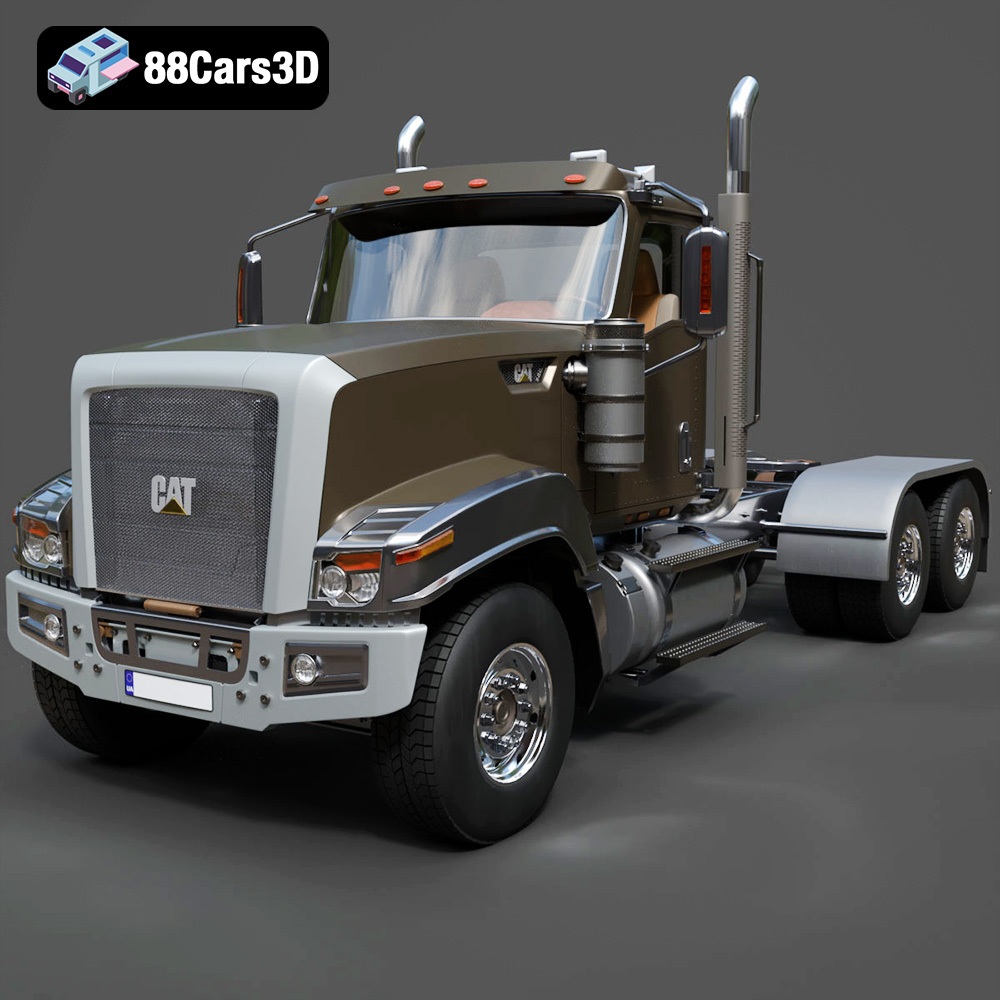
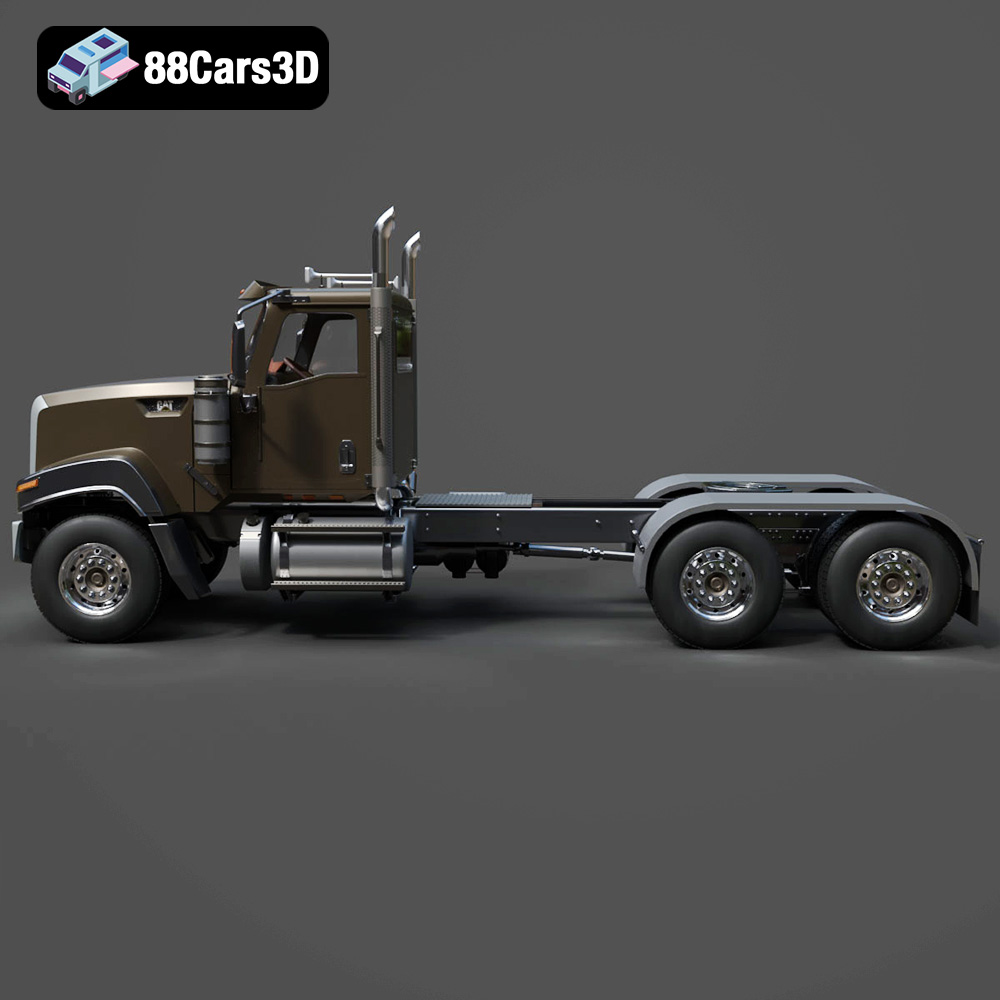
Today, we’re diving deep into the technical prowess and multifaceted applications of one such exceptional asset: the Caterpillar CT680 Tractor Truck 2015 3D Model. This robust digital recreation of Caterpillar’s heavy-duty vocational tractor is a prime example of a professional-grade asset that transcends simple visual representation, offering a versatile toolkit for a wide array of industrial and creative endeavors. From stunning automotive rendering to complex game assets and even physical 3D prints, this model provides the foundational excellence necessary for any demanding project.
Choosing the correct file format for your 3D car models is a critical decision that impacts compatibility, feature retention, and overall workflow efficiency. Each format is designed with specific strengths and intended uses, making it essential for professionals to understand their nuances. The Caterpillar CT680 Tractor Truck 2015 3D Model thoughtfully includes a comprehensive suite of these formats, ensuring maximum flexibility for any project on 88cars3d.com.
The .blend format is the native file type for Blender, an open-source 3D creation suite. It’s incredibly versatile, capable of storing everything from mesh data, materials, textures, animations, camera setups, lighting, and even the entire scene hierarchy. For users primarily working in Blender, this format offers the most complete and editable version of the model. It retains all modifiers, procedural textures, rigging, and custom properties, allowing for deep customization without loss of information. This is ideal for artists who wish to dissect the model, learn from its construction, or make extensive modifications to the CT680’s chassis, cabin, or internal components.
As a proprietary format developed by Autodesk, .fbx has become an industry-standard for exchanging 3D data between various applications. It’s highly favored in game development (Unreal, Unity) and animation pipelines due to its robust support for meshes, materials, textures (often linked or embedded), animations, bones, and blend shapes. The .fbx format maintains a good balance between file size and data retention, making it an excellent choice for exporting the CT680 model for real-time engines where performance and fidelity are crucial. Its widespread compatibility ensures a smooth transition from your modeling software to your target application.
The .obj (Wavefront Object) format is one of the most widely supported and simplest 3D file formats. It primarily stores geometric data (vertices, normals, texture coordinates, and faces) and can link to external .mtl (material) files for basic material properties. While it doesn’t support animation or rigging, its universal compatibility makes it an excellent choice for cross-software transfers where only the static mesh is needed. For the Caterpillar CT680, .obj provides a clean, raw mesh that can be imported into virtually any 3D application for rendering or further processing, serving as a reliable fallback.
.glb (GLB Binary) is the binary version of the glTF (GL Transmission Format), a royalty-free specification for 3D scenes and models. It’s specifically optimized for efficient transmission and loading of 3D content, particularly for web-based applications, augmented reality (AR), and virtual reality (VR). A .glb file typically embeds all assets – textures, materials, and animations – into a single file, making it highly portable and ideal for displaying interactive 3D car models directly in browsers or mobile AR apps without complex setup. This format is crucial for showcasing the CT680 in immersive digital experiences.
.stl (STereoLithography) is almost universally used for 3D printing. It represents a 3D model as a series of connected triangles (a triangular mesh) and contains no color, texture, or material information. Its simplicity makes it ideal for defining the surface geometry for additive manufacturing. When converting the CT680 3D model to .stl, it becomes a precise blueprint for creating a physical replica, whether it’s a small-scale collectible or a larger prototype, ensuring manifold geometry necessary for successful printing.
The .ply (Polygon File Format) is another format for storing 3D data, particularly point clouds and meshes. It’s often used in scientific and engineering applications, capable of storing properties like color, transparency, and even specific data per vertex or face. While less common for general artistic exchange than .fbx or .obj, .ply can be valuable for applications requiring high precision mesh data, possibly for CAD integration, reverse engineering, or detailed analysis of the CT680’s robust structure.
The .unreal format, often referring to a cooked asset or an asset directly imported and optimized within the Unreal Engine ecosystem, signifies a model ready for real-time environments. While not a standalone file type in the same way as .fbx or .blend, its inclusion implies that the model has undergone the necessary processing to perform optimally within Unreal Engine. This could mean pre-setup materials, LODs (Levels of Detail), and collision meshes, significantly streamlining the workflow for game developers and simulation engineers utilizing Unreal Engine with the CT680 model.
The .max format is the native file type for Autodesk 3ds Max, a leading software for 3D modeling, animation, and rendering. Like .blend, it stores all scene information, including geometry, materials, lighting, cameras, animations, and render settings. For professionals working in architectural visualization, broadcast animation, or high-end product rendering using 3ds Max, the .max file provides the most comprehensive and editable version of the CT680 model, ensuring full control over every aspect of the scene.
Creating a high-quality 3D car model, especially for a complex industrial vehicle like the Caterpillar CT680 Tractor Truck 2015, demands meticulous attention to detail, precision, and technical optimization. The assets available on 88cars3d.com exemplify this commitment to excellence, offering models that are not only visually striking but also functionally robust.
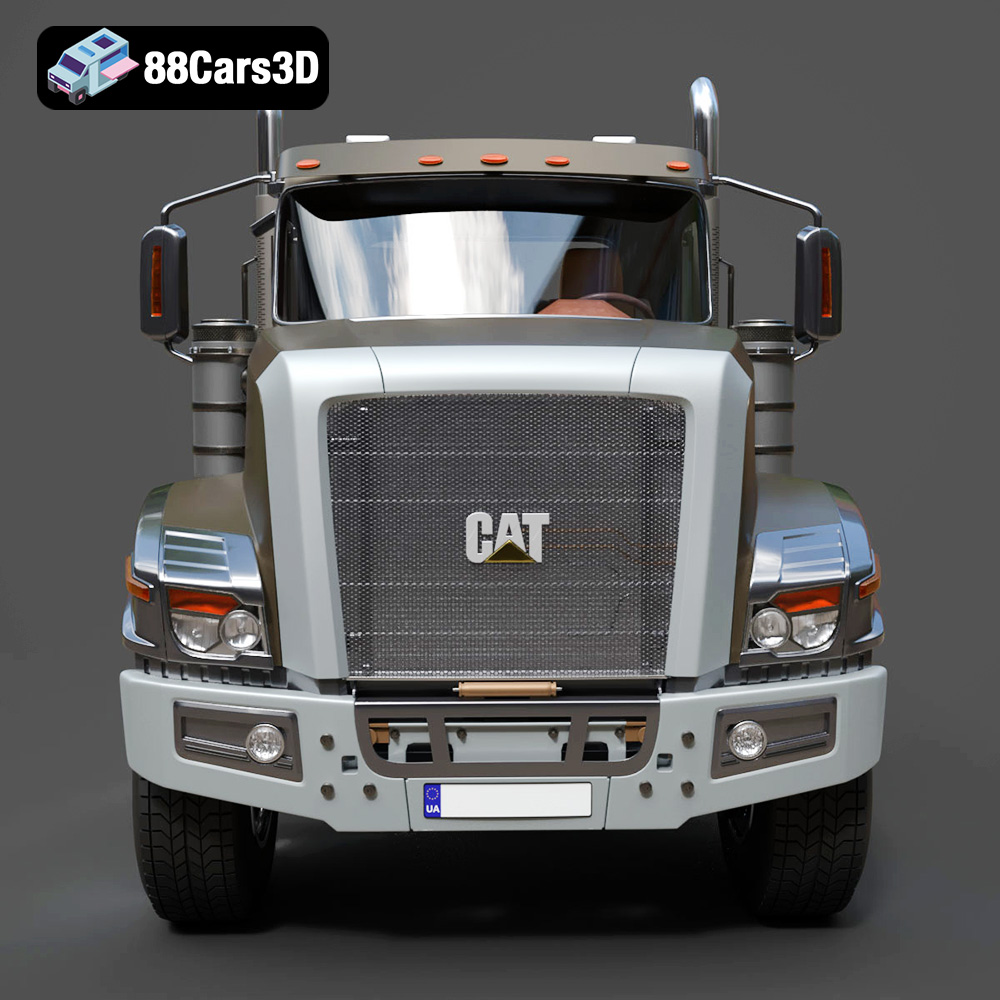
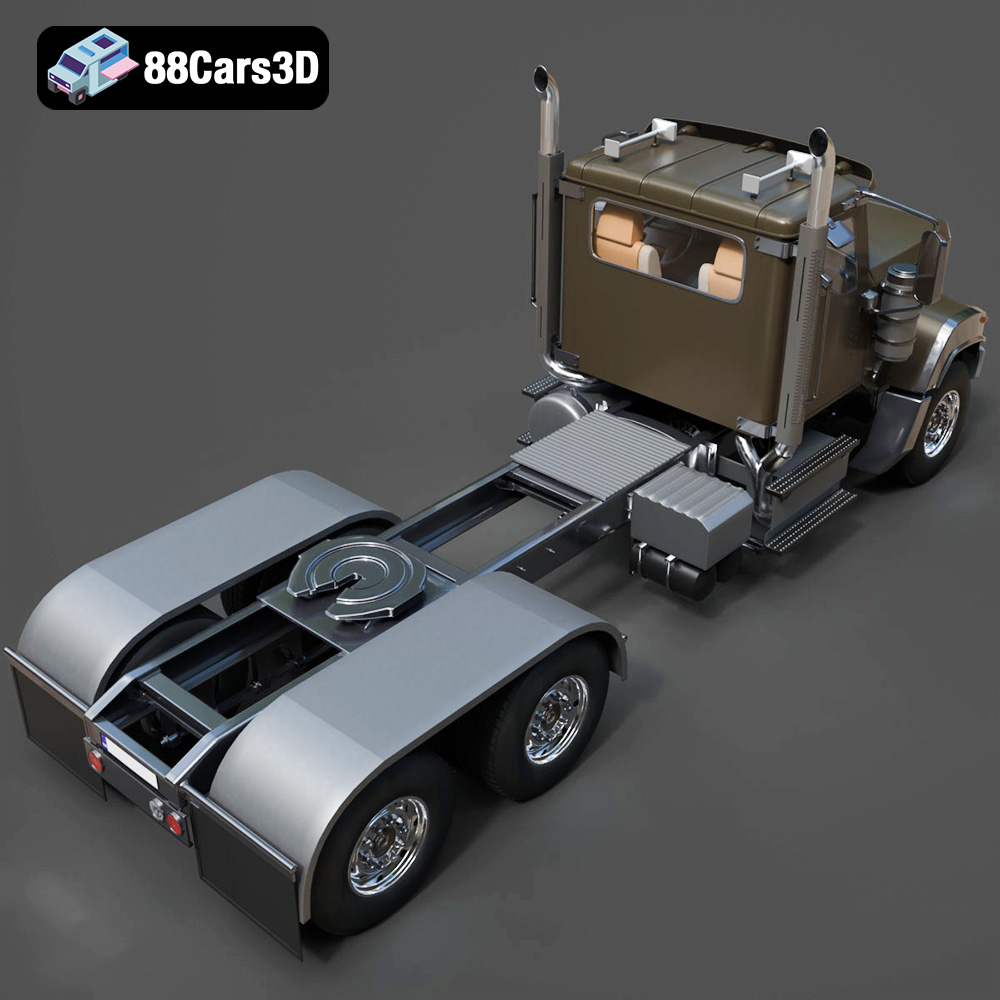
The CT680 model’s exterior is a testament to accurate replication. Its “aerodynamic hood” and “bold grille design” are not merely aesthetic; they reflect the real-world engineering of a vehicle designed for efficiency and strength. The reinforced bumper, extended mirrors, and detailed lighting elements (headlights, indicators) are modeled with precision, ensuring visual integrity from every angle. Key industrial components like the exposed chassis frame, fuel tanks, exhaust system, and side steps are faithfully recreated. Crucially, the “fifth-wheel coupling system” is accurately modeled, providing a functional point for attaching compatible trailer models and enabling realistic articulation in simulations and animations. Separately modeled wheels and steering components are vital for dynamic animations, allowing for independent rotation and steering kinematics.
While often less visible in external renders, a well-detailed interior significantly enhances the versatility and realism of a 3D model. The CT680 model features a “modeled dashboard and instrument cluster,” “steering wheel and driver control layout,” and a “driver seat and cabin interior structure.” These elements are not just placeholders; they possess enough detail for interior shots, virtual cockpit views in VR, or even close-up renders for marketing materials. The “console and panel detailing” further contributes to the immersive experience, ensuring that if a project requires a glimpse inside the cabin, the quality is maintained.
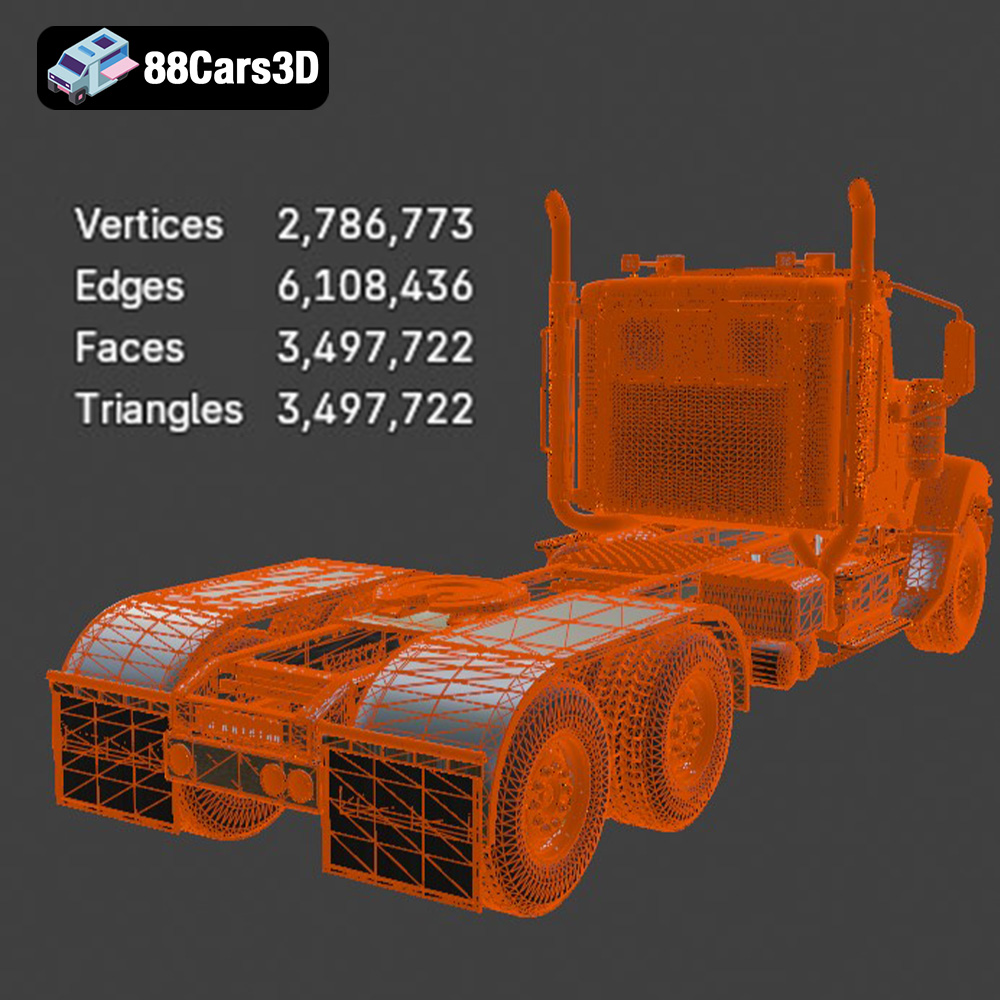
Beyond visual fidelity, the technical underpinnings of the CT680 model are critical for professional use. It boasts a “clean and well-organized mesh structure,” which is foundational for smooth deformations during animation, efficient UV unwrapping, and predictable subdivision surfacing. “Real-world scale accuracy” is non-negotiable for integration into architectural visualization scenes, engineering simulations, or game environments where proportions must be correct relative to other assets. The “proper pivot setup for steering and wheel rotation” is a technical detail that dramatically simplifies animation workflows, saving animators countless hours. Furthermore, “optimized polygon flow for performance and realism” strikes a balance between visual detail and computational efficiency, making the model suitable for both high-end renders and real-time game engines. The inclusion of various file formats like .fbx and .unreal ensures broad compatibility across major 3D software platforms and engines.
The versatility of the Caterpillar CT680 Tractor Truck 2015 3D Model lies in its ability to seamlessly integrate into diverse professional pipelines, from high-stakes marketing campaigns to intricate simulation environments. Its robust design and multiple file formats ensure broad utility.
For architectural visualization (ArchViz) firms and advertising agencies, premium 3D car models are essential for adding realism and context to rendered scenes. Using the .max or .blend file, artists can drop the CT680 into various environments – from vast logistics yards to bustling construction sites or alongside new industrial buildings. In 3ds Max with V-Ray or Corona Renderer, the model’s clean mesh and optimized UVs allow for easy application of PBR materials (physically based rendering) for realistic paint, chrome, and rubber. Dynamic lighting setups, leveraging HDRI (High Dynamic Range Imaging) for environmental reflections and accurate sun/sky systems, bring the truck to life, creating stunning marketing visuals for logistics, transportation, or heavy equipment industries. Similarly, Blender users can harness Cycles or Eevee, leveraging the native .blend file’s pre-configured materials for immediate, high-quality renders or further customization.
In the realm of game development, the CT680 model transforms into a powerful game asset. The .fbx and .unreal formats are specifically tailored for engines like Unreal Engine and Unity. Game developers can leverage the model’s optimized geometry and proper pivot setup for wheel rotation and steering to create interactive, drivable vehicles for truck simulators, open-world logistics games, or even as AI traffic. Implementing LODs (Levels of Detail) from the base model ensures performance optimization across varying distances, while custom collision meshes can be generated to handle realistic physics interactions. The separate wheels and steering components are crucial for rigging and implementing vehicle physics blueprints, allowing for realistic driving mechanics and suspension behavior.
The burgeoning fields of Augmented Reality (AR) and Virtual Reality (VR) demand highly optimized 3D models for seamless, interactive experiences. The .glb format, included with the CT680 model, is perfectly suited for web-based AR applications and mobile VR. Industrial companies can use this for interactive fleet demonstrations, allowing potential clients to virtually inspect the truck in a real-world setting via AR on a tablet, or immerse themselves in a virtual driving experience. Its optimized nature ensures quick loading times and smooth frame rates, critical for preventing motion sickness and enhancing user engagement in immersive industrial simulations or training modules.
Beyond digital displays, the Caterpillar CT680 model is also “3D Printable STL,” making it invaluable for creating physical miniatures, scale models, or prototypes. The .stl format allows hobbyists and professionals to produce tangible assets for tabletop displays, educational purposes, or even functional prototypes. The recommended print settings – specific scales (1:32 / 1:24 / 1:18 / 1:14), layer height (0.12–0.20 mm), and wall thickness (2–3 mm) – provide a clear roadmap for successful printing. The guidance on supports for complex areas like mirrors and exhaust stacks, along with print orientation advice, ensures the best possible physical output, requiring only post-processing like sanding, primer, and paint for a showroom-ready miniature.
Achieving photorealism in automotive rendering requires more than just a great model; it demands a deep understanding of materials, lighting, and animation. The Caterpillar CT680 Tractor Truck 2015 3D Model provides an excellent canvas for applying advanced rendering techniques.
Physically Based Rendering (PBR) is the cornerstone of modern photorealistic rendering. For the CT680, this means meticulously crafting materials that accurately simulate real-world surfaces. The truck’s paint job, for instance, would utilize a metallic/roughness workflow, with base color maps representing the paint hue, metallic maps defining reflectivity, and roughness maps dictating the smoothness or texture of the surface. Tires would employ detailed normal maps for tread patterns, alongside roughness and specular maps to convey the rubber’s texture. Chrome accents on the grille and fuel tanks require high metallic values and low roughness to achieve their signature gleam. Even the interior dashboard and instrument cluster would benefit from subtle normal mapping and roughness variations to simulate plastics and fabrics, ensuring every detail contributes to the overall authenticity.
Lighting is arguably the most critical element in automotive rendering. For the CT680, an ideal setup often involves a combination of HDRI and targeted area lights. An HDRI provides realistic environmental illumination and reflections, mimicking outdoor conditions like a sunny day, an overcast morning, or a dusky industrial yard. This immediately grounds the truck in a believable setting. Supplementing the HDRI, strategic area lights can emphasize specific features, highlight contours, or create dramatic shadows. For night scenes, the modeled headlights and indicators can be enhanced with emissive materials and volume scattering effects to simulate realistic light beams, adding another layer of depth and realism to the CT680’s presentation.
The CT680’s technical advantages, such as “separate wheels and steering components for animation” and “proper pivot setup,” greatly simplify the animation process. Animators can link the wheels to a path or curve constraint for accurate rolling motion, while the steering mechanism can be controlled via a simple rotational driver. For more advanced simulations, simple suspension compression can be added through bone rigging or direct transformations, responding to terrain changes or vehicle weight shifts. The fifth-wheel plate’s independent movement is also crucial for realistic trailer attachment and articulation, allowing for complex maneuvers and dynamic interactions in animated sequences, essential for logistics simulations or short film projects.
The power of a professional 3D model like the Caterpillar CT680 Tractor Truck 2015 extends into tangible real-world applications, offering unparalleled opportunities for visualization, training, and marketing.
Consider a large logistics company needing to optimize its yard operations or train new drivers. The CT680 3D model can be integrated into a sophisticated simulation environment (using Unreal Engine or Unity, for instance). This allows the company to create virtual training scenarios – navigating tight spaces, coupling trailers, or practicing safe loading procedures – without the risks and costs associated with real-world equipment. The model’s accurate scale and articulated parts provide a highly realistic and immersive training experience, allowing for critical assessment of efficiency and safety protocols before implementation. This kind of simulation, built on solid 3D car models, can significantly reduce accidents and improve operational flow.
For Caterpillar itself, or for dealerships and fleet operators, the CT680 model is an indispensable marketing tool. Imagine a striking digital advertisement showcasing the CT680 hauling a massive load through a dynamic landscape. With high-end renders generated from 3ds Max or Blender, the truck can be presented in its ideal operational environment, highlighting its rugged design and vocational prowess. From product launch videos to interactive online configurators allowing customers to “build” their ideal CT680 with various accessories and paint jobs, the 3D model offers flexibility unmatched by traditional photography. It allows for showcasing features, customization options, and the vehicle’s aesthetic appeal in ways that are both engaging and cost-effective.
The model’s inherent flexibility allows for extensive customization. Fleet managers might need to visualize their entire fleet with specific branding and livery. The CT680 model’s clean UVs and well-structured mesh make applying custom decals, company logos, and changing body colors a straightforward process. Furthermore, for unique projects, the ability to “modify wheel configurations” or “attach compatible trailer models” means the base asset can be adapted for a wide range of specialized applications, from heavy haulage to refuse collection, even if the original truck was not designed for it. This adaptability makes the CT680 a versatile foundation for any bespoke industrial visualization project, easily managed within any major 3D software.
The journey through the technical intricacies and expansive applications of a high-quality 3D automotive asset reveals its profound value in today’s digital landscape. From cutting-edge automotive rendering to robust game assets and precise 3D printable models, the demand for meticulously crafted digital vehicles continues to grow. The Caterpillar CT680 Tractor Truck 2015 3D Model stands as a testament to this commitment to excellence, offering a versatile, technically sound, and visually stunning representation of a heavy-duty industrial workhorse.
Its comprehensive array of file formats – from the native editability of .blend and .max to the universal compatibility of .fbx and .obj, the real-time optimization of .glb and .unreal, and the physical printability of .stl and .ply – ensures that this model is ready for any professional challenge. Whether you are creating photorealistic advertising campaigns, developing immersive simulation experiences, or producing scale models for display, the CT680 provides an unparalleled foundation.
Investing in professional-grade 3D car models like the Caterpillar CT680 Tractor Truck 2015 3D Model found on 88cars3d.com is not just about acquiring an asset; it’s about empowering your creativity, streamlining your workflow, and elevating the quality of your final output across all your digital and physical endeavors. Explore this model and many others to discover how premium 3D assets can transform your projects.
The Caterpillar CT680 Tractor Truck 2015 3D Model is a high-detail digital recreation of the heavy-duty vocational tractor developed by Caterpillar Inc. Built for durability and on-highway performance, the CT680 combines industrial strength with aerodynamic efficiency, making it a popular choice for logistics, construction, and long-haul transport operations. This 3D model accurately represents the truck’s aerodynamic hood, bold grille design, reinforced bumper, extended mirrors, exposed chassis frame, and fifth-wheel coupling system. Designed with clean topology and real-world proportions, it is ideal for rendering, animation, simulation, game development, and AR/VR industrial visualization. Perfect for highway scenes, logistics yards, construction environments, freight simulations, and commercial fleet presentations. Includes .blend, .fbx, .obj, .glb, .stl, .ply, .unreal, and .max formats. 3D Print Setting: • Recommended scale: 1:24 / 1:32 / 1:43 • Layer height: 0.04–0.12 mm (Resin printing recommended for the smaller scale details like the Thor’s Hammer headlights) • Wall thickness: 1.2–2.0 mm • Infill: 15–25% • Supports: Required for side mirrors, wheel arches, and the subtle rear roof spoiler • Print orientation: Body printed angled for a smooth surface finish; wheels printed separately • Post-processing: Sanding, primer, and modern Volvo factory colors (like Sage Green, Glacier Silver, or Crystal White) paired with a gloss black roof.3D Printing, STL, 3D Printable, Miniature Car, Scale Model, FDM Ready, Resin Print, SLA, Digital Manufacture, Car Prototype, Automotive Collectible, 3D Print Model, Physical Asset, Tabletop Display, Manifold Geometry.
$59.90
.arvr
.blend
.caterpillar
.ct680
.fbx
.gameasset
.glb
.heavydutytruck
.industrialvehicle
.logisticsvehicle
.max
.obj
.ply
.rendering
.simulation
.stl
.tractortruck
.truck3dmodel
.unreal