Get 20% OFF All Premium 3D & STL Models!

In the high-octane world of 3D visualization, automotive design, and game development, precision and realism are paramount. Whether you’re a seasoned professional crafting breathtaking cinematic sequences, a game developer building an immersive racing simulator, or an architect creating dynamic virtual environments, the quality of your 3D assets dictates the success of your project. This is especially true when it comes to iconic vehicles that evoke passion and performance.
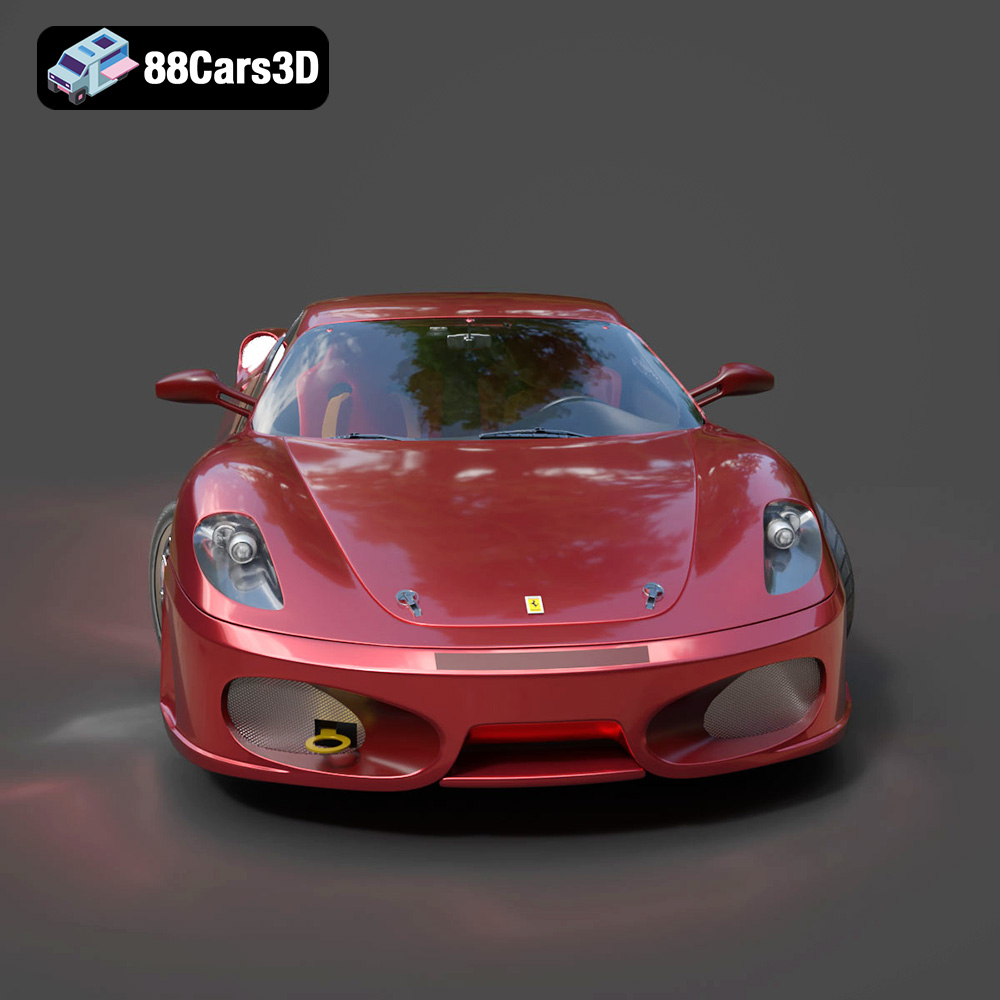
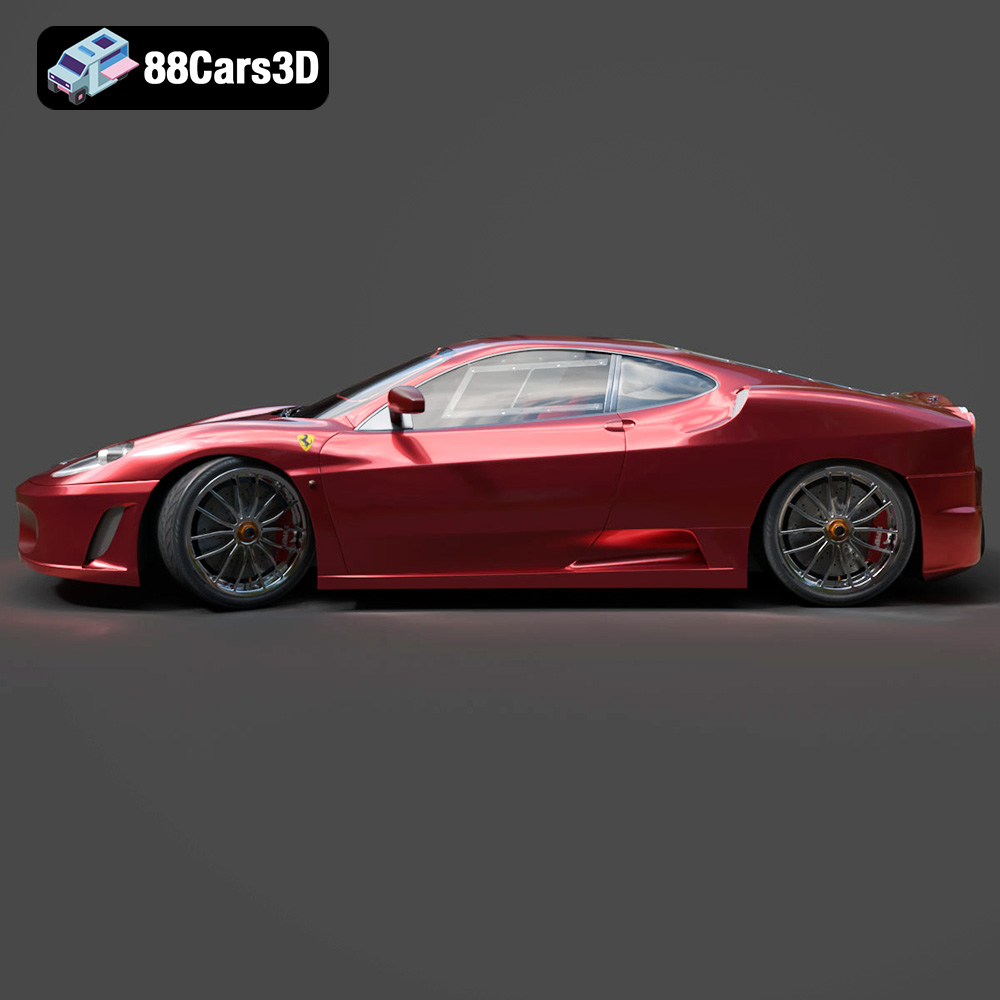
Few cars command attention like a Ferrari. The Ferrari 450 Italia 2013 is a prime example of Italian engineering and design prowess – a mid-engine supercar celebrated for its aggressive styling, aerodynamic perfection, and exhilarating performance. Recreating such a masterpiece in the digital realm requires meticulous attention to detail, from the sculpted body lines and signature front fascia to the intricate interior and the quad exhaust system. A high-quality 3D model of this vehicle isn’t just an asset; it’s a statement.
Today’s professional workflows are diverse and demanding. Artists and developers need 3D car models that are not only visually stunning but also technically robust and versatile. This means clean topology, real-world scale accuracy, proper pivot points for animation, and compatibility across a spectrum of software and engines. The Ferrari 450 Italia 2013 3D Model, available on 88cars3d.com, is engineered to meet these rigorous standards, offering a flexible foundation for everything from high-fidelity rendering to real-time interactive experiences and even physical 3D printing.
The choice of 3D model file format is a critical decision that influences compatibility, feature preservation, and the ultimate utility of your digital asset across different software, engines, and applications. Professional 3D artists and developers often work with multiple formats to ensure their assets can be seamlessly integrated into various pipelines. The Ferrari 450 Italia 2013 3D Model from 88cars3d.com is provided in a comprehensive range of formats, ensuring maximum flexibility for your projects. Let’s explore these in detail.
Having this extensive range of file formats ensures that the Ferrari 450 Italia 2013 3D Model can serve a multitude of professional needs, providing flexibility and efficiency for any project.
Automotive rendering is an art form, blending technical expertise with a keen eye for aesthetics. A premium 3D car model like the Ferrari 450 Italia 2013 is the perfect canvas for showcasing your rendering skills, delivering stunning visuals for marketing, presentations, or cinematic storytelling.
Software like 3ds Max and Blender are powerhouses for high-fidelity rendering. The Ferrari 450 Italia 2013 3D Model, with its clean topology and accurate proportions, provides an excellent foundation. In 3ds Max, artists can utilize V-Ray or Corona Renderer to achieve photorealistic results. This involves setting up complex material shaders for the car paint (multi-layered clear coat, metallic flakes), realistic glass for windows and headlights, and precise chrome for badges and trim. Blender’s Cycles or Eevee render engines offer similar capabilities, allowing for detailed PBR (Physically Based Rendering) material setups. The model’s separate wheels and steering components are invaluable for creating dynamic animations, from a simple showroom turntable to an exhilarating drive sequence.
Effective lighting is crucial for bringing a 3D car model to life. Studio setups with softboxes and area lights can highlight the Ferrari’s elegant curves, while HDRI (High Dynamic Range Image) environments can place it realistically in a sun-drenched street, a rainy urban setting, or a dramatic sunset. The detailed alloy wheels, complete with brake calipers and discs, require specific material attention to reflect light accurately and showcase their intricate design. Transparent glass materials for the windshield and side windows, along with detailed mirror elements, contribute significantly to the overall realism, allowing for reflections and refractions that tie the model seamlessly into its environment. The interior, with its modeled dashboard, sport steering wheel, and racing-style bucket seats, can be lit to emphasize its premium feel, even in exterior shots.
Imagine a global automotive brand launching a new vehicle. Instead of costly physical showrooms and prototypes, they opt for a virtual experience. Using a high-quality 3D car model such as the Ferrari 450 Italia 2013, they can create a fully interactive virtual showroom. Customers can explore the car from every angle, customize its paint finish, change wheel designs, and even step inside to examine the detailed interior. This application leverages the model’s optimized geometry and realistic materials, often rendered in real-time engines like Unreal or pre-rendered for high-quality web configurators. Such a project underscores the versatility and value of investing in premium 3D car models.
For game developers, 3D car models are not just static objects; they are interactive elements that need to perform flawlessly within a real-time environment. The Ferrari 450 Italia 2013 3D Model is built with these demands in mind, making it an excellent asset for racing simulators and open-world driving games.
Integrating a high-detail automotive asset into a game engine like Unreal Engine or Unity requires careful optimization. While the Ferrari 450 Italia 2013 3D Model boasts clean topology, developers often need to create multiple Levels of Detail (LODs) to ensure smooth performance across various hardware configurations. This involves reducing polygon counts for distant views without sacrificing visual integrity. The .fbx and .unreal file formats are specifically tailored for this purpose, facilitating easy import and setup of materials, textures, and collision meshes. Proper pivot points for steering and wheel rotation are pre-configured, drastically reducing setup time for vehicle physics and animation.
A realistic driving experience hinges on accurate physics and responsive controls. The clean mesh structure of the Ferrari 450 Italia 2013 3D Model simplifies the creation of precise collision meshes, essential for detecting impacts and ground interaction. For animation, the separate wheels and steering components are critical. Game developers can easily rig these parts to an inverse kinematics (IK) system, allowing for realistic wheel rotation based on speed and steering input. The interior details, such as the digital instrument cluster and paddle shifters, can be animated to react to player actions, enhancing immersion. This level of detail in a game asset makes the difference between a generic vehicle and a memorable, engaging driving experience.
Consider a high-end racing simulator. The game’s appeal relies on the visual fidelity of its cars and tracks. With a detailed model like the Ferrari 450 Italia 2013, developers can ensure that every curve, every vent, and every interior detail is accurately represented. This visual authenticity, combined with finely tuned physics, transforms a simple driving game into a sophisticated simulation. From the gleam of the paint under virtual sunlight to the subtle reflections on the transparent glass materials, these details immerse the player in the fantasy of driving a premium supercar.
Augmented Reality (AR) and Virtual Reality (VR) are transforming how we interact with digital content, offering immersive experiences that blur the lines between the real and virtual. High-quality 3D car models are at the forefront of this revolution, enabling interactive configurators, virtual showrooms, and advanced training simulations.
Automotive brands are increasingly turning to AR/VR to showcase their vehicles. Imagine a prospective buyer using a tablet to “place” the Ferrari 450 Italia 2013 in their driveway using AR, or donning a VR headset to sit inside the car and explore its detailed interior. For these applications, the .glb format is particularly powerful due to its optimization for real-time display and web integration. Users can change body colors, add racing stripes, or modify wheel designs in real-time, visualizing their dream car before it even exists physically. The customization options provided with the Ferrari 450 Italia 2013 3D Model—from body colors to wheel designs—are perfectly suited for such interactive experiences.
Beyond marketing, AR/VR with detailed 3D car models like the Ferrari 450 Italia can be used for training and simulation. Driving schools can offer virtual test drives in safe, controlled environments, teaching students to handle high-performance vehicles. Automotive engineers can use VR to visualize and test new designs or perform virtual maintenance training. The real-world scale accuracy and optimized geometry of this model ensure that these simulations are not only visually convincing but also functionally precise.
The rise of WebGL and WebXR has made browser-based AR/VR experiences more accessible than ever. The .glb file format, with its compact size and efficiency, is a cornerstone of this trend. It allows for quick loading and smooth interaction, meaning users can view, rotate, and customize the Ferrari 450 Italia 2013 3D Model directly in their web browser, without requiring powerful software or dedicated applications. This opens up vast opportunities for online configurators, interactive product displays, and educational content, making premium 3D car models more widely available to a global audience.
The journey of a 3D model doesn’t always end on a screen. For enthusiasts, collectors, and prototyping specialists, bringing digital assets into the physical world through 3D printing is an exciting prospect. The Ferrari 450 Italia 2013 3D Model is also provided in .stl format, specifically prepared for this purpose.
The .stl file format is the universal language of 3D printing. For a complex object like a supercar, ensuring the .stl is “manifold” (watertight, with no gaps or intersecting geometry) is crucial. The Ferrari 450 Italia 2013 3D Model is designed with this in mind, making it ready for slicing software. Recommended scales like 1:32, 1:24, 1:18, or 1:14 allow for various levels of detail and print sizes. For smaller scales, resin printing (SLA) is often recommended to capture the intricate details like the aggressive front grille, detailed alloy wheels, and subtle aerodynamic elements.
3D printing is often just the first step. Post-processing is where the model truly comes to life. For the Ferrari 450 Italia, this could involve sanding to smooth layer lines (especially for FDM prints), applying primer for a uniform surface, and then meticulously painting. Achieving a realistic automotive finish—like a classic Ferrari red with a high-gloss clear coat—requires specialized paints and techniques. Optional racing decals can add a personalized touch, transforming a generic print into a unique collectible scale model. The separate printing of wheels is recommended for enhanced detail, allowing for distinct tire and rim painting.
With precise 3D printing and careful finishing, the Ferrari 450 Italia 2013 3D Model can be transformed into a stunning physical collectible. These miniatures are perfect for desktop displays, enthusiast collections, or even as high-fidelity prototypes for design reviews. The ability to customize physical models with unique paint schemes or modifications offers a tangible connection to the digital asset, demonstrating the incredible versatility of high-quality 3D car models.
In the competitive fields of 3D modeling and visualization, the technical foundation of your assets is as important as their visual appeal. The Ferrari 450 Italia 2013 3D Model exemplifies the advantages that a meticulously crafted asset brings to any project, streamlining workflows and enhancing output.
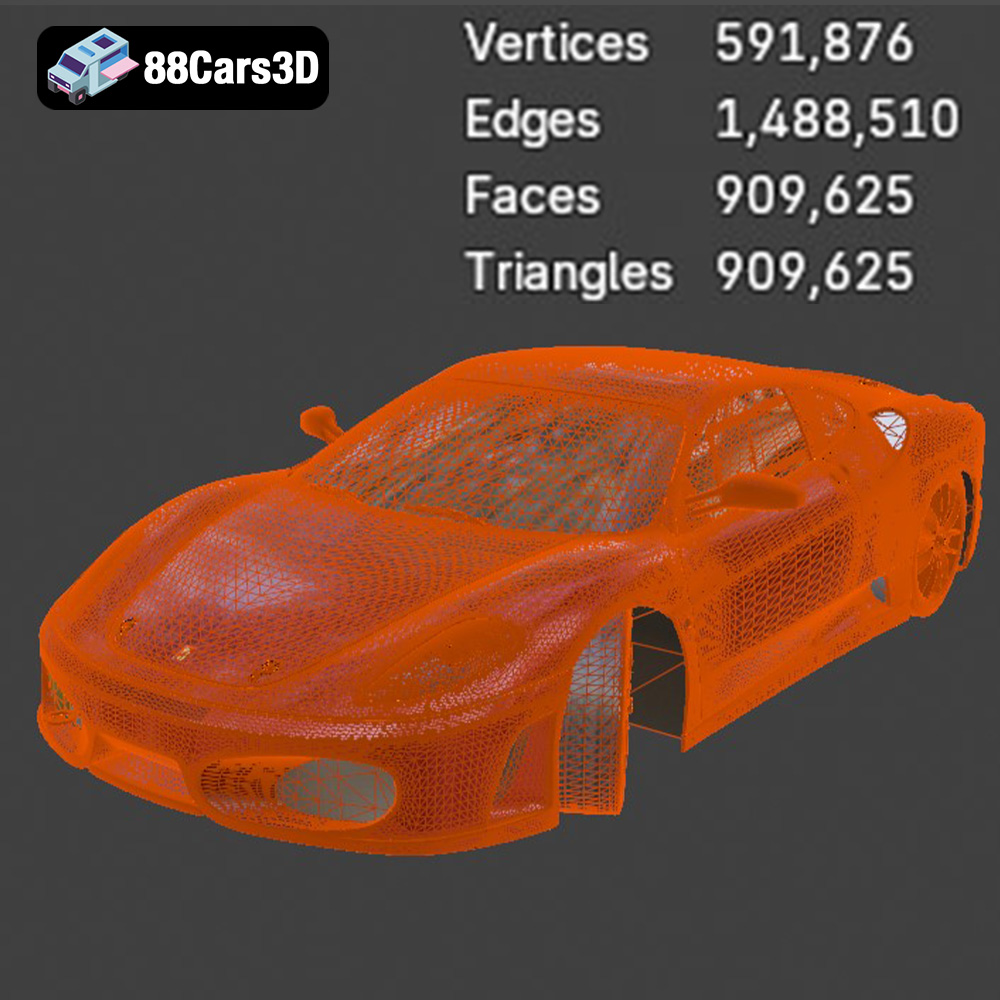
A hallmark of professional 3D car models is clean and well-organized mesh structure. This means efficient polygon distribution, minimal triangulation, and optimal edge flow, which facilitates smooth deformation during animation and precise subdivision for close-up renders. The Ferrari 450 Italia 2013 3D Model boasts optimized polygon flow, crucial for both performance in real-time engines and realism in high-quality renders. Furthermore, adherence to real-world scale accuracy ensures that the model integrates seamlessly into scenes with other real-world objects, preventing scaling issues and maintaining a sense of proportion and authenticity.
The technical advantages extend to practical benefits in the artist’s workflow. Proper pivot setup for steering and wheel rotation saves countless hours in rigging and animation. Compatibility with major 3D software platforms and engines means less time spent on conversion and re-optimization. The customization options, from changing body colors and adding decals to modifying wheel designs and adjusting ride height, are facilitated by the model’s organized structure and material setup. This allows artists to quickly adapt the Ferrari 450 Italia 2013 3D Model to specific client requests or creative visions without starting from scratch, making it an invaluable asset for commercial and personal projects alike.
The world of 3D content creation is continuously evolving, demanding assets that are not only visually stunning but also technically robust and adaptable. The Ferrari 450 Italia 2013 3D Model stands as a testament to these requirements, offering an iconic supercar recreated with exceptional detail and versatility.
From the intricacies of automotive rendering in 3ds Max and Blender to the demanding optimizations for game asset development in Unreal, and from the interactive possibilities of AR/VR configurators using .glb to the tangible reality of 3D printable scale models, this Ferrari 450 Italia model is designed to excel. Its comprehensive file format support, clean topology, and real-world accuracy make it an indispensable tool for professionals across various industries. It’s more than just a model; it’s a foundation for innovation, enabling artists and developers to push the boundaries of visual storytelling and interactive experiences.
Whether you’re developing the next big racing title, creating a captivating advertisement, or simply want to appreciate the beauty of this Italian masterpiece in a new dimension, investing in high-quality 3D car models is a decision that pays dividends. Explore the potential of the Ferrari 450 Italia 2013 3D Model and other premium 3D car models at 88cars3d.com, where excellence in digital automotive assets is just a click away.
The Ferrari 450 Italia 2013 3D Model is a high-detail digital recreation of the iconic mid-engine Italian supercar engineered for performance, precision, and aerodynamic excellence. Known for its aggressive styling and track-inspired engineering, the 450 Italia delivers a perfect balance of speed, luxury, and driving dynamics. This 3D model accurately represents the vehicle’s sculpted aerodynamic body, signature front fascia, side air intakes, quad exhaust system, detailed alloy wheels, and premium interior layout. Designed with clean topology and real-world proportions, it is ideal for rendering, animation, simulation, game development, and AR/VR automotive visualization. Perfect for racing scenes, showroom presentations, cinematic renders, configurators, automotive advertising, and driving simulations.
$39.99
.450italia
.arvr
.automotive
.blend
.car3dmodel
.fbx
.ferrari
.gameasset
.glb
.italiansupercar
.max
.obj
.ply
.racingcar
.rendering
.simulation
.sportsCar
.stl
.supercar
.unreal