Get 20% OFF All Premium 3D & STL Models!

In the dynamic world of digital content creation, the demand for exceptionally detailed and versatile 3D models is constantly escalating. From blockbuster video games and cinematic visualizations to immersive AR/VR experiences and precision 3D printing, the backbone of any compelling project lies in the quality of its assets. When it comes to automotive subjects, achieving photorealism and functional accuracy is paramount. This is where models like the Harley-Davidson FXDR 114 3D Model truly shine, offering a meticulously crafted digital twin of an iconic machine, ready to be deployed across a multitude of platforms and creative endeavors.
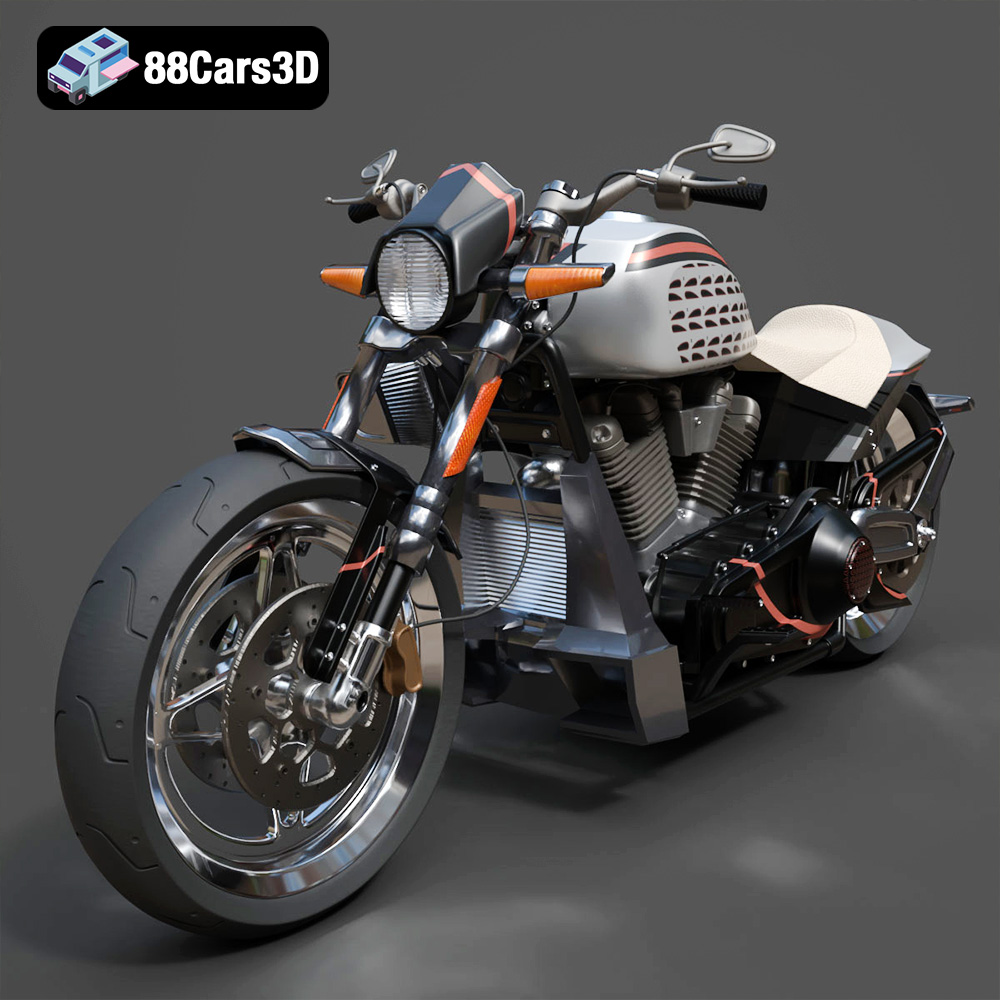
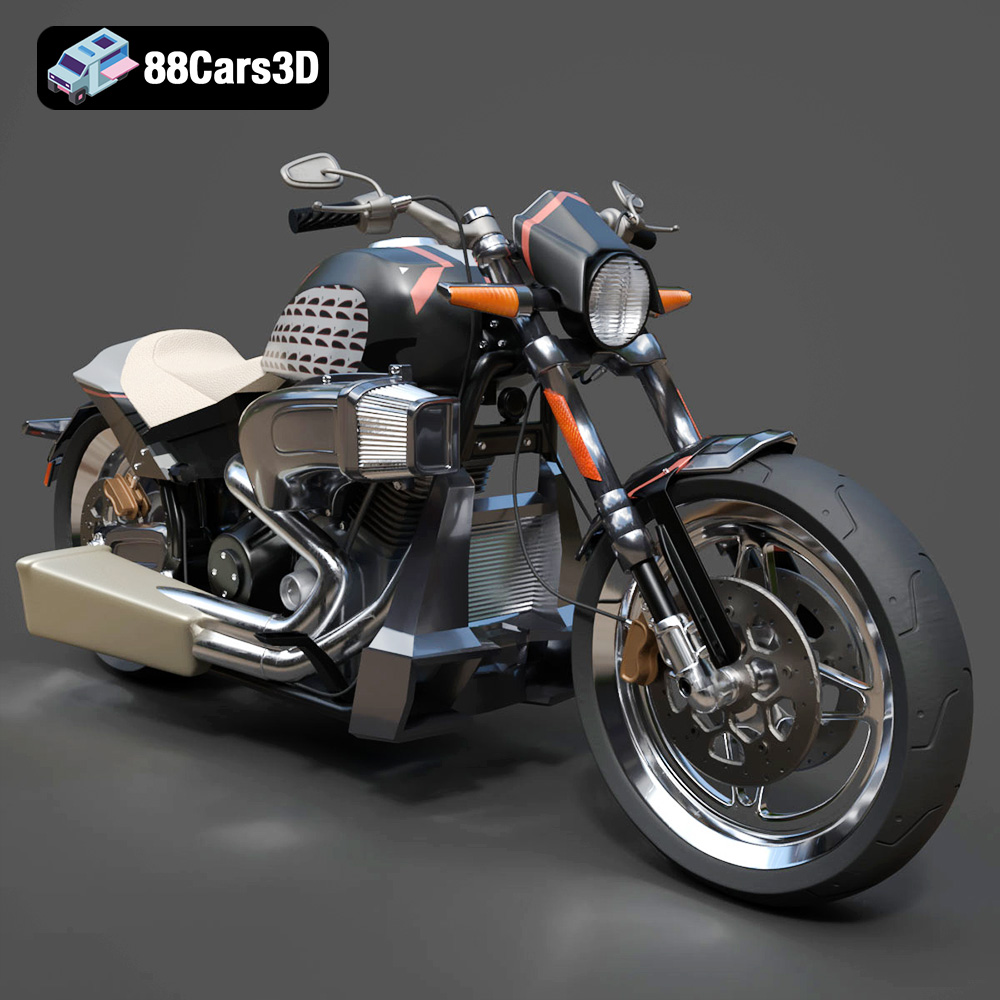
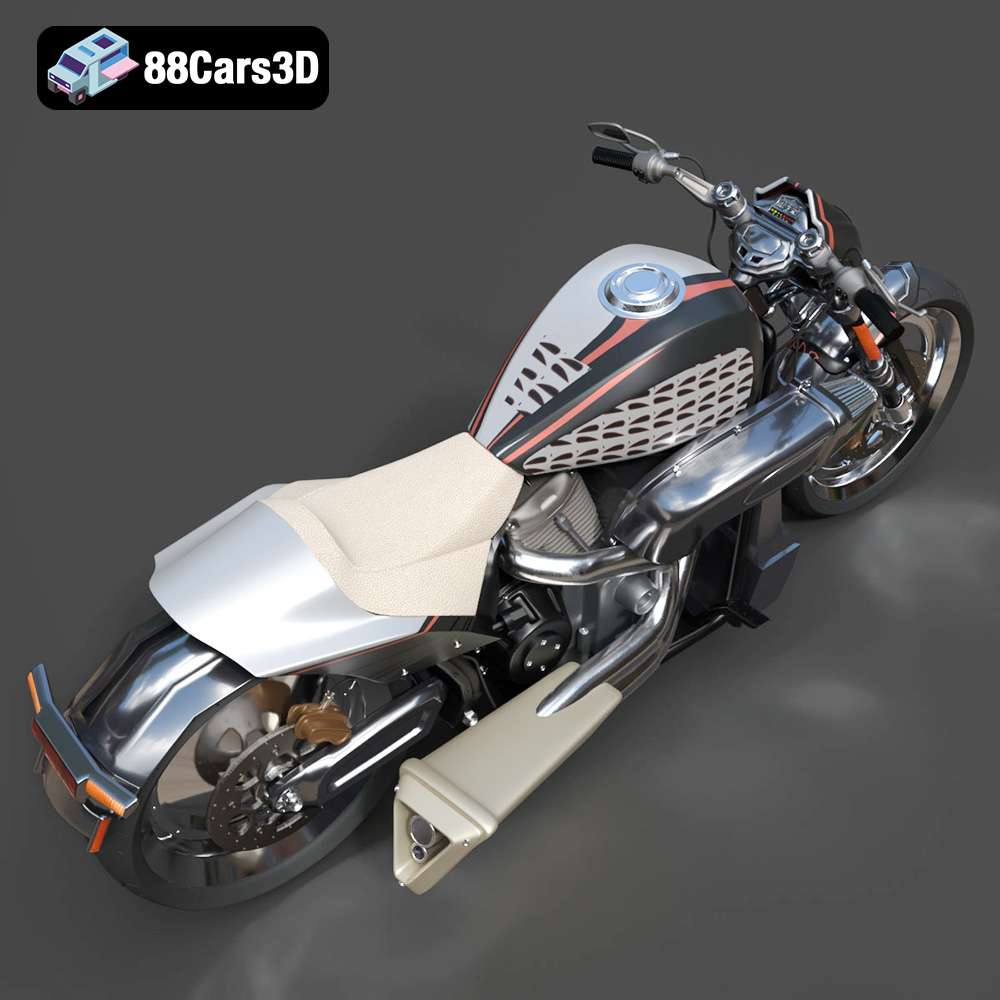
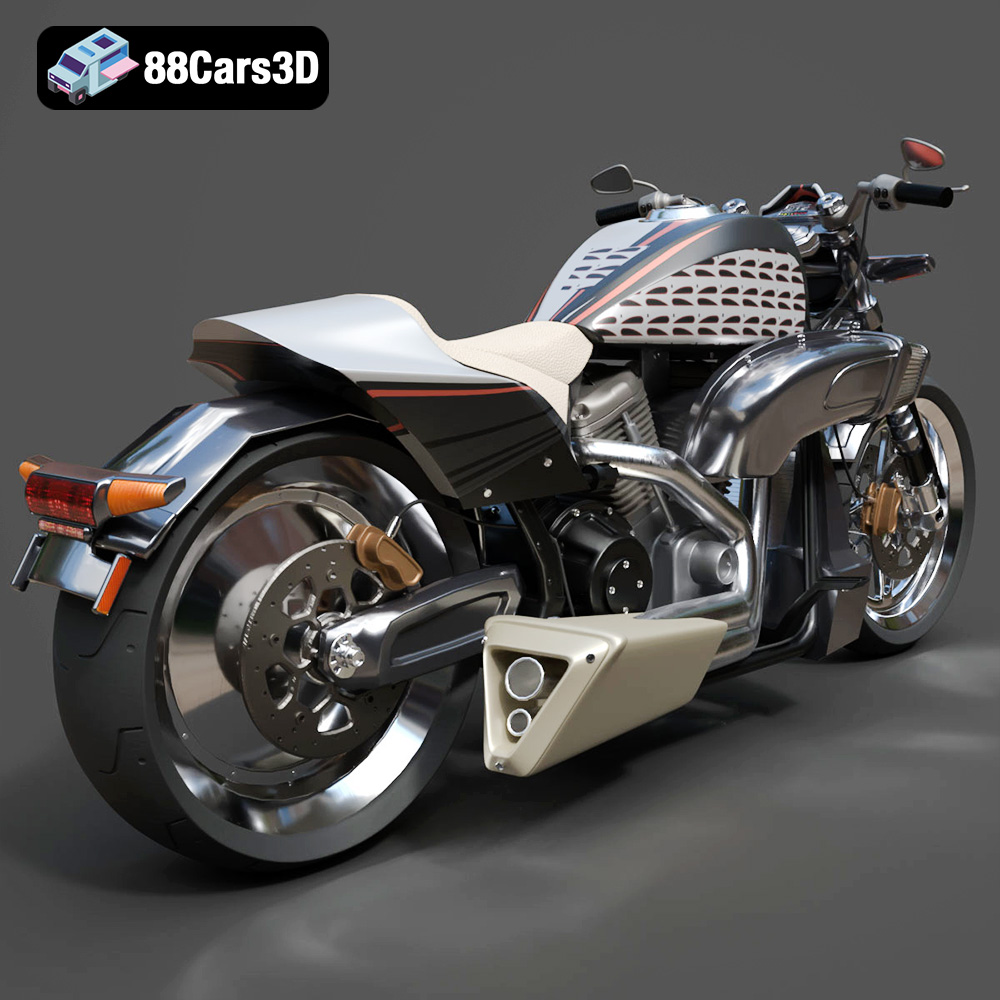
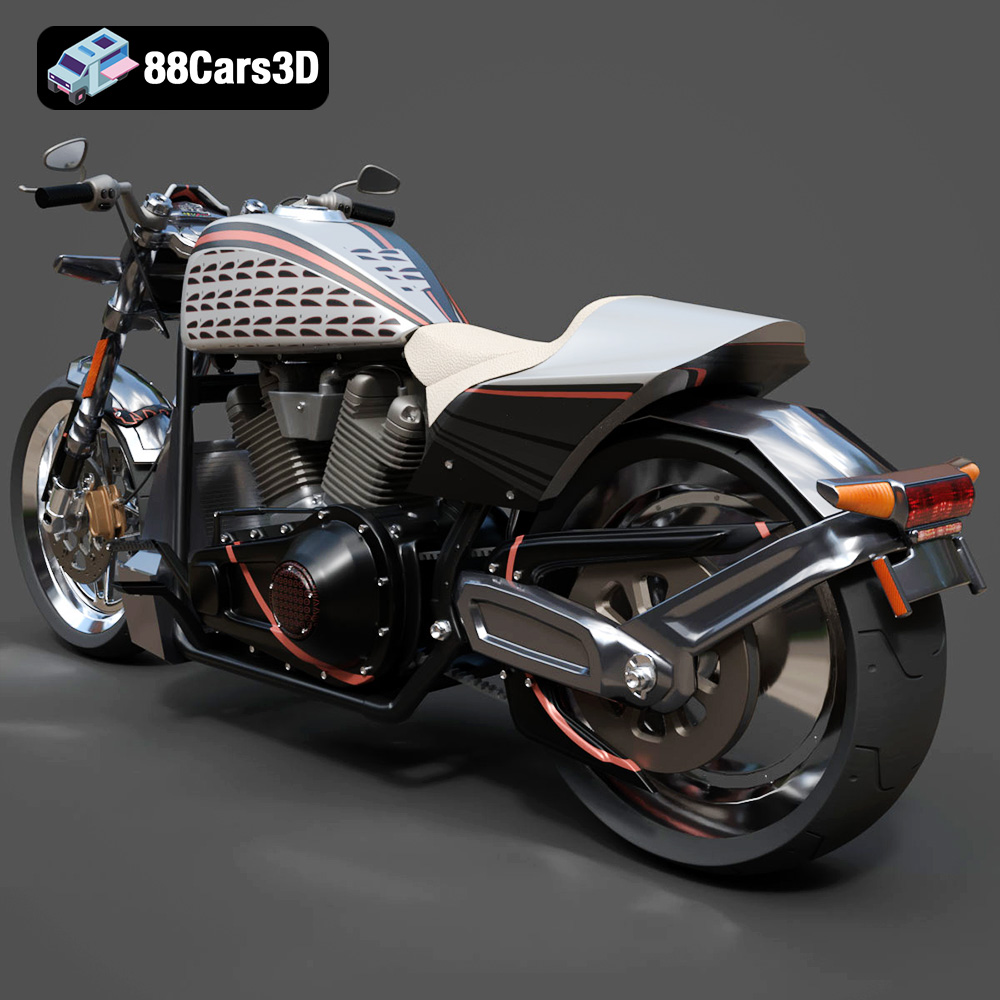
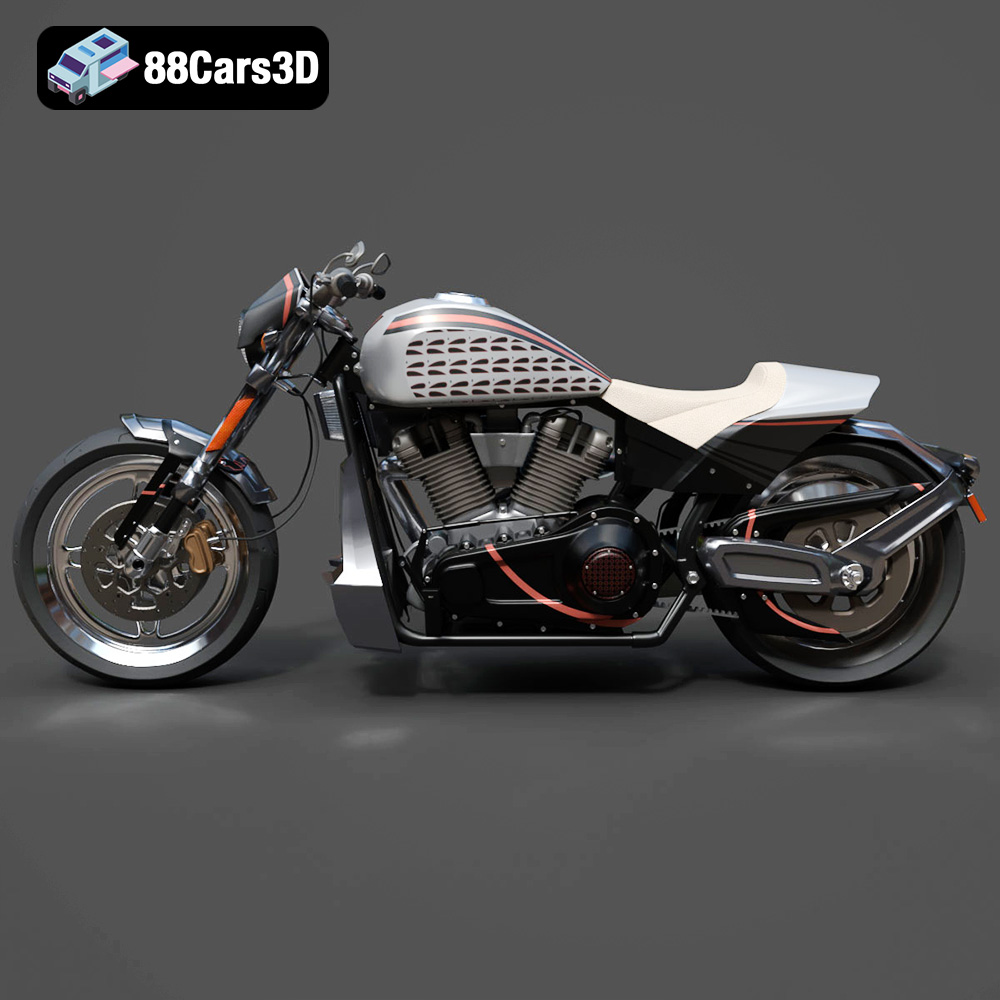
The Harley-Davidson FXDR 114 is not just a motorcycle; it’s a statement. A drag-inspired power cruiser designed for raw performance and aggressive aesthetics. Its distinctive Milwaukee-Eight 114 V-Twin engine, 240mm rear tire, forward-reaching air intake, and clipped tail give it an unmistakable presence. Translating this unique blend of muscle and design into a 3D model requires an expert touch, ensuring that every curve, component, and characteristic is faithfully reproduced. This particular Harley-Davidson FXDR 114 3D Model stands out as a prime example of such craftsmanship, capturing the very essence of the original bike with astonishing detail.
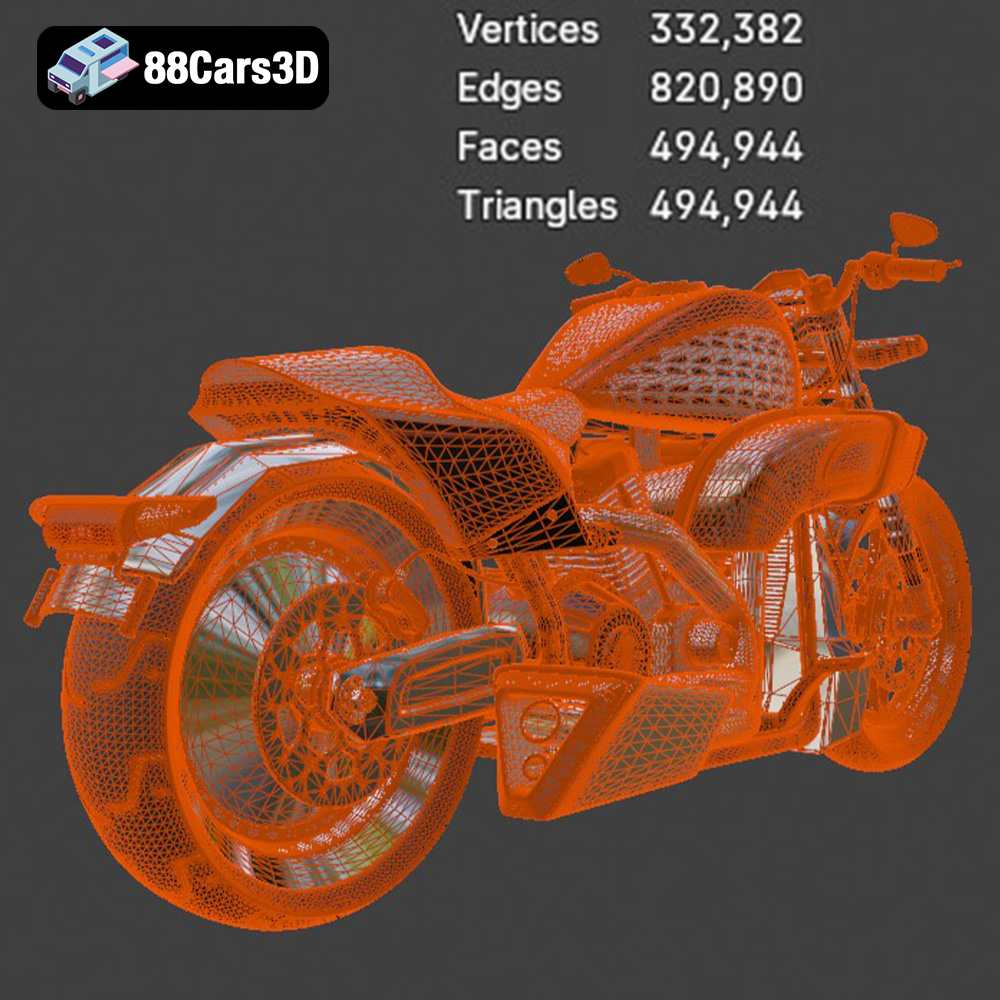
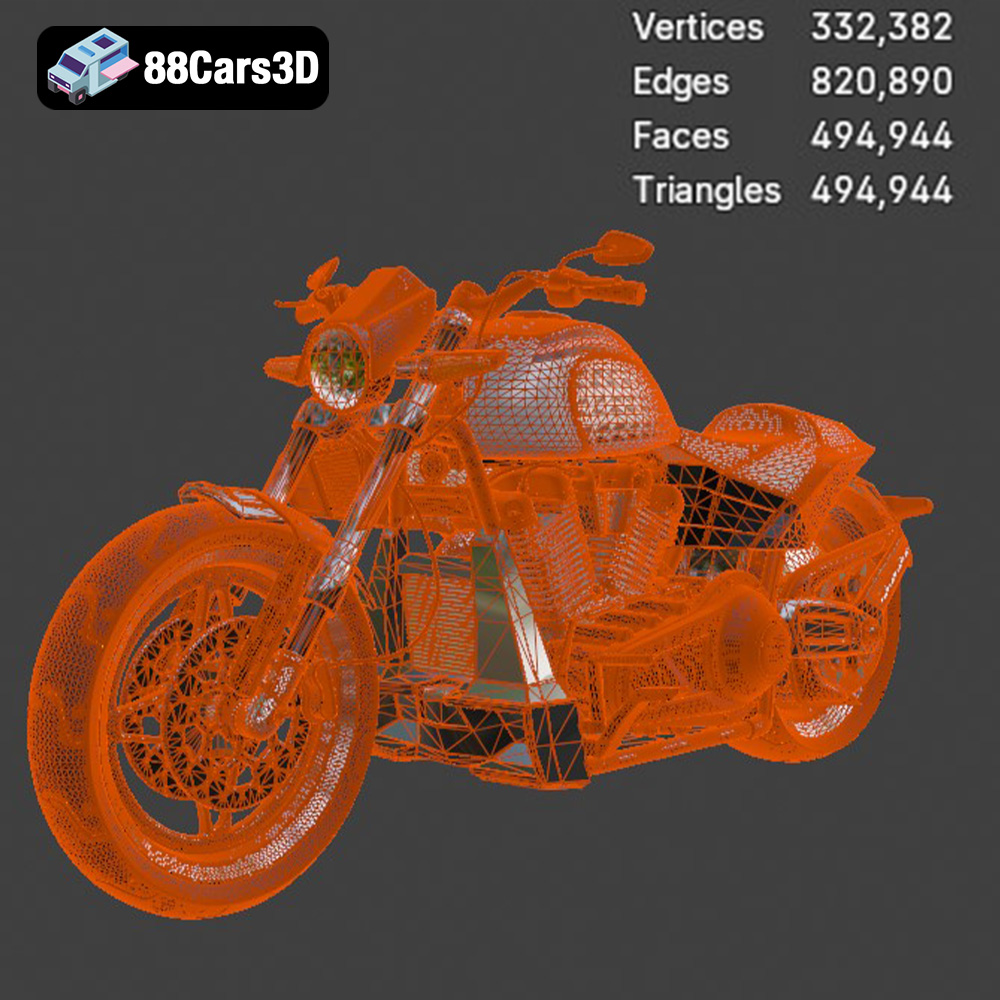
A superior 3D model doesn’t just look good; it performs well across diverse applications. For professionals, this means a delicate balance between polygon count, texture resolution, and optimized geometry. The Harley-Davidson FXDR 114 3D Model achieves this equilibrium with its “perfectly balanced topology” – just under 500k triangles. This makes it a fantastic asset for close-up automotive rendering, where fine details are critical, while also being optimized enough to serve as a high-fidelity “hero” vehicle in modern current-gen game engines. Whether you’re an automotive designer, a game developer, or a visualization artist, integrating such a versatile model into your toolkit can significantly elevate your projects.
Navigating the landscape of 3D modeling often means understanding a multitude of file formats, each serving specific purposes and workflows. The Harley-Davidson FXDR 114 3D Model comes packaged with a comprehensive array of formats, ensuring maximum compatibility and utility for any professional pipeline. Choosing the right format is critical for maintaining data integrity, optimizing performance, and achieving your project goals efficiently.
The .blend format is the native file type for Blender, the powerful open-source 3D creation suite. When you receive a .blend file, you’re getting a complete Blender scene, often including cameras, lights, materials, and even animations. For users deeply integrated into the Blender ecosystem, this format offers unparalleled flexibility. You can easily modify the model, adjust its materials, tweak lighting setups, or extend its animation sequence directly within Blender. It’s ideal for artists who want to delve into the model’s construction, customize it extensively, or use Blender’s robust rendering engines like Cycles or Eevee for high-quality automotive rendering.
.fbx (Filmbox) is arguably the most widely adopted 3D asset exchange format in the industry, particularly favored for game development and animation pipelines. Its strength lies in its ability to encapsulate complex scene data, including geometry, materials, textures, bones/rigging, and animations, while maintaining relatively small file sizes. For bringing the Harley-Davidson FXDR 114 into Unreal Engine, Unity, or other real-time applications, .fbx is the go-to choice. Its robust nature ensures that hierarchical transformations and animation data are preserved, making it straightforward to import, rig, and animate high-quality game assets.
The .obj (Wavefront Object) format is a venerable and highly compatible choice, universally supported by almost every 3D software application. It primarily stores geometric data (vertices, normals, texture coordinates, and faces) and can reference external material files (.mtl) for basic shading information. While .obj doesn’t typically carry animation or rigging data, its simplicity makes it an excellent option for basic mesh import, sculpting, or when cross-software compatibility is a primary concern. If you need a clean mesh of the FXDR 114 for a specialized renderer or a sculpting application, .obj is a reliable format.
.glb (GL Transmission Format Binary) is the binary version of glTF, a royalty-free specification for the efficient transmission and loading of 3D scenes and models by engines and applications. Optimized for web-based 3D, AR, and VR, .glb packages all necessary data (geometry, materials, textures, animation) into a single, self-contained file. This makes it incredibly efficient for displaying interactive 3D content directly in browsers, integrating into augmented reality apps, or creating lightweight assets for virtual showrooms. The FXDR 114 in .glb format is perfect for showcasing the model interactively on 88cars3d.com or deploying it in a mobile AR experience.
.stl (Stereolithography) is the de facto standard format for 3D printing. It describes only the surface geometry of a 3D object using a collection of triangular facets. While it doesn’t store color, texture, or material information, its ubiquity in the 3D printing world is unmatched. Having the Harley-Davidson FXDR 114 in .stl format means you can directly prepare it for fabrication, turning a digital asset into a tangible collectible or a prototype. For hobbyists wanting a display-scale model of the FXDR 114, this format is indispensable, and the provided model is explicitly designed to be 3D printable, making it highly versatile.
.ply (Polygon File Format or Stanford Triangle Format) is another format for storing 3D data, particularly popular in academic and research settings, and often used for 3D scanned data. It can store a wider range of properties than .obj, including color, transparency, normals, texture coordinates, and even properties per vertex or face. While not as common for general asset exchange as .fbx, it’s excellent for precision mesh data, especially when dealing with high-fidelity digital twins derived from real-world scans or for specialized CAD/analysis applications where additional mesh attributes are crucial.
The inclusion of a .unreal specific file format (often referring to a pre-packaged asset or project within the Unreal Engine ecosystem) signifies that the Harley-Davidson FXDR 114 3D Model is optimized and ready for immediate use in Unreal Engine. This often means it comes with proper material setups, potentially some basic collision meshes, and clean asset hierarchies, saving developers significant time in asset preparation. For those building immersive real-time environments, simulations, or games with Unreal Engine, this direct integration ensures a streamlined workflow and rapid deployment of this high-quality motorcycle 3D model.
The .max format is the native scene file type for Autodesk 3ds Max, a leading software in architectural visualization, automotive design, and animation. A .max file contains the entire scene data, including geometry, lights, cameras, materials, modifiers, and animation. For professionals working in 3ds Max, having the FXDR 114 in its native format allows for comprehensive editing, advanced material setups using V-Ray or Corona renderers, and integration into complex scene compositions. It offers the full power and flexibility of a professional DCC application for those who need to deeply customize or render the model within this environment.
Creating a truly exceptional 3D model like the Harley-Davidson FXDR 114 requires an understanding of both artistic detail and technical optimization. Every component, from the engine block to the smallest bolt, must contribute to the overall realism while adhering to performance budgets. This particular model exemplifies the meticulous approach needed to deliver a versatile and high-quality asset for various professional applications.
The cornerstone of a great 3D model is its topology. The FXDR 114 model boasts just under 500,000 triangles (494,944, to be precise) with 332,382 vertices and 820,890 edges. This “perfectly balanced topology” is a significant technical advantage. It means the model provides excellent extreme close-up detail – essential for high-end automotive rendering and visualization – without the crushing engine-load associated with multi-million polygon assets. This careful poly-budgeting ensures smooth performance in real-time applications like game engines (Unreal Engine 5, Unity HDRP) while still retaining the visual fidelity required for hero shots. Developers can rely on this optimized geometry to minimize draw calls and maintain high frame rates.
The value of a high-fidelity 3D model often lies in its authenticity. The Harley-Davidson FXDR 114 3D Model meticulously replicates the real-world motorcycle’s iconic features:
Beyond static representation, a truly professional 3D car model or motorcycle model is built for motion. This Harley-Davidson FXDR 114 model features separate wheels, steering components, and suspension, all with proper pivot setups. This modularity is crucial for animators and game developers who need to animate steering, wheel rotation, suspension compression, or even kickstand articulation for dynamic scenes or drivable vehicles. Real-world scale accuracy further enhances its utility in any realistic simulation or rendering scenario, ensuring correct proportions when integrated into larger environments.
The versatility of the Harley-Davidson FXDR 114 3D Model means it can be seamlessly integrated into diverse professional workflows, from producing stunning visual marketing materials to powering interactive digital experiences. Professionals seeking top-tier 3D car models or game assets will find its multi-format availability and optimized geometry incredibly beneficial.
For high-end automotive rendering, accuracy and detail are paramount. Whether you’re using 3ds Max with V-Ray or Corona Renderer, or Blender with Cycles, the FXDR 114 model provides an excellent foundation. Its mid-to-high polygon count allows for extreme close-ups without visible faceting, making it ideal for:
The ability to customize fuel tank and tail cowl colors (e.g., Vivid Black, Rawhide Denim, Black Denim) and even swap exhaust pipes provides creative freedom to match specific brand aesthetics or artistic visions. Moreover, the inclusion of .max and .blend files means artists can directly manipulate shaders and lighting within their preferred DCC.
For game developers, the Harley-Davidson FXDR 114 3D Model is an exceptional game asset, particularly suitable as a “hero” drivable vehicle for current-gen console and PC games. Its optimized polygon count (494k triangles) strikes a sweet spot between visual fidelity and performance, ensuring that detailed assets don’t bog down the game engine. The .fbx and .unreal formats facilitate smooth integration into Unreal Engine 5 or Unity HDRP. Proper pivot setups for steering, wheels, and suspension components mean less time spent on rigging and more time on gameplay mechanics. Developers can leverage its high detail for:
Furthermore, the option to add custom baked normal maps allows for simulating even higher-poly engine casing details without increasing the actual poly count, a common and effective optimization technique in game development.
Augmented Reality (AR) and Virtual Reality (VR) demand highly optimized yet visually stunning 3D models to create truly immersive experiences. The Harley-Davidson FXDR 114 3D Model, especially in its .glb format, is perfectly suited for such applications. Its balanced topology ensures high detail is visible up close, crucial for interactive exploration, while maintaining performance for real-time rendering on various devices. Potential applications include:
The model’s optimized geometry is also suitable for immersive first-person POV in VR, making riders feel truly connected to the digital motorcycle.
Beyond digital rendering and interactive experiences, the Harley-Davidson FXDR 114 3D Model also opens up avenues for physical creation through 3D printing. The inclusion of the .stl format means this digital asset can be transformed into a tangible display model, appealing to hobbyists, collectors, and automotive enthusiasts.
3D printing allows for the creation of intricate scale models directly from digital data. The FXDR 114, with its detailed engine block, delicate spokes, and aggressive frame, presents a fantastic opportunity for this. The process involves preparing the .stl file for a specific printer, setting parameters, and then bringing the design to life layer by layer. Recommended scales like 1:12, 1:10, or 1:8 ensure that sufficient detail is preserved for a high-quality physical output.
The choice of 3D printing technology significantly impacts the final result, especially for models with fine details like the FXDR 114. The product description explicitly recommends resin printing (SLA/DLP) for preserving intricate features such as engine cooling fins and wheel spokes, along with a layer height of 0.04–0.08 mm. This is because resin printers typically achieve much finer resolutions than FDM (Fused Deposition Modeling) printers, which are better suited for larger, less detailed objects. For FDM printing, careful calibration and potentially larger scales might be necessary to capture the level of detail present in this motorcycle 3D model.
Once printed, the physical model undergoes post-processing to achieve a refined, showroom-quality finish. This typically involves:
This journey from a digital file to a meticulously crafted physical object demonstrates the breadth of applications for high-quality 3D car models and motorcycle models.
One of the most powerful advantages of a well-structured 3D model is the creative freedom it affords. The Harley-Davidson FXDR 114 3D Model is designed with customization in mind, allowing artists and developers to tailor it to their specific project needs and artistic visions. This flexibility is what elevates a good asset to an indispensable tool for creative professionals.
The ability to modify and adapt a 3D model is crucial for unique projects. With the FXDR 114 model, you’re not just getting a static representation; you’re getting a dynamic canvas. This includes:
Beyond physical modifications, the model’s adaptability extends to its environment and presentation. The Harley-Davidson FXDR 114 is a character in itself, and its context can dramatically alter its impact:
This level of creative freedom ensures that the Harley-Davidson FXDR 114 3D Model is not just an asset but a catalyst for imaginative and professional storytelling.
The journey from concept to final render, or from digital mesh to physical print, is a complex one, demanding high-quality assets at every stage. The Harley-Davidson FXDR 114 3D Model stands as a testament to what meticulous craftsmanship and technical optimization can achieve. It’s a versatile powerhouse, ready to transform your creative projects, whether you’re focusing on cutting-edge automotive rendering, developing immersive game assets, crafting realistic AR/VR experiences, or bringing models to life through 3D printing.
In an industry that continually pushes the boundaries of visual fidelity and interactive experiences, having a multi-purpose, high-detail 3D model like the Harley-Davidson FXDR 114 is not just a luxury—it’s a necessity. Its balanced topology, accurate replication of the iconic motorcycle, and comprehensive suite of included file formats (.blend, .fbx, .obj, .glb, .stl, .ply, .unreal, .max) ensure that it fits perfectly into virtually any professional workflow. This model empowers artists and developers to achieve stunning results efficiently, providing the foundation for compelling visuals and engaging interactions.
Investing in a premium 3D model means investing in efficiency, quality, and creative potential. The Harley-Davidson FXDR 114 3D Model from 88cars3d.com is more than just a digital file; it’s a meticulously engineered asset designed to meet the rigorous demands of modern content creation. For professionals seeking top-tier 3D car models and motorcycle assets that deliver both aesthetic excellence and technical performance, 88cars3d.com offers a curated selection of high-quality digital assets. Elevate your next project with an asset that’s built for performance, realism, and boundless creative exploration.
The Harley-Davidson FXDR 114 3D Model is a high-detail digital recreation of the aggressive, drag-inspired power cruiser. Built to represent raw, unapologetic muscle, the FXDR 114 combines the massive torque of the Milwaukee-Eight 114 V-Twin engine with weight-saving aluminum components, a clipped tail, and a massive 240mm rear tire. This 3D model accurately captures the drag-strip attitude of the original bike, featuring the signature forward-reaching air intake, 2-into-1 tuned exhaust, lightweight cast aluminum swingarm, and the sleek LED Daymaker headlamp surround. Built with an optimized mid-to-high polygon topology (just under 500k triangles), it strikes a fantastic balance between premium visual fidelity for close-up rendering and manageable performance for modern current-gen game engines as a hero asset. Perfect for gritty urban street-racing scenes, biker lifestyle campaigns, modern open-world video games, and automotive visualization.
$44.99
.blend
.fbx
.obj
.rendering
.stl
car-3d-model
drag-bike
fxdr
fxdr-114
game asset
harley-davidson
mid-poly
milwaukee-eight
motorcycle-3d-model
power-cruiser
softail
VR/AR