Get 20% OFF All Premium 3D & STL Models!

In the expansive and ever-evolving landscape of 3D content creation, the demand for high-quality, technically sound automotive models remains consistently high. Whether for cinematic realism, interactive game environments, cutting-edge AR/VR experiences, or precision 3D printing, the foundation of any successful project lies in the integrity and detail of its core assets. Today, we’re diving deep into an iconic vehicle that perfectly embodies this blend of classic appeal and modern utility: the first-generation Jeep Grand Cherokee Laredo (ZJ). This particular model, available on 88cars3d.com, offers a robust and versatile foundation for a myriad of professional applications, capturing the essence of 1990s SUV design with meticulous accuracy.
The Jeep Grand Cherokee Laredo (ZJ) was a trailblazer, marrying rugged off-road prowess with an unprecedented level of comfort and refinement for its time. Its distinctive boxy-yet-smooth styling, signature seven-slot grille, and commanding presence made it an instant classic. Translating such a vehicle into a digital asset requires not just artistic skill but a deep understanding of technical parameters, optimization strategies, and multi-platform compatibility. This article will explore the critical aspects of working with advanced 3D car models, focusing on how assets like the Jeep Grand Cherokee Laredo (ZJ) 3D Model empower designers, developers, and enthusiasts to achieve outstanding results across diverse mediums.
The choice of file format is paramount in any 3D workflow, dictating compatibility, feature support, and overall project efficiency. High-quality 3D car models, such as the Jeep Grand Cherokee Laredo (ZJ) 3D Model from 88cars3d.com, are often provided in a suite of formats to ensure maximum versatility. Understanding when and why to use each format is crucial for a streamlined professional pipeline.
The .blend format is native to Blender, an incredibly powerful and popular open-source 3D creation suite. When you receive a .blend file, you’re gaining access to a fully editable scene, complete with materials, textures, lighting, cameras, and even animations if present. This format is ideal for users deeply integrated into the Blender ecosystem, allowing for immediate customization, re-topology, advanced rigging, or rendering with Cycles or Eevee. Its primary strength lies in retaining all project data, offering an uncompressed and comprehensive working file that can be easily modified or extended without data loss from translation.
.fbx (Filmbox) is an industry-standard proprietary file format developed by Autodesk, renowned for its excellent support for 3D models, animation, and various scene data. It’s the go-to format for interoperability between different 3D software applications and, crucially, for game engines like Unreal Engine and Unity. FBX files can efficiently store geometry (meshes, polygons, vertices), materials, textures, bone rigs, and animation data. Its robust nature makes it perfect for game asset development, ensuring that a complex 3D car model like the Grand Cherokee ZJ can be seamlessly imported, retaining its hierarchy and animation readiness for real-time environments.
The .obj (Wavefront OBJ) format is one of the oldest and most widely supported formats for 3D geometry. It’s a universal choice due to its simplicity and broad compatibility across almost all 3D software. An OBJ file primarily stores geometry data – vertex positions, UV coordinates, normals, and polygon faces – and can reference external material files (.mtl). While it doesn’t store animation or rigging data, its strength lies in providing a clean, untextured mesh that can be imported into virtually any 3D program for further texturing, rigging, or rendering. It’s a reliable fallback for cross-software sharing of base meshes.
.glb (GL Transmission Format Binary) is the binary version of glTF, a royalty-free specification for the efficient transmission and loading of 3D scenes and models by applications. GLB files are highly optimized and self-contained, bundling 3D model data, textures, and animations into a single file. This format is rapidly becoming the standard for web-based 3D content, augmented reality (AR), and virtual reality (VR) applications due to its small file size and quick loading times. For showcasing a classic SUV in an interactive web viewer or an AR application, GLB is the superior choice.
.stl (STereoLithography) is the de facto standard format for 3D printing. It represents a 3D model as a series of connected triangles, describing only the surface geometry of an object without color, texture, or other CAD attributes. When preparing the Jeep Grand Cherokee Laredo (ZJ) 3D Model for physical fabrication, converting it to an STL file is a critical step. While simple, it’s a robust format for ensuring your digital design translates accurately to a physical print, allowing enthusiasts to create collectible scale models.
The .ply (Polygon File Format or Stanford Triangle Format) is another format for storing 3D data, particularly useful for capturing scanned 3D objects or point cloud data. Unlike OBJ, PLY files can store a wider range of properties, including color, transparency, surface normals, and even data reliability for each polygon or vertex. It’s often favored in scientific, engineering, and CAD workflows where precision and additional data attributes for mesh analysis are important, offering a more comprehensive representation of complex surfaces.
The .unreal format, or more accurately, assets packaged and optimized specifically for Unreal Engine, represents a complete, ready-to-use asset within the Unreal ecosystem. This isn’t a standalone file format in the same way FBX or OBJ are; rather, it implies a meticulously prepared asset, potentially including Unreal-specific materials, collision meshes, LODs (Levels of Detail), and blueprint setups. For game developers and real-time visualization artists, receiving a pre-configured Unreal asset for a 3D car model significantly accelerates the integration process, minimizing setup time and maximizing performance within the engine.
The .max format is the native file type for Autodesk 3ds Max, a leading software for 3D modeling, animation, rendering, and compositing. Similar to a .blend file for Blender, a .max file contains the complete scene data, including geometry, modifiers, materials, textures, lighting, cameras, animation keyframes, and plugins. This format is essential for professionals who primarily work within 3ds Max, providing full control over every aspect of the 3D car model for high-end automotive rendering, detailed simulations, and complex animation sequences.
The first-generation Jeep Grand Cherokee, internally dubbed ZJ, holds a special place in automotive history. It wasn’t just another SUV; it was a vehicle that redefined expectations, blending rugged capability with daily drivability and comfort. Translating such a nuanced design into a high-fidelity 3D model is a testament to the skill involved, and the Jeep Grand Cherokee Laredo (ZJ) 3D Model from 88cars3d.com achieves this with remarkable accuracy.
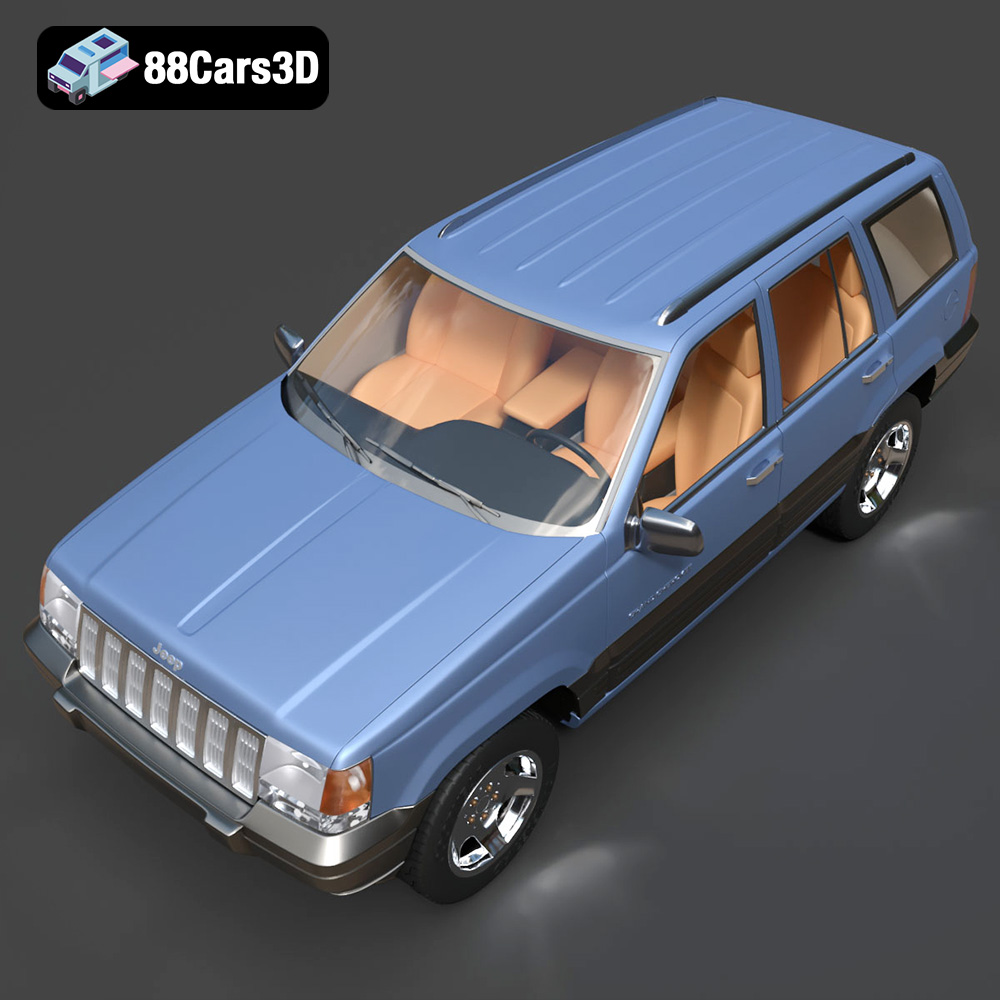
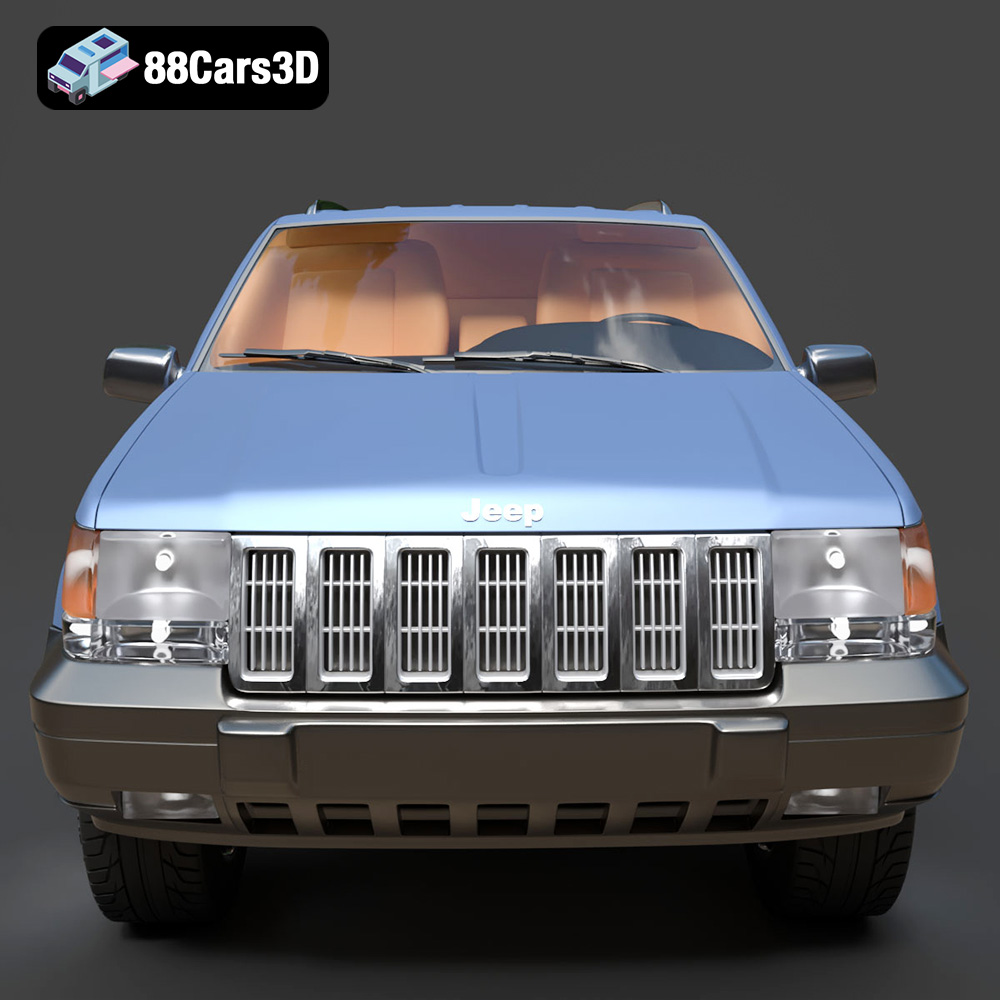
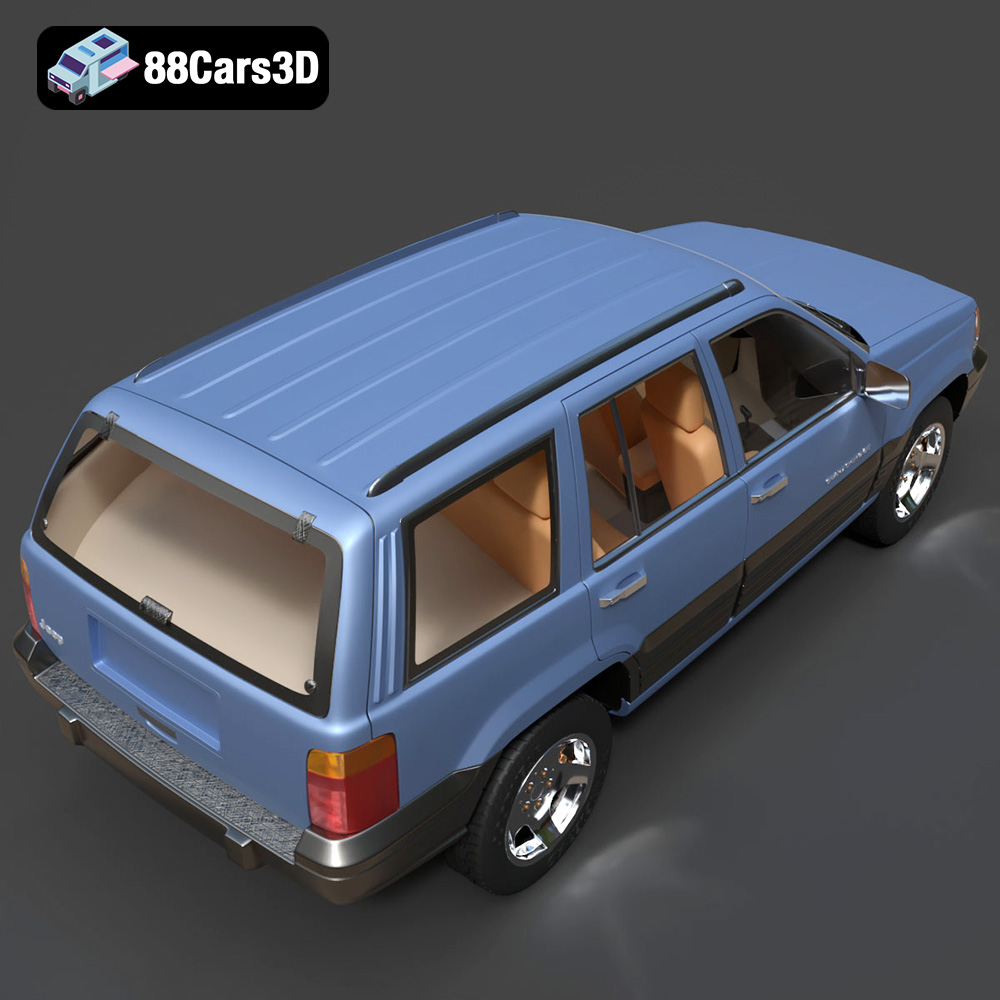
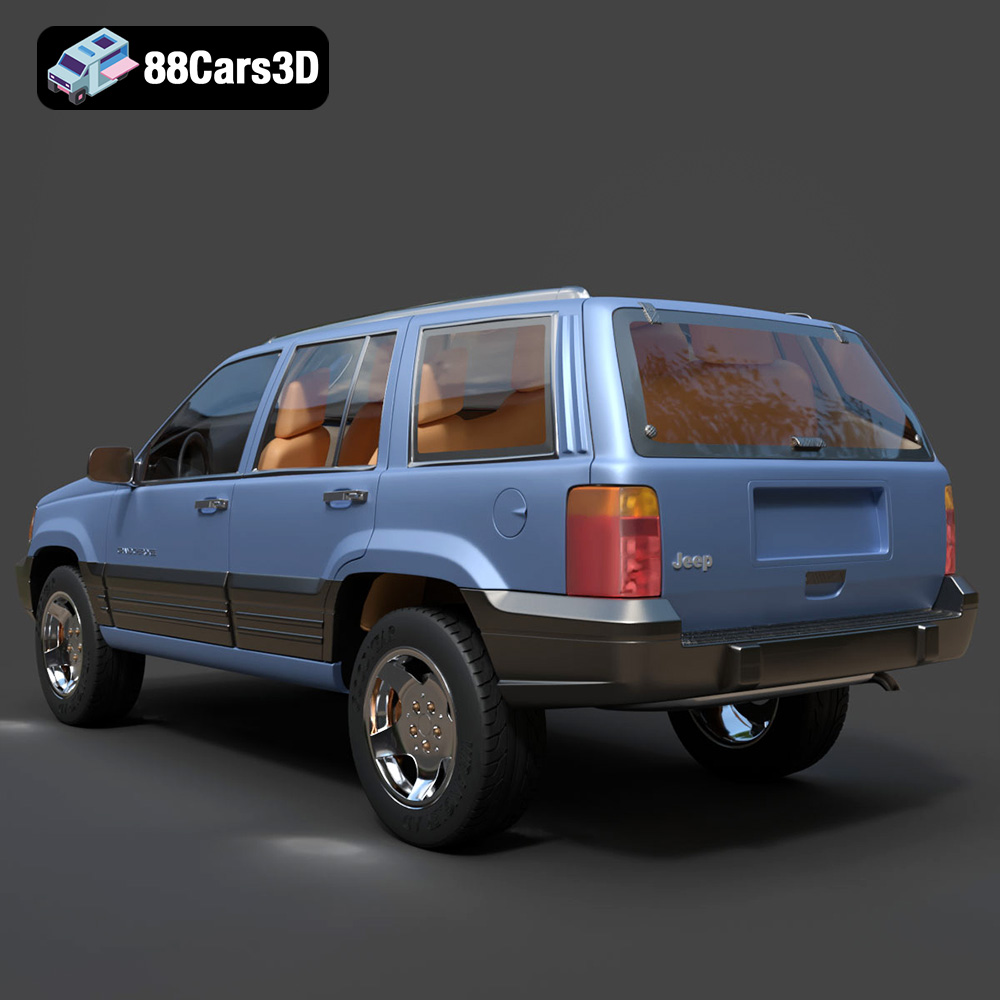
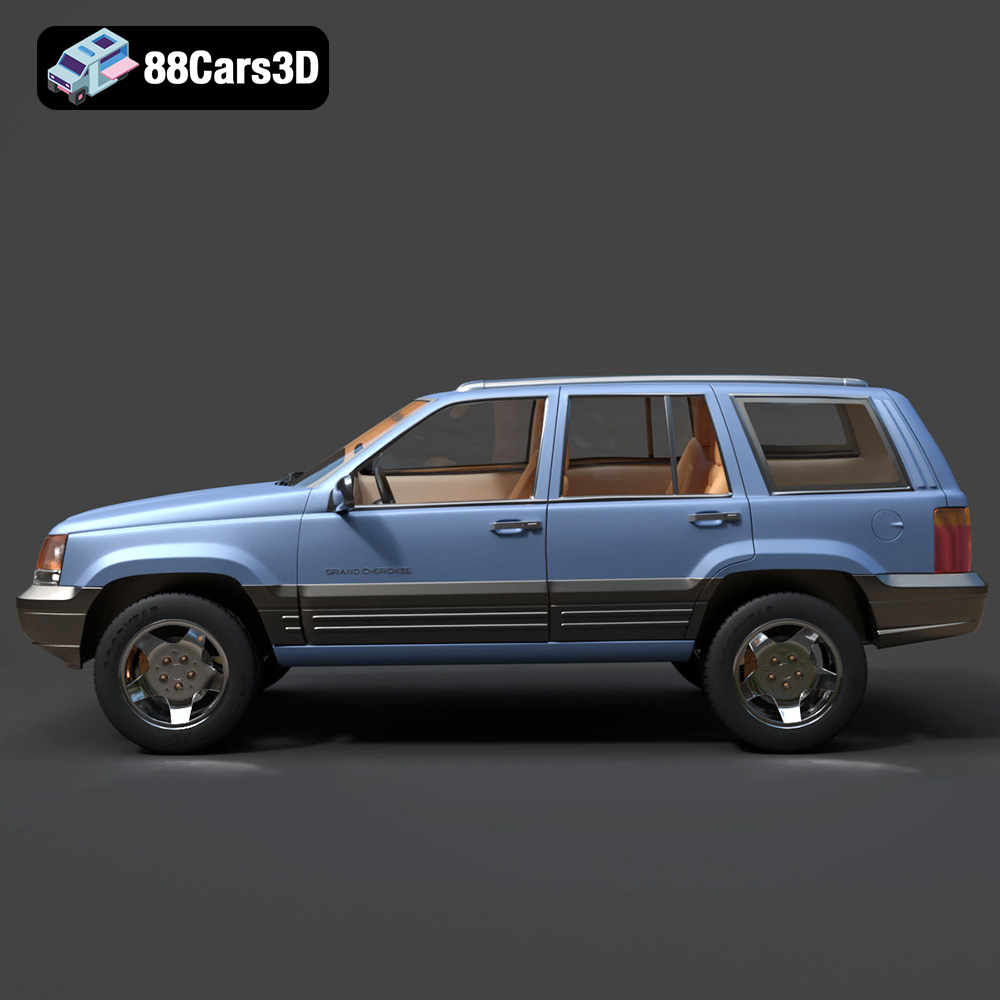
The external design of the ZJ Grand Cherokee is instantly recognizable, and its 3D counterpart captures every defining characteristic. From the accurate body proportions that convey its commanding stance to the signature seven-slot grille and rectangular headlamps, no detail is overlooked. The model meticulously recreates the taillights, bumpers, side moldings, and even the often-forgotten roof rails, which were crucial for its adventurous utility. Period-correct wheels, off-road tires, and subtle underbody details further enhance the realism, making it suitable for even the closest camera shots in automotive rendering. Furthermore, transparent materials are properly configured for windows and lighting elements, ensuring realistic reflections and light refraction. For dynamic scenes, key components like doors, the hood, tailgate, and wheels are separated, enabling smooth animation workflows, whether for opening doors in a cinematic sequence or rotating wheels in a game environment.
While often less visible in certain applications, a detailed interior is vital for true immersion, especially in AR/VR, first-person game views, or detailed visualizations. The Jeep Grand Cherokee Laredo (ZJ) 3D Model boasts a fully modeled 1990s-style interior. This includes the classic dashboard layout, the ergonomic steering wheel, comfortable seating, and the functional center console. Key elements like the analog instrument cluster, radio system, air vents, and control panels are all faithfully represented, transporting the viewer back to the era. The interior mesh is optimized to strike a balance between high-quality rendering and efficient performance in real-time engines, ensuring that even with a detailed cabin, frame rates remain smooth and consistent.
Beyond aesthetic appeal, the true value of a professional 3D car model lies in its technical underpinnings. The Jeep Grand Cherokee Laredo (ZJ) 3D Model is engineered with several technical advantages that make it a robust asset for any demanding production pipeline, from high-end automotive rendering to interactive game environments.
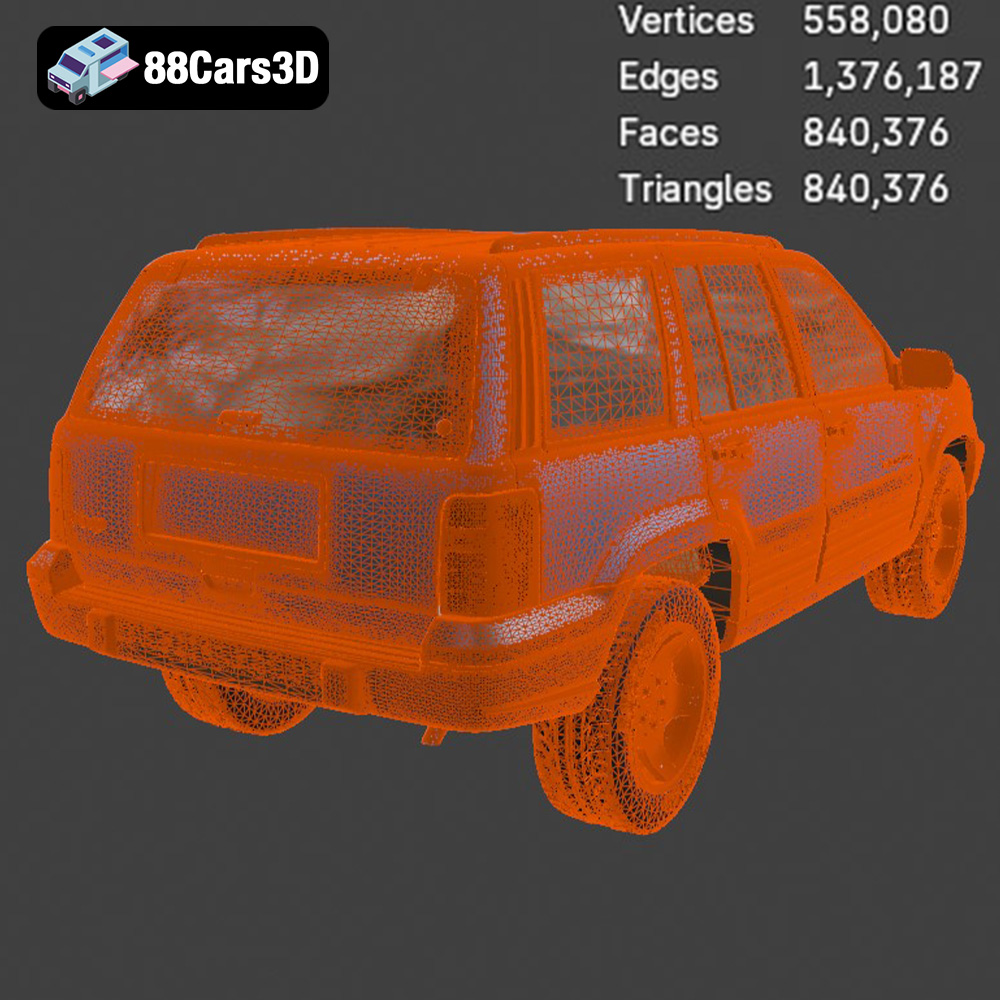
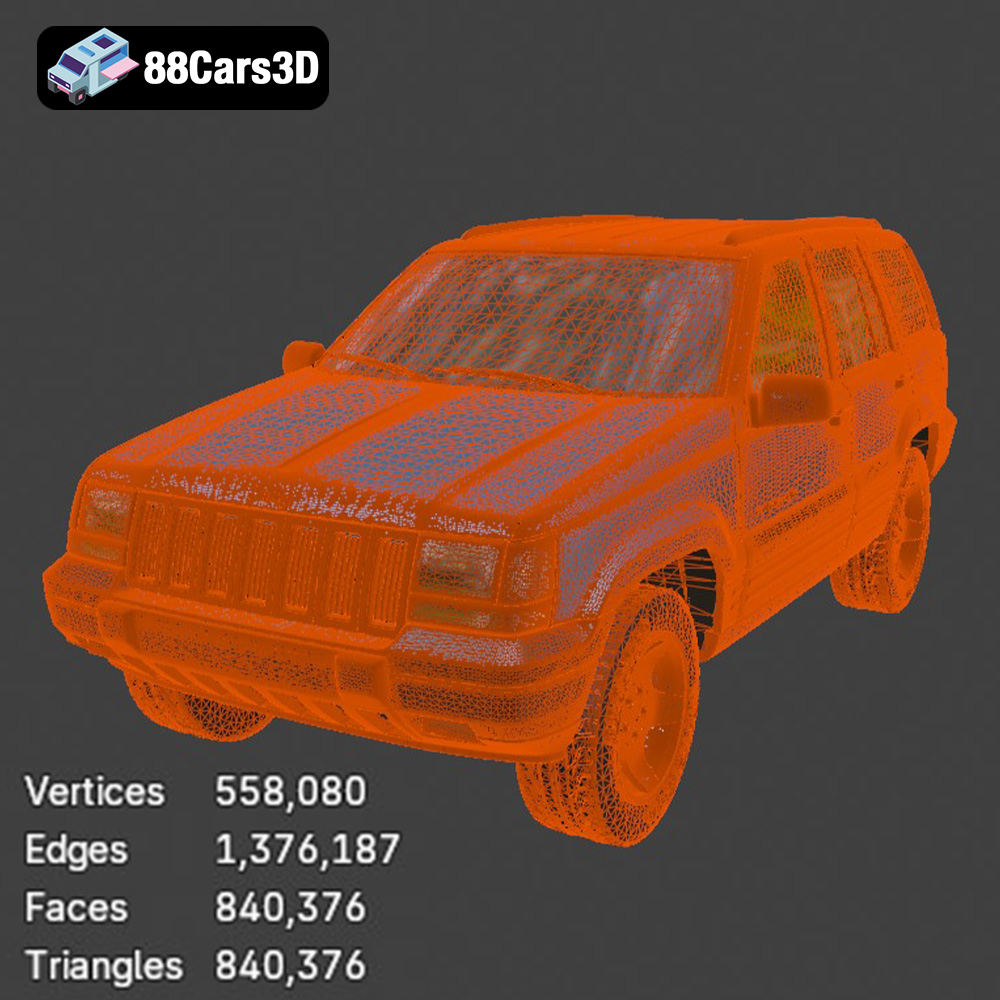
A clean and structured mesh is the cornerstone of any high-quality 3D model. The ZJ model features optimized topology, meaning its polygon flow is logical and efficient. This ensures smooth shading, prevents rendering artifacts, and allows for easy customization, modification, or even subdivision for extreme close-ups without introducing unwanted distortions. Furthermore, proper UV mapping is critical for applying textures effectively. While the product description doesn’t explicitly detail UVs, a “clean and structured mesh” implies well-laid-out UVs, essential for applying intricate material details like paint, plastic, and metal finishes accurately and without stretching. This attention to mesh integrity simplifies texturing workflows and enhances the visual fidelity in any render engine.
For any automotive asset intended for animation or interactive use, a well-thought-out hierarchy and pivot setup are indispensable. The Jeep Grand Cherokee Laredo (ZJ) 3D Model is designed with this in mind, providing proper pivot points for critical components. This facilitates easy animation of wheel rotation, allowing the vehicle to drive realistically. The steering mechanism can be articulated, and doors, hood, and tailgate are set up for smooth opening and closing animations. This pre-configured readiness saves countless hours in rigging and setup, enabling artists to focus on creative animation rather than technical preparations. Whether simulating a full-scale off-road adventure or a simple showroom demonstration, the model’s inherent animation readiness simplifies the process.
One of the perennial challenges in 3D content creation is balancing visual realism with performance, especially for real-time applications. The ZJ Grand Cherokee 3D Model achieves a balanced polygon density. This means it has enough polygons to accurately represent its curves and details for high-quality rendering without being excessively heavy, which could hinder performance in game engines or AR/VR experiences. This optimization is crucial for maintaining fluid frame rates while still delivering stunning visual fidelity. For applications requiring even higher detail or extreme optimization, the clean mesh makes it straightforward to generate LODs (Levels of Detail) or decimate the mesh further without significant quality loss.
The versatility of a well-crafted 3D car model like the Jeep Grand Cherokee Laredo (ZJ) allows it to transcend traditional boundaries, finding utility in a wide array of professional and creative endeavors. From high-fidelity visualizations to interactive simulations, this model offers a robust foundation.
For artists and studios focused on producing stunning visuals, the Jeep Grand Cherokee Laredo (ZJ) 3D Model is an ideal asset. Its accurate proportions, detailed exterior, and rich interior make it perfect for classic SUV showcases, studio renders, and nostalgic automotive scenes. Imagine a cinematic production set in the 1990s, where this Grand Cherokee navigates a rain-slicked city street or a dusty trail – the model’s realism lends itself perfectly to such high-end visualizations. Designers can experiment with different lighting environments, from crisp studio setups to dramatic outdoor scenes, bringing the classic ZJ to life with photorealistic results. This is where 88cars3d.com excels, providing the foundational assets for such visually demanding projects.
Game developers constantly seek optimized yet detailed assets, and the Jeep Grand Cherokee Laredo (ZJ) 3D Model fits this requirement perfectly. Its balanced polygon density and organized hierarchy make it excellent for open-world driving games, retro simulations, and off-road gameplay environments. Developers can easily integrate it into game engines like Unreal Engine or Unity, leveraging its pre-configured components for realistic vehicle physics, damage models, and interactive elements. Whether players are cruising through a meticulously recreated 90s urban landscape or tackling challenging off-road terrains, the ZJ model provides an authentic and engaging driving experience.
Augmented Reality (AR) and Virtual Reality (VR) are transforming how we interact with digital content, offering immersive experiences that blur the lines between the real and virtual. The ZJ Grand Cherokee model is highly suitable for interactive classic vehicle showrooms in VR or historical automotive experiences in AR. Imagine walking around a life-size virtual ZJ, opening its doors, and exploring its interior as if it were truly there. Its optimized mesh and support for formats like GLB ensure smooth performance in these demanding real-time environments, providing users with a truly captivating and educational experience.
Beyond digital screens, the versatility of 3D models extends into the physical realm through 3D printing. The Jeep Grand Cherokee Laredo (ZJ) 3D Model can be easily converted to an .stl format, making it ready for physical fabrication. This is perfect for creating collectible classic SUV scale models, desktop displays, or even functional prototypes. The product description provides excellent 3D print settings, recommending scales like 1:32, 1:24, 1:18, or 1:12, along with suggested layer heights, wall thicknesses, and infill percentages. Important printing tips like required supports and optimal print orientation (body upside-down for a better roof and hood finish) ensure successful prints. The ability to bring a digital asset into the physical world offers a unique dimension for designers, collectors, and model enthusiasts.
Integrating a complex 3D car model into a professional workflow requires familiarity with various software ecosystems and an understanding of how to leverage the provided file formats. The Jeep Grand Cherokee Laredo (ZJ) 3D Model, with its comprehensive format support, offers seamless integration into industry-standard tools like 3ds Max, Blender, and Unreal Engine.
For users entrenched in Autodesk 3ds Max, the provided .max file is a goldmine. It allows direct access to the full scene, preserving all original hierarchy, materials, and potentially modifiers. In 3ds Max, artists can easily refine materials using powerful renderers like V-Ray or Corona, create complex lighting setups, and orchestrate intricate animation sequences. The clean topology of the ZJ model facilitates further detailing, such as applying Turbosmooth for ultra-high-resolution renders, or adding specific environmental effects like dust, dirt, or water splashes using particle systems. The pre-set pivot points for wheels and doors make it straightforward to keyframe drive sequences or interactive component movements, ideal for automotive configurators or detailed product showcases.
Blender users benefit directly from the included .blend file. This native file provides the complete model with all its materials and textures, ready for immediate use with Blender’s Cycles or Eevee render engines. Artists can take advantage of Blender’s powerful modeling tools to customize the ZJ further, perhaps adding unique off-road modifications, designing custom interiors, or even re-rigging the vehicle for advanced physics simulations. Eevee, Blender’s real-time renderer, is perfect for quick previews and even producing high-quality cinematic renders rapidly, making the ZJ Grand Cherokee Laredo 3D Model an excellent asset for independent creators and small studios seeking professional results without extensive rendering times.
The .fbx and specifically the .unreal formats are tailored for game development and real-time visualization within Unreal Engine. Importing the FBX file allows developers to bring in the geometry, skeletal mesh (if rigged), and basic materials. From there, Unreal’s powerful material editor can be used to create highly realistic car paint shaders, reflective surfaces, and dynamic lighting that reacts accurately to the environment. For the .unreal asset, much of this setup may already be done, including collision meshes, LODs, and even basic physics assets. This means less time on technical setup and more time integrating the classic Grand Cherokee into interactive driving simulations, open-world games, or photorealistic architectural visualizations, allowing the ZJ to become a dynamic element within expansive digital worlds.
The true power of a high-quality 3D car model like the Jeep Grand Cherokee Laredo (ZJ) from 88cars3d.com lies not just in its initial fidelity, but in its capacity for extensive customization and its longevity as a reusable asset. Investing in well-built models ensures your creative projects remain flexible and future-proof.
The modular and clean nature of this 3D model allows for significant customization to meet diverse project requirements. Artists can easily customize paint colors, experimenting with period-correct factory options or contemporary custom finishes. Modifying wheel styles, from stock Laredo trims to aftermarket off-road rims, is straightforward due to the separated components. Furthermore, the model provides a perfect base for adding off-road accessories like roof racks, bull bars, winches, or trail equipment, transforming the ZJ from a classic daily driver to an adventure-ready machine. Even environmental adjustments are crucial for impact; fine-tuning lighting for forest trails, recreating the gritty realism of 90s urban scenes, or showcasing the vehicle under pristine showroom lights all contribute to the narrative. This adaptability ensures that the single Jeep Grand Cherokee Laredo (ZJ) 3D Model can serve multiple visual themes and stories.
In the fast-paced world of 3D production, having a robust and versatile asset library is a significant advantage. A high-quality 3D car model, meticulously crafted and supplied in multiple formats, becomes a cornerstone of such a library. It reduces development time and costs by providing ready-to-use components that can be repurposed across numerous projects. The Jeep Grand Cherokee Laredo (ZJ) 3D Model is an excellent example of such an asset. Its clean topology and comprehensive file formats mean it can be effortlessly integrated into new projects for years to come, adapting to evolving software and rendering technologies. Whether you’re building a portfolio, working on commercial projects, or experimenting with new creative ideas, a well-structured asset like this classic ZJ offers enduring value, making it a wise investment for any serious 3D artist or studio looking to enhance their automotive rendering and game assets collection.
The world of 3D automotive design and visualization demands precision, versatility, and technical excellence. The Jeep Grand Cherokee Laredo (ZJ) 3D Model stands as a prime example of an asset that delivers on all fronts. From its authentic recreation of a beloved classic SUV to its meticulously optimized technical specifications and comprehensive file format support, this model empowers creators across industries.
Whether your goal is to produce stunning photorealistic renders for advertising, integrate a dynamic vehicle into a cutting-edge game, craft immersive AR/VR experiences, or even bring a digital design to life through 3D printing, the ZJ Grand Cherokee model provides the robust foundation you need. Its readiness for various workflows, from the detailed control of 3ds Max to the real-time prowess of Unreal Engine, underscores its value as a professional-grade asset.
By investing in high-quality 3D car models like the Jeep Grand Cherokee Laredo (ZJ), available on 88cars3d.com, artists and developers can significantly enhance their productivity, expand their creative possibilities, and ensure their projects achieve the highest standards of visual fidelity and technical performance. Dive into the world of professional 3D automotive assets and elevate your next project with this iconic vehicle.
The Jeep Grand Cherokee Laredo (ZJ) 3D Model is a detailed digital recreation of the first-generation Grand Cherokee, internally known as the ZJ platform. Produced during the 1990s, this model represents a milestone in SUV development, combining traditional off-road capability with modern comfort for its era. This 3D asset accurately captures the boxy-yet-refined body styling, signature seven-slot grille, rectangular headlamps, wide stance, and practical 5-door layout that defined the ZJ generation. Designed with clean topology and real-world proportions, it is ideal for rendering, animation, simulation, AR/VR, game development, and automotive visualization projects. Perfect for retro automotive scenes, off-road environments, 90s-themed city simulations, cinematic productions, and classic SUV showcases.
$39.99
.1990sSUV
.arvr
.blend
.car3dmodel
.classicsuv
.fbx
.gameasset
.glb
.grandcherokeelaredo
.jeep
.max
.obj
.offroadvehicle
.ply
.rendering
.retrocar
.simulation
.stl
.unreal
.vehicle3D
.zj