

In the realm of real-time rendering and immersive experiences, stunning visuals often take center stage. Yet, the true power of immersion lies in the seamless integration of sight and sound. For professionals working with high-quality 3D car models, whether for game development, automotive visualization, or virtual production, overlooking the audio aspect is akin to showcasing a masterpiece in silence. A roaring engine, the subtle creak of leather, the distinctive whir of an electric motor – these auditory cues transform a visual spectacle into a living, breathing reality. Unreal Engine provides a robust and highly flexible audio system that empowers developers and artists to craft incredibly realistic and engaging soundscapes, crucial for bringing models sourced from marketplaces like 88cars3d.com to life.
This comprehensive guide dives deep into Unreal Engine’s audio capabilities, focusing on spatial sound design and advanced mixing techniques. We’ll explore how to set up, optimize, and creatively utilize these tools to elevate your automotive projects. From understanding basic sound assets to implementing dynamic spatialization, fine-tuning submixes, and integrating audio with interactive Blueprints, you’ll learn the professional workflows needed to create a truly captivating auditory experience. Prepare to unlock the full potential of Unreal Engine’s audio engine and transform your visually rich automotive scenes into acoustically stunning environments.
The Foundation of Unreal Engine’s Audio System
Unreal Engine’s audio system is a powerful and versatile framework designed to handle everything from simple sound effects to complex, interactive soundscapes. At its core, it provides the tools necessary to import, manage, and play back audio assets, allowing artists and developers to build rich auditory environments. Understanding these foundational components is crucial for anyone looking to craft compelling sound for their projects, especially when dealing with the nuanced audio requirements of automotive visualization, where engine sounds, tire screeches, and environmental ambiance play a significant role in conveying realism and performance.
The system is built on a hierarchical structure, starting with raw audio files and extending to sophisticated mixing and spatialization tools. Its robust architecture supports various audio formats, detailed attenuation settings, and comprehensive mixing capabilities, making it a go-to solution for high-fidelity interactive audio. As you delve deeper, you’ll discover how these fundamental elements combine to form the backbone of any immersive sound design, ensuring that every engine rev and environmental detail contributes to a cohesive and believable experience within your Unreal Engine project. For more in-depth technical details on the audio system, the official Unreal Engine documentation at dev.epicgames.com/community/unreal-engine/learning is an invaluable resource.
Sound Waves and Sound Cues: Building Blocks of Audio
The journey of audio in Unreal Engine begins with Sound Waves. These are your raw audio files, typically imported as WAV or OGG Vorbis formats, which serve as the fundamental source for all sounds in your project. When importing, Unreal Engine processes these files, allowing you to configure crucial properties such as compression settings, sample rate, and loading behavior. For automotive projects, source quality is paramount; capturing high-fidelity engine recordings or tire sounds directly translates to a more authentic experience within the engine.
Once you have Sound Waves, you combine and manipulate them using Sound Cues. A Sound Cue is a node-based graph that acts as a blueprint for how a sound will behave. It allows for complex sound design without writing a single line of code. You can layer multiple Sound Waves, apply randomization to pitch or volume, create looping sections, implement crossfades between different sound states (e.g., idle engine to accelerating engine), and even add basic effects. For instance, a vehicle’s engine sound might be a Sound Cue that blends different Sound Waves based on RPM, adds a subtle exhaust rumble, and randomizes small mechanical clicks to enhance realism.
Organizing Your Audio with Sound Classes
As projects grow, managing numerous Sound Cues individually becomes unwieldy. This is where Sound Classes become indispensable. A Sound Class is a powerful organizational tool that allows you to group related sounds and apply shared properties to them. Think of them as categories for your audio, such as “Engine_SFX,” “UI_SFX,” “Music,” “Environmental_Ambiance,” or “Tire_SFX.”
Sound Classes can be arranged hierarchically, meaning a parent Sound Class can have multiple child Sound Classes that inherit its properties. This enables granular control: you can adjust the master volume of all engine sounds from the “Engine_SFX” parent, or override specific settings for a child class like “Electric_Engine_SFX” without affecting traditional combustion engine sounds. Beyond volume and pitch, Sound Classes are critical for routing audio through submixes, which allows for applying shared effects like reverb or compression to entire categories of sounds, significantly streamlining the mixing process and ensuring consistency across your entire automotive soundscape.
Achieving Realism with Spatial Audio
Visuals alone can paint a convincing picture, but it’s spatial audio that truly sells the illusion of a tangible world. In automotive visualization, this means hearing an engine roar from the correct direction, perceiving a tire screech fading into the distance, or discerning the subtle rustle of leaves as a car drives past a forest. Spatial audio in Unreal Engine is the art and science of making sounds appear to originate from specific points in 3D space, relative to the listener. This not only enhances immersion but also provides crucial navigational and informational cues within interactive experiences or simulations.
Unreal Engine provides a robust set of tools for spatializing sounds, primarily through Sound Attenuation. These settings dictate how sound properties, such as volume and spatialization, change as the distance between the sound source and the listener varies. Mastering these parameters is key to creating a believable acoustic environment where sounds behave as they would in the real world, enhancing the perception of depth, scale, and presence within your automotive scenes.
Sound Attenuation Settings: Defining Distance and Falloff
Sound Attenuation assets are at the heart of Unreal Engine’s spatial audio capabilities. These assets define how a sound’s characteristics change with distance. The most critical setting is the volume falloff, which dictates how quickly a sound’s volume decreases as the listener moves away from its source. Unreal Engine offers various falloff shapes, typically spheres or capsules, with customizable inner and outer radii. Within the inner radius, the sound plays at full volume, while beyond the outer radius, it’s completely silent. The transition between these radii can be defined by various attenuation curves, allowing for linear, logarithmic, or custom falloffs that mimic real-world sound propagation more accurately.
Beyond simple volume, attenuation settings allow for control over other spatial parameters. For example, you can implement a distance-based low-pass filter, making sounds appear muffled and less distinct at further distances, simulating atmospheric absorption. Reverb send levels can also be adjusted by distance, creating a sense of natural reverberation in larger spaces. The spatialization method can be chosen between simple panning (stereo spread) or advanced HRTF (Head-Related Transfer Function), offering different levels of perceived 3D accuracy. For instance, a vehicle’s engine sound would use attenuation to ensure it sounds loudest when the listener is close and progressively quieter and more muffled as the distance increases, providing a realistic auditory experience.
Advanced Spatialization: HRTF and Ambisonics
For the ultimate in immersive spatial audio, Unreal Engine supports advanced techniques like HRTF (Head-Related Transfer Function) spatialization. HRTF utilizes specialized filters that simulate how our ears perceive sound from different directions, taking into account the unique shape of our head and ears. When enabled, HRTF creates a truly three-dimensional sound experience, allowing listeners to pinpoint the exact location of a sound source in space, not just on a stereo plane. This is incredibly impactful for automotive AR/VR experiences, where accurately localizing the sound of a passing vehicle or the precise direction of a car horn can significantly enhance realism and user presence. Enabling HRTF is typically done at the Attenuation asset level or within the Project Settings under the Audio section, where you can select a specific spatialization plugin.
While HRTF focuses on individual sound sources, Ambisonics offers a powerful way to capture and reproduce entire 360-degree sound fields, ideal for environmental audio. Ambisonic recordings store sound information from all directions, which can then be decoded to match the listener’s orientation. While less directly applied to individual car sounds, ambisonics can be used to create highly realistic ambient backgrounds for automotive scenes, making the environment itself sound more lifelike. Combined with HRTF for discrete sound sources, these advanced spatialization techniques push the boundaries of acoustic realism in Unreal Engine, ensuring that your automotive visualizations not only look but also sound profoundly authentic.
Mastering the Mix: Sound Classes, Submixes, and Effects
Once your individual sound assets are imported, organized, and spatially defined, the next critical step is to master their overall interplay through mixing. Just as a film director balances visual elements, an audio designer balances different sound components to create a cohesive, impactful, and clear soundscape. In Unreal Engine, this goes beyond simple volume adjustments; it involves dynamic control, signal routing, and effect processing to create a balanced, professional-sounding audio experience. For automotive projects, a well-mastered mix ensures that the roar of a high-performance engine isn’t drowned out by background music, or that essential UI feedback sounds are always audible.
Unreal Engine provides powerful tools like Sound Mixes, Snapshots, and Submixes to achieve this level of control. These features allow you to dynamically alter audio properties at runtime, apply sophisticated effects to groups of sounds, and manage the overall audio output of your project, ensuring that every element contributes optimally to the final auditory experience. A truly immersive experience, whether in a game or a visualization, hinges on a meticulously crafted sound mix that guides the listener’s attention and reinforces the visual narrative.
Dynamic Audio with Sound Mixes and Snapshots
In interactive experiences, audio needs to be dynamic. Imagine a scenario where the driver hits the gas, and the engine sound needs to become prominent, while the background music gently ducks. This is precisely what Sound Mixes achieve. A Sound Mix is a runtime asset that allows you to temporarily or permanently modify properties of Sound Classes. You can adjust the volume, pitch, or even apply specific effects to an entire Sound Class or its children during gameplay. For instance, creating a “Driving_Mix” that lowers the volume of the “Music” Sound Class by 50% and slightly boosts the “Engine_SFX” Sound Class when the player is actively driving. Sound Mixes can be activated and deactivated via Blueprint or C++.
To manage multiple states of your audio mix, Sound Mix Snapshots are incredibly useful. A Snapshot is essentially a saved state of multiple Sound Mixes applied simultaneously. Instead of individually activating and deactivating various Sound Mixes, you can apply a Snapshot to instantly transition the entire audio landscape to a predefined configuration. Consider an automotive configurator: you might have a “Car_Interior_Snapshot” that emphasizes subtle cabin sounds and mutes exterior noise, and an “Exterior_Showcase_Snapshot” that highlights the engine and environmental sounds. These snapshots provide a powerful way to manage complex audio states and transition between them smoothly, making your automotive experiences feel polished and professional.
Submixes and Effects Processing
For advanced audio routing and effects, Submixes are indispensable. A Submix acts as a signal chain, allowing you to route audio from one or more Sound Classes through a series of effects processors before it reaches the final output. This is crucial for applying global effects like reverb, delay, or compression to specific groups of sounds in a controlled manner. For example, all your “Engine_SFX” Sound Classes could be routed to an “Engine_Submix” which then applies a subtle compression to smooth out dynamic peaks and a specific reverb to simulate the acoustics of a garage or an open road.
Unreal Engine offers a range of built-in effects, including reverbs, delays, EQs, and compressors, which can be applied directly to Submixes. You can create Master Reverb Submixes and configure Reverb Zones in your levels to simulate different acoustic environments dynamically. Beyond built-in effects, Unreal Engine’s modular synthesizer architecture allows for highly customized effect chains. The ability to route, apply, and parameterize these effects in real-time gives sound designers immense control over the sonic texture of their automotive projects. This professional approach to mixing ensures clarity, depth, and character in your audio, elevating the realism of your vehicles and environments.
Performance Optimization and Data-Driven Audio
While visual fidelity is often the primary focus for performance optimization, audio can also significantly impact real-time rendering, especially in complex environments with many concurrent sounds or advanced spatialization. Efficient audio management is critical for maintaining high frame rates and a smooth user experience, particularly in performance-sensitive applications like AR/VR or high-end game development. Therefore, understanding how to optimize your audio assets and their playback is just as important as optimizing your 3D models.
Beyond optimization, creating truly dynamic and reactive vehicle audio requires a data-driven approach. Instead of merely playing static sound files, modern automotive simulations and games link audio parameters directly to vehicle telemetry data, such as RPM, speed, gear selection, and load. This allows for an organic, nuanced sound experience that accurately reflects the vehicle’s state and performance. When incorporating high-fidelity vehicle models from marketplaces like 88cars3d.com, ensuring their accompanying audio assets are optimized and integrated correctly is paramount to achieving a truly convincing simulation.
Optimizing Audio for Real-Time Performance
Effective audio optimization in Unreal Engine begins with the source assets themselves. For Sound Waves, compression settings are crucial. While WAV files offer uncompressed fidelity, they can be large. OGG Vorbis provides good compression with minimal quality loss for many use cases, while ADPCM is efficient for shorter, transient sounds. Balancing file size and perceived quality is key. Each Sound Wave also has a “Max Concurrent Plays” setting, preventing an excessive number of instances of the same sound from playing simultaneously, which can prevent audio clipping and reduce CPU load.
Further optimization comes from clever management of sound playback. Unreal Engine’s audio system can automatically cull sounds that are inaudible due to distance or occlusion. Ensure your Sound Attenuation settings are properly configured so sounds that are far away or blocked by geometry are correctly reduced in volume or completely stopped. Consider the “Max Distance” setting in attenuation to define a cutoff point beyond which sounds no longer play. For large, ambient sound files, streaming can prevent long loading times and reduce memory footprint, whereas smaller, frequently played sounds are better loaded entirely into memory. Implementing a robust priority system for your Sound Cues and Sound Classes ensures that the most important sounds are always heard, even under heavy audio load.
Crafting Dynamic Vehicle Audio Systems with Blueprints
Static sound files, while useful, cannot replicate the complex and constantly changing sounds of a vehicle in motion. This is where Blueprint visual scripting becomes invaluable for creating dynamic, data-driven audio systems. By leveraging vehicle telemetry, you can drive various audio parameters in real-time, resulting in an incredibly realistic and responsive soundscape.
For example, you can use a vehicle’s RPM (revolutions per minute) value to control the pitch and volume of an engine Sound Cue. A common technique involves blending multiple Sound Waves (e.g., low RPM, mid RPM, high RPM layers) based on the current engine RPM, crossfading smoothly between them using Blueprint curves. Similarly, gear shifts can trigger distinct sound events, and tire squeal sounds can be activated and modulated based on wheel slip or friction values. Braking sounds can dynamically adjust their intensity based on brake pressure. These connections are typically made by casting to your vehicle’s Blueprint and accessing its physics or component data, then updating parameters of your running Sound Cues via Blueprint nodes like “Set Float Parameter” or “Set Volume Multiplier.” While external audio middleware like FMOD or Wwise offer advanced features, Unreal Engine’s native Blueprint system provides powerful capabilities for building highly interactive and believable vehicle audio systems, ensuring every action of the car is reflected sonically.
Interactive Automotive Audio Experiences and Virtual Production
The synergy between visual fidelity and compelling audio extends beyond simple playback; it’s about crafting interactive experiences that engage users on multiple sensory levels. For automotive visualization, this translates into configurators where changing a car part also changes its sound, or virtual production environments where the real-time audio blends seamlessly with the projected visuals on an LED wall. Unreal Engine’s capabilities in Blueprinting and Sequencer make it an ideal platform for designing these highly immersive and interactive auditory narratives.
From fine-tuning the subtle sounds of a car’s interior to orchestrating complex cinematic audio sequences, the engine provides tools that bridge the gap between static content and dynamic storytelling. The goal is to make every interaction, every camera movement, and every visual change resonate acoustically, creating a holistic and unforgettable experience. This integration is vital for professional applications, where precision and immersion are paramount, whether for marketing, design review, or entertainment purposes.
Blueprinting Interactive Sound for Configurators
Automotive configurators are a prime example of where interactive audio significantly enhances the user experience. Imagine selecting a new engine type and instantly hearing its distinct roar, or clicking on a door and hearing a satisfying “clunk” as it opens and closes. Blueprint visual scripting in Unreal Engine empowers you to create these dynamic audio responses. You can set up event dispatchers that trigger specific Sound Cues or modify audio parameters whenever a user interacts with a UI element or a 3D model.
For instance, changing a car’s exhaust system in a configurator could trigger a Blueprint event that swaps out one engine Sound Cue for another, reflecting the performance upgrade. Interior sounds, such as the subtle click of a seatbelt buckle or the texture-specific sound of pressing a dashboard button, can be played on interaction. Even subtle details like the specific ‘thud’ of a heavy door versus the lighter sound of a sports car door can be driven by Blueprint events attached to component interaction. These small, yet impactful, auditory feedback loops significantly enhance the realism and perceived quality of your configurator, making the virtual car feel more tangible and responsive. For game developers leveraging assets from 88cars3d.com, integrating specific sound design choices with car variants is a natural and effective way to deepen player engagement.
Cinematic Audio with Sequencer and Virtual Production
For creating stunning automotive cinematics or virtual production sequences, Unreal Engine’s Sequencer is the go-to tool for precise audio orchestration. Sequencer is a multi-track editor that allows you to animate virtually any property over time, including audio. You can import audio tracks directly into Sequencer, align them perfectly with visual events, and automate their volume, pitch, spatialization, and even Submix sends over the course of a shot.
Imagine a tracking shot of a car accelerating, and you need the engine sound to swell in volume and pitch precisely as it speeds up, while a musical score builds in the background. Sequencer enables you to keyframe these audio parameters, ensuring perfect synchronization with your camera movements and car animations. In a virtual production workflow, where real-time rendered automotive scenes are displayed on large LED walls, synchronized audio is critical for immersing both the actors on set and the viewing audience. Combining meticulously crafted vehicle models, perhaps sourced from 88cars3d.com, with powerful audio design through Sequencer creates a seamless, believable illusion. For example, if a virtual car drives past a virtual camera on the LED wall, its spatial sound in Sequencer needs to dynamically pan and attenuate to match its visual position, providing a cohesive real-world experience for the crew and talent.
AR/VR and Future Trends in Automotive Audio
The future of automotive visualization is increasingly heading towards immersive technologies like Augmented Reality (AR) and Virtual Reality (VR). These platforms offer unparalleled opportunities for experiencing vehicles in new ways, from virtual showrooms and interactive design reviews to realistic driving simulations. However, AR/VR also introduces unique challenges for audio, demanding even higher levels of immersion, performance, and user comfort. Delivering compelling audio in these environments requires careful consideration of latency, spatial accuracy, and optimization techniques tailored for head-mounted displays.
Beyond current capabilities, the landscape of automotive sound design is continually evolving. The rise of electric vehicles (EVs) necessitates entirely new soundscapes, moving away from traditional internal combustion engine sounds towards synthetic, often futuristic, auditory identities. Furthermore, advances in audio technology hint at more personalized and procedural sound experiences, promising even greater depth and realism in future automotive applications. Staying abreast of these trends and leveraging Unreal Engine’s robust features will be key to shaping the next generation of automotive experiences.
XR Audio Challenges and Solutions
Developing audio for AR/VR applications presents specific hurdles. Low latency is paramount; any perceptible delay between a visual event and its accompanying sound can break immersion and even induce motion sickness. Unreal Engine’s audio engine is designed for real-time performance, but optimizing your sound assets (as discussed in the performance section) is even more critical in XR. This includes using efficient compression, careful management of concurrent sounds, and minimizing complex DSP chains.
Spatial accuracy is also vital for AR/VR. The listener’s head movements directly influence their perception of sound direction. Therefore, effectively utilizing HRTF (Head-Related Transfer Function) spatialization becomes crucial. HRTF, by simulating how sound waves interact with the user’s head and ears, provides a highly convincing 3D audio experience that accurately tracks with head orientation. However, HRTF can be more computationally intensive, so careful performance profiling is needed, especially for standalone VR headsets. Managing occlusion and environmental reverb realistically also contributes significantly to presence in XR, making the virtual car and its environment feel genuinely tangible. Ensuring that the listener correctly perceives where an engine sound is coming from, even with head movements, is foundational to a believable VR driving experience.
The Future of Automotive Sound: From Electric Vehicles to Dynamic Soundscapes
The advent of electric vehicles is profoundly reshaping automotive sound design. With the absence of traditional engine noise, designers are tasked with creating entirely new auditory identities that convey power, speed, and brand character, often using synthetic sounds. Unreal Engine’s capabilities in synthesizing and manipulating audio, combined with Blueprint, allow for the creation of rich, adaptable EV soundscapes that dynamically respond to acceleration, deceleration, and driver input. These sounds are not merely functional but integral to the EV’s personality and the driver’s experience.
Looking further ahead, we can anticipate more personalized audio experiences within vehicles and even more sophisticated procedural audio generation for dynamic environments. Imagine a car’s interior audio adapting to the driver’s mood or the external environment, subtly shifting ambience to enhance comfort or focus. Procedural audio, where sounds are generated and modified in real-time based on environmental parameters rather than relying solely on pre-recorded samples, could create infinitely varied and realistic ambient soundscapes for virtual drives. As models on platforms like 88cars3d.com become more sophisticated and interactive, the audio pipelines that bring them to life will continue to evolve, offering richer, more immersive, and increasingly personalized experiences, pushing the boundaries of what’s possible in real-time automotive visualization.
Conclusion
The journey through Unreal Engine’s audio system reveals its immense power in transforming compelling visuals into truly immersive experiences. While the sleek lines of a vehicle model or the intricate details of a virtual showroom are immediately apparent, it’s the carefully crafted sound design—from the precise spatialization of an engine’s roar to the nuanced layers of a dynamic mix—that provides depth, realism, and emotional resonance. We’ve explored the foundational elements of Sound Waves and Sound Cues, delved into the intricacies of spatial audio with Attenuation and HRTF, mastered the art of mixing with Sound Classes and Submixes, and tackled the crucial aspects of performance optimization and data-driven audio.
Furthermore, we’ve seen how Blueprint scripting empowers interactive audio in configurators and how Sequencer orchestrates cinematic sound for virtual production. The discussion also extended to the unique considerations for AR/VR audio and the exciting future trends shaping automotive sound. By embracing these techniques, you can ensure that your projects, whether games, visualizations, or simulations, captivate your audience not just visually, but acoustically. The next time you’re crafting an automotive experience in Unreal Engine, remember that sound is not an afterthought; it is the vital component that truly brings your high-fidelity models to life. Dive in, experiment with these tools, and create auditory masterpieces that resonate with your audience.
Featured 3D Car Models

The Italian Legends Bundle 5 Ultimate Supercar 3D Models STL Optimized
Texture: Yes | Material: Yes | 3D Printable: Yes. Download the Italian Thoroughbreds Bundle featuring 5 iconic 3D models: Lamborghini Huracán Performante, Ferrari 458 Italia, Lamborghini Urus, Diablo SV, and Maserati GT. Optimized for 4K rendering and 3D printing (STL included). Save 50% with this ultimate Italian vehicle collection.
Price: $199.99

Elite Future Mobility: EV & Autonomous SUV Bundle (4 High-End 3D Models)3D Printable STL
Download the Elite Future Mobility Bundle featuring 4 highly optimized 3D models: Tesla Model S, Avatr 11, Li L9, and Zoox Robotaxi. Perfect for ArchViz, Smart City renders, and game dev. Optimized for Unreal Engine and Blender. Includes .fbx, .obj, and .max formats.
Price: $99

German Luxury & Performance Bundle – High-End 3D Vehicle Collection3D Printable STL
🚗 5 Iconic German Cars (BMW M4 G82, M5 CS, X3, 1 Series & Mercedes E-Class). ✅ Optimized for ArchViz: Ready for Corona & V-Ray. 💰 Save €71 with this limited-time collection! 🚀 Instant Download after purchase.
Price: $119

Extreme Off-Road & Survival 3D Models Bundle (4-in-1 Pack)3D Printable STL
Download the Extreme Off-Road & Survival 3D Models Bundle! Includes the Brabus 800 Adventure, Dodge Ram Bigfoot, Spec Truck, and a Caravan. Save over €210 on this premium 4-in-1 off-grid vehicle pack for ArchViz and game development.
Price: $149.99
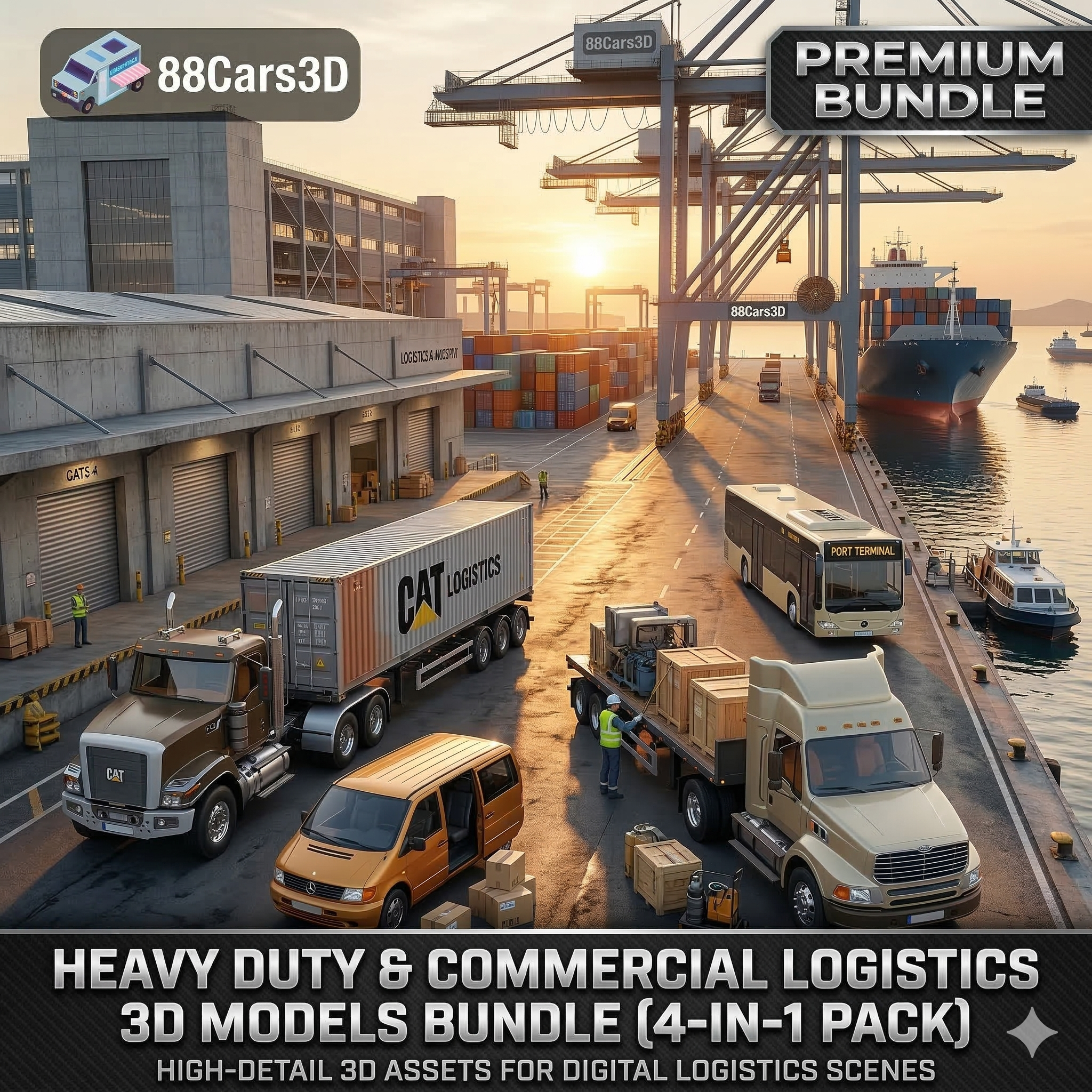
Heavy Duty & Commercial Logistics 3D Models Bundle (4-in-1 Pack)3D Printable STL
Download the Heavy Duty & Commercial Logistics 3D Models Bundle! Includes the Ford Sterling, Caterpillar CT680, Mercedes Citaro Bus, and Vito Van. Save over €130 on this massive, game-ready 4-in-1 industrial vehicle pack.
Price: $109.99

The Ultimate Garage Props & Custom Motorcycles 3D Models Bundle 3D Printable STL
Download the Ultimate Custom Motorcycles 3D Models Bundle. Includes a Custom Chopper, Ducati 916 Café Fighter, Harley XR1200X, and BMW K100. Perfect premium props for luxury ArchViz garages. Save over €250 today!
Price: $159.99

Japanese Legends: JDM Street Racing 3D Models Bundle (5-in-1 Pack) Nissan Mitsubishi Honda Mazda Toyota 3D Printable STL
Download the ultimate JDM Street Racing 3D Models Bundle! Includes the Nissan GT-R, Toyota Supra, Mazda RX-7, Lancer Evo IX, and Honda NSX. Save big on this highly optimized, game-ready 5-in-1 Japanese legend car pack.
Price: $129.99

American Muscle & Classics Pack 4 in 1 Ford Dodge Chevrolet 3D Printable STL
Download the ultimate American Muscle & Cinematic Classics 3D Models Bundle! Includes the Dodge Charger ’68, Mustang Eleanor GT500, Camaro Z28 ’79, and a custom ’69 Mustang. Save over €240 on this game-ready, premium 4-in-1 pack.
Price: $149.99
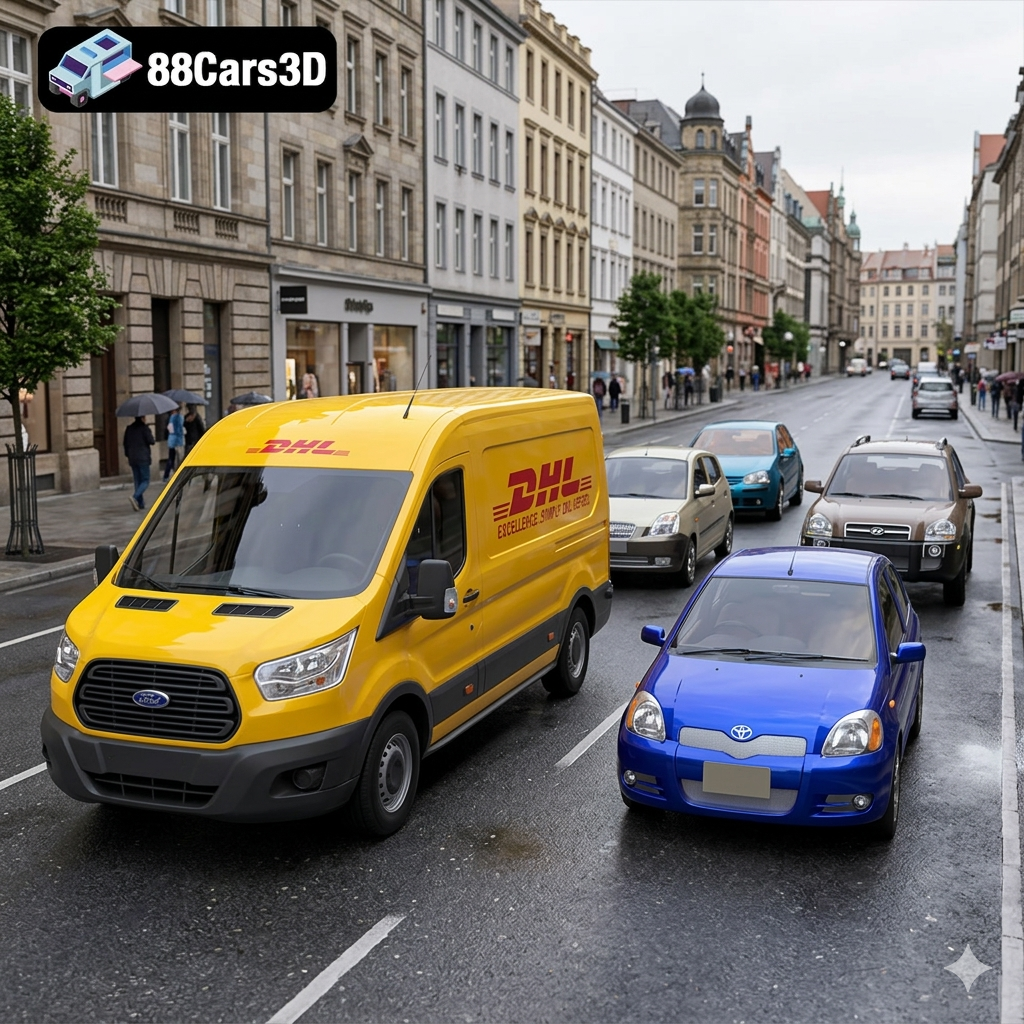
Everyday City Traffic Essentials pack 5in1 Hyundai Kia Volkswagen Toyota Ford 3D Printable STL
Download the Everyday City Traffic 3D Models Bundle. Includes the VW Golf, Kia Picanto, Hyundai Tucson, Toyota Yaris, and a DHL Ford Transit Van. Save big on this 5-in-1 pack, perfectly optimized for realistic ArchViz streets and game traffic.
Price: $99.99
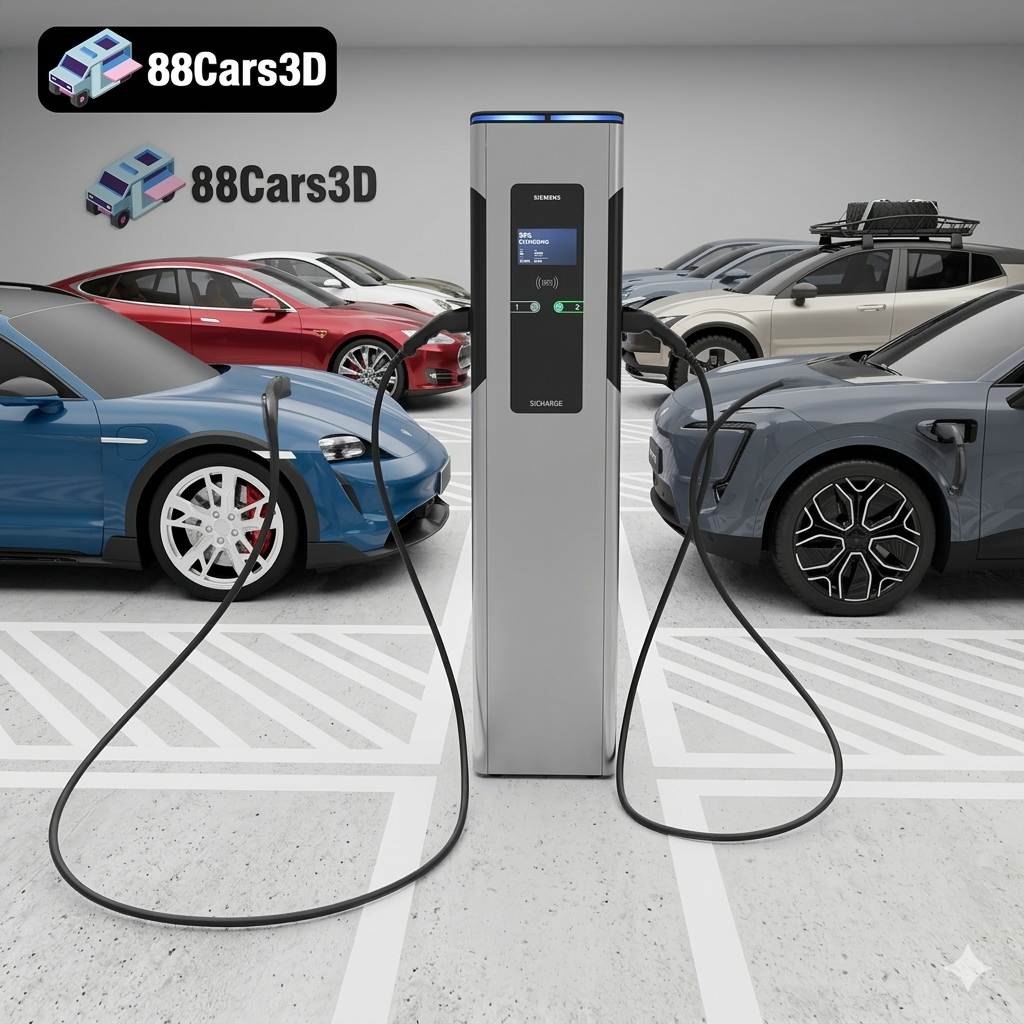
The Future of Mobility: Smart City EV 3D Models Bundle (5-in-1 Pack) Volvo Tesla AVATR Porsche 3D Printable STL
Download the Future of Mobility EV 3D Models Bundle. Includes the Volvo EX30, Tesla Model S, AVATR 11, Porsche Taycan, and a Siemens EV Charger. Save big on this highly optimized 5-in-1 pack for ArchViz and game development!
Price: $89.99
