The Digital Engineering of Speed: Harnessing 3D Models for Automotive Excellence
In the vibrant world of 3D visualization and simulation, the demand for highly detailed and accurate digital assets is ever-growing. From crafting cinematic renders that captivate audiences to developing immersive game environments and precise engineering prototypes, the quality of a 3D model is paramount. It forms the very foundation upon which breathtaking visuals and interactive experiences are built. Today, we’re diving deep into the technical intricacies and boundless applications of a superb example of such an asset: the Yamaha MT-09 Tracer 2015 3D Model. This particular model stands out as a versatile, high-fidelity recreation of the iconic sport-touring motorcycle, designed to meet the rigorous demands of professional workflows across various industries.
The Yamaha MT-09 Tracer, known for its aggressive styling, lightweight chassis, and dynamic three-cylinder performance, offers a perfect subject for a sophisticated 3D representation. Its blend of sporty DNA with comfort-oriented ergonomics makes it a compelling choice for digital artists and developers looking to integrate a high-performance motorcycle into their projects. Whether you’re an automotive visualization expert, a game developer, or an AR/VR content creator, understanding the underlying technicalities and potential applications of such a comprehensive 3D car model is crucial for achieving unparalleled realism and efficiency.
Understanding 3D Model File Formats: The Backbone of Digital Assets
The choice of file format for a 3D model is far more than a simple preference; it dictates compatibility, functionality, and the efficiency of your workflow. Each format is designed with specific use cases and technical considerations in mind, making it essential for professionals to understand their nuances. The Yamaha MT-09 Tracer 2015 3D Model, available on 88cars3d.com, exemplifies this versatility by offering a wide array of formats, ensuring it seamlessly integrates into almost any professional pipeline.
.blend – The Native Blender Ecosystem
The .blend format is Blender’s native file type. It’s comprehensive, storing not just mesh data but also materials, textures, animations, camera settings, lighting, and even the user interface layout of the Blender scene. This makes it ideal for users who primarily work within Blender, offering full editability and preserving all scene information. For the Yamaha MT-09 Tracer, a .blend file means access to the original project structure, allowing for deep customization, re-texturing, animation tweaks, and rendering within Blender’s powerful Cycles or Eevee engines. It’s perfect for artists who need maximum flexibility.
.fbx – The Industry Standard for Interoperability
.fbx (Filmbox) is a proprietary file format developed by Autodesk, widely regarded as the industry standard for exchanging 3D data between various software applications. Its strength lies in its ability to store a broad range of 3D data, including geometry, materials, textures, animations, rigging, and camera information, while maintaining scene hierarchy. This format is crucial for game development, making it ideal for engines like Unreal Engine and Unity. For the MT-09 Tracer, the .fbx ensures that all components, including separate wheels, steering, and suspension, retain their pivot points and animation readiness when imported into a real-time environment, making it a cornerstone for creating dynamic game assets.
.obj – Universal Compatibility and Simplicity
The .obj (Wavefront OBJ) format is one of the most widely supported 3D file formats, known for its simplicity and cross-software compatibility. It primarily stores geometry (vertices, normals, texture coordinates, and faces) and can reference external material (.mtl) files for basic shading information. While it doesn’t typically store animation or rigging data, its universal nature makes it excellent for static model exchange between disparate 3D applications. When working with the Yamaha MT-09 Tracer, an .obj file provides a clean mesh that can be easily imported into almost any 3D package for rendering, sculpting, or re-texturing, serving as a reliable fallback or a starting point for complex projects.
.glb – Optimized for AR, VR, and Web-Based Displays
.glb (GLB format for GL Transmission Format) is an efficient, single-file container that includes 3D model data, textures, and animations. It’s designed for rapid loading and runtime delivery, making it the preferred format for AR, VR, and web-based 3D applications, particularly with technologies like WebGL. Its compact nature and optimization for real-time viewing make the MT-09 Tracer in .glb format perfect for interactive virtual showrooms, augmented reality demonstrations, or embedding 3D views directly into web pages, ensuring fast performance and visual fidelity across platforms.
.stl – The Standard for 3D Printing
.stl (STereoLithography) is the most common file format used for 3D printing. It represents a 3D model as a series of connected triangles, defining only the surface geometry without color, texture, or other CAD attributes. Its simplicity ensures compatibility with almost all 3D printers and slicing software. For the Yamaha MT-09 Tracer, providing an .stl file means the model is directly convertible for physical output, enabling users to 3D print collectible scale motorcycle models or display miniatures. This format is crucial for designers looking to bridge the gap between digital and physical fabrication.
.ply – Precision Mesh for Advanced Applications
.ply (Polygon File Format or Stanford Triangle Format) is a file format for storing 3D data, particularly from 3D scanners. It supports the storage of various properties, including color, transparency, surface normals, and range data, alongside geometric information. While less common for direct artistic creation, it’s valuable for applications requiring high precision mesh data, such as CAD, engineering analysis, or capturing detailed real-world objects. The MT-09 Tracer in .ply format offers a robust, precision mesh suitable for advanced technical workflows where fidelity to scanned or meticulously modeled surfaces is paramount.
.unreal – Engine-Ready for Real-Time Environments
The inclusion of an .unreal format, often referring to a pre-packaged asset optimized for direct import into Unreal Engine projects, signifies a highly streamlined workflow for game developers. This format implies that the model has been specifically prepared with Unreal Engine’s conventions in mind, potentially including optimized materials, collision meshes, LODs (Levels of Detail), and blueprint setups. For the MT-09 Tracer, an .unreal asset significantly reduces setup time, allowing developers to drop the motorcycle directly into their game world with minimal tweaking, ensuring peak performance and visual quality within the engine’s real-time rendering pipeline.
.max – The 3ds Max Project File
Similar to .blend for Blender, .max is Autodesk 3ds Max’s native file format. It contains all scene data—geometry, materials, textures, lights, cameras, animations, and modifiers—allowing for full editability within 3ds Max. This format is preferred by professionals who utilize 3ds Max for high-end architectural visualization, product design, and complex animations. The Yamaha MT-09 Tracer in .max format offers comprehensive control over every aspect of the model, from rigging its separate components for intricate animations to setting up advanced rendering with V-Ray or Corona Renderer.
Understanding these diverse file formats empowers professionals to select the right tool for the job, ensuring seamless integration and optimal performance regardless of their specific project requirements. The availability of the Yamaha MT-09 Tracer 2015 3D Model in such a comprehensive suite of formats truly underscores its value as a versatile and professional-grade asset.
The Art and Science of Automotive 3D Modeling
Automotive 3D modeling transcends mere digital sculpture; it’s a meticulous blend of artistic vision and engineering precision. Creating a high-quality 3D car model, such as the Yamaha MT-09 Tracer 2015, involves an intricate process that ensures both aesthetic appeal and technical accuracy. This foundational work is what distinguishes professional assets from amateur ones, providing a reliable basis for a multitude of applications.
Precision in Recreation: Why Detail Matters
The core of an exceptional 3D automotive model lies in its faithful recreation of the real-world counterpart. For the Yamaha MT-09 Tracer 2015, this means accurately capturing every curve of its aggressive dual headlight front design, the nuances of its adjustable windscreen geometry, and the subtle contours of its sculpted fuel tank. These details are not just for visual flair; they are critical for maintaining realism in renders, ensuring correct physics in simulations, and providing a believable experience in interactive environments. The attention to detail extends to the internal structure, such as the exposed frame, sport-touring exhaust system, and intricate disc brake detailing, which are all meticulously modeled. This level of precision is what allows the model to hold up under close-up scrutiny and dynamic lighting conditions.
From Concept to Digital Reality: Workflow Considerations
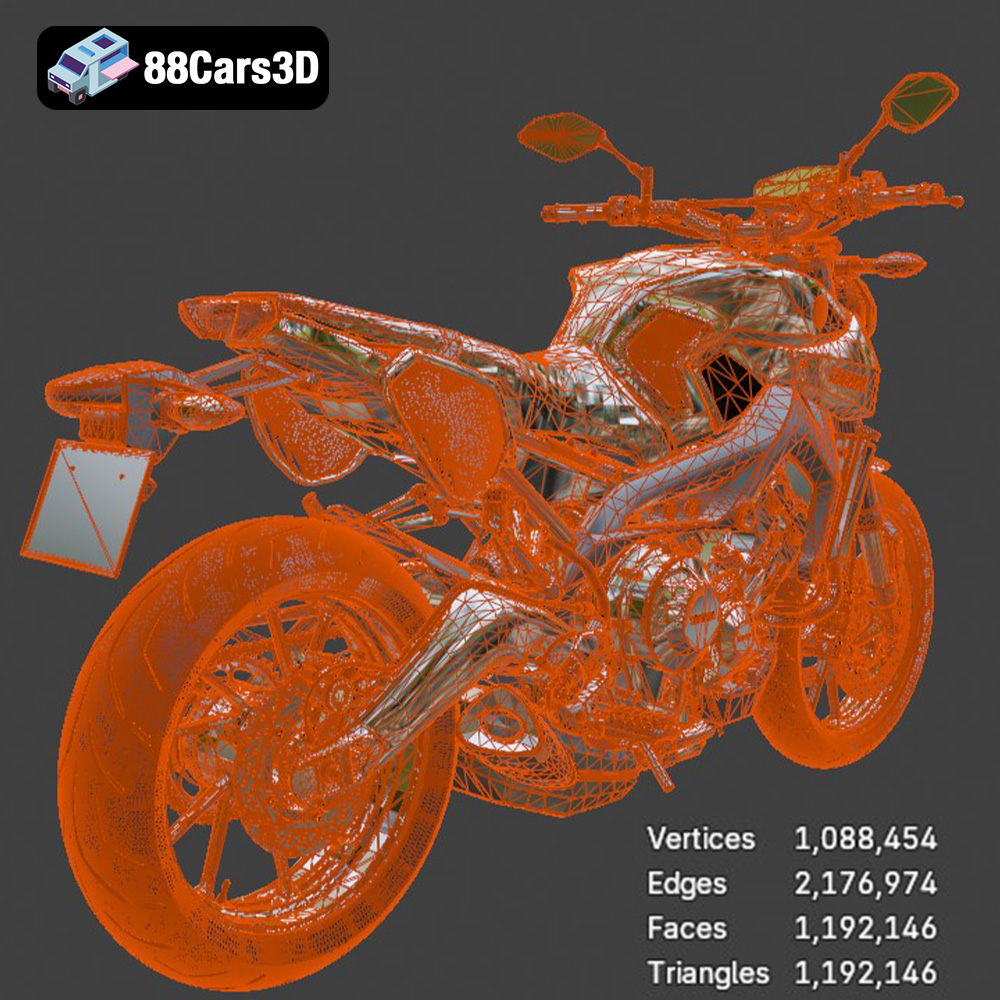
The journey from a physical vehicle to a digital 3D model typically involves extensive reference gathering, meticulous polygon modeling, UV unwrapping, and texture creation. For a model like the MT-09 Tracer, a clean and well-organized mesh structure is paramount. This means using efficient polygon flow to ensure smooth deformations during animation and easy modification. Real-world scale accuracy is another non-negotiable aspect, ensuring that the model integrates seamlessly with other assets in a scene without scale discrepancies. Furthermore, proper pivot setup for components like steering and wheel rotation is essential for any animated or interactive application. These technical advantages ensure that the Yamaha MT-09 Tracer 2015 3D Model is not just visually appealing but also functionally robust, ready for immediate integration into demanding production pipelines.
Mastering Automotive Rendering and Visualization
Automotive rendering is where the digital model truly comes to life, transforming raw geometry and textures into photorealistic images and animations. It’s a highly specialized field that demands a deep understanding of lighting, materials, and camera techniques. The Yamaha MT-09 Tracer 2015 3D Model provides an excellent foundation for achieving stunning visualization results.
Crafting Photorealistic Scenes with the MT-09 Tracer
For marketing visuals, promotional materials, or touring advertisements, photorealism is key. The MT-09 Tracer’s detailed body proportions, aggressive styling, and intricate cockpit features (like the digital instrument cluster and control switches) are prime candidates for high-fidelity rendering. Artists can place the model in various environments—urban streets, winding mountain roads, or sleek studio settings—and craft compelling narratives through light and shadow. The separate components, such as wheels and suspension, allow for dynamic posing, capturing the motorcycle in motion or at rest, further enhancing the visual storytelling. This level of realism helps in creating impactful visuals that resonate with audiences and effectively convey the essence of the vehicle.
Advanced Lighting and Material Techniques
Achieving photorealism goes beyond good modeling; it requires mastery of rendering engines. Techniques like physically-based rendering (PBR) are crucial for simulating how light interacts with different surfaces. For the Yamaha MT-09 Tracer, this means carefully crafting materials for its painted body, chrome accents, rubber tires, and transparent windscreen. Applying realistic reflections, refractions, and diffuse properties ensures that the motorcycle reacts to its environment naturally. Global illumination, ambient occlusion, and volumetric lighting further enhance depth and atmosphere, making the digital scene indistinguishable from a photograph. The optimized geometry and well-organized mesh of the MT-09 Tracer facilitate the application of these advanced techniques without excessive rendering times.
Case Study: Bringing the MT-09 Tracer to Life in a Cinematic Render
Imagine a cinematic shot: the Yamaha MT-09 Tracer speeding through a digital mountain pass at dusk. The process begins with importing the .max or .blend file into a powerful renderer like V-Ray or Cycles. Environment HDRI (High Dynamic Range Image) lighting provides realistic outdoor illumination and reflections. Volumetric fog might be added to simulate morning mist, while carefully placed rim lights highlight the motorcycle’s aggressive silhouette. The PBR materials ensure that the metallic paint gleams realistically, and the tire rubber subtly absorbs light. Post-processing in compositing software adds depth of field, motion blur, and color grading, transforming the raw render into a high-impact promotional video. The MT-09 Tracer’s accurately modeled separate components, like the steering and wheels, are then animated along a spline path, giving life to the scene. This type of project showcases the immense potential of high-quality 3D car models in creating captivating visual narratives.
Elevating Game Development with High-Quality 3D Assets
In the realm of game development, the line between reality and simulation blurs with each technological advancement. High-quality 3D assets are indispensable for creating immersive and believable virtual worlds. The Yamaha MT-09 Tracer 2015 3D Model is specifically designed to meet the stringent requirements of real-time game engines.
Optimized Assets for Real-Time Performance
Game development demands a delicate balance between visual fidelity and performance. The MT-09 Tracer model is engineered with optimized polygon flow, ensuring that while it maintains a high level of detail for realistic appearances, its mesh structure is efficient enough for real-time rendering. This is crucial for maintaining high frame rates, especially in open-world riding simulations or motorcycle racing games where multiple vehicles and complex environments are rendered simultaneously. Furthermore, the proper pivot setup for steering and wheel rotation is not just a rendering convenience; it’s a game-changer for implementing accurate vehicle physics and responsive player controls. Developers can easily integrate this model into their physics engines, knowing that its geometry and articulation points are correctly defined.
Integrating Motorcycle Models into Game Engines: An Unreal Engine Workflow
For developers using Unreal Engine, the .fbx and .unreal file formats of the MT-09 Tracer offer a streamlined workflow. After importing the .fbx, the model’s material slots can be assigned with PBR textures (Albedo, Normal, Metallic, Roughness, AO) created in substance painter or similar tools. Collision meshes, often simplified versions of the main mesh, are then generated to handle physical interactions. LODs (Levels of Detail) are crucial for performance; the model can be configured to switch to lower-polygon versions when viewed from a distance, saving rendering resources. The separate components of the MT-09 Tracer, like the wheels and suspension, can be integrated into a vehicle blueprint, allowing for realistic suspension compression, wheel rotation, and steering behavior driven by player input or AI. This level of preparation means less time on asset cleanup and more time on gameplay mechanics.
The Role of Detailed Assets in Immersive Gameplay
A highly detailed motorcycle model like the Yamaha MT-09 Tracer enhances immersion exponentially. Players connect more deeply with a game when the assets within it feel tangible and real. From the intricate detailing of the handlebar assembly with control switches to the stepped rider and passenger seat design, these elements contribute to the overall authenticity. In motorcycle games, being able to appreciate the design of your vehicle, customize its appearance, and see realistic wear and tear elevates the player experience. The MT-09 Tracer’s realistic chassis structure and accurate proportions mean that players will feel like they are interacting with a genuine motorcycle, not just a generic placeholder, thus enriching the overall game world and narrative.
The Frontier of AR/VR and 3D Printing with the MT-09 Tracer
Beyond traditional rendering and game development, high-quality 3D models like the Yamaha MT-09 Tracer are pushing the boundaries in emerging technologies such as Augmented Reality (AR), Virtual Reality (VR), and 3D printing. These applications offer new ways to interact with and utilize digital assets.
Immersive Experiences: AR/VR Showrooms and Simulations
The .glb format, included with the MT-09 Tracer, is specifically optimized for AR/VR and web-based displays. This makes the model perfect for creating immersive virtual showrooms where potential buyers can explore the motorcycle in 360 degrees, customize its color, and even “sit” on it in a virtual environment. Imagine using an AR application on your phone to project the MT-09 Tracer onto your driveway, allowing you to walk around it and inspect its features as if it were really there. For training simulations, VR can place riders in realistic scenarios, allowing them to visualize the motorcycle’s handling and features in a safe, controlled environment. The model’s real-world scale accuracy and detailed cockpit features contribute significantly to the sense of presence and immersion vital for effective AR/VR experiences.
From Digital Model to Tangible Miniature: 3D Printing the MT-09 Tracer
One of the most exciting applications for a highly detailed 3D model is 3D printing. The inclusion of an .stl format for the Yamaha MT-09 Tracer means that this digital asset can be converted into a physical object. This opens up possibilities for creating collectible scale motorcycle models, display miniatures, or even prototypes. For optimal 3D print quality, several considerations are crucial:
- Recommended Scale: The product suggests scales like 1:18, 1:12, 1:10, or 1:8. Choosing an appropriate scale ensures that fine details are preserved without making the model too fragile or too large. Larger scales allow for greater detail fidelity.
- Layer Height: A layer height of 0.08–0.16 mm is recommended. A smaller layer height (e.g., 0.08mm) results in finer details and smoother surfaces, ideal for capturing the motorcycle’s curves, but increases print time. A slightly larger height (0.16mm) is faster for less critical areas.
- Wall Thickness: A wall thickness of 1.2–2.0 mm provides structural integrity, preventing parts from being too thin and brittle, especially for smaller components like mirrors or levers.
- Infill: An infill of 15–25% offers a good balance between material usage, print time, and strength. For a display model, this is usually sufficient.
- Supports: Supports are critical for overhangs and intricate geometries. The product specifically notes requirements for mirrors, windscreen, exhaust, and the rear swingarm. Proper support placement ensures these parts print accurately without sagging.
- Print Orientation: Printing the frame angled helps preserve surface details and reduces the need for extensive supports on complex curves. Printing wheels separately allows for optimal orientation to minimize layer lines and maximize detail on spokes and tire treads.
- Post-processing: After printing, sanding, priming, and applying a matte or gloss finish, along with optional racing decals, transform the raw print into a professional-looking miniature. This process highlights the model’s inherent details and brings it closer to a factory finish.
This journey from a digital file to a physical collectible showcases the incredible versatility and value of professionally crafted 3D models, bridging the gap between virtual and tangible assets.
Why Choose Professional 3D Car Models from 88cars3d.com
In a competitive digital landscape, the choice of assets can significantly impact project timelines, quality, and ultimately, success. Opting for high-quality, production-ready 3D car models like the Yamaha MT-09 Tracer 2015 from a reputable source like 88cars3d.com offers distinct advantages.
The Value of Pre-Made, Production-Ready Assets
Creating a detailed 3D vehicle from scratch is an incredibly time-consuming and resource-intensive process, requiring specialized skills in modeling, texturing, and rigging. By acquiring a pre-made asset such as the Yamaha MT-09 Tracer 2015 3D Model, artists and developers can save hundreds of hours of production time. This allows them to focus on creative tasks like scene composition, animation, or game logic, rather than the foundational modeling work. The “Technical Advantages” of this model – clean and well-organized mesh, real-world scale, proper pivot setup, and optimized polygon flow – mean it’s ready for integration right out of the box, reducing the need for costly cleanup and adjustments.
Ensuring Quality and Compatibility Across Platforms
Professional marketplaces like 88cars3d.com curate models that meet industry standards for quality and compatibility. The Yamaha MT-09 Tracer is supplied with textures and materials, and is compatible with major 3D software platforms and engines, including 3ds Max, Blender, Unreal Engine, and Unity. This multi-format availability, from .blend to .max to .unreal, ensures that the asset will seamlessly integrate into diverse pipelines, whether for high-end cinematic rendering, real-time game development, or AR/VR applications. This breadth of compatibility eliminates friction points in collaborative projects and ensures a smooth workflow regardless of the software ecosystem.
Customization and Adaptability for Diverse Projects
While pre-made, these models are not rigid. The Yamaha MT-09 Tracer 2015 3D Model offers extensive customization options. Users can easily change body color and accent trims, add touring side cases or a top box, modify windshield height, or adjust wheel color and brake caliper finish. This flexibility allows the base model to be adapted to specific project requirements, whether it’s configuring lighting for urban night scenes, highway cruising, or mountain road settings. This adaptability makes the model a valuable investment for studios and individual artists who need a high-quality, versatile motorcycle asset that can be tailored to various creative visions.
Conclusion
The journey through the intricate world of 3D automotive modeling reveals the sheer dedication and technical expertise required to craft truly exceptional digital assets. The Yamaha MT-09 Tracer 2015 3D Model stands as a testament to this, offering a meticulously detailed and technically robust recreation of a beloved sport-touring motorcycle. From its pristine geometry and real-world scale to its comprehensive suite of file formats, this model is designed to empower professionals across rendering, game development, AR/VR, and even 3D printing.
Whether you’re aiming for photorealistic automotive rendering, building an immersive game world, developing cutting-edge AR/VR experiences, or fabricating physical miniatures, the Yamaha MT-09 Tracer 2015 provides a solid, versatile foundation. It embodies the characteristics of a premium 3D car model: precision, optimization, and broad compatibility. For those seeking to elevate their projects with top-tier assets, exploring the offerings at 88cars3d.com, particularly models like the Yamaha MT-09 Tracer, is a strategic step towards achieving unparalleled digital excellence.
Featured 3D Model
Yamaha MT-09 Tracer 2015 3D Model
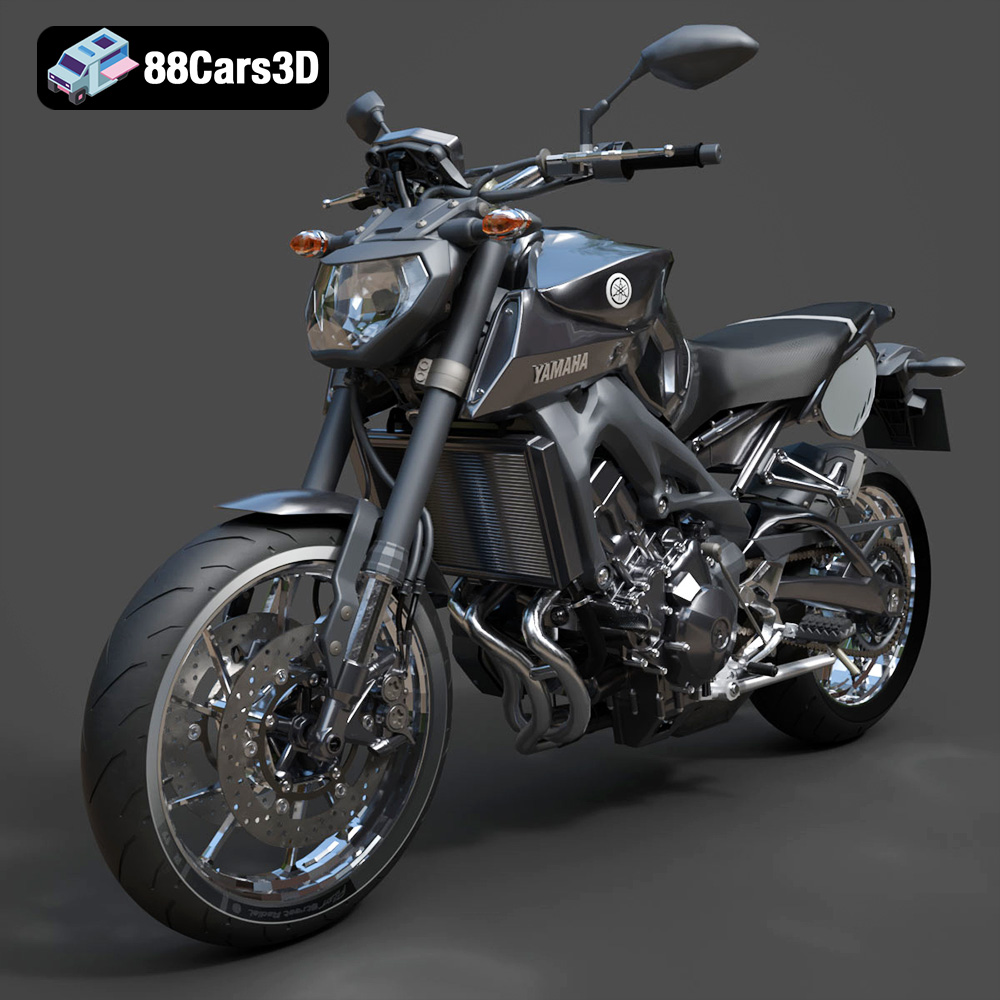
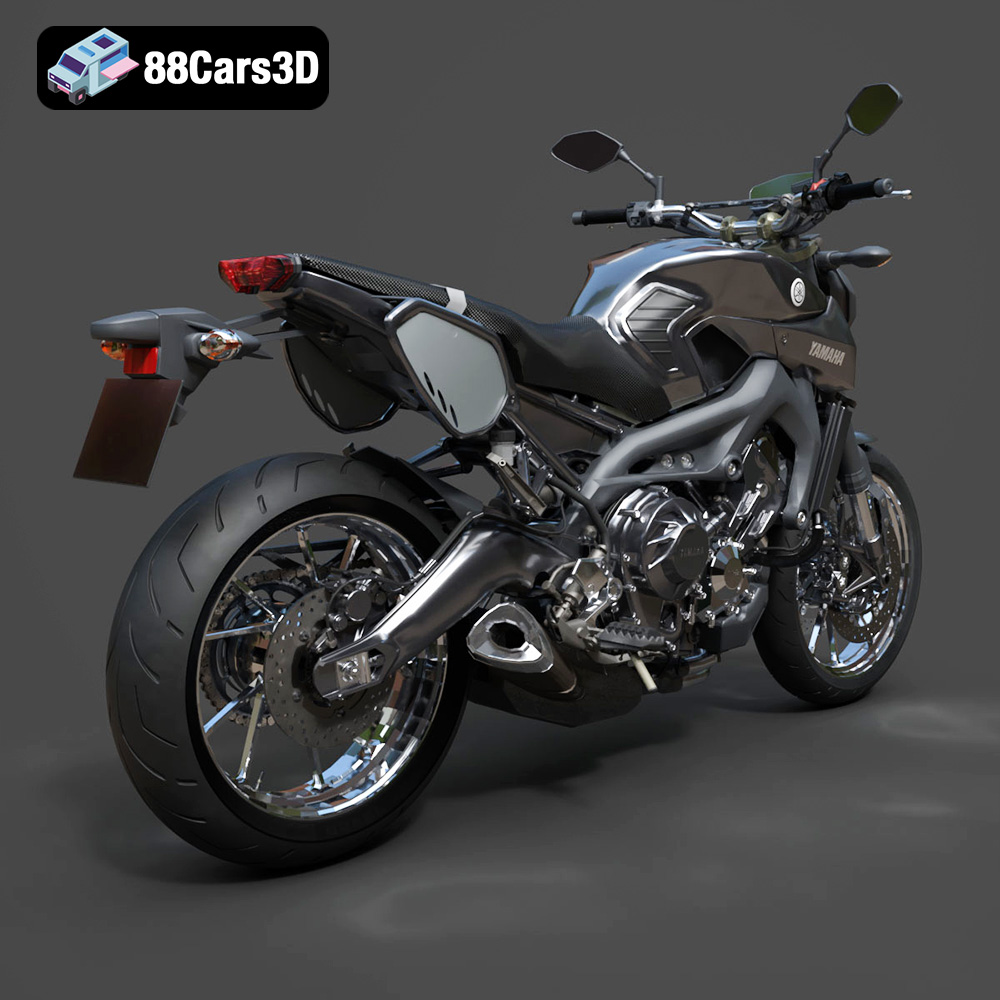
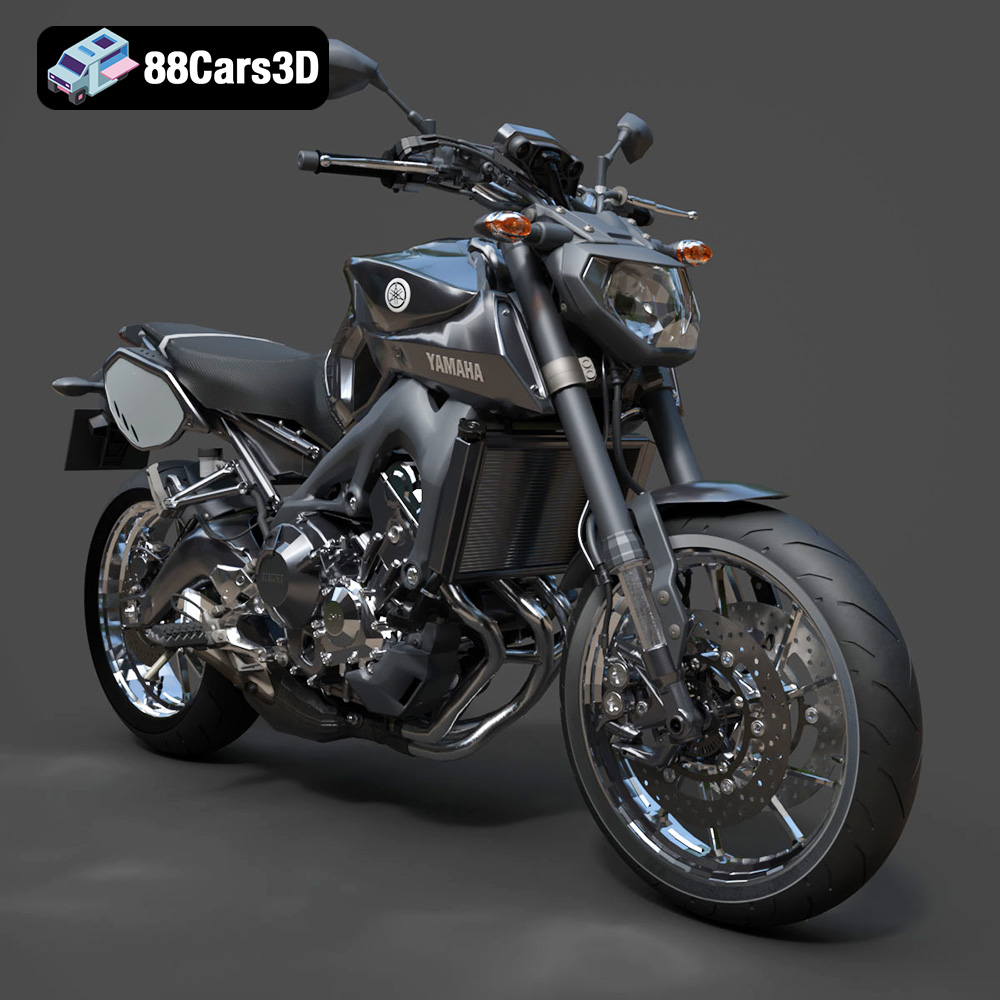
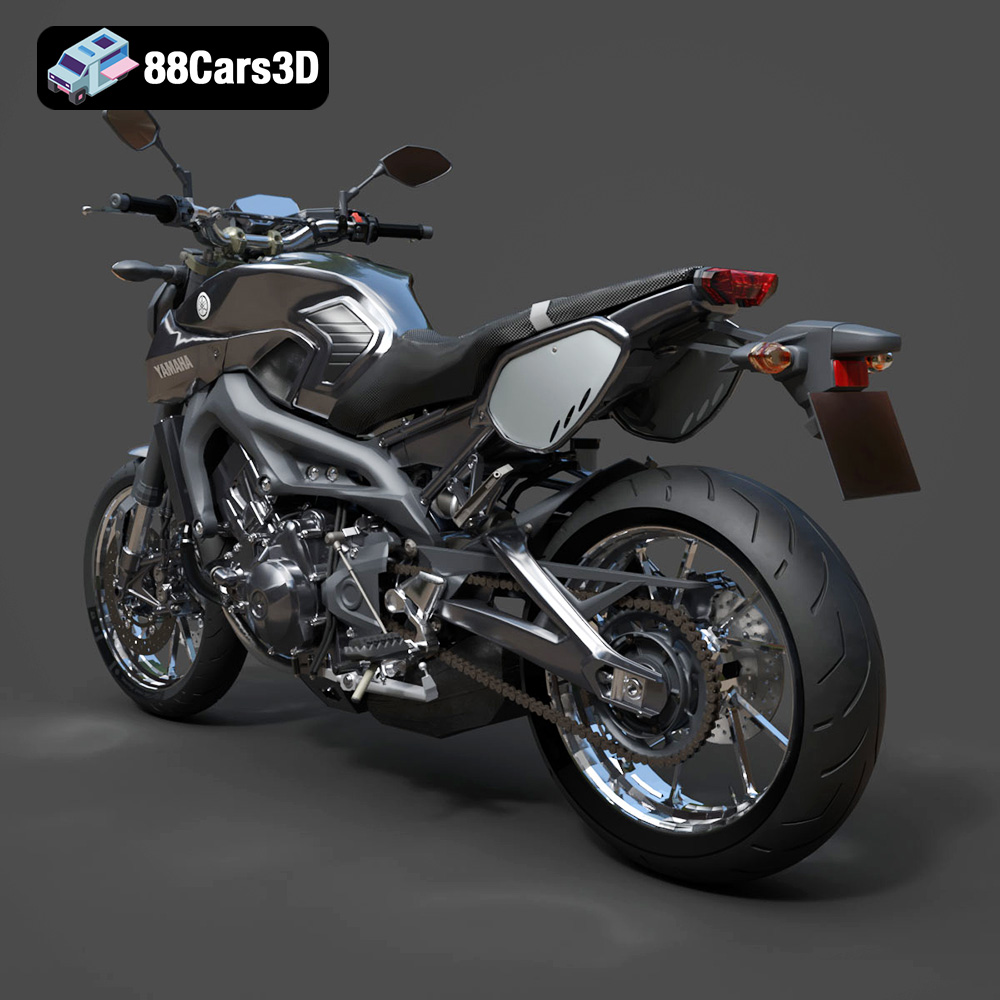
The Yamaha MT-09 Tracer 2015 3D Model is a high-detail digital recreation of the versatile sport-touring motorcycle known for its aggressive styling, lightweight chassis, and dynamic three-cylinder performance. Designed for both urban riding and long-distance touring, the 2015 MT-09 Tracer combines sporty DNA with comfort-oriented ergonomics. This 3D model accurately represents the sharp front fairing, dual headlight assembly, adjustable windscreen, exposed frame structure, sculpted fuel tank, stepped seat configuration, and sport-touring exhaust system. Built with clean topology and real-world scale accuracy, it is ideal for rendering, animation, automotive visualization, game development, and AR/VR experiences. Perfect for urban environments, mountain road scenes, touring simulations, cinematic projects, and motorcycle games.
$39.99
Product Image Gallery