Get 20% OFF All Premium 3D & STL Models!

The world of 3D visualization and content creation is constantly evolving, demanding ever-higher levels of detail, accuracy, and versatility from digital assets. For automotive and motorcycle enthusiasts, designers, game developers, and visualization specialists, access to meticulously crafted 3D models is paramount. These assets serve as the foundational building blocks for everything from cinematic renders and immersive game environments to interactive AR/VR experiences and even tangible 3D prints. Today, we delve into the technical intricacies and creative potential of a standout asset: the Yamaha MT-09 Tracer 2015 3D Model.
This exceptional digital recreation captures the essence of the versatile sport-touring motorcycle, renowned for its aggressive styling, lightweight chassis, and dynamic three-cylinder performance. Whether your project demands realistic automotive rendering, engaging game assets, or precise simulation components, a high-quality model like the MT-09 Tracer from 88cars3d.com provides an unparalleled starting point. We’ll explore how this model, with its clean topology, real-world scale, and broad compatibility, empowers professionals across various industries to bring their visions to life with stunning realism and efficiency.
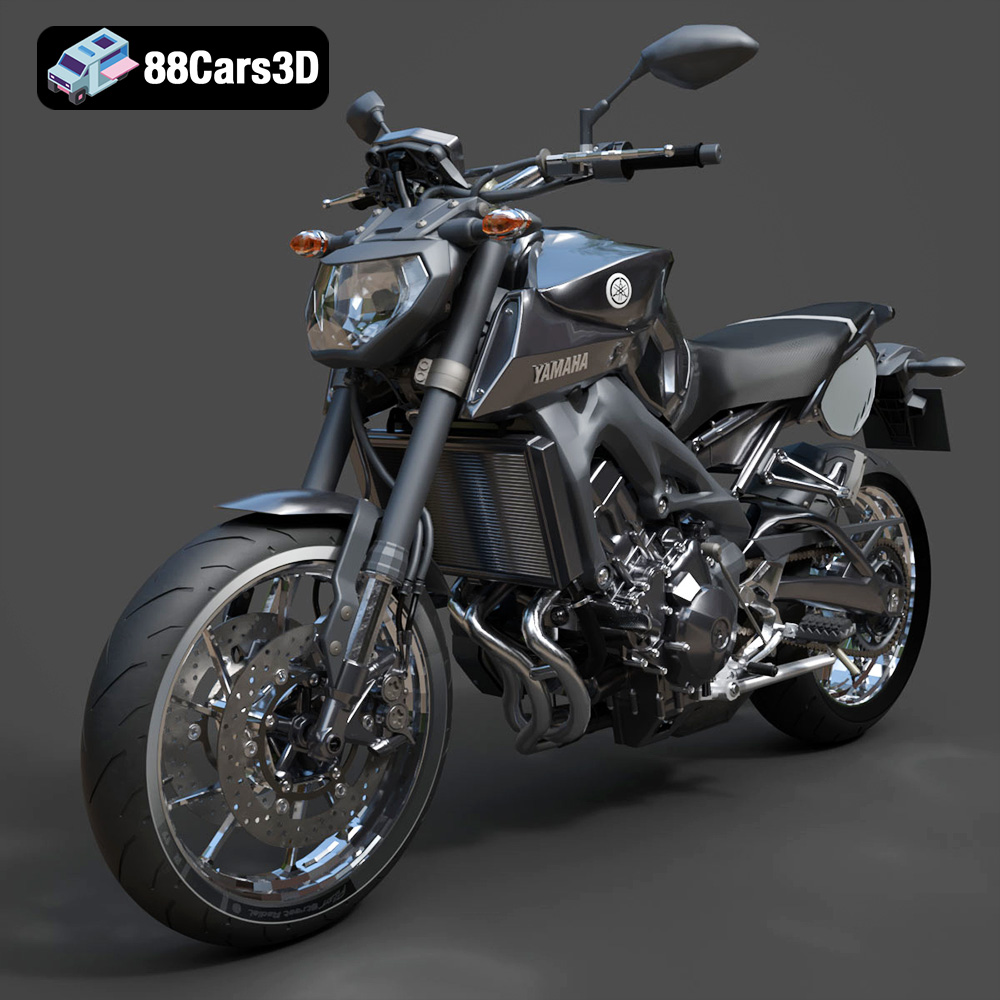
Recreating an iconic vehicle in three dimensions requires a keen eye for detail and a deep understanding of its design philosophy. The Yamaha MT-09 Tracer 2015 is a motorcycle that skillfully blends sporty DNA with comfort-oriented ergonomics, making it a favorite for both urban commuting and long-distance touring. Translating this balance into a 3D model involves precise modeling techniques to ensure every curve, panel gap, and mechanical component is faithfully represented.
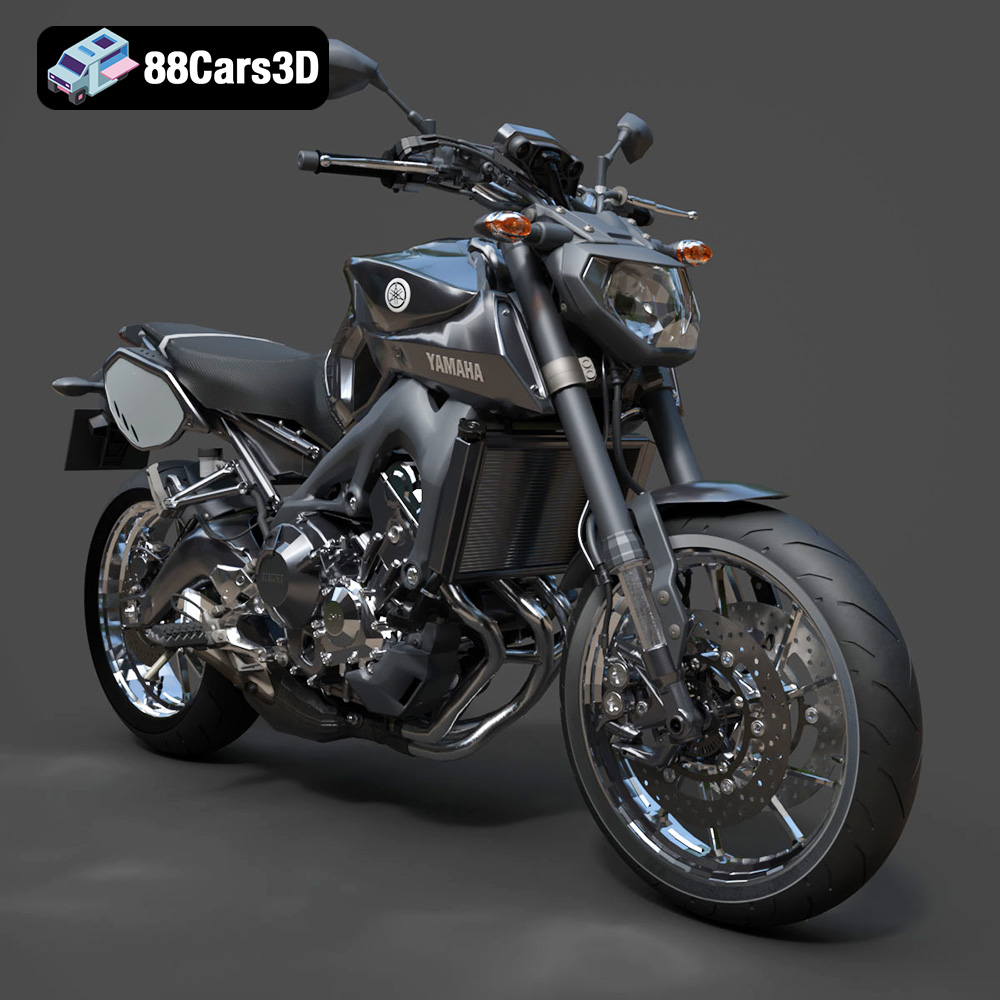
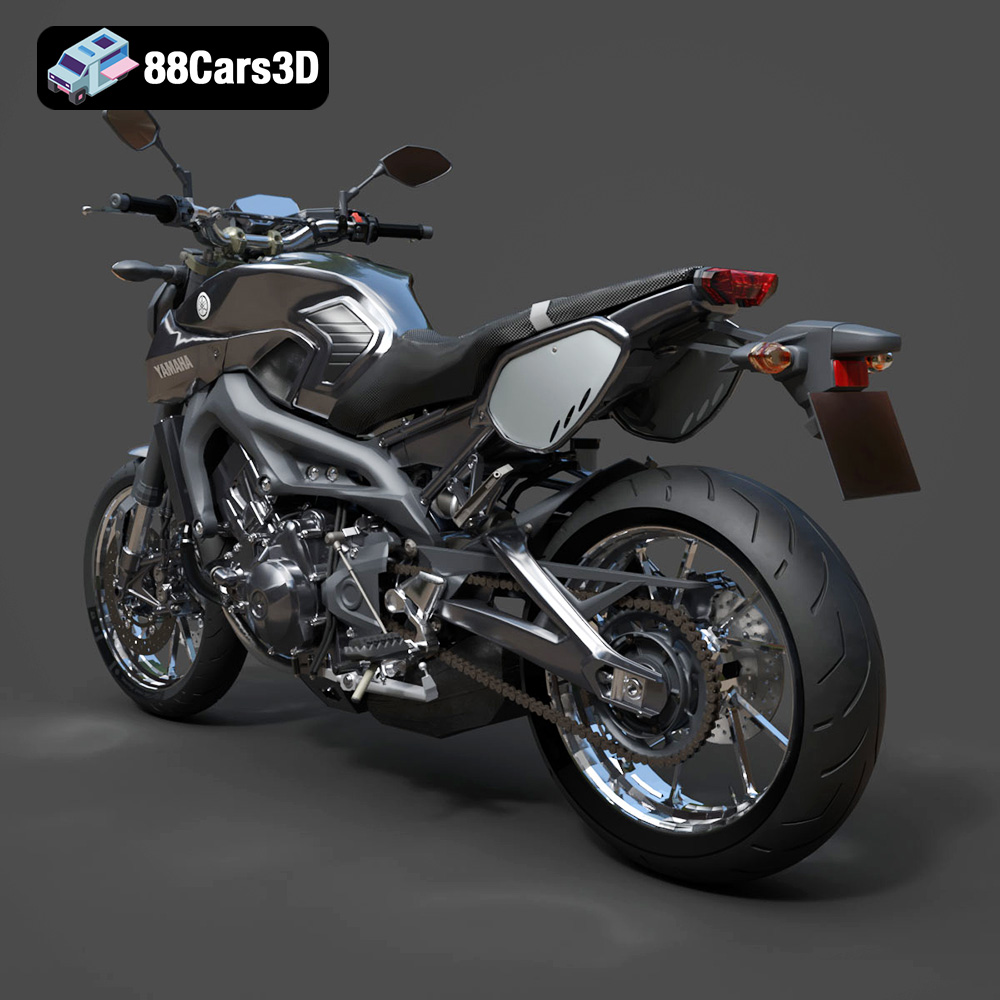
The digital representation of the MT-09 Tracer meticulously reproduces its signature features. This includes the sharp front fairing, which contributes to its aerodynamic profile, and the distinctive dual headlight assembly that gives the bike its aggressive face. The adjustable windscreen geometry is not just a visual detail but a functional element for potential animation or customization. Attention to the exposed frame structure, sculpted fuel tank, and sport-touring exhaust system ensures that the model not only looks authentic but also provides the structural integrity expected in a real-world vehicle. These details are critical for automotive rendering where every visual cue contributes to the realism of the scene.
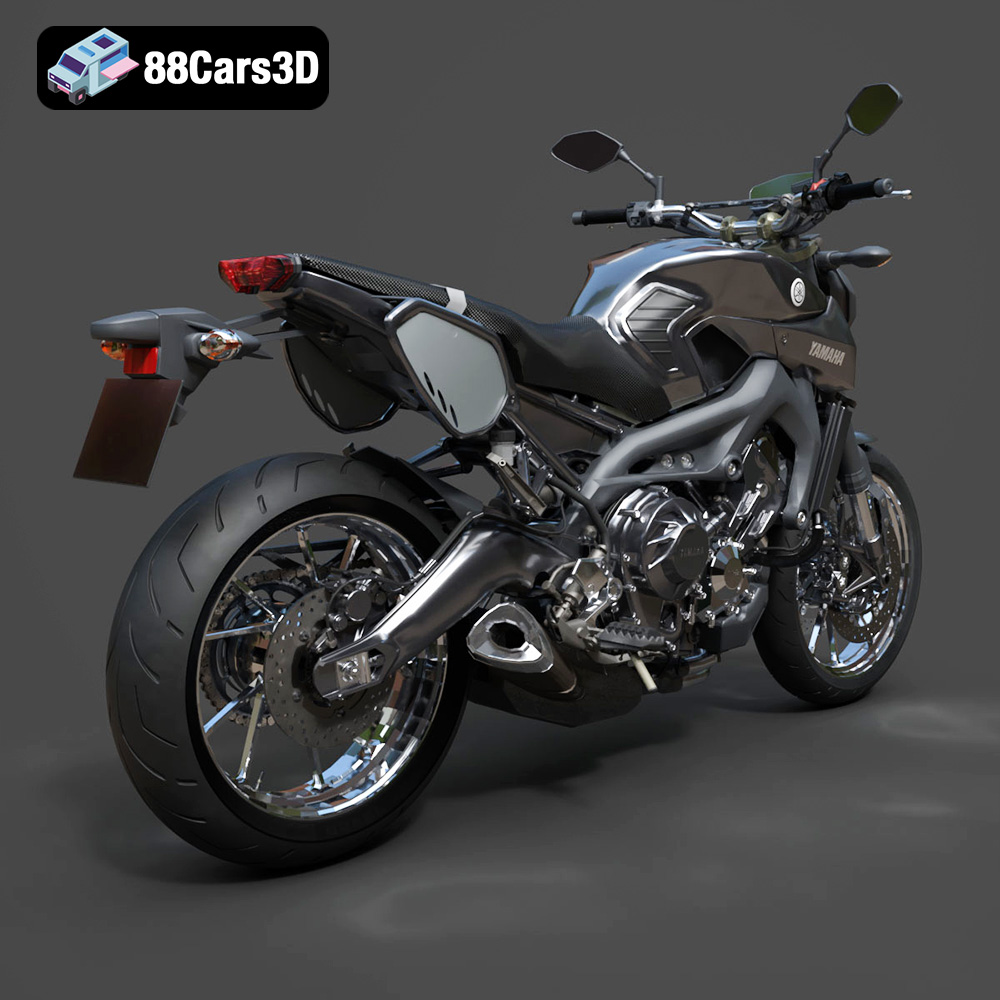
Beyond the primary bodywork, the model extends its fidelity to critical mechanical and rider-centric elements. The front and rear disc brake detailing, chain drive, and rear swingarm geometry are all present, crucial for close-up renders or detailed mechanical visualizations. Furthermore, the cockpit and rider area have received equal attention. The digital instrument cluster layout, handlebar assembly with control switches, brake and clutch lever detailing, and the stepped rider and passenger seat design are all accurately modeled. Even the foot pegs and their rear-set positioning contribute to a comprehensive digital twin. Such granular detail ensures that whether viewed from afar in an open-world game or scrutinized in a high-resolution promotional render, the Yamaha MT-09 Tracer 2015 3D Model holds up to scrutiny.
In the diverse landscape of 3D content creation, understanding the various file formats available is crucial for seamless integration into different software, engines, and pipelines. The Yamaha MT-09 Tracer 2015 3D Model from 88cars3d.com offers an extensive range of formats, each serving specific purposes and workflows. Choosing the right format can significantly impact compatibility, performance, and the level of editability for your project, from automotive rendering to game asset development.
The .blend format is the native file type for Blender, a powerful open-source 3D creation suite. When you receive a model in .blend format, it often means you’re getting a fully editable Blender scene. This typically includes the raw mesh data, materials (Blender’s Cycles or Eevee setups), textures, lighting, camera setups, and even animation data. For artists already working within the Blender ecosystem, this format offers the highest degree of flexibility for customization, material tweaks, animation, and further scene development without any data loss during conversion. It’s excellent for those who want to dive deep into the model’s construction and integrate it natively into their Blender projects.
.fbx (Filmbox) stands as one of the most widely adopted proprietary file formats for 3D data interchange across various software applications. Developed by Autodesk, it’s particularly ideal for exporting 3D models with animation, rigging, and material information between programs like 3ds Max, Maya, Cinema 4D, and game engines like Unreal Engine and Unity. For a model like the MT-09 Tracer, an .fbx file would typically contain the mesh geometry, UV mapping, basic material assignments, and often hierarchical data, making separate wheels, steering, and suspension components ready for animation. Its robust nature makes it a go-to for complex game assets or animation pipelines.
The .obj (Wavefront Object) format is a universal standard known for its widespread compatibility. Almost every 3D software can import and export .obj files, making it an excellent choice for cross-software compatibility. It primarily stores geometry (vertices, normals, UVs, and faces) and can link to an accompanying .mtl (material library) file for basic material properties and texture references. While it doesn’t support animation or advanced rigging, its simplicity and ubiquity make it a reliable format for transferring pure mesh data, especially when the goal is to re-texture or re-rig the model in a new environment. For general 3D car models, .obj is a solid, no-frills option.
.glb (GL Transmission Format Binary) is a modern, efficient format optimized for the web and real-time applications, particularly AR, VR, and browser-based displays. It’s a binary version of the glTF format, consolidating all model data—geometry, materials, textures, animations—into a single file. This “all-in-one” packaging makes it incredibly easy to load and render quickly in web browsers, mobile apps, and dedicated AR/VR platforms. For showcasing the MT-09 Tracer in a virtual showroom or an interactive web configurator, .glb is the format of choice due to its compact size and performance-driven design.
The .stl (STereoLithography) format is the de facto standard for 3D printing. Unlike other formats that describe surface geometry using various methods, .stl approximates surfaces using a collection of interconnected triangles. It contains no color, texture, or material information, focusing solely on the geometric data necessary for manufacturing processes like additive manufacturing. For users looking to 3D print a miniature replica of the Yamaha MT-09 Tracer, the .stl file ensures the mesh is manifold (watertight) and ready for slicing software. It’s the critical link between a digital 3D model and a physical object.
.ply (Polygon File Format, or Stanford Triangle Format) is another format primarily used for storing 3D data, particularly from 3D scanners. It can store a wider range of properties than .obj or .stl, including color per vertex, normal vectors, and transparency, making it suitable for scientific visualization, CAD, or detailed analysis. While less common for general asset distribution, its ability to hold rich mesh information can be valuable for specific applications requiring precision and additional data points.
The .unreal format, though not a distinct file extension in the same way as .fbx or .obj, refers to assets specifically prepared and optimized for Unreal Engine. This typically means the model has been imported, configured with Unreal-specific materials (like PBR setups), UV channels for lightmaps, collision meshes, and potentially LODs (Levels of Detail) to ensure optimal performance within the engine. When a model is provided as “.unreal,” it signifies that it’s an engine-ready asset, saving developers significant setup time for game development or real-time architectural visualization projects.
The .max format is the native file type for Autodesk 3ds Max, one of the leading software packages for 3D modeling, animation, and rendering. Similar to .blend, a .max file contains the complete scene information: geometry, materials (V-Ray, Corona, Arnold setups), textures, lighting, cameras, animation, and scene organization. Providing the Yamaha MT-09 Tracer 2015 3D Model in .max format ensures that users of 3ds Max can access the model with all its original settings, making it highly versatile for high-end rendering and detailed scene composition within their preferred environment.
The true value of a high-quality 3D model lies in its seamless integration into various professional pipelines. The Yamaha MT-09 Tracer 2015 3D Model, with its detailed construction and versatile file formats, serves as an invaluable asset for a multitude of creative and technical endeavors.
For studios specializing in automotive rendering, the MT-09 Tracer model is a perfect fit. Imagine creating stunning promotional materials for motorcycle brands, touring advertisements, or engaging marketing visuals. Using software like 3ds Max, Blender, or Maya, artists can import the model, apply advanced physically based rendering (PBR) materials, and set up realistic lighting environments. The model’s clean topology and accurate scale ensure that light interacts correctly with its surfaces, from the glossy paint of the fuel tank to the metallic sheen of the exhaust. Furthermore, the separate, animatable components—wheels, steering, suspension—allow for dynamic shots, showcasing the motorcycle in motion or performing maneuvers, elevating the quality of any automotive visualization project.
Game development demands performance without sacrificing visual quality. The Yamaha MT-09 Tracer 2015 3D Model is optimized for real-time engines, making it an ideal game asset. Whether it’s a motorcycle racing game, an open-world riding simulation, or a detailed touring environment, the model’s polygon flow is designed for efficiency. Developers can import the .fbx or .unreal formats directly into engines like Unreal Engine or Unity, quickly setting up collisions, LODs (Levels of Detail) for performance optimization across different distances, and integrating it into game physics systems. The proper pivot setup for steering and wheel rotation further streamlines the rigging process, allowing for realistic in-game handling and animation that enriches the player’s experience. This translates to a significantly faster iteration cycle for game studios.
Augmented Reality (AR) and Virtual Reality (VR) are transforming how we interact with digital content, offering immersive experiences that demand optimized assets. The MT-09 Tracer 3D model is perfect for virtual showrooms where customers can explore the bike in 3D, customize colors, and even take a virtual test ride. Utilizing the .glb format, developers can easily integrate the model into web-based AR/VR applications or dedicated platforms. The optimized geometry ensures smooth performance on a range of devices, from high-end VR headsets to mobile phones running AR apps. Interactive motorcycle demonstrations, educational simulations, or even virtual reality training scenarios can all benefit from the model’s fidelity and performance-ready nature, providing a rich, interactive experience.
Beyond its visual accuracy, the Yamaha MT-09 Tracer 2015 3D Model boasts several technical advantages that enhance its usability and efficiency in professional production environments. These attributes are crucial for artists and developers seeking reliable and easy-to-manage 3D assets.
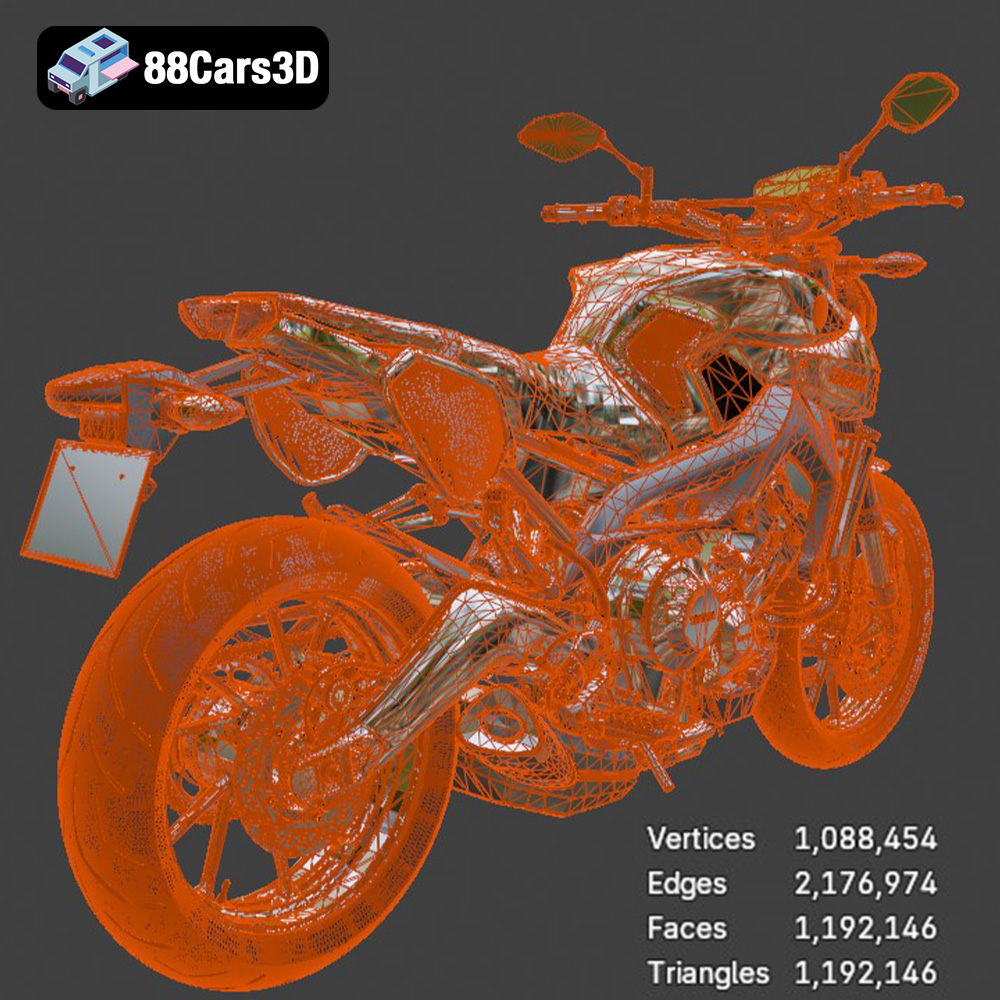
A well-structured mesh is the backbone of any high-quality 3D model. The MT-09 Tracer features clean and well-organized mesh structure, meaning polygons are distributed efficiently, avoiding unnecessary density in flat areas while providing sufficient detail where needed. This clean topology is vital for several reasons: it facilitates easier UV unwrapping for texturing, produces smoother deformations during animation, and reduces render times. For game development and real-time applications, optimized polygon flow is paramount for maintaining high frame rates without sacrificing visual fidelity, striking a balance between realism and performance. Models from 88cars3d.com are typically built with these considerations at the forefront.
Accuracy in scale is not just about visual correctness; it’s a technical necessity for many applications. The MT-09 Tracer model is built with real-world scale accuracy, ensuring that when imported into any scene or engine, it will immediately fit without requiring tedious resizing. This is especially important for architectural visualization, vehicle simulations, or any project where precise spatial relationships are critical. Furthermore, the model comes with proper pivot setup for steering and wheel rotation, along with separate wheels, steering, and suspension components. This pre-rigged structure vastly simplifies the animation process, allowing animators to quickly set up dynamic shots, simulate movement, or integrate the model into complex physics engines without extensive prep work.
The breadth of included file formats (.blend, .fbx, .obj, .glb, .stl, .ply, .unreal, .max) speaks directly to the model’s commitment to workflow efficiency. This extensive compatibility ensures that regardless of an artist’s preferred software—be it Blender, 3ds Max, Maya, Cinema 4D, or real-time engines like Unreal and Unity—they can readily integrate the MT-09 Tracer into their existing pipeline. This eliminates the time-consuming process of format conversion, potential data loss, or the need to re-create materials from scratch. The provision of engine-ready assets, particularly the .unreal format, further reduces setup time for game developers, allowing them to focus more on creative implementation and less on technical asset preparation.
Beyond digital visualization, the Yamaha MT-09 Tracer 2015 3D Model offers an exciting path to physical creation through 3D printing. This capability transforms a virtual asset into a tangible collectible, display piece, or even a prototype, adding another layer of versatility to its applications.
For a 3D model to be successfully printed, it needs to adhere to specific geometric requirements, primarily being “manifold” or “watertight”—meaning it has no holes, internal geometry, or intersecting faces that would confuse a 3D printer’s slicer software. While the .stl format is specifically designed for this, the underlying mesh quality is crucial. The MT-09 Tracer’s clean and well-organized mesh structure simplifies this conversion, minimizing potential errors. Designers can prepare the model by checking for manifold geometry, ensuring consistent normal directions, and potentially thickening thin walls to meet minimum print specifications. This often involves using software like Blender or Meshmixer to fine-tune the model before exporting to .stl.
The product description provides excellent guidelines for 3D printing the MT-09 Tracer, recommending scales like 1:18, 1:12, 1:10, or 1:8 for a balance of detail and manageable size. Print settings such as layer height (0.08–0.16 mm for FDM), wall thickness (1.2–2.0 mm), and infill (15–25%) are crucial for achieving structural integrity and detail. Supports are essential for overhangs like mirrors, the windscreen, exhaust, and rear swingarm, preventing print failures. Strategic print orientation—e.g., printing the frame angled and wheels separately—helps preserve fine details and reduces the need for excessive supports. After printing, post-processing steps like sanding to smooth layer lines, applying primer for an even surface, and painting with matte or gloss finishes can elevate the model to a high-quality collectible. Optional racing decals can add a personalized touch, bringing the digital design fully into the physical realm.
The ability to 3D print the Yamaha MT-09 Tracer opens up a world of customization. Users aren’t limited to a single factory color; they can experiment with custom paint schemes, add touring side cases or a top box, modify the windshield height, or even adjust wheel and brake caliper finishes. This level of personalization makes each printed model unique. For hobbyists, collectors, or even educational purposes, having a high-detail, physically accurate scale model of the MT-09 Tracer is a rewarding experience. It provides a tangible link to the digital design process and celebrates the engineering and aesthetics of the original motorcycle.
The Yamaha MT-09 Tracer 2015 3D Model stands as a testament to the power of high-quality digital assets in today’s creative industries. Its meticulous detail, clean topology, and extensive file format compatibility make it an indispensable tool for a wide array of professional applications. From generating breathtaking automotive rendering for marketing campaigns to providing optimized game assets for immersive virtual worlds, and even bridging the gap to physical reality through 3D printing, this model offers unparalleled versatility.
Whether you are an automotive designer visualizing new concepts, a game developer crafting realistic environments, an AR/VR specialist creating interactive experiences, or a hobbyist looking to 3D print a stunning replica, the MT-09 Tracer provides the foundation for success. The thoughtful inclusion of diverse file formats, from the editable .blend and .max files to the universally compatible .fbx and .obj, and the specialized .glb for web/AR/VR and .stl for 3D printing, ensures that this asset seamlessly integrates into virtually any professional workflow. Explore the possibilities and elevate your projects with premium 3D car models and more, available at 88cars3d.com, where quality and versatility are paramount.
The Yamaha MT-09 Tracer 2015 3D Model is a high-detail digital recreation of the versatile sport-touring motorcycle known for its aggressive styling, lightweight chassis, and dynamic three-cylinder performance. Designed for both urban riding and long-distance touring, the 2015 MT-09 Tracer combines sporty DNA with comfort-oriented ergonomics. This 3D model accurately represents the sharp front fairing, dual headlight assembly, adjustable windscreen, exposed frame structure, sculpted fuel tank, stepped seat configuration, and sport-touring exhaust system. Built with clean topology and real-world scale accuracy, it is ideal for rendering, animation, automotive visualization, game development, and AR/VR experiences. Perfect for urban environments, mountain road scenes, touring simulations, cinematic projects, and motorcycle games.
$39.99