Get 50% OFF All Premium 3D & STL Models!

In the dynamic world of 3D visualization, the demand for highly detailed and technically accurate assets is paramount. Whether you’re an automotive designer striving for photorealistic renders, a game developer building immersive digital environments, or an engineer prototyping components through 3D printing, the quality of your base models dictates the success of your project. This is especially true for specialized vehicles, where intricate mechanics and industrial aesthetics require meticulous digital craftsmanship. Today, we’re delving into precisely such an asset: the Caterpillar CT680 Tractor Truck 2015 3D Model, a standout example of professional-grade 3D car models that addresses the diverse needs of modern creative and technical industries. This powerful model is designed not just for visual appeal, but for deep integration into complex workflows, offering unparalleled flexibility from high-fidelity rendering to practical 3D printing applications.
The Caterpillar CT680 is an icon of vocational heavy-duty trucking, renowned for its robustness, reliability, and distinctive design. Translating this real-world engineering marvel into a digital format requires a keen eye for detail and a deep understanding of 3D modeling principles. The Caterpillar CT680 Tractor Truck 2015 3D Model available on 88cars3d.com is a testament to this, delivering an asset that excels in both visual authenticity and technical utility.
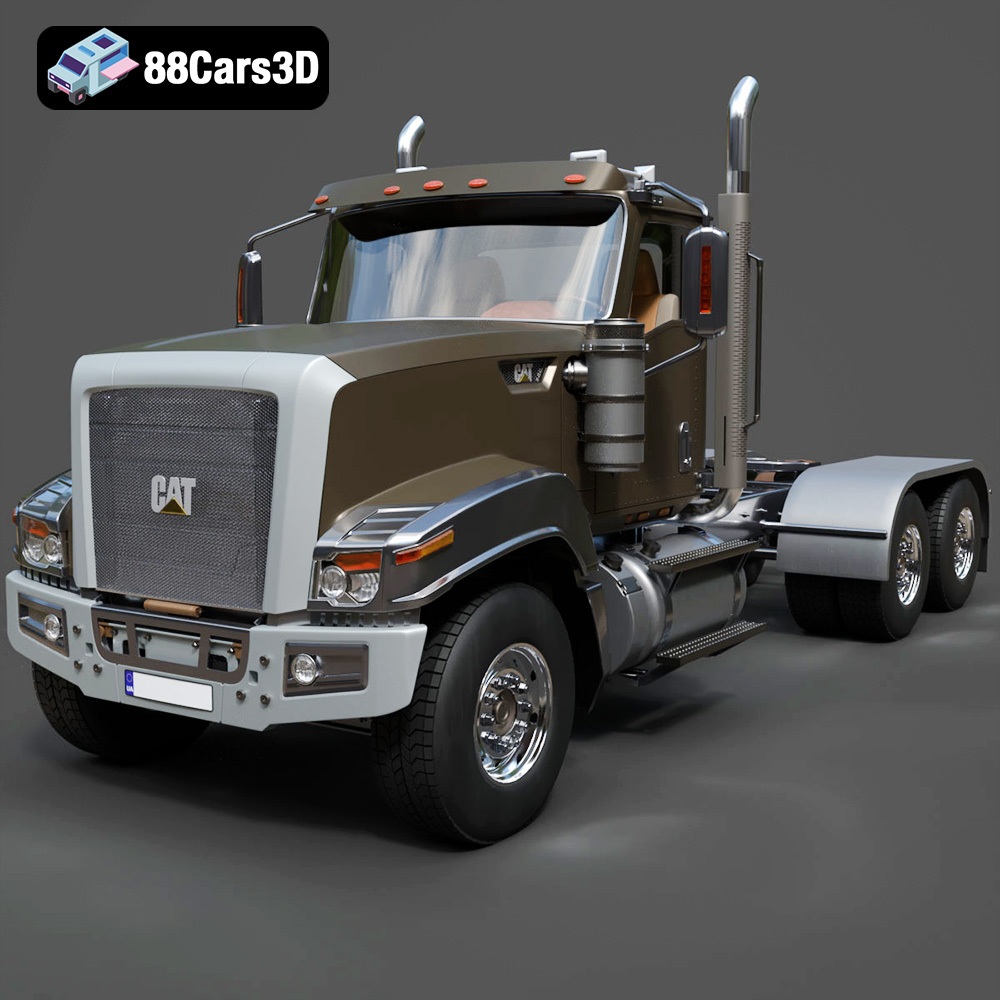
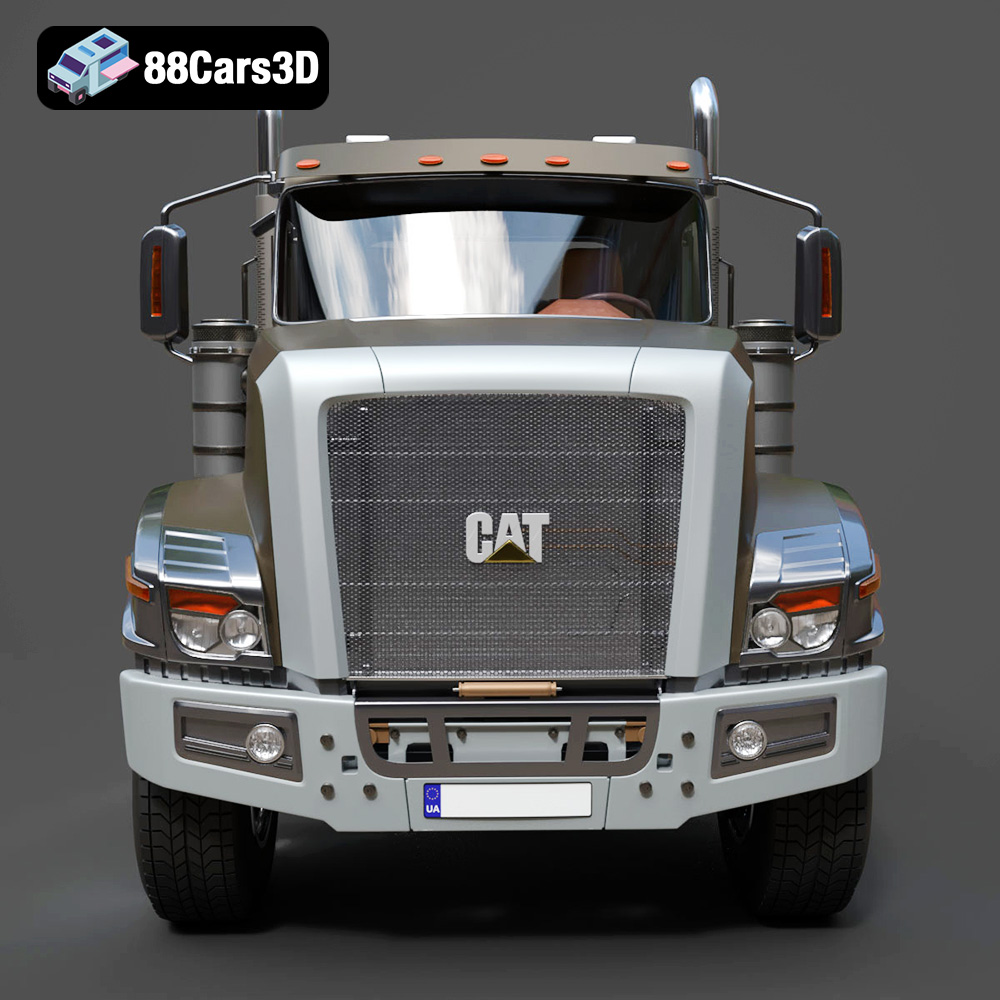
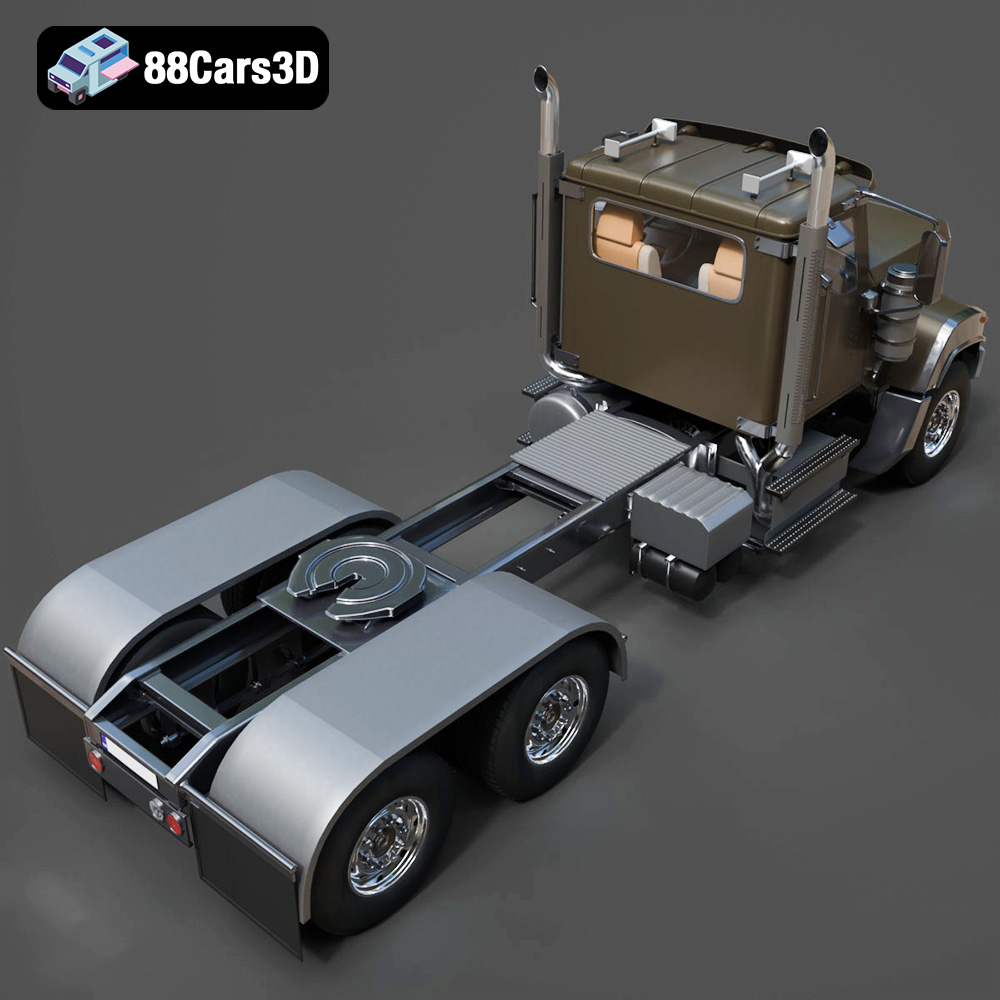
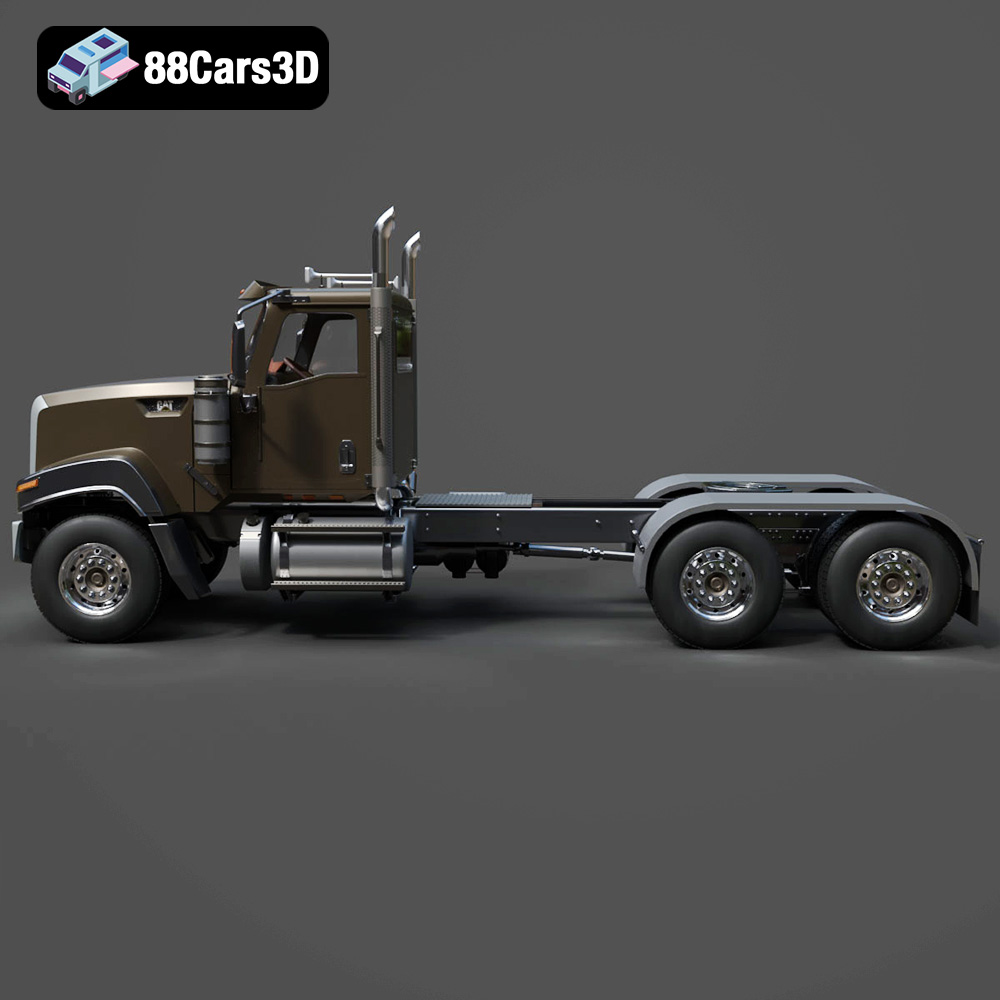
The exterior of this 3D model accurately captures the essence of the CT680, from its aerodynamic hood and bold grille design to its reinforced bumper and extended mirrors. Every element, including the exposed chassis frame, detailed fuel tanks, exhaust system, and side steps, has been meticulously recreated to maintain real-world proportions. The precision extends to functional components like the fifth-wheel coupling system, modeled for seamless trailer attachment in simulations or animations. The model’s clean topology ensures smooth deformations for animation and impeccable surfaces for high-resolution automotive rendering, making it an ideal choice for showcasing industrial strength and logistical prowess.
While often seen as secondary, a well-modeled interior significantly enhances realism, especially for driver’s eye views, AR/VR simulations, and detailed presentations. The Caterpillar CT680 model includes a faithfully reproduced dashboard and instrument cluster, a detailed steering wheel and driver control layout, and the driver’s seat and cabin interior structure. Console and panel detailing further enrich the virtual cabin experience. Crucially, the geometry for the interior, much like the exterior, is optimized for both real-time engines, where performance is key, and high-quality renders, where every reflection and texture counts. This dual-purpose optimization makes the model highly adaptable for diverse project requirements.
In the world of 3D modeling, the choice of file format is as critical as the model itself. Different formats serve specific purposes, offering varying levels of compatibility, data retention, and optimization for different software and end uses. The Caterpillar CT680 Tractor Truck 2015 3D Model from 88cars3d.com is provided in a comprehensive suite of formats, ensuring maximum flexibility for any professional workflow. Understanding each one is key to leveraging your 3D car models effectively.
The provision of all these formats with the Caterpillar CT680 Tractor Truck 2015 3D Model underscores the commitment of 88cars3d.com to professional users, ensuring that no matter the software or end goal, a compatible and optimized version of the model is readily available.
Automotive rendering is an art form that combines technical prowess with an artistic vision to produce visuals that are indistinguishable from photographs. The Caterpillar CT680 Tractor Truck 2015 3D Model provides an excellent foundation for achieving stunning results, whether for marketing, product visualization, or industrial presentations.
Importing the CT680 model into professional rendering software like 3ds Max or Blender is the first step. For 3ds Max users, the .max file provides a complete scene, while Blender users benefit from the .blend file. Alternatively, .fbx or .obj can be used for broader compatibility. Once imported, the focus shifts to creating a compelling environment. This involves setting up realistic lighting, often utilizing High Dynamic Range Images (HDRIs) for natural ambient illumination and reflections, complemented by area lights to emphasize specific features or mimic studio setups. Materials, particularly the truck’s paint, chrome, and rubber, require a physically based rendering (PBR) workflow to accurately simulate how light interacts with surfaces. Adjusting parameters like roughness, metallicness, and clear coat layers ensures the truck looks genuinely robust and road-worn, or factory-fresh. Careful camera angles and compositions are crucial to highlight the truck’s imposing presence and detailed design, making it ideal for high-impact automotive rendering.
Raw renders, no matter how good, almost always benefit from a professional touch in post-production. Software like Adobe Photoshop or Affinity Photo can be used for compositing elements, color grading to achieve a specific mood or brand aesthetic, and adding subtle atmospheric effects like dust, fog, or lens flares. Depth of field can be artfully applied to draw the viewer’s eye to key areas, while motion blur can convey a sense of speed in animated sequences. These techniques elevate a good render to an exceptional one, making the Caterpillar CT680 Tractor Truck 2015 3D Model truly shine in any industrial marketing or logistics presentation. The end result is a polished visual that captivates and communicates effectively.
The demand for realistic vehicle assets in game development and interactive simulations continues to grow. The Caterpillar CT680 Tractor Truck 2015 3D Model is meticulously crafted to serve as a high-quality game asset, balancing visual fidelity with performance efficiency, critical for real-time environments.
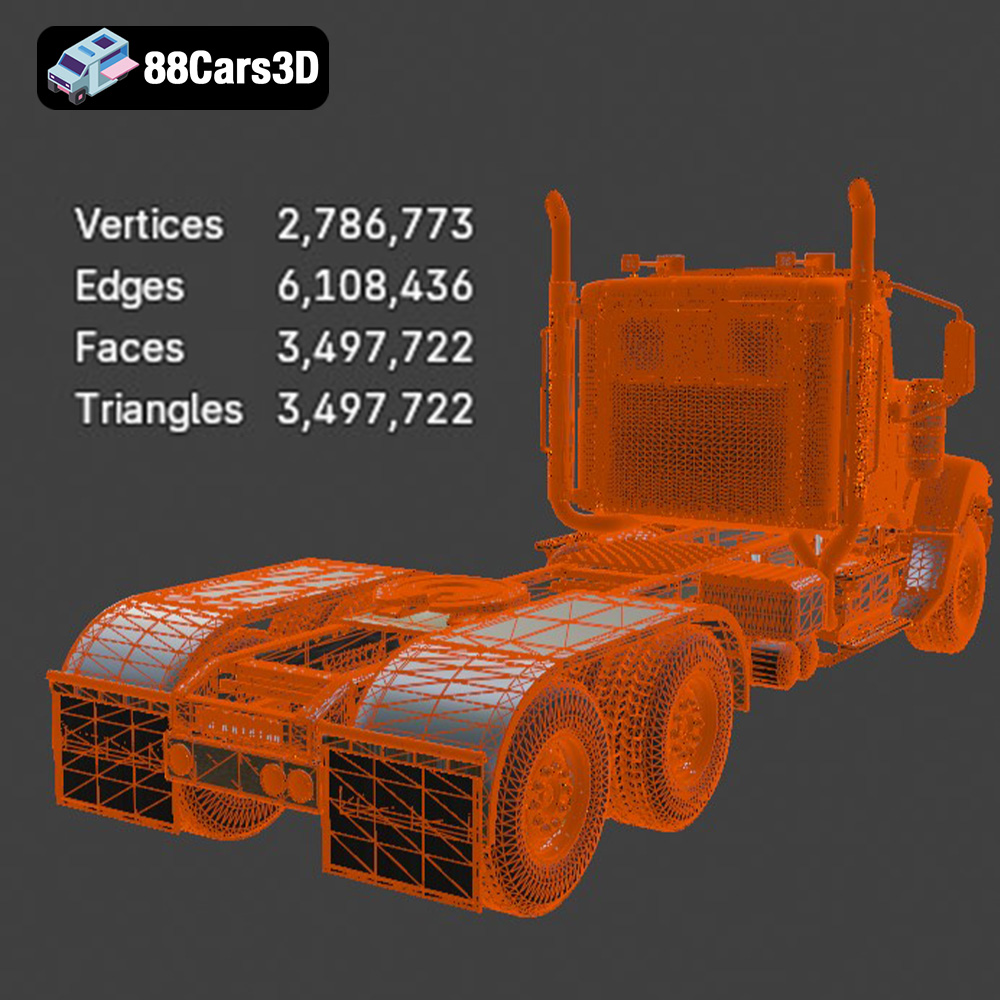
When integrating the CT680 into game engines like Unreal Engine, the .fbx or the dedicated .unreal format proves invaluable. Upon import, optimization is key. This includes generating Levels of Detail (LODs) – progressively simpler versions of the model that automatically swap in at a distance to save rendering resources without sacrificing perceived detail. Creating accurate collision meshes ensures realistic interactions with the environment and other vehicles. Materials can be converted to Unreal’s PBR system, often using material instances for easy color and texture variations without creating new materials for every fleet branding. For driving simulations, setting up the vehicle physics, perhaps utilizing Unreal Engine 5’s Chaos Vehicle system, allows for realistic handling, suspension, and tire dynamics. The model’s “optimized polygon flow” and “proper pivot setup for steering and wheel rotation” are crucial technical advantages that significantly streamline this integration process, making the CT680 a truly game-ready asset.
The utility of the CT680 extends far beyond traditional gaming. For AR/VR applications, this model can power interactive fleet demonstrations, allowing users to explore the truck in a virtual showroom or overlaid onto real-world environments. In industrial simulations, the model becomes a key component for vocational training, helping new drivers understand vehicle dynamics or mechanics practice maintenance procedures in a safe, virtual space. The .glb format is particularly useful here, offering a lightweight, web-friendly option for browser-based AR experiences. Such immersive industrial visualizations and freight simulations provide cost-effective and engaging alternatives to physical training or demonstrations, showcasing the robust capabilities of high-quality 3D car models.
The journey of a 3D model doesn’t always end on a screen. For enthusiasts, collectors, or even engineers needing a physical prototype, 3D printing offers an exciting avenue. The Caterpillar CT680 Tractor Truck 2015 3D Model is designed with 3D printing in mind, providing an .stl format specifically for this purpose.
The .stl format, included with the model, simplifies the process of bringing the CT680 into the physical world. STL files represent the model’s surface as a series of triangles, a language that 3D printers understand. It’s crucial that the model has “manifold geometry”—meaning it’s a completely enclosed, watertight mesh—to prevent errors during slicing and printing. While the provided .stl is ready for this, designers sometimes need to check for non-manifold edges or holes when converting complex models themselves. The inherent cleanliness and organization of the CT680’s mesh structure minimize these concerns, ensuring a smooth transition from digital to physical. This makes it a perfect foundation for creating tangible scale truck models and display miniatures.
Achieving a high-quality 3D print of a complex vehicle like the CT680 requires careful attention to print settings. The recommended scales (1:32 / 1:24 / 1:18 / 1:14) offer flexibility, with smaller scales often benefiting from resin (SLA) printing for finer details like mirrors and grille patterns. Layer height is critical for surface smoothness; 0.12–0.20 mm is generally advised for FDM, though resin printing for finer details might suggest even lower heights. Wall thickness (2–3 mm) and infill (20–35%) ensure structural integrity. Supports are typically required for overhangs such as mirrors, exhaust stacks, and chassis elements. For optimal results, print orientation is key: the cab can be printed upright, while the chassis might be printed flat for stability. Crucially, printing wheels separately allows for enhanced detail and easier post-processing. After printing, post-processing steps like sanding, priming, and applying an industrial paint finish, along with optional decals, can transform a raw print into a stunning, professional-grade scale model.
Beyond its inherent detail and multi-format compatibility, the true power of a high-quality 3D asset lies in its adaptability. The Caterpillar CT680 Tractor Truck 2015 3D Model offers extensive customization options, making it a valuable tool across numerous professional disciplines.
The provided clean mesh and logical material separation allow for easy customization. Professionals can effortlessly change body colors to match specific fleet branding, add custom decals or company logos for marketing materials, or modify wheel configurations to represent different tire types or operational needs. The ability to attach compatible trailer models opens up possibilities for complete logistics scenarios, creating dynamic and realistic visualizations. Furthermore, adjusting lighting setups for day, night, or specific industrial scenes ensures the truck is presented in the most impactful way, whether for a bright daytime highway scene or a gritty nighttime construction environment. This level of control is essential for producing bespoke content for clients or internal projects.
Investing in high-quality 3D car models like the Caterpillar CT680 from 88cars3d.com significantly accelerates production workflows. Instead of spending valuable time modeling a complex vehicle from scratch, artists and developers can focus on scene composition, animation, and unique project elements. This efficiency translates into cost savings and faster project delivery. Whether for architectural visualization projects requiring realistic industrial vehicles, engineering simulations needing precise representations, or marketing campaigns demanding stunning automotive renders, a versatile and technically sound model is an indispensable asset. The CT680 embodies this versatility, serving as a reliable cornerstone for any professional 3D library.
The modern 3D landscape demands assets that are not only visually impressive but also technically robust and universally adaptable. The Caterpillar CT680 Tractor Truck 2015 3D Model exemplifies these qualities, offering a highly detailed, accurately proportioned, and expertly optimized digital recreation of an iconic heavy-duty vehicle. Its comprehensive file format support, from .blend and .max for deep customization to .fbx and .unreal for game development, and .stl for tangible 3D prints, ensures it fits seamlessly into virtually any professional pipeline.
Whether your goal is to create photorealistic automotive rendering for an advertising campaign, develop an immersive game with compelling vehicle assets, build an interactive AR/VR training simulation, or even fabricate a physical scale model, the CT680 provides the precision and flexibility you need. It’s a prime example of the high-quality 3D car models available for professionals who refuse to compromise on detail or performance. Explore the potential of this exceptional asset and many more at 88cars3d.com, where premium 3D models empower your most ambitious projects.
The Caterpillar CT680 Tractor Truck 2015 3D Model is a high-detail digital recreation of the heavy-duty vocational tractor developed by Caterpillar Inc.. Built for durability and on-highway performance, the CT680 combines industrial strength with aerodynamic efficiency, making it a popular choice for logistics, construction, and long-haul transport operations. This 3D model accurately represents the truck’s aerodynamic hood, bold grille design, reinforced bumper, extended mirrors, exposed chassis frame, and fifth-wheel coupling system. Designed with clean topology and real-world proportions, it is ideal for rendering, animation, simulation, game development, and AR/VR industrial visualization. Perfect for highway scenes, logistics yards, construction environments, freight simulations, and commercial fleet presentations.
$59.90
.arvr
.blend
.caterpillar
.ct680
.fbx
.gameasset
.glb
.heavydutytruck
.industrialvehicle
.logisticsvehicle
.max
.obj
.ply
.rendering
.simulation
.stl
.tractortruck
.truck3dmodel
.unreal