Get 50% OFF All Premium 3D & STL Models!

In the dynamic world of 3D visualization, automotive design, and game development, the foundation of any compelling project lies in the quality of its assets. From bustling urban streetscapes to immersive virtual realities, the cars that populate these digital realms are more than mere props; they are crucial elements that define realism, scale, and atmosphere. Professionals constantly seek meticulously crafted 3D car models that offer both aesthetic fidelity and technical versatility.
Today, we delve into the intricate processes of integrating such high-quality assets into various workflows, showcasing how a well-prepared model can significantly elevate a project. Our focus will be on a particularly versatile and characterful example: the Daewoo Damas 2 Microvan 3D Model. This unassuming workhorse, digitally recreated with exceptional detail, provides a fantastic case study for understanding the technical specifications and application breadth expected from premium 3D assets found on platforms like 88cars3d.com.
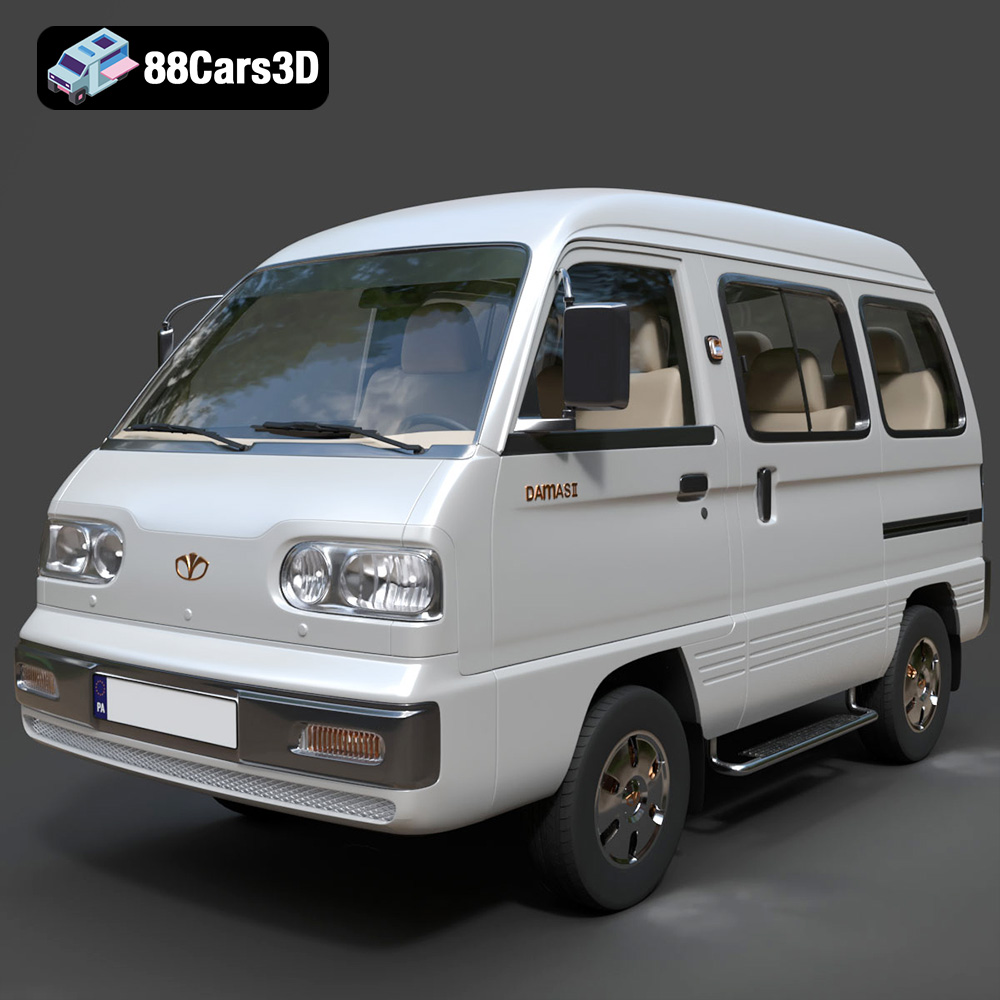
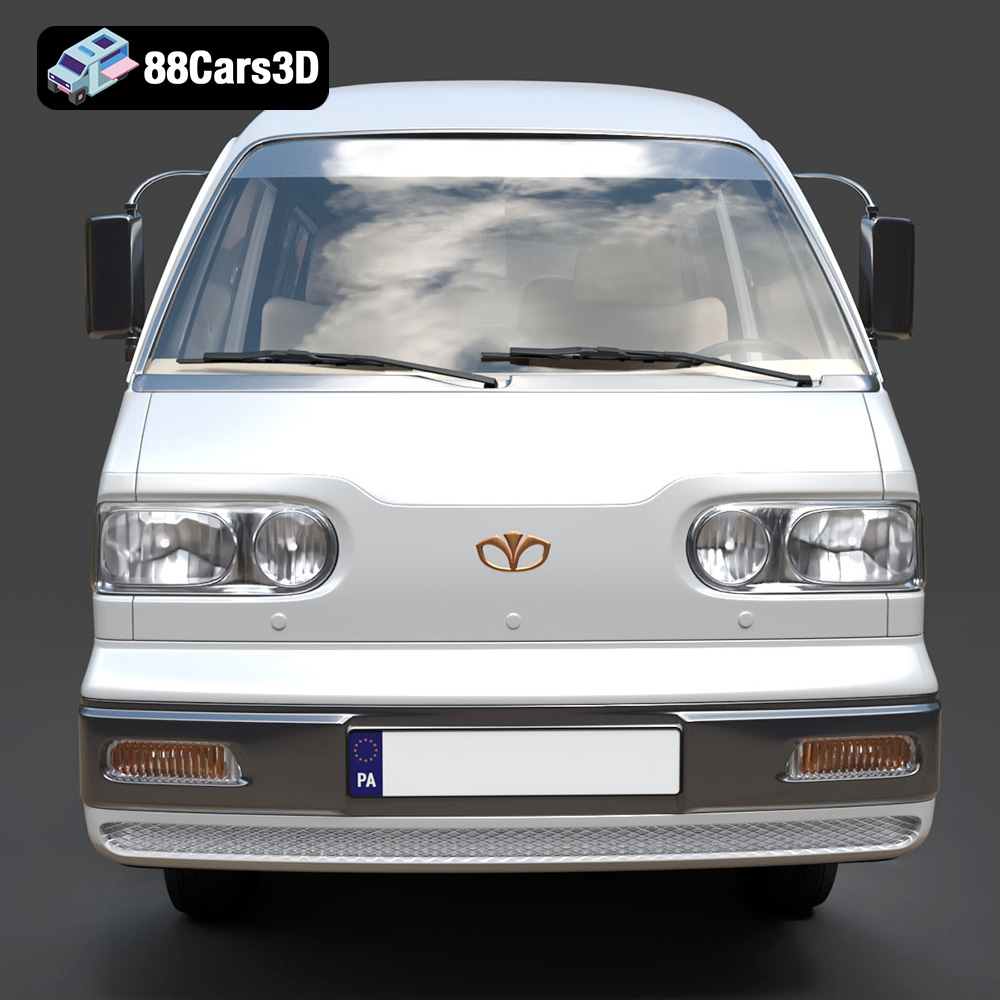
The Daewoo Damas 2 Microvan, in its real-world form, is an icon of practical urban transport. This compact commercial vehicle, a refinement of classic kei-van architecture, carved out its legacy across South Korea, Central Asia, and Eastern Europe. Known for its remarkable maneuverability, incredible space efficiency, and utilitarian charm, it became the ultimate urban delivery van and a popular choice for compact passenger transport. Its distinctive, slightly more rounded front fascia, featuring curved headlight and indicator clusters, marked a modernization while retaining its fundamental purpose.
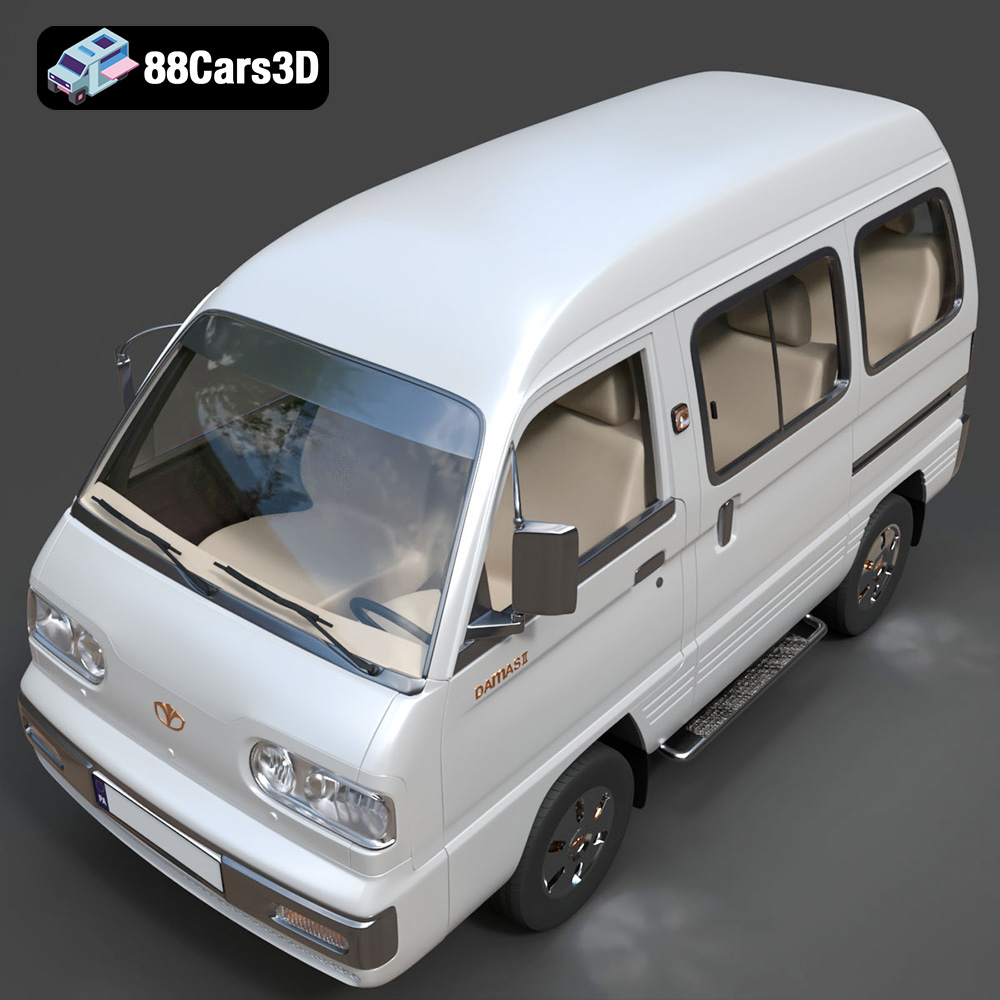
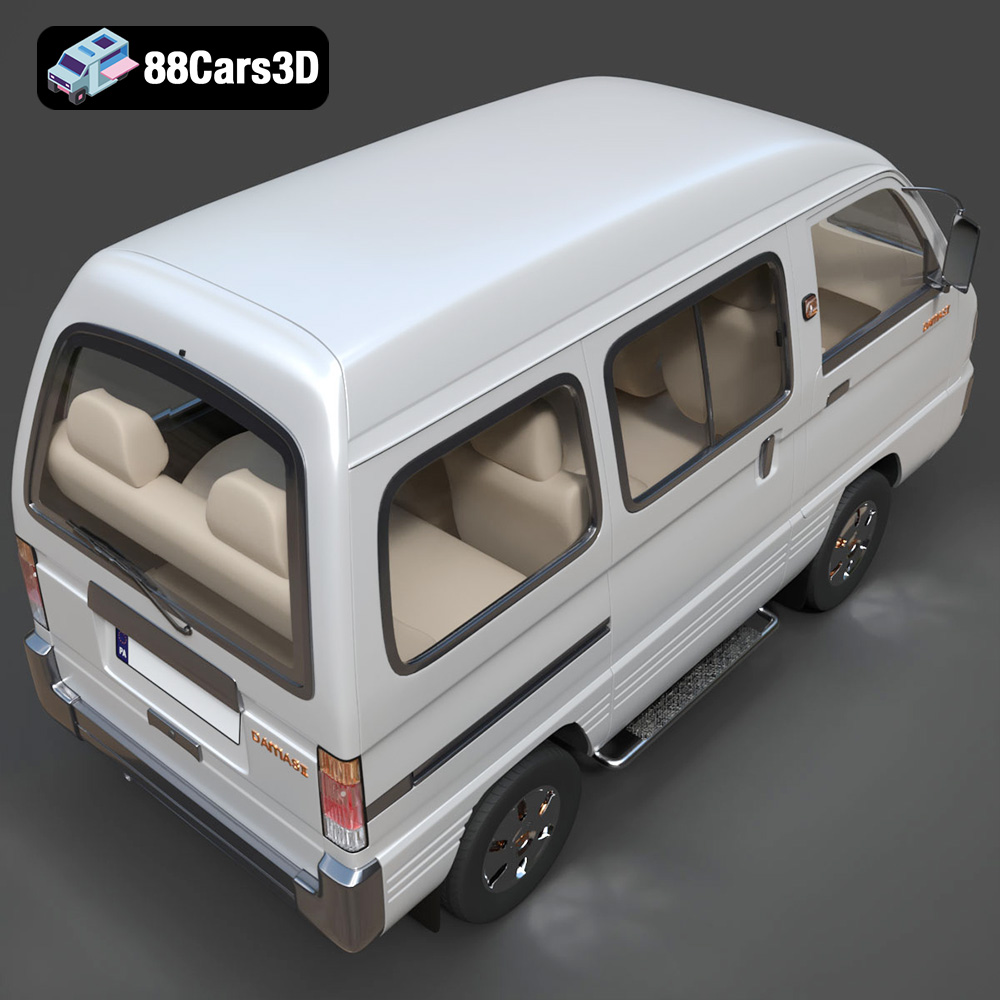
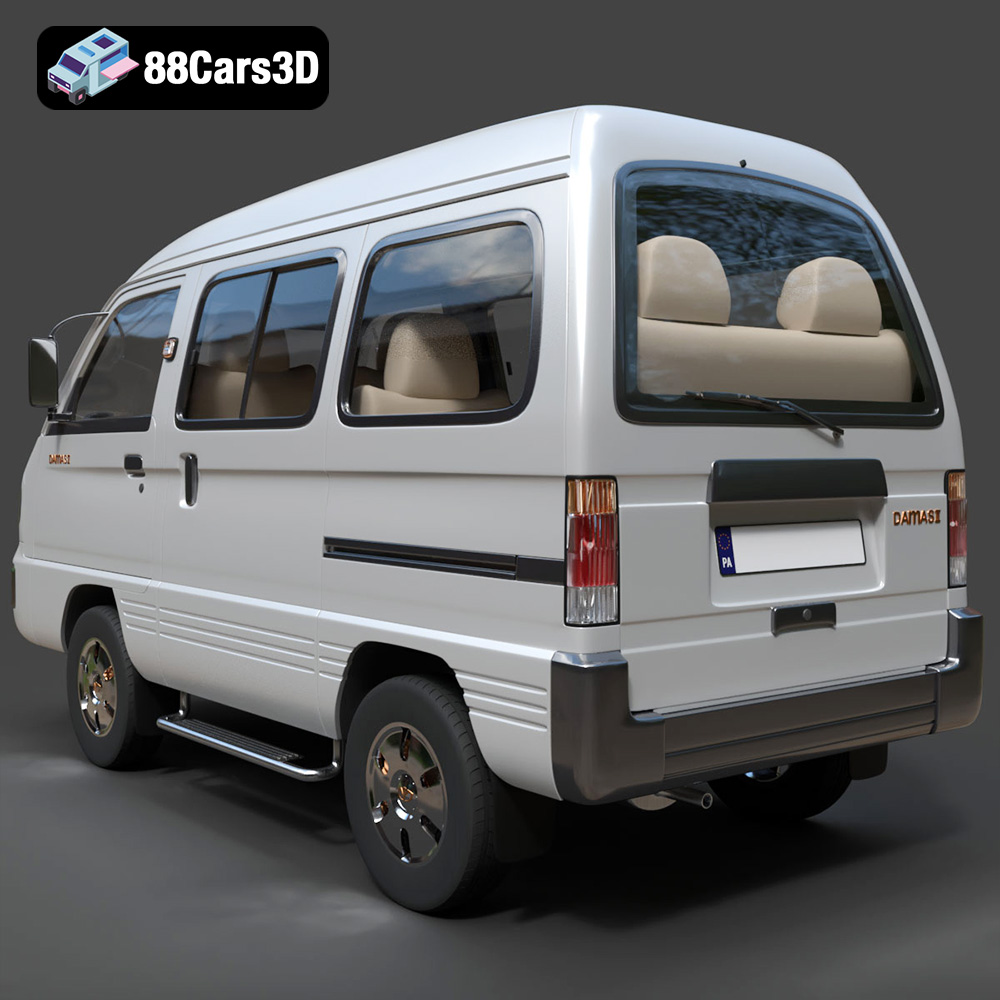
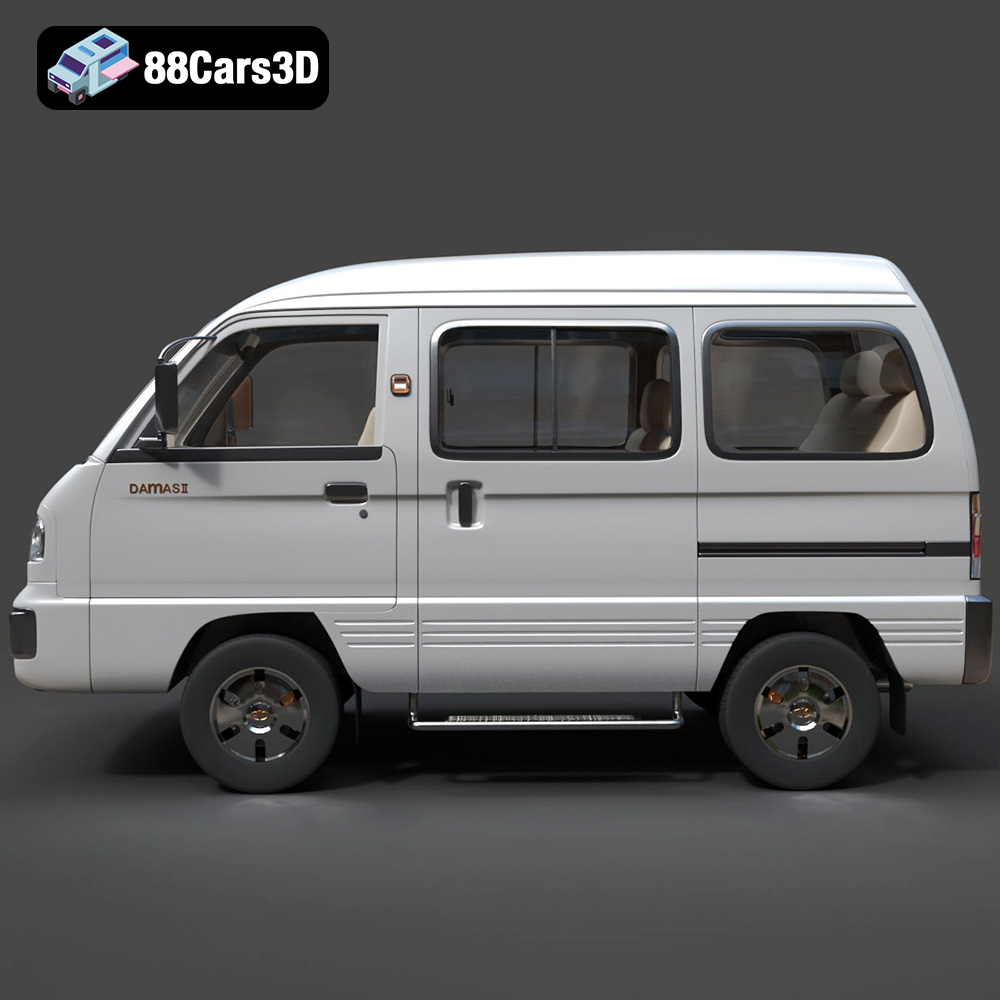
The challenge in creating a high-quality 3D car model of such a vehicle lies in faithfully reproducing its unique characteristics. The Daewoo Damas 2 Microvan 3D Model succeeds by accurately representing the facelifted exterior styling, from its cabover proportions and dual sliding rear doors to the functional rear liftgate. Every curve and panel line is meticulously modeled to ensure that the digital recreation resonates with the authentic look and feel of the real microvan. This level of detail makes it ideal for populating realistic street scenes, enhancing architectural visualizations, or providing an authentic backdrop for historical and commercial projects.
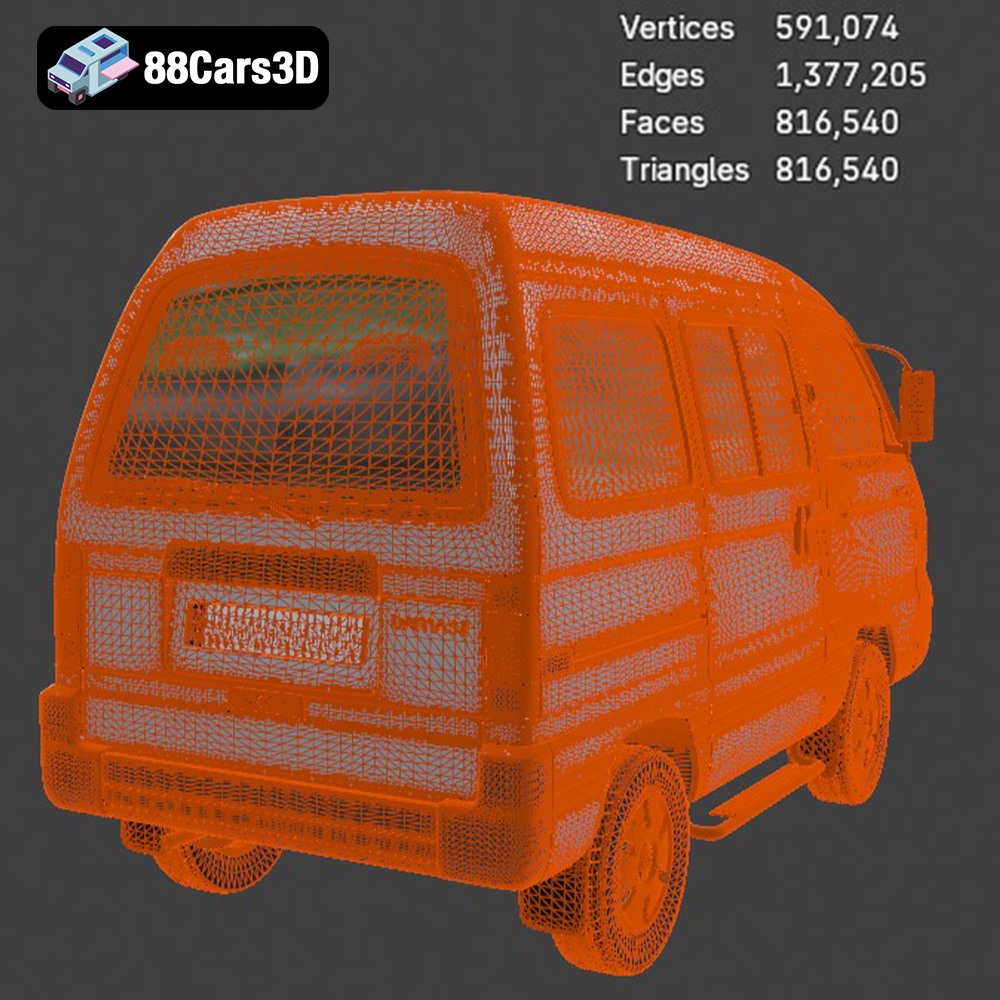
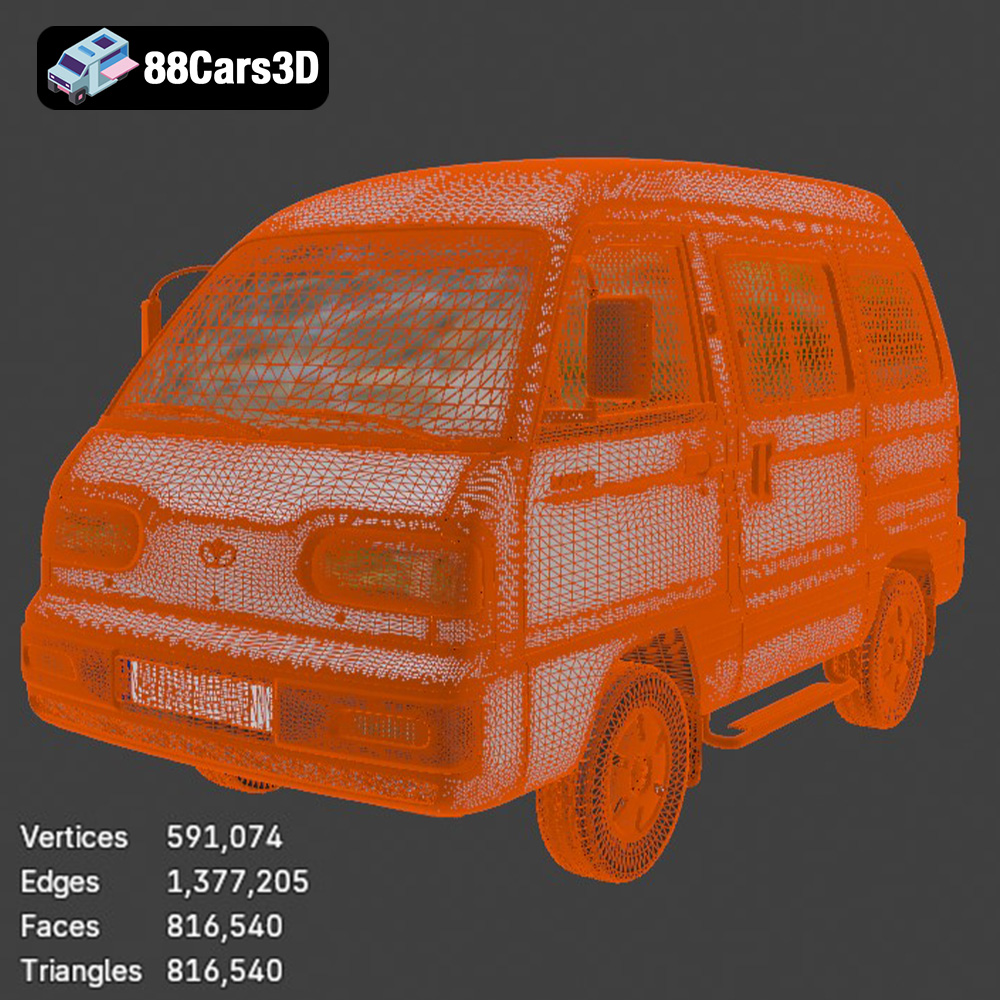
Technical precision is paramount. This 3D model is built with a dense, clean topology, ensuring premium visual fidelity and real-world scale accuracy. It boasts an impressive specification:
These numbers reflect a high-poly asset designed for close-up rendering where every detail counts. The exterior features are all present, from the utilitarian 12-inch steel wheels with optional basic hubcaps to the functional side mirrors, door handles, and black plastic trim. The interior, though practical, is also meticulously modeled with a highly functional cabin layout, a minimalist dashboard, simple two-spoke steering wheel, and basic cloth or durable vinyl seating textures. Separate elements like wheels, steering components, and doors are modeled for animation readiness, ensuring that this 3D car model is not just visually accurate but also functionally prepared for dynamic scenarios.
The versatility of any high-quality 3D asset, especially 3D car models, is intrinsically linked to the file formats it supports. Different formats are optimized for different stages of the 3D pipeline, from initial modeling and texturing to final rendering, real-time integration, and even physical production. Understanding which format to use and when is crucial for efficient workflow and optimal results.
When you download a 3D model from a marketplace like 88cars3d.com, you often receive a package containing multiple file types. This is not arbitrary; each format serves a specific purpose, allowing the artist or developer to pick the most suitable one for their current task. For instance, a format optimized for real-time performance might lack the comprehensive scene data of a native software file, while a universal exchange format might not carry advanced material properties. The Daewoo Damas 2 Microvan 3D Model provides a comprehensive suite of these formats, ensuring maximum compatibility and utility across diverse professional applications.
Let’s break down the included file formats for the Daewoo Damas 2 and their typical use cases:
The availability of the Daewoo Damas 2 Microvan model in all these formats significantly enhances its value, making it a truly versatile asset for any 3D professional seeking quality 3D car models.
The real power of a well-crafted 3D asset like the Daewoo Damas 2 Microvan lies in its seamless integration into diverse professional pipelines. Whether you’re an architectural visualizer, a game developer, or a product designer, this model offers immediate utility.
For artists focused on high-end automotive rendering and visualization, the .max and .blend files are invaluable. In 3ds Max, you can import the .max file, which will contain all the established scene elements. From there, you can leverage advanced rendering engines like V-Ray or Corona to create photorealistic images. The workflow typically involves:
Similarly, Blender artists can utilize the .blend file directly. With Cycles or Eevee, stunning renders can be achieved. Cycles offers unbiased, physically accurate rendering, while Eevee provides real-time rendering capabilities for quick iterations. This makes the Daewoo Damas 2 ideal for architectural visualization projects, where populating a street scene with authentic, detailed vehicles adds significant credibility and life to an otherwise static environment.
The inclusion of .fbx and .unreal formats specifically targets the needs of game asset creators and real-time visualization specialists. For game developers working with Unreal Engine, importing the optimized .unreal or .fbx file is the first step. While the Damas 2 is a high-poly model, it serves as an excellent base for creating game-ready versions. Workflow considerations include:
Beyond traditional gaming, this model is perfectly suited for AR/VR applications, such as immersive virtual delivery configurations, urban planning simulations, or commercial fleet showcases where users can interact with the vehicle in a 3D space. The efficiency of the .glb format also allows for its use in web-based configurators or interactive product presentations.
For hobbyists and professionals alike, the ability to translate a digital model into a physical object via 3D printing is a powerful advantage. The Daewoo Damas 2 Microvan 3D Model comes with an .stl file specifically prepared for this purpose. The provided 3D print settings offer a starting point for achieving high-quality physical replicas:
This allows for the creation of display-scale commercial diecast models, physical prototypes for automotive design studies, or unique tabletop collectibles.
A truly professional 3D model is more than just a pretty face; it’s a meticulously engineered digital object. The technical specifications and setup of the Daewoo Damas 2 Microvan 3D Model exemplify this principle, offering creators a robust and flexible foundation.
As detailed earlier, the model’s high polygon count (nearly a million faces) ensures exceptional visual fidelity. This dense mesh allows for smooth curves and sharp edges without the need for excessive normal mapping, resulting in cleaner, more accurate reflections and shadows crucial for realistic automotive rendering. A “well-organized mesh structure” implies clean quads (four-sided polygons) where possible, consistent polygon density, and efficient edge flow. This is critical for:
The real-world scale accuracy, based on factory dimensions, ensures that the microvan fits perfectly within any scene, maintaining correct proportions relative to other objects and environments.
For dynamic visualizations, animations, or interactive game experiences, a 3D car model needs to be animation-ready. The Daewoo Damas 2 excels here with:
This attention to detail in the underlying structure dramatically reduces the setup time for animators. Instead of manually correcting pivot points or separating meshes, they can immediately begin keyframing movements, bringing the Damas 2 to life for delivery simulations, cinematic sequences, or dynamic traffic flows in a game engine. While the product description mentions “Texture: Yes | Material: Yes”, a complete package typically implies PBR material setups, including albedo (color), roughness, metallic, normal, and possibly ambient occlusion maps, enabling realistic surface interactions with light.
Beyond its inherent quality, the true strength of a premium 3D asset lies in its adaptability. The Daewoo Damas 2 Microvan 3D Model is designed with customization in mind, allowing artists to tailor it precisely to their project’s requirements.
The product description outlines several key customization options that allow users to breathe specific life into the microvan:
These customization options make the model incredibly versatile, ensuring it can fit into almost any scenario, from hyper-realistic archival projects to stylized indie games.
While the obvious applications for 3D car models are automotive rendering and game assets, the Daewoo Damas 2 Microvan 3D Model expands its utility to numerous niche areas:
The availability of such a distinctive, non-supercar 3D car model on marketplaces like 88cars3d.com caters to a broader spectrum of creative needs, proving that authenticity and utility can be found in even the most unassuming vehicles.
The journey through the intricacies of the Daewoo Damas 2 Microvan 3D Model reveals the depth and versatility demanded of modern high-quality 3D assets. From its meticulous polygonal construction and real-world scale accuracy to its comprehensive support for various file formats, this model stands as a testament to the blend of artistic craftsmanship and technical prowess. It serves as an exemplary asset for professionals engaging in high-fidelity automotive rendering, developing immersive game assets, creating precise visualizations, or even producing physical prototypes through 3D printing.
Understanding the nuances of each file format – from the comprehensive .blend and .max scenes to the real-time optimized .fbx and .unreal, the web-friendly .glb, and the print-ready .stl – empowers creators to seamlessly integrate this microvan into virtually any digital pipeline. The ready-for-animation setup and extensive customization options further ensure that this 3D car model can be precisely tailored to meet specific project demands, adding unparalleled realism and character to any scene or application.
For those seeking to elevate their projects with high-quality, technically sound, and versatile 3D car models, exploring the offerings at 88cars3d.com is a worthwhile endeavor. The Daewoo Damas 2 Microvan 3D Model, with its unique charm and robust design, is just one example of the exceptional assets available, ready to drive your creative visions forward.
The Daewoo Damas 2 Microvan 3D Model is a highly detailed digital recreation of the ubiquitous and practical compact commercial vehicle. Based heavily on the classic kei-van architecture but refined with a modernized, slightly more rounded front fascia, the Damas 2 became a legendary workhorse across South Korea, Central Asia (particularly Uzbekistan), and Eastern Europe. Known for its incredible maneuverability and space efficiency, it serves as the ultimate urban delivery van and compact passenger transport. This 3D model accurately represents the facelifted exterior styling, including the distinct curved headlight and indicator clusters, cabover proportions, dual sliding rear doors, and functional rear liftgate. Built with dense, clean topology for premium visual fidelity and real-world scale accuracy, it is ideal for close-up rendering, urban environment visualization, animation, game development, and AR/VR commercial fleet showcases.
$29.99
.automotive
.blend
.daewoo
.damas
.fbx
.obj
.rendering
.stl
3d printing
car-3d-model
chevrolet-damas
commercial-vehicle
damas-2
game asset
high poly
kei-van
microvan
utility-van
uzauto