Get 50% OFF All Premium 3D & STL Models!

“`html
The allure of the automobile, from classic curves to futuristic designs, has captivated enthusiasts for generations. With the advent of 3D printing, this passion can now be manifested in tangible, physical models. Imagine holding a perfectly scaled replica of your dream car, crafted layer by layer right in your own home. At 88cars3d.com, we understand this desire and are dedicated to providing you with high-quality, 3D printable car models in STL format. However, the journey from a complex 3D vehicle model to a flawless 3D print involves crucial steps, particularly in preparing the digital file. This comprehensive guide will walk you through the technical intricacies of converting vehicle models into robust, printable STL files. We’ll delve into mesh integrity, file formats, slicing strategies, and essential preparation techniques that ensure your automotive creations come to life with stunning accuracy and minimal printing woes.
The Stereolithography (STL) file format is the undisputed lingua franca of 3D printing. Developed by 3D Systems, it’s a simple yet effective format that describes the surface geometry of a three-dimensional object using a collection of connected triangles. Unlike complex CAD formats that store precise mathematical definitions of surfaces (NURBS or B-splines), STL represents objects as a tessellated mesh – essentially, a net of flat triangles. Each triangle is defined by three vertices (corner points) and a normal vector, which indicates the outward-facing direction of the triangle’s surface. This simplicity is precisely why STL is universally supported by slicing software and 3D printers.
For a 3D model to be printable, its STL representation must be “watertight” or “manifold.” This means the surface must be closed, with no holes, gaps, or internal faces. Imagine trying to fill a bucket with water; if there are holes, the water will leak out. Similarly, a 3D printer’s slicing software needs a continuous, unbroken surface to calculate how to fill the volume with extruded plastic or cured resin. Holes in the mesh can lead to printing errors such as gaps in the model, incomplete layers, or outright slicing failures. Repairing non-manifold geometry is often the most critical step in preparing a vehicle model for printing, especially if the model was originally designed for rendering or animation and not for additive manufacturing.
STL files can exist in two primary forms: ASCII and Binary. ASCII STL files are human-readable text files where the triangle data is represented as plain text. While easy to inspect, they tend to be much larger in file size. Binary STL files, on the other hand, store the same information more compactly, resulting in significantly smaller file sizes, which are faster to process and transfer. The vast majority of 3D printing workflows utilize Binary STL files due to their efficiency. Most 3D modeling software can export to either format, but Binary is the preferred choice for practical printing applications.
Vehicle models, especially those sourced from professional CAD software or created for visual purposes, often possess a level of detail and geometric complexity that is not ideal for direct 3D printing. This can include extremely thin walls, internal volumes that should be solid, overlapping surfaces, or features that are too small to be resolved by standard 3D printing technologies. The process of converting these complex digital assets into printable STL files involves meticulous mesh preparation and repair. Software like Meshmixer, Blender, or Autodesk Netfabb are invaluable tools in this stage, allowing you to clean, simplify, and ensure the integrity of your model’s geometry.
Models designed for high-fidelity rendering can have millions of polygons (triangles). While visually stunning on screen, such dense meshes can overwhelm slicing software, lead to excessively large STL files, and sometimes cause performance issues. The process of decimation or retopology involves reducing the polygon count while preserving the essential shape and details of the model. This can be achieved using tools within your chosen 3D modeling software. For example, Blender’s ‘Decimate’ modifier or Meshmixer’s ‘Remesh’ and ‘Reduce’ tools allow you to intelligently decrease the polygon count. The goal is to find a balance: enough polygons to represent fine details like panel lines or emblems, but not so many that the file becomes unmanageable or introduces printing artifacts.
This is arguably the most crucial step. A non-manifold edge is where more than two triangles share a single edge, or where a single vertex connects multiple separate surfaces. Holes occur when the surface is not closed. Many 3D modeling programs have automated mesh repair tools. In Meshmixer, the ‘Inspector’ feature can automatically detect and often fix common issues like holes, non-manifold edges, and stray triangles. Blender offers similar capabilities through its ‘3D-Print Toolbox’ add-on. For more stubborn errors, manual editing might be required, where you select problematic vertices or edges and weld them together or delete extraneous geometry. Platforms like 88cars3d.com prioritize delivering models that have already undergone this critical repair process, saving you significant time and effort.
3D printers have limitations on how thin they can print. Features like thin spoilers, mirrors, or antennas need to have sufficient wall thickness to print successfully without breaking or deforming. Most slicing software can detect walls that are too thin, but it’s best practice to address this during the mesh preparation phase. You can use tools like Meshmixer’s ‘Thickness’ analysis to identify thin areas and then thicken them using sculpting or offsetting tools. For parts that are designed to be hollow, ensuring a consistent minimum wall thickness (e.g., 1mm for FDM, or 0.5mm for resin, depending on the printer and scale) is paramount for structural integrity.
Once you have a clean, watertight STL file, the next step is to “slice” it. Slicing software (also known as slicers) takes your 3D model and divides it into hundreds or thousands of thin horizontal layers. It then generates the toolpath instructions (G-code for FDM printers, specific commands for resin printers) that tell your 3D printer exactly where to move, how fast, and how much material to extrude or expose for each layer. The settings you choose in your slicer have a profound impact on print quality, speed, strength, and surface finish. Mastering these settings is key to achieving professional-looking results, especially for intricate models like vehicles.
Layer height refers to the thickness of each individual layer deposited by the printer. Common layer heights for FDM printing range from 0.1mm for high detail to 0.3mm for faster, less detailed prints. For resin printing, layer heights are typically much finer, ranging from 0.025mm to 0.1mm. A smaller layer height results in smoother curves and finer details, crucial for capturing the subtle contours of a car model. However, it also significantly increases print time, as the printer must lay down many more layers to complete the object. For most car models from 88cars3d.com, a layer height of 0.1mm to 0.15mm on an FDM printer offers a good balance between detail and reasonable print duration.
Infill refers to the internal support structure printed within the model. While some models might be printed solid (100% infill), most benefit from a lower infill density to save material and reduce print time. For display models, an infill density of 10-20% is often sufficient. For models intended for more handling or functional use, you might increase this to 25-50%. The choice of infill pattern also matters. Grid, Gyroid, and Cubic patterns offer good strength in multiple directions. For car models, where you primarily want structural integrity without excessive weight, these are excellent choices. Some slicers allow you to set different infill densities for different parts of the model if needed.
Print speed dictates how quickly the print head (for FDM) or the build platform (for resin) moves. Printing too fast can lead to decreased quality, such as layer shifting, poor adhesion between layers, stringing, and reduced detail accuracy. Conversely, printing too slowly can unnecessarily extend print times. A good starting point for FDM printing with PLA is around 50-60 mm/s for general movement, with outer walls printed slower (e.g., 25-30 mm/s) to improve surface finish. Inner walls and infill can often be printed faster. Resin printers typically have very consistent speeds, but the ‘lift speed’ (how fast the build plate moves up and down) is critical for preventing print failures and reducing strain on the FEP film.
How you position your car model on the build plate and how you generate support structures are critical decisions that directly influence print success, surface quality, and the effort required for post-processing. Incorrect orientation can lead to weak points, excessive overhangs, and poor adhesion, while poorly generated supports can damage delicate features or leave unsightly marks upon removal.
The orientation of your model on the build plate affects how it’s sliced and printed. For car models, consider the following:
Experimentation is key, and most slicers provide tools to preview the print layer by layer, allowing you to visualize the impact of your chosen orientation.
Supports are temporary structures printed to hold up overhanging parts of the model during printing. For complex shapes like cars, they are almost always necessary.
The choice of 3D printing technology and material plays a significant role in the final appearance and quality of your 3D printed car model. Both Fused Deposition Modeling (FDM) and Stereolithography (SLA)/Digital Light Processing (DLP) resin printing have distinct advantages and disadvantages for automotive models.
FDM printers build objects by extruding melted thermoplastic filament layer by layer. They are generally more affordable, easier to maintain, and offer a wider range of material options.
Resin printers cure liquid photopolymer resin layer by layer using a UV light source (laser for SLA, projector for DLP/MSLA). They excel at producing incredibly detailed and smooth surfaces.
For hyper-realistic, miniature car models, resin printing is often the preferred choice due to its superior detail capabilities.
The journey doesn’t end when the print is finished. Post-processing is essential for transforming a raw 3D print into a polished, professional-looking model. This stage involves cleaning the print, removing supports, sanding, and optionally, painting and assembly.
For FDM prints, carefully remove any support material using pliers, cutters, or a hobby knife. For resin prints, this typically involves washing the part in isopropyl alcohol (IPA) or a specialized resin cleaner to remove uncured resin, followed by removing the supports (often easier before final curing) and then curing the part under UV light to achieve its final hardness. Always wear gloves and work in a well-ventilated area when handling uncured resin or IPA.
Layer lines are a common characteristic of FDM prints. Sanding is the primary method to achieve a smooth surface. Start with coarser grit sandpaper (e.g., 150-220 grit) to remove major imperfections and layer lines, then progressively move to finer grits (e.g., 400, 800, 1000+ grit) for a smooth finish. For resin prints, sanding is usually less intensive, mainly focusing on smoothing support contact points. Using filler primers or automotive putty can help fill any remaining small imperfections before painting.
Once the surface is smooth, you can prime and paint your car model. Automotive spray paints, acrylic model paints, and airbrushing are all viable options. Masking tape is essential for achieving clean lines between different colors, such as on stripes or trim. Many car models consist of multiple parts (body, wheels, interior). Carefully plan the assembly process, using super glue (cyanoacrylate) or epoxy for strong bonds. Models downloaded from marketplaces like 88cars3d.com often come as multi-part kits designed for easier printing and assembly, allowing you to build complex replicas with intricate details.
Transforming digital vehicle models into tangible 3D prints is a rewarding process that blends digital artistry with hands-on crafting. Understanding the intricacies of the STL file format, ensuring mesh integrity through careful preparation and repair, and mastering the settings within your slicing software are fundamental to success. Whether you choose the accessible versatility of FDM printing or the unparalleled detail of resin technology, the key lies in a methodical approach. From selecting the optimal print orientation and generating intelligent support structures to choosing the right materials and dedicating time to post-processing, each step contributes to the final quality of your automotive masterpiece. By following these guidelines, you’ll be well-equipped to tackle even the most complex car models, bringing your passion for automobiles to life, one layer at a time. Explore the vast collection at 88cars3d.com, and embark on your next 3D printing adventure with confidence, knowing you have the technical foundation to achieve stunning results.
“`

Texture: Yes | Material: Yes | 3D Printable: Yes. Download the Italian Thoroughbreds Bundle featuring 5 iconic 3D models: Lamborghini Huracán Performante, Ferrari 458 Italia, Lamborghini Urus, Diablo SV, and Maserati GT. Optimized for 4K rendering and 3D printing (STL included). Save 50% with this ultimate Italian vehicle collection.
Price: $199.99

Download the Elite Future Mobility Bundle featuring 4 highly optimized 3D models: Tesla Model S, Avatr 11, Li L9, and Zoox Robotaxi. Perfect for ArchViz, Smart City renders, and game dev. Optimized for Unreal Engine and Blender. Includes .fbx, .obj, and .max formats.
Price: $99

🚗 5 Iconic German Cars (BMW M4 G82, M5 CS, X3, 1 Series & Mercedes E-Class). ✅ Optimized for ArchViz: Ready for Corona & V-Ray. 💰 Save €71 with this limited-time collection! 🚀 Instant Download after purchase.
Price: $119

Download the Extreme Off-Road & Survival 3D Models Bundle! Includes the Brabus 800 Adventure, Dodge Ram Bigfoot, Spec Truck, and a Caravan. Save over €210 on this premium 4-in-1 off-grid vehicle pack for ArchViz and game development.
Price: $149.99

Download the Heavy Duty & Commercial Logistics 3D Models Bundle! Includes the Ford Sterling, Caterpillar CT680, Mercedes Citaro Bus, and Vito Van. Save over €130 on this massive, game-ready 4-in-1 industrial vehicle pack.
Price: $109.99

Download the Ultimate Custom Motorcycles 3D Models Bundle. Includes a Custom Chopper, Ducati 916 Café Fighter, Harley XR1200X, and BMW K100. Perfect premium props for luxury ArchViz garages. Save over €250 today!
Price: $159.99

Download the ultimate JDM Street Racing 3D Models Bundle! Includes the Nissan GT-R, Toyota Supra, Mazda RX-7, Lancer Evo IX, and Honda NSX. Save big on this highly optimized, game-ready 5-in-1 Japanese legend car pack.
Price: $129.99

Download the ultimate American Muscle & Cinematic Classics 3D Models Bundle! Includes the Dodge Charger ’68, Mustang Eleanor GT500, Camaro Z28 ’79, and a custom ’69 Mustang. Save over €240 on this game-ready, premium 4-in-1 pack.
Price: $149.99

Download the Everyday City Traffic 3D Models Bundle. Includes the VW Golf, Kia Picanto, Hyundai Tucson, Toyota Yaris, and a DHL Ford Transit Van. Save big on this 5-in-1 pack, perfectly optimized for realistic ArchViz streets and game traffic.
Price: $99.99
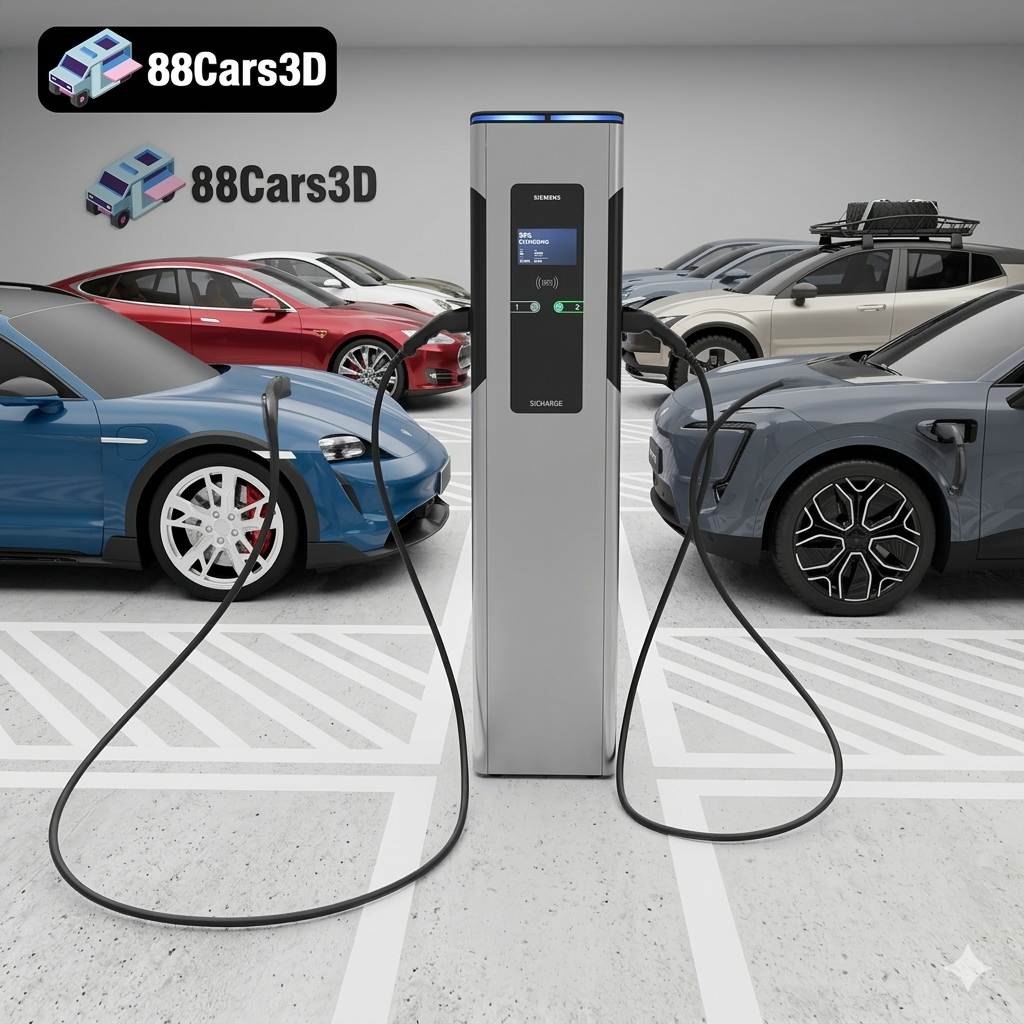
Download the Future of Mobility EV 3D Models Bundle. Includes the Volvo EX30, Tesla Model S, AVATR 11, Porsche Taycan, and a Siemens EV Charger. Save big on this highly optimized 5-in-1 pack for ArchViz and game development!
Price: $89.99

