Get 50% OFF All Premium 3D & STL Models!

In the dynamic world of 3D visualization, the demand for exceptionally detailed and versatile 3D car models continues to accelerate. From breathtaking automotive rendering to immersive game development and innovative AR/VR experiences, a high-quality vehicle asset forms the bedrock of any compelling project. It’s not merely about polygons and textures; it’s about capturing the soul of a design, the precision of engineering, and the potential for limitless creative application.
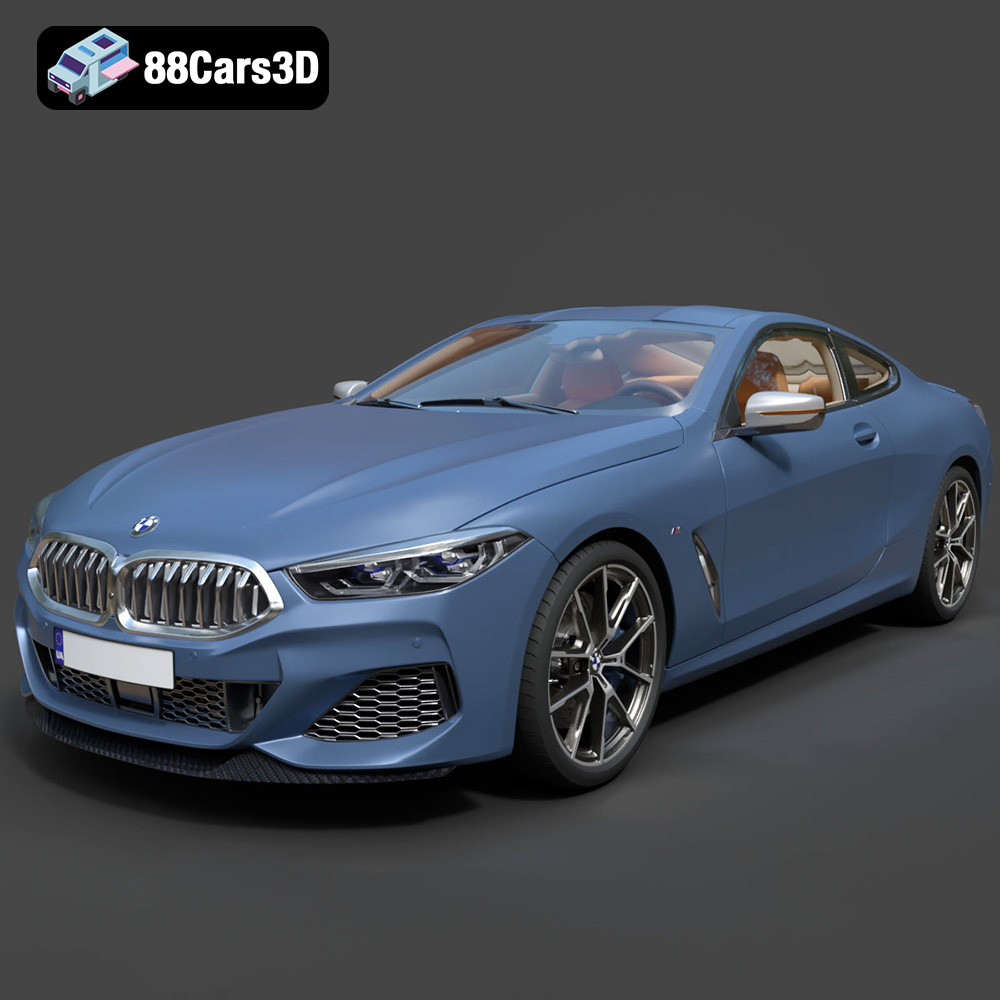
Few vehicles embody this blend of performance and luxury as perfectly as the BMW 8-Series Mk2 G15 Coupe M850i 2019. Its aggressive lines, powerful stance, and sophisticated interior make it a prime candidate for digital recreation. For professionals seeking to integrate such an iconic machine into their workflows, the BMW 8-Series Mk2 G15 Coupe M850i 2019 3D Model available at 88cars3d.com stands out as an exemplary asset, offering meticulous detail and broad compatibility across various platforms. This article delves into the technical intricacies and professional applications of such a model, demonstrating why it’s an indispensable tool for designers, artists, and developers alike.
The versatility of a 3D model often hinges on the range and quality of its supported file formats. Each format caters to specific workflows, software, and end-use applications. Understanding these distinctions is crucial for seamless integration and optimal project outcomes. The BMW 8-Series Mk2 G15 Coupe M850i 2019 3D Model provides a comprehensive suite of formats, ensuring it’s ready for virtually any pipeline.
The .blend format is native to Blender, a powerful open-source 3D creation suite. When a model is provided in .blend, it typically includes the entire scene setup: mesh data, materials, textures, lighting, camera settings, and even rigging or animation. For artists using Blender, this means immediate access to a fully realized asset with all its editable components. You can dive in to modify shaders, adjust the topology, re-pose elements like the separate wheels and steering components, or integrate it directly into a larger Blender project without any import issues or data loss. The clean topology and organized mesh structure of the M850i model, as described, make it particularly amenable to further customization within Blender.
Autodesk’s .fbx format is an industry standard for interoperability, especially in game development and real-time visualization. It efficiently stores 3D models, animation data, cameras, and lights, making it the preferred choice for exporting assets between different 3D software and game engines like Unreal Engine and Unity. For the M850i, an .fbx export ensures that the model’s geometry, UV maps, material assignments, and even basic skeletal information (for wheels and steering) transfer accurately, ready for integration into a driving simulator or an AR/VR showroom application. Its robust support for animations also makes it excellent for cinematic sequences.
The .obj (Wavefront OBJ) format is one of the most widely supported 3D file formats. It’s a universal choice for basic mesh data and UV coordinates. While it doesn’t typically store advanced material definitions or animation, its simplicity ensures maximum compatibility across virtually all 3D software platforms. When you need to bring the M850i model into niche applications or older software, .obj is a reliable fallback. Materials are usually referenced via an accompanying .mtl file, and textures would need to be re-linked, but the core geometry remains intact.
The .glb (GLB format, Binary GL Transmission Format) is a modern, efficient format for sharing 3D models with PBR (Physically Based Rendering) materials. It’s designed for rapid loading and display in web browsers, AR/VR applications, and mobile platforms. A single .glb file packages the model, textures, and materials, making it incredibly convenient for immersive experiences like interactive car configurators. The optimized geometry of the M850i model, coupled with the .glb format, is perfect for delivering high-quality visual fidelity even on less powerful hardware, crucial for engaging AR/VR showroom experiences.
The .stl (Stereolithography) format is the standard for 3D printing. It represents 3D surfaces as a collection of triangles, defining the exterior shell of an object. The BMW 8-Series Mk2 G15 Coupe M850i 2019 3D Model is explicitly designed to be 3D printable, meaning its geometry is manifold (watertight) and suitable for direct conversion to .stl. This is crucial for creating physical collectible scale models, requiring careful attention to wall thickness and detail preservation, which the model’s description addresses with specific print settings.
The .ply (Polygon File Format) is another widely used format for storing 3D data, particularly from 3D scanners or for CAD/engineering applications. Like .obj, it primarily focuses on geometry, but it can also store additional properties like color, transparency, normals, and even confidence values per vertex. It’s often used for precision modeling and analysis, making it valuable for workflows requiring highly accurate geometric representation, perhaps for reverse engineering or integrating the car model into complex environmental simulations.
While not a universal file extension in the same way .fbx or .obj are, an .unreal designation implies a model specifically prepared and optimized for Unreal Engine. This could mean it comes as a pre-packaged Unreal asset file (.uasset) or an FBX specifically structured and exported with Unreal’s import settings in mind, potentially including LODs (Levels of Detail), collision meshes, and basic material setups. For the M850i, this means minimal setup time for integration into racing simulators or architectural visualization projects within Unreal Engine, allowing developers to immediately leverage its engine-specific features and PBR material workflows.
The .max format is the native scene file for Autodesk 3ds Max, a leading software for 3D modeling, animation, and rendering. Providing the model in .max grants users full access to the original scene, including hierarchies, modifiers, materials, lighting, and animation setups. For professionals working in 3ds Max, this is invaluable. It allows for advanced customization, integration into complex production pipelines, and leveraging Max-specific rendering solutions like V-Ray or Corona Renderer. The “clean and well-organized mesh structure” and “proper pivot setup for steering and wheel rotation” are fully exploitable within this native format, enabling sophisticated animation and high-fidelity rendering.
Creating a truly convincing 3D car model goes beyond mere replication; it demands an understanding of the vehicle’s design philosophy and meticulous attention to detail. The BMW 8-Series Mk2 G15 Coupe M850i 2019 3D Model exemplifies this commitment, meticulously replicating a luxury grand tourer known for its aggressive styling and executive refinement.
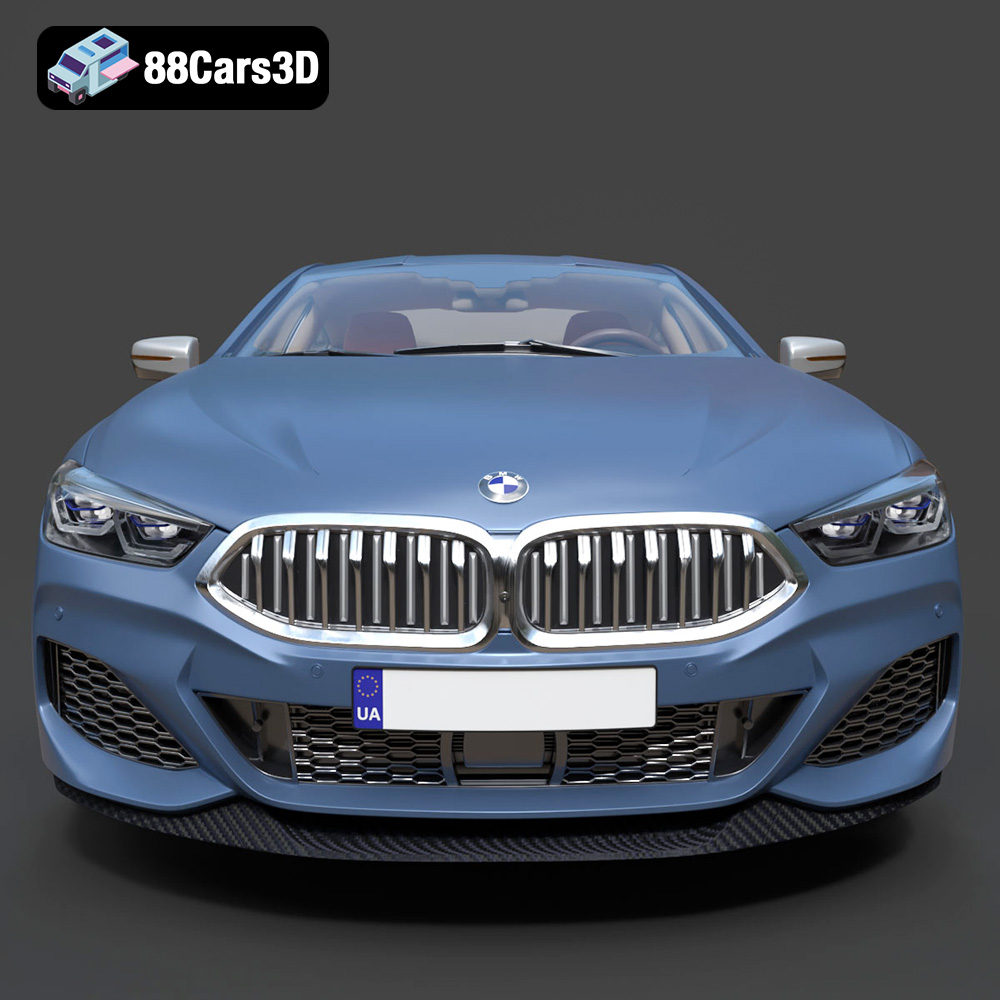
The M850i’s exterior is a masterclass in modern automotive design, and its digital counterpart reflects this with stunning accuracy. The wide kidney grille, a hallmark of BMW’s contemporary aesthetic, is faithfully rendered, showcasing its intricate louver design. The sharp LED headlight signature, giving the car its distinctive gaze, is precisely modeled, promising realistic light propagation in renders. Aerodynamic front bumpers, sculpted hood lines, and the muscular side profile are all recreated with an “accurate G15 M850i 2019 body proportions” and an “optimized polygon flow for performance and realism.” This level of detail extends to the rear diffuser with its quad exhaust outlets and high-detail performance alloy wheels complete with brake calipers, crucial for close-up shots and high-resolution renders.
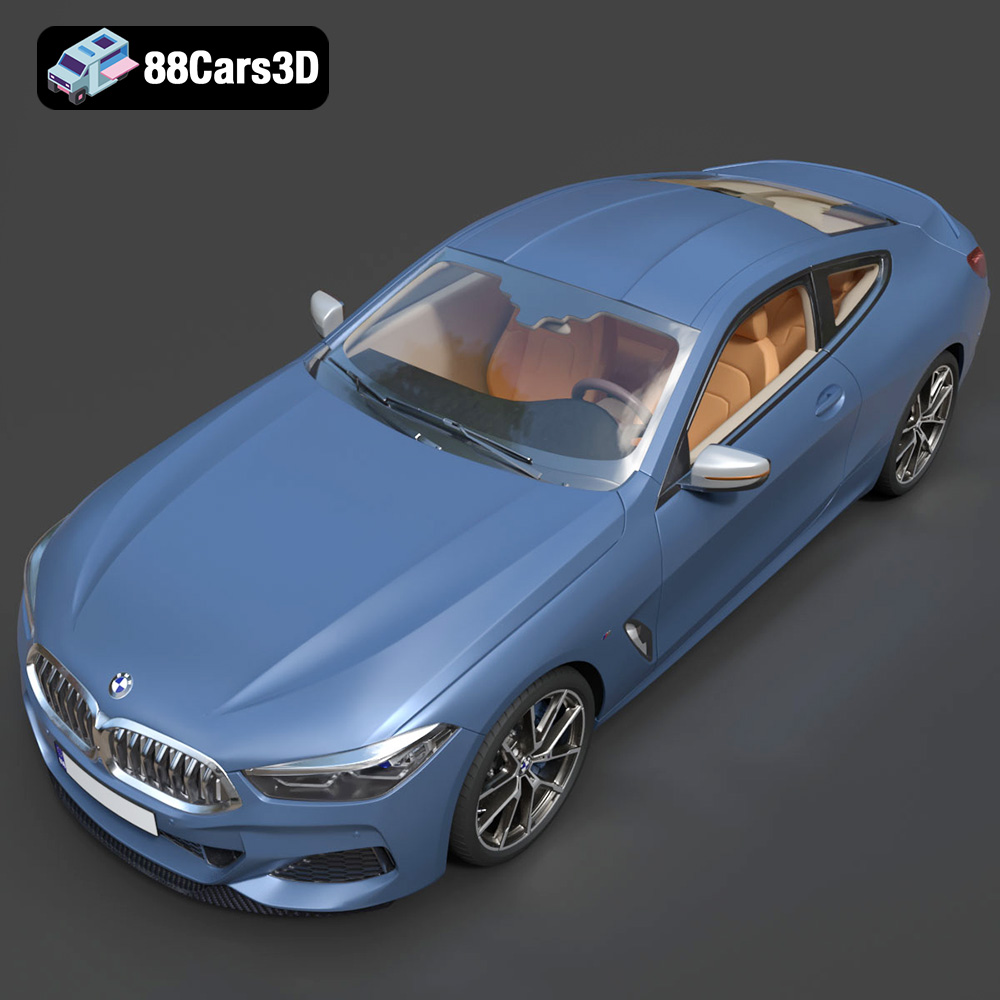
A luxury grand tourer isn’t complete without a premium interior, and the 3D model doesn’t disappoint. The “modeled digital instrument cluster” and “sport steering wheel with multifunction controls” immediately convey the car’s advanced technology and driver focus. “Premium leather seat geometry with stitching detail” adds a layer of tactile realism, while the “center console with infotainment system” and “door panels and trim detailing” complete the immersive cockpit. Such interior fidelity makes the model ideal for first-person views in games, virtual showroom tours, or detailed product visualizations, allowing viewers to truly feel present within the vehicle.
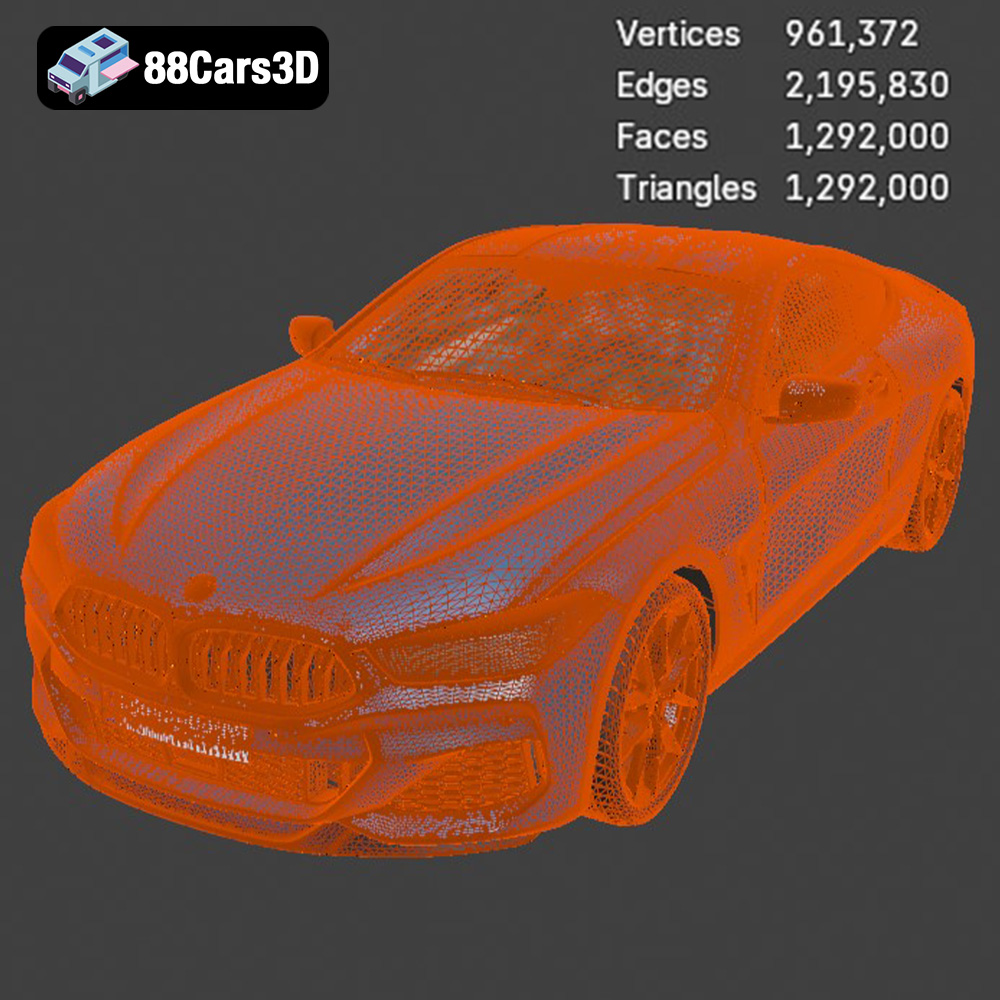
For any automotive project requiring movement, animation readiness is paramount. The M850i model features “separate wheels and steering components for animation” and “proper pivot setup for steering and wheel rotation.” This thoughtful engineering means animators can easily set up realistic driving sequences, turns, and suspensions without having to spend valuable time separating parts or correcting pivot points. This significantly streamlines production workflows, whether for a cinematic commercial or interactive driving simulation.
High-quality 3D car models are the backbone of impactful automotive rendering and visualization projects. The BMW 8-Series Mk2 G15 Coupe M850i 2019 3D Model provides a robust foundation for artists working across various industries, from advertising to film.
For artists utilizing industry-standard rendering engines like V-Ray, Corona Renderer (within 3ds Max), or Cycles and Eevee (in Blender), the M850i model offers immense potential. Its “clean and well-organized mesh structure” ensures smooth subdivision without artifacts, essential for close-up shots revealing every curve and detail. The inclusion of transparent glass materials and mirror detailing simplifies the setup for realistic reflections and refractions, critical for conveying a luxury vehicle’s sheen. The provided .max and .blend formats allow direct access to pre-configured scene setups, enabling artists to jump straight into lighting and material refinement. This is ideal for “luxury automotive marketing” and “high-end advertising visuals,” where photorealism is non-negotiable.
Imagine a digital agency tasked with creating a cinematic commercial for a new luxury car. Starting with a high-fidelity model like the M850i from 88cars3d.com significantly cuts down on production time. An artist can import the .max file into 3ds Max, already equipped with clean geometry and a logical hierarchy. They can then quickly apply advanced PBR materials, set up studio lighting, and leverage the model’s pre-separated components for dynamic camera movements and wheel spins. The ability to “configure lighting for studio, city night, or highway sunset scenes” directly influences the mood and narrative of the commercial, all built upon the robust foundation of the 3D model.
Beyond traditional rendering, the M850i model is also perfectly suited for real-time cinematic production within engines like Unreal Engine. Leveraging the .fbx or .unreal formats, virtual photographers and cinematographers can create dynamic scenes with instant feedback. The model’s “optimized geometry for real-time engines” ensures smooth playback, allowing for interactive camera control and rapid iteration on lighting and composition. This approach is gaining traction for “promotional campaigns” and “high-performance driving simulations,” where flexibility and speed are key.
In the realm of game development, performance and visual fidelity must coexist. The BMW 8-Series Mk2 G15 Coupe M850i 2019 3D Model is engineered to meet these demands, making it a valuable asset for virtual worlds.
The provision of .fbx and .unreal formats makes this model an excellent candidate for game developers working with Unreal Engine or Unity. Its “optimized geometry for real-time engines” suggests a poly-count that balances detail with performance, potentially allowing for seamless integration into “open-world driving games” or “racing simulators.” Developers can import the .fbx, which carries mesh, UVs, and material assignments, and then apply their engine’s PBR shaders. The “proper pivot setup for steering and wheel rotation” is invaluable for setting up vehicle physics and animation blueprints, reducing the need for tedious manual adjustments.
While not explicitly listed, a professional-grade game asset like this M850i model would typically be designed with considerations for Levels of Detail (LODs) and collision meshes. LODs are simplified versions of the model that swap in as the vehicle moves further from the camera, dramatically improving frame rates. Collision meshes, often a much simpler hull, are used by the physics engine to calculate impacts and interactions, preventing expensive per-polygon collision detection. A well-constructed model, like the M850i, forms an ideal base from which these optimizations can be derived, ensuring it performs robustly in demanding game environments.
For mobile gaming or large-scale multiplayer environments, further optimization might be necessary. The “clean topology” of the M850i model makes it easier to create additional LODs or to bake high-detail textures onto lower-poly versions. Its “real-world scale accuracy” ensures consistency when integrating with other assets and environments. This scalability is vital for “premium vehicle systems” where the asset needs to perform across a spectrum of hardware specifications without compromising visual quality for higher-end machines.
Beyond traditional screen-based media, the BMW 8-Series Mk2 G15 Coupe M850i 2019 3D Model extends its utility into cutting-edge domains like augmented reality, virtual reality, and physical manufacturing via 3D printing.
The .glb format makes the M850i model perfectly suited for modern AR/VR applications. This single-file format is highly optimized for web-based and mobile AR/VR viewers, enabling developers to create “interactive car configurators and immersive virtual showroom experiences.” Imagine customers using their phone to place a virtual M850i in their driveway, changing its exterior color and wheel designs in real-time, or exploring its detailed interior in a VR headset. The model’s “optimized geometry for real-time engines” ensures smooth, responsive interaction, which is critical for compelling immersive experiences.
A luxury car dealership could leverage this 3D model to create an interactive virtual showroom. Customers, from the comfort of their home, could launch a web-based AR/VR application featuring the M850i. They could walk around the car, open doors, examine the “digital instrument cluster” and “premium leather seat geometry,” and even cycle through “customization options” like different exterior colors or “M Performance styling package elements.” The quality of the 3D car model from 88cars3d.com would be paramount in convincing potential buyers of the vehicle’s real-world appeal.
Uniquely, this M850i model is explicitly designed to be 3D printable, convertible to the .stl format. This opens up an entirely new avenue for engagement: physical collectibles and prototypes. The detailed product description even provides specific “3D Print Setting” recommendations:
These precise instructions are incredibly valuable for hobbyists and professionals alike, ensuring successful prints of “collectible scale luxury coupe models and display miniatures.” The ability to transition from a digital asset to a tangible object further enhances the model’s value proposition.
A truly professional 3D asset provides not just a finished product, but a foundation for boundless creativity and adaptation. The BMW 8-Series Mk2 G15 Coupe M850i 2019 3D Model is built with customization in mind, offering significant flexibility for various project requirements.
The model’s clean mesh and organized structure make it easy for artists to “change exterior color and trim accents,” allowing for bespoke presentations or specific brand guidelines. Want to showcase the M850i in a bold red with black accents, or a sophisticated silver with chrome detailing? The model facilitates this. Furthermore, the option to “add M Performance styling package elements” means the base model can be transformed to represent different trim levels or aftermarket modifications, catering to diverse client requests.
Customization extends to performance aesthetics as well. The ability to “modify wheel designs and brake caliper colors” allows for unique visual identities, while “adjusting suspension stance” can simulate various driving modes or aftermarket suspension kits. For advanced users, the “clean topology” is excellent for sculpting subtle body kit additions or even integrating the model into a damage system for game development. This flexibility ensures that the M850i model is not a static asset, but a dynamic canvas for creative expression in rendering, game development, and architectural visualization projects.
The journey from concept to compelling visualization demands tools that are both powerful and versatile. The BMW 8-Series Mk2 G15 Coupe M850i 2019 3D Model from 88cars3d.com stands as a testament to this principle, offering an exceptional blend of meticulous detail, technical precision, and broad compatibility. Whether your project involves high-fidelity automotive rendering, dynamic game development, immersive AR/VR experiences, or even the creation of tangible 3D printed collectibles, this model provides the robust foundation you need.
Its accurate representation of the M850i’s iconic design, coupled with animation-ready components and a comprehensive suite of file formats—including .blend, .fbx, .obj, .glb, .stl, .ply, .unreal, and .max—ensures seamless integration into virtually any professional workflow. This is more than just a 3D car model; it’s a versatile asset designed to elevate your creative projects and unlock new possibilities. Explore the potential and precision of this outstanding model and many other 3D car models at 88cars3d.com, where quality meets innovation.
The BMW 8-Series Mk2 G15 Coupe M850i 2019 3D Model is a high-detail digital recreation of the luxury grand tourer that blends aggressive performance styling with executive-level refinement. The G15 generation M850i features a powerful V8 configuration, sculpted aerodynamic bodywork, and advanced digital interior technology. This 3D model accurately represents the wide kidney grille, sharp LED headlight signature, aerodynamic front bumper, muscular side profile, quad exhaust system, performance alloy wheels, and premium cockpit layout. Built with clean topology and real-world scale accuracy, it is ideal for rendering, animation, automotive visualization, game development, and AR/VR showroom applications.
$59.99
.8series
.arvr
.automotive
.blend
.bmw
.car3dmodel
.fbx
.g15
.gameasset
.glb
.luxurycoupe
.m850i
.max
.obj
.ply
.rendering
.simulation
.sportsCar
.stl
.unreal