Get 50% OFF All Premium 3D & STL Models!

In the dynamic world of 3D visualization, the demand for incredibly detailed and accurate automotive 3D models continues to grow. From cinematic renders that captivate audiences to immersive game environments and precise physical prototypes, high-quality vehicle assets are foundational. Achieving photorealism and functional accuracy requires a meticulous approach, leveraging sophisticated software, understanding complex file formats, and mastering intricate technical specifications.
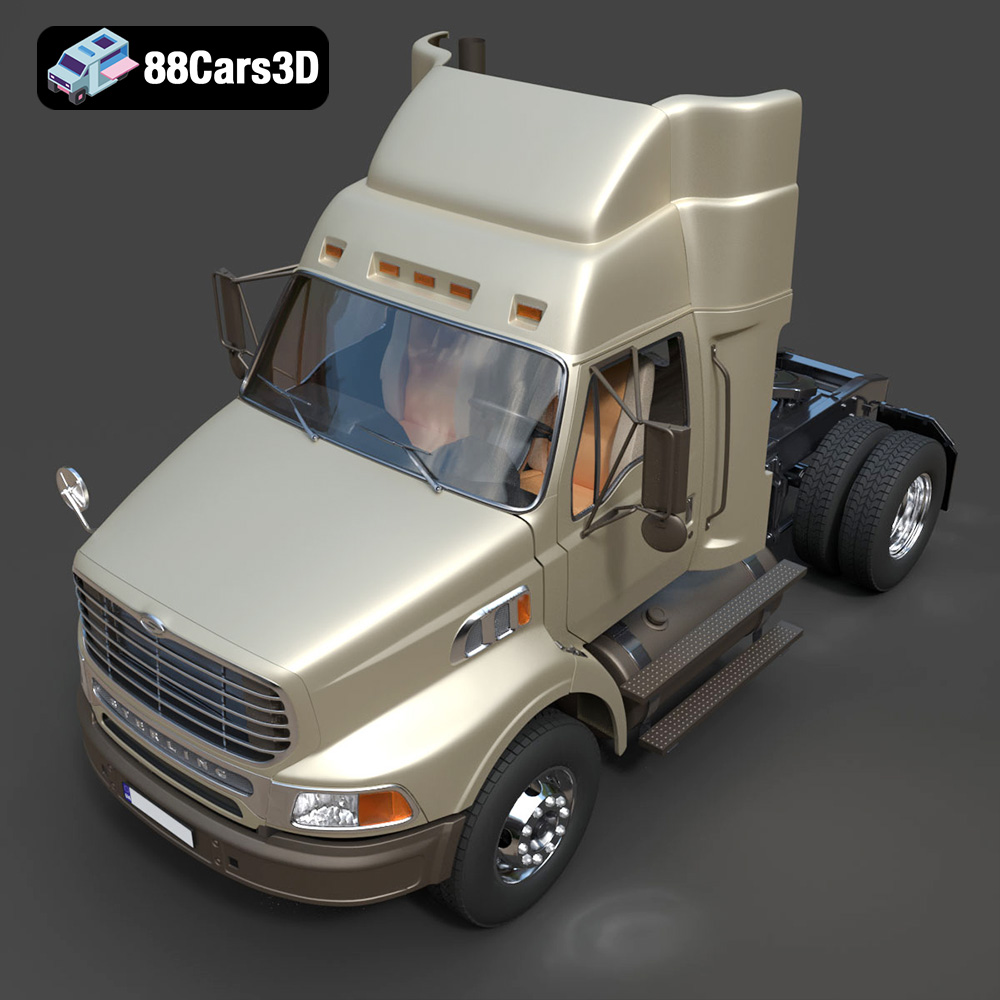
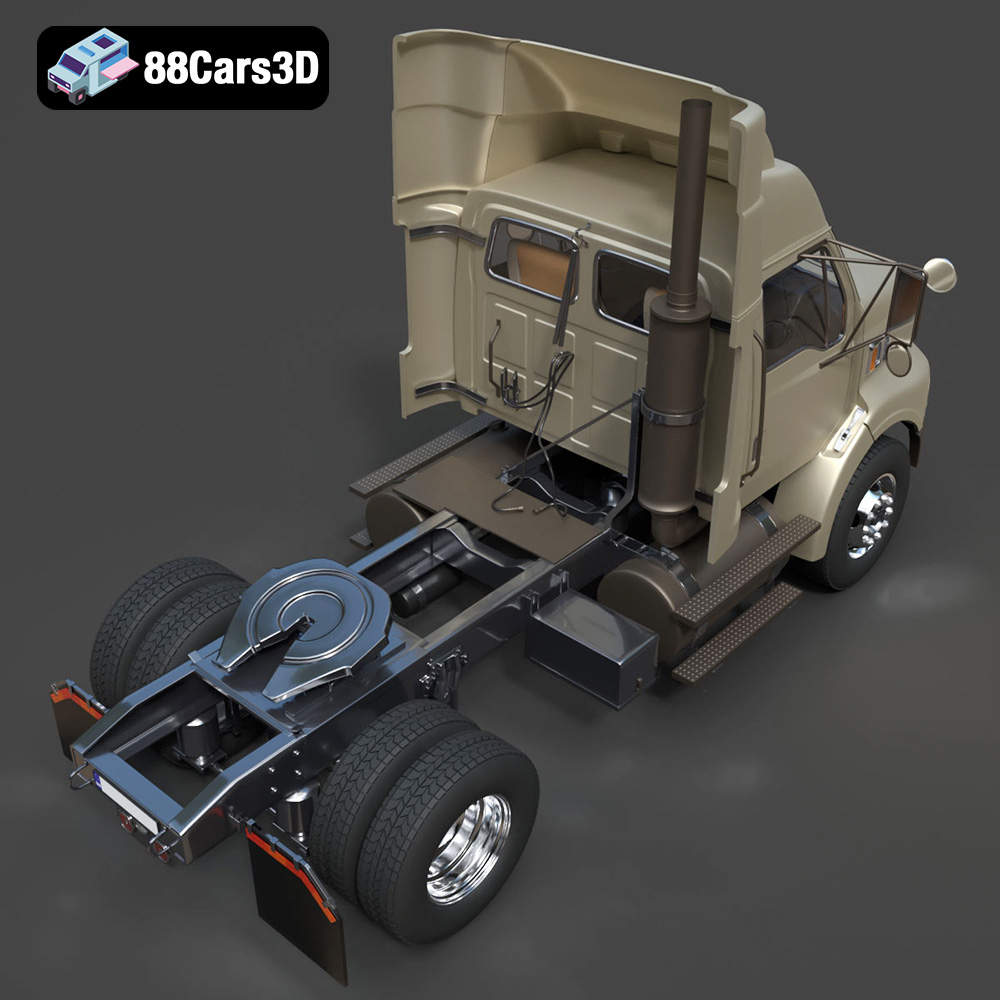
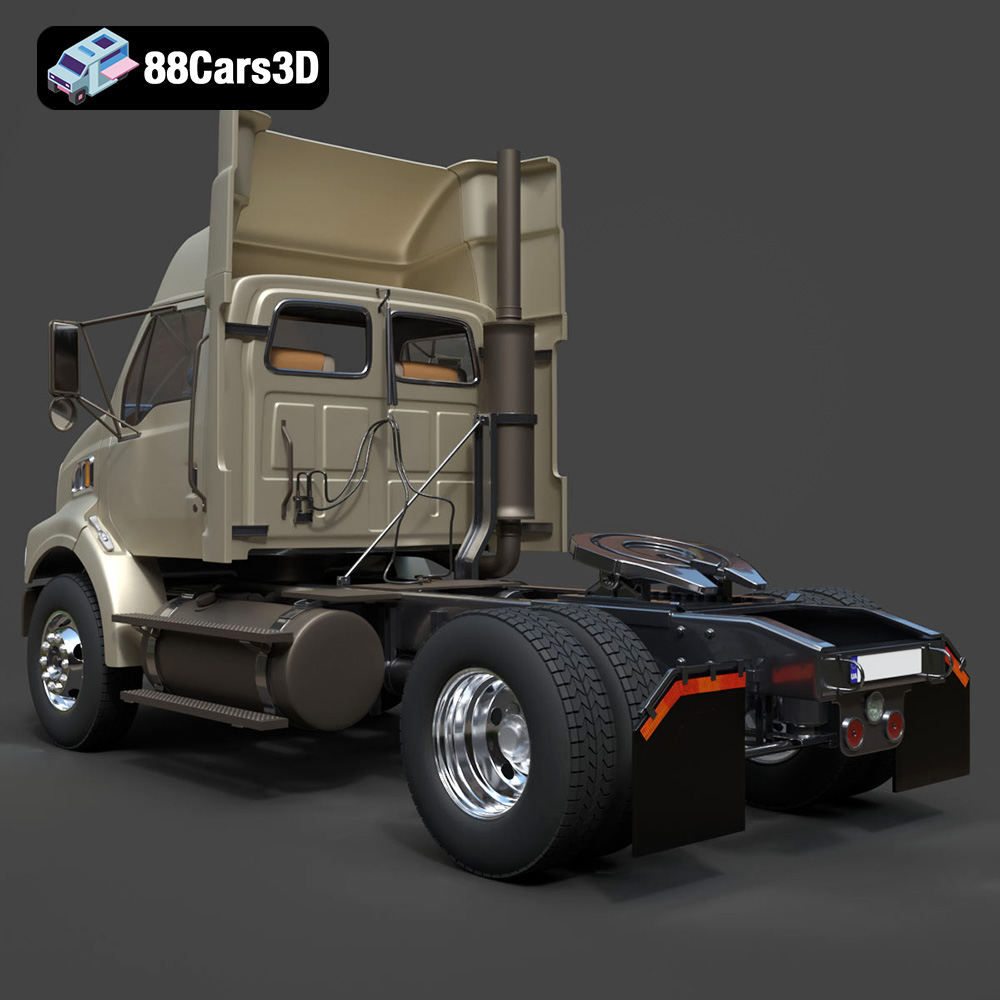
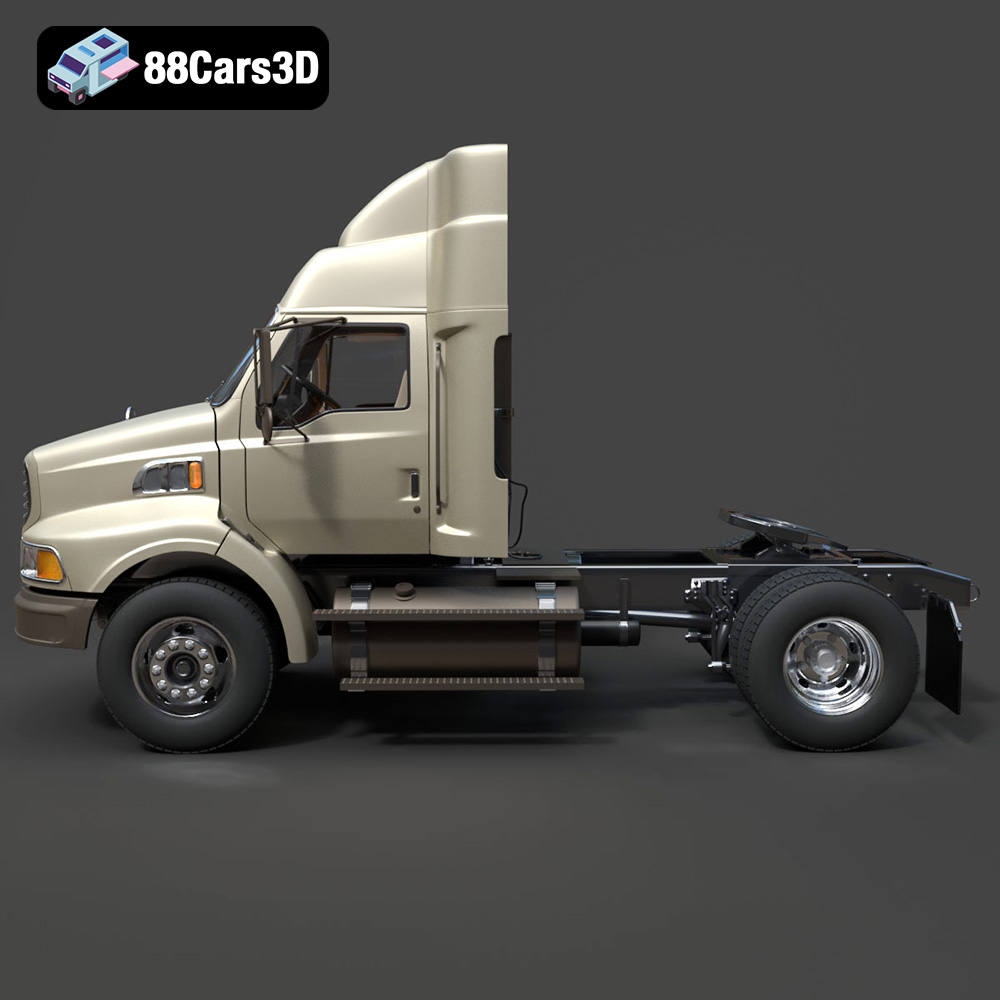
Today, we're putting a spotlight on a particular heavy-duty legend that exemplifies the peak of digital automotive recreation: the Ford Sterling A9500 Tractor Truck 2006 3D Model. This iconic Class 8 commercial semi-truck, a workhorse of North American logistics, has been digitally reborn with an uncompromising level of detail. Whether you're an automotive designer, a game developer, an architect visualizing industrial scenes, or a hobbyist eager to bring a digital model to life through 3D printing, understanding the nuances of such an asset is crucial. Join us as we explore the technical journey from concept to final application, demonstrating how professional 3D car models, like those found on 88cars3d.com, empower creators across diverse industries.
Choosing the right file format is often the first critical decision in any 3D project, dictating compatibility, feature support, and overall workflow efficiency. For a versatile asset like the Ford Sterling A9500 Tractor Truck 2006 3D Model, a comprehensive suite of formats is essential to serve various professional needs.
The .blend format is the native file type for Blender, an incredibly powerful open-source 3D creation suite. When you receive a .blend file, you're getting a complete Blender scene, often including the model's mesh data, materials, textures, lighting setups, cameras, animation data, and even physics simulations. For artists primarily working in Blender, this format offers maximum flexibility and editability. It's ideal for deep customization of the Sterling A9500 model, allowing users to modify its extensive geometry, tweak materials, or prepare it for complex animations within Blender's robust environment.
.fbx (Filmbox) is arguably the most widely adopted interchange format in the 3D industry, especially crucial for game development (Unreal, Unity) and film/VFX pipelines. Developed by Autodesk, FBX supports geometry, materials, textures, animations, rigging, and even some camera data. It excels at transferring complex scenes between different 3D applications while retaining much of their original structure. When working with the Sterling A9500, an .fbx file ensures a smooth transition into software like 3ds Max, Maya, or directly into a game engine, making it a cornerstone for real-time applications, albeit often requiring optimization for heavy assets.
.obj (Wavefront Object) is a universal 3D format that has been around for decades. It's primarily known for its excellent compatibility across almost all 3D software. An .obj file stores geometric data (vertices, normals, texture coordinates, faces) and can reference external material (.mtl) and texture files. While it doesn't support animation or rigging, its simplicity and widespread support make it a reliable choice for transferring static mesh data. For the Sterling A9500, an .obj ensures that the core mesh geometry is accessible in virtually any modeling package, serving as a reliable backup or primary format for static renders.
.glb (GL Transmission Format Binary) is the binary version of glTF, a royalty-free specification for 3D scenes and models. Designed for efficient transmission and loading of 3D scenes by applications, it's rapidly becoming the standard for web-based 3D, augmented reality (AR), and virtual reality (VR) experiences. A .glb file packages all necessary data (geometry, materials, textures, animations) into a single, compact file. This format is perfect for showcasing the Sterling A9500 in interactive online viewers, AR apps, or lightweight VR experiences, offering a balance of visual quality and performance.
.stl (Stereolithography) is the de facto standard file format for 3D printing. It represents a 3D model as a series of connected triangles (a tessellated surface) and primarily describes the surface geometry of an object without color, texture, or other CAD attributes. For the 3D printable Ford Sterling A9500 model, the .stl format is critical. It provides a watertight, manifold mesh that 3D slicer software can interpret to generate toolpaths for FDM, SLA, or other 3D printing technologies. This format ensures that the complex details of the truck's chassis, cab, and accessories are accurately translated into a physical object.
.ply (Polygon File Format) is another format for storing 3D data, particularly useful for scanned data, CAD, and scientific applications. It supports properties such as color, transparency, texture coordinates, and even material properties for each vertex or face. While less common for general 3D model distribution than .fbx or .obj, .ply can offer a more robust representation for precision mesh data, especially when color per vertex is important. For specialized analysis or integration into CAD pipelines, the Sterling A9500 in .ply format offers enhanced data integrity.
The .unreal format signifies an asset specifically optimized and packaged for the Unreal Engine ecosystem. While often derived from .fbx or other intermediate formats, an “.unreal” file suggests a pipeline where the model has been imported, materials set up, collisions defined, and potentially even LODs (Levels of Detail) generated within Unreal Engine. This makes the Sterling A9500 immediately usable in an Unreal project, saving significant setup time for game developers and real-time visualization artists looking to integrate the truck into their environments without extensive re-configuration.
Similar to .blend for Blender, .max is the native file format for Autodesk 3ds Max, a leading software for 3D modeling, animation, and rendering in architectural visualization, product design, and cinematic production. A .max file contains the complete 3ds Max scene, including all models, modifiers, materials, lighting, cameras, and animation data. For professionals entrenched in the 3ds Max workflow, the Sterling A9500 in .max format provides the ultimate flexibility for advanced rendering setups, complex rigging, or integrating into existing 3ds Max projects, ensuring all original scene properties are preserved.
Creating a highly detailed 3D car model like the Ford Sterling A9500 is a meticulous process that combines artistic skill with technical precision. It goes beyond simply replicating geometry; it’s about capturing the essence, the engineering, and the presence of the vehicle.
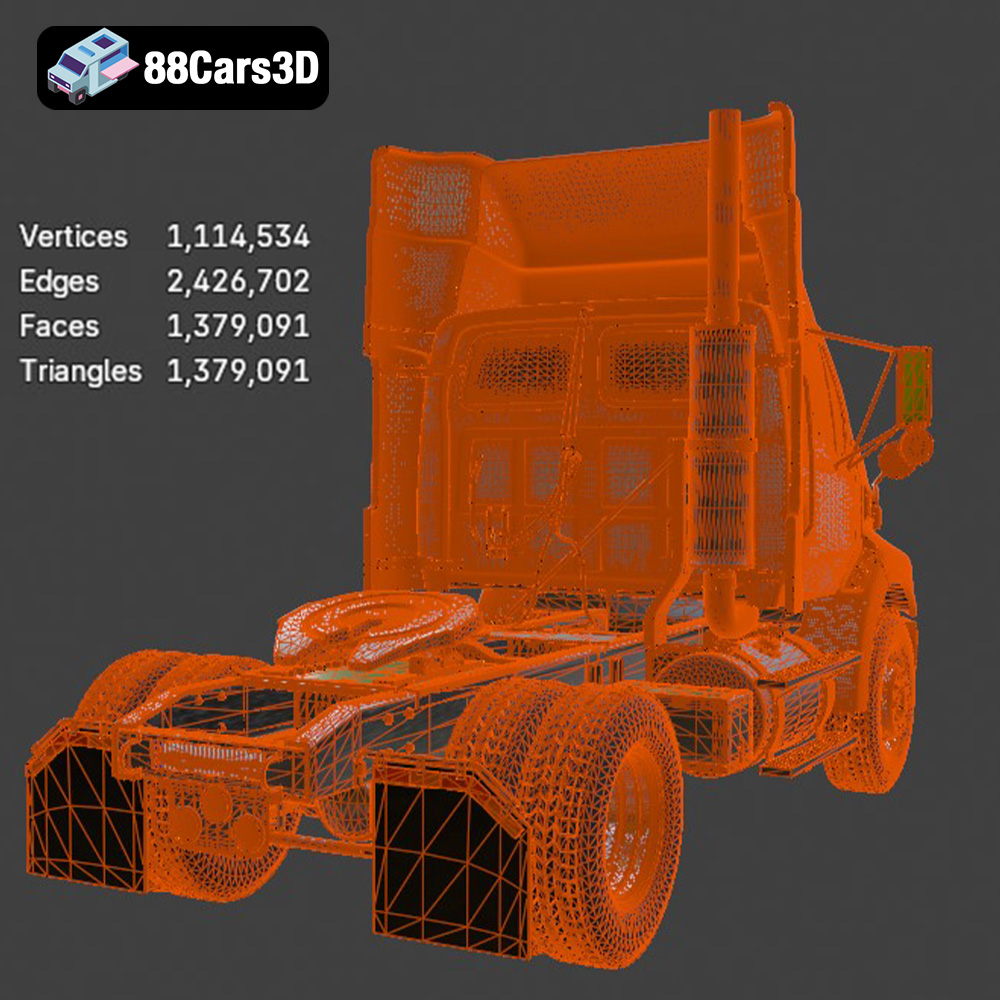
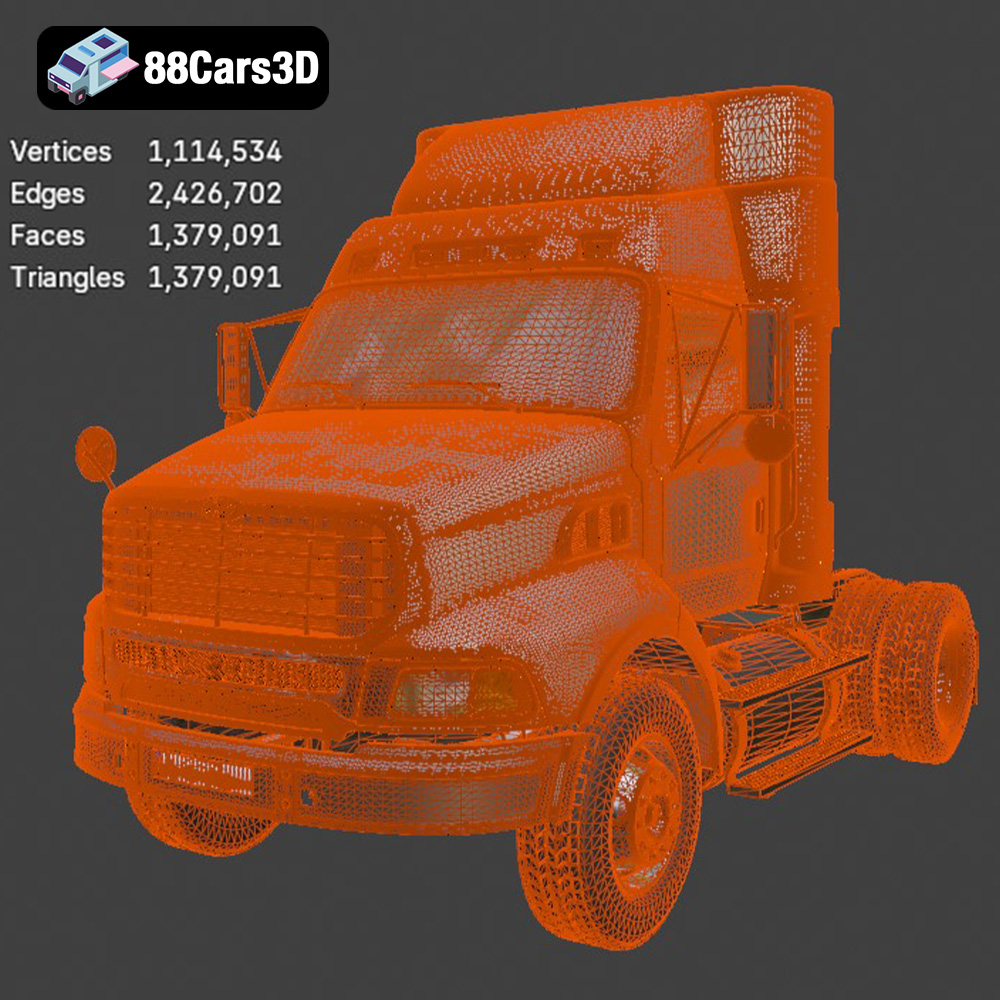
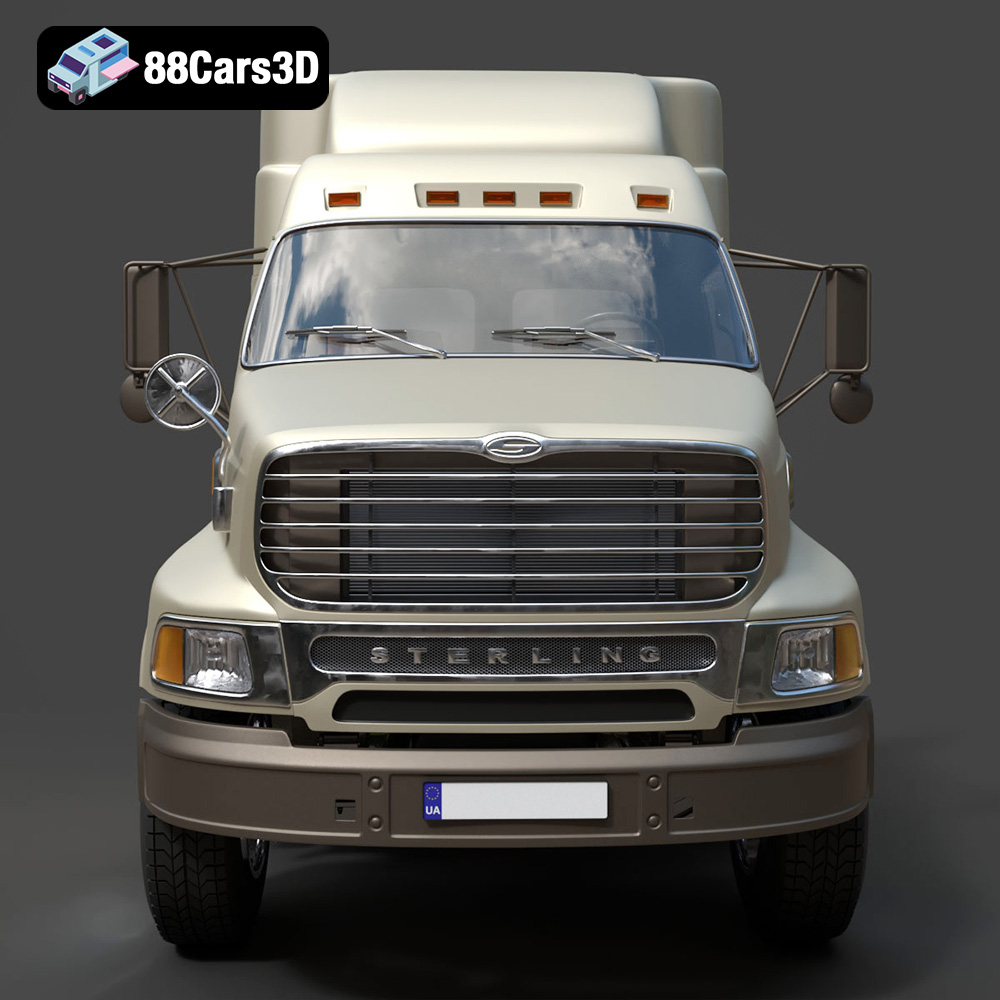
The Ford Sterling A9500 Tractor Truck 2006 3D Model exemplifies high-fidelity modeling through its exterior features. The product description highlights “accurate 2006 Sterling A9500 Class 8 tractor proportions and heavy-duty chassis geometry.” This isn't just about looking right from a distance; it involves precise measurements, reference photography, and an understanding of vehicle construction. The distinctive bold chrome front grille, aerodynamic sloped hood, large cylindrical diesel fuel tanks, and towering exhaust stacks are all carefully sculpted. With nearly 1.6 million triangles (1,579,091 triangles, to be exact), the mesh provides an incredibly dense, uncompromising topology. This high poly count is a deliberate choice for maximum visual fidelity, ensuring that even in extreme close-up renders, the surfaces appear smooth and intricate details like bolts, seams, and panel gaps are sharply defined. For professional automotive rendering, this level of detail is paramount.
A truly comprehensive automotive 3D model extends beyond the exterior. The Sterling A9500 model boasts an "authentic commercial driver's cabin layout built for long-haul ergonomics." This includes a wrap-around dashboard with detailed analog gauge clusters, heavy-duty switches, air-ride driver and passenger seating with authentic upholstery, and a large industrial steering wheel. These interior details are crucial for projects requiring first-person views, virtual tours, or cinematic shots where the camera ventures inside the cab. In applications like AR/VR training simulations for truck drivers, or detailed product visualizations for commercial vehicle manufacturers, this level of interior accuracy is non-negotiable, offering an immersive and believable experience.
Once a 3D car model of the caliber of the Sterling A9500 is complete, the next step is often to render it into stunning, photorealistic images or animations. This process involves careful consideration of lighting, materials, textures, and camera angles.
The product description confirms that the model includes both textures and materials. These are vital for achieving realism. For the Ford Sterling A9500, this means replicating the metallic sheen of the chrome grille, the subtle worn look of the interior upholstery, the reflective quality of the paint, and the rugged texture of tires and chassis components. Professional rendering workflows in software like 3ds Max (using V-Ray or Corona Renderer) or Blender (with Cycles or Eevee) would leverage physically based rendering (PBR) materials. These materials, comprising albedo, roughness, metallic, normal, and ambient occlusion maps, interact realistically with light, ensuring that the truck looks convincing under various lighting conditions, from bright daylight to moody, rain-slicked night scenes.
Effective lighting is the cornerstone of any great render. For automotive rendering, studios often employ HDRI (High Dynamic Range Image) environments combined with targeted area lights to simulate real-world conditions. An HDRI can encapsulate an entire environment’s lighting information, providing realistic reflections and ambient illumination. For the Sterling A9500, imagine placing it in an industrial dockyard HDRI, a sun-drenched highway, or a misty morning truck stop. Complementary lights would accentuate key features, like the chrome accents or the intricacies of the engine block. The model’s “separate wheels, steering components, doors, and fifth-wheel pivot for animation” further enable dynamic camera work, allowing for compelling visual storytelling in promotional videos or product showcases.
While the Ford Sterling A9500 model is built for high-end rendering, its inclusion of .fbx and .unreal formats indicates its potential for game development and real-time applications. However, its high polygon count presents a common challenge in this domain.
The technical specifications state, “At nearly 1.58M triangles, this is a heavy ‘hero’ asset. It will require manual retopology or decimation to be used efficiently in real-time driving simulators or game engines like Unreal or Unity.” This is a crucial point for game developers. A model with 1.58 million triangles is ideal for cinematic pre-renders, but far too dense for a typical in-game vehicle, especially if multiple instances are present. The workflow would involve:
Once optimized, the Sterling A9500 can serve as a stunning "hero" vehicle in a game, perhaps as a prominent asset in a driving simulator, an interactive AR experience for logistics companies, or a detailed prop in a VR training scenario.
For Unreal Engine, the .fbx format is the standard import method. After import, materials would be set up using the engine's PBR shader system, textures applied, and collision meshes generated. The .unreal file mentioned in the product provides an even more streamlined experience, indicating the asset has likely undergone this initial setup. In Unity, a similar process applies, leveraging its extensive asset pipeline. Both engines allow for advanced physics integration, enabling realistic driving mechanics for the heavy-duty tractor truck, bringing the Ford Sterling A9500 to life in interactive environments.
The inclusion of a 3D printable .stl format and detailed print settings opens up a fascinating avenue for the Ford Sterling A9500 Tractor Truck 2006 3D Model: physical fabrication. This transitions the digital asset from pixels to tangible form, perfect for collectors, hobbyists, or custom model builders.
The provided 3D print settings are invaluable. "Recommended scale: 1:32 / 1:24 / 1:14 (Popular for RC semi-truck builds)" indicates that the model is designed with versatility in mind, suitable for various scales of physical display or functional RC models. The recommendation for layer height (0.08–0.16 mm), wall thickness (1.5–2.5 mm), and infill (15–25%) provides a solid starting point for FDM (Fused Deposition Modeling) printers, ensuring structural integrity and detail capture.
The journey from a raw 3D print to a display-ready model involves significant post-processing: "Sanding, primer, standard commercial fleet paint colors (Fleet White, Viper Red, Cobalt Blue), and silver metalizer for the chrome accents." This process allows hobbyists to apply their craft, mimicking real-world automotive finishes. Achieving a high-gloss paint job or a realistic chrome look requires patience and skill, turning the printed Sterling A9500 into a truly bespoke collectible or a highly detailed component for an RC semi-truck build. This aspect underscores the value of precise digital models for those in the scale modeling community, offering an unparalleled base for custom projects.
The versatility of professional 3D car models like the Sterling A9500 makes them indispensable in various commercial and creative workflows. From advertising to specialized simulations, their adaptability is a key strength.
For logistics companies or truck manufacturers, high-quality 3D models can revolutionize marketing. The Ford Sterling A9500 Tractor Truck 2006 3D Model can be used to create stunning visuals for brochures, websites, and animated commercials without the expense and logistical challenges of a physical photo shoot. "Change exterior paint colors to match classic fleet logistics branding" is a powerful customization option. Imagine a fleet manager being able to visualize their company's livery on the Sterling A9500 with exact accuracy, exploring different color schemes or logo placements in a dynamic 3D environment. This capability saves time and money, allowing for rapid iteration and decision-making in brand development.
Beyond visual marketing, detailed automotive 3D models are critical for simulation. For driver training programs, a highly accurate Sterling A9500 could be integrated into a virtual driving simulator, allowing trainees to familiarize themselves with the cabin layout, controls, and vehicle dimensions in a safe, controlled environment. "Authentic commercial driver's cabin layout" and "wrap-around dashboard with detailed analog gauge clusters" mean the digital representation can mirror the real-world experience, enhancing training efficacy. For engineering simulations, the model’s precise geometry could be used for aerodynamic analysis or load distribution studies, though this would typically involve specialized CAD software and further model preparation.
The Sterling A9500 model’s well-organized mesh structure and separate components (wheels, steering, doors, fifth-wheel pivot) lend themselves to modular scene building. Artists can easily integrate this truck into larger industrial environments, highway scenes, or urban landscapes. The ability to "Adjust rear chassis accessories (mudflaps, pogo sticks for air lines, and rear work lights)" means the truck can be tailored to specific storytelling needs – perhaps a long-haul version with extensive fuel tanks, or a vocational variant with specialized equipment. This modularity reduces development time for complex scenes and increases the model's utility across different projects, solidifying its status as a robust 3D asset.
In conclusion, the journey through creating, utilizing, and optimizing high-fidelity 3D car models is complex and multifaceted. From the initial modeling of a legendary vehicle like the Ford Sterling A9500 Tractor Truck 2006, through the intricate steps of rendering, game engine integration, and 3D printing, every stage demands precision and an understanding of specialized technical workflows.
The Ford Sterling A9500 3D Model stands out as a prime example of a professional-grade asset, offering unparalleled detail, accurate proportions, and comprehensive features for both exterior and interior. Its robust technical specifications, including a high polygon count, ensure exceptional visual fidelity for cinematic sequences and close-up renders, while its broad range of file formats (.blend, .fbx, .obj, .glb, .stl, .ply, .unreal, .max) guarantees compatibility across virtually all professional pipelines.
Whether your project calls for stunning automotive rendering, realistic game assets (with appropriate optimization), engaging AR/VR experiences, or precision 3D printing, investing in quality 3D car models is a decision that pays dividends in both efficiency and visual impact. Platforms like 88cars3d.com specialize in providing these meticulously crafted assets, enabling designers, artists, and developers to bring their most ambitious visions to life with confidence and technical excellence. The Sterling A9500 is more than just a model; it’s a testament to the power of digital craftsmanship in the modern 3D industry.
The Ford Sterling A9500 Tractor Truck 2006 3D Model is a highly detailed digital recreation of the iconic heavy-duty Class 8 commercial semi-truck. Born from the legacy of Ford’s heavy truck division, the Sterling A-Line series is renowned for its rugged durability, versatile chassis, and commanding presence on the highway. This model captures the classic aerodynamic yet muscular styling that made it a staple of regional hauling, vocational fleets, and industrial logistics across North America. Built with incredibly dense, uncompromising topology (nearly 1.6 million triangles), it provides maximum visual fidelity for extreme close-up rendering, cinematic industrial visualization, commercial fleet mockups, and high-end 3D printing.
$79.99
.automotive
.blend
.fbx
.obj
.rendering
.stl
3d printing
a9500
big-rig
car-3d-model
class-8
commercial-vehicle
ford-trucks
heavy-duty
high poly
semi-truck
sterling-truck
tractor-truck