Get 50% OFF All Premium 3D & STL Models!

“`html
The rumble of an engine, the sleek lines of a classic chassis, the intricate details of a modern supercar – for automotive enthusiasts and 3D printing aficionados alike, the desire to bring these iconic machines to life in miniature form is a powerful one. Thankfully, the convergence of high-quality 3D printable car models and accessible additive manufacturing technology has made this dream a reality. Whether you’re looking to build a detailed display piece, a functional prototype, or an educational tool, understanding the nuances of 3D printing from STL files is paramount. This comprehensive guide will walk you through the entire process, from deciphering STL file structures and preparing your slicer settings to achieving flawless prints and beautiful post-processing. We’ll cover everything from optimizing your print orientation and mastering support structures to selecting the right materials and troubleshooting common issues, empowering you to create stunningly realistic car models with confidence. Get ready to hit the accelerator on your 3D printing journey!
At the heart of every 3D printable model lies the STL (Stereolithography) file. Originating from CAD software, an STL file describes the surface geometry of a 3D object using a collection of connected triangles (facets). Think of it as a digital blueprint built from countless tiny flat surfaces. The accuracy and quality of your final print are directly influenced by the integrity of this mesh. For highly detailed models, like those found on marketplaces such as 88cars3d.com, the STL file is meticulously crafted to capture intricate curves, sharp edges, and fine details. This often involves a high polygon count, which, while excellent for visual fidelity, can sometimes present challenges during slicing and printing if not handled correctly.
A crucial concept when working with STL files is the notion of a “watertight” or “manifold” mesh. In essence, this means the model has no holes, no internal faces, and no stray edges. Imagine a 3D object made of paper – if there are any gaps or overlaps, water could leak in or out. For a 3D printer to accurately interpret and build an object, the mesh must be a closed volume. Inconsistent normals (the direction a triangle’s surface is facing), overlapping triangles, or non-manifold edges can confuse the slicer software, leading to printing errors such as missing sections, incorrect geometry, or complete print failures. Fortunately, software like Meshmixer, Blender, or even dedicated tools like Netfabb can analyze and repair STL files, automatically or semi-automatically fixing most common mesh imperfections before you even send them to the printer.
The number of triangles used to represent a model – its polygon count – directly impacts the level of detail achievable. A lower polygon count results in a simpler, more “blocky” model, which can be easier to slice and print but sacrifices fine details. Conversely, a high polygon count allows for incredibly smooth curves and intricate features, essential for realistic car models. However, excessively high polygon counts can slow down slicing software and, in some cases, lead to issues with slicing algorithms. For the professional-grade models offered by 88cars3d.com, you’ll typically find a balance struck between high detail and manageable file sizes, ensuring excellent printability without overwhelming your software.
The slicer is your digital workshop, the software that converts your STL file into layer-by-layer instructions (G-code) that your 3D printer can understand. This is where the magic of 3D printing truly begins, and mastering your slicer settings is key to achieving high-quality results, especially with complex geometries like car models. Popular slicers such as Cura, PrusaSlicer, and Simplify3D offer a vast array of parameters, each influencing the final outcome. Understanding the interplay between these settings is crucial for optimizing print quality, minimizing print time, and ensuring successful execution.
Layer height is perhaps the most significant setting affecting print quality and speed. It defines the thickness of each individual layer the printer deposits. A smaller layer height (e.g., 0.1mm) will result in finer details, smoother curves, and less visible layer lines, leading to a more realistic finish for car models. However, this comes at the cost of significantly increased print times as the printer has to lay down many more layers. Conversely, a larger layer height (e.g., 0.2mm or 0.3mm) will dramatically reduce print time but will result in more pronounced layer lines and less fine detail. For display-quality car models, a layer height between 0.1mm and 0.15mm is often recommended, while for faster prints or less critical parts, 0.2mm can be sufficient.
Print speed dictates how quickly the print head moves while extruding material. While faster speeds reduce print time, they can also lead to reduced print quality, ringing artifacts (ghosting), and decreased accuracy. For detailed car models, it’s often best to err on the side of caution. Printing outer walls at a slower speed (e.g., 30-50 mm/s) helps improve surface finish, while infill can be printed faster. Acceleration and jerk settings also play a role, controlling how quickly the print head speeds up and slows down. Lowering these values can reduce vibrations and improve the quality of sharp corners and intricate details, especially on models with complex curves.
Infill refers to the internal structure printed within the outer shell of your model. While it consumes material and adds to print time, it provides crucial support for top layers and adds strength to the model. For most car models, where structural integrity isn’t the primary concern, a low infill density (5-15%) is usually sufficient. This saves material and printing time while still providing adequate support. Common infill patterns like grid, gyroid, or cubic offer a good balance of speed and support. For very thin or delicate parts of a car model, you might consider increasing infill density or using a pattern that provides better support for overhangs.
Car models are often characterized by complex geometries, including overhangs, bridges, and delicate details like spoilers, mirrors, and exhaust pipes. These features pose a significant challenge for 3D printing as they require material to be printed in mid-air. This is where support structures come into play. Supports are temporary scaffolding printed alongside your model to hold up these overhanging sections. Choosing the right support type, density, and placement, alongside optimal print orientation, is critical for a successful and clean print, and for minimizing the tedious task of removal.
Most slicers offer various support options, including normal, tree (or organic), and custom supports. Normal supports are typically generated as a grid or lines extending directly from the build plate or other parts of the model. Tree supports, on the other hand, branch out from a single point, offering better support for complex overhangs with less contact surface area on the model itself, often leading to easier removal and cleaner surfaces. Key settings to consider include:
Experimenting with these settings is crucial. For delicate parts, consider using dissolvable supports if your printer has dual extrusion capabilities, as these can be removed with minimal damage to the model.
Before even thinking about supports, determining the optimal print orientation is vital. This involves deciding how the car model will sit on the print bed. The goal is to minimize the need for supports, maximize surface quality on visible areas, and ensure structural integrity. For a car model, this often means printing it upright, or sometimes upside down. Printing upright might require supports for the undercarriage and wheels. Printing upside down might require extensive supports for the roof, spoilers, and other upper details, but could potentially yield a cleaner top surface. Consider the most critical surfaces you want to be smooth and detail-rich; orient the model so these surfaces are either facing upwards or have minimal direct contact with supports.
Removing supports cleanly can be an art form. Start by gently wiggling the support structures to break the adhesion. For stubborn supports, use a sharp hobby knife, needle-nose pliers, or specialized support removal tools. Always cut away from yourself and work slowly and patiently. If supports have fused with the model, carefully shave them down with a knife or use a rotary tool with a fine grinding bit for precision work. Sanding and filing are essential follow-up steps to smooth out any remaining blemishes left by the supports. For resin prints, supports are often much finer and easier to remove, but require curing under UV light before attempting removal.
The material you choose for your 3D printed car model significantly impacts its appearance, durability, and post-processing capabilities. While there’s a wide variety of filaments and resins available, some are better suited for detailed models than others. Understanding the properties of each material and how they interact with your printer technology (FDM vs. Resin) will help you select the best option for your project.
PLA (Polylactic Acid) is the most popular choice for FDM printing due to its ease of use, low warping, and wide availability. It’s biodegradable and comes in a vast range of colors. PLA is excellent for achieving good detail and is ideal for display models that won’t be subjected to high temperatures or stress. Its main drawback is its lower heat resistance, meaning it can deform in direct sunlight or hot environments. PETG (Polyethylene Terephthalate Glycol) offers a good balance of strength, flexibility, and temperature resistance compared to PLA. It’s more durable and less brittle, making it suitable for models that might be handled more frequently. However, PETG can be stringier and slightly harder to print than PLA. ABS (Acrylonitrile Butadiene Styrene) is known for its toughness, impact resistance, and higher temperature resistance. However, it’s prone to warping, requires a heated print bed and often an enclosure, and emits fumes, necessitating good ventilation. ABS is best suited for functional parts or models that need to withstand more demanding conditions.
Resin 3D printing technologies like SLA (Stereolithography) and DLP (Digital Light Processing) use UV light to cure liquid resin layer by layer. This process typically results in significantly higher detail and smoother surface finishes compared to FDM printing, making it exceptionally well-suited for intricate car models. Various resin types are available, each with different properties:
Resin prints require thorough washing in isopropyl alcohol (IPA) and post-curing under UV light to achieve their final properties. Safety precautions, including wearing gloves and working in a well-ventilated area, are essential when handling liquid resins.
For FDM printing of detailed car models, using a smaller nozzle size, such as 0.2mm or 0.3mm, can significantly improve the level of detail and reduce the visibility of layer lines. However, this also increases print time and can make the printer more susceptible to clogs. If you have a standard 0.4mm nozzle, printing at a smaller layer height (as discussed earlier) is the primary way to enhance detail. Ensure your printer’s calibration is spot-on when using smaller nozzles.
Even the best STL files and slicer settings can lead to disappointing results if your 3D printer isn’t properly calibrated and maintained. A well-tuned machine is the bedrock of consistent, high-quality prints. Regular maintenance and calibration not only prevent print failures but also ensure that your printer operates at its peak performance, allowing it to accurately translate the intricate details of car models from the digital realm to your workbench.
The first layer is arguably the most critical. If it doesn’t adhere properly to the build plate, the entire print is likely to fail. Ensure your build plate is clean (use isopropyl alcohol to remove any grease or dust) and perfectly leveled. Manual bed leveling involves adjusting the distance between the nozzle and the build plate at multiple points. Automatic bed leveling systems (ABL) use a sensor to map the build plate and compensate for minor unevenness. For optimal adhesion, consider using a brim or raft in your slicer settings, especially for models with small contact areas. Adjusting your Z-offset (the precise starting height of the nozzle from the bed) is also crucial. A slight squish of the first layer is desired – too high and it won’t stick, too low and it can clog the nozzle.
E-steps calibration ensures that your extruder motor pushes out the correct amount of filament. Incorrect E-steps can lead to under-extrusion (gaps and weak prints) or over-extrusion (blobs and dimensional inaccuracy). This calibration involves commanding the printer to extrude a specific length of filament (e.g., 100mm) and then measuring how much was actually extruded. You then adjust the E-steps value in your printer’s firmware accordingly. The extrusion multiplier (or flow rate) in your slicer can be used for fine-tuning. It’s typically set to 1.00 (or 100%), but can be slightly adjusted (e.g., 0.95-1.05) to compensate for filament variations or slight inconsistencies after E-steps calibration.
PID (Proportional-Integral-Derivative) tuning is essential for maintaining stable nozzle and bed temperatures. Without proper PID tuning, your printer’s temperature can fluctuate significantly, leading to inconsistent extrusion and poor print quality. Most slicers and printer firmware have a PID tuning function you can run. Always ensure your hotend and bed temperatures are set correctly for the filament you are using. These values can typically be found on the filament spool or manufacturer’s website. Printing a temperature tower test print is an excellent way to find the optimal temperature for a specific filament on your printer.
Once your car model has successfully emerged from the 3D printer, the journey isn’t over. Post-processing is where you transform a raw print into a polished, display-worthy masterpiece. This stage involves cleaning, smoothing, assembling, and painting your model to achieve a professional finish. Patience and attention to detail are key here, and the techniques you employ will depend on the printing technology used and your desired outcome.
For FDM prints, sanding is crucial to remove layer lines and imperfections. Start with a coarser grit sandpaper (e.g., 120-220 grit) to remove major blemishes and support marks, then progressively move to finer grits (e.g., 400, 800, 1200, and even higher) for a smooth finish. Wet sanding (using sandpaper with water) can help reduce dust and create a smoother surface. For resin prints, sanding is often less intensive as the layer lines are minimal, but it’s still useful for removing support marks. Specialized fillers and primers can be used to fill any remaining minor gaps or imperfections before painting. For an ultra-smooth finish on ABS prints, vapor smoothing with acetone can be employed, but this requires extreme caution due to the hazardous nature of acetone fumes.
Many complex car models are designed to be printed in multiple parts for easier printing and better detail. This necessitates assembly. Cyanoacrylate (super glue) is a common choice for bonding 3D printed parts due to its fast setting time. For stronger bonds, especially with materials like ABS or PETG, a plastic cement or epoxy might be more suitable. Ensure you have a clean, flat surface for assembly and use clamps or jigs to hold parts in place while the adhesive cures. Carefully align parts to ensure proper fitment before applying glue.
Painting brings your 3D printed car model to life. Start with a primer – this helps the paint adhere better and reveals any surface imperfections that need further attention. For FDM prints, a filler primer can be particularly useful. Choose acrylic model paints, spray paints, or airbrush paints depending on your preference and the finish you desire. Apply thin, even coats to avoid obscuring fine details. Masking tape is essential for achieving clean lines between different colors, such as on two-tone paint schemes or trim details. Decals can add an extra layer of realism, replicating badges, logos, and racing stripes. A final clear coat (matte, satin, or gloss) will protect the paint job and provide the desired sheen.
In conclusion, 3D printing realistic car models from STL files is a rewarding endeavor that blends technical skill with artistic vision. By understanding the intricacies of STL files, mastering your slicer settings, optimizing support structures and print orientation, selecting appropriate materials, ensuring proper printer calibration, and executing meticulous post-processing, you can elevate your creations from simple prints to stunning replicas. The wealth of high-quality, print-ready STL files available on platforms like 88cars3d.com provides an excellent starting point for your projects. Remember that practice, experimentation, and a willingness to troubleshoot are your greatest allies on this journey. With each print, you’ll gain valuable insights, refine your techniques, and ultimately achieve the high-fidelity automotive models you envision. Happy printing!
“`

Texture: Yes | Material: Yes | 3D Printable: Yes. Download the Italian Thoroughbreds Bundle featuring 5 iconic 3D models: Lamborghini Huracán Performante, Ferrari 458 Italia, Lamborghini Urus, Diablo SV, and Maserati GT. Optimized for 4K rendering and 3D printing (STL included). Save 50% with this ultimate Italian vehicle collection.
Price: $199.99

Download the Elite Future Mobility Bundle featuring 4 highly optimized 3D models: Tesla Model S, Avatr 11, Li L9, and Zoox Robotaxi. Perfect for ArchViz, Smart City renders, and game dev. Optimized for Unreal Engine and Blender. Includes .fbx, .obj, and .max formats.
Price: $99

🚗 5 Iconic German Cars (BMW M4 G82, M5 CS, X3, 1 Series & Mercedes E-Class). ✅ Optimized for ArchViz: Ready for Corona & V-Ray. 💰 Save €71 with this limited-time collection! 🚀 Instant Download after purchase.
Price: $119

Download the Extreme Off-Road & Survival 3D Models Bundle! Includes the Brabus 800 Adventure, Dodge Ram Bigfoot, Spec Truck, and a Caravan. Save over €210 on this premium 4-in-1 off-grid vehicle pack for ArchViz and game development.
Price: $149.99

Download the Heavy Duty & Commercial Logistics 3D Models Bundle! Includes the Ford Sterling, Caterpillar CT680, Mercedes Citaro Bus, and Vito Van. Save over €130 on this massive, game-ready 4-in-1 industrial vehicle pack.
Price: $109.99

Download the Ultimate Custom Motorcycles 3D Models Bundle. Includes a Custom Chopper, Ducati 916 Café Fighter, Harley XR1200X, and BMW K100. Perfect premium props for luxury ArchViz garages. Save over €250 today!
Price: $159.99

Download the ultimate JDM Street Racing 3D Models Bundle! Includes the Nissan GT-R, Toyota Supra, Mazda RX-7, Lancer Evo IX, and Honda NSX. Save big on this highly optimized, game-ready 5-in-1 Japanese legend car pack.
Price: $129.99

Download the ultimate American Muscle & Cinematic Classics 3D Models Bundle! Includes the Dodge Charger ’68, Mustang Eleanor GT500, Camaro Z28 ’79, and a custom ’69 Mustang. Save over €240 on this game-ready, premium 4-in-1 pack.
Price: $149.99

Download the Everyday City Traffic 3D Models Bundle. Includes the VW Golf, Kia Picanto, Hyundai Tucson, Toyota Yaris, and a DHL Ford Transit Van. Save big on this 5-in-1 pack, perfectly optimized for realistic ArchViz streets and game traffic.
Price: $99.99
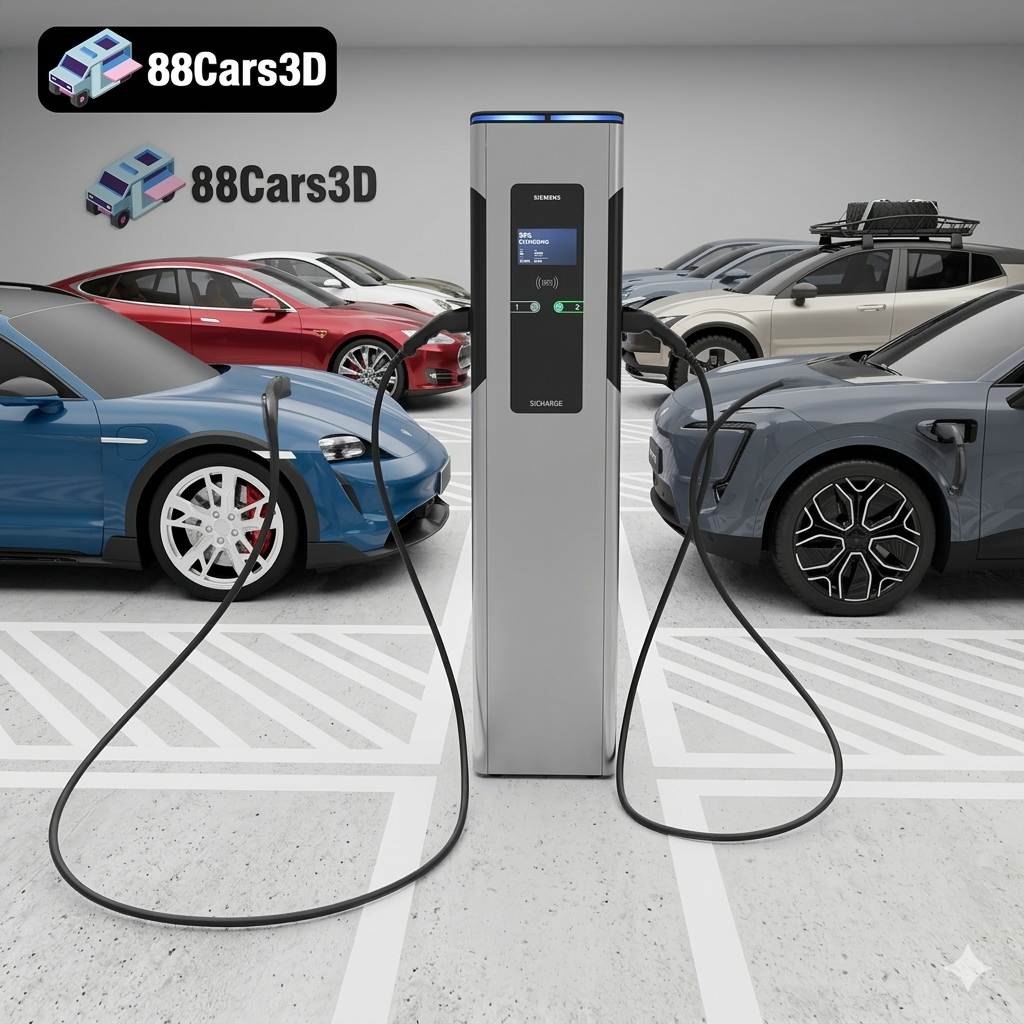
Download the Future of Mobility EV 3D Models Bundle. Includes the Volvo EX30, Tesla Model S, AVATR 11, Porsche Taycan, and a Siemens EV Charger. Save big on this highly optimized 5-in-1 pack for ArchViz and game development!
Price: $89.99

