Get 20% OFF All Premium 3D & STL Models!

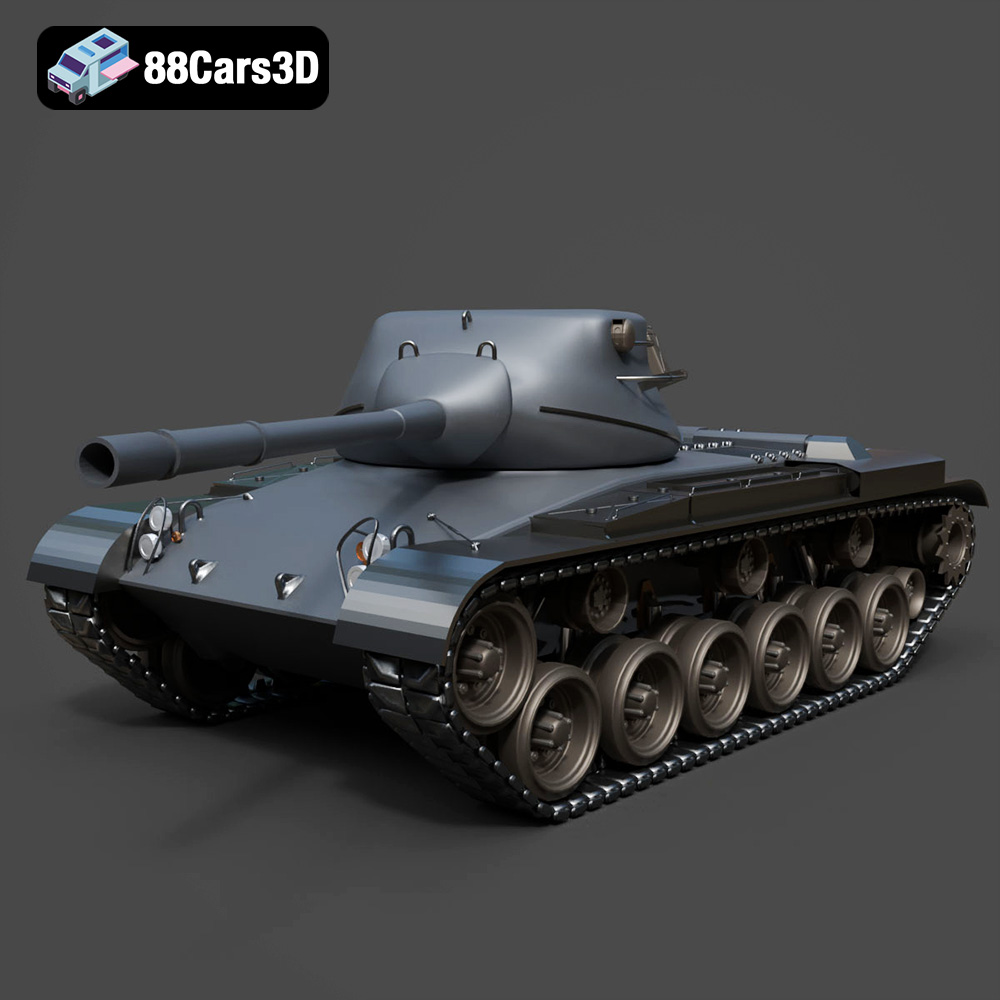
In the annals of military history, some vehicles stand out not just for their combat record, but for their innovative design and forward-thinking engineering. The AMX 50 100 French Heavy Tank is precisely one such marvel. An experimental prototype from the post-World War II era, it pushed the boundaries of armored vehicle development with its distinctive oscillating turret and powerful 100 mm cannon. This wasn’t just another tank; it was a vision of future warfare, a bridge between conventional design and revolutionary autoloading systems.
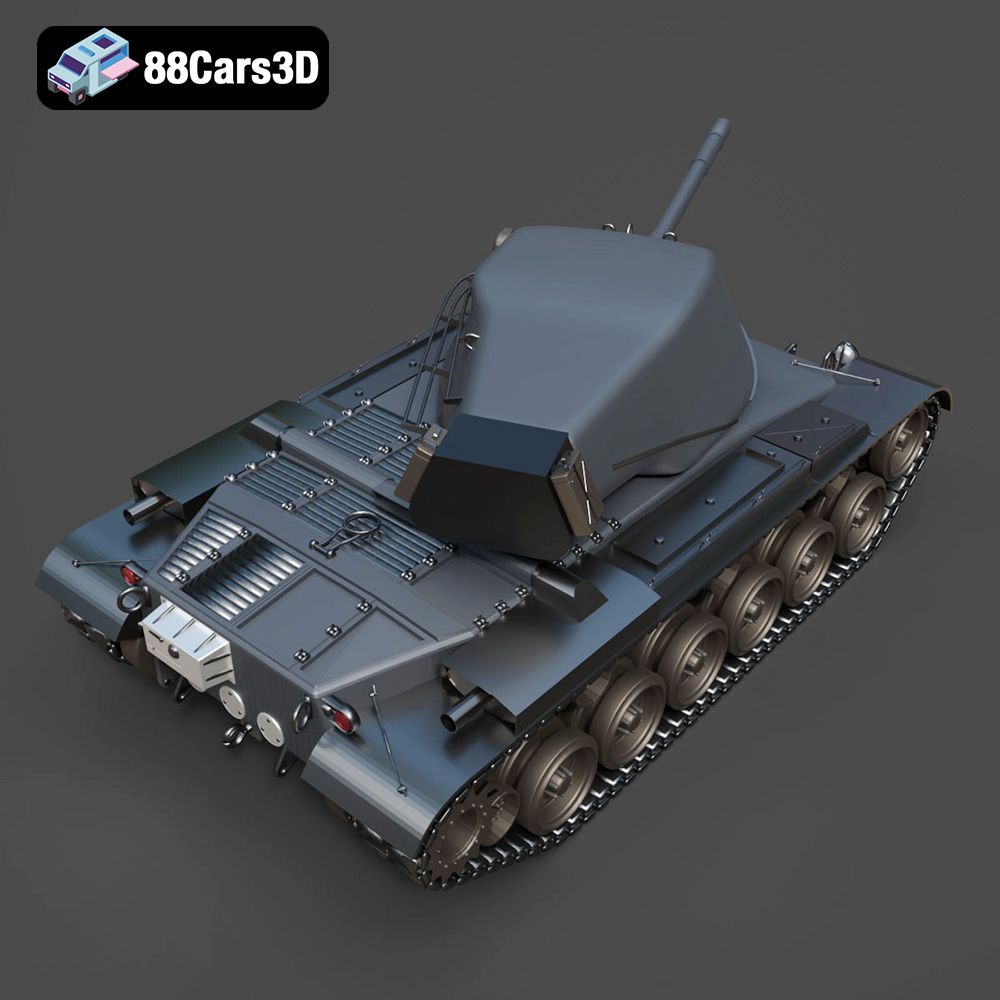
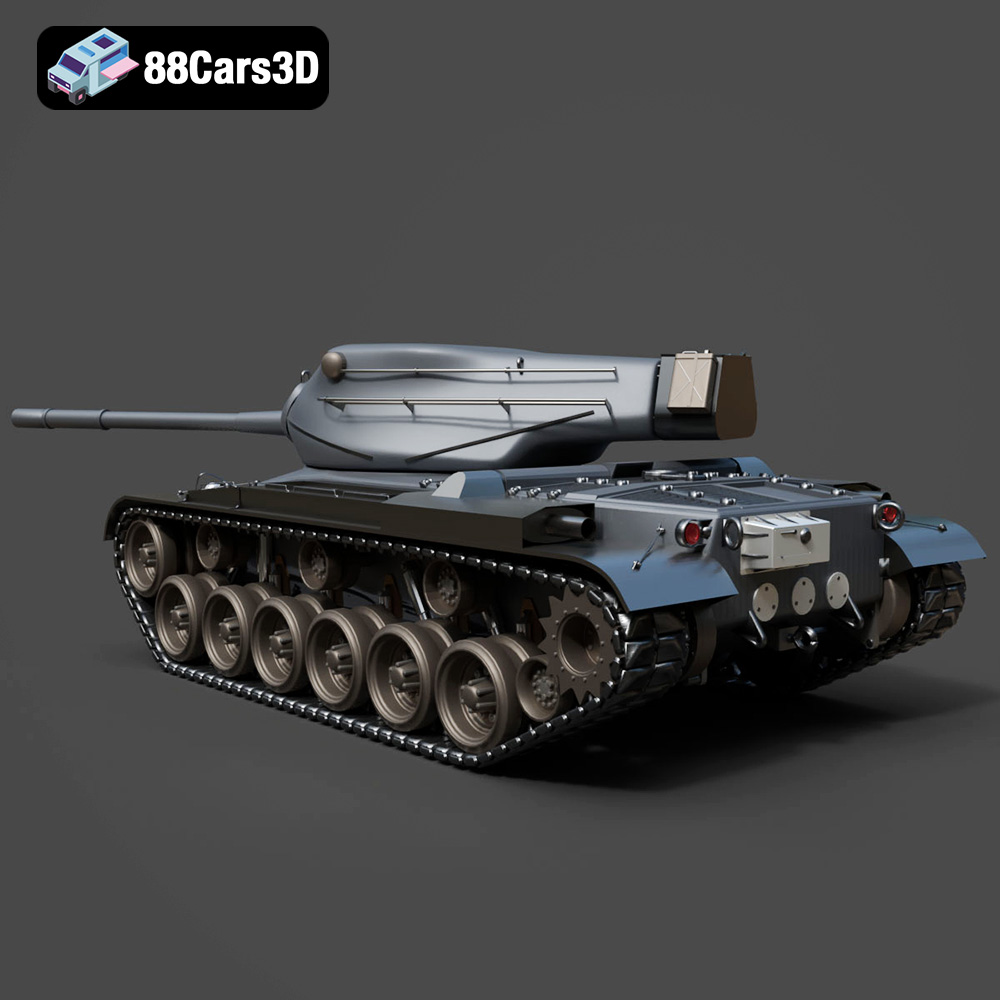
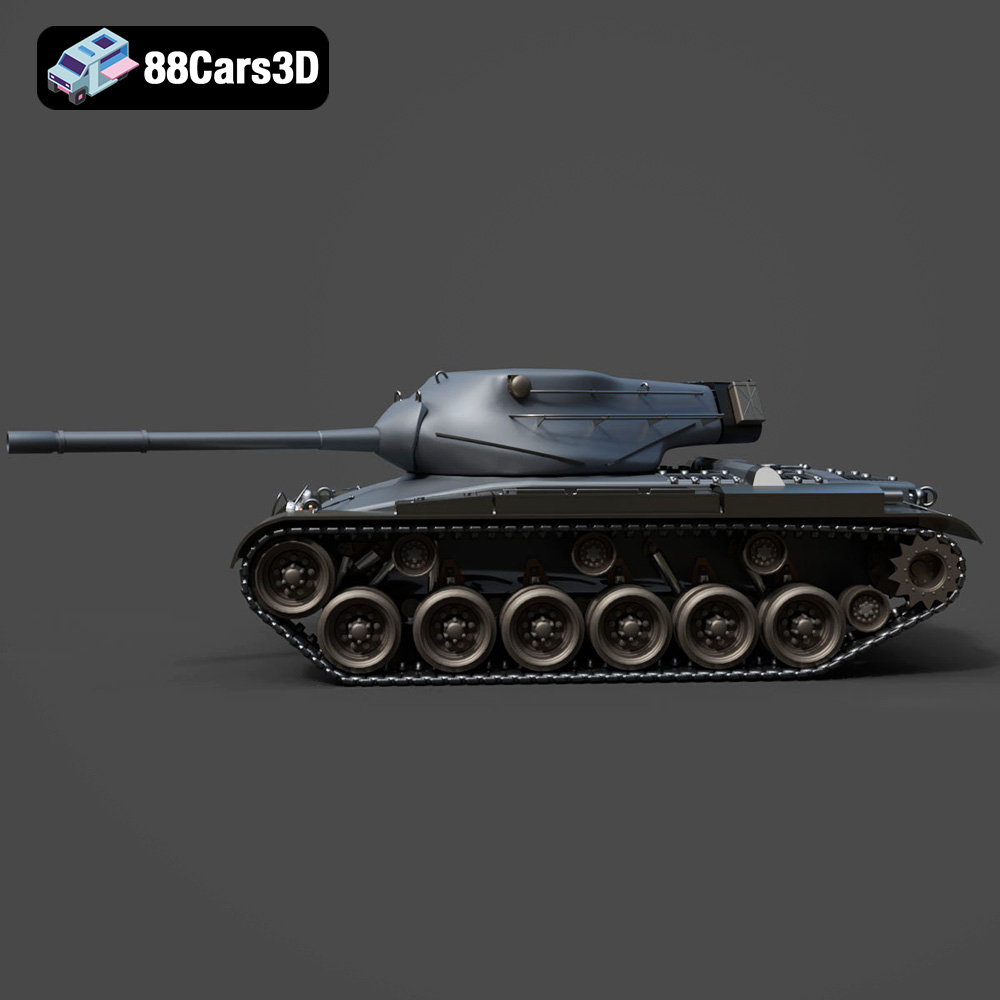
Today, thanks to advancements in 3D modeling, enthusiasts, historians, and digital creators can explore this iconic machine in unprecedented detail. Imagine bringing this piece of history to life in a realistic battlefield simulation, a captivating cinematic sequence, or even as a tangible, high-fidelity scale model. The AMX 50 100 French Heavy Tank 3D Model stands as a testament to meticulous digital craftsmanship, offering a comprehensive and accurate recreation of this historical behemoth. Whether for intricate renders, dynamic game environments, or detailed 3D printing projects, this model provides the foundation for limitless creative endeavors.
Creating a truly exceptional 3D model, especially of a complex historical vehicle like the AMX 50 100, requires a blend of artistic vision and rigorous technical precision. It’s a journey from historical blueprints and photographic references to a perfectly realized digital object, capable of performing across diverse platforms and applications.
The foundation of any high-quality 3D asset lies in its geometry. For the AMX 50 100 French Heavy Tank 3D Model, this meant an exhaustive study of its unique characteristics: the elongated hull, the multi-roadwheel suspension system, and critically, the distinctive oscillating turret. The modeling process begins with extensive reference gathering—historical documents, blueprints, photographs, and even surviving museum pieces. This ensures that every curve, every plate, and every component of the tank adheres to real-world accuracy.
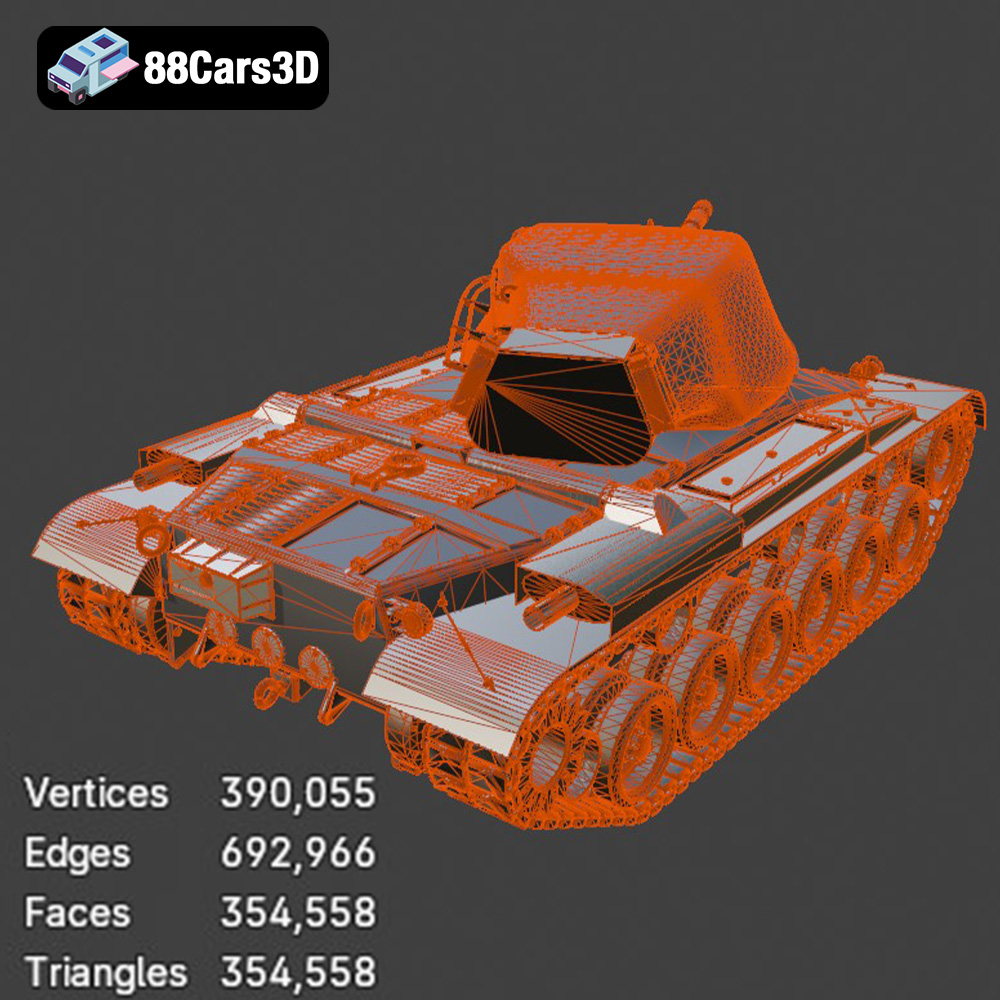
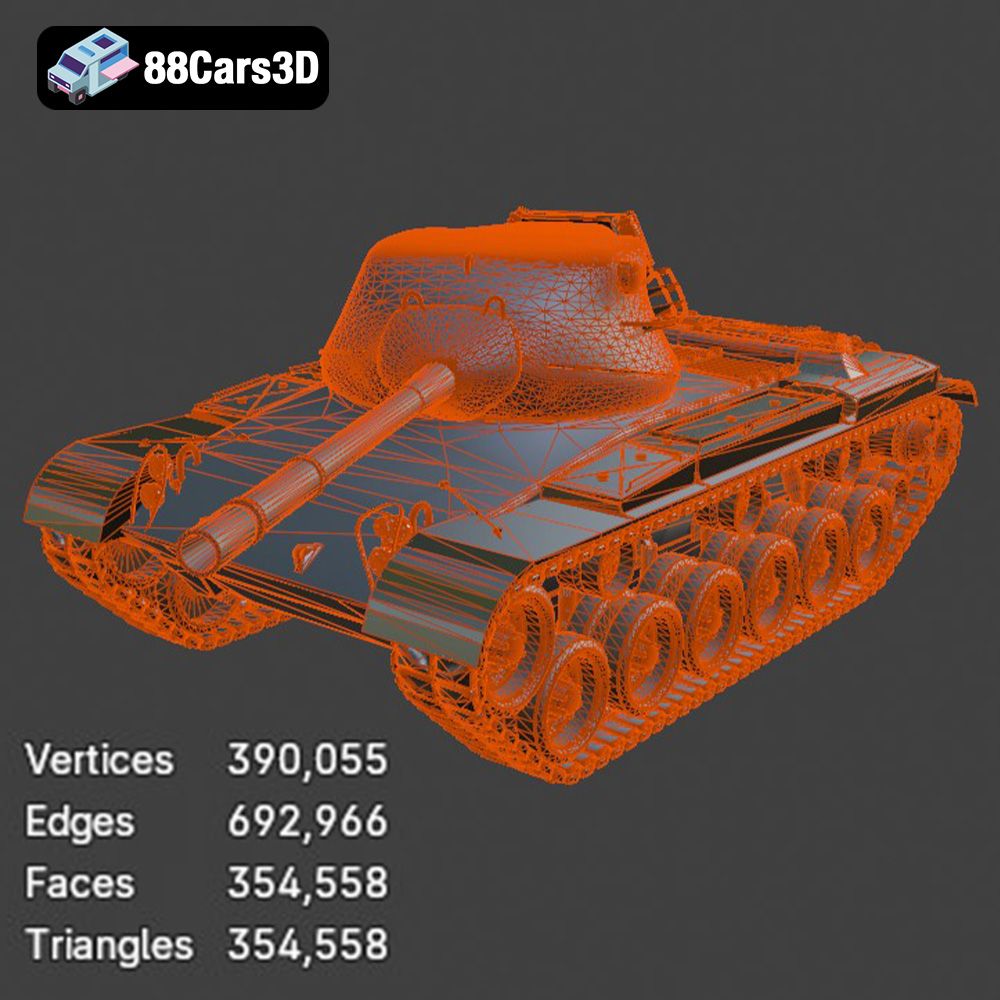
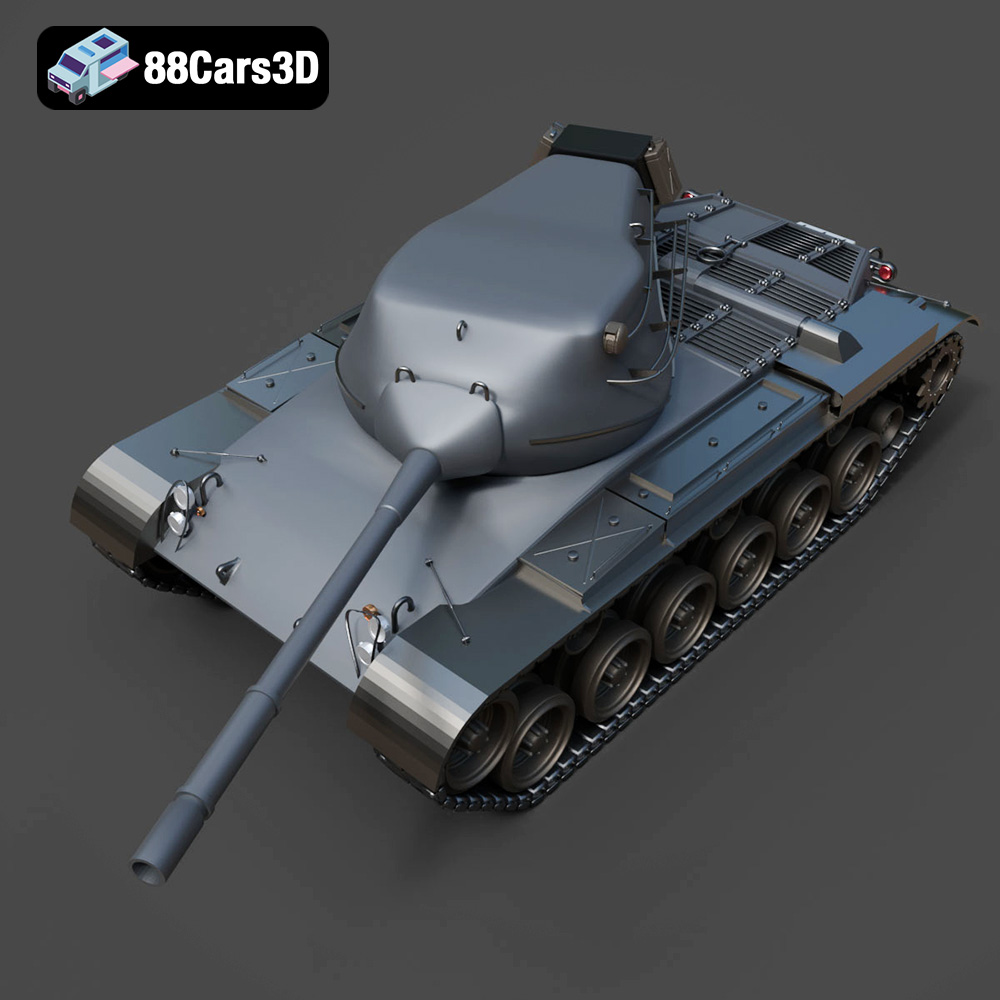
Following the research, a blockout phase establishes the primary forms and proportions. This is then refined into a clean, organized mesh topology. This isn’t merely about visual appeal; it’s about functionality. Clean topology ensures predictable subdivision for high-detail renders, efficient UV mapping, and smooth deformation if the model is ever animated. Every detail, from the realistic muzzle brake to the engine deck grills and track assemblies, is carefully constructed to maintain real-world scale accuracy and mechanical integrity. The result is a model with separate components for turret rotation and barrel elevation, making it animation-ready right out of the box.
Once the geometry is perfect, materials and textures breathe life into the model. While the base model provides clean geometry, the application of realistic textures and PBR (Physically Based Rendering) materials is crucial for achieving photorealistic results in rendering and convincing visuals in game engines. This involves creating textures for painted metal, worn tracks, rubber road wheels, and various metallic components. UV mapping, the process of flattening the 3D surface onto a 2D plane, is meticulously handled to ensure that textures can be applied without distortion and with optimal resolution. The product description confirms that materials and textures are included, indicating that the model is prepared for immediate integration into rendering pipelines, allowing artists to instantly achieve compelling visuals consistent with historical French military camouflage schemes or custom battle-damaged aesthetics.
The versatility of a 3D model often hinges on the range of file formats it supports. Different formats are optimized for distinct purposes, software environments, and performance needs. The AMX 50 100 French Heavy Tank 3D Model comes with a comprehensive suite of file formats, ensuring maximum compatibility across professional workflows. Understanding each is key to leveraging its full potential.
The .blend format is native to Blender, the popular open-source 3D creation suite. When you receive a .blend file, you’re not just getting geometry; you’re getting a fully editable Blender scene. This includes all modifiers, materials set up with Blender’s powerful node-based shader editor, lighting, cameras, and even animations if present. For artists working in Blender, this is the most flexible option, allowing for deep customization, rigging, animation, and rendering directly within their preferred environment. It preserves all the scene’s intricacies, making it ideal for those who wish to dissect the model’s construction or adapt it significantly.
.fbx (Filmbox) is a proprietary file format owned by Autodesk and is widely regarded as an industry-standard for exchanging 3D data between various software applications and game engines. It’s particularly ideal for Unreal, Unity, and other real-time pipelines because it can store not only geometry but also hierarchies, materials (often with PBR metadata), animations, skinning, and even camera data. Its robust nature makes it the go-to format for bringing complex animated 3D car models and military assets into game development, where performance and data integrity are paramount.
The .obj (Wavefront OBJ) format is one of the most widely supported and universal file formats for 3D graphics. It’s a simple, text-based format primarily used to store 3D geometry, including vertex positions, UV coordinates, vertex normals, and faces. While it can reference external material files (.mtl) for basic color and texture mapping, it doesn’t typically store complex PBR materials or animation data. Its strength lies in its widespread compatibility, making it an excellent choice for cross-software integration or for static models where pure geometry exchange is the priority. Almost every 3D application can open an .obj file.
.glb (GL Transmission Format Binary) is a relatively newer format that has rapidly gained traction, especially for web-based 3D, augmented reality (AR), and virtual reality (VR) applications. It’s the binary version of glTF, designed for efficient transmission and loading of 3D scenes and models. Critically, a .glb file embeds all textures and data directly within a single file, making it lightweight and self-contained. This optimization makes it perfect for displaying 3D models directly in web browsers, integrating into AR/VR experiences, or for mobile applications where quick loading times and minimal data size are essential.
The .stl (Stereolithography) format is the undisputed standard for 3D printing. Unlike other formats that store various types of 3D data, .stl exclusively describes the surface geometry of a 3D object using a mesh of triangular facets. It contains no color, texture, or material information—just raw geometry. For anyone looking to physically manifest the AMX 50 100 as a scale model, an .stl file is what your 3D printer slicing software will require. The model’s availability in .stl format directly addresses the growing demand for 3D printable military miniatures and collectibles.
The .ply (Polygon File Format) is another format for storing 3D data, commonly used for high-resolution 3D scans and scientific applications. It’s more flexible than .obj as it can store a wider range of properties, including vertex colors, normals, texture coordinates, and even transparency, often used in CAD or for analysis where precise mesh data is crucial. While not as universally common as .obj or .fbx, its inclusion caters to niche applications requiring detailed mesh information beyond standard geometry.
The .unreal format signifies that the asset is provided in a package specifically prepared and optimized for direct import into the Unreal Engine. This typically means that materials are set up using Unreal’s physically based material system, collision meshes are configured, and the asset is ready for real-time environments without extensive manual setup. For game developers and simulation creators using Unreal Engine, this provides an unparalleled level of convenience and efficiency, ensuring the AMX 50 100 tank is engine-ready for immediate deployment.
Finally, the .max format is the native file type for Autodesk 3ds Max, a powerful 3D modeling, animation, and rendering software. Similar to .blend for Blender, a .max file contains the entire 3ds Max scene, including all geometry, modifiers, materials (often V-Ray, Corona, or Arnold specific), lighting, cameras, and animation data. For professionals using 3ds Max for high-end automotive rendering, architectural visualization, or cinematic productions, the .max file provides complete access to the model’s creation hierarchy and allows for the most extensive modifications and highest fidelity renders.
The provision of this comprehensive range of formats for the AMX 50 100 French Heavy Tank 3D Model underscores its adaptability and value, making it an indispensable asset for virtually any 3D workflow.
A truly professional 3D model isn’t just about good looks; it’s about seamless integration into established pipelines and diverse applications. The AMX 50 100 French Heavy Tank 3D Model is engineered to fit effortlessly into various creative and technical workflows, from breathtaking renders to interactive game experiences.
For those focused on creating stunning visuals, whether for historical documentaries, cinematic sequences, or high-end simulations, the provided .max and .blend formats are invaluable. In 3ds Max, artists can import the .max file and immediately leverage its clean geometry and pivot points for turret rotation and gun elevation. With industry-standard renderers like V-Ray or Corona, a realistic studio lighting setup can transform the tank into a museum-quality render. Imagine the AMX 50 100 meticulously lit, showcasing its unique oscillating turret and heavy armor profile in a period-accurate diorama or a dynamic action scene. Similarly, Blender users can open the .blend file and utilize Cycles or Eevee for equally impressive results. Its real-world scale accuracy ensures that it integrates perfectly with other assets and environments, making it ideal for military history presentations and museum exhibits.
The world of game development demands assets that are not only visually appealing but also optimized for real-time performance. The AMX 50 100 model excels here, thanks to its optimized polygon structure and the inclusion of .fbx and .unreal formats. Importing the .unreal package into Unreal Engine allows developers to quickly integrate the tank, with materials, collision, and LODs (Levels of Detail, if implemented by the artist) pre-configured. This saves countless hours of setup time, allowing teams to focus on gameplay and environment design. For Unity, the .fbx format provides the necessary data, including hierarchies for animation. The model’s proper pivot points are critical for accurate in-game mechanics, enabling realistic turret traversal and gun elevation, essential for tank battle games, strategy simulations, and historical combat environments.
Beyond the digital realm, the AMX 50 100 French Heavy Tank 3D Model offers a fantastic opportunity for physical creation. With the included .stl format, it’s ready for 3D printing. Enthusiasts can produce detailed scale military miniatures at various recommended scales, such as 1:35, 1:48, 1:72, or even larger 1:16. The product details provide specific print settings, including layer height (0.08–0.16 mm for fine track details), wall thickness (2–3 mm), and infill (20–35%). Crucially, it advises on supports for overhangs like the barrel and turret, and suggests printing the hull flat and the barrel separately for optimal precision. This level of detail empowers modelers to move from digital file to tangible collectible, allowing for post-processing like sanding, primer coats, camouflage painting, and weathering effects to truly bring the historical vehicle to life on their display shelf or tabletop battlefield.
The utility of a high-quality 3D model extends far beyond its initial purpose. With its robust design and multiple formats, the AMX 50 100 French Heavy Tank 3D Model opens doors to advanced applications and deep customization, empowering creators to tell unique stories.
Augmented Reality (AR) and Virtual Reality (VR) are transforming how we interact with digital content. The .glb format, optimized for web and mobile, makes the AMX 50 100 a perfect candidate for interactive military exhibits or immersive armored vehicle walkthroughs. Imagine placing a life-sized AMX 50 100 in your living room via an AR app, or exploring its simplified crew compartment layout in a VR museum. The model’s clean topology and efficient design ensure smooth performance in these demanding real-time environments, offering unparalleled engagement for educational demonstrations or interactive historical displays.
One of the greatest advantages of a well-structured 3D model is its capacity for modification. The AMX 50 100 model is not a static object; it’s a foundation for creative exploration. Artists can apply historical French military camouflage schemes with precision, add tactical markings or unit insignia, or even create battle-damaged and weathered versions to depict a vehicle that has seen action. For those delving into alternative history scenarios, the model can be modified to explore alternate prototype configurations or even hypothetical upgrades. This adaptability makes it suitable for “WWII-era alternative history scenes, Cold War prototypes collections, museum visualizations, and tactical combat simulations,” allowing creators to populate rich, believable digital worlds with a piece of unique military heritage.
In today’s fast-paced digital production environment, time is a precious commodity. Creating complex, accurate 3D assets from scratch is an incredibly labor-intensive process, demanding significant expertise and resources. This is where platforms like 88cars3d.com provide immense value, offering a curated selection of high-quality 3D models ready for immediate integration.
For studios, independent developers, and hobbyists alike, acquiring a pre-made asset like the AMX 50 100 French Heavy Tank 3D Model represents a substantial saving in both time and cost. Rather than spending hundreds of hours on research, modeling, UV mapping, and optimization, creators can instantly access a production-ready model. The technical advantages highlighted in the product description—clean, organized mesh topology, real-world scale accuracy, proper pivot points, and optimized polygon structure—are not merely features; they are guarantees of a professional-grade asset that performs reliably across various platforms. This efficiency allows teams to allocate their valuable time to other critical aspects of their projects, such as environment design, animation, or rendering the final scene. It exemplifies how premium 3D assets accelerate workflows in game development, simulation, and high-end automotive rendering, even for military vehicles.
Beyond efficiency, platforms like 88cars3d.com expand creative possibilities by providing access to a diverse library of niche or highly complex subjects. The AMX 50 100, as an experimental prototype, is not an easy vehicle to model accurately due to its unique design and limited historical documentation. By offering such specialized 3D car models and military assets, 88cars3d.com empowers artists and developers to tackle projects that might otherwise be prohibitively complex or time-consuming. It’s about enabling storytelling, historical preservation, and innovative interactive experiences by putting meticulously crafted digital components directly into the hands of creators. The quality and versatility of models available ensure that whether your project is a historical simulation or a cutting-edge AR experience, you have the assets to make it exceptional.
The AMX 50 100 French Heavy Tank represents a fascinating chapter in armored warfare, and its digital recreation as a 3D model offers an unparalleled opportunity for exploration and integration into modern digital projects. From its historically accurate oscillating turret and 100 mm cannon to its meticulously detailed suspension and hull, this model is a masterclass in digital craftsmanship.
Its comprehensive technical features—including clean topology, real-world scale, and optimized polygon structure—ensure its versatility across a multitude of applications. Whether you’re a cinematic artist utilizing 3ds Max or Blender, a game developer building immersive worlds in Unreal Engine, or a hobbyist eager to 3D print a high-fidelity scale model, the AMX 50 100 French Heavy Tank 3D Model is equipped to meet your needs. With support for a wide array of file formats like .blend, .fbx, .obj, .glb, .stl, .ply, .unreal, and .max, this asset guarantees seamless integration into virtually any professional workflow.
By providing such a high-quality, technically robust, and historically accurate asset, 88cars3d.com continues its commitment to empowering digital artists and developers. Explore the possibilities, delve into history, and elevate your projects with this exceptional 3D model. Visit 88cars3d.com to discover the AMX 50 100 and a vast collection of other premium 3D car models and vehicle assets.
The AMX 50 100 French Heavy Tank 3D Model is a highly detailed digital recreation of the experimental post-World War II heavy tank developed by Ateliers de construction d’Issy-les-Moulineaux for the French Army. Known for its oscillating turret design and autoloaded 100 mm cannon, the AMX 50 100 represents a unique stage in armored vehicle engineering history. This model accurately captures the tank’s elongated hull, distinctive oscillating turret structure, multi-roadwheel suspension system, and heavy armor profile. Designed with clean topology and precise mechanical detailing, it is ideal for military simulations, historical visualization, game development, cinematic productions, and 3D printing projects.
$15.99
.amx50
.amx50100
.armoredvehicle
.blend
.fbx
.frenchtank
.glb
.heavytank
.historicalvehicle
.max
.militaryvehicle
.obj
.ply
.simulation
.stl
.tank3dmodel
.unreal
.wargameasset