Get 20% OFF All Premium 3D & STL Models!

In the vast landscape of 3D modeling, few subjects capture the imagination quite like iconic automobiles. These aren’t just vehicles; they are monuments to design, engineering, and cultural history. For artists, developers, educators, and enthusiasts, bringing these timeless machines into the digital realm offers unparalleled opportunities for visualization, interaction, and creation. From high-fidelity cinematic renders to immersive virtual experiences and even tangible 3D prints, the demand for meticulously crafted 3D car models continues to accelerate.
Consider the legendary BMW 328 Mille Miglia Touring Coupe. This pre-war racing marvel, with its breathtaking aerodynamic aluminum body by Touring of Milan and its lightweight tubular frame, isn’t just a car; it’s a piece of motorsport legend. Capturing such an icon in 3D requires an extraordinary blend of historical accuracy, artistic skill, and technical precision. A premium 3D model of this vehicle doesn’t merely replicate its form; it embodies its spirit, allowing creators to tell new stories and preserve its legacy in digital and physical formats.
At 88cars3d.com, we understand the critical role these assets play in professional projects. That’s why we offer exceptional 3D car models like the BMW 328 Mille Miglia Touring Coupe 3D Model, designed to meet the rigorous demands of various industries. This article will delve into the technical intricacies, diverse applications, and profound impact that high-quality automotive 3D assets have across different fields, illustrating how models of this caliber serve as foundational elements for groundbreaking work.
The versatility of a 3D model is often defined by the file formats it supports. Each format is engineered for specific purposes, offering unique advantages in terms of compatibility, data retention, and optimization for various workflows. For a complex asset like the BMW 328 Mille Miglia Touring Coupe 3D Model, understanding these formats is crucial for designers, game developers, animators, and 3D printing enthusiasts.
The .blend format is the native file type for Blender, a powerful open-source 3D creation suite. When you acquire a model in .blend format, you’re getting a fully editable Blender scene. This includes not only the mesh geometry but also all associated materials, textures, lighting setups, cameras, animation data, and even modifiers or rigging. This format is ideal for artists who primarily work in Blender, offering maximum flexibility for customization, material adjustments, or integrating the model into a larger Blender-based scene. Its comprehensive nature makes it perfect for detailed automotive rendering and animation projects where intricate control over every element is desired.
As a proprietary format developed by Autodesk, .fbx (Filmbox) has become an industry standard for exchanging 3D data between different software applications. It’s particularly favored in real-time pipelines for game development and virtual production, making it ideal for engines like Unreal and Unity. An .fbx file can encapsulate geometry, materials, textures, animations, and skeletal data. Its robust support for animation and rigging data ensures that dynamic elements, like the separate wheels and steering components of the BMW 328 model, can be seamlessly imported and animated within various engines and DCC (Digital Content Creation) tools. This format is a cornerstone for creating compelling game assets.
The .obj (Wavefront Object) format is one of the oldest and most widely supported 3D file formats. It’s a universal choice for simple mesh data exchange, making it incredibly compatible across virtually all 3D software platforms. An .obj file typically stores geometric data (vertices, faces, normals, UVs) and can reference external .mtl (Material Template Library) files for basic material properties and texture maps. While it doesn’t support animation or rigging directly, its widespread adoption makes it an excellent fallback for cross-software compatibility, ensuring that the core geometry of your 3D car models is accessible everywhere.
The .glb (GLB – GL Transmission Format Binary) format is a relatively newer standard designed for efficient transmission and loading of 3D scenes and models. It packages all necessary data—geometry, materials, textures, and animation—into a single binary file, making it highly optimized for augmented reality (AR), virtual reality (VR), and web-based applications. For showcasing the BMW 328 Mille Miglia Touring Coupe 3D Model in an interactive web viewer or an AR experience, .glb offers superior performance and ease of integration.
The .stl (STereoLithography) format is synonymous with 3D printing. It represents a 3D model as a series of connected triangles, defining only the surface geometry without color or texture information. For converting a digital automotive masterpiece like the BMW 328 into a tangible, physical collectible or prototype, .stl is the indispensable format. Ensuring the model is manifold and watertight in .stl format is critical for successful 3D printing.
The .ply (Polygon File Format) is often used for storing 3D data from 3D scanners, offering a more comprehensive representation than .obj by potentially including color, transparency, and normal information directly within the mesh data. It’s a precision mesh format valuable for CAD applications, scientific visualization, and situations where detailed surface information or point cloud data needs to be preserved, often used for reverse engineering or quality control.
While not a standalone file format in the same way as .fbx or .obj, .unreal refers to assets specifically packaged and optimized for the Unreal Engine. This often means models have been imported via .fbx, had their materials set up using Unreal’s material editor, and are organized within the engine’s content browser. An .unreal asset represents an engine-ready, optimized version of the 3D model, configured with proper collision, LODs (Levels of Detail), and PBR (Physically Based Rendering) materials, making it instantly usable in demanding real-time projects and a prime candidate for high-performance game assets.
The .max format is the native file for Autodesk 3ds Max, a powerful 3D modeling, animation, and rendering software widely used in architectural visualization, film, and game development. Similar to .blend, a .max file contains the entire scene data, including geometry, modifiers, materials, textures, lights, cameras, and animation. It provides the highest level of editability and control for users working within the 3ds Max ecosystem, offering robust tools for intricate automotive rendering and complex animation sequences.
Recreating a historical vehicle like the BMW 328 Mille Miglia Touring Coupe in 3D is a testament to meticulous craftsmanship. It’s about more than just aesthetics; it’s about engineering a digital asset that performs reliably across various platforms and use cases. The BMW 328 Mille Miglia Touring Coupe 3D Model from 88cars3d.com exemplifies this dedication, offering a highly detailed yet technically robust asset.
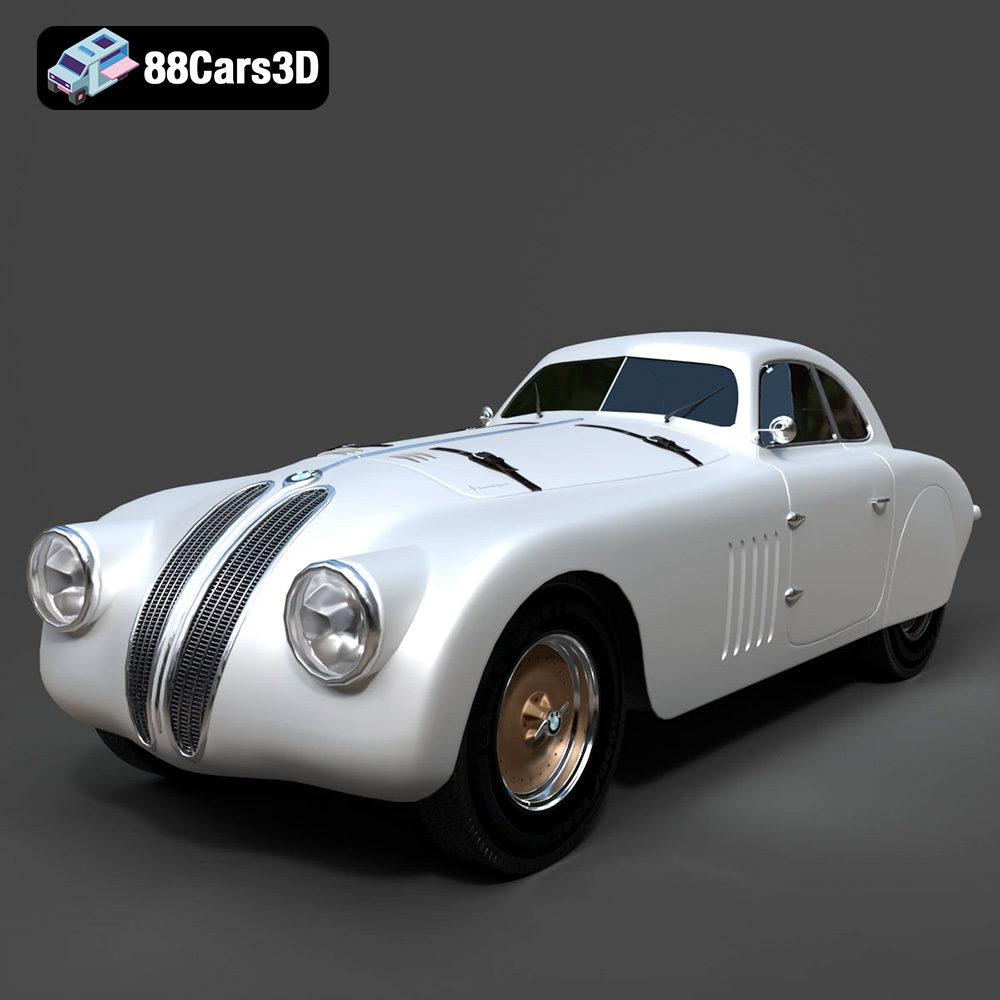
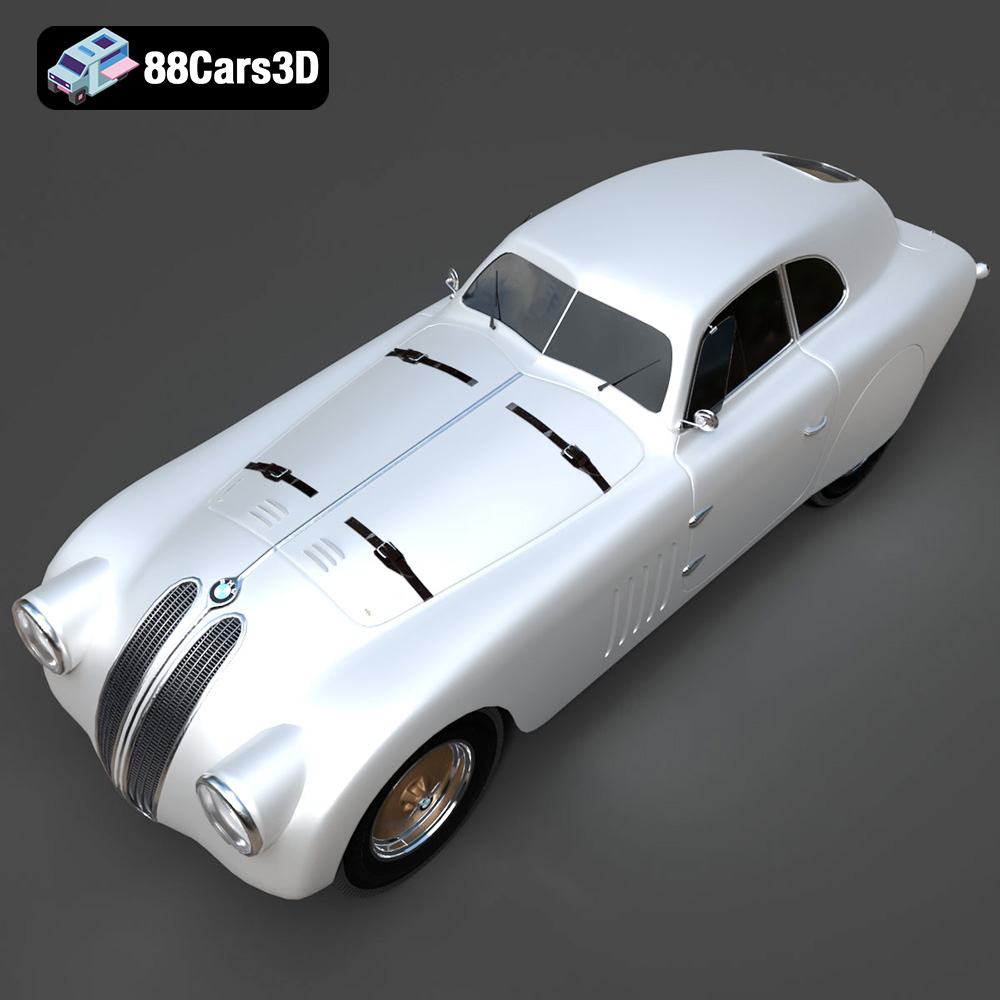
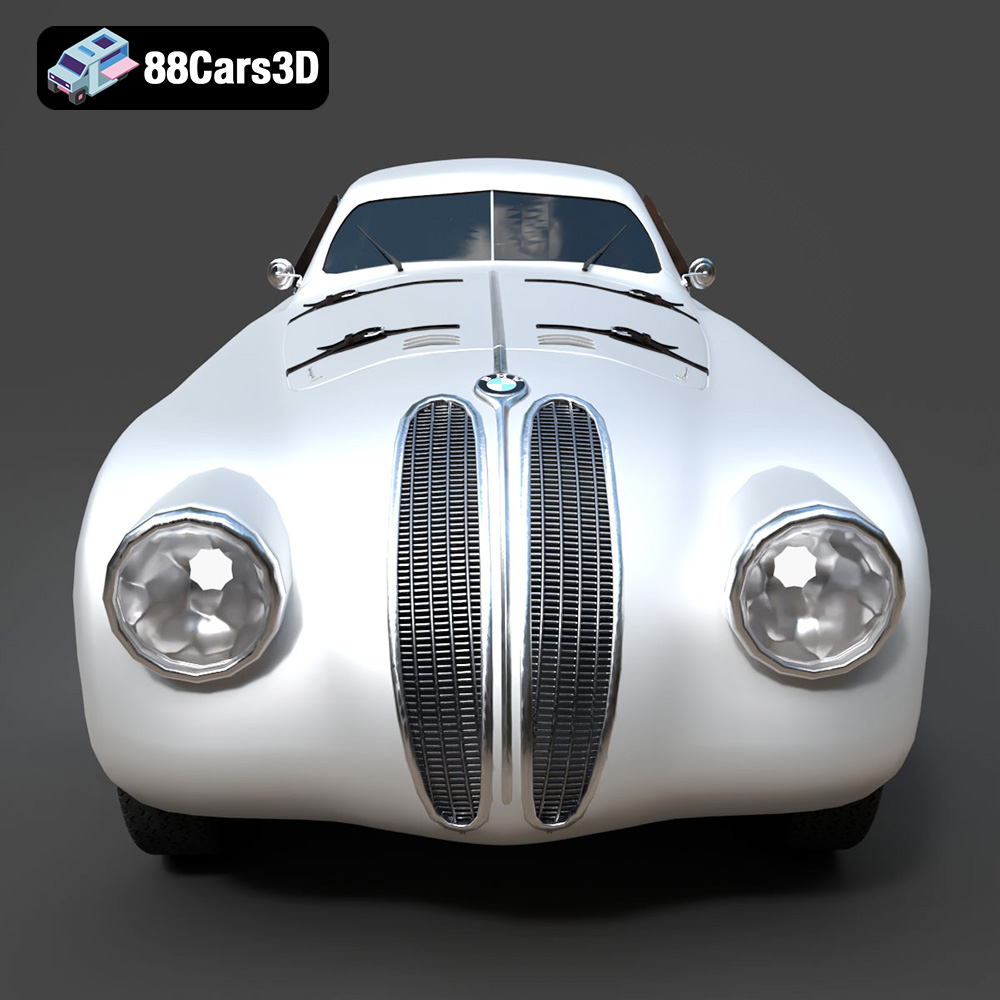
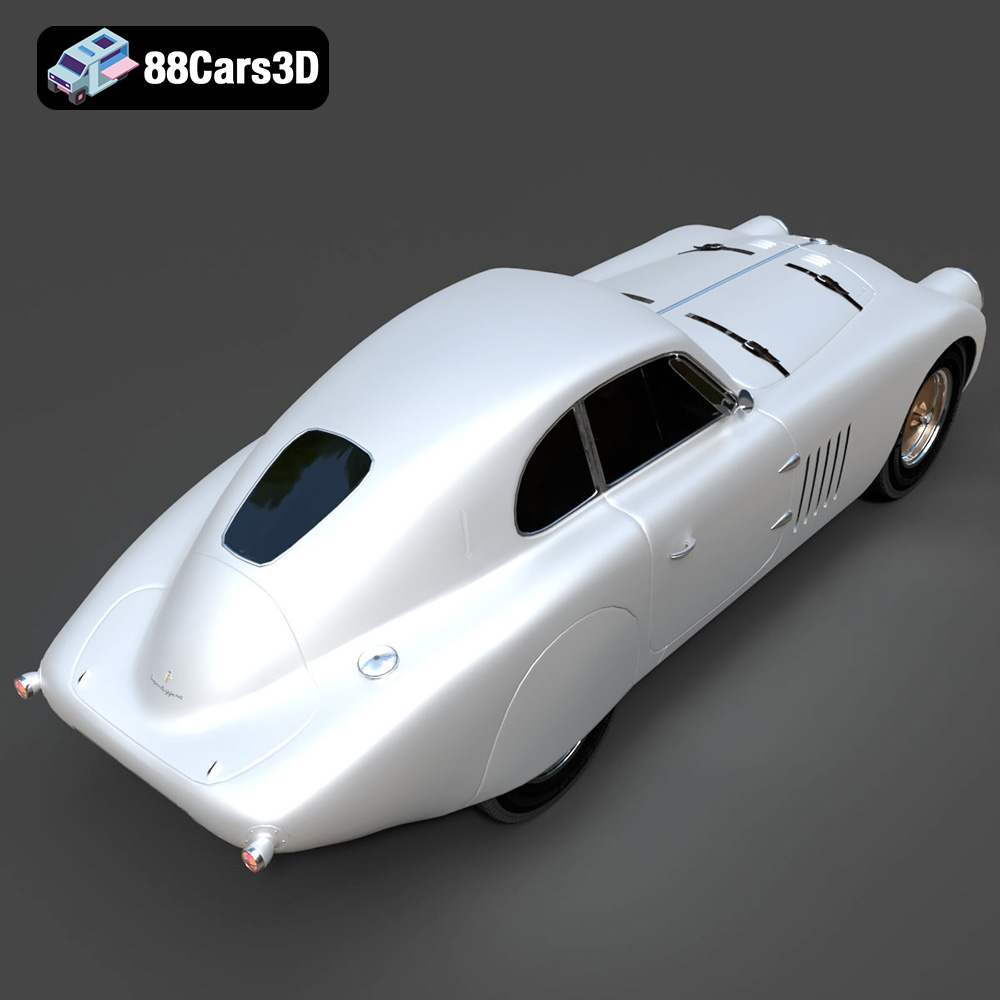
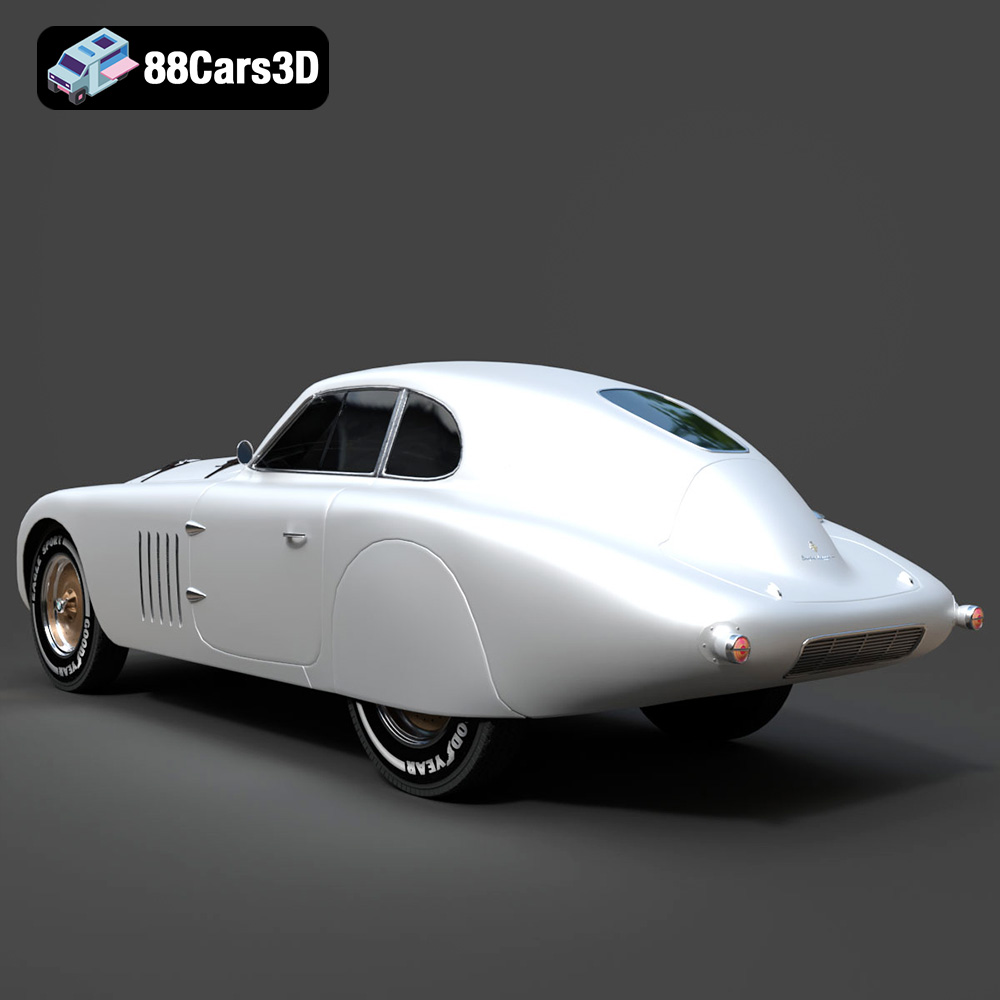
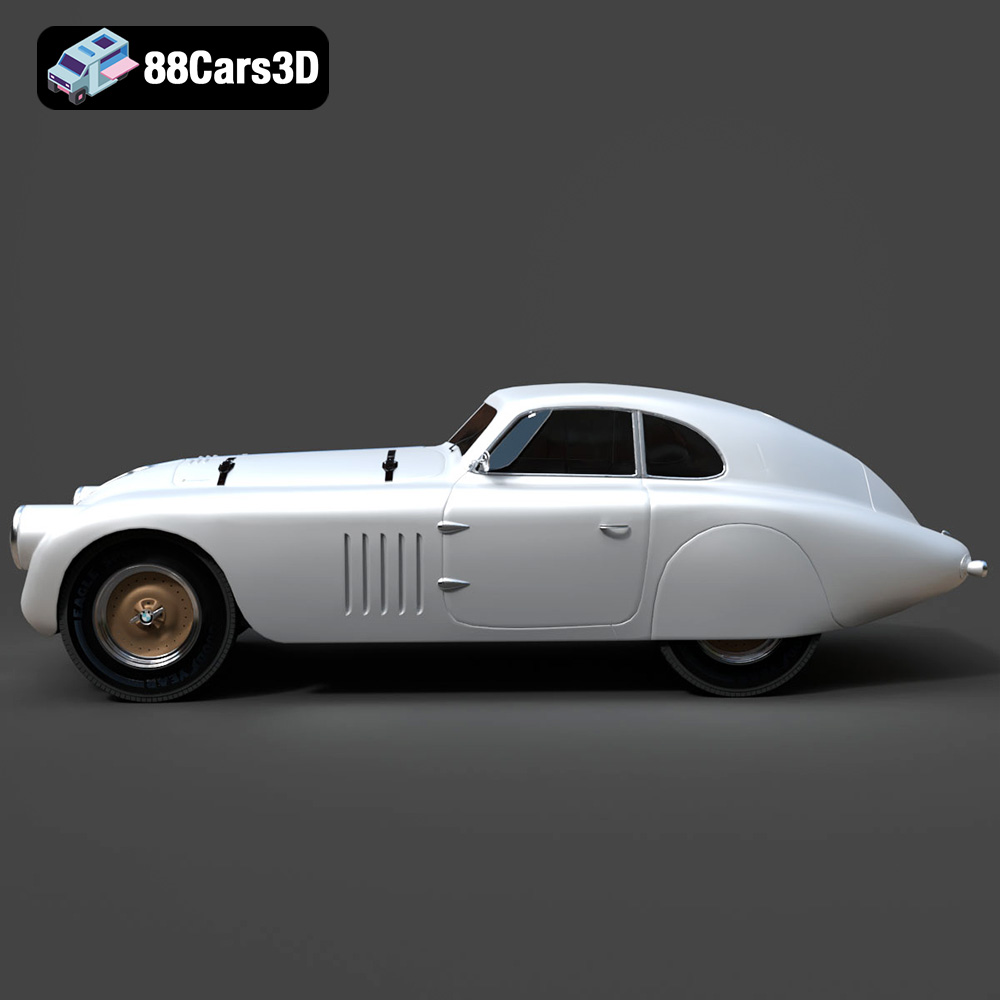
The BMW 328 Mille Miglia Touring Coupe is celebrated for its distinctive aerodynamic profile. The 3D model accurately reflects these pre-war coupe body proportions, from the streamlined fastback design to the signature kidney grille and the unique covered or faired-in headlight configuration. Every curve and panel, rendered in a smooth aluminum-style finish, speaks to the original’s lightweight construction. The period-correct racing wheels and covers, along with subtle chrome trim and emblem detailing, are faithfully recreated, ensuring historical accuracy for even the most discerning observer. This level of detail is paramount for high-end automotive rendering where authenticity is key.
Stepping inside the digital cockpit of the BMW 328 reveals its minimalist vintage racing roots. The model features a period-style steering wheel, an authentic analog instrument cluster, and a racing seat configuration that immerses the viewer in the historical context. Dashboard and control detailing, while optimized, retain their character. This attention to interior fidelity makes the model suitable for close-up renders, virtual tours, and even first-person interactive experiences in games or AR/VR applications, making it a valuable game asset.
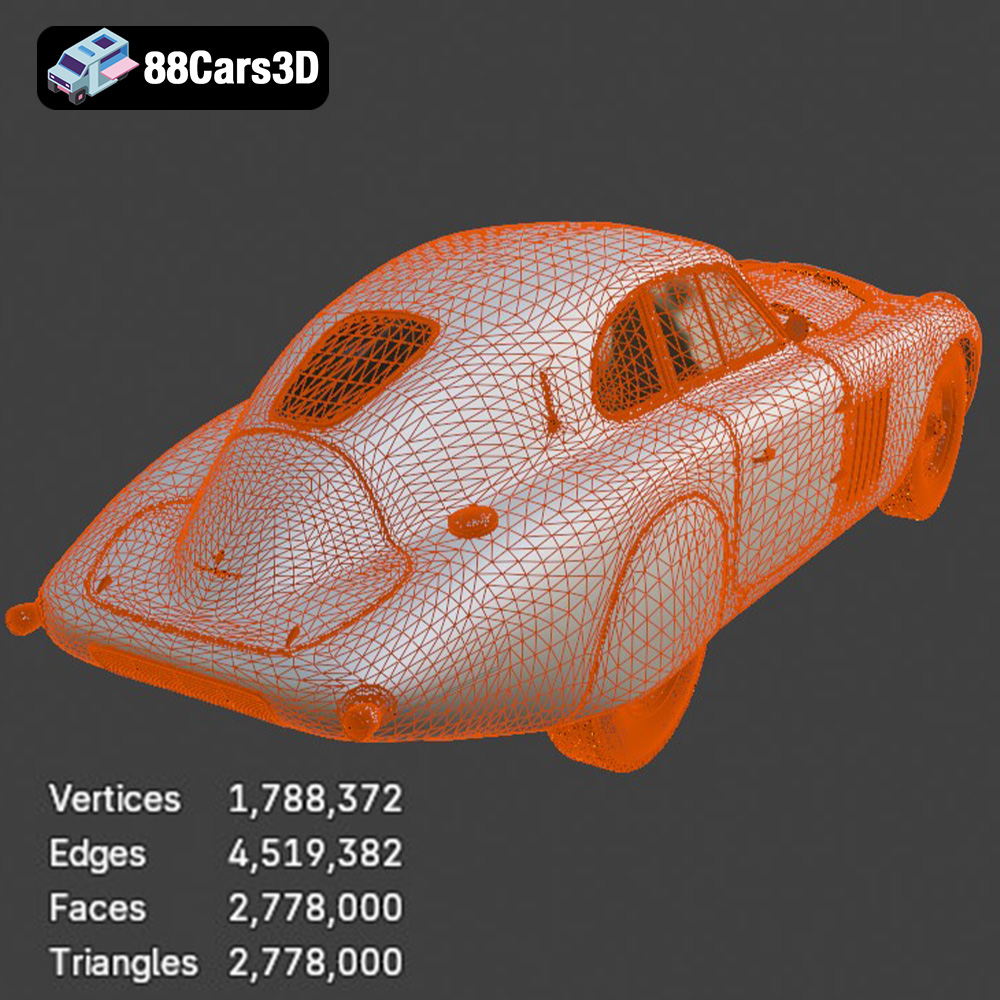
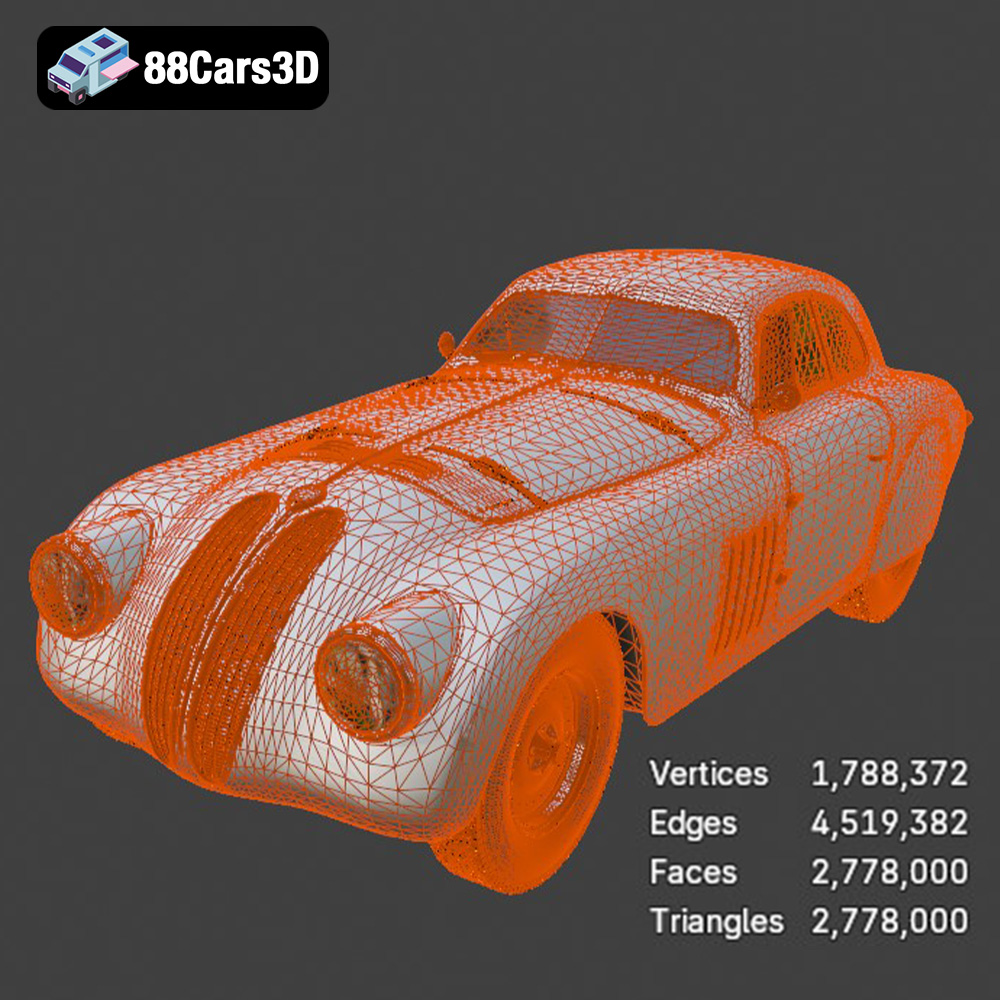
Beyond visual accuracy, the technical underpinnings of this 3D model are crucial for its utility. It boasts a clean and well-organized mesh structure, ensuring optimal polygon flow for both performance and realism. Real-world scale accuracy guarantees seamless integration into existing scenes or environments without requiring manual scaling. Furthermore, the proper pivot setup for steering and wheel rotation simplifies animation workflows, a critical advantage for animators working on racing simulations or cinematic sequences. This thoughtful technical execution allows for broad compatibility with major 3D software platforms and engines, from 3ds Max and Blender to Unreal and Unity.
The utility of a high-quality 3D car model like the BMW 328 Mille Miglia Touring Coupe extends across diverse professional workflows. Its meticulous design and technical advantages make it an invaluable asset for various creative and technical projects.
For artists focused on creating stunning visual content, the BMW 328 model provides an excellent foundation for photorealistic automotive rendering. In software like 3ds Max, professionals can leverage advanced rendering engines such as V-Ray or Corona to produce breathtaking images and animations. The model’s clean mesh and optimized geometry allow for intricate material setups, whether replicating vintage polished aluminum, a classic racing paint finish, or even adding realistic dust and wear. Similarly, Blender users can harness Cycles or Eevee to achieve compelling results, utilizing the model’s native .blend format for full control over every aspect of the scene, from lighting to environment effects. This is crucial for marketing, advertising, and historical visualization projects.
The world of game development demands assets that are not only visually impressive but also highly optimized for real-time performance. The BMW 328 Mille Miglia Touring Coupe 3D Model, with its optimized geometry and proper pivot setup, makes an ideal game asset. When imported into Unreal Engine via .fbx or as an .unreal asset, developers can swiftly integrate it into vintage racing games, historical open-world environments, or motorsport simulations. The separation of wheels and steering components is particularly beneficial for rigging realistic vehicle physics and animation, allowing for dynamic gameplay and believable driving experiences. Ensuring efficient UV mapping and PBR material setup within Unreal further enhances its visual fidelity without compromising frame rates.
Augmented Reality (AR) and Virtual Reality (VR) platforms are transforming how we interact with digital content. The BMW 328 model is perfectly suited for creating immersive classic car exhibitions and interactive racing history experiences. The .glb format, optimized for web and real-time display, facilitates deployment in WebGL viewers or dedicated AR/VR applications. Imagine a user able to walk around the virtual BMW 328 in their living room via AR, examining its intricate details, or experiencing a VR simulation of the Mille Miglia race from the cockpit. The model’s clean topology and real-world scale are essential for maintaining a sense of presence and believability in these interactive environments, making historical visualization accessible and engaging.
The journey of a 3D model doesn’t always end on a screen. For enthusiasts and collectors, the ability to transform digital assets into tangible objects through 3D printing offers a unique way to own a piece of automotive history. The BMW 328 Mille Miglia Touring Coupe 3D Model is explicitly designed with this in mind, offering a convertible .stl format for physical replication.
Before any 3D model can be printed, it must be meticulously prepared. The conversion to an .stl format ensures that the model’s surface geometry is accurately represented as a series of triangles, a language universally understood by 3D printers. For a classic car like the BMW 328, ensuring the mesh is “manifold” (watertight, without holes or inversions) is critical for a successful print. The model’s clean and well-organized mesh structure provides a solid foundation for this preparation, minimizing potential errors and allowing for direct output for collectible scale models or display miniatures.
Achieving a high-quality 3D print of the BMW 328 Mille Miglia Touring Coupe involves careful consideration of print settings. Recommended scales like 1:32, 1:24, 1:18, or 1:12 allow for various levels of detail and display purposes. A layer height between 0.08–0.16 mm strikes a balance between fine detail and reasonable print time. A wall thickness of 1.5–2.5 mm ensures the model’s structural integrity, especially for delicate parts. An infill of 15–25% provides necessary internal support without excessive material consumption. Supports will be required for complex geometries such as mirrors, underbody details, and wheel arches, while printing the body angled and wheels separately optimizes surface finish and minimizes support marks.
Once printed, the physical model enters the post-processing phase, which is where its character truly comes alive. This often involves sanding to smooth layer lines, applying primer for an even surface, and then carefully painting. For the BMW 328 Mille Miglia, a gloss vintage racing paint finish, possibly with historical race decals, would recreate its iconic look. This process allows hobbyists and professionals to create unique automotive collectibles, prototypes, or even custom parts, further extending the value of the original digital asset. The ability to manifest these 3D car models physically is a testament to the comprehensive design offered by resources like 88cars3d.com.
The versatility of a high-fidelity 3D model like the BMW 328 Mille Miglia Touring Coupe lends itself to an array of creative and commercial applications. Here are a few conceptual case studies demonstrating its potential.
Imagine a university automotive history department using the BMW 328 Mille Miglia Touring Coupe 3D Model to create an interactive learning module. Students could explore the vehicle from every angle, dismantle it virtually to understand its mechanical components, and even visualize its performance dynamics through simulated animations. The model’s accurate exterior and interior details, coupled with its clean topology, make it an ideal tool for educational visualization, providing a deeper understanding than static images or text ever could. This transforms passive learning into an engaging, hands-on experience, fostering a new generation of automotive historians and engineers.
For filmmakers and advertising agencies working on historical documentaries or luxury automotive commercials, the BMW 328 model is a game-changer. Instead of relying on rare, expensive, and fragile physical vehicles for every shot, CGI can be seamlessly integrated. Picture a scene where the BMW 328 races through a digital recreation of a 1940s Italian countryside, with dynamic lighting and camera movements that would be impossible with a real car. The model’s animation-ready features, such as separate wheels and steering components, allow for hyper-realistic motion, bringing historical races to life with cinematic grandeur. This drastically reduces production costs and expands creative possibilities for high-impact visual storytelling.
Luxury car brands or automotive museums can utilize the BMW 328 Mille Miglia Touring Coupe 3D Model to construct cutting-edge virtual showrooms or interactive museum exhibits. Using AR/VR technology, prospective buyers or museum visitors could engage with the car in a dynamic, personalized way. They could change body colors, apply different liveries, or explore customization options virtually, offering a tailored experience without the constraints of a physical space. This innovative approach enhances customer engagement and provides a unique platform for showcasing iconic vehicles globally, leveraging the model’s compatibility with real-time engines and optimized formats like .glb.
The digital automotive world thrives on precision, versatility, and artistic integrity. The BMW 328 Mille Miglia Touring Coupe 3D Model stands as a prime example of an asset that marries historical accuracy with technical excellence, making it indispensable for a wide array of professional applications. From the intricate details vital for stunning automotive rendering and visualization to the optimized structure essential for high-performance game assets and interactive AR/VR experiences, this model delivers on all fronts.
Understanding the nuances of various 3D file formats – from the editable depth of .blend and .max to the universal compatibility of .fbx and .obj, the real-time efficiency of .glb and .unreal, and the tangible promise of .stl and .ply – empowers creators to maximize the potential of their projects. Whether you’re animating a historical race, developing an immersive simulation, or crafting a physical collectible, the foundational quality of your 3D assets is paramount.
At 88cars3d.com, we are committed to providing artists and developers with the highest caliber of 3D car models, meticulously crafted to elevate your creative endeavors. The BMW 328 Mille Miglia Touring Coupe 3D Model is more than just a digital file; it’s a gateway to recreating history, driving innovation, and crafting captivating experiences for audiences worldwide. Explore the possibilities and discover how premium assets can transform your vision into reality.
The BMW 328 Mille Miglia Touring Coupe 3D Model is a high-detail digital recreation of the legendary pre-war racing coupe that achieved historic success in the 1940 Mille Miglia endurance race. Renowned for its aerodynamic aluminum body crafted by Touring of Milan and its lightweight tubular frame, the BMW 328 Mille Miglia Coupe stands as an icon of classic motorsport engineering. This 3D model accurately represents the streamlined fastback body, covered headlamps, signature kidney grille design, aerodynamic wheel covers, racing cockpit layout, and period-correct detailing. Built with clean topology and real-world scale accuracy, it is ideal for rendering, animation, historical visualization, game development, and AR/VR classic automotive showcases. Perfect for vintage racing scenes, museum presentations, cinematic historical projects, concours displays, and classic car simulations.
$29.99
.arvr
.blend
.bmw328
.car3dmodel
.classicracecar
.fbx
.gameasset
.glb
.max
.millemiglia
.motorsport
.obj
.ply
.prewarcar
.rendering
.simulation
.stl
.touringcoupe
.unreal
.vintagecar