Get 50% OFF All Premium 3D & STL Models!

In the rapidly evolving world of 3D visualization, game development, and digital manufacturing, the demand for exceptionally detailed and technically sound assets is paramount. Whether you’re an automotive designer crafting the next-generation vehicle, a game developer building an immersive racing experience, or an architect integrating dynamic elements into a virtual walkthrough, the quality of your 3D models dictates the realism and impact of your final product.
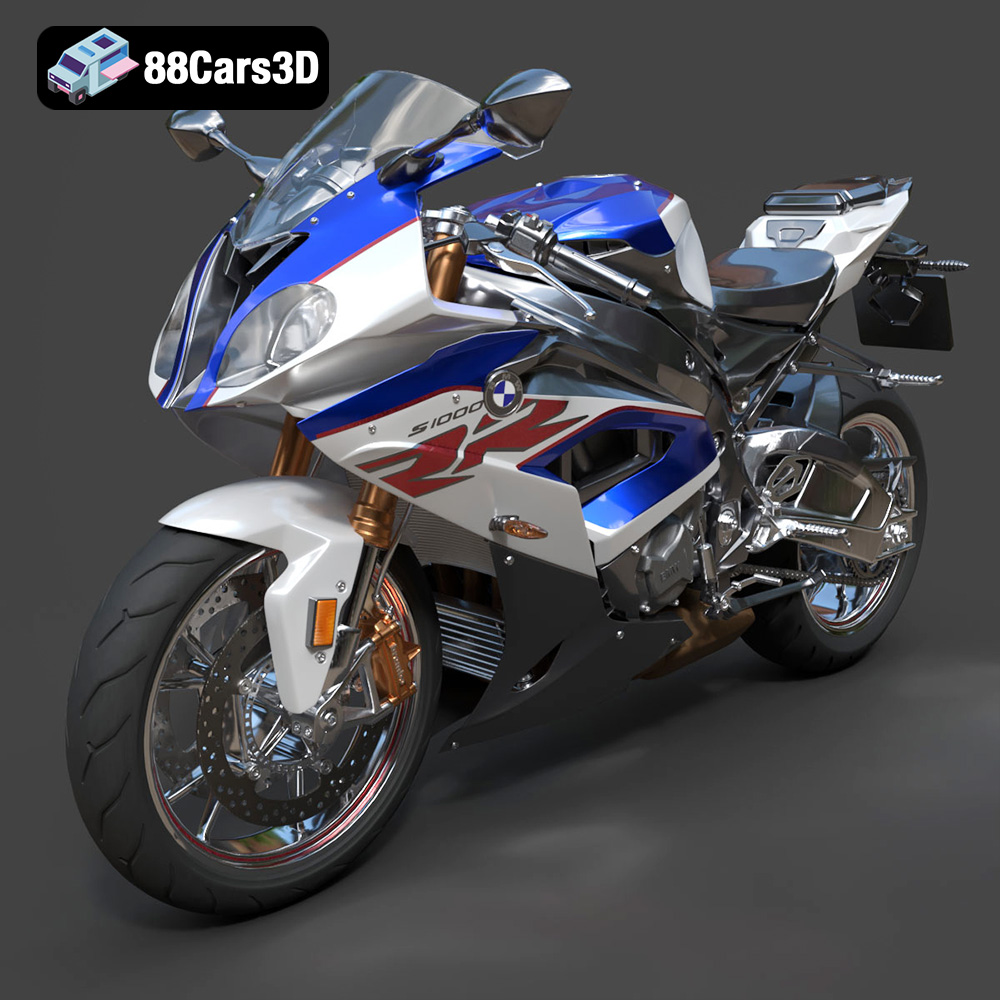
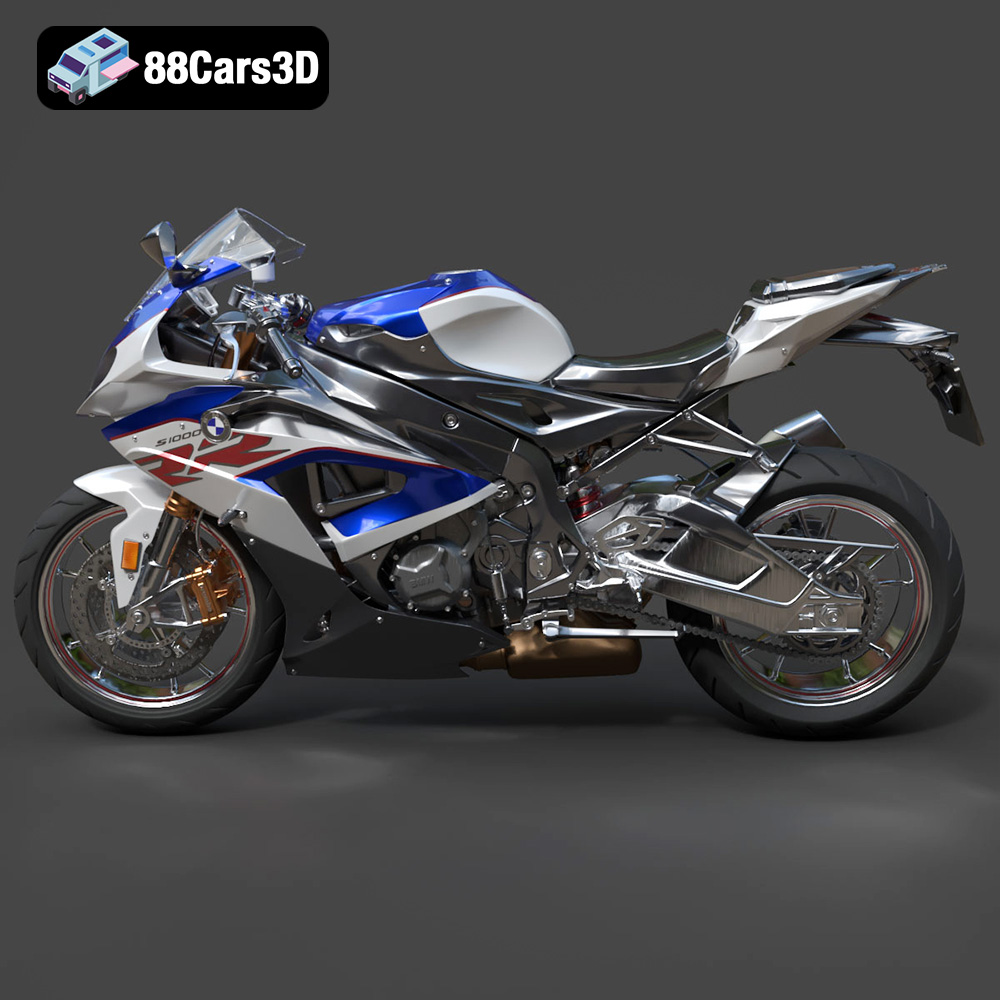
Today, we delve into a prime example of such a high-caliber asset: the BMW S 1000 RR 2018 3D Model. This isn’t merely a static representation; it’s a meticulously engineered digital recreation of BMW Motorrad’s iconic superbike, a machine renowned for its aggressive aerodynamic styling, formidable inline-four engine power, and sophisticated electronic systems. Available at 88cars3d.com, this model serves as an indispensable tool for professionals seeking unparalleled detail and versatility across a myriad of applications, from stunning automotive rendering to cutting-edge AR/VR motorcycle experiences and even precision 3D printing.
The 2018 S 1000 RR epitomizes precision German sportbike engineering, and its digital counterpart mirrors this commitment to excellence. With clean topology, real-world scale accuracy, and separated components ready for animation, this 3D model is poised to transform your projects, offering both visual fidelity and technical flexibility.
Choosing the right 3D model file format is crucial for seamless integration into various software pipelines and achieving specific project goals. Each format carries its own set of advantages, catering to different stages of a project, from initial design to final rendering, real-time deployment, or physical production. The BMW S 1000 RR 2018 3D Model exemplifies versatility by offering a comprehensive suite of these formats.
The .blend format is native to Blender, a powerful open-source 3D creation suite. When you receive a .blend file, you’re getting a fully editable Blender scene, complete with materials, textures, lighting setups, cameras, and even animation data if present. This format is ideal for artists who primarily work within Blender, allowing for deep customization, adjustments to node-based materials, geometry modifications, and easy integration into Blender-centric workflows. It ensures that all original scene data, including modifiers and hierarchies, is preserved, offering maximum flexibility for further development or learning from the model’s construction.
Autodesk’s .fbx (Filmbox) format has become an industry-standard for 3D data exchange, especially for animated models. It’s highly versatile, supporting geometry, materials, textures, animations, and skeletal data. This makes it an ideal choice for pipelines involving multiple software packages, such as transferring models between 3ds Max, Maya, Unity, and Unreal Engine. For game development and real-time applications, .fbx is often the go-to format due to its robust support for animation and scene hierarchy, ensuring that separate components like the BMW S 1000 RR’s wheels and steering are correctly linked and ready for physics or kinematic setups.
The .obj (Wavefront Object) format is a simpler, more universal exchange format, widely supported across virtually all 3D software. It primarily stores geometric data (vertices, normals, texture coordinates, and faces) and can reference an accompanying .mtl (material) file for basic material properties. While it doesn’t typically support animation, rigging, or advanced material networks, its simplicity ensures broad compatibility. For static renders, visualization, or as a fallback format, .obj is incredibly reliable. It’s excellent for sharing raw mesh data, allowing artists to build materials from scratch in their preferred rendering engine.
.glb is the binary version of the glTF (GL Transmission Format), an open standard for 3D scenes and models developed by the Khronos Group. Designed for efficient transmission and loading of 3D content, .glb files encapsulate all necessary data (geometry, materials, textures, animations) into a single, compact file. This makes it exceptionally well-suited for web-based 3D applications, augmented reality (AR), and virtual reality (VR) experiences where performance and file size are critical. The BMW S 1000 RR 2018 3D Model in .glb format would be perfect for an interactive web viewer or an immersive AR app showcasing the bike’s features.
The .stl (Stereolithography) format is the standard for 3D printing. It represents a 3D model as a series of connected triangles, describing only the surface geometry of an object without color, texture, or other CAD attributes. For a model like the BMW S 1000 RR, an .stl file needs to have “manifold” geometry, meaning it’s watertight with no gaps or intersecting faces, ensuring it can be correctly interpreted by 3D slicer software. The product specifically highlights its suitability for 3D printing, making the .stl a vital inclusion for creating tangible miniatures and display models.
The .ply (Polygon File Format) is another format for storing 3D data, often used for scanned 3D models or in scientific and engineering applications. It can store not just geometry, but also properties like color per vertex, normal information, and transparency, making it more robust than .obj for certain use cases. While less common for general animation or rendering than .fbx, it’s valuable for precise mesh data and computational analysis, or when working with highly detailed scan data.
The .unreal format, or more broadly, assets specifically optimized and sometimes packaged for Unreal Engine, signifies an asset ready for direct integration. While not a standalone file extension like .fbx, it denotes a model that has undergone Unreal-specific optimizations, material setups, collision generation, and potentially LODs (Levels of Detail). For the BMW S 1000 RR, having an “unreal” option means developers can expect a smoother import and setup process, saving considerable time in configuring materials, physics, and interactions within a real-time environment.
Finally, the .max format is the native file type for Autodesk 3ds Max, a leading software for 3D modeling, animation, and rendering. Like .blend, it saves the entire scene, including lights, cameras, modifiers, animations, and render settings specific to 3ds Max and its integrated renderers like V-Ray or Corona. This format provides the highest level of editability and control for professionals accustomed to 3ds Max, allowing them to leverage all its powerful tools for animation, scene composition, and high-quality rendering without any data loss from conversion.
The foundation of any superior 3D asset lies in its technical construction. The BMW S 1000 RR 2018 3D Model sets a high bar, demonstrating meticulous attention to detail that directly translates into visual fidelity and ease of use in professional projects.
A key indicator of a quality 3D model is its clean and well-organized mesh structure. The S 1000 RR model boasts precisely accurate 2018 BMW S 1000 RR body proportions, reflecting its aggressive aerodynamic fairing design and distinctive asymmetrical headlight configuration. The topology is optimized, meaning the polygon flow is structured logically, making it easy to subdivide for extreme close-up renders without distorting the surface. This attention to detail ensures that the subtle curves of the sculpted fuel tank, the sharpness of the windscreen detailing, and the exposed frame elements are rendered with photographic realism, crucial for high-end automotive rendering.
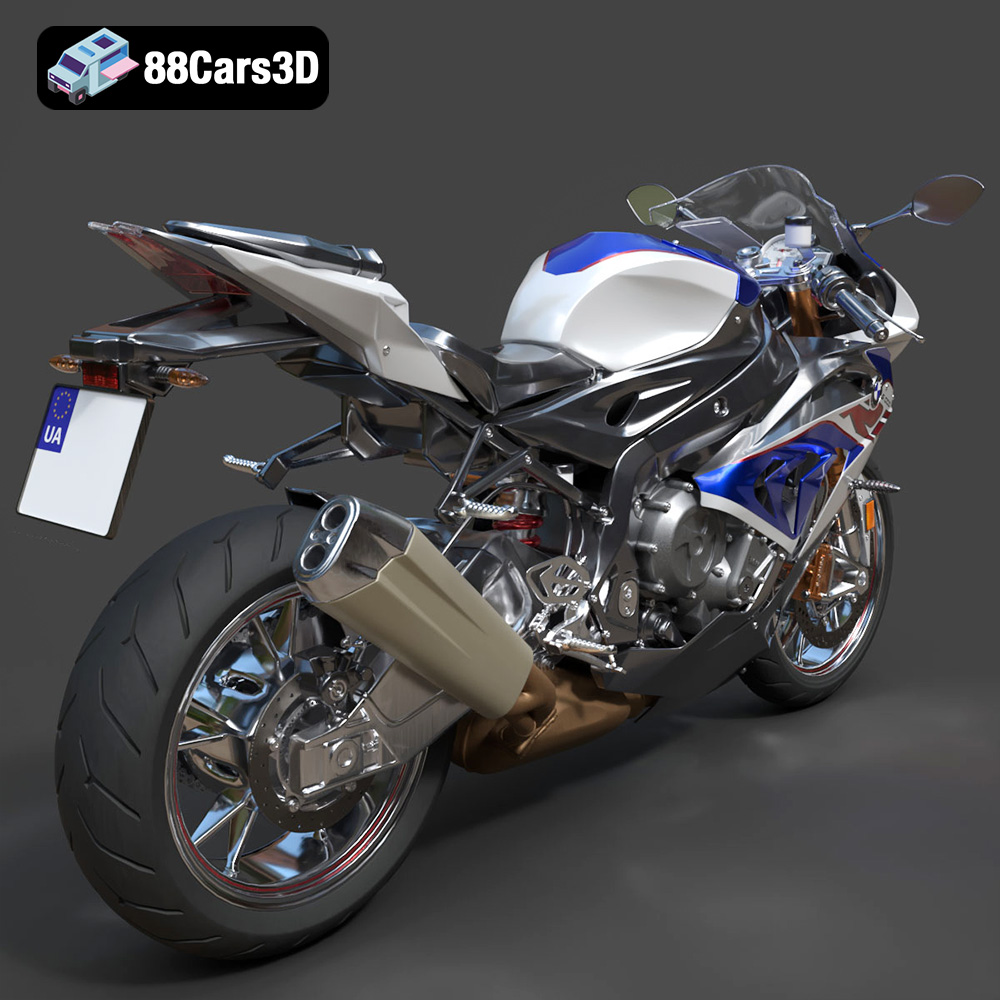
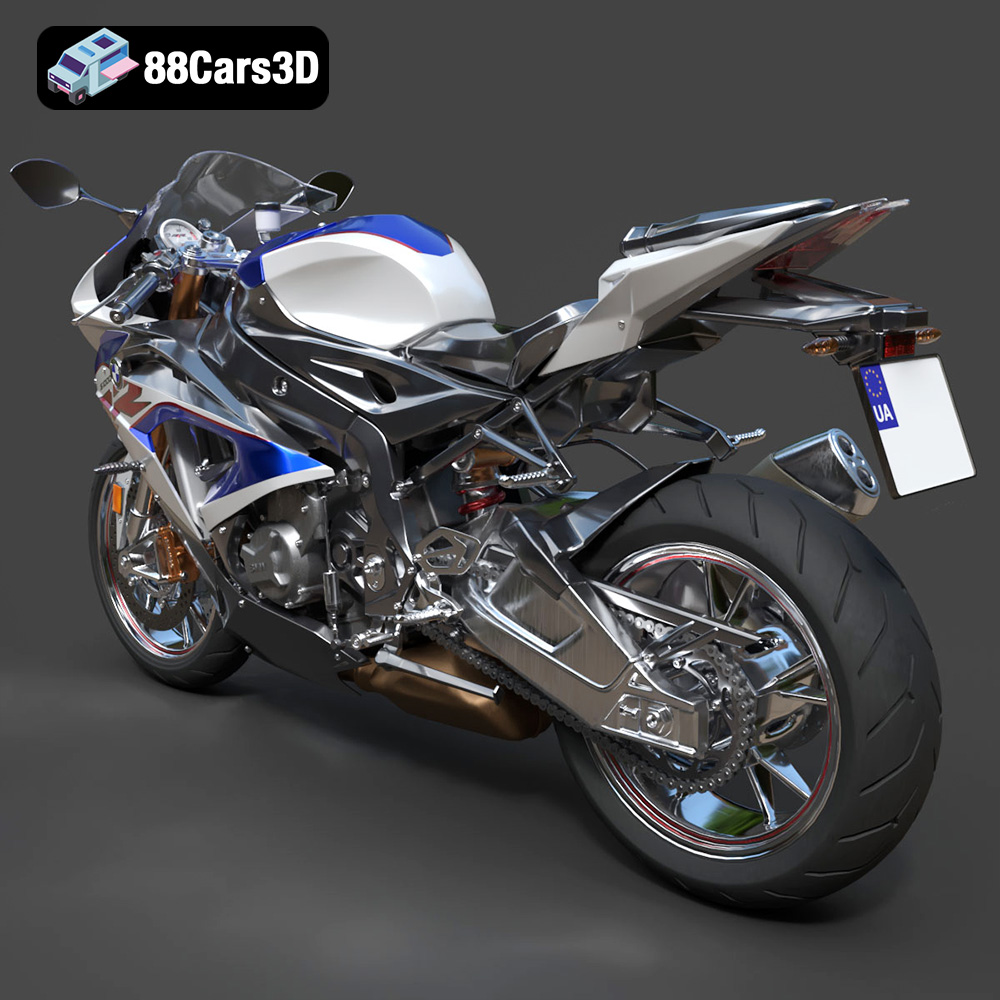
Beyond the surface, the model’s internal structure is equally impressive. It features a highly detailed inline-four engine and frame structure, a high-performance brake disc and caliper modeling, and a rear mono-shock suspension and swingarm assembly. Crucially, components like the wheels and steering are separated, with proper pivot setups, enabling seamless animation for dynamic scenes. This modularity is a significant technical advantage, allowing artists to animate the bike in motion, articulate steering, or even create exploded views for technical demonstrations. The cockpit area, with its detailed instrument cluster, sport clip-on handlebar assembly, brake and clutch lever detailing, and rear-set foot peg positioning, is also optimized for close-up renders, capturing every essential nuance.
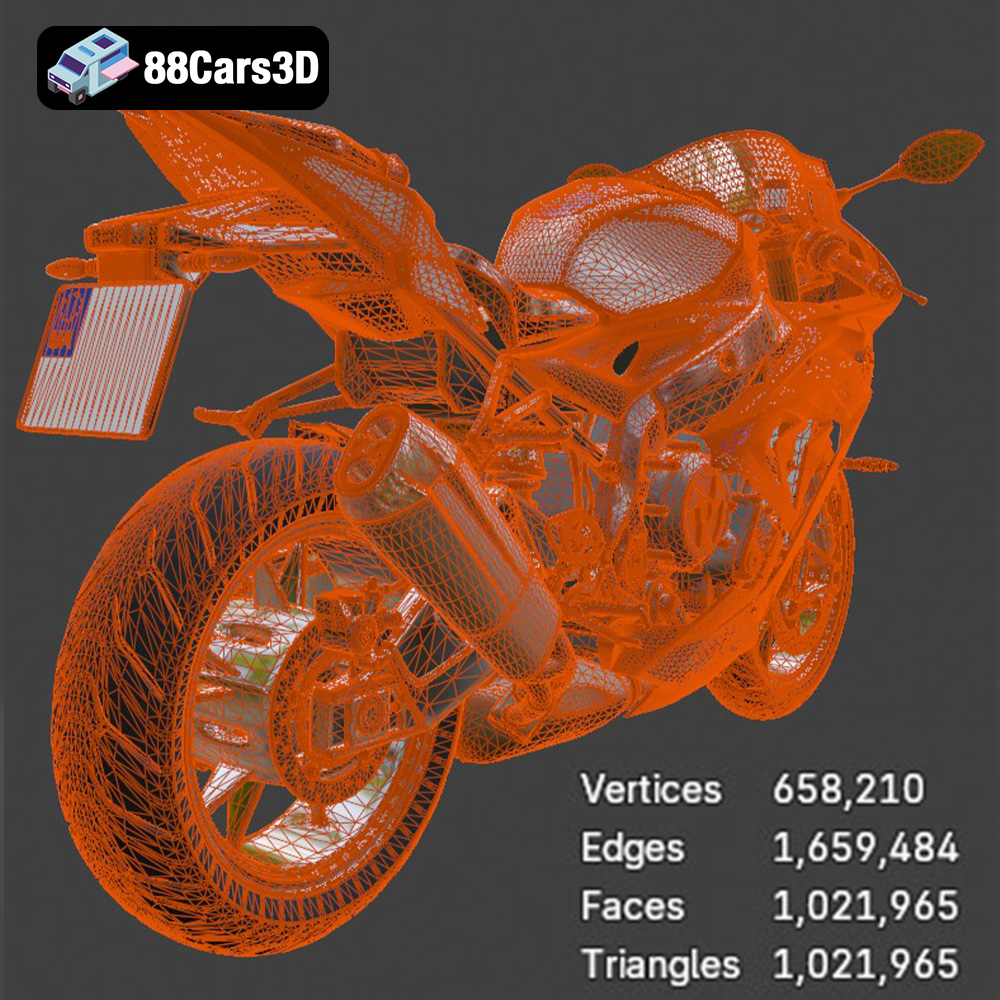
An effective 3D model strikes a balance between visual complexity and performance efficiency. While not specifying exact poly counts, the description highlights “optimized polygon flow for performance and realism.” This suggests that the model is crafted to look stunning in high-fidelity renders while also being adaptable for real-time applications where poly budgets are tighter. Efficient UV mapping would be a natural accompaniment to such optimization, ensuring textures are applied without stretching or distortion, and that material artists can work effectively to achieve the bike’s iconic finishes.
The BMW S 1000 RR 2018 3D Model is a powerhouse for automotive rendering and visualization, enabling artists and studios to produce stunning promotional content, immersive experiences, and compelling marketing materials.
For professionals using 3ds Max, the inclusion of the native .max format ensures complete scene integrity, allowing direct access to all modifiers, materials, and lighting setups. Artists can effortlessly integrate the model into V-Ray or Corona render engines, leveraging advanced physically-based rendering (PBR) workflows to achieve photorealistic results. Similarly, Blender users can take advantage of the .blend file, working within Cycles or Eevee, utilizing its comprehensive node-based material system to replicate the bike’s metallic paint, intricate textures, and reflective surfaces. Setting up sophisticated lighting, from studio HDRI environments to dramatic outdoor scenes, brings the S 1000 RR to life with stunning realism, capturing every highlight and shadow on its aggressive form.
The model’s technical advantages, such as separate wheels and steering components with proper pivots, are invaluable for animation. This allows for the creation of dynamic, cinematic shots: a camera swooping around the bike as its wheels spin, showcasing its aggressive stance, or even animating it tearing down a virtual racetrack. Such capabilities are perfect for motorsport marketing, promotional campaigns, and high-end motorcycle renders that demand motion and narrative. Imagine a virtual commercial where the S 1000 RR navigates a high-speed urban environment or a dramatic desert road, all rendered with breathtaking accuracy using this versatile 3D asset.
The ability to customize is crucial in professional visualization. The BMW S 1000 RR 2018 3D Model provides extensive customization options. Artists can easily change body colors, apply racing liveries, adjust wheel and brake caliper colors, add track number decals, and even modify the exhaust finish to replicate titanium or carbon fiber looks. Configuring lighting for specific environments, whether a pristine showroom or a gritty racetrack, further enhances the visual narrative. This flexibility ensures the model can be tailored to specific brand guidelines, project requirements, or creative visions, making it an incredibly adaptable asset for any visualization project.
The demand for realistic vehicle assets in interactive experiences is at an all-time high. The BMW S 1000 RR 2018 3D Model is perfectly poised to meet this need, providing a high-quality foundation for game developers and AR/VR creators.
For game developers, the inclusion of the .fbx and .unreal formats significantly streamlines the integration process into leading game engines like Unreal Engine and Unity. The .fbx format ensures all geometric data, UVs, and hierarchical structures are transferred correctly, allowing developers to quickly set up materials using PBR workflows within the engine. For Unreal Engine, the “engine-ready asset” designation (implied by the .unreal format) means the model is likely optimized with appropriate material instances, collision meshes, and potentially LODs (Levels of Detail). This dramatically reduces setup time, allowing developers to focus on gameplay mechanics and performance optimization rather than asset preparation.
The technical advantages of the S 1000 RR 3D model, such as its clean mesh structure and proper pivot setup for steering and wheel rotation, are vital for creating believable vehicle physics and animations in games. Optimized polygon flow means the model can perform well in real-time environments without excessively taxing system resources, while still maintaining visual fidelity for racing games, motorcycle simulators, and open-world titles. The detailed exterior and cockpit features, including the instrument cluster and handlebar assembly, ensure that whether the player is viewing the bike from a distance or in a first-person perspective, the level of immersion remains consistent and high-quality.
The BMW S 1000 RR 2018 3D Model is an excellent candidate for augmented and virtual reality applications. The .glb format, specifically optimized for efficient transmission and display in web and AR/VR contexts, allows for seamless integration into interactive superbike showcases or immersive racetrack simulations. Imagine a potential customer exploring the S 1000 RR in their living room via AR, or experiencing a virtual test ride through a VR headset. The model’s real-world scale accuracy and detailed components make these experiences incredibly convincing, providing a powerful tool for product visualization and interactive marketing. This type of digital presence is becoming increasingly important for automotive brands, and high-quality 3D car models are the bedrock.
The versatility of the BMW S 1000 RR 2018 3D Model extends beyond digital screens, offering a pathway to physical creation through 3D printing. This capability allows for the production of tangible collectibles, prototypes, and educational models.
The inclusion of the .stl format is a direct nod to its 3D printing capabilities. For successful 3D printing, a model must have “manifold” geometry, meaning it’s a completely enclosed, watertight mesh with no holes or overlapping faces. The description indicates that this model is “convertible to .stl format,” implying it possesses the clean topology necessary for this process. Essential print settings are also provided: recommended scales (1:18, 1:12, 1:10, 1:8), layer height (0.08–0.16 mm), wall thickness (1.2–2.0 mm), and infill (15–25%). These parameters are critical for achieving a robust and detailed physical print, ensuring the delicate parts of the superbike are accurately reproduced.
Printing the S 1000 RR model requires strategic orientation and support structures. The recommendation to print the frame angled for maximum detail preservation, with wheels printed separately, is a professional insight for achieving optimal results. Supports will be required for intricate areas like the fairings, exhaust, rear swingarm, and handlebar. After printing, post-processing steps such as sanding, priming, and applying a gloss sport paint finish (perhaps with optional racing decals) can transform the raw print into a stunning, high-quality collectible sportbike miniature. These physical models are perfect for tabletop displays, dioramas, or as unique gifts for motorcycle enthusiasts.
Beyond collectibles, 3D printed versions of the BMW S 1000 RR can serve practical purposes in prototyping and education. Designers can use them for physical design reviews, examining proportions and ergonomics in a tangible form. Educational institutions can utilize these models for mechanical demonstrations, allowing students to visualize complex components like the engine and suspension system in a hands-on manner. This bridge between digital design and physical manifestation showcases the holistic utility of a well-crafted 3D model.
In any professional creative field, the assets you use directly reflect the quality of your output. Opting for a meticulously crafted 3D model like the BMW S 1000 RR 2018 3D Model from 88cars3d.com is not just a convenience; it’s a strategic decision that impacts efficiency, realism, and ultimately, your project’s success.
A professional-grade 3D model comes with inherent advantages. Its clean topology ensures smooth deformations and realistic renders, while real-world scale accuracy guarantees correct proportions and easy integration into larger scenes. Comprehensive UV mapping allows for precise texturing, and proper pivot setups facilitate effortless animation. These technical foundations minimize post-purchase cleanup and conversion efforts, allowing artists to immediately dive into creative work rather than technical troubleshooting. This makes it an ideal choice for serious designers and developers.
Developing a high-fidelity 3D car model from scratch is an incredibly time-consuming and expensive endeavor, often requiring specialized expertise in modeling, texturing, and rigging. By sourcing pre-made, high-quality 3D car models like the BMW S 1000 RR, studios and individual artists can significantly cut down on development time and costs. This efficiency allows project timelines to be met more reliably and resources to be allocated to other critical aspects of production, whether that’s advanced scene composition, complex animation, or robust game logic.
When investing in digital assets, reliability and quality assurance are paramount. 88cars3d.com prides itself on offering a curated selection of high-quality 3D car models that meet professional standards. The detailed descriptions, technical specifications, and broad file format compatibility ensure that you know exactly what you’re getting. Choosing a reputable marketplace like 88cars3d.com guarantees access to assets that are built with precision and designed for a wide range of professional applications, providing a solid foundation for your creative ventures.
The BMW S 1000 RR 2018 3D Model stands as a testament to the power of high-fidelity 3D assets in today’s digital landscape. Its meticulous detailing, clean topology, and comprehensive file format support make it an exceptionally versatile tool for a broad spectrum of professional applications. From producing breathtaking automotive rendering and cinematic visualizations in 3ds Max and Blender, to crafting immersive game assets and AR/VR experiences in Unreal Engine, or even fabricating tangible collectibles through 3D printing, this model empowers creators to achieve unparalleled realism and efficiency.
By providing an asset that is technically robust and aesthetically accurate, it streamlines workflows, fosters creativity, and ultimately elevates the quality of any project it touches. For professionals seeking to integrate an iconic superbike into their next endeavor, exploring this and other premium 3D car models available at 88cars3d.com is an investment in both quality and capability.
The BMW S 1000 RR 2018 3D Model is a high-detail digital recreation of BMW Motorrad’s iconic superbike, engineered for high performance on both road and track. Known for its aggressive aerodynamic styling, inline-four engine power, and advanced electronic systems, the 2018 S 1000 RR represents precision German sportbike engineering. This 3D model accurately captures the sharp fairing design, asymmetrical headlight styling (pre-2019 generation), aerodynamic windscreen, sculpted fuel tank, exposed frame elements, high-performance braking system, rear swingarm assembly, and race-inspired exhaust configuration. Built with clean topology and real-world scale accuracy, it is ideal for rendering, animation, simulation, game development, and AR/VR motorcycle experiences. Convertible to .stl format for collectible sportbike miniatures and display models.
$29.99
.2018superbike
.arvr
.blend
.bmw
.fbx
.gameasset
.glb
.max
.motorcycle3dmodel
.obj
.performancebike
.ply
.racingbike
.rendering
.s1000rr
.simulation
.sportbike
.stl
.twowheeler
.unreal