Get 20% OFF All Premium 3D & STL Models!

In the dynamic world of 3D visualization, from cinematic rendering to immersive game environments and precise product design, the quality of your assets is paramount. Automotive models, in particular, demand an exceptional level of detail, accuracy, and technical sophistication to truly capture the essence of their real-world counterparts. A poorly constructed 3D car model can detract from even the most ambitious project, while a meticulously crafted one elevates it to a professional standard.
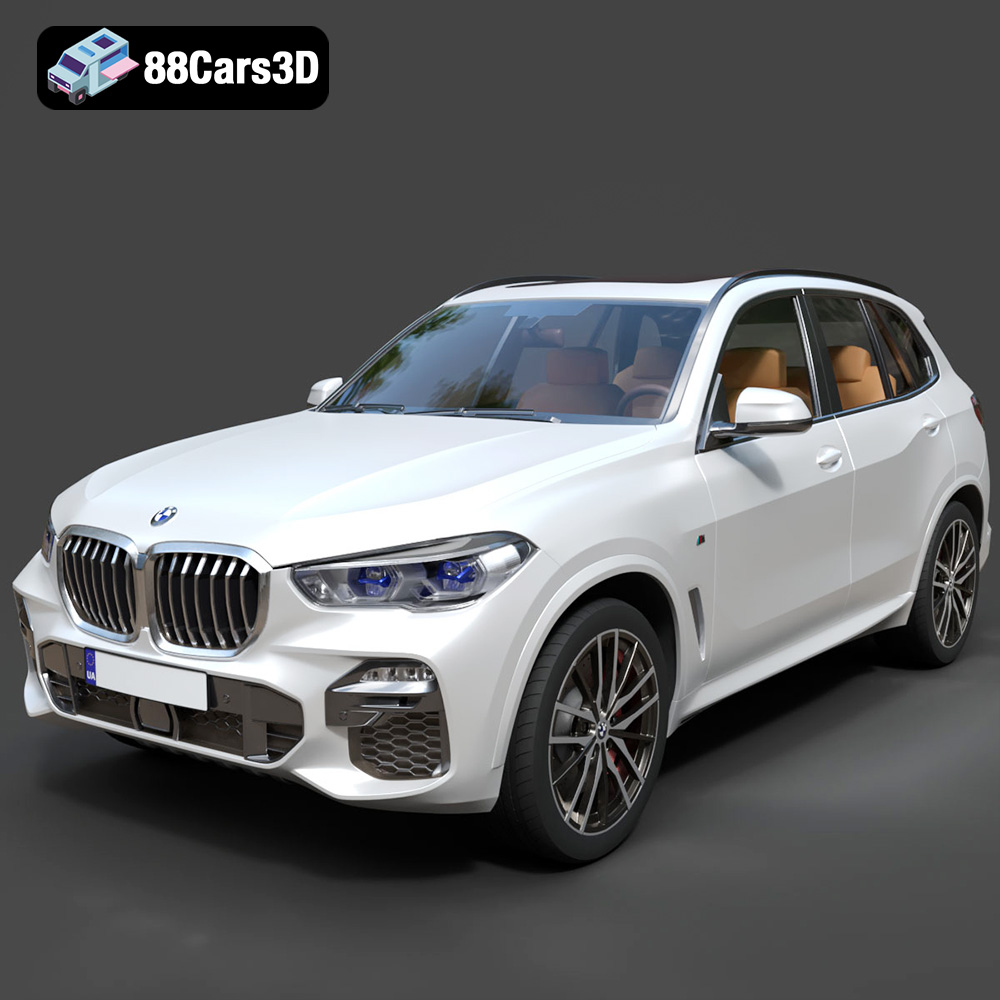
This pursuit of perfection is precisely where a high-quality asset like the BMW X5 (G05) M Sport 2019 3D Model shines. This digital recreation offers a robust foundation for a myriad of applications, embodying the aggressive M Sport styling and luxury SUV presence with remarkable fidelity. Whether you’re an automotive designer showcasing a new concept, a game developer populating a virtual city, or an architect visualizing an executive setting, having access to such a refined 3D car model is an invaluable asset. It’s not just about having a model; it’s about having a ready-to-use, technically sound, and visually stunning piece of virtual automotive art that integrates seamlessly into your professional workflow.
Choosing the right file format for your 3D car models is a critical decision that impacts compatibility, performance, and overall project efficiency. Each format is designed with specific use cases and software ecosystems in mind, offering unique advantages. Understanding these distinctions is crucial for maximizing the utility of assets like the BMW X5 (G05) M Sport 2019 3D Model, which comes with a comprehensive suite of file types.
The .blend file is the native format for Blender, a powerful open-source 3D creation suite. When you receive a .blend file, you’re getting a fully editable Blender scene. This includes the model’s geometry, materials, textures, lighting, camera setups, and even animation data. For users deeply integrated into the Blender ecosystem, this format offers unparalleled flexibility. You can easily modify topology, adjust materials using Blender’s node-based shader editor (principled BSDF for physically-based rendering), and integrate the model into a larger Blender project without any data loss or conversion artifacts. It’s the ideal choice for artists who need full control and intend to work extensively within Blender for rendering or further asset preparation.
.fbx (Filmbox) is arguably the most widely adopted proprietary file format for 3D data exchange across different software applications. Developed by Autodesk, it’s a robust choice for transferring models, animations, cameras, and lights between various 3D programs like 3ds Max, Maya, Cinema 4D, and critically, game engines like Unreal Engine and Unity. The .fbx format excels at maintaining scene hierarchy, animation curves, and basic material properties, making it an ideal format for real-time pipelines. For game developers or those needing to port the BMW X5 model into a sophisticated animation package, .fbx ensures a relatively smooth transition with minimal setup required post-import.
The .obj (Wavefront OBJ) format is a simple, non-proprietary geometric data format that has been a cornerstone of 3D asset exchange for decades. It stores vertex positions, UV coordinates, normals, and group information. While it doesn’t typically store advanced material properties or animation, its universal compatibility makes it an excellent fallback for cross-software integration. Almost every 3D application can import and export .obj files. For straightforward mesh data, especially when you need to ensure broad accessibility or when applying new materials from scratch in a target application, .obj is a reliable choice. It’s often paired with an .mtl file for basic material definitions and separate texture files.
.glb (GL Transmission Format Binary) is an increasingly popular format, particularly optimized for modern web-based 3D applications, augmented reality (AR), and virtual reality (VR) experiences. It’s a binary version of the glTF format, which bundles all necessary data—geometry, materials, textures, and animation—into a single, self-contained file. This makes .glb highly efficient for streaming and display in web browsers without needing external dependencies. For creators looking to implement the BMW X5 (G05) M Sport 2019 3D Model in interactive AR/VR showcases or integrate it into a web-based configurator, .glb offers excellent performance and ease of deployment.
The .stl (Stereolithography) format is the de facto standard for 3D printing. It represents 3D surfaces as a collection of triangles (a triangular mesh) and contains only geometric information, without color, texture, or material properties. While it’s excellent for manufacturing, it’s not ideal for rendering or animation due to its lack of surface detail beyond raw geometry. The inclusion of an .stl file for the BMW X5 model specifically caters to enthusiasts or professionals looking to physically manifest the digital design as a collectible scale SUV model or a detailed prototype.
.ply (Polygon File Format) is another format for storing 3D data, often used for scanned data, CAD, and scientific applications where precision and a rich set of attributes are important. It can store not only geometry but also color, transparency, normals, texture coordinates, and even reliability information for each vertex or face. While less common for general-purpose rendering than .fbx or .obj, its ability to store detailed mesh properties makes it valuable for specific workflows requiring high data integrity or direct integration into CAD software or analysis tools.
The .unreal format, or more accurately, assets packaged and optimized specifically for Unreal Engine, represents models that are ready to be directly imported and utilized within Epic Games’ powerful real-time engine. This often implies that the model has already been properly scaled, has collision meshes generated, and PBR (Physically Based Rendering) materials set up within the engine’s framework. Having the BMW X5 (G05) M Sport 2019 3D Model prepped for Unreal Engine significantly reduces setup time for game developers and real-time visualization artists, allowing for immediate integration into interactive scenes and simulations.
Similar to .blend for Blender, the .max file is the native project file for Autodesk 3ds Max, a leading software for 3D modeling, animation, and rendering. A .max file contains the complete scene data, including all geometry, modifiers, materials, textures, lighting, cameras, and animation keyframes. For professionals working within 3ds Max, this format provides maximum editability and access to all of the software’s powerful tools. It’s ideal for those who need to extensively animate the vehicle, customize its setup, or integrate it into complex architectural visualizations rendered with V-Ray or Corona.
The true value of a premium 3D car model lies in its ability to replicate the nuances and character of the real vehicle. The BMW X5 (G05) M Sport 2019 3D Model from 88cars3d.com exemplifies this principle, offering a highly detailed digital asset that captures the luxury SUV’s distinctive features with remarkable fidelity.
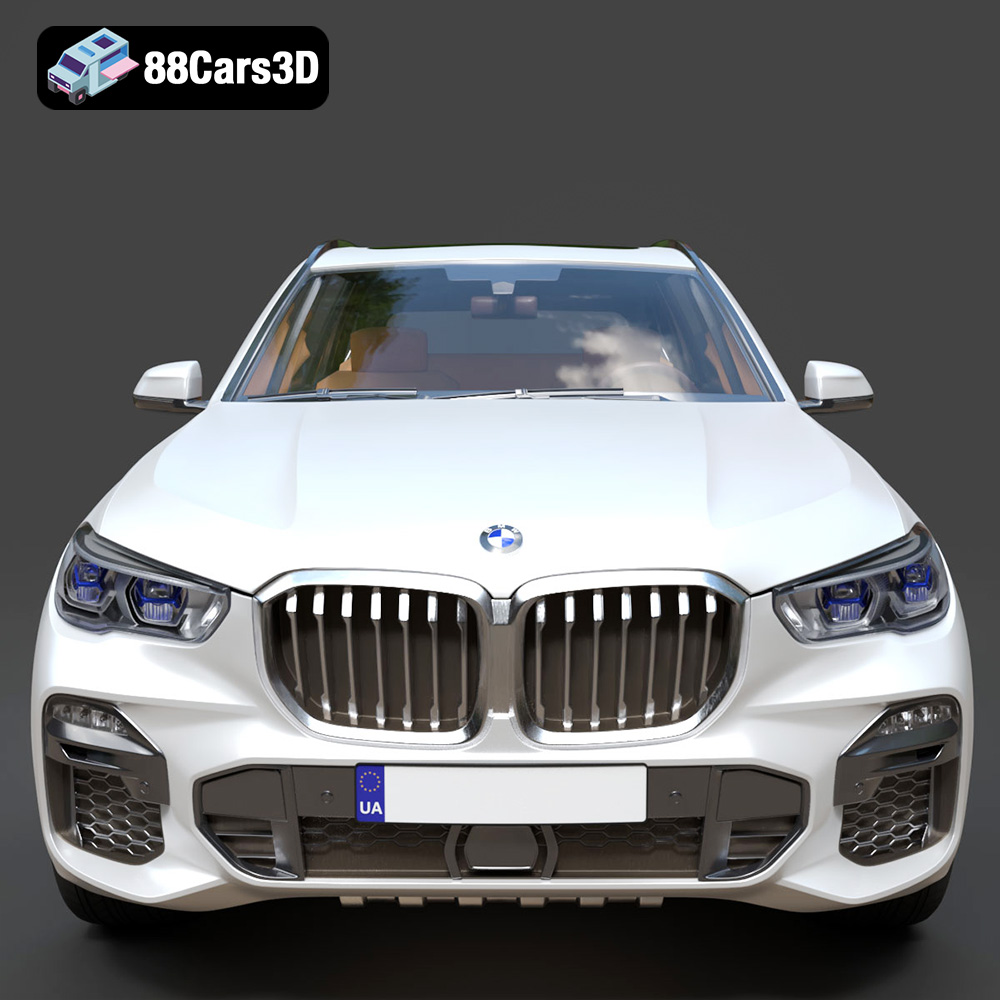
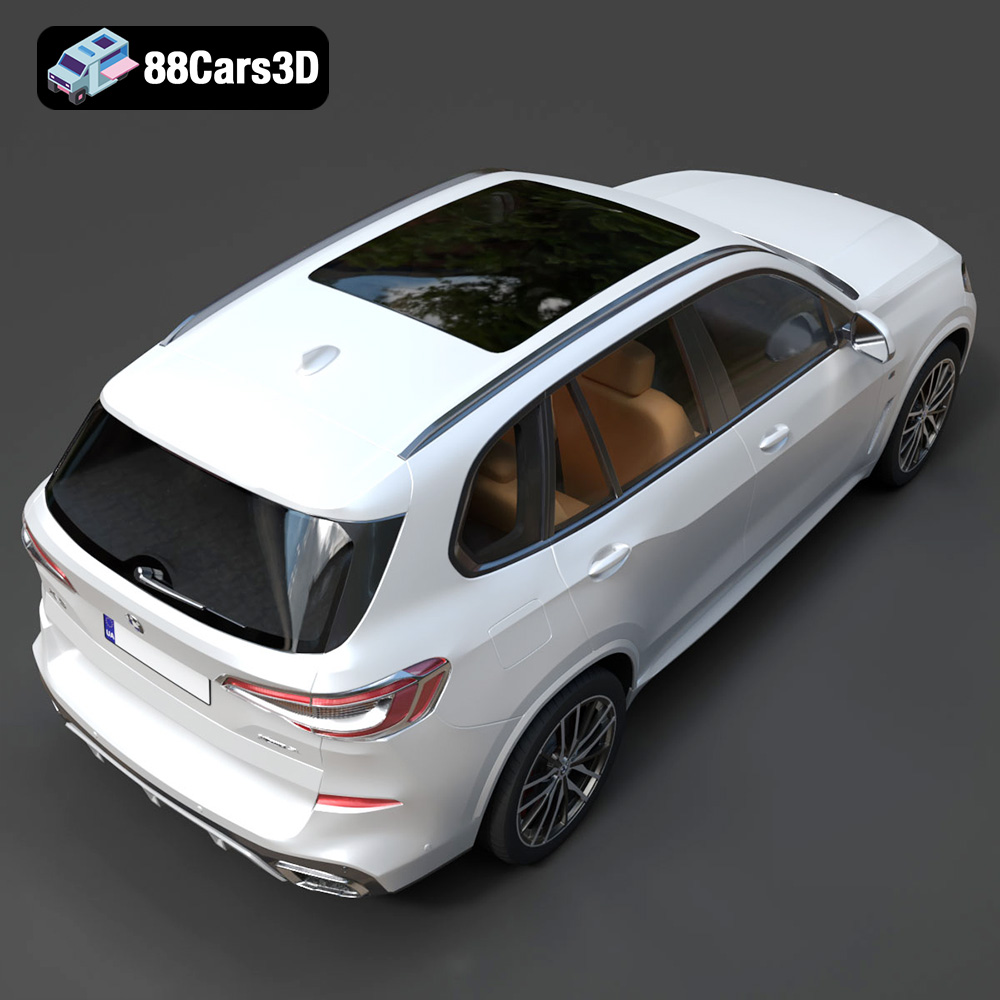
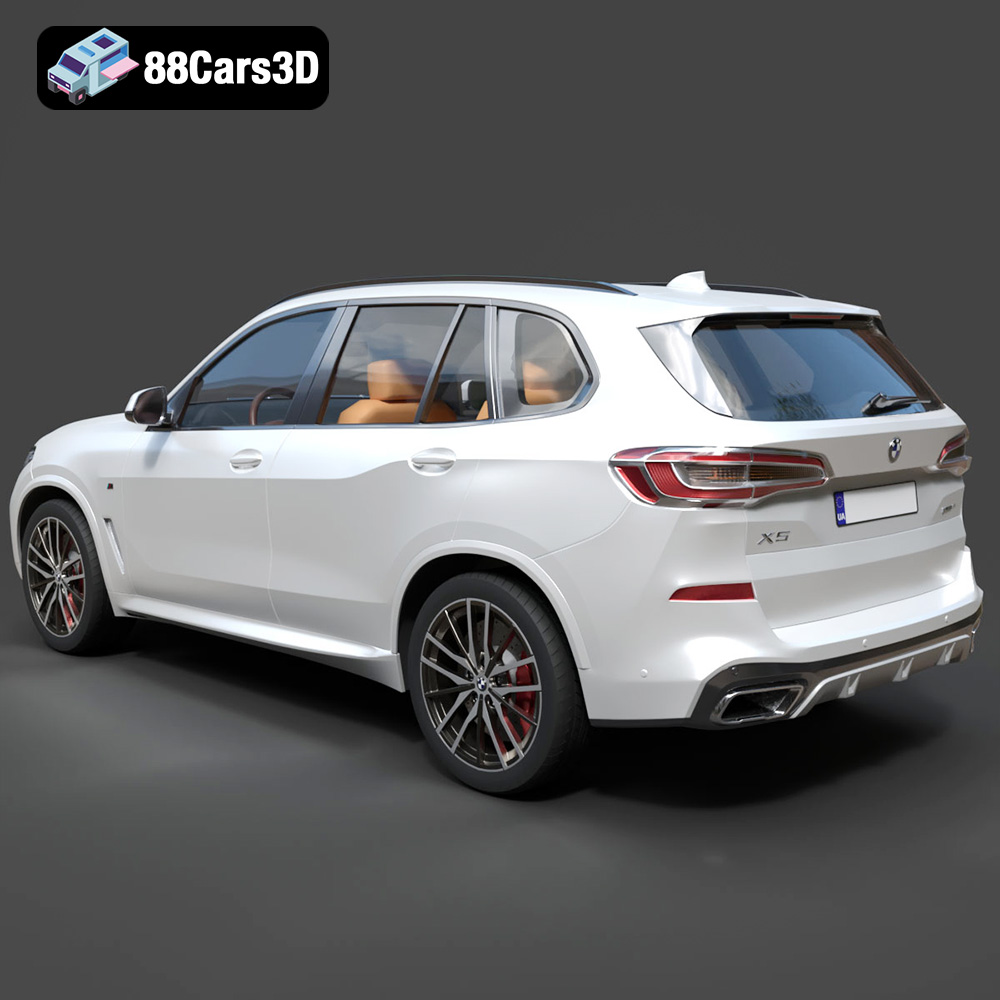
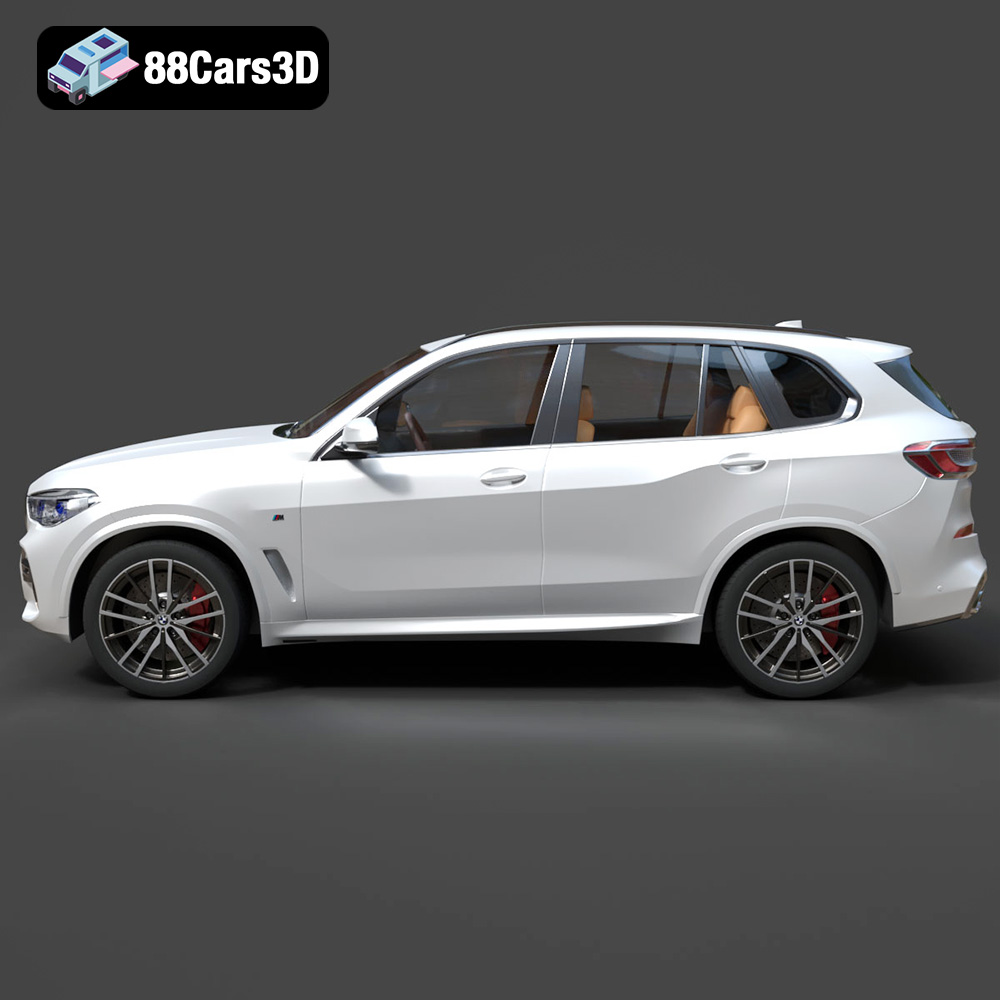
The first impression of any vehicle is its exterior, and this model delivers on all fronts. It meticulously recreates the accurate 2019 G05 X5 body proportions, ensuring the digital representation feels authentic. Special attention has been paid to the enlarged BMW kidney grille design, a signature element that defines the vehicle’s face. The adaptive LED headlight and taillight detailing are not mere placeholders but intricate recreations, ready to illuminate any scene with realism. The aggressive M Sport front and rear bumper styling, along with sculpted side character lines, accurately reflect the performance-oriented aesthetic. Further details like roof rails, window trim, and large multi-spoke M Sport alloy wheels contribute to its authentic presence. Crucially, components like wheels and steering are separated, allowing for realistic animation in driving simulations or cinematic sequences.
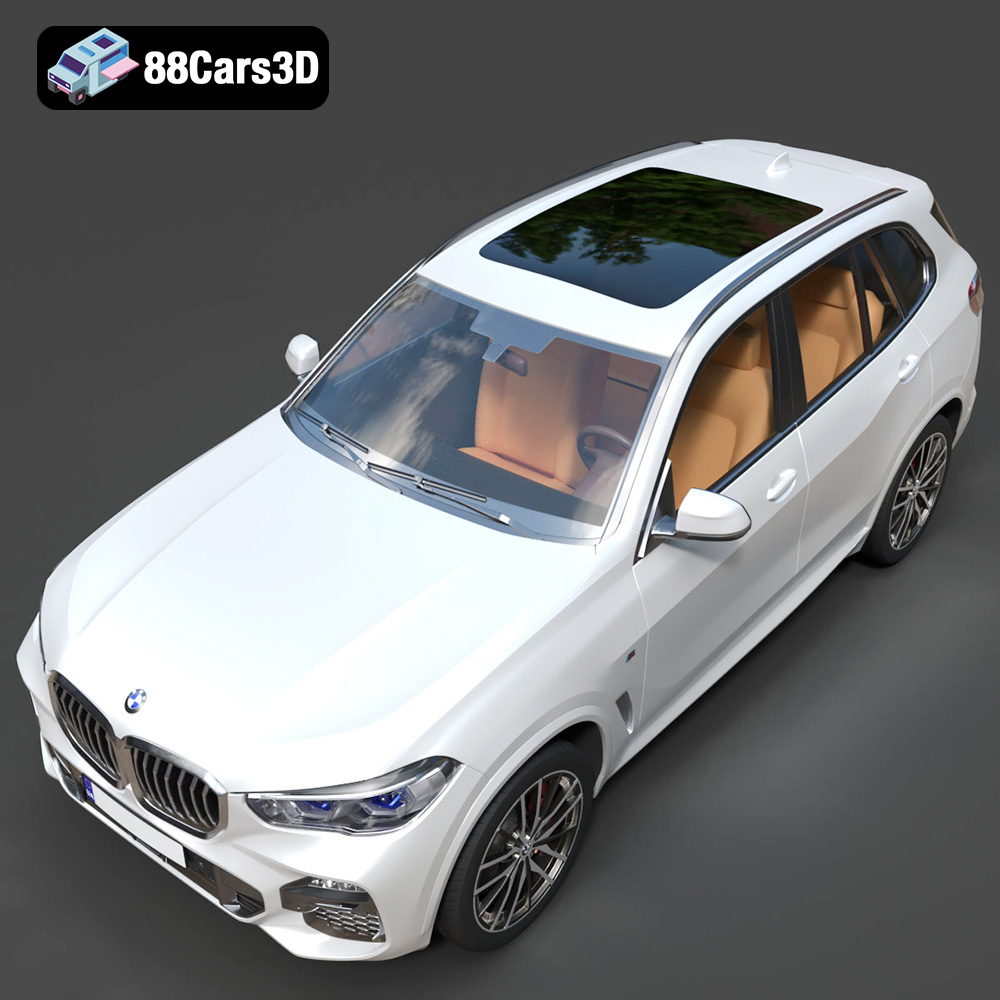
Beyond the impressive exterior, the BMW X5 (G05) M Sport 2019 3D Model extends its detail to a thoughtfully crafted interior. A premium dashboard with a digital instrument cluster and a multifunction M Sport steering wheel are carefully modeled to convey the vehicle’s high-tech, driver-centric cockpit. The center console, complete with an infotainment display, and luxury seat geometry with subtle stitching detail, contribute to a sense of opulent realism. Door panel trim and metallic accent detailing complete the immersive internal environment. This level of interior detail is vital for virtual showrooms, close-up renders, and first-person game perspectives, ensuring that the experience inside the vehicle is as convincing as the view from outside.
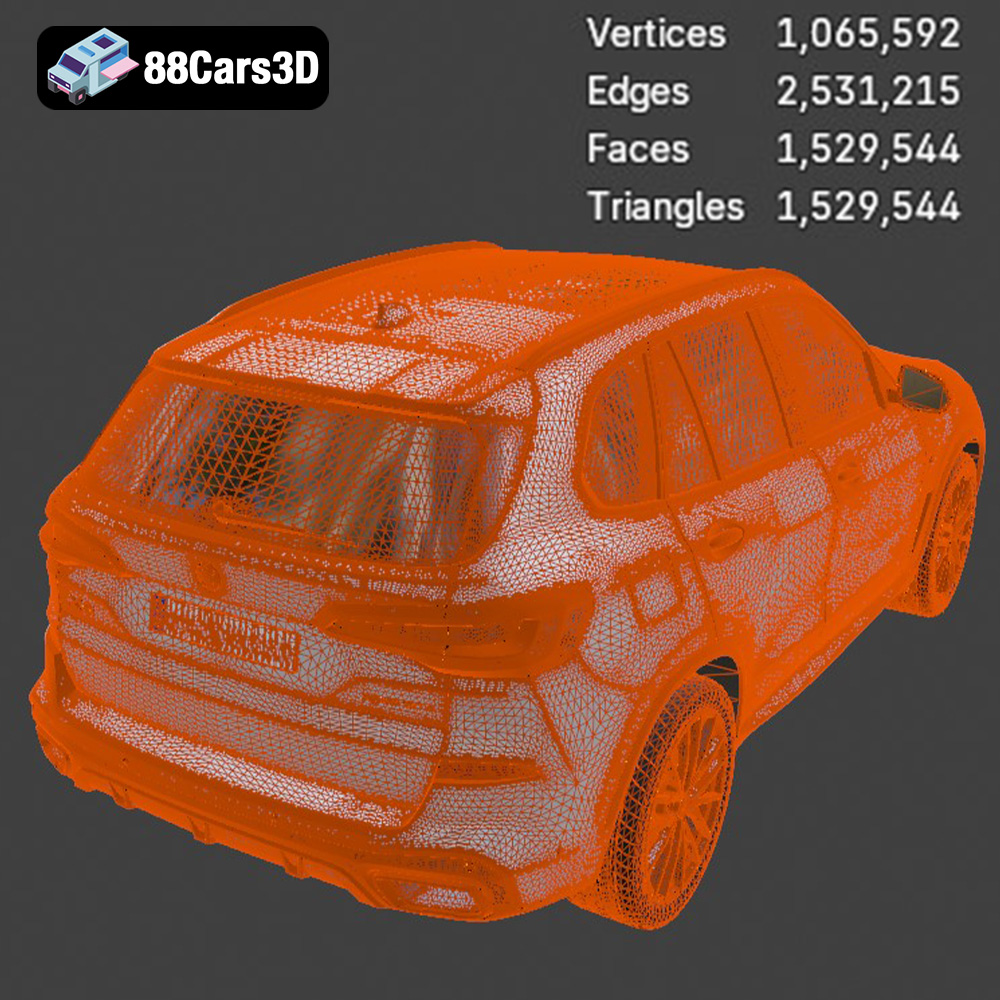
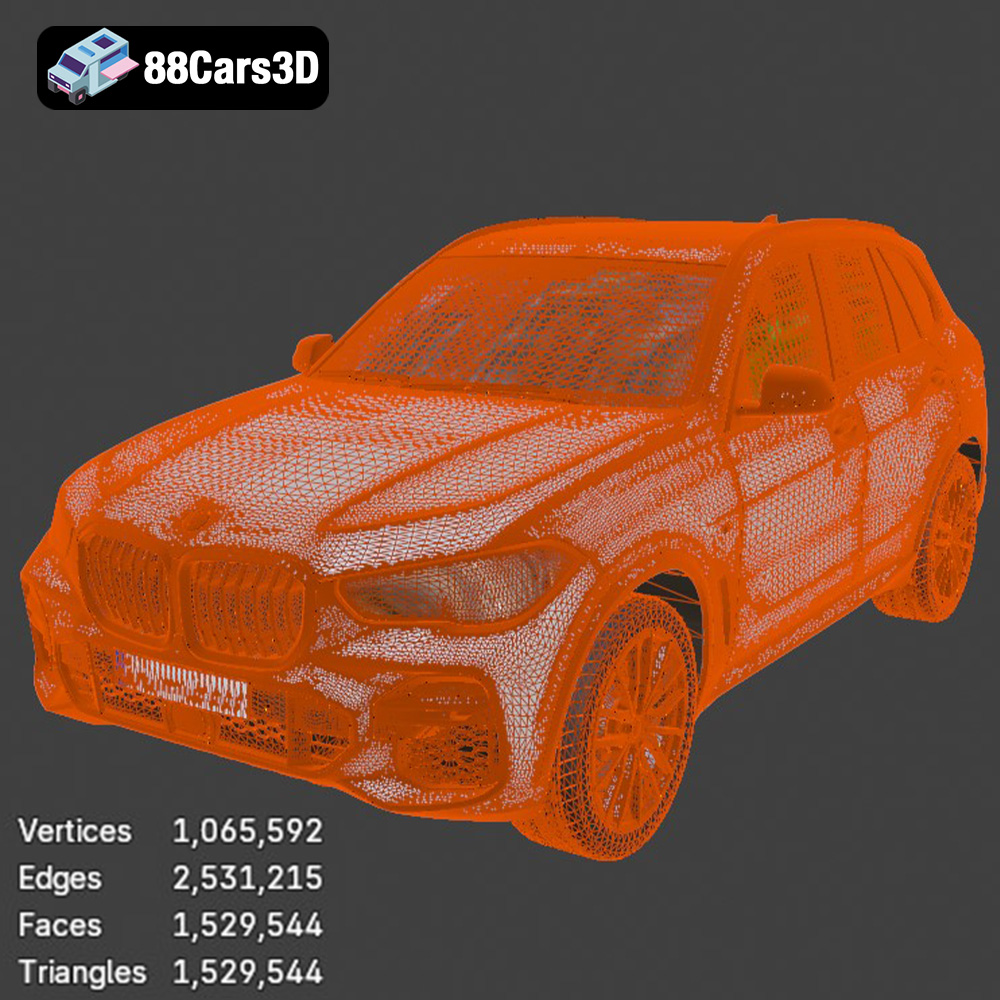
Beyond visual appeal, the technical underpinnings of this 3D model are optimized for professional use. It boasts a clean and well-organized mesh structure, which is crucial for efficient editing, texturing, and rendering. Real-world scale accuracy ensures that the model integrates seamlessly into environments without needing tedious resizing. A proper pivot setup for steering and wheel rotation simplifies animation workflows, saving countless hours for animators. The optimized polygon flow is a significant advantage, striking a balance between high detail for renders and efficient performance for real-time engines. This ensures that whether you’re working on a high-fidelity cinematic or a fast-paced game, the model performs optimally. Its broad compatibility with major 3D software platforms and engines, reinforced by the array of included file formats, makes it a versatile asset for any professional pipeline.
The versatility of the BMW X5 (G05) M Sport 2019 3D Model makes it an ideal component for various professional 3D production pipelines. Its clean topology, optimized geometry, and diverse file formats ensure smooth integration into industry-standard software and real-time engines.
In architectural visualization (ArchViz), vehicles are often essential elements for grounding a scene in reality and conveying a sense of scale and lifestyle. With the included .max file, 3ds Max users can seamlessly drop the BMW X5 into their exterior or interior renders.
This allows ArchViz artists to populate luxury urban scenes or executive environments with a premium, credible vehicle, enhancing the overall realism and narrative of their visualizations.
For game developers, integrating realistic 3D car models is crucial for creating immersive driving experiences or populating open-world environments. The BMW X5 (G05) M Sport 2019 3D Model is particularly well-suited for this, especially with its .fbx and dedicated .unreal formats.
These workflows demonstrate how this premium 3D car model provides a flexible and efficient asset for game development, whether for high-fidelity driving games or detailed virtual cityscapes.
For marketing agencies, automotive designers, and product visualizers, showcasing a vehicle in its best light is crucial. The BMW X5 model’s high detail makes it perfect for photorealistic renders.
This approach allows for the creation of stunning promotional campaigns and cinematic productions that truly highlight the BMW X5’s luxury and performance styling.
The utility of a high-quality 3D car model extends far beyond static renders. The BMW X5 (G05) M Sport 2019 3D Model is designed to be a multifaceted asset, adaptable to cutting-edge interactive experiences, simulations, and even tangible physical products.
In the realm of game development, realistic vehicles are essential for creating believable virtual worlds. The BMW X5 model is optimized for integration as a game asset, balancing visual fidelity with performance efficiency. Its clean topology and optimized polygon flow ensure that it can be rendered smoothly in real-time engines without bogging down frame rates. The separation of wheels and steering components is particularly critical for game mechanics, allowing developers to implement accurate physics, suspension systems, and animated steering. This model is ideal for open-world driving games, premium SUV simulations, and populating modern city environments, adding a layer of realism and luxury to any virtual landscape. When sourced from reputable marketplaces like 88cars3d.com, game assets are generally structured to minimize post-import cleanup, accelerating development cycles.
Augmented Reality (AR) and Virtual Reality (VR) are transforming how we interact with digital content, especially in product showcases. The BMW X5 (G05) M Sport 2019 3D Model is perfectly suited for these immersive platforms, particularly with its .glb format. Imagine a virtual showroom where prospective buyers can walk around the X5, open doors, inspect the interior, and even change paint colors in real-time.
The optimized geometry and clean UVs facilitate the creation of high-performing, visually rich AR/VR applications without excessive computational demands.
The inclusion of the .stl file format, along with the model’s robust geometry, makes the BMW X5 (G05) M Sport 2019 3D Model suitable for 3D printing. This allows for the creation of tangible, collectible scale SUV models or even detailed prototypes. Transforming a digital asset into a physical object requires careful consideration of print settings and model preparation.
This capability allows enthusiasts and designers to bridge the gap between digital and physical, creating tangible representations of this iconic luxury SUV.
In the competitive landscape of 3D content creation, the decision to invest in a premium 3D car model is a strategic one. It’s not merely about acquiring a digital file, but about leveraging a meticulously crafted asset that brings significant advantages to any professional project. The BMW X5 (G05) M Sport 2019 3D Model from 88cars3d.com perfectly encapsulates this value proposition, offering a blend of quality, efficiency, and versatility that streamlines production and elevates final output.
Building a high-detail automotive 3D model from scratch is an incredibly time-consuming and resource-intensive endeavor. It requires specialized skills in modeling, UV unwrapping, texturing, and often, extensive research into vehicle blueprints and photographic references. By purchasing a pre-built, production-ready model like the BMW X5 (G05) M Sport 2019, designers and studios can dramatically cut down on development time. This allows teams to focus on core project aspects such as scene composition, animation, lighting, or interactive functionalities, rather than getting bogged down in asset creation. The cost-effectiveness of this approach quickly becomes apparent when considering the man-hours saved, making premium models an intelligent investment for tight deadlines and budgets.
The mark of a professional 3D project is its attention to detail and realism. Premium models, such as those found on 88cars3d.com, are developed by experienced artists who adhere to strict quality standards. This means clean, optimized mesh topology, real-world scale accuracy, meticulously crafted exterior and interior details, and proper UV mapping for seamless texturing. Such precision is crucial for photorealistic rendering, where even minor inaccuracies can break immersion. For the BMW X5 (G05) M Sport 2019, every sculpted line, every grill detail, and every interior element is faithfully recreated, ensuring that the digital model is a true reflection of its luxury real-world counterpart. This uncompromised quality translates directly into more impactful and believable visualizations.
A truly valuable 3D asset is one that can adapt to diverse workflows and software environments. The BMW X5 (G05) M Sport 2019 3D Model’s availability in multiple industry-standard formats (including .blend, .fbx, .obj, .glb, .stl, .ply, .unreal, and .max) underscores its versatility. This wide range of formats ensures compatibility with virtually any major 3D software (3ds Max, Blender, Maya, Cinema 4D) and real-time engines (Unreal Engine, Unity). Whether your project involves cinematic rendering, game development, AR/VR experiences, or even 3D printing, this model provides an immediate and usable solution. This adaptability minimizes conversion headaches and allows for a fluid workflow across different departments or project requirements, making it a cornerstone asset for any professional 3D library.
The journey from concept to a stunning 3D visualization, immersive game environment, or tangible 3D print relies heavily on the quality and versatility of your digital assets. The BMW X5 (G05) M Sport 2019 3D Model stands out as an exemplary asset, offering unparalleled detail, technical precision, and broad compatibility across numerous professional applications. From its meticulously recreated exterior and interior features to its optimized geometry and extensive range of file formats, this model is engineered to meet the rigorous demands of modern 3D production.
Whether you are an automotive rendering specialist aiming for photorealistic marketing visuals, a game developer populating a vibrant open-world, an architect enhancing a luxury scene, or an enthusiast creating a 3D-printed collectible, this BMW X5 model provides a robust and reliable foundation. Its readiness for integration into workflows spanning 3ds Max, Blender, Unreal Engine, and AR/VR platforms, along with its suitability for 3D printing, highlights its exceptional value.
Investing in such a high-quality 3D car model from a reputable source like 88cars3d.com is more than just a purchase; it’s a strategic decision that saves time, ensures quality, and empowers creators to push the boundaries of their projects. Elevate your next endeavor with an asset that truly reflects professional standards and creative excellence.
The BMW X5 (G05) M Sport 2019 3D Model is a high-detail digital recreation of the fourth-generation luxury SUV enhanced with the aggressive M Sport package. Combining premium comfort with dynamic performance styling, the 2019 G05 X5 delivers a bold road presence, advanced technology, and refined interior craftsmanship. This 3D model accurately represents the large kidney grille, sharp adaptive LED headlights, sculpted hood lines, aerodynamic M Sport bumpers, side air intakes, roof rails, muscular rear profile, and performance alloy wheels. Built with clean topology and real-world scale accuracy, it is ideal for rendering, animation, automotive visualization, game development, and AR/VR experiences. Perfect for luxury urban scenes, executive environments, promotional campaigns, cinematic productions, and driving simulations.
$39.99
.2019suv
.arvr
.automotive
.blend
.bmw
.bmwx5
.car3dmodel
.fbx
.gameasset
.glb
.luxurysuv
.max
.msport
.obj
.ply
.rendering
.simulation
.stl
.unreal
.x5g05