Get 20% OFF All Premium 3D & STL Models!

There’s an undeniable charm to classic American automobiles, a blend of power, style, and nostalgia that captivates enthusiasts across generations. The 1963 Buick Wildcat Convertible stands as a prime example of this era, a full-size performance machine that effortlessly combined luxury cruising with a bold, muscular presence. Its distinctive lines, chrome accents, and V8 engine heritage tell a story of a bygone automotive golden age.
For designers, animators, game developers, and visualization specialists, bringing such an iconic vehicle into the digital space offers immense creative potential. A meticulously crafted 3D car model of the Buick Wildcat 1963 allows for unparalleled flexibility, enabling everything from high-fidelity cinematic renderings to interactive virtual experiences and even physical 3D prints. These assets are more than just models; they are gateways to recreating history, building immersive worlds, and crafting compelling narratives.
The challenge, however, lies in finding models that not only capture the aesthetic essence but also meet the stringent technical demands of professional workflows. This is where premium platforms like 88cars3d.com excel, offering high-quality, production-ready 3D car models designed for a spectrum of applications. The Buick Wildcat Convertible 1963 3D Model is one such gem, providing a robust foundation for any project demanding authentic vintage automotive presence.
The versatility of a 3D car model often hinges on the range and quality of its included file formats. Each format serves a specific purpose, catering to different software, engines, and end-uses. Understanding these distinctions is crucial for seamless integration into any professional pipeline, whether you’re focusing on automotive rendering, game development, or 3D printing. The Buick Wildcat Convertible 1963 3D Model from 88cars3d.com provides a comprehensive suite of formats, ensuring maximum compatibility and utility.
The .blend format is the native file type for Blender, a powerful and increasingly popular open-source 3D creation suite. When a model is provided in .blend, it typically means a fully editable Blender scene. This includes not just the mesh, but also all materials, textures, lighting setups, cameras, and any modifiers or rigging applied. For artists who primarily work in Blender, this is invaluable, offering the most control for further customization, animation, or scene integration without needing to import and reconstruct elements. It allows for direct access to clean topology, organized scene collections, and often, an optimized render setup right out of the box.
Autodesk’s .fbx (Filmbox) format is arguably the most widely adopted interchange format in the 3D industry, particularly popular for its robust support of animation, rigging, and embedded media. It’s the go-to choice for transferring assets between different 3D software packages (like 3ds Max, Maya, Blender, Cinema 4D) and, critically, into game engines such as Unreal Engine and Unity. For a vehicle like the Buick Wildcat, an .fbx file ensures that elements like separate wheels and steering components, along with their pivot points, translate correctly for animation. It handles geometry, materials (though PBR setups might need re-linking), bone structures, and even cameras, making it ideal for real-time pipelines and complex animated sequences.
The .obj (Object) format is one of the oldest and most universal 3D file formats. It’s a simple, text-based format that defines geometry (vertices, normals, texture coordinates, and faces) and can reference external material files (.mtl). While it doesn’t support animation or advanced scene data, its widespread compatibility makes it an excellent choice for basic mesh transfer between virtually any 3D software. For the Buick Wildcat 1963 3D Model, the .obj provides a clean geometric base that can be easily imported into any application for texturing, rigging, or rendering, particularly when a stripped-down, geometry-focused asset is desired.
The .glb (GL Transmission Format Binary) is a relatively newer format, gaining rapid traction as the standard for 3D web delivery and immersive experiences like AR/VR. It’s a binary version of glTF, designed for efficient transmission and loading of 3D scenes and models. A .glb file packages everything – model data, textures, and animations – into a single, self-contained file, making it incredibly easy to share and deploy. For interactive showrooms or web-based visualizations of the Buick Wildcat, .glb offers optimal performance and a streamlined user experience.
The .stl (STereoLithography) format is the industry standard for 3D printing. It represents 3D surfaces as a collection of unconnected triangles, essentially a raw mesh that defines the object’s geometry without color, texture, or animation data. While simple, it’s universally recognized by slicing software for FDM and resin printers. For transforming the digital Buick Wildcat into a physical collectible model or prototype, the .stl file is indispensable, allowing for precise control over print settings and ensuring manifold geometry suitable for manufacturing.
The .ply (Polygon File Format) is a format primarily used for storing 3D data from 3D scanners, CAD applications, or scientific data. It’s capable of storing more complex information than .obj, including color per vertex, normal information, and various properties, making it excellent for precision models and detailed analyses. While less common for general-purpose 3D asset sharing compared to .fbx or .obj, its inclusion with the Buick Wildcat model underscores its technical accuracy and suitability for niche applications requiring precise mesh data, such as detailed CAD work or historical documentation.
The .unreal format signifies an asset specifically optimized and often pre-configured for direct import and use within Unreal Engine. This might include pre-applied materials (PBR), collision meshes, LODs (Levels of Detail), and potentially even basic blueprints or animations, all structured to integrate seamlessly into an Unreal project. For game developers or real-time visualization artists building environments around the Buick Wildcat, an .unreal file dramatically reduces setup time and ensures optimal performance within the engine.
Finally, the .max format is the native file type for Autodesk 3ds Max, a leading software for 3D modeling, animation, and rendering in the professional visualization and design industries. Similar to .blend for Blender users, a .max file offers the full editable scene, including all modifiers, material setups, lighting, and camera data as created within 3ds Max. This provides the ultimate flexibility for artists working in 3ds Max to modify, animate, or incorporate the Buick Wildcat into complex scenes, leveraging all the features of this powerful software.
The comprehensive range of formats included with the Buick Wildcat Convertible 1963 3D Model truly makes it a versatile asset, ready for virtually any digital production pipeline you can imagine.
Capturing the soul of a classic car in a digital render requires more than just accurate geometry; it demands attention to every curve, every chrome reflection, and every subtle material transition. The Buick Wildcat Convertible 1963 3D Model rises to this challenge, providing an exceptional foundation for stunning automotive rendering projects.
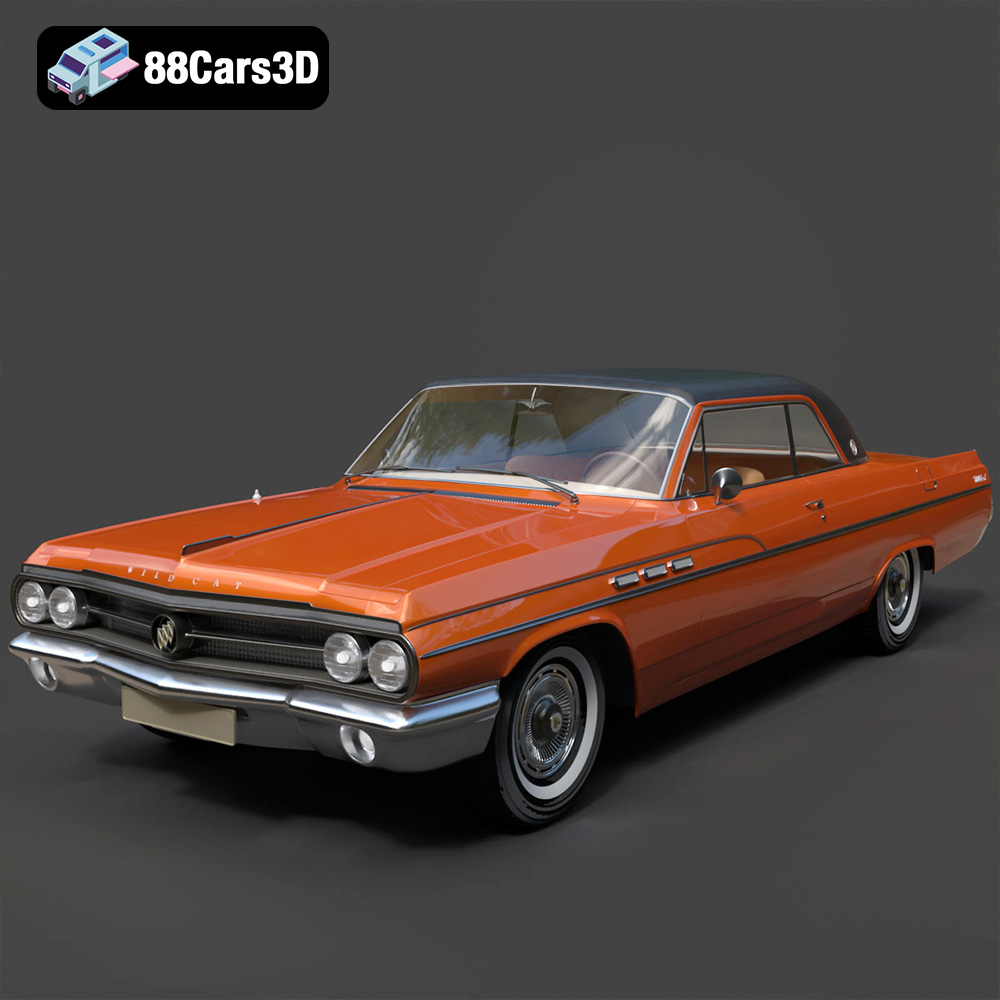
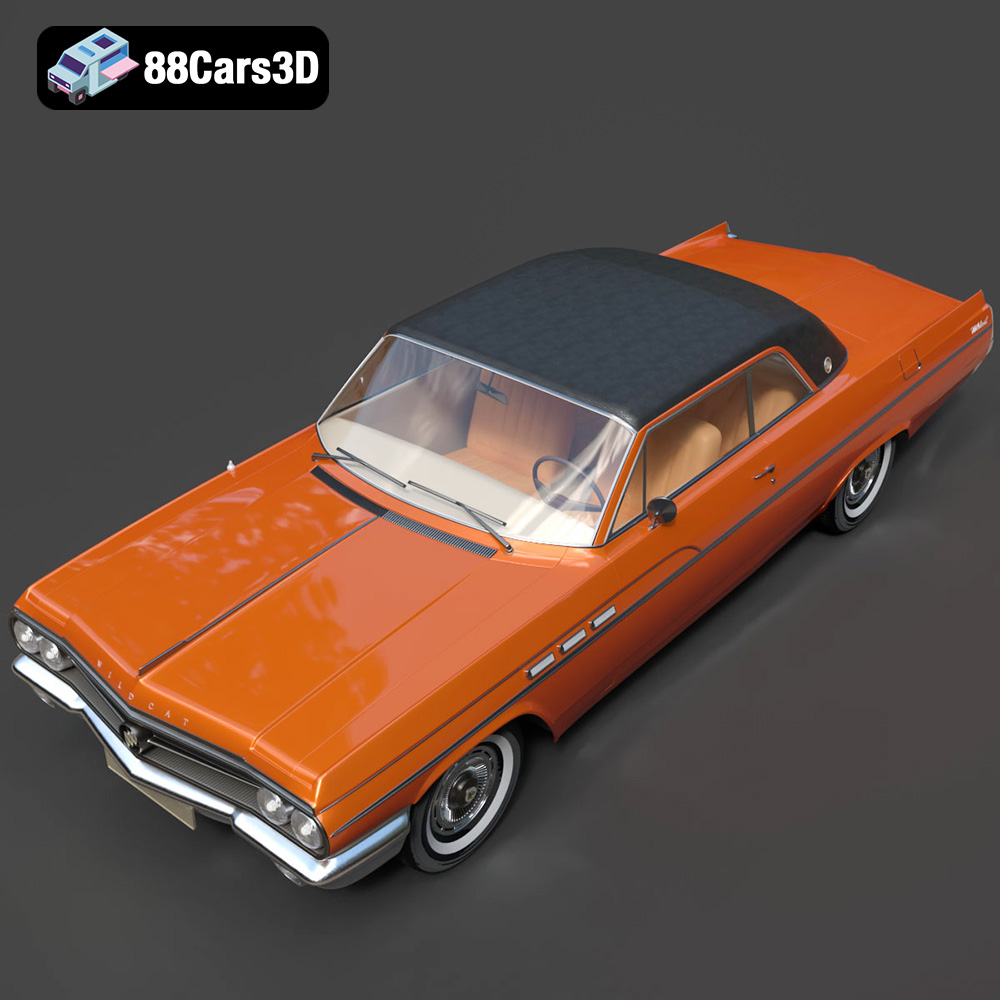
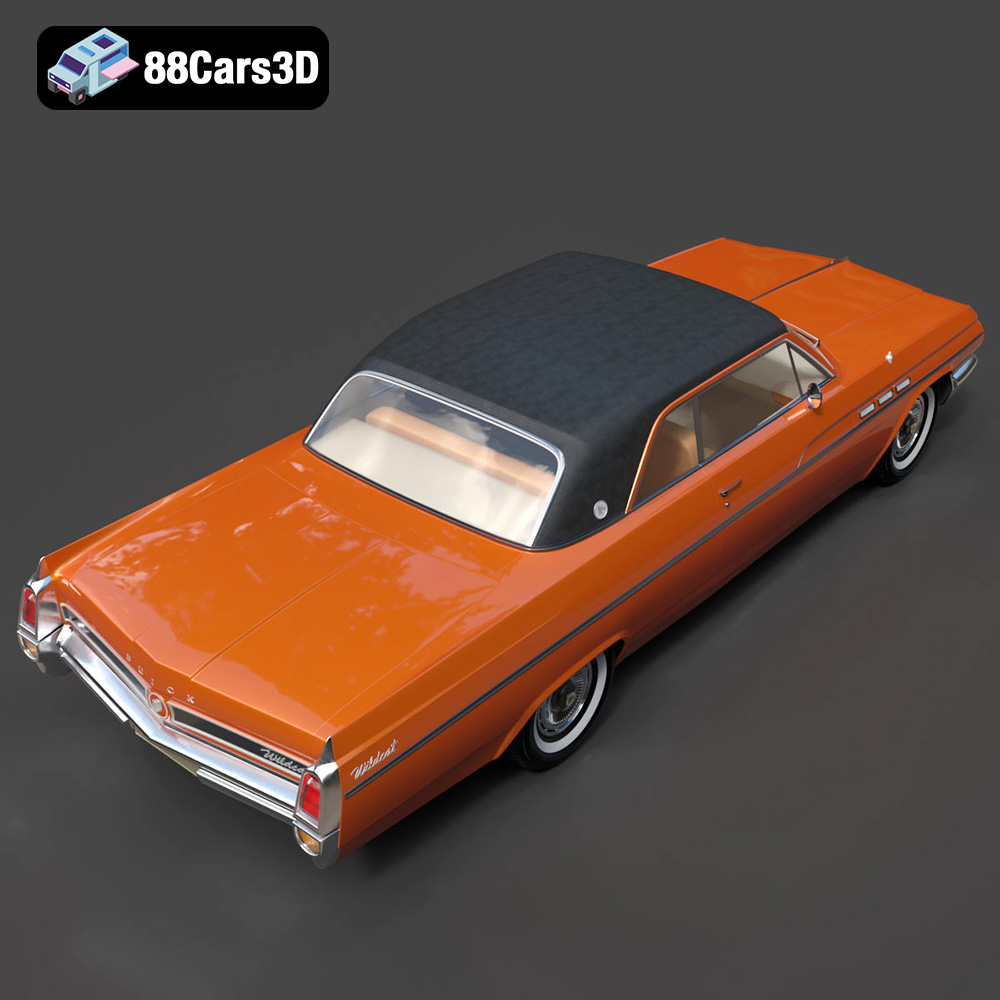
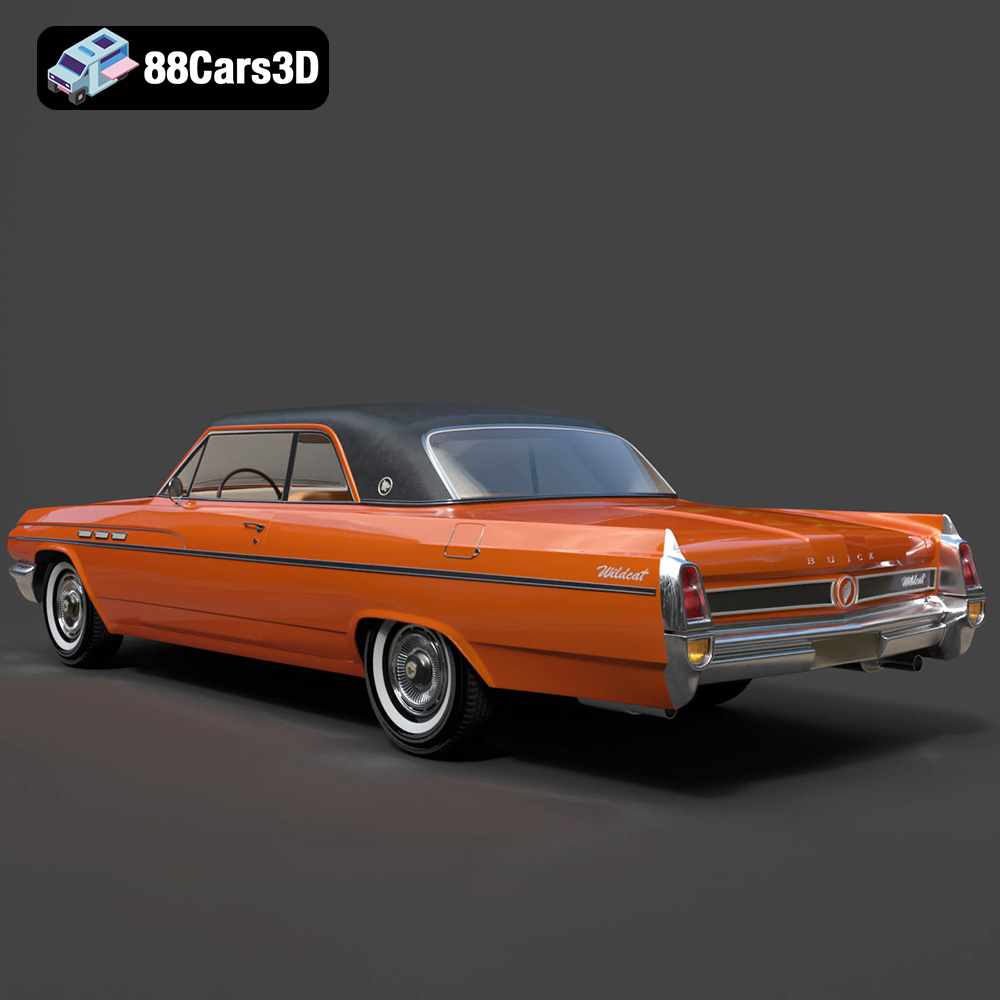
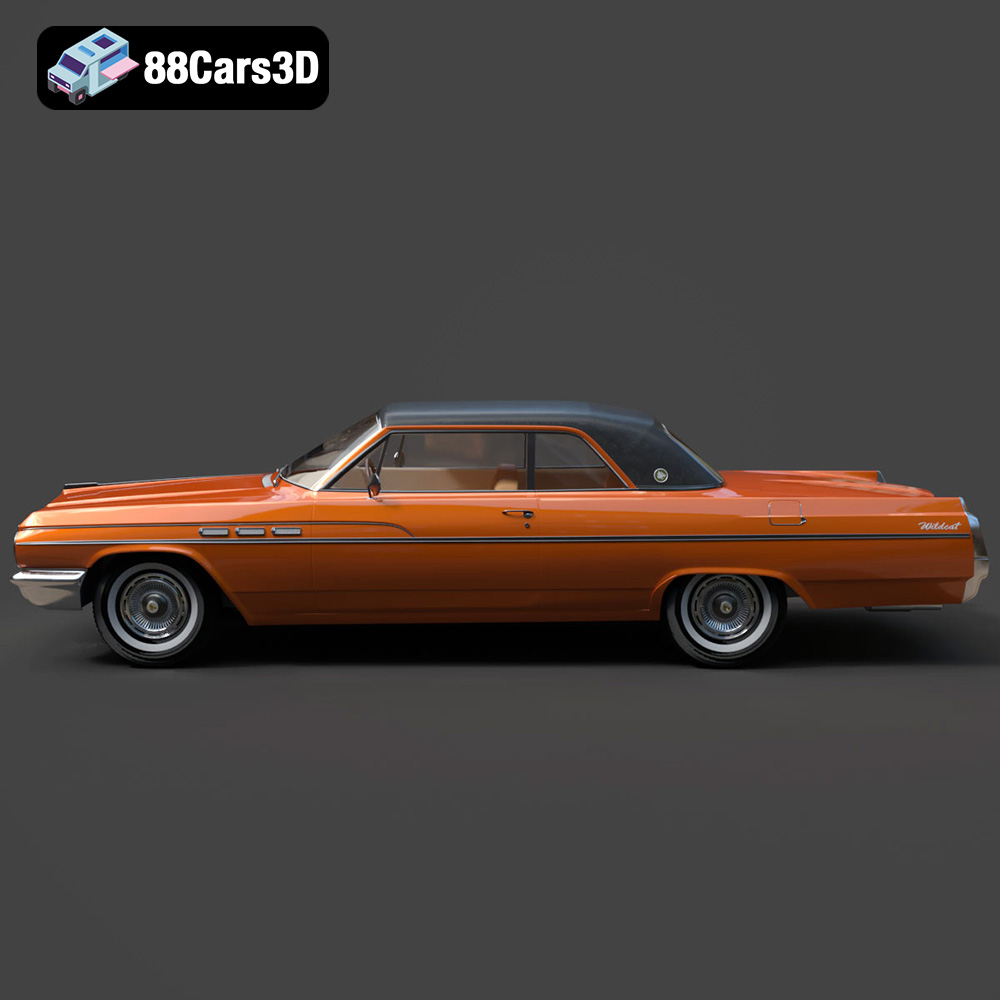
The detailed product description highlights the meticulous effort put into replicating the Wildcat’s distinctive features. From the accurate 1963 convertible body proportions, the dual headlight front design with its signature chrome grille, to the sculpted side lines and rear deck detailing, every aspect has been carefully recreated. The model includes classic chrome wheels with whitewall tire styling, ensuring period correctness. Internally, the vintage dashboard, analog gauge cluster, classic steering wheel, and even the option for front bench or bucket seats contribute to an immersive and authentic experience. The “convertible soft-top (up and down configuration ready)” is a particularly valuable feature, offering immediate versatility for various scene setups without additional modeling effort. These details are paramount for convincing renders, allowing artists to play with lighting and reflections to truly bring the car to life.
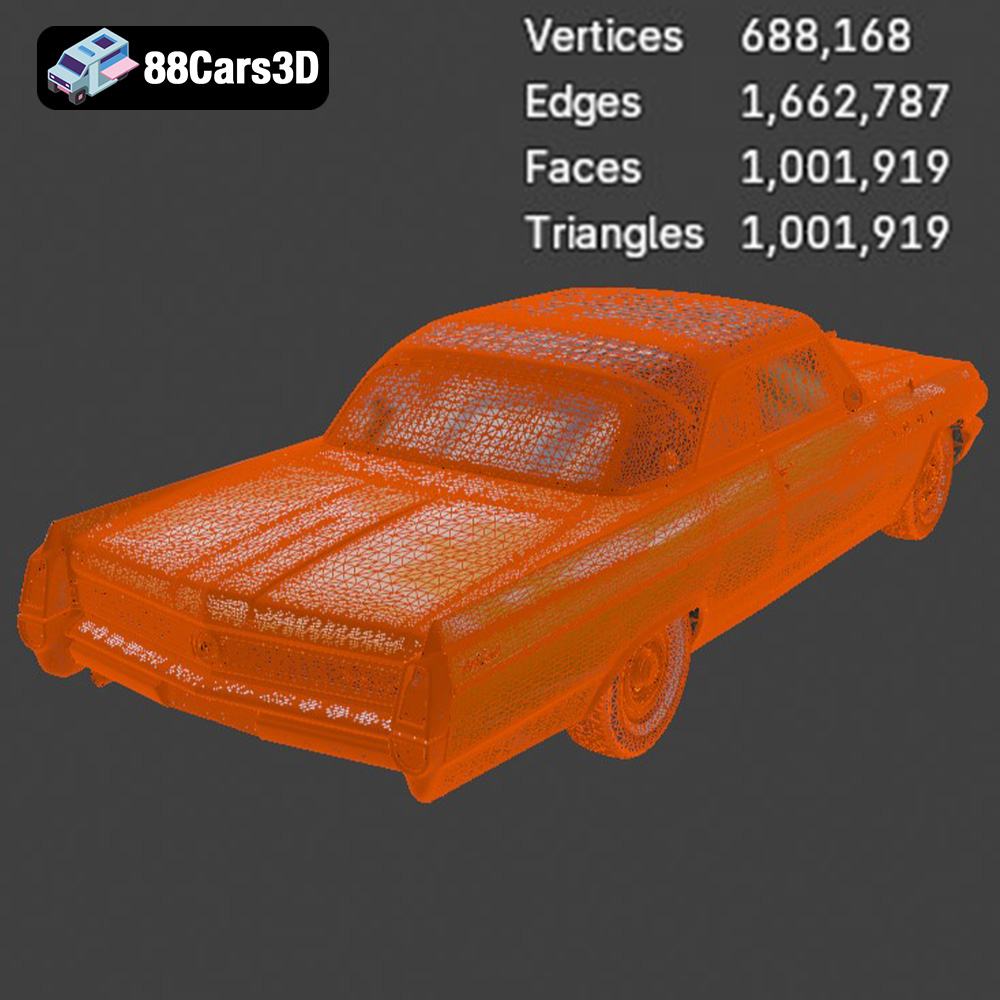
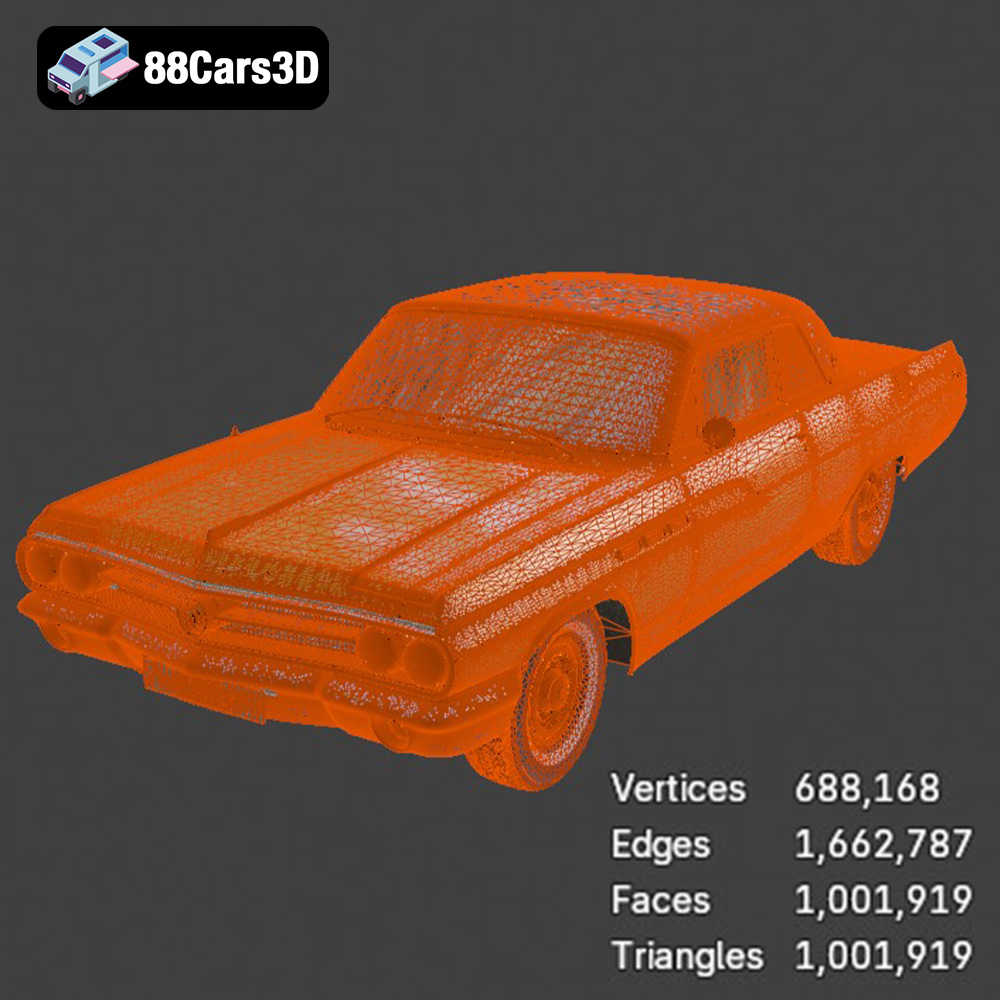
The high detail and clean topology of this 3D model make it ideal for a wide range of visualization tasks. Imagine the Buick Wildcat cruising through a retro boulevard scene, its chrome glinting under a digital sunset, perfect for advertising campaigns or nostalgic marketing visuals. It could be the star of a classic car showcase, presented in a virtual showroom built with precision lighting and material shaders. For cinematic productions, the separate wheels and steering components, coupled with proper pivot setups, mean it’s animation-ready, allowing for dynamic camera shots and realistic vehicle movement. The optimized polygon flow ensures that even at close-up, high-resolution renders, the surfaces remain smooth and artifact-free, essential for professional-grade output. With this model, creating compelling visual stories around the classic Wildcat becomes an efficient and rewarding process.
The demands of real-time environments, such as those found in modern video games or interactive AR/VR applications, are unique. They require a delicate balance between visual fidelity and performance efficiency. The Buick Wildcat Convertible 1963 3D Model is engineered with these considerations in mind, making it an excellent candidate for various interactive projects as a premium game asset.
While the model is described as “high-detail,” professional game assets often require multiple levels of detail (LODs) to maintain smooth frame rates without sacrificing visual quality at close range. A well-constructed base model like the Wildcat, with its “clean and well-organized mesh structure” and “optimized polygon flow,” serves as an ideal starting point for generating these LODs. For a high-fidelity game vehicle, a base mesh might range from 150,000 to 300,000 polygons, with optimized versions for mid-distance (50,000-80,000 polys) and far distance (10,000-20,000 polys). Crucially, the model’s clean topology ensures that these reductions can be made efficiently. Furthermore, clean, non-overlapping UV maps are essential for texture baking and efficient material application in game engines, preventing visual artifacts and optimizing draw calls. The “real-world scale accuracy” also aids in seamless integration into game environments without scaling distortions.
The inclusion of .fbx and .unreal file formats directly addresses the needs of game developers working with Unreal Engine and Unity. The .fbx format is the industry standard for importing complex animated assets, ensuring that separate components like wheels, doors, and the convertible top maintain their hierarchy and pivot points for easy rigging and animation within the engine. For example, a developer can quickly set up physics assets, apply PBR materials, and integrate the Wildcat into a driving simulation. The .unreal format potentially offers even faster integration, providing an asset already configured for Unreal’s ecosystem. This reduces the often time-consuming process of material setup, collision mesh generation, and preliminary optimization, allowing developers to focus on gameplay and environment design for 1960s-themed open-world driving games or vintage cruising simulations.
The burgeoning fields of Augmented Reality (AR) and Virtual Reality (VR) demand efficient, high-quality 3D car models that can render smoothly on diverse hardware. The .glb format, specifically designed for web-based 3D and immersive experiences, makes the Buick Wildcat 3D Model an excellent candidate for AR/VR applications. Imagine an interactive classic car showroom in VR, where users can walk around, open the doors, and even configure the soft-top of the Wildcat in real-time. In AR, the model could be projected onto a real-world surface, allowing enthusiasts to visualize the car in their driveway or garage. The optimized geometry ensures that these experiences are fluid and responsive, offering immersive classic car showrooms and interactive historical automotive experiences.
The journey of a 3D car model doesn’t always end on a digital screen. For many enthusiasts and professionals, the ability to physically manifest a digital design is a powerful and rewarding aspect of 3D modeling. The Buick Wildcat Convertible 1963 3D Model, with its “3D Printable STL” designation, offers this tangible connection, allowing creators to bring this classic beauty into the physical world.
The inclusion of the industry-standard .stl file format is crucial for 3D printing. This format provides the raw, triangulated mesh data that slicing software uses to generate print instructions. The product description provides highly specific and valuable 3D print settings, which are essential for achieving a high-quality physical model:
These detailed instructions demonstrate that the model has been designed with manufacturability in mind, making it accessible even for those new to 3D printing complex automotive shapes.
Imagine a beautifully painted, scaled-down replica of the 1963 Buick Wildcat Convertible gracing a desk or display shelf. With this 3D printable model, enthusiasts can create their own automotive collectibles, customized to their preference. Model makers can experiment with different classic 1960s paint finishes, add custom detailing, or even integrate the model into a larger diorama depicting a retro street scene or beach environment. Beyond personal collections, this capability opens doors for educational displays, historical vehicle studies, or even custom awards and trophies for classic car events. The precision geometry ensures that even at smaller scales, the iconic features of the Wildcat remain recognizable and impressive.
A high-quality 3D car model like the Buick Wildcat Convertible 1963 is not just an endpoint; it’s a starting point for boundless creativity. Its robust technical foundation allows artists to delve deeper, customizing every aspect to fit their unique vision and integrate seamlessly into diverse professional workflows.
The product description highlights several customization options that empower artists to make the Wildcat truly their own. The ability to “change body color with classic 1960s finishes” is fundamental for creative expression, allowing for faithful historical recreations or imaginative interpretations. Adding “whitewall or custom wheel variations” can dramatically alter the car’s character, shifting it from a factory-fresh look to a subtly modified cruiser. The “configure soft-top up or down” option provides immediate scene versatility, useful for depicting different weather conditions or moods. Furthermore, details like “add vintage license plates” and “adjust lighting for sunset cruise or retro city scenes” exemplify the kind of granular control that elevates a scene from good to exceptional. This level of customizable detail ensures the model remains relevant and inspiring across numerous projects.
For professional 3D artists, the inclusion of native .blend and .max files is a significant advantage. These files mean the model is not merely an imported mesh, but a fully structured scene within its respective software. In Blender, artists can leverage the model’s “clean and well-organized mesh structure” to perform advanced modeling tasks, add intricate damage, or prepare the vehicle for complex physics simulations. They can easily modify the convertible top mechanism, add interior accessories, or refine the materials using Blender’s powerful Cycles or Eevee render engines. Similarly, in 3ds Max, animators can fully exploit the “proper pivot setup for steering and wheel rotation” to create sophisticated vehicle animations, perhaps a dramatic chase sequence or a serene drive through a picturesque landscape. The “optimized polygon flow” also means that if subdivision surfacing is needed for extreme close-ups, the mesh will deform smoothly without pinching or artifacts. For studios handling large projects, starting with such a well-prepared asset from a reliable source like 88cars3d.com significantly streamlines the production pipeline, saving countless hours on modeling and cleanup. This ensures that creative energy is focused on storytelling and artistic refinement, rather than foundational asset creation.
The 1963 Buick Wildcat Convertible embodies an era of unparalleled automotive design, a testament to American engineering and style. In the digital realm, a high-quality 3D car model of this iconic vehicle transcends mere representation, becoming a versatile tool for creation across diverse industries. From breathtaking automotive rendering projects that transport viewers back in time, to optimized game assets that power immersive virtual experiences, and even precision 3D prints that bring a piece of history into the physical world, the possibilities are vast.
The Buick Wildcat Convertible 1963 3D Model, with its meticulous detail, extensive file format support, and thoughtful technical advantages, stands as a prime example of what a professional-grade digital asset should be. It provides the foundation for artists, designers, and developers to tell compelling stories, build engaging environments, and celebrate the enduring legacy of classic automobiles. Whether you’re a seasoned professional or an aspiring enthusiast, this model offers a robust and inspiring starting point. Explore this exceptional model and many other high-quality 3D car models by visiting 88cars3d.com, where digital dreams of automotive excellence come to life.
The Buick Wildcat Convertible 1963 3D Model is a high-detail digital recreation of the classic American full-size performance convertible known for its bold styling, powerful V8 engine heritage, and open-top cruising appeal. The 1963 Wildcat combined luxury comfort with muscle-era presence, making it a standout of early 1960s American automotive design. This 3D model accurately represents the long and wide body proportions, dual headlight front fascia, chrome grille and bumpers, sculpted side lines, convertible soft-top configuration, rear deck detailing, and period-correct wheel design. Built with clean topology and real-world scale accuracy, it is ideal for rendering, animation, automotive visualization, game development, and AR/VR experiences. Perfect for retro boulevard scenes, beach environments, classic car showcases, cinematic productions, and vintage driving simulations. Also includes .stl for 3D printing.
$29.9
.1960scar
.americanclassic
.arvr
.automotive
.blend
.buick
.car3dmodel
.classiccar
.convertible
.fbx
.gameasset
.glb
.max
.obj
.ply
.rendering
.simulation
.stl
.unreal
.vintagecar
.wildcat1963