Get 20% OFF All Premium 3D & STL Models!

In the demanding world of 3D visualization, automotive rendering, and game development, the quality and optimization of 3D car models can make or break a project. From breathtaking cinematic sequences to sprawling open-world games and precise architectural visualizations, every pixel and polygon counts. Professionals constantly seek assets that not only exhibit photorealistic detail but also integrate seamlessly into diverse pipelines without bogging down performance. The ability to find such high-fidelity, production-ready assets is a cornerstone of efficient and successful project delivery.
Today, we’re exploring the critical elements that define exceptional 3D automotive assets and examining how a specific, expertly crafted model exemplifies these principles. We’ll delve into the intricacies of file formats, the nuances of game engine integration, and the art of crafting assets that balance visual fidelity with technical efficiency. Our journey will highlight the remarkable Daewoo Damas Microvan 3D Model, a quintessential example of a versatile and highly optimized asset available at 88cars3d.com, designed to elevate your projects with authentic regional character and technical prowess.
The choice of a 3D model file format is far more than a simple preference; it dictates compatibility, workflow efficiency, and the ultimate usability of your digital asset across different software and platforms. Professionals must understand the strengths and weaknesses of each format to ensure seamless integration and optimal performance. The Daewoo Damas Microvan 3D Model, for instance, comes equipped with a comprehensive suite of file formats, making it incredibly versatile. Let’s break down the most crucial ones:
The .blend format is the native file type for Blender, the renowned open-source 3D creation suite. When you receive a .blend file like that for the Daewoo Damas, you’re getting a fully editable Blender scene. This typically includes the mesh data, materials (configured with Blender’s Cycles or Eevee render engines), textures, lighting, camera setups, and even animation data. For Blender users, this format offers the most flexibility, allowing for direct manipulation of the model, easy retargeting of materials, and leveraging Blender’s powerful modifiers and node-based shaders without any loss of information during import/export cycles. It’s ideal for artists who primarily work within the Blender ecosystem and require granular control over every aspect of the asset.
.fbx (Filmbox) is arguably the most widely used proprietary file format for 3D data exchange, particularly favored in game development and real-time pipelines like Unreal Engine and Unity. Developed by Autodesk, FBX excels at preserving a wide range of data, including geometry (meshes), materials, textures (often linked as external files), animations, skeletal rigs, and scene hierarchies. Its robust nature makes it an excellent choice for exporting the Daewoo Damas model into game engines, ensuring that pivot points, object relationships, and potential animation setups (like wheel rotation or door slides) are accurately transferred. While powerful, users should be aware of version compatibility issues between different software applications.
The .obj (Wavefront OBJ) format is a venerable and highly compatible format, often considered the “lowest common denominator” for 3D geometry. It primarily stores vertex positions, UV coordinates, normals, and polygon faces, often accompanied by an .mtl (material) file that defines basic material properties and texture references. While it doesn’t support advanced features like animation or rigging, its simplicity and widespread adoption make it excellent for cross-software compatibility. If you need to import the Daewoo Damas into a niche 3D application or a legacy pipeline, .obj is a reliable choice for transferring just the raw geometric data.
.glb (GLB format for glTF) is a relatively newer, but rapidly gaining traction, format optimized for efficient transmission and loading of 3D scenes and models in web-based applications, augmented reality (AR), and virtual reality (VR) experiences. It’s a binary container format that embeds all necessary data—geometry, materials, textures, animations—into a single file. This self-contained nature and optimization for real-time rendering make the .glb version of the Daewoo Damas ideal for showcasing the model directly in a browser, integrating it into AR apps, or using it in lightweight VR environments where performance is paramount.
.stl (Stereolithography) is the de facto standard file format for 3D printing. It represents a 3D model as a collection of unconnected triangular facets, defining only the surface geometry without color, texture, or material information. While simplistic, its universality in additive manufacturing workflows is unmatched. The Daewoo Damas model’s inclusion of an .stl variant means it’s ready for physical production, allowing users to create tangible scale models or prototypes, adhering to the specified print settings for optimal results.
The .ply (Polygon File Format, or Stanford Triangle Format) is a versatile format often used for storing 3D data from 3D scanners, CAD applications, or for scientific and engineering analysis. It can store a variety of properties including color, transparency, surface normals, and range data, making it more robust than .obj for certain applications where precision and additional per-vertex or per-face data are crucial. For specific analytical or CAD-centric workflows with the Daewoo Damas, .ply offers a robust data exchange option.
The inclusion of an .unreal file (often a .uasset or an optimized export specifically prepared for Unreal Engine) signifies that the Daewoo Damas model is not just compatible, but *primed* for Epic Games’ powerful real-time engine. This format typically implies pre-configured materials, collision meshes, LODs (Levels of Detail), and proper pivot setups, streamlining the import process and reducing the setup time within Unreal Engine. It’s a huge advantage for game developers looking for true “plug-and-play” assets.
Similar to .blend for Blender, the .max format is the native file type for Autodesk 3ds Max. This provides a complete 3ds Max scene file, retaining all the original scene hierarchy, modifiers, materials, lighting, and animation curves. For professionals using 3ds Max for high-fidelity rendering or complex animation, the .max version of the Daewoo Damas offers the most direct access to the asset’s construction and allows for deep customization within a familiar environment.
The Daewoo Damas Microvan 3D Model from 88cars3d.com isn’t just a digital representation; it’s a meticulously engineered asset designed for performance and realism. Its focus on a “mid-polygon” approach demonstrates a profound understanding of what makes a 3D model truly versatile across various professional applications.
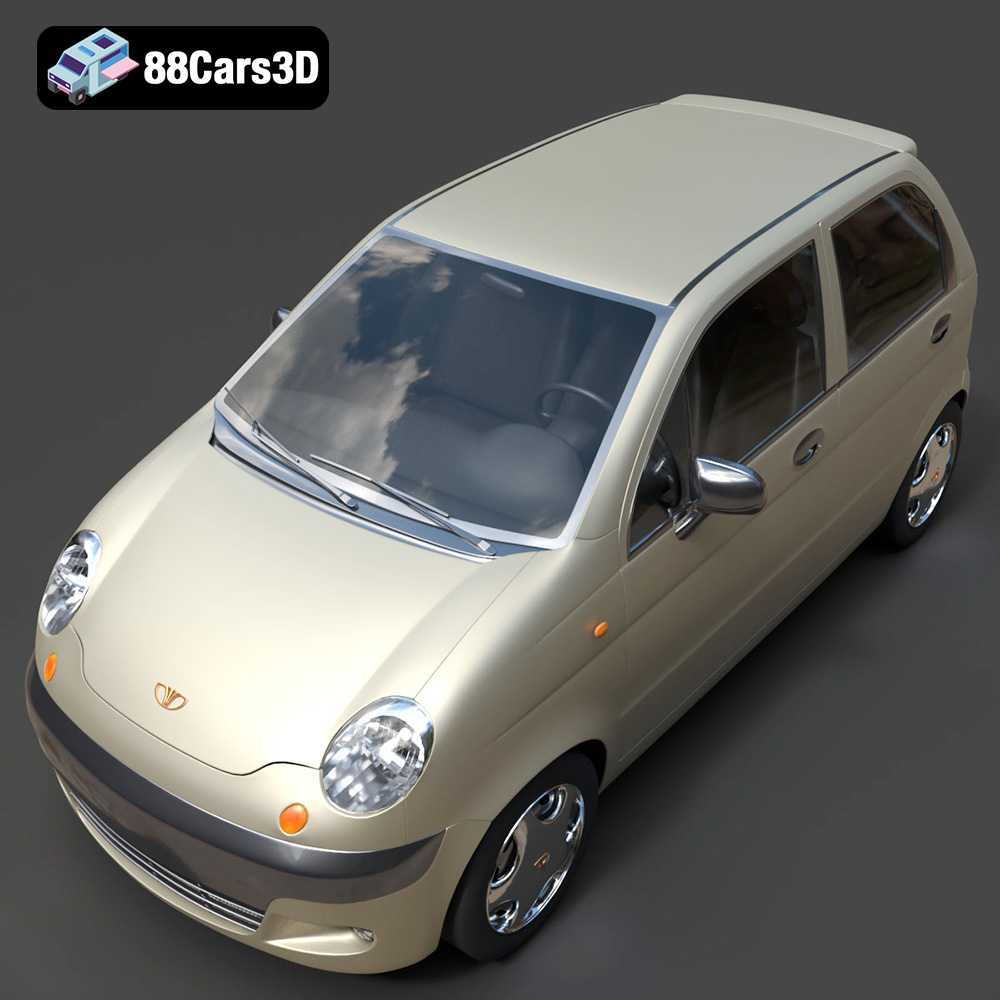
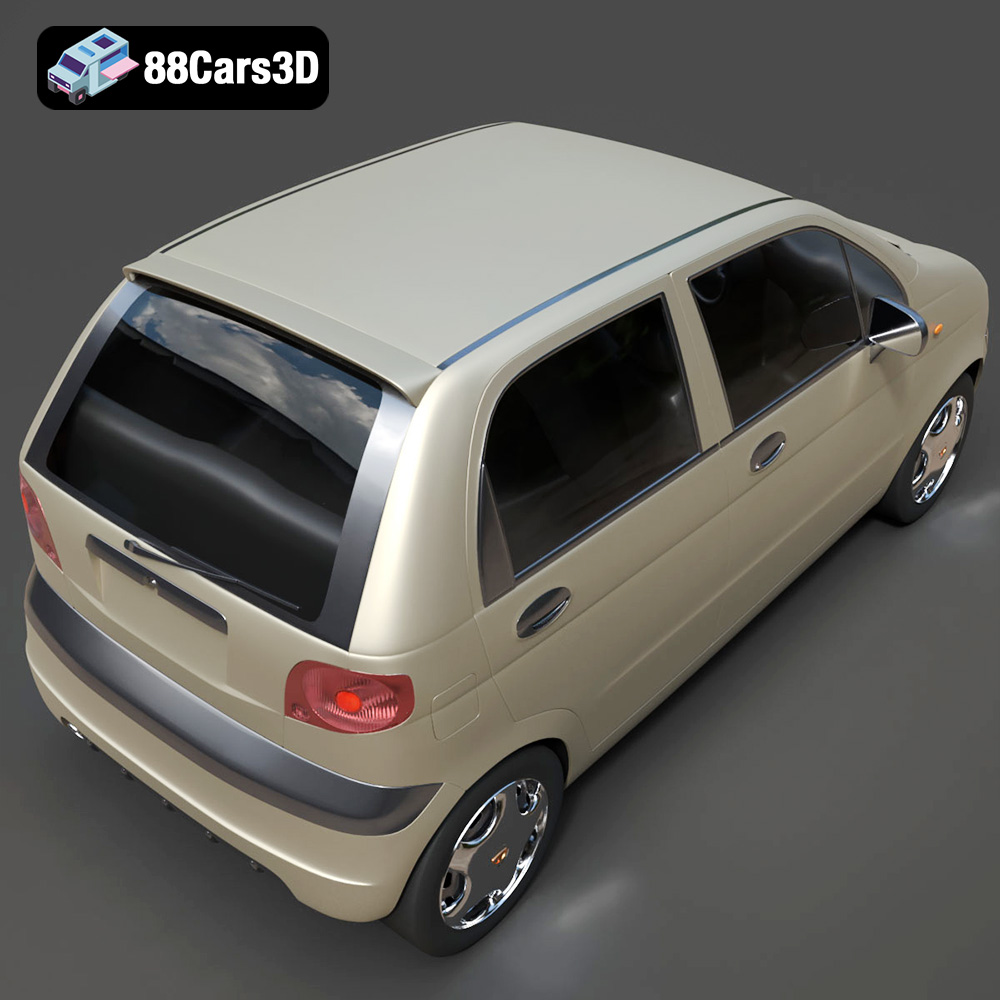
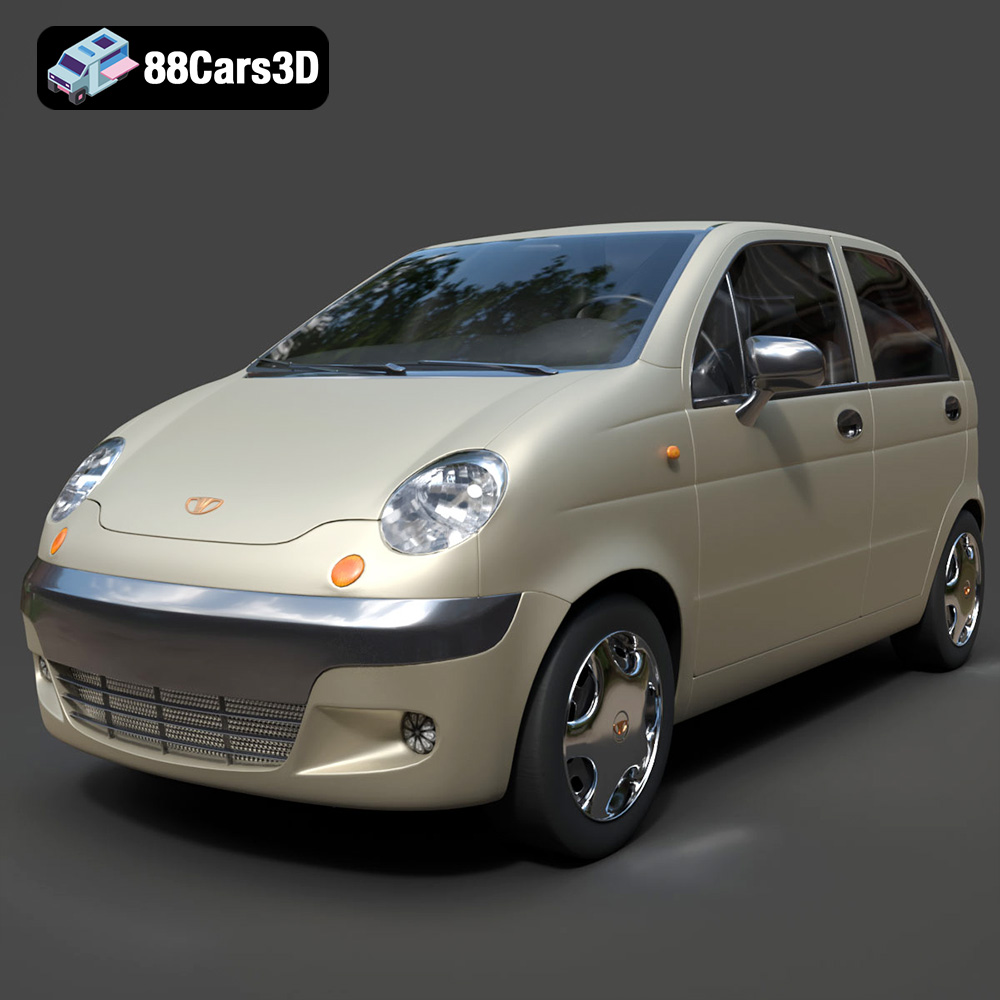
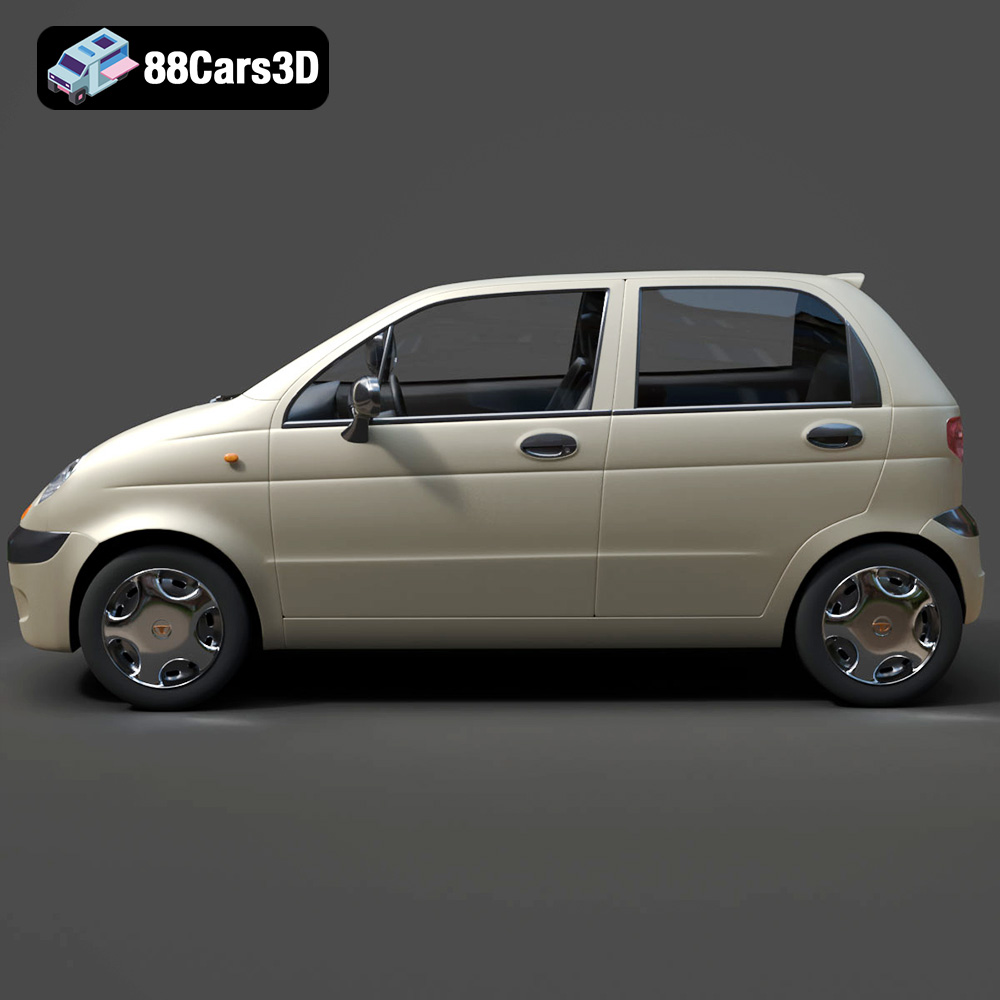
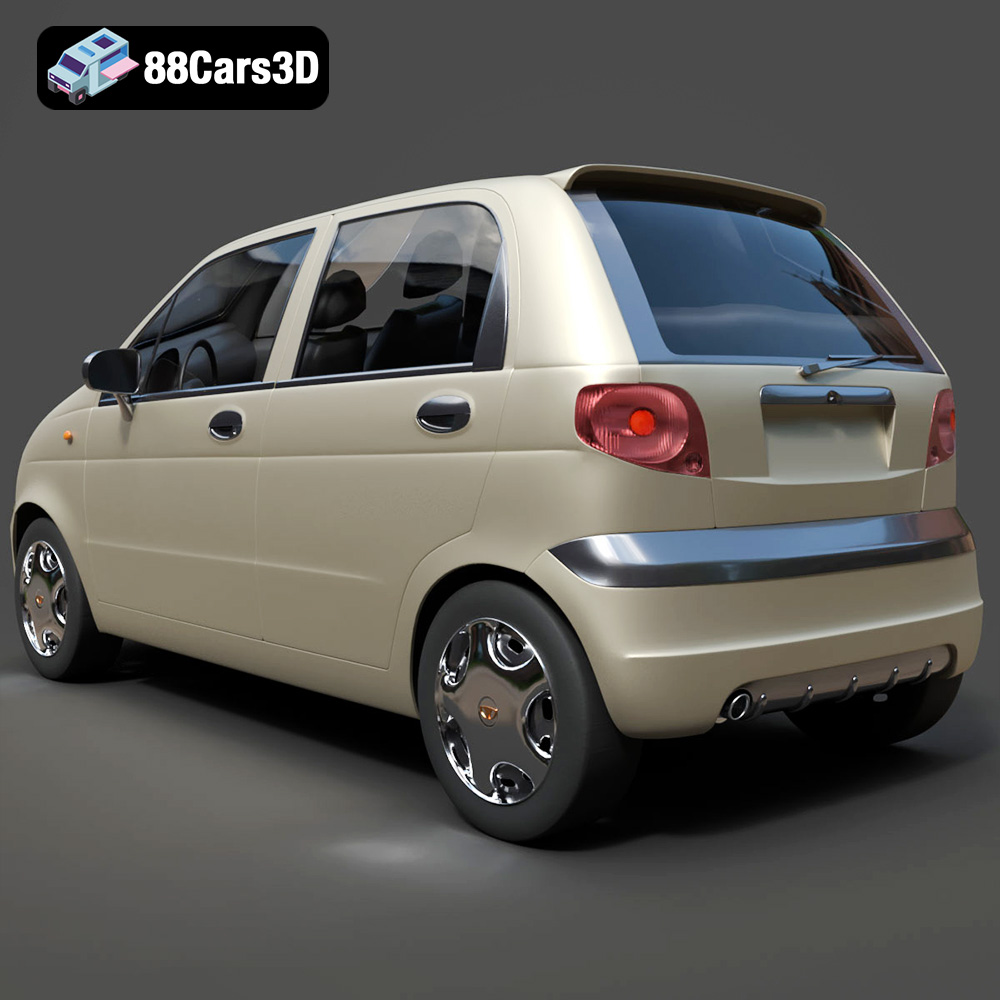
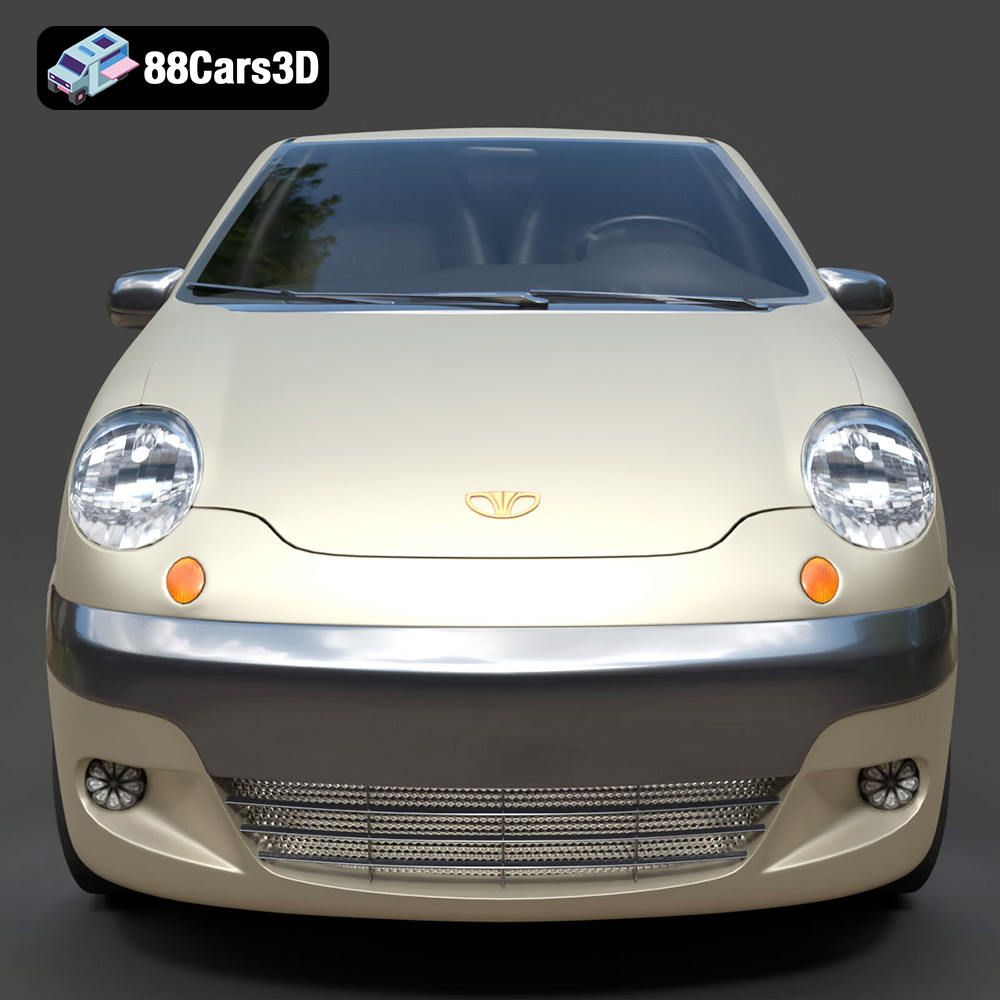
The model accurately captures the distinctive, utilitarian cabover aesthetic of the classic Daewoo Damas. This isn’t merely about visual similarity; it’s about recreating the essence of a vehicle that is a ubiquitous workhorse in many parts of the world. Features like the flat front fascia, large rectangular headlight assemblies, dual sliding passenger/cargo doors, and a tall, space-maximizing roofline are all faithfully reproduced. These details are critical for achieving authenticity in scenes set in South Korea, Central Asia, or the Middle East, where the Damas is a common sight. The separate wheels, steering components, and doors are not just aesthetic touches but functional elements, allowing for realistic rigging and animation, which is paramount for game development and animated sequences.
While often overlooked in background assets, a well-modeled interior adds a layer of depth and realism, especially for close-up shots or interactive experiences like AR/VR. The Daewoo Damas model provides a practical, Spartan driver-centric cabin layout, true to its affordable commercial van origins. Details such as the minimalist dashboard, classic two-spoke steering wheel, analog gauges, and realistic seating geometry (front seats mounted directly over the front axle) contribute to a believable internal environment. Crucially, this interior geometry is optimized to look authentic from the exterior or within VR, demonstrating a smart balance between detail and performance, ensuring it doesn’t needlessly increase poly count for elements that won’t be seen up close in most applications.
At the heart of any professional 3D asset are its technical specifications. The Daewoo Damas Microvan 3D Model boasts:
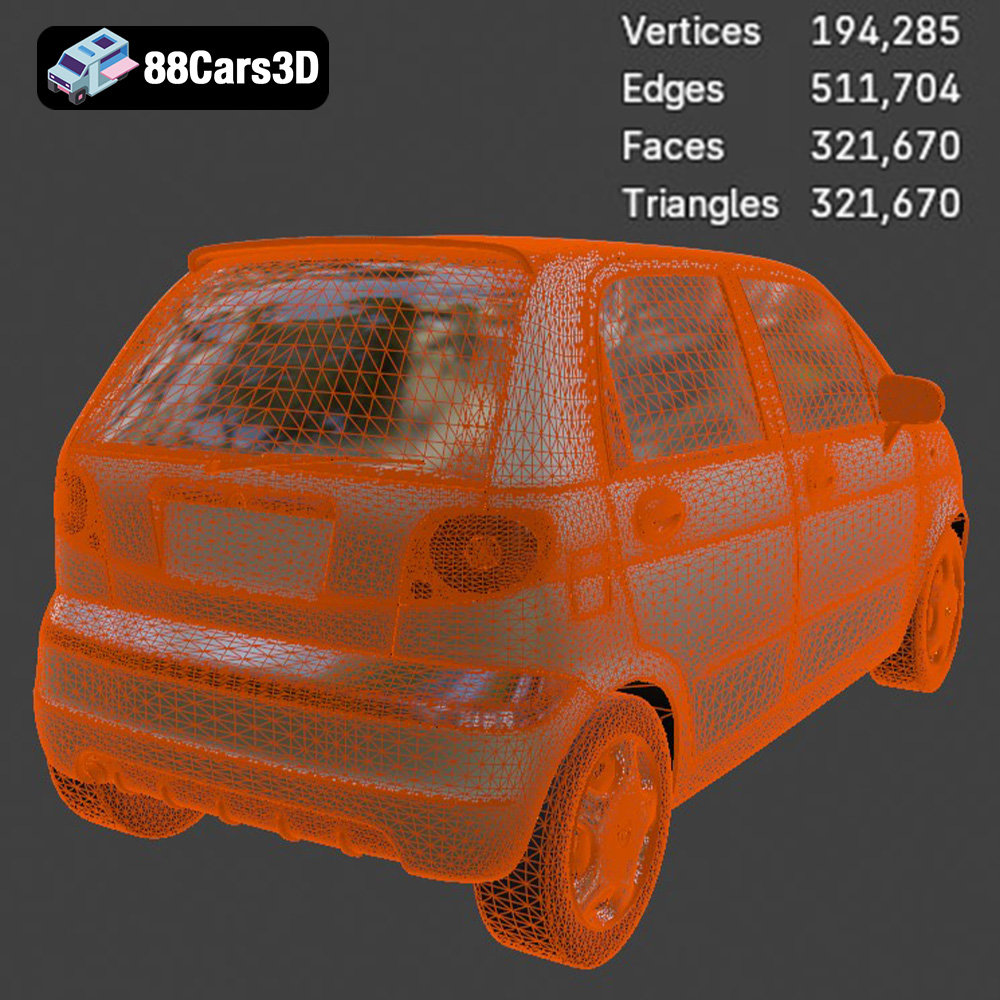
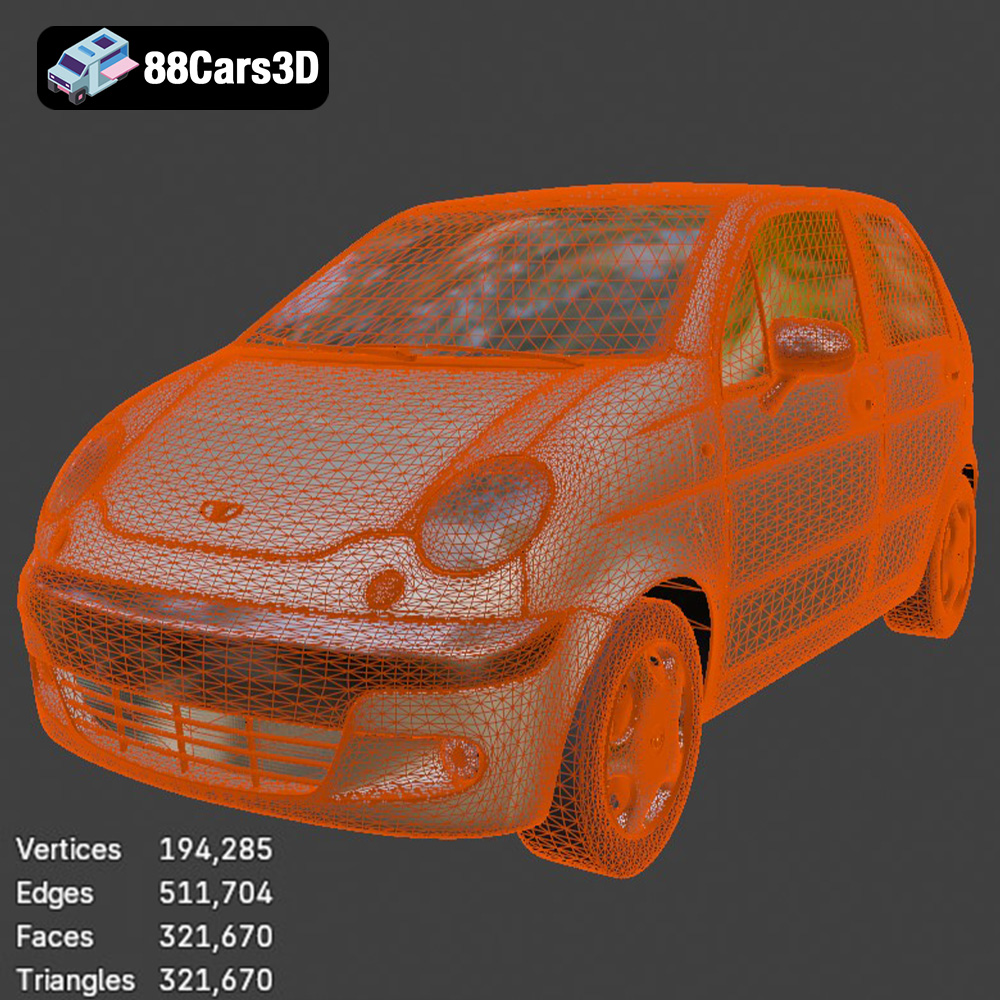
With just over 321,000 triangles, this model perfectly exemplifies a “mid-polygon” asset. This triangle count is high enough to provide crisp visual fidelity for close-up automotive rendering, capturing subtle curves and details without noticeable faceting. Simultaneously, it’s lightweight enough to be duplicated endlessly as background traffic in modern game engines without causing significant performance bottlenecks. The “beautifully clean, quad-heavy structure” (as noted in the product description) is a hallmark of good modeling practice, ensuring predictable subdivision, clean deformations, and easier texture mapping. This highly optimized topology is what makes this specific 3D car model an incredibly efficient asset, perfect for scenes requiring dense, realistic traffic.
The true test of a versatile 3D asset lies in its seamless integration into various professional pipelines. The Daewoo Damas Microvan 3D Model, with its diverse file formats and optimized structure, is built to excel across major 3D software and real-time engines.
For artists working in Autodesk 3ds Max or Blender, the included .max and .blend files offer unparalleled control. Upon opening the respective native file, users will find the model with its clean mesh, proper pivot setups, and initial material configurations. In 3ds Max, artists can leverage V-Ray or Corona Renderer to create stunning, photorealistic renders. This involves:
Blender users benefit from similar advantages. The .blend file provides direct access to the model, allowing for immediate rendering with Cycles or Eevee. Node-based materials can be quickly adapted, and Blender’s extensive add-on ecosystem can further enhance realism and workflow efficiency. The model’s clean topology ensures that subdivision surface modifiers can be applied smoothly for extremely close-up shots, should the project require even higher detail than the already crisp mid-poly mesh.
Game developers and real-time visualization specialists rely on engines like Unreal and Unity for immersive experiences. The Daewoo Damas model is “compatible with major 3D software platforms and real-time engines,” and the inclusion of a dedicated .unreal format (likely optimized .fbx for Unreal or a .uasset) is a significant advantage.
The Daewoo Damas Microvan 3D Model transcends basic visualization; it’s a versatile tool for a multitude of professional applications, breathing authentic life into diverse digital environments.
For game developers, the Damas is far more than just another car. Its ubiquitous presence in specific regions makes it the “ultimate everyday traffic and delivery vehicle” for open-world games, logistics simulators, and mobile driving titles. Imagine a driving game set in a fictionalized Central Asian city; without the iconic Daewoo Damas, the streetscapes would feel incomplete. Game studios can utilize this model to:
Architectural Visualization (ArchViz) and cinematic rendering demand a high degree of realism and contextual accuracy. The Daewoo Damas excels here, particularly for projects set in regions where it’s a common sight.
Augmented Reality (AR) and Virtual Reality (VR) thrive on engaging, performant 3D content. The optimized nature and .glb format of the Daewoo Damas make it an excellent candidate for interactive experiences.
Beyond digital realms, the Daewoo Damas Microvan 3D Model is also prepared for physical manifestation. Its inclusion of the .stl format, alongside detailed 3D print settings, opens up opportunities for hobbyists and professionals alike.
A truly valuable 3D asset provides a solid foundation for further customization. The Daewoo Damas Microvan 3D Model is no exception, offering numerous avenues to tailor its appearance to specific project needs, enhancing realism and narrative.
The base model provides excellent clean topology, which is ideal for applying a wide range of material treatments. Artists can:
The utility of the Damas as a commercial vehicle provides rich opportunities for adding specific contextual details:
These customization options allow the Daewoo Damas Microvan 3D Model to be adapted from a generic vehicle to a unique, character-filled element that profoundly impacts the visual authenticity and narrative of any project.
In summary, the journey through the Daewoo Damas Microvan 3D Model underscores the critical importance of expertly crafted 3D car models in today’s demanding digital landscape. From its meticulously optimized mid-polygon topology to its comprehensive suite of file formats, this asset exemplifies what professionals seek: a perfect balance of visual fidelity, technical efficiency, and unparalleled versatility.
Whether you’re an automotive renderer aiming for photorealism, a game developer populating expansive urban environments, an architect visualizing international projects, or an AR/VR creator building immersive experiences, the Daewoo Damas Microvan 3D Model offers a robust and ready-to-use solution. Its ability to integrate seamlessly into workflows across 3ds Max, Blender, Unreal Engine, and other platforms, coupled with detailed customization potential, makes it an indispensable addition to any professional asset library.
Embrace efficiency, enhance realism, and elevate your projects with assets designed for success. Discover the Daewoo Damas Microvan 3D Model and a vast collection of other high-quality 3D car models at 88cars3d.com – your trusted source for premium automotive 3D assets that truly make a difference.
The Daewoo Damas 3D Model is an incredibly accurate, highly optimized digital recreation of the legendary compact commercial microvan. Based on the classic kei-van architecture, the Damas is a ubiquitous and unstoppable workhorse recognized globally—serving as the ultimate urban delivery vehicle, taxi, and daily commuter, particularly across South Korea, Central Asia (such as Uzbekistan), and the Middle East. This 3D model beautifully captures the timeless, utilitarian cabover aesthetic of the classic Damas. It features the distinctive flat front fascia, large rectangular headlight assemblies, dual sliding passenger/cargo doors, and a tall, space-maximizing roofline. Built with a highly efficient, impeccably clean mid-polygon topology (just over 321k triangles), it strikes the absolute perfect balance. It provides crisp visual fidelity for close-up automotive rendering while remaining lightweight enough to be duplicated endlessly as background traffic in modern game engines. Perfect for populating realistic global street scenes, commercial fleet simulations, architectural visualizations, and mobile game development.
$29