Get 50% OFF All Premium 3D & STL Models!

In the vibrant realm where digital artistry meets engineering precision, 3D car models have become indispensable tools across a multitude of industries. From blockbuster films and immersive video games to architectural visualization and sophisticated product design, the demand for hyper-realistic and technically accurate automotive assets has never been higher. These digital counterparts are far more than mere visual representations; they are intricate data sets, carefully sculpted virtual objects that serve as the foundation for breathtaking renders, interactive experiences, and even physical prototypes.
At the forefront of this digital revolution are premium 3D models like the Genesis G70 2018 3D Model. This particular asset embodies the pinnacle of detail and versatility, capturing the essence of the acclaimed Korean luxury sports sedan with uncompromising fidelity. Designed for professionals who demand excellence, it stands as a testament to what’s achievable when meticulous craftsmanship is applied to the digital domain. Whether your project calls for stunning automotive rendering, dynamic game assets, or even high-resolution 3D printing, this model offers a robust and ready-to-use solution. Its comprehensive design and diverse file format support make it an invaluable asset for anyone looking to elevate their projects with a touch of modern automotive luxury, readily available through platforms like 88cars3d.com.
The choice of a 3D model file format is a critical decision that dictates compatibility, functionality, and the overall efficiency of your workflow. Different formats are optimized for specific purposes, from real-time game engines to detailed 3D printing. Understanding their nuances is key to leveraging high-quality assets like the Genesis G70 2018 3D Model to their fullest potential. The Genesis G70 2018 3D Model generously provides an extensive suite of formats, ensuring seamless integration into virtually any professional pipeline.
The .blend format is native to Blender, the powerful open-source 3D creation suite. When you receive a .blend file, you’re not just getting the model; you’re getting an entire scene. This includes all geometry, materials, textures, lighting setups, cameras, animations, modifiers, and even scene settings. For users deeply integrated into the Blender ecosystem, this format offers unparalleled flexibility. You can easily dissect the model, adjust its topology, modify materials, or adapt the scene to your specific rendering needs without losing any data. It’s fully editable, making it perfect for custom modifications and extending the lifespan of the asset for future projects.
The .fbx (Filmbox) format, developed by Autodesk, is arguably the most widely used interchange format in 3D production. It’s a binary format that efficiently stores 3D models, animation data, cameras, and lights. Its strength lies in its excellent support for animation, rigging, and skeletal data, making it the preferred format for transferring animated 3D car models between different software applications like Maya, 3ds Max, Blender, and crucially, real-time game engines such as Unreal Engine and Unity. For game developers building interactive environments or animators crafting cinematic sequences, an FBX version of the Genesis G70 2018 is ideal due to its robust support for mesh, materials, and motion data.
The .obj (Wavefront OBJ) format is one of the oldest and most universally supported 3D file formats. It’s a simpler format, primarily focused on storing geometry (vertices, normals, texture coordinates, and faces) and material references (.mtl file). While it doesn’t typically embed animation or advanced scene data, its widespread compatibility across virtually all 3D software makes it an excellent fallback or starting point for new projects. If you need a clean mesh of the Genesis G70 2018 that can be imported anywhere for texturing and rendering from scratch, .obj is your go-to.
The .glb (GL Transmission Format Binary) is a relatively newer format designed specifically for the efficient transmission and loading of 3D scenes and models in web and real-time applications. It packages textures, animations, and other data directly into a single binary file, making it incredibly streamlined for AR (Augmented Reality), VR (Virtual Reality), and browser-based 3D viewers. For developers looking to showcase the Genesis G70 2018 in a web configurator, a mobile AR app, or a lightweight VR experience, the .glb format provides excellent performance and ease of deployment.
The .stl (Stereolithography) format is the cornerstone of 3D printing. It represents a 3D model as a series of connected triangles, describing only the surface geometry of an object without color, texture, or other CAD attributes. For transforming the Genesis G70 2018 from a digital asset into a physical miniature, .stl is the mandatory format. It’s crucial for the model’s geometry to be “manifold” (watertight) for successful printing, a characteristic often ensured in professional 3D printable models. This format is explicitly catered to by the Genesis G70 2018 3D Model, making it ready for detailed physical reproduction.
The .ply (Polygon File Format or Stanford Triangle Format) is another format for storing 3D data, particularly useful for capturing and storing the results of 3D scanning. It supports properties like color, transparency, and normal vectors per vertex, and can also store point cloud data. While less common for general rendering, it’s invaluable in scientific visualization, reverse engineering, and applications where precise surface data or metadata associated with the mesh is critical, such as certain CAD workflows or analytical simulations. Its inclusion offers another layer of versatility for specialized engineering or research projects involving the Genesis G70 2018.
The .unreal format, or more accurately, assets packaged for Unreal Engine, signifies a model that has been specifically prepared and optimized for direct import and use within Unreal Engine projects. This often means the model comes with proper material setups, potentially LODs (Levels of Detail), collision meshes, and even blueprints. For users of Unreal Engine, this pre-packaged format streamlines the integration process significantly, reducing the time spent on setup and allowing immediate application of the Genesis G70 2018 in real-time environments, virtual productions, or interactive experiences.
The .max format is the proprietary file type for Autodesk 3ds Max, a leading software for 3D modeling, animation, rendering, and visualization. Like .blend, it contains the complete scene data, including all model geometry, materials (with support for advanced rendering engines like V-Ray or Corona), lighting, cameras, and animation curves. For professionals who primarily work within 3ds Max, the .max file of the Genesis G70 2018 provides the most direct and uninhibited access to the model’s structure, allowing for complex scene assembly, advanced material development, and high-fidelity rendering straight out of the box.
The Genesis G70 2018 3D Model isn’t just a collection of polygons; it’s a meticulously crafted digital twin of a vehicle celebrated for its design prowess. This model captures the essence of the original pre-facelift G70, a car that carved out Genesis’s reputation in the competitive luxury compact executive segment. Its design fuses aggressive athleticism with refined elegance, a balance perfectly translated into its digital form.
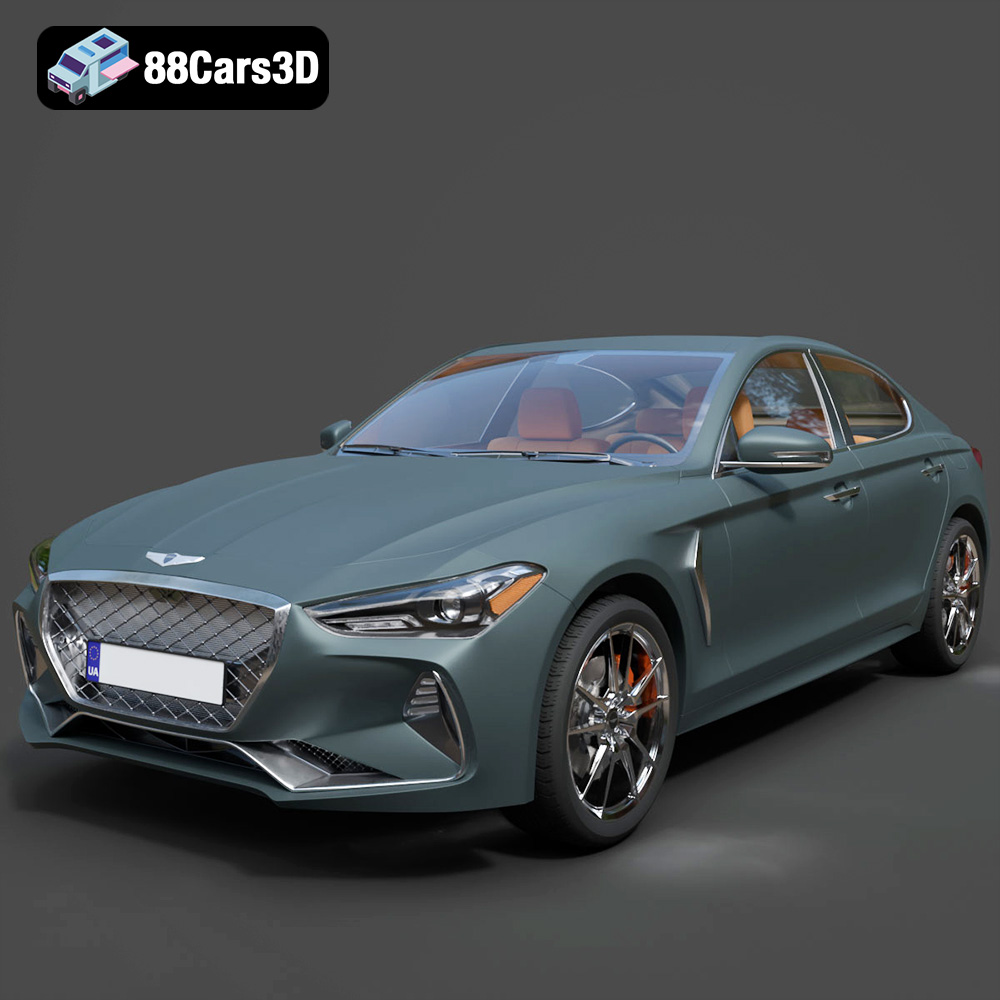
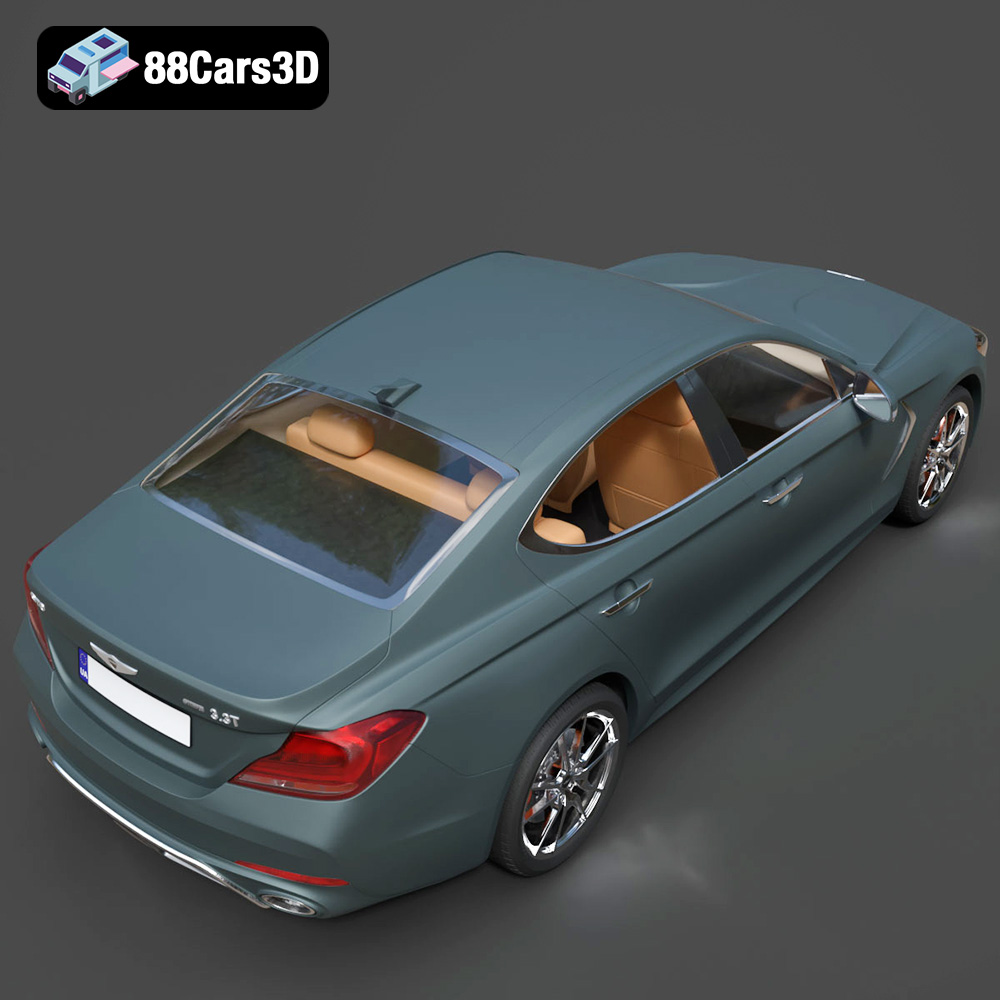
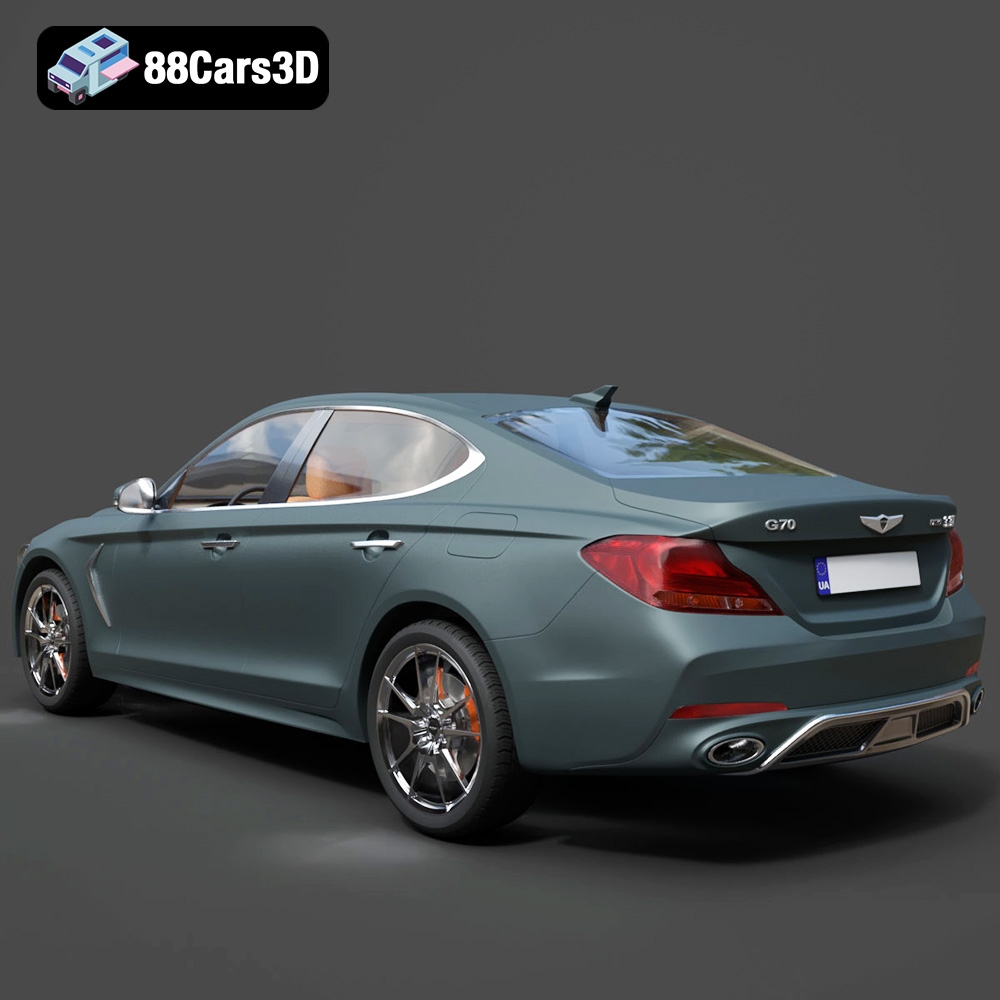
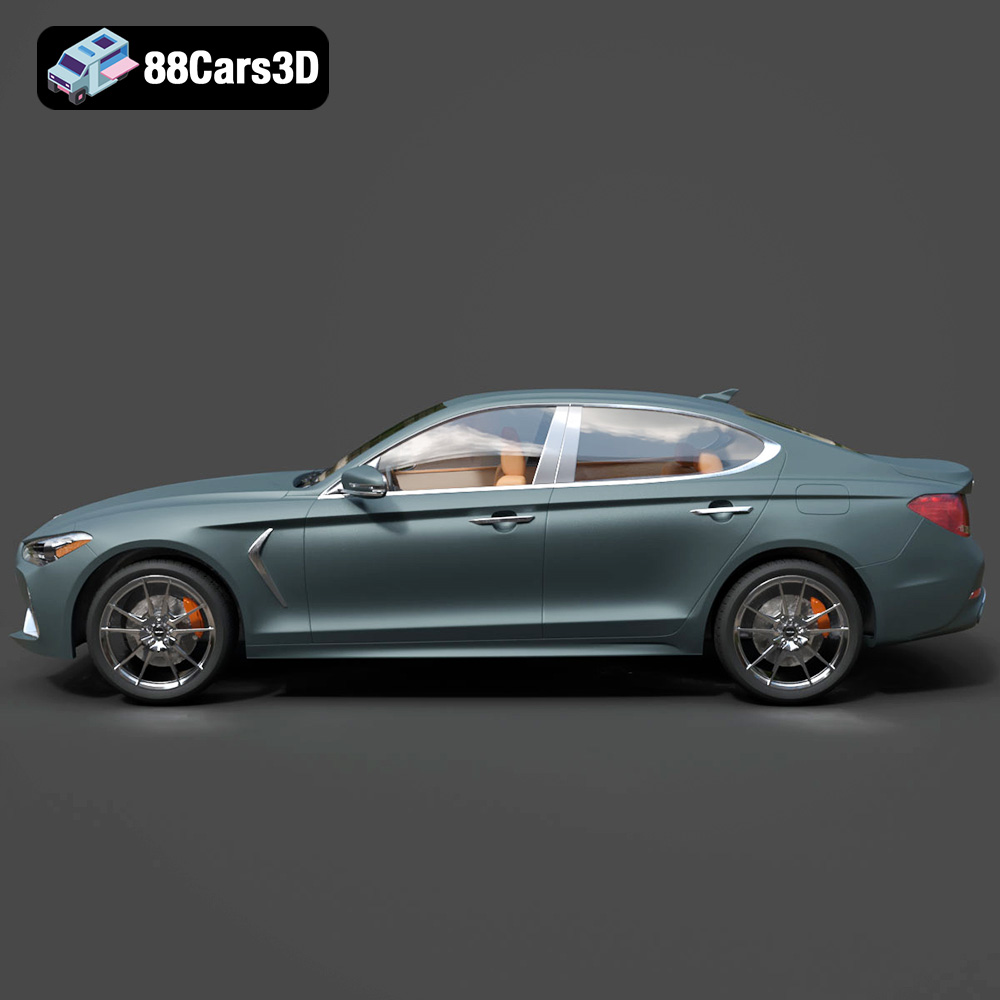
Every curve, vent, and lighting element of the Genesis G70 2018 has been rendered with acute attention to detail. The distinctive wide Crest Grille, a hallmark of Genesis design, is faithfully recreated, flanked by sharp LED headlight assemblies that boast intricate internal detailing. The sporty front fender vents, dynamic character lines tracing the profile, and the sleek, aerodynamic rear with its dual exhausts all contribute to an authentic representation. The high-end factory alloy wheels, wrapped in performance tires, complete the aggressive yet sophisticated stance. Furthermore, the model features separate wheels, steering components, and doors, which are crucial for animators and designers who need to articulate movement for interactive presentations or cinematic sequences.
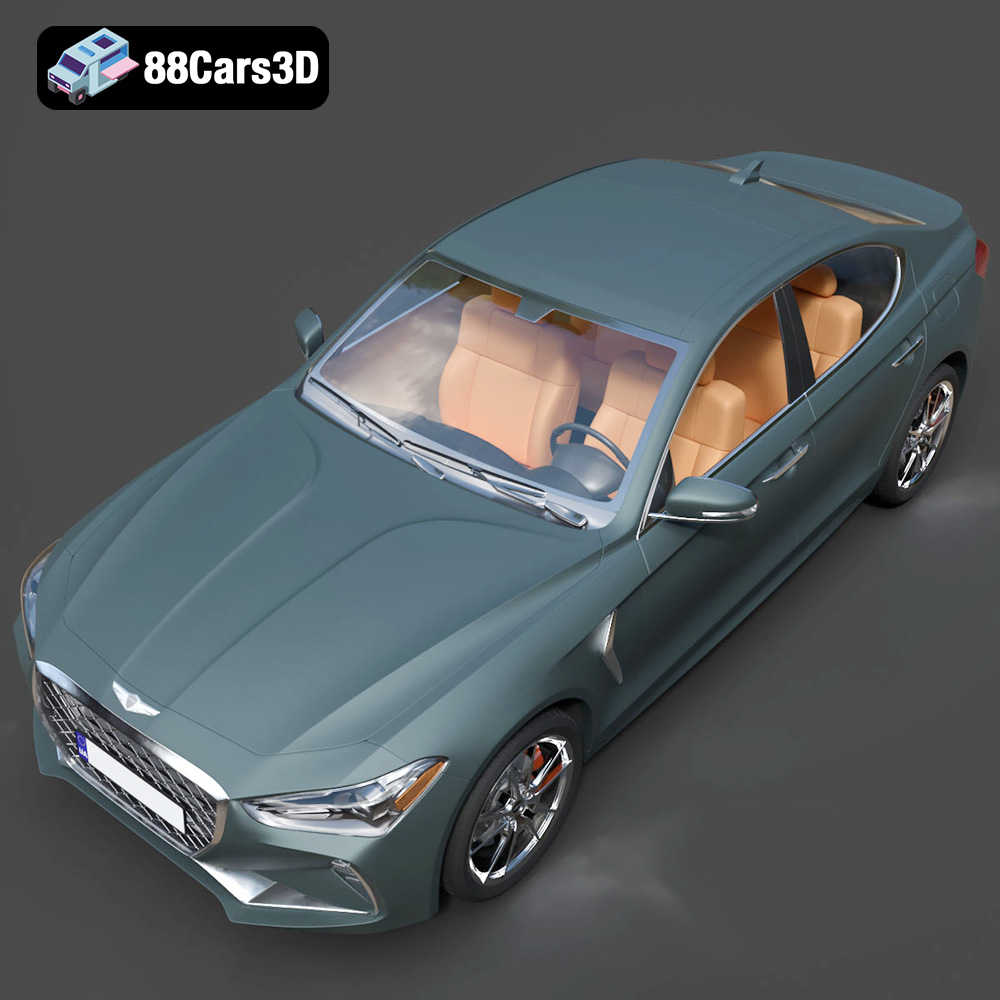
The exterior brilliance is matched by an equally impressive interior. The Genesis G70 2018 3D Model presents an authentic luxury driver-focused cabin. The premium dashboard, complete with a central infotainment screen and a detailed center console, reflects the vehicle’s sophisticated ergonomics. Intricate seating geometry showcases classic luxury quilted and perforated leather textures, inviting close-up inspection. A highly detailed multi-function steering wheel and instrument cluster further enhance realism. Refined interior trim representations, from brushed aluminum to gloss finishes, contribute to an immersive environment, specifically optimized for high-resolution interior renders—an essential feature for architectural visualization projects that require modern, elegant vehicle interiors.
Beyond its aesthetic appeal, the Genesis G70 2018 3D Model is built on a solid technical foundation. Its specifications reveal a commitment to professional-grade quality, making it suitable for demanding production pipelines where precision and performance are paramount.
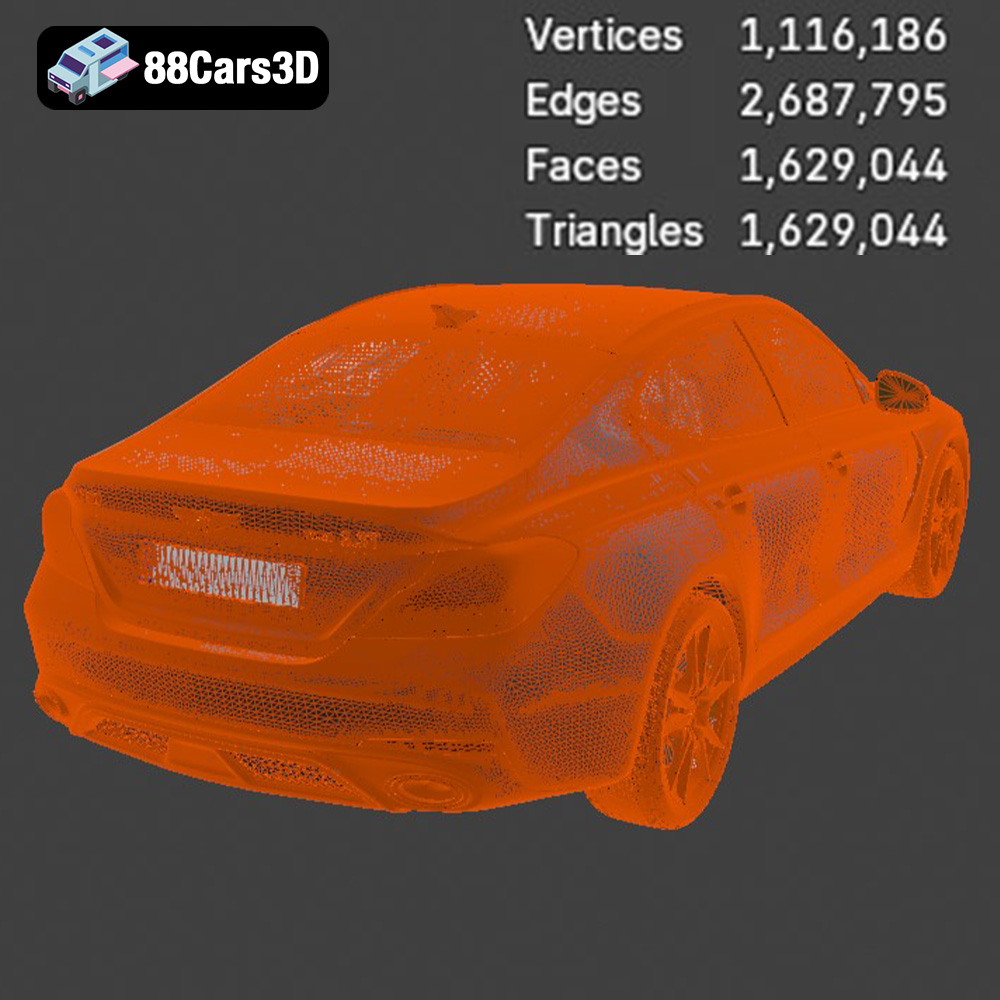
With an impressive 1,116,186 vertices, 2,687,795 edges, and 1,629,044 faces/polygons (equaling 1,629,044 triangles), this model boasts an exceptionally dense and well-organized mesh structure. This high-poly count is a direct indicator of its capacity for maximum exterior and interior realism. Such a detailed mesh ensures that even under extreme close-up rendering, no detail is lost, and surfaces appear smooth, free from noticeable facets. This level of detail is ideal for cinematic automotive visualization, high-end commercial mockups, and any project where visual fidelity is non-negotiable. While this makes it a “hero” asset for rendering, professionals in real-time environments understand that careful optimization, such as retopology or decimation, would be necessary for efficient game development, especially for drivable vehicles.
Accuracy extends beyond visual detail to real-world scale. The Genesis G70 2018 3D Model is built with real-world scale accuracy, based on Genesis factory dimensions. This is critical for seamless integration into architectural visualizations or product design scenes where proportionality is key. Furthermore, the model features proper pivot setups for steering, wheel rotation, and door articulation. This thoughtful preparation saves animators countless hours, allowing for immediate setup of dynamic shots or interactive explorations. The model’s compatibility with major 3D software platforms and rendering engines means it can be effortlessly imported and manipulated within your existing workflow, whether you use 3ds Max, Blender, Maya, or Cinema 4D, leveraging its robust geometry and material definitions for stunning results.
The versatility of the Genesis G70 2018 3D Model allows it to seamlessly integrate into a wide array of professional applications, enhancing visual narratives and delivering compelling results across industries.
For artists specializing in automotive rendering, the Genesis G70 2018 is a dream asset. Its high-fidelity mesh and detailed materials are primed for advanced rendering engines like V-Ray, Corona Renderer, Octane, or Arnold. Designers can easily adjust paint reflectivity, metallic flake, glass transparency, and interior material properties to achieve photorealistic results that rival studio photography. This makes it perfect for luxury brand campaigns, vehicle configurators, or high-impact advertisements. In architectural visualization, adding a premium 3D car model like the G70 2018 transforms static building renders into dynamic, aspirational scenes. Imagine a sleek G70 parked elegantly in front of a modern high-rise development or cruising through a meticulously designed urban streetscape – it instantly elevates the perceived value and lifestyle associated with the architecture. Designers can populate new real estate project renders with stylish, contemporary traffic, providing a sense of scale and aspirational living to potential buyers.
While the Genesis G70 2018 is a high-poly model (over 1.6 million triangles), it serves as an excellent foundation for game development and real-time applications, particularly as a “hero” asset. In game engines like Unreal Engine or Unity, a model of this density is usually reserved for cinematic sequences, close-up inspections in a showroom environment, or as a single, highly detailed prop for a virtual reality experience where performance can be optimized around it. For drivable vehicles in a large open-world game, retopology or aggressive decimation would be necessary to reduce the polygon count significantly while retaining visual fidelity through normal maps. However, for a meticulously detailed garage scene, a VR car configurator, or pre-rendered cutscenes, the raw detail of the G70 2018 is invaluable. The inclusion of the .unreal format means that developers can often expect a more streamlined import process, with textures and materials potentially pre-configured, reducing setup time and allowing them to focus on interactivity and optimization.
Beyond screens and simulations, the Genesis G70 2018 3D Model offers the unique advantage of being fully optimized for 3D printing. This capability bridges the gap between the digital and physical, allowing creators to bring this luxurious sedan into the real world as a tangible collectible or a detailed prototype.
The .stl file format, a standard for additive manufacturing, ensures that the Genesis G70 2018 3D Model is ready for fabrication. The model’s inherent detail translates beautifully to physical form, especially at recommended scales such as 1:24, 1:18, or even 1:12 for larger, more imposing displays. For smaller scales like 1:32 or 1:43, resin printing (SLA/DLP) is highly recommended over FDM, as it can capture the intricate details of the Crest Grille, sharp LED lights, and interior textures with superior precision. Recommended print settings like a layer height of 0.08–0.16 mm (for FDM) or 0.04–0.12 mm (for resin) and wall thicknesses of 1.2–2.0 mm ensure structural integrity. Supports will be necessary for overhangs like side mirrors, door handles, exhaust tips, and bumper elements, while printing the body angled and wheels separately helps achieve the smoothest surface finish and allows for easier painting.
Once printed, the Genesis G70 model enters the realm of traditional model-making. Post-processing is key to achieving a professional finish. This typically involves careful sanding to remove layer lines and support marks, followed by several coats of primer to create a perfectly smooth canvas. From there, hobbyists can apply standard factory paint colors, mimicking authentic Genesis options like Siberian Ice, Mallorca Blue, or Havana Red. Detailed gloss and chrome detailing can be added to mirrors, trim, and emblems to replicate the luxury vehicle’s real-world appeal. This transformation from a digital file to a physical collectible showcases the immense potential of high-quality 3D car models for hobbyists, automotive enthusiasts, and even for creating prototypes or promotional items. The attention to detail in the digital model translates directly to an impressive physical replica, making it a prized possession.
The Genesis G70 2018 3D Model is not a static asset; it’s a dynamic canvas for creative expression. Its well-structured geometry and separate components lend themselves readily to extensive customization, allowing artists and designers to tailor the vehicle to their exact project needs.
One of the most immediate customization options is changing the exterior paint colors. Instead of a generic color, artists can opt for classic Genesis factory options, creating a more authentic or brand-specific look. Beyond paint, the model allows for modifications to wheel setups; users can easily swap the stock alloy wheels for aggressive aftermarket forged alloys, dramatically altering the car’s character. Interior materials can also be adjusted, from a sporty black leather with red stitching to more elegant beige or ivory layouts, matching specific luxury aesthetics. Furthermore, the model’s adaptability extends to environmental integration. Designers can adapt lighting setups to create dramatic studio reflections, simulate the golden hour glow of a sunset drive, or even capture the moody atmosphere of a rainy night, allowing the Genesis G70 2018 to shine in any scene. This flexibility makes the model an invaluable resource for advertising agencies, concept designers, and virtual production studios that require specific visual narratives.
The Genesis G70 2018 3D Model stands as a prime example of excellence in digital asset creation. Its uncompromising detail, comprehensive technical specifications, and broad compatibility across multiple file formats make it an exceptionally versatile tool for professionals in automotive rendering, architectural visualization, game development, and 3D printing. From its exquisitely replicated exterior and immersive interior to its robust 1.6 million triangle mesh, every aspect of this model has been meticulously crafted to deliver unparalleled visual fidelity and functionality. Whether you’re aiming for photorealistic renders, compelling cinematic sequences, interactive real-time experiences, or a high-quality physical collectible, this Genesis G70 2018 asset provides the robust foundation you need.
Investing in high-quality 3D car models like the Genesis G70 2018 from trusted marketplaces such as 88cars3d.com ensures that your projects benefit from accuracy, efficiency, and stunning realism. It empowers artists and developers to push creative boundaries and deliver projects that truly captivate. Explore the potential of this meticulously designed luxury sports sedan and elevate your digital creations today.
The Genesis G70 2018 3D Model is a premium, high-detail digital recreation of the acclaimed Korean luxury sports sedan. As the vehicle that firmly established Genesis as a serious competitor in the compact executive segment, the 2018 G70 combines an aggressive, athletic stance with refined elegance and world-class luxury design. This 3D model accurately represents the original pre-facelift styling, featuring the signature wide Crest Grille, sharp LED headlight assemblies with intricate detailing, sporty front fender vents, dynamic character lines, and a sleek, aerodynamic rear profile with dual exhausts. Built with dense, uncompromising topology (over 1.6 million triangles), it provides maximum visual fidelity for extreme close-up rendering, cinematic automotive visualization, commercial mockups, and high-end 3D printing.
$59.00
.automotive
.blend
.fbx
.g70
.genesis
.obj
.rendering
.stl
2018-g70
3d printing
car-3d-model
compact-executive
high poly
korean-auto
luxury car
sports-sedan