Get 50% OFF All Premium 3D & STL Models!

In the dynamic world of 3D visualization, from cinematic rendering to immersive game development and detailed product design, the demand for exceptionally crafted 3D models is perpetually on the rise. Artists, developers, and engineers alike seek assets that not only look stunning but are also technically robust, offering versatility and seamless integration into diverse professional workflows. Whether you’re constructing a sprawling open-world environment, designing a meticulously detailed historical scene, or creating a tangible physical collectible, the quality of your foundational 3D assets dictates the final output.
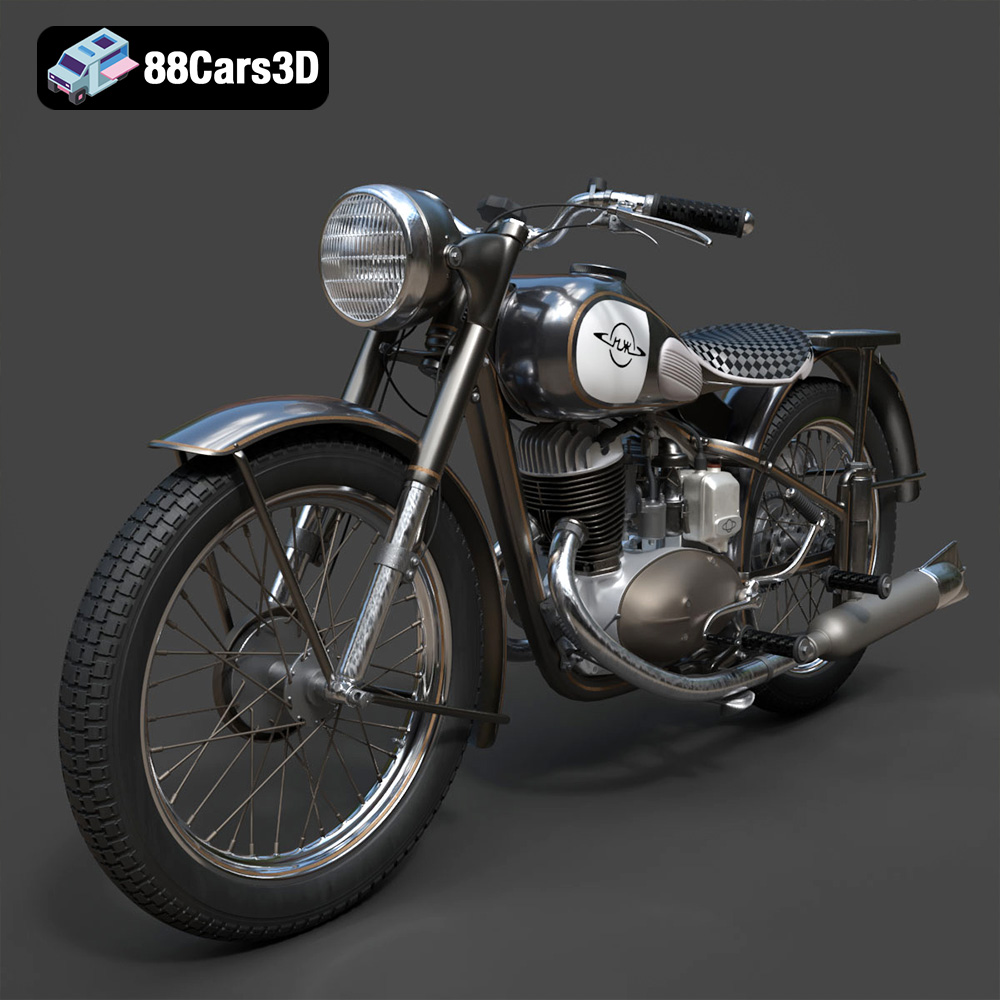
Today, we’re diving deep into the technical prowess and artistic potential of an exemplary asset: the IZ-49 Classic Motorcycle 3D Model. This isn’t just a digital recreation; it’s a testament to the blend of historical accuracy and modern 3D modeling expertise. This iconic mid-20th century Soviet motorcycle, renowned for its post-war engineering and enduring reliability between 1951 and 1958, has been meticulously brought back to life in a digital format. It offers an invaluable resource for anyone looking to infuse their projects with authentic vintage charm, mechanical detail, and a compelling narrative. From the classic spoked wheels to the exposed suspension and period-correct exhaust, every element has been thoughtfully preserved, making it an ideal choice for high-end rendering, interactive simulations, and even precise 3D printing, available readily at 88cars3d.com.
The journey of a 3D model, from its creation to its final application, often involves a multitude of software and platforms. Understanding the nuances of different file formats is crucial for ensuring compatibility, preserving data integrity, and optimizing performance. The IZ-49 Classic Motorcycle 3D Model is provided in an array of formats, each serving distinct purposes within various professional pipelines.
The .blend format is the native file type for Blender, the popular open-source 3D creation suite. When you acquire a .blend file, you’re getting more than just a mesh; you’re gaining access to the complete scene setup. This includes the model’s geometry, materials, textures, lighting, camera configurations, and even animation data, all within a fully editable environment. For artists who primarily work within Blender, this format offers the highest degree of flexibility for customization, material tweaks, rigging, and animation. It’s perfect for detailed renders or for modifying specific components of the IZ-49 model to suit unique project requirements without any loss of fidelity.
The Filmbox, or .fbx format, developed by Autodesk, is one of the most widely adopted interchange formats in the 3D industry, particularly for game development. It efficiently stores not only mesh data but also crucial information like hierarchies, animation curves, skinning, and blend shapes. Its robust support across major 3D software (like 3ds Max, Maya, Blender) and game engines (Unreal Engine, Unity) makes it indispensable. For importing the IZ-49 model into a real-time environment, .fbx ensures that the motorcycle’s separate components, such as wheels and steering, retain their proper pivot points and hierarchical relationships, facilitating easy animation and integration.
The Wavefront .obj format is a simple, universally recognized geometry definition file. While it primarily stores vertex positions, UV coordinates, normals, and material group information, it typically relies on an accompanying .mtl (material) file for basic material properties and texture references. Its strength lies in its widespread compatibility, serving as a reliable fallback for transferring models between almost any 3D application. For the IZ-49, an .obj file provides a clean mesh that can be easily imported into any software, making it an excellent choice for base geometry if you plan to rebuild materials or integrate it into a less common pipeline.
The GL Transmission Format (.glb) is the binary version of glTF, a royalty-free specification for the efficient transmission and loading of 3D scenes and models by applications. .glb packages all necessary data—geometry, materials, textures, and animations—into a single, self-contained file. It’s specifically optimized for web-based 3D, AR (Augmented Reality), and VR (Virtual Reality) applications due to its compact size and quick loading times. This makes the IZ-49 model in .glb format perfect for interactive historical demonstrations in web browsers or for immersive virtual museum experiences.
The Standard Tessellation Language (.stl) format represents 3D surfaces using a collection of triangular facets. It is the de facto standard for 3D printing. While it doesn’t store color or texture information, its simplicity makes it ideal for defining the geometry of physical objects. The IZ-49 model, provided in .stl, is perfectly geared for manufacturing collectible scale vintage motorcycle models. Its manifold geometry ensures a watertight mesh, critical for successful 3D printing.
The Polygon File Format (.ply) is another common format for storing 3D data from 3D scanners. It supports a wider range of properties than .stl, including color, transparency, normals, and even texture coordinates, per vertex or per face. While less common for general 3D asset exchange than .fbx or .obj, .ply files are often used in scientific, CAD, or reverse engineering applications where precision mesh data is paramount. For detailed analysis or specialized manufacturing processes of the IZ-49, the .ply format offers enhanced data integrity.
While not a standalone format in the traditional sense, an “.unreal” file typically refers to an asset specifically prepared and optimized for direct import into Unreal Engine. This often implies a .fbx file that has been carefully configured with proper scaling, material slots, LODs (Levels of Detail), and collision meshes, ready to be dropped into an Unreal project with minimal setup. The IZ-49 model provided in this “engine-ready” state signifies that it has undergone optimization and rigorous testing to ensure it performs seamlessly within Unreal Engine’s demanding real-time environment, adhering to best practices for game assets.
The .max format is the native file type for Autodesk 3ds Max, a powerful 3D modeling, animation, rendering, and compositing software. Similar to .blend, a .max file contains the complete scene, including geometry, modifiers, materials, textures, lighting, cameras, and animation data specific to 3ds Max. For professionals working within the Autodesk ecosystem, the .max file of the IZ-49 provides the ultimate flexibility for advanced rendering with V-Ray or Corona, complex animation setups, or detailed scene integration within a 3ds Max-centric workflow.
The true value of a premium 3D asset lies in its fidelity to reality, especially when depicting historical objects. The IZ-49 Classic Motorcycle 3D Model exemplifies this commitment to authenticity, meticulously recreating an iconic piece of mid-20th century engineering. This model is more than just a collection of polygons; it’s a digital artifact preserving a bygone era of Soviet manufacturing, perfect for historical visualizations and nuanced storytelling.
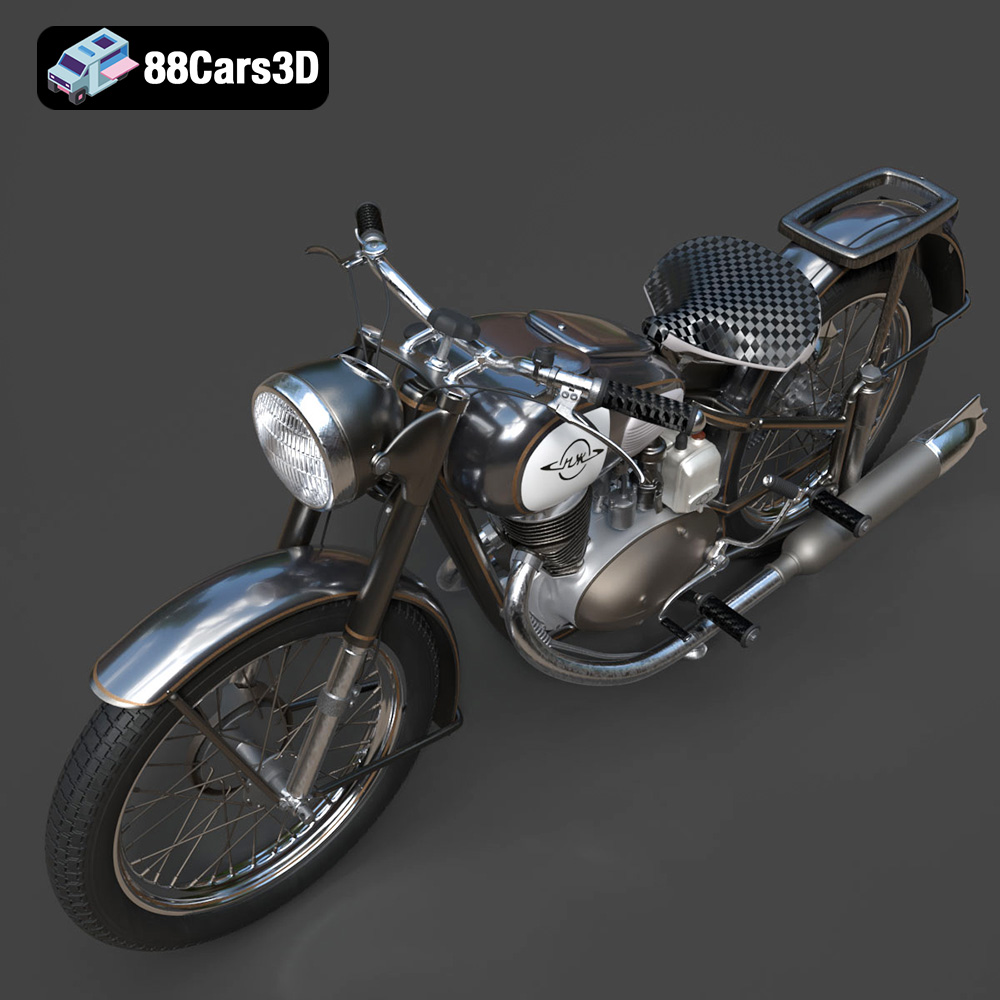
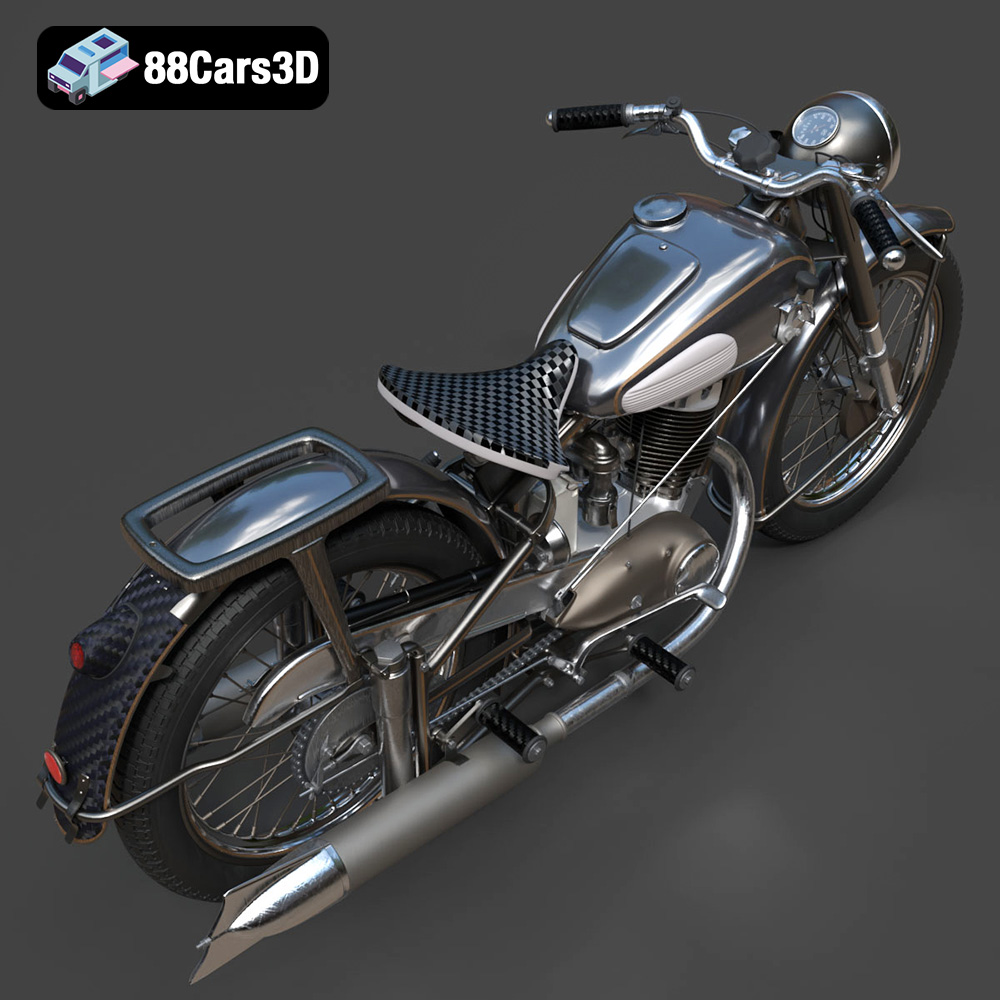
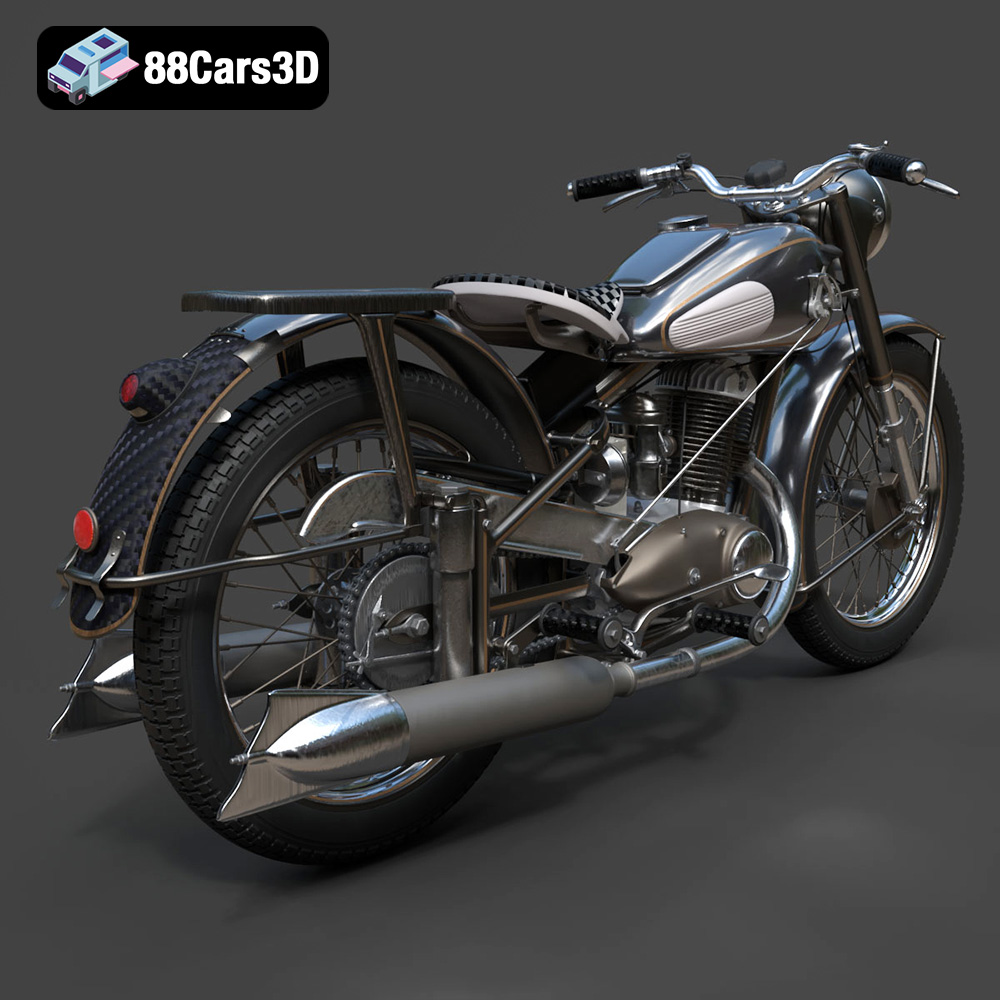
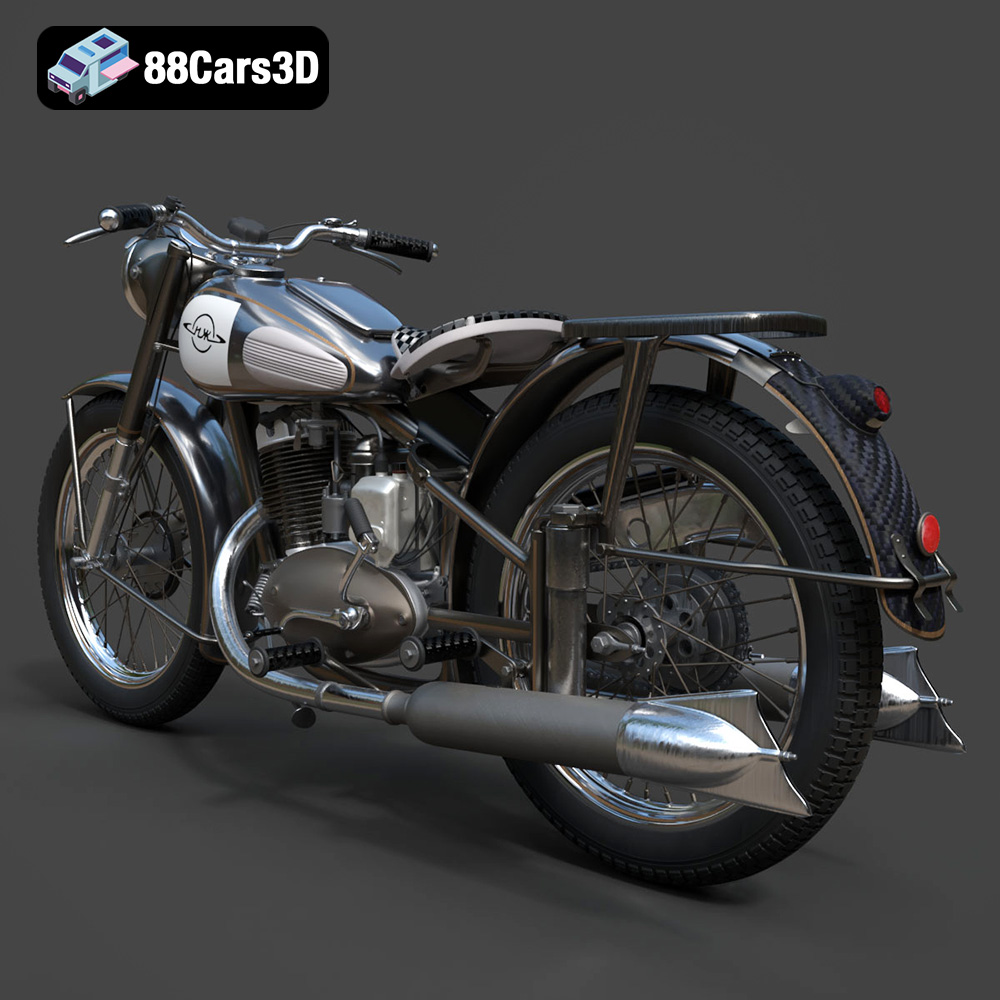
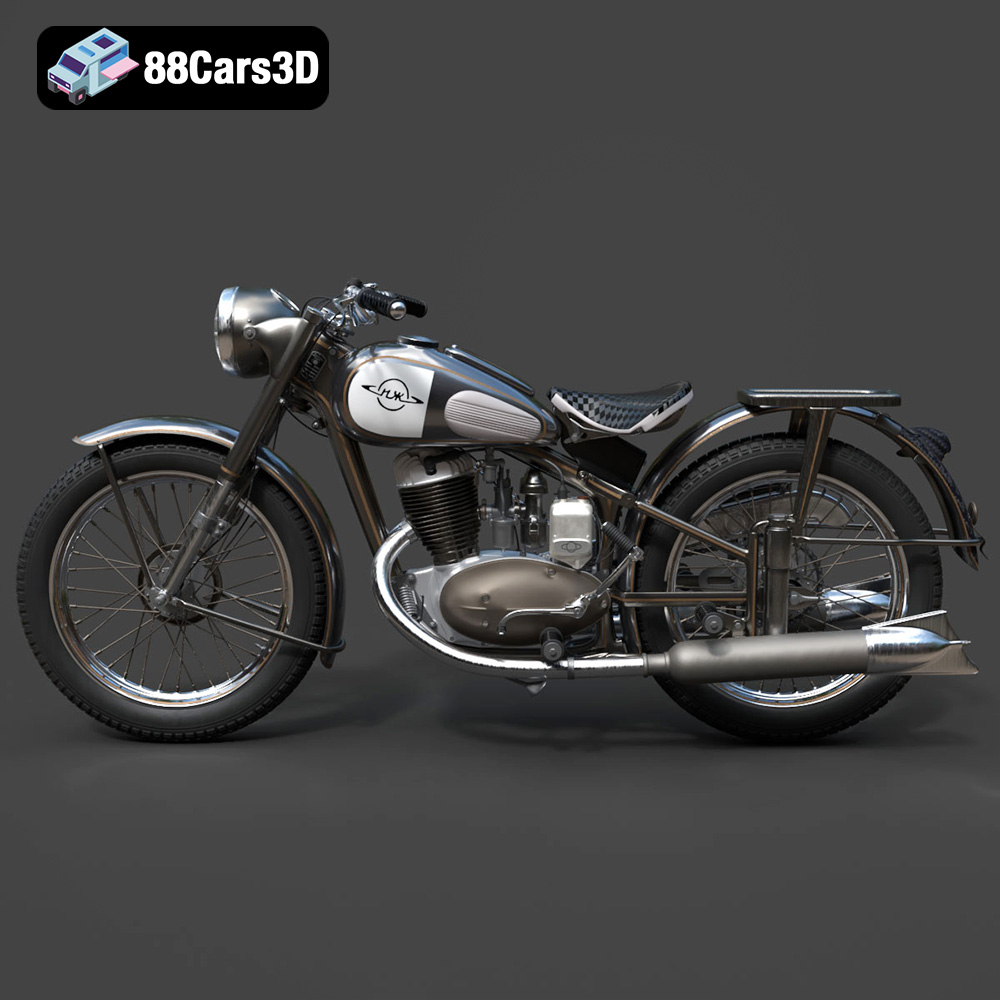
The visual impact of the IZ-49 model begins with its accurate mid-century motorcycle proportions. Every curve of the rounded vintage-style fuel tank, the classic front and rear fenders, and the overall silhouette speak volumes about its era. The headlamp housing, a crucial visual identifier, is period-correct, contributing significantly to the model’s historical veracity. A particular highlight is the inclusion of spoked wheels with realistic hub detailing, which are often overlooked in lesser models but are vital for an authentic vintage aesthetic. These elements work in concert to transport the viewer back to the 1950s, whether in a high-resolution render or an interactive digital museum display.
Beyond the surface, the IZ-49 model delves into the mechanical heart of the motorcycle. The detailed single-cylinder engine block is not merely an abstract shape but a representation of the actual power plant. The modeled suspension system, chain drive assembly, and the realistic routing of the exhaust pipe showcase a deep understanding of the original vehicle’s engineering. The frame geometry accurately reflects the original production design, providing a solid foundation for both visual authenticity and potential functional simulation. These mechanical details are crucial for projects requiring close-up shots, educational content, or even interactive exploded views where the inner workings of the motorcycle need to be clearly understood. The separate wheels and steering components are also set up with proper pivots, enabling realistic animation, a critical feature for any dynamic visualization or game environment.
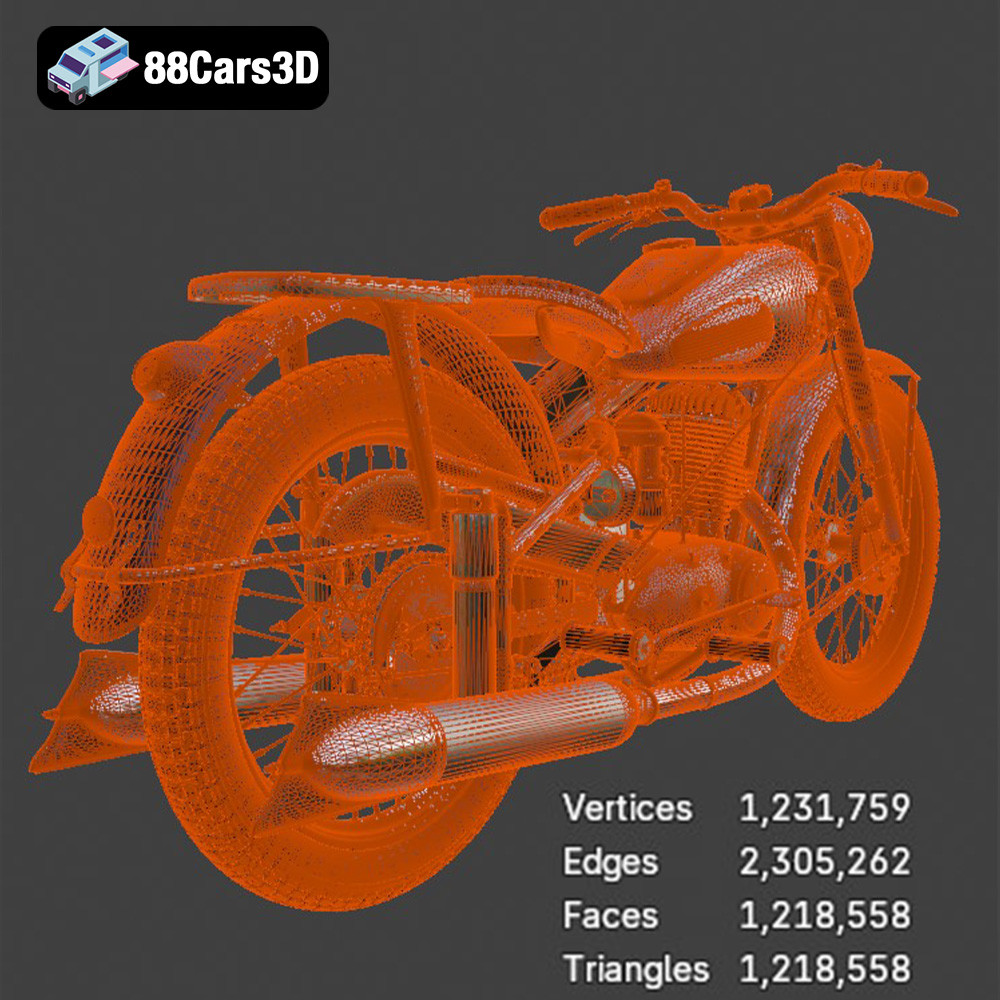
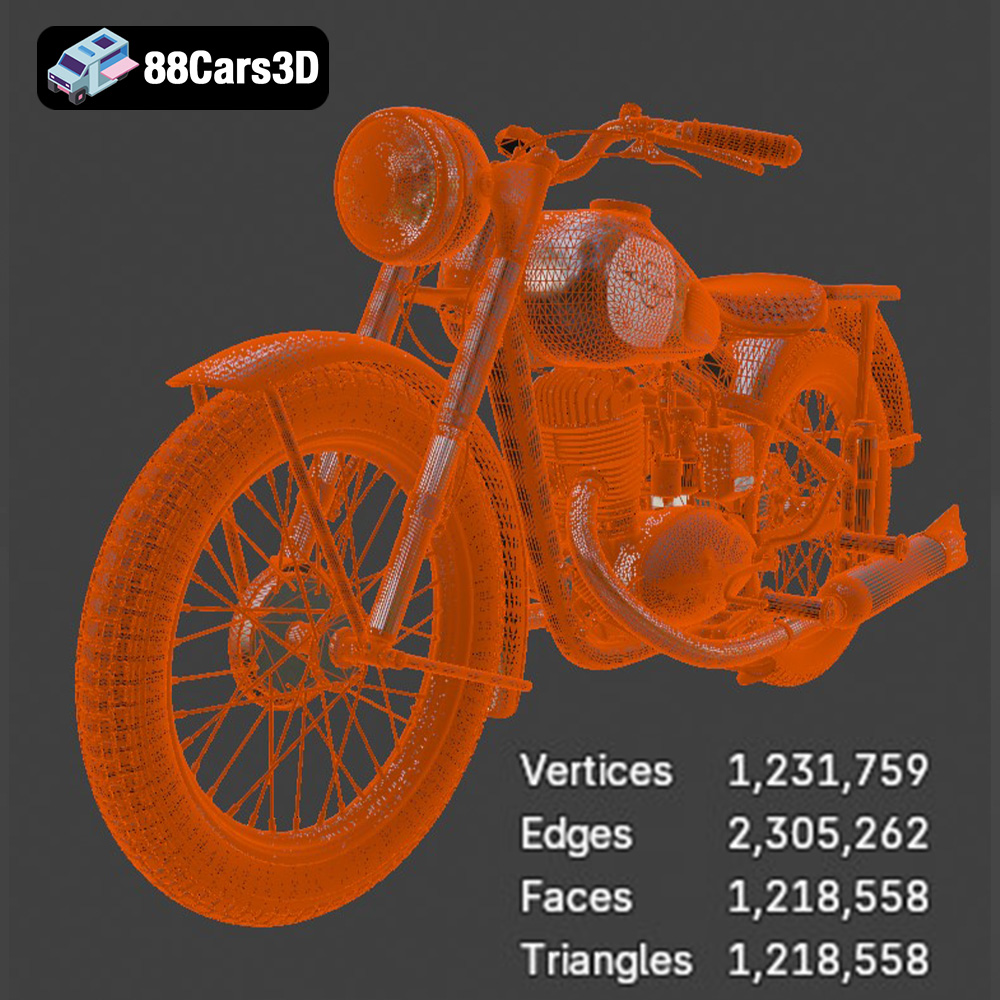
The versatility of the IZ-49 Classic Motorcycle 3D Model makes it an invaluable asset across a spectrum of professional applications. Its optimized mesh, clean topology, and multi-format availability ensure it integrates seamlessly into various creative pipelines, whether you’re focusing on hyper-realistic imagery or real-time interactive experiences. The meticulous design, available through 88cars3d.com, addresses the technical demands of high-end production.
For automotive rendering specialists and visualization artists, the IZ-49 model is a powerhouse. Its high level of detail and clean mesh structure allow for stunning, photorealistic renders. In software like 3ds Max (using the .max file) or Blender (with the .blend file), artists can leverage advanced rendering engines like V-Ray, Corona, Cycles, or Octane to create breathtaking imagery. Imagine the IZ-49 bathed in cinematic lighting, showcased in a retro street scene or a pristine museum environment. The real-world scale accuracy and proper pivot setup for components like wheels and steering mean that any animation—from a simple wheel spin to complex riding sequences—will appear believable and natural. Customization options, such as changing paint colors or adding weathering effects, further enhance its utility for advertising visuals, historical showcases, or film projects.
The game development industry demands assets that are both visually rich and performant. The IZ-49 excels as a game asset, thanks to its optimized polygon flow and efficient mesh. The .fbx and .unreal formats ensure direct compatibility with leading game engines like Unreal Engine and Unity. Developers can easily integrate this model into historical open-world games, retro driving simulations, or period-based environments. The proper pivot setup for independent wheel rotation and steering is a massive time-saver for animators, allowing for quick implementation of physics-based vehicle dynamics. Furthermore, the model’s clean structure facilitates the creation of Level of Detail (LOD) meshes, ensuring optimal performance across different platforms and graphical settings without sacrificing visual quality at close range.
With the rise of Augmented Reality (AR) and Virtual Reality (VR), immersive experiences are becoming increasingly prevalent. The IZ-49 model, particularly in the .glb format, is perfectly suited for these cutting-edge applications. Its optimized nature allows for efficient loading and display in interactive historical demonstrations, virtual museum tours, or even educational simulations. In AR, users could virtually place the IZ-49 in their living room, examining its details from every angle. In VR, it could be the centerpiece of an interactive historical exhibit, allowing users to “walk around” and inspect its mechanical intricacies. For simulation and education, the model’s accurate mechanical and structural details make it valuable for mechanical education, restoration planning, and vintage engineering visualization, providing a safe and accessible way to study complex machinery.
The beauty of a high-quality 3D model extends beyond digital screens; it can manifest as a tangible, physical object. The IZ-49 Classic Motorcycle 3D Model is explicitly designed with 3D printing in mind, making it an excellent candidate for creating collectible scale vintage motorcycle models. Transforming a digital asset into a physical one requires a specific understanding of geometry, printer capabilities, and post-processing techniques.
For successful 3D printing of the IZ-49, particularly as a detailed collectible, careful attention to print settings is paramount. The model’s manifold geometry ensures a watertight mesh, which is a fundamental requirement for most 3D printers. Recommended scales of 1:18, 1:12, 1:10, or 1:8 offer a good balance between detail and printability. For FDM (Fused Deposition Modeling) printers, a layer height of 0.08–0.16 mm is suggested to capture fine details, while a wall thickness of 1.5–2.5 mm ensures structural integrity. Infill settings of 15–25% provide adequate internal support without excessive material usage. Crucially, supports will be required for intricate parts like the exhaust pipe, handlebars, and fender edges to prevent sagging during printing. A recommended print orientation suggests angling the frame for optimal detail, with wheels printed separately to maximize surface quality and simplify support removal.
Achieving a museum-quality finish for your 3D printed IZ-49 model involves diligent post-processing. This typically includes sanding to smooth out layer lines and imperfections, followed by the application of a primer to create a uniform surface for paint. The customization options for paint are vast, allowing for classic military green, black, red, or cream finishes, matching the motorcycle’s historical variations. Applying a vintage matte paint finish will further enhance its authenticity. For those seeking even greater realism, optional weathering effects can be added, simulating years of use and exposure. This hands-on process transforms a printed plastic object into a meticulously crafted collectible, a testament to both digital design and physical craftsmanship.
A truly professional 3D model offers more than just accurate geometry; it provides a canvas for creative expression and project-specific adaptation. The IZ-49 Classic Motorcycle 3D Model is built with customization in mind, empowering artists to tailor its appearance and integration to perfectly fit their vision. Whether for automotive rendering, game asset development, or a unique visualization, the flexibility of this model is a significant advantage.
One of the most immediate customization options is the ability to change the paint color. While the IZ-49 historically appeared in utilitarian shades like military green, black, red, or classic cream, artists have the freedom to experiment. Imagine a vibrant, custom color scheme for a stylized project, or a rusted, forgotten look for a post-apocalyptic scene. Beyond color, the model allows for the addition of weathered or restored finishes. This can range from subtle dust and grime for a used look, to chipped paint and rust for an aged appearance, or a pristine, factory-new shine for a showroom display. Modifying the seat texture or material—from worn leather to fresh vinyl—further contributes to the narrative. These adjustments allow the IZ-49 to fit seamlessly into any visual context, from historical accuracy to imaginative fiction, ensuring it always serves the intended aesthetic.
Beyond the motorcycle itself, the IZ-49 model’s flexibility extends to its interaction with the environment. Artists can adjust lighting for studio or historical scene setups, creating dramatic shadows and highlights that emphasize its classic lines or integrate it naturally into a broader tableau. Whether it’s the harsh sunlight of a Soviet-era street or the soft glow of an exhibition hall, the model responds beautifully to varied lighting conditions. Furthermore, the option to add period-correct decals opens up endless possibilities for historical accuracy or fictional branding. These small details can significantly enhance storytelling, providing context and character. For a game environment, this means the IZ-49 can be placed as a static background element, a drivable vehicle, or even a narrative focal point, its appearance perfectly tuned to the specific demands of the project. The thoughtful design of this 3D motorcycle model truly empowers creators to push their artistic boundaries.
The world of 3D modeling thrives on detail, accuracy, and versatility. The IZ-49 Classic Motorcycle 3D Model stands as a prime example of an asset that delivers on all fronts. From its meticulously recreated historical aesthetics and mechanical fidelity to its robust technical advantages and broad application across rendering, game development, AR/VR, and 3D printing, it represents a valuable investment for any professional pipeline. The provision of multiple industry-standard file formats ensures seamless integration, offering unparalleled flexibility whether you’re working in Blender, 3ds Max, Unreal Engine, or preparing a model for physical fabrication.
This model is more than just polygons and textures; it’s a gateway to recreating history, crafting immersive experiences, and bringing intricate designs to life. For designers, animators, game developers, and collectors seeking high-quality 3D car models or vehicles that meet the highest technical standards while inspiring creative freedom, the IZ-49 offers an exceptional foundation. Explore the potential of this and many other premium assets available at 88cars3d.com, and elevate your projects with models that blend historical significance with modern 3D excellence.
The IZ-49 Classic Motorcycle 3D Model is a high-detail digital recreation of the iconic mid-20th century Soviet motorcycle known for its simplicity, durability, and post-war engineering heritage. Originally produced between 1951 and 1958, the IZ-49 became a symbol of reliable transportation across Eastern Europe. This 3D model accurately represents the vintage steel frame, rounded fuel tank, single-cylinder engine configuration, classic spoked wheels, exposed suspension components, rear luggage rack, and period-correct exhaust system. Designed with clean topology and real-world proportions, it is ideal for rendering, animation, historical visualization, simulation, and game development. Perfect for retro street scenes, museum displays, historical reconstructions, cinematic projects, and vintage motorcycle collections.
$25.9
.arvr
.blend
.classicmotorcycle
.fbx
.gameasset
.glb
.historicalvehicle
.iz49
.max
.motorcycle3dmodel
.obj
.ply
.rendering
.retrovehicle
.simulation
.sovietbike
.stl
.unreal
.vintagemotorcycle