Get 50% OFF All Premium 3D & STL Models!

Few vehicles command as much respect and admiration as the Land Rover Defender 110. A true titan of off-road prowess, this iconic SUV has traversed continents, conquered unforgiving landscapes, and served as a beacon of rugged reliability for decades. Its utilitarian design, robust engineering, and unmistakable silhouette make it a legend in automotive history. For 3D artists, game developers, architects, and visualization specialists, recreating such an icon with absolute fidelity is a challenge and an opportunity.
The quest for photorealistic automotive rendering and impeccably crafted game assets often begins with sourcing high-quality 3D car models. This is where a resource like the Land Rover Defender 110 3D Model from 88cars3d.com becomes an indispensable asset. This meticulously detailed digital recreation brings the legendary Defender 110 to life, ready for integration into a vast array of creative and professional applications. From cinematic visualizations to immersive AR/VR experiences and even precise 3D prints, this model offers a versatile foundation for projects that demand authenticity and technical excellence.
When working with 3D car models, understanding the nuances of various file formats is paramount. Each format serves a specific purpose, catering to different software ecosystems, project requirements, and output intentions. The Land Rover Defender 110 3D Model, available on 88cars3d.com, is provided in a comprehensive suite of formats, ensuring maximum compatibility and utility across diverse professional workflows. This breadth of options is a hallmark of high-quality game assets and automotive rendering resources.
The .blend format represents a fully editable Blender scene. For users deeply integrated into the Blender ecosystem, this is often the preferred choice. It typically includes the mesh, materials, textures, lighting, camera setups, and even animations within a single file. This allows for immediate manipulation and customization, leveraging Blender’s powerful modeling, sculpting, and rendering capabilities (like Cycles or Eevee). Artists can easily modify topology, adjust materials, or re-rig components, making it ideal for projects requiring deep customization or further development within Blender.
Autodesk’s .fbx (Filmbox) is arguably the most widely used interchange format in 3D production pipelines, particularly for game development. It efficiently stores 3D models, including mesh data, materials, textures, animations, and even rigging information. Its strength lies in its excellent compatibility with major 3D software like 3ds Max, Maya, Cinema 4D, and critically, game engines such as Unreal Engine and Unity. When importing the Defender 110 as an .fbx, developers can expect its separate wheels and steering components to retain their pivot information, making it ideal for animation and real-time vehicle physics.
The .obj (Wavefront Object) format is a venerable and highly compatible format, primarily used for storing 3D geometry (vertices, normals, texture coordinates, and faces). While it lacks support for animations or advanced material properties within the file itself (materials are typically defined in an accompanying .mtl file), its universality ensures that virtually any 3D software can open and interpret an .obj file. This makes it an excellent choice for cross-software compatibility, especially when the primary focus is on the raw mesh data, perfect for artists who prefer to rebuild materials in their target application.
.glb (GLB, Binary GL Transmission Format) is an increasingly important format, particularly optimized for AR, VR, and browser-based display. It’s a binary container for the glTF (GL Transmission Format), which is designed for efficient transmission and loading of 3D scenes and models by engines and applications. .glb files are “self-contained,” meaning they bundle all assets (geometry, materials, textures, animations) into a single file, making them highly portable and efficient for web viewers, augmented reality apps, and virtual reality experiences. The Land Rover Defender 110 3D Model in .glb format would be perfect for interactive online showrooms or mobile AR demonstrations.
The .stl (STereoLithography) format is the de facto standard for 3D printing. It describes only the surface geometry of a 3D object as a collection of unconnected triangles, without any color, texture, or material information. For designers looking to convert the digital Defender 110 into a physical scale model or collectible miniature, the .stl file is essential. The model’s clean topology ensures manifold geometry, a critical requirement for successful 3D printing, enabling precise physical replicas.
The .ply (Polygon File Format, or Stanford Triangle Format) is often used for storing 3D data from 3D scanners, CAD systems, and scientific applications. It can store a variety of data, including color, transparency, and sometimes even confidence values for each vertex or face. While less common for general artistic asset exchange compared to .fbx or .obj, its ability to store detailed mesh information makes it suitable for precision engineering, analysis, or specific visualization pipelines where robust mesh data is paramount.
The .unreal format, often referring to an asset specifically prepared or packaged for Unreal Engine, signifies an asset ready for direct integration. This isn’t a single universal file type like .fbx, but rather implies an asset that has been optimized, perhaps even with collision meshes, LODs (Levels of Detail), and a basic material setup, pre-configured for the Unreal Engine environment. This dramatically speeds up workflow for game developers, allowing for quick drag-and-drop implementation of the Defender 110 as a vehicle asset within a complex virtual world.
For users of Autodesk 3ds Max, the .max file contains the complete scene, including geometry, modifiers, materials, textures (linked externally), lights, cameras, and animation data. It offers the most comprehensive editing capabilities within 3ds Max, allowing animators and visualizers to fully leverage the software’s powerful rendering engines like V-Ray or Corona. The Defender 110 in .max format provides an excellent starting point for high-fidelity automotive rendering projects or complex animations.
The appeal of the Land Rover Defender 110 lies in its uncompromising, functional design. A high-quality 3D model must honor this legacy through meticulous attention to detail, from its signature stance to the smallest external hinge. The Land Rover Defender 110 3D Model excels in this regard, providing a foundation for truly authentic automotive rendering and simulation.
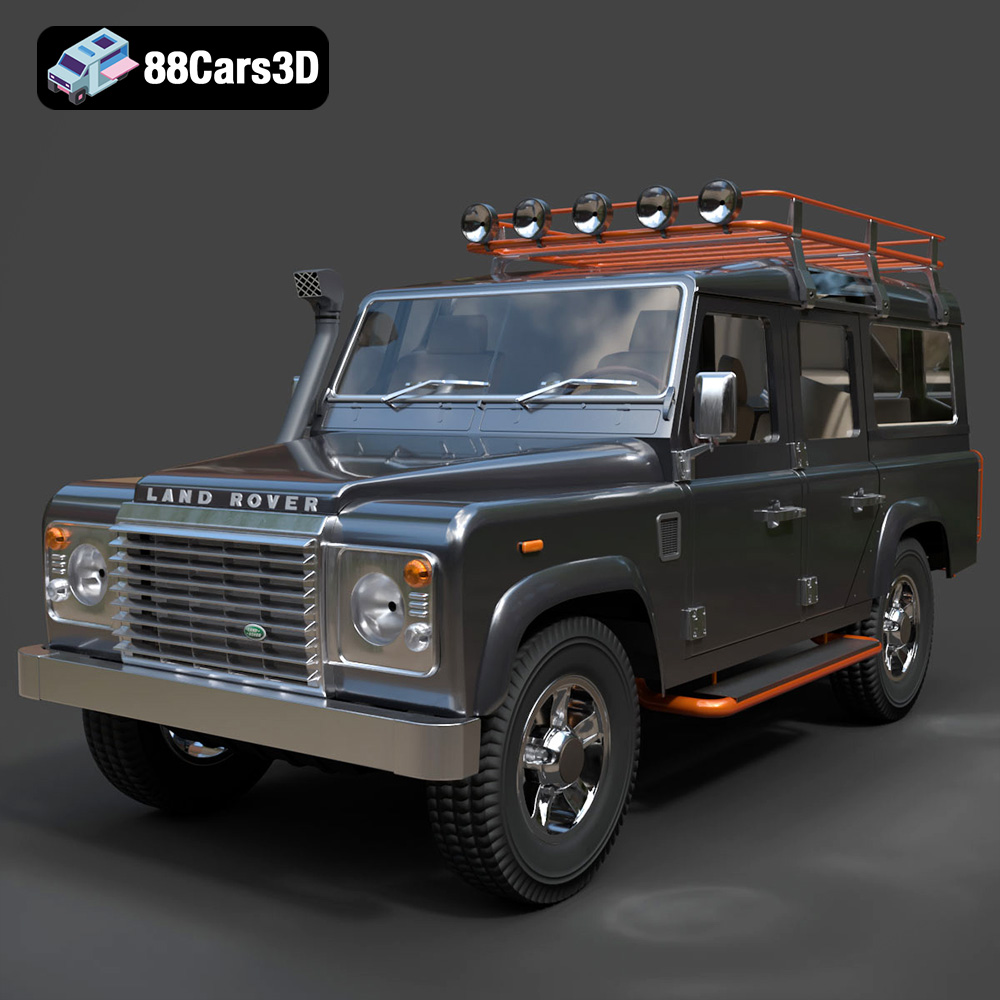
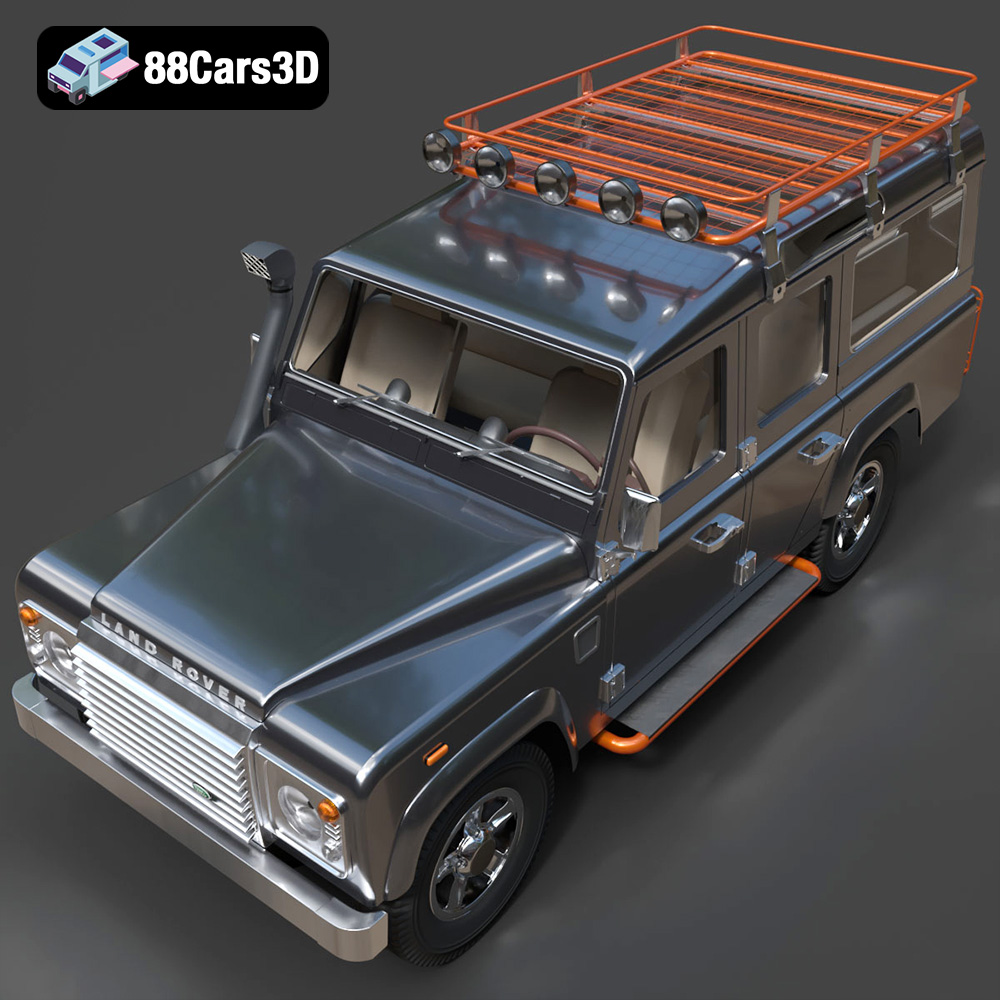
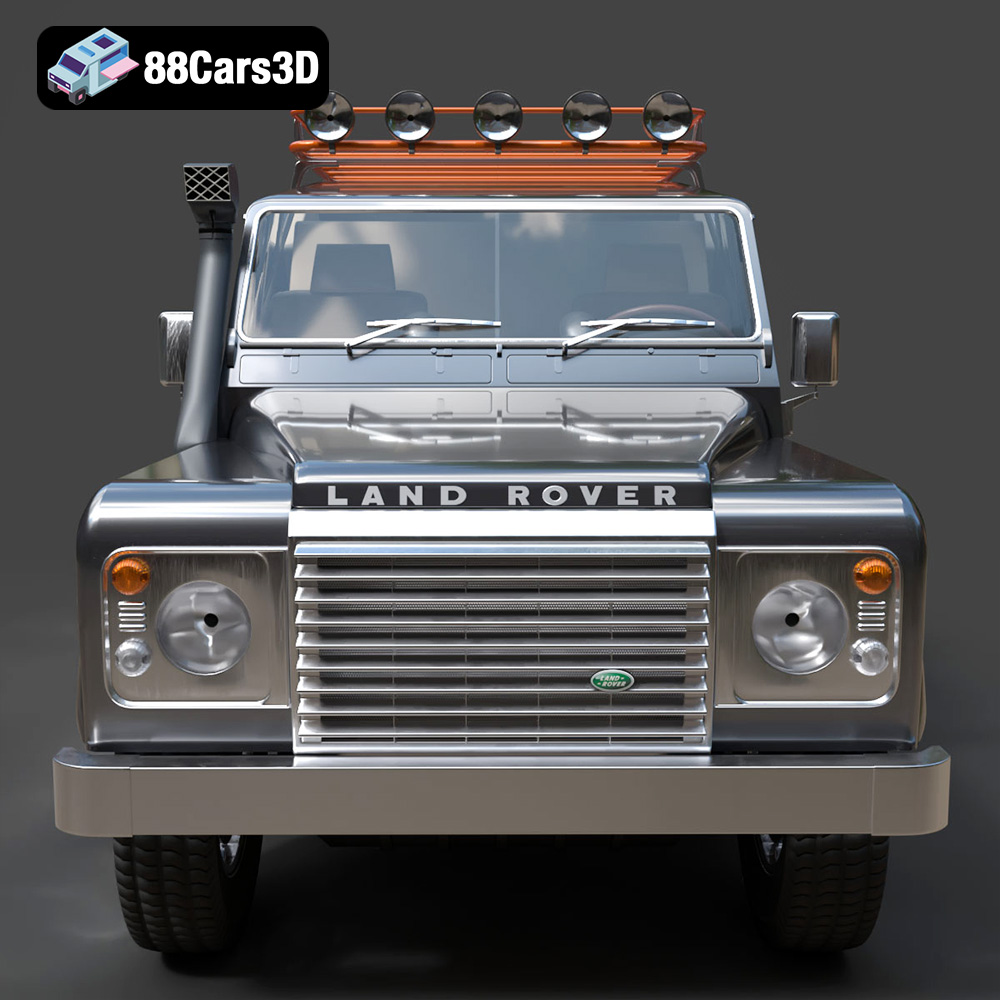
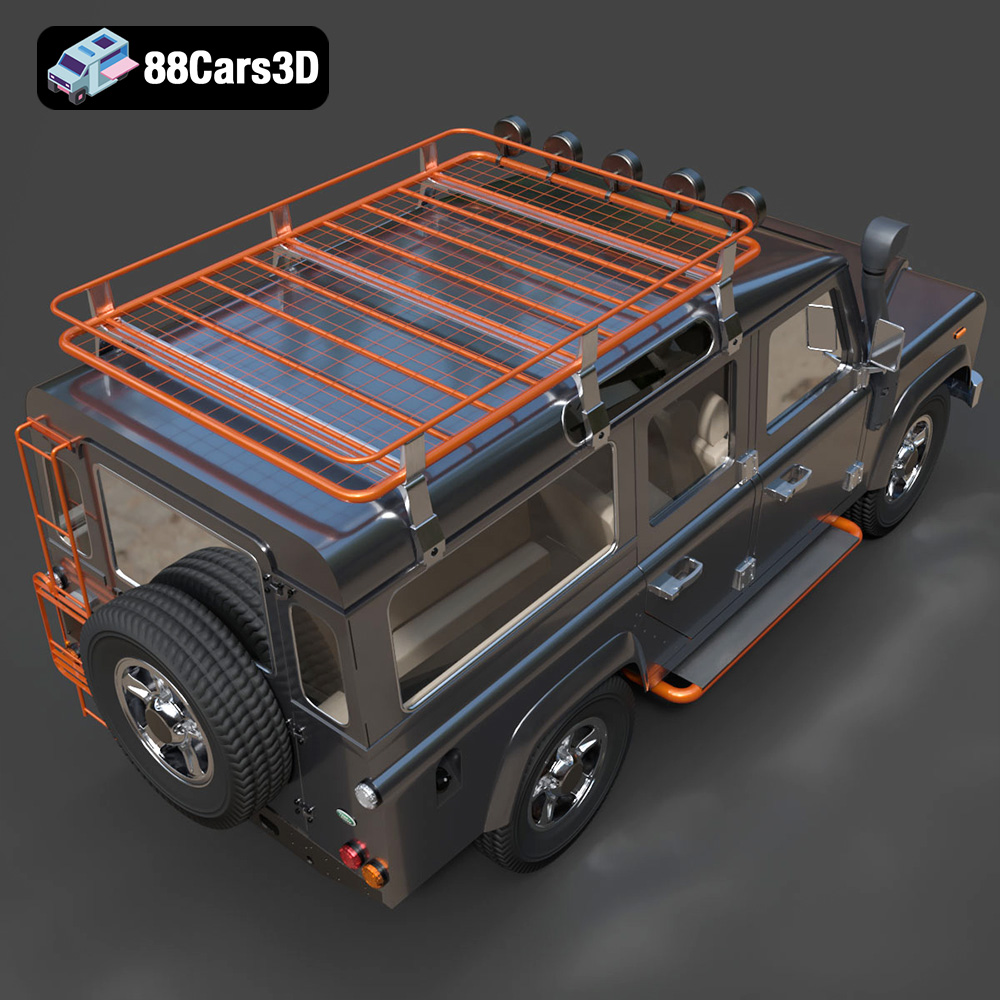
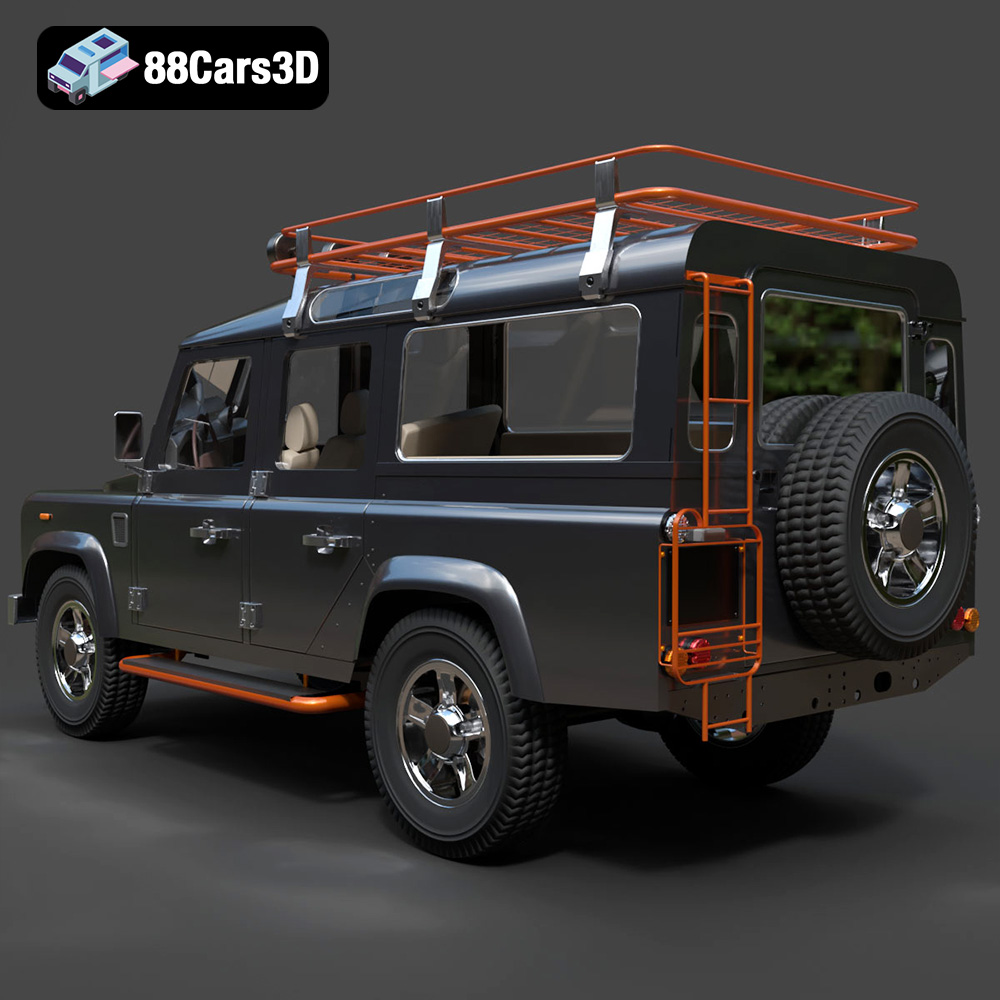
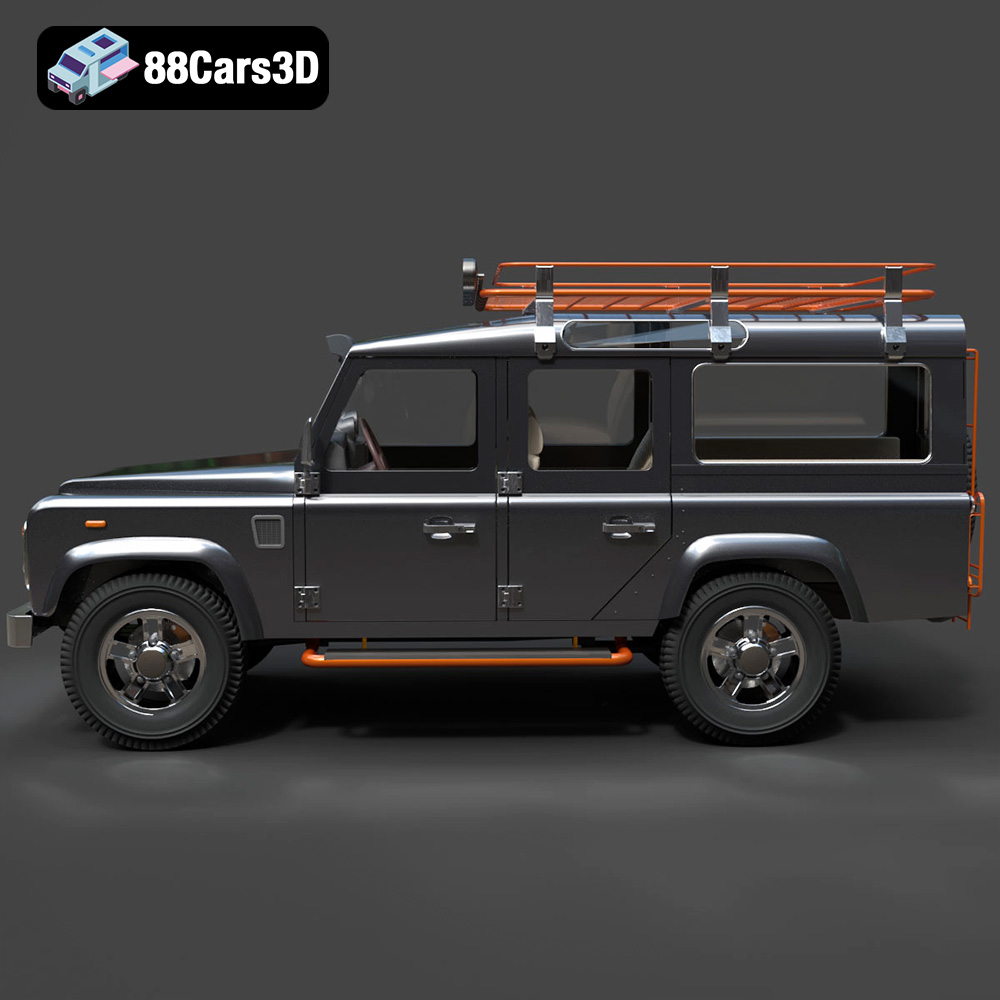
The exterior of this 3D car model is a testament to accurate digital craftsmanship. It meticulously captures the Defender 110’s iconic long-wheelbase body proportions, a crucial detail for visualizers seeking genuine representation. The characteristic boxy aluminum body panel styling, which gives the vehicle its robust appearance, is faithfully recreated. Key features like the detailed front grille, the classic round headlight assembly, and the rugged front and rear bumper designs are all present, contributing to the model’s overall realism. Furthermore, the model includes hood-mounted air vents, exposed external hinges, and a rear-mounted spare wheel—elements that are indispensable to the Defender’s identity. Even the roof configuration, offering options for a solid roof or being roof rack ready, and the detailed side steps with off-road tires, underscore the model’s dedication to capturing every aspect of the legendary SUV.
While the Defender is primarily known for its rugged exterior, its interior, though utilitarian, is an essential part of its character. The included interior features of this Land Rover Defender 110 3D Model are designed to support a range of applications, especially those requiring a first-person perspective or interior shots. A functional dashboard layout complete with an analog instrument cluster provides crucial visual information. The steering wheel and driver control configuration are accurately modeled, enabling realistic driving animations or interactive experiences. Front and rear seating layouts, along with the center console and gear shifter detailing, complete the interior, optimized specifically for real-time rendering. This attention to internal components makes the model exceptionally well-suited for game development and AR/VR environments where players or users might interact directly with the vehicle’s cabin.
The true value of a versatile 3D asset, like the Land Rover Defender 110, lies in its seamless integration into various professional pipelines. Whether you’re aiming for photorealistic marketing materials or highly optimized game assets, this model is engineered for efficiency and quality.
For high-end automotive rendering, software like 3ds Max and Blender are industry staples. Artists can import the .max or .blend files directly, leveraging the native scene setups. This allows for immediate engagement with the model’s clean topology and real-world scale accuracy. In 3ds Max, designers can utilize powerful rendering engines like V-Ray or Corona to set up advanced PBR (Physically Based Rendering) materials, simulate realistic paint shaders, and apply intricate texture maps for dirt, scratches, or wear. With HDRI (High Dynamic Range Imaging) lighting, stunning environmental reflections and realistic illumination can be achieved, perfect for outdoor advertising visuals or adventure-themed promotions. Similarly, Blender users can harness Cycles or Eevee, refining materials and creating dynamic animations, utilizing the separately modeled wheels and steering components for authentic movement. The proper pivot setup for steering and wheel rotation further streamlines the animation process, ensuring fluid and believable vehicle dynamics in any cinematic production.
In the realm of game development, efficiency and optimization are key. The Land Rover Defender 110 3D Model, provided in .fbx and potentially pre-optimized .unreal formats, is built to perform as robust game assets. Game developers can import the .fbx into Unreal Engine or Unity, where its optimized polygon flow ensures minimal performance overhead while maintaining visual fidelity. The clean mesh structure facilitates the creation of LODs (Levels of Detail), crucial for managing performance across different viewing distances. With properly set pivots for the wheels and steering, integrating the model into a vehicle blueprint for realistic driving mechanics, including suspension, traction, and collision physics, becomes a much smoother process. This makes it suitable for open-world exploration games, off-road simulators, and survival-based environments. For AR/VR experiences, the .glb format, or an optimized .fbx, allows for immersive expedition simulations and interactive vehicle demonstrations, bringing the legendary Defender into virtual and augmented realities with stunning detail.
The digital fidelity of the Land Rover Defender 110 3D Model extends beyond pixels, offering the exciting prospect of tangible, physical replicas through 3D printing. This capability transforms the model into a versatile tool for collectors, hobbyists, and professional prototypers alike.
The included .stl format is specifically engineered for 3D printing. For successful FDM (Fused Deposition Modeling) printing, adherence to the recommended settings is crucial. Scales such as 1:32, 1:24, 1:18, or 1:10 allow for varying levels of detail and print time. A layer height of 0.12–0.20 mm balances print speed with surface quality, while a wall thickness of 1.5–2.5 mm ensures structural integrity. Infill percentages of 20–35% provide a good compromise between strength and material usage. For intricate details like side mirrors, roof racks, and the rear-mounted spare wheel, support structures are required to prevent sagging during the printing process. Optimal print orientation, such as printing the body angled or upright, helps achieve the best surface detail, while printing wheels separately allows for cleaner results and easier assembly. For smaller scales or exceptionally fine details, resin printing (SLA/DLP) is often recommended, as it can achieve much finer layer heights and smoother finishes.
Once printed, the physical Land Rover Defender 110 model can be further enhanced through various post-processing techniques. This typically involves sanding to smooth out layer lines, followed by applying primer to prepare the surface for painting. Artists can then apply a matte or satin paint finish in classic Defender colors like classic green, sand, black, or custom tones, allowing for personalized scale off-road display models and collectible miniatures. Beyond basic finishing, the model offers extensive customization options. Enthusiasts can add roof racks, snorkels, or other off-road accessories to create a unique expedition vehicle. Modifying wheel and tire configurations, applying expedition decals or military markings, and even weathering effects like mud splashes or rust can elevate the realism of the physical model, transforming it into a personalized piece of automotive art. These capabilities make it an excellent resource for anyone looking to bring a piece of automotive history to life on their desk or diorama.
In any professional 3D pipeline, the underlying technical quality of a model is as important as its visual appeal. The Land Rover Defender 110 3D Model exemplifies the technical advantages that make it a superior choice for complex projects, whether for rendering or real-time applications. This attention to technical detail ensures that the model is not just beautiful, but also highly functional and efficient.
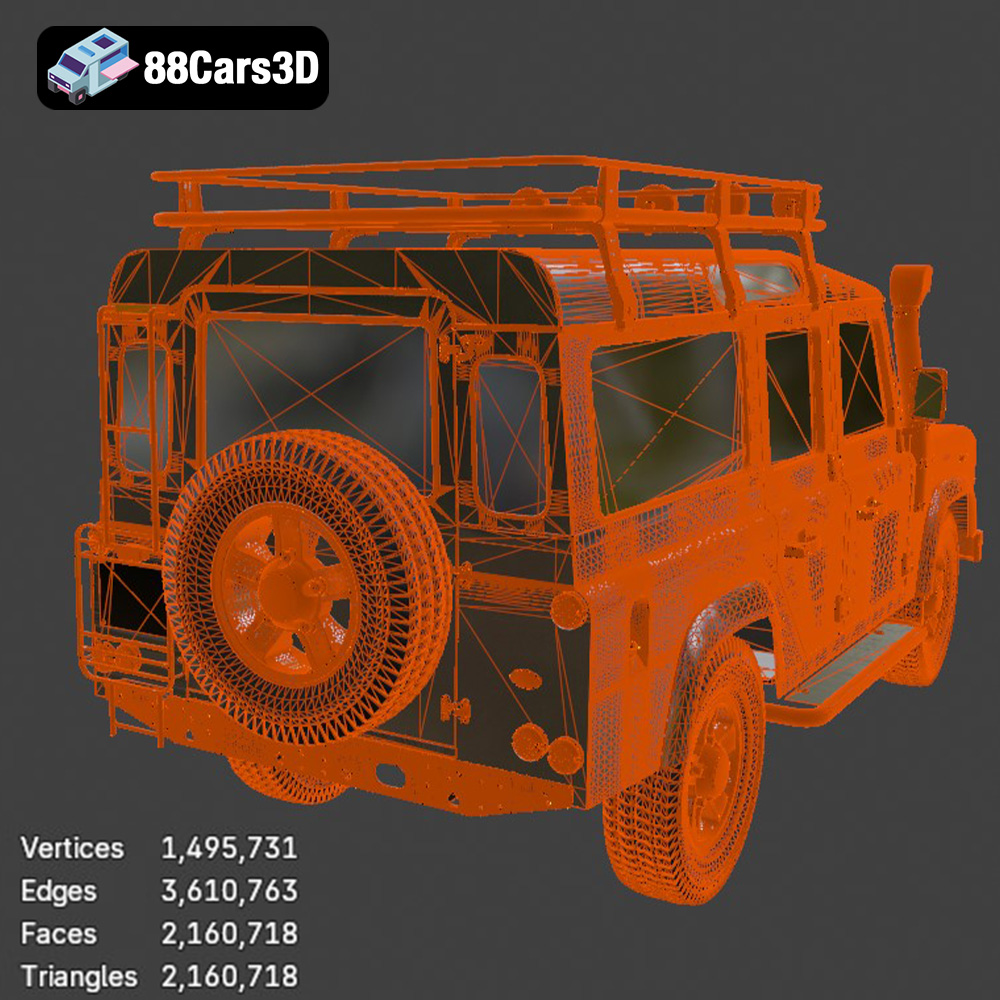
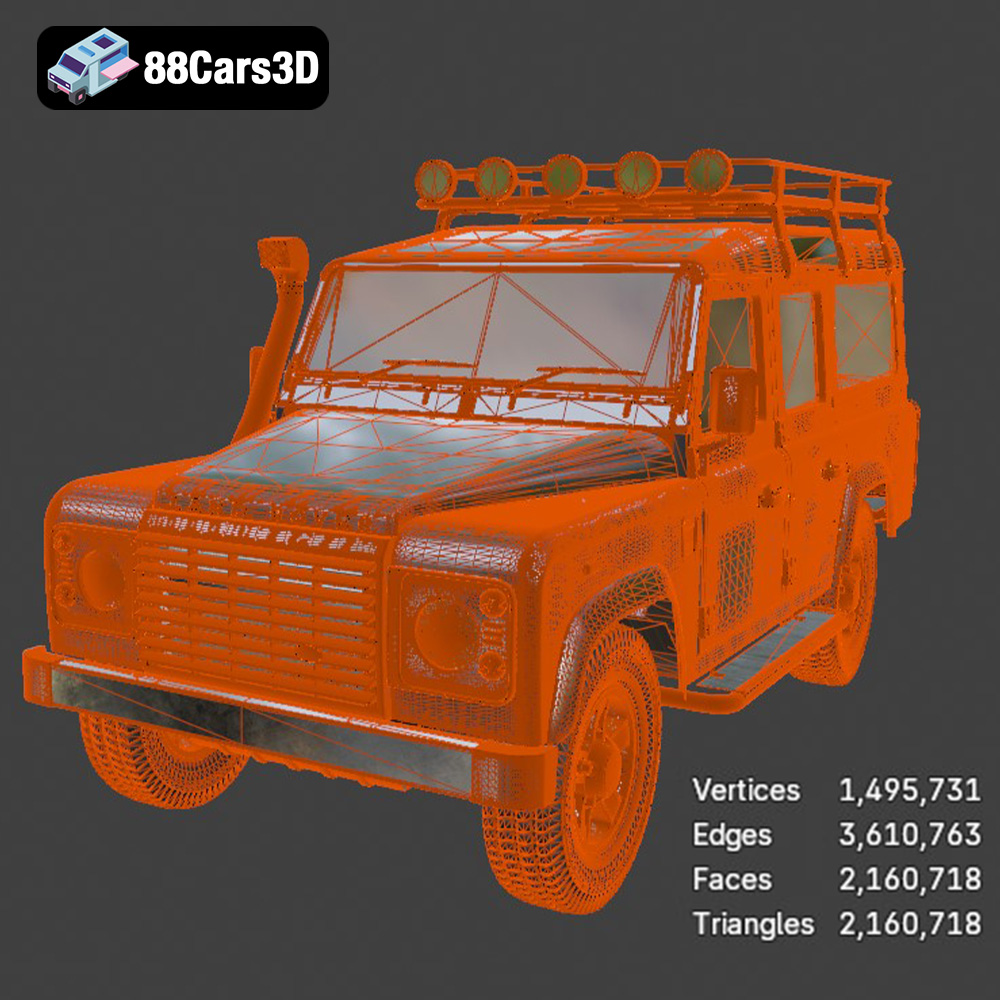
One of the standout technical advantages of this model is its clean and well-organized mesh structure. This refers to the orderly arrangement of polygons (triangles and quads) that form the surface of the model. A clean mesh is crucial for several reasons: it facilitates smooth deformation during animation, prevents shading artifacts in rendering, and significantly aids in optimization for game engines. The model features optimized polygon flow, meaning the polygons are distributed intelligently, providing detail where needed without unnecessary density in flat areas. This balance ensures high visual fidelity without excessive poly counts that could bog down real-time performance. For developers creating game assets or interactive experiences, this efficient mesh structure translates directly into faster load times, smoother frame rates, and easier UV unwrapping for texturing, a true mark of a professional 3D car model.
Accuracy in scale is non-negotiable for realistic visualizations and simulations. The Land Rover Defender 110 3D Model is built with real-world scale accuracy, ensuring that it seamlessly integrates into scenes alongside other assets or architectural models without requiring tedious adjustments. This consistency is vital for maintaining realism in large-scale environments, from open-world games to urban planning visualizations. Equally important is the proper pivot setup for animated components. The model features correct pivot points for the steering and wheel rotation. This seemingly small detail is critical for animators and game developers, as it allows for immediate and accurate vehicle motion without having to manually adjust pivot origins. Realistic wheel spin, steering movements, and suspension articulation become straightforward to implement, saving valuable production time and ensuring the authenticity of any vehicle simulation or animation.
The versatility of a high-quality 3D model like the Land Rover Defender 110 means it finds application across a wide spectrum of industries and creative endeavors. Its iconic status and rugged design make it a compelling subject for numerous scenarios.
The Land Rover Defender 110 3D Model is an ideal asset for automotive marketing and high-end visualization projects. Imagine a striking visual for an outdoor advertising campaign, showcasing the Defender conquering a desert dune, or a cinematic production where the vehicle embarks on a global expedition. Its accurate proportions and detailed features allow for photorealistic renders that can enhance brand messaging and promotional content. Virtual showrooms can be created where potential buyers can explore the Defender’s exterior and interior in exquisite detail. For architectural visualization, the model can populate remote landscapes or serve as a rugged companion to a modern cabin design, adding context and realism to the scene. The customization options, such as changing body color or adding accessories, enable marketers to tailor the visual narrative to specific campaigns, from showcasing a classic green expedition vehicle to a sleek, modern black urban cruiser.
Beyond traditional rendering, the Land Rover Defender 110 3D Model is perfectly suited for immersive technologies and practical training. For AR/VR, developers can create interactive expedition simulations, allowing users to virtually drive the Defender through challenging terrains or explore its features up close in an augmented reality overlay. These interactive vehicle demonstrations offer a unique way to engage audiences and educate them about the vehicle’s capabilities. In the realm of simulation and training, the model can be integrated into advanced terrain-driving simulators for off-road training scenarios, utility vehicle operation modeling, or even emergency service vehicle training. Its accurate physics setup and animatable components make it a robust foundation for building realistic driving dynamics. Whether it’s a game developer building an open-world adventure or an engineer developing a virtual prototype, the Defender 110 model provides a reliable and detailed asset for a myriad of applications.
The Land Rover Defender 110 stands as a testament to timeless engineering and adventure. Bringing such an icon into the digital realm requires a 3D model that matches its legendary status in quality and versatility. The Land Rover Defender 110 3D Model from 88cars3d.com delivers precisely that, offering unparalleled detail, technical precision, and broad compatibility across all major professional pipelines.
From the intricate exterior details perfect for high-fidelity automotive rendering to its optimized mesh for smooth performance as game assets, and even its robust suitability for 3D printing, this model is a comprehensive solution. The extensive range of included file formats – .blend, .fbx, .obj, .glb, .stl, .ply, .unreal, and .max – ensures that whether you’re working in film, gaming, AR/VR, or physical prototyping, you have the right tool at your fingertips. For creators seeking to infuse their projects with the rugged spirit and authentic presence of this legendary 4×4, this model is an indispensable investment. Explore the possibilities and elevate your digital creations with this exceptional 3D car model, available now at 88cars3d.com.
The Land Rover Defender 110 3D Model is a high-detail digital recreation of the legendary long-wheelbase off-road SUV known for its rugged durability, utilitarian design, and global expedition heritage. Built to conquer extreme terrains, the Defender 110 has become an icon of adventure, military service, agriculture, and exploration worldwide. This 3D model accurately captures the boxy body structure, flat hood design, signature front grille, round headlamps, reinforced bumpers, extended wheelbase proportions, roof configuration, exposed hinges, and rear-mounted spare wheel. Designed with clean topology and real-world scale accuracy, it is ideal for rendering, animation, simulation, game development, and AR/VR environments. Perfect for off-road trails, safari landscapes, military scenes, rural environments, expedition visuals, and cinematic productions. Includes .blend, .fbx, .obj, .glb, .stl, .ply, .unreal, and .max formats for rendering, simulation, AR/VR, game development, and 3D printing.
$29.99
.4×4
.arvr
.automotive
.blend
.car3dmodel
.defender110
.expeditionvehicle
.fbx
.gameasset
.glb
.landrover
.max
.obj
.offroadvehicle
.ply
.rendering
.simulation
.stl
.unreal
.utilityvehicle
SUV