Get 50% OFF All Premium 3D & STL Models!

In the dynamic world of 3D visualization, automotive design, and interactive media, the quality of a 3D car model can make or break a project. From breathtaking photorealistic renders that define a luxury brand’s marketing campaign to seamlessly integrated game assets that populate expansive virtual worlds, the demand for meticulously crafted vehicles is ever-present. Professionals across industries require models that are not only visually stunning but also technically robust, optimized for diverse applications, and readily adaptable to specific project needs.
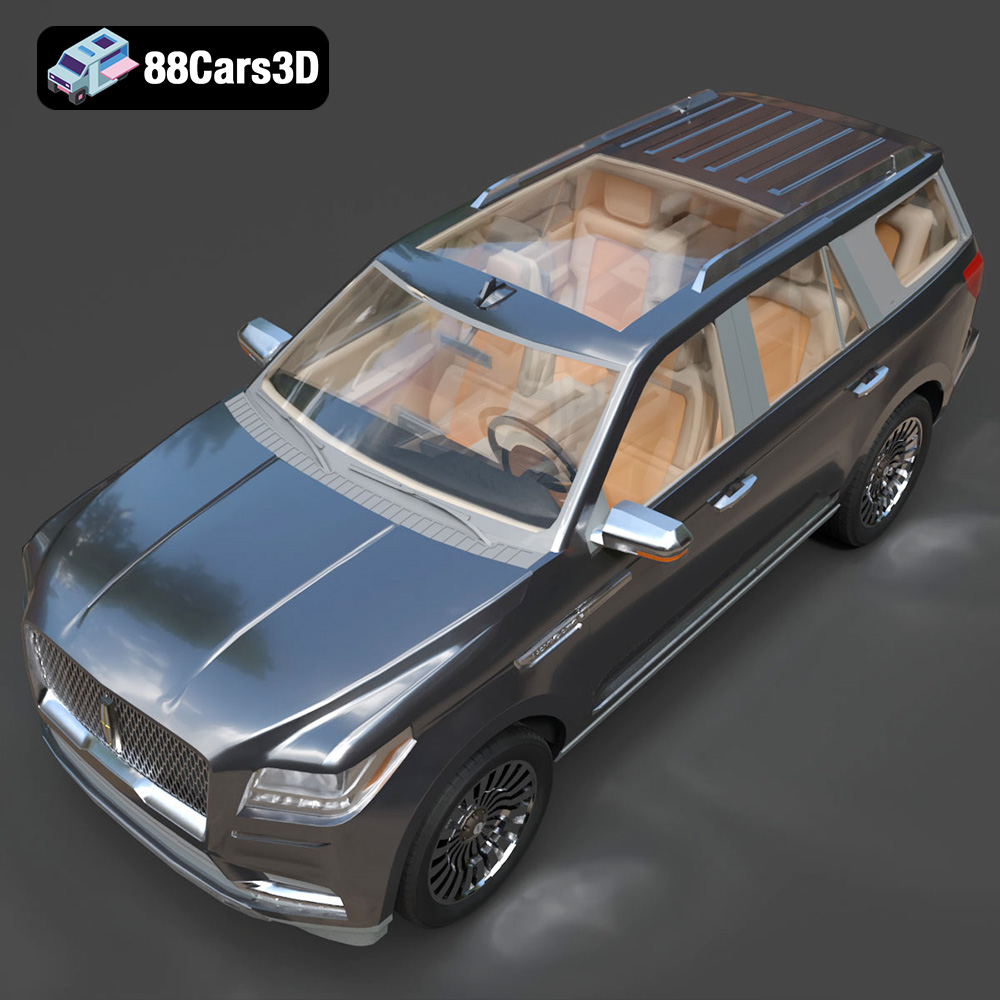
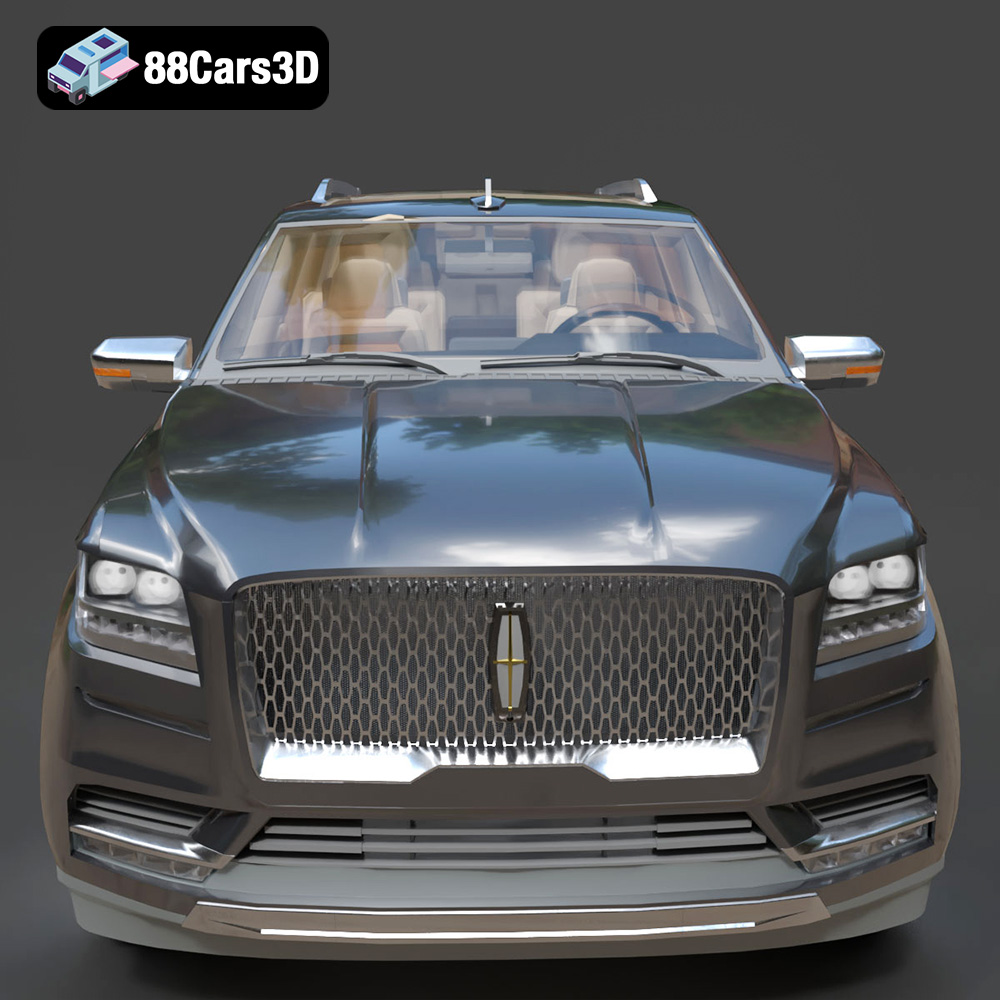
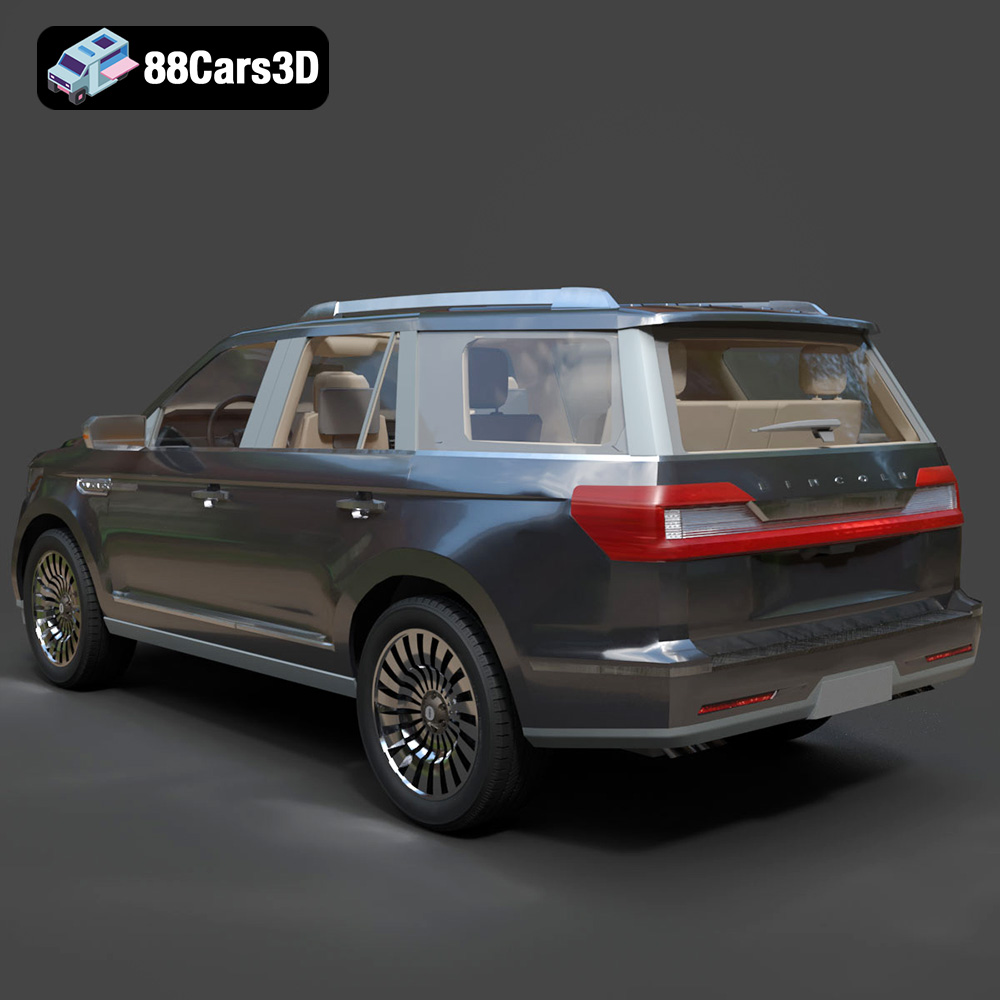
Today, we’re taking a comprehensive look at what elevates a good 3D car model to an exceptional one, exploring the technical intricacies and creative possibilities it unlocks. We’ll delve into critical aspects like file formats, rendering techniques, game engine optimization, and even 3D printing. As our guiding example, we will frequently refer to the Lincoln Navigator 2018 3D Model, a premium asset available at 88cars3d.com that perfectly embodies the blend of aesthetic detail and technical precision required by today’s leading artists and developers. This particular model, a high-detail digital recreation of the full-size luxury SUV, serves as an excellent case study for understanding the multi-faceted demands of modern 3D production pipelines.
The choice of a 3D model file format is far from trivial; it dictates compatibility, feature preservation, and workflow efficiency across different software and platforms. A truly versatile 3D car model, like the Lincoln Navigator 2018, offers a multitude of formats to ensure seamless integration into any professional pipeline. Let’s break down the essential formats included and their specific applications.
The .blend format is Blender’s native file type, encapsulating an entire scene with all its components: mesh geometry, materials, textures, lighting, cameras, animations, physics simulations, and even custom scripts. For artists deeply integrated into the Blender ecosystem, this format is invaluable. It offers full editability, allowing for complete control over every aspect of the model. When working with the Lincoln Navigator 2018 3D Model in .blend, users gain access to its clean topology, optimized geometry, and expertly set up materials, providing a flexible foundation for custom renders, animations, or further modifications within Blender.
.fbx (Filmbox) is arguably the most widely adopted interchange format in the 3D industry, particularly popular for its robust support for mesh data, materials, textures, animations, and skeletal structures. It is the go-to format for transferring assets between different 3D software packages (e.g., from 3ds Max to Maya or Blender) and is universally embraced by game engines like Unreal Engine and Unity. Its efficiency in handling complex scene data makes it ideal for real-time pipelines. For the Lincoln Navigator 2018, the .fbx version ensures that all its detailed features, separate wheels and steering components for animation, and material assignments translate accurately, making it immediately usable for game development or cinematic sequences.
The .obj (Wavefront Object) format is a simple, universal geometry format that has been a staple in 3D for decades. It primarily stores vertex positions, UV coordinates, normals, and material definitions (via an accompanying .mtl file). While it doesn’t support animation or complex scene data like .fbx, its simplicity ensures maximum cross-software compatibility. If you need a clean mesh of the Lincoln Navigator 2018 to import into virtually any 3D application for basic rendering or sculpting, .obj is an excellent choice due to its stability and widespread support.
.glb (GL Transmission Format Binary) is the binary version of glTF, a modern, open-standard format designed for efficient transmission and loading of 3D scenes and models by applications. It’s quickly becoming the standard for web-based 3D, AR, and VR experiences due to its compact size and ability to embed all textures and animations directly within a single file. For interactive virtual showrooms or browser-based displays of the Lincoln Navigator 2018, the .glb format offers optimal performance and visual fidelity, making it perfect for immersive demonstrations and digital marketing.
.stl (Stereolithography) is the most common file format for 3D printing. It represents a 3D model as a series of connected triangles, defining only the surface geometry without color, texture, or other properties. While simpler, this format is critical for manufacturing physical objects. The inclusion of an .stl version for the Lincoln Navigator 2018 3D Model directly caters to creators looking to produce collectible SUV scale models or display miniatures, ensuring the mesh is manifold and watertight for successful printing.
The .ply (Polygon File Format) is another popular format for storing 3D data, particularly useful for scanned data, CAD applications, and scientific visualization. It can store a wider range of properties than .obj, including color, transparency, and even normals per vertex or per face. While less common for everyday artistic exchange, .ply provides a high-precision mesh representation suitable for engineering analysis, precise measurement, or specialized manufacturing workflows involving the Lincoln Navigator 2018.
A native .unreal asset format signifies that the model is specifically prepared for direct import and optimal performance within Unreal Engine. This often implies pre-configured materials, LODs (Levels of Detail), and potentially collision meshes, minimizing setup time for game developers. The Lincoln Navigator 2018 3D Model, available in this format, ensures a smooth transition into high-fidelity real-time environments, saving countless hours for developers building driving simulations or open-world games.
Finally, the .max format is the native project file for Autodesk 3ds Max, a leading software for 3D modeling, animation, and rendering. Like .blend, it retains all scene information, including specific modifiers, rigging, lighting, and V-Ray or Corona Renderer setups. For professionals whose pipelines are centered around 3ds Max, having the Lincoln Navigator 2018 in its native .max format is crucial for full customizability and leveraging powerful 3ds Max features for high-end rendering and animation, such as adjusting the pivot setup for steering and wheel rotation.
The availability of the Lincoln Navigator 2018 3D Model in such a comprehensive array of formats underscores its professional-grade nature. This strategic approach by 88cars3d.com ensures that users have the right tool for any job, from high-fidelity cinematic rendering to interactive real-time applications and physical prototyping.
Automotive rendering is an art form, demanding a deep understanding of light, materials, and composition to transform a digital mesh into a photorealistic image. The Lincoln Navigator 2018 3D Model provides an exceptional foundation for such endeavors, with its high-detail geometry and clean topology. Whether you’re using 3ds Max with V-Ray or Corona, or Blender with Cycles, the core principles remain the same: simulating reality with meticulous attention to detail.
At the heart of any photorealistic render are Physically Based Rendering (PBR) materials. These materials simulate how light interacts with surfaces in the real world, based on properties like albedo (color), roughness, metallicness, and normal maps. For the Lincoln Navigator 2018, its premium finish requires precise PBR material setup. The sleek body paint needs a metallic-flake clear coat effect, achieved by carefully balancing metallic and roughness values, along with a slight anisotropic reflection. Chrome accents demand high metallic values and minimal roughness, while the transparent glass materials for windows and headlights require accurate transmission and refraction properties. Even the intricate stitching detail on the interior seats benefits from subtle normal maps to add tactile realism without excessive geometry.
Lighting is paramount in automotive rendering. It defines the mood, highlights design lines, and brings out the nuances of materials. Professional setups often involve a combination of HDRI (High Dynamic Range Image) environment maps and targeted area lights. An HDRI provides realistic global illumination and reflections, perfectly mimicking outdoor scenes or studio environments. For example, using an HDRI of a luxury showroom can instantly give the Navigator a sophisticated ambiance. Supplementing this with area lights allows artists to sculpt reflections along the car’s body, emphasize the signature LED lighting, and create dramatic shadows that underscore its bold presence. The separated lighting components for day, night, or showroom scenes in the Lincoln Navigator 2018 3D Model facilitate these complex lighting arrangements, enabling diverse visual narratives.
Once the raw render is complete, post-production in software like Adobe Photoshop or Affinity Photo is crucial for adding the final layer of polish. This stage involves color grading to enhance mood, adding depth of field for cinematic effect, subtle chromatic aberration, bloom for lights, and sharpening details. Exposure adjustments, contrast tweaks, and even minor paint touch-ups can elevate a good render to an extraordinary one. The goal is to make the Lincoln Navigator 2018 image not just look real, but feel real, evoking the luxury and performance it represents. This holistic approach, from initial model to final pixel, is what sets professional automotive rendering apart.
Real-time applications such as game development, AR, and VR demand a different kind of optimization compared to offline rendering. Here, performance is king, requiring careful management of polygon counts, texture memory, and overall asset complexity. The Lincoln Navigator 2018 3D Model is designed with this balance in mind, making it an excellent candidate for interactive experiences where frame rates are critical.
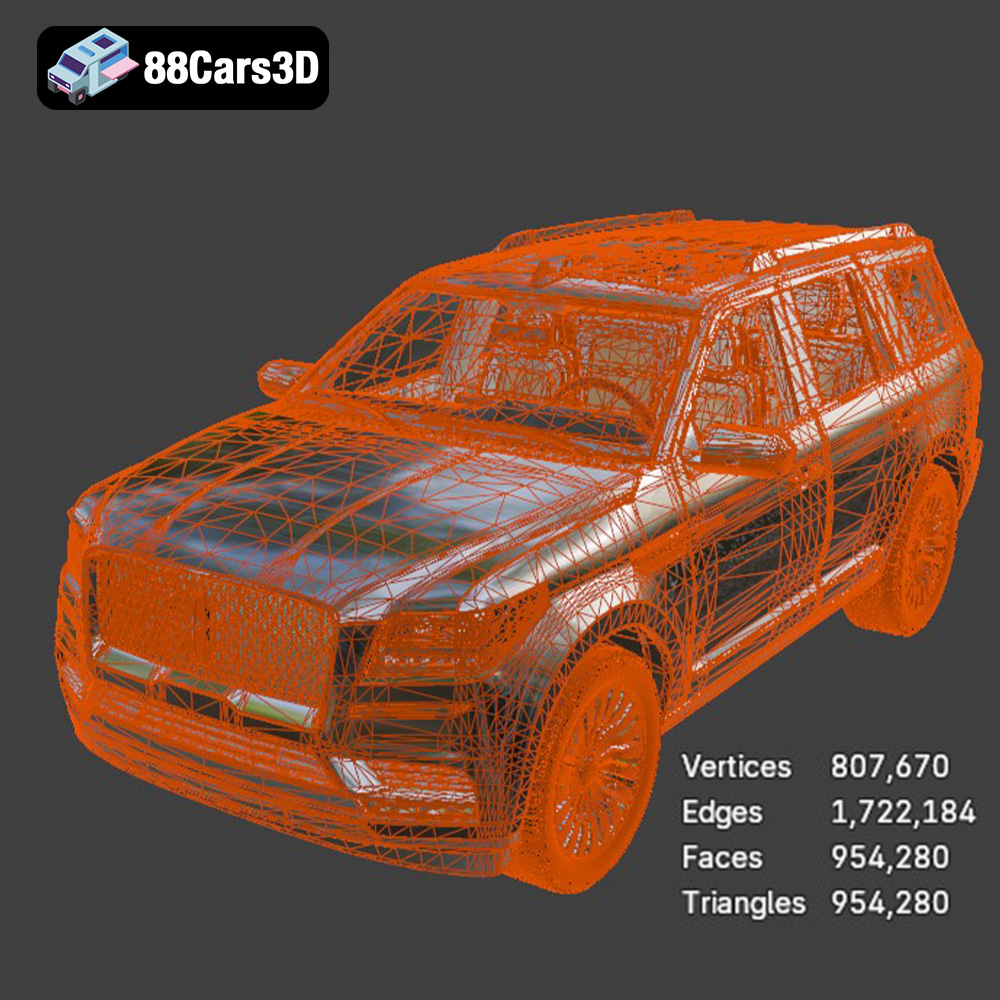
High-detail models like the Lincoln Navigator 2018 often start with a significant poly count to capture every curve and panel gap. However, displaying millions of polygons for every vehicle in a game, especially distant ones, is impractical. This is where Levels of Detail (LODs) become essential. LODs are simplified versions of the model that automatically switch based on the camera’s distance. A distant Navigator might use a low-poly version (e.g., 20,000 tris), while a close-up view might utilize the full-detail model (e.g., 200,000+ tris). This optimization ensures visual quality up close while maintaining smooth performance at a distance. The Lincoln Navigator 2018’s optimized geometry and polygon flow for both performance and realism demonstrate an understanding of these requirements.
Integrating 3D car models into game engines like Unreal Engine or Unity involves more than just importing the mesh. It requires proper UV mapping for textures, material setup that translates efficiently to the engine’s PBR pipeline, and often the creation of collision meshes. The Lincoln Navigator 2018’s clean UVs allow for texture mapping without distortion, while its robust material setup ensures that the luxury finish appears correctly in engine. For driving simulations, accurate pivot points for the wheels and steering components are vital for realistic animation, a feature explicitly designed into this model. The .unreal and .fbx formats are specifically tailored to facilitate this seamless integration, providing an engine-ready asset right out of the box.
AR (Augmented Reality) and VR (Virtual Reality) push the boundaries of real-time rendering, demanding even tighter optimization due to the need for stereoscopic rendering at high frame rates. Whether it’s an interactive virtual showroom where users can explore the Navigator’s interior or an AR app that places the SUV directly in their driveway, the model must be lightweight yet visually convincing. The .glb format, with its embedded textures and compact size, is particularly suited for these platforms. The Lincoln Navigator 2018 3D Model’s optimized geometry is ideal for delivering these immersive experiences, allowing users to interact with a highly detailed representation of the luxury SUV in a truly engaging way.
Beyond digital screens, 3D models increasingly bridge the gap to the physical world through 3D printing. This application transforms virtual assets into tangible objects, serving purposes from collectible miniatures to functional prototypes. The Lincoln Navigator 2018 3D Model, notably available in .stl format, excels in this domain, providing a solid foundation for physical fabrication.
Creating a physical scale model of the Lincoln Navigator 2018 allows enthusiasts, designers, and marketers to hold a piece of digital craftsmanship in their hands. The .stl format provided is specifically designed for additive manufacturing processes. This process converts the complex digital geometry into a series of printable layers. Producing a miniature car requires a carefully prepared mesh that is “manifold” (watertight, without gaps or self-intersections), ensuring a successful print. The base geometry of the Lincoln Navigator 2018 is ideally suited for this conversion, offering a clean, robust mesh that translates well to a physical form.
Successful 3D printing isn’t just about the file format; it’s also about understanding the print settings. The recommended scales for the Lincoln Navigator 2018 are 1:32, 1:24, 1:18, or 1:14, providing options for various display sizes. For optimal detail and surface finish, specific layer heights are recommended: 0.10–0.18 mm for FDM printers, and even finer settings like 0.04–0.12 mm for resin (SLA/DLP) printers, especially for smaller scale details like headlights and intricate grille patterns. Wall thickness (1.5–2.5 mm) and infill (15–25%) recommendations ensure structural integrity without excessive material usage. Crucially, supports are required for delicate features like mirrors, roof rails, and underbody details, preventing sagging during printing. The suggested print orientation—body angled for smooth finish, wheels printed separately—is a testament to expert knowledge, minimizing visible layer lines and facilitating easier assembly and post-processing.
While collectible scale models are a popular application, 3D printed automotive models also serve critical roles in prototyping and engineering. Designers can rapidly iterate on physical forms, testing proportions and ergonomics long before committing to expensive tooling. The .ply format, with its capacity for precision mesh data, can also be instrumental here for more technical analysis, allowing engineers to examine surface curvature or perform basic flow simulations. For example, a 3D print of the Navigator could be used for wind tunnel testing at a small scale, or to assess panel fit and finish in a tactile way. This versatility underscores the professional utility of high-quality 3D car models from sources like 88cars3d.com, extending their value far beyond mere visual appeal.
A truly valuable 3D asset provides not just a static representation, but a dynamic canvas for creative exploration. The Lincoln Navigator 2018 3D Model exemplifies this, offering extensive customization options that allow artists and designers to tailor the vehicle to their exact project vision, enhancing its utility across diverse applications.
The ability to customize a 3D model is a cornerstone of professional workflows. The Lincoln Navigator 2018 3D Model is designed to be highly adaptable, allowing users to effortlessly change body color and chrome accents to match specific brand palettes or client requirements. Imagine rendering the Navigator in a unique metallic blue for a bespoke advertising campaign, or applying custom license plates and branding for a realistic urban scene in a game. The flexibility to modify wheel style and finish, or even adjust ride height and suspension stance, provides unparalleled creative control. This level of detail empowers artists to create unique visual narratives and present the SUV in countless scenarios, from sleek city driving to rugged off-road adventures, all without needing to remodel core components.
For cinematic projects, driving simulations, or interactive walkthroughs, the ability to animate the vehicle is critical. The Lincoln Navigator 2018 3D Model stands out with its separate wheels and steering components, meticulously set up with proper pivots for smooth rotation. This technical advantage means animators can quickly bring the SUV to life, simulating realistic driving maneuvers, showcasing suspension dynamics, or even demonstrating turning radius. The potential for configuring lighting for day, night, or showroom scenes further enhances animation possibilities, allowing for dynamic time-of-day transitions or dramatic reveal sequences, highlighting the Navigator’s signature LED lighting in various ambient conditions.
The inherent versatility of this 3D car model from 88cars3d.com means it seamlessly transitions between different project types. It’s ideal for luxury automotive marketing, generating high-impact visuals for dealership presentations or promotional media. In game development, it can populate open-world driving games or city simulators as a premium vehicle. For AR/VR, it transforms into an immersive virtual showroom, offering interactive demonstrations. Its robust structure also makes it useful for simulation and training, such as automotive visualization or driving experience simulations. By providing a clean, organized mesh with real-world scale accuracy, the Lincoln Navigator 2018 3D Model ensures that whether you’re rendering a still image, animating a sequence, or creating an interactive experience, the core asset provides a reliable and adaptable foundation.
The journey from a digital concept to a fully realized 3D asset capable of serving multiple professional applications is complex, demanding expertise in modeling, texturing, optimization, and platform-specific preparation. The Lincoln Navigator 2018 3D Model stands as a testament to this intricate process, offering a meticulously detailed and technically sound representation of a modern luxury SUV. From its precise exterior and interior features to its optimized geometry and extensive file format compatibility, it exemplifies what a professional-grade 3D car model should be.
Whether your goal is to produce stunning automotive renders, integrate high-quality game assets into a real-time engine, create immersive AR/VR experiences, or even 3D print a tangible scale model, this asset provides the foundation for success. The comprehensive suite of file formats – from .blend and .max for full editability to .fbx and .unreal for engine readiness, and .stl for manufacturing – ensures that artists and developers have the tools they need for any pipeline. The careful attention to detail, clean topology, and well-thought-out customization options make the Lincoln Navigator 2018 3D Model an invaluable resource.
For professionals seeking exceptional 3D car models that deliver on both aesthetic appeal and technical performance, 88cars3d.com offers a curated selection of assets designed to meet the highest industry standards. Investing in quality assets like the Lincoln Navigator 2018 3D Model means investing in efficiency, versatility, and the ultimate creative freedom for your projects.
The Lincoln Navigator 2018 3D Model is a high-detail digital recreation of the full-size luxury SUV known for its bold presence, refined design, and premium comfort. Combining powerful performance with upscale craftsmanship, the 2018 Navigator represents modern American luxury in the SUV segment. This 3D model accurately captures the commanding front grille, signature LED lighting, sculpted body lines, chrome trim accents, large alloy wheels, and spacious cabin layout. Designed with clean topology and real-world scale accuracy, it is ideal for rendering, animation, automotive visualization, game development, and AR/VR experiences. Perfect for urban environments, luxury vehicle showcases, commercial presentations, cinematic projects, and driving simulations. 3D Print Setting: • Recommended scale: 1:24 / 1:32 / 1:43 • Layer height: 0.04–0.12 mm (Resin printing recommended for the smaller scale details like the Thor’s Hammer headlights) • Wall thickness: 1.2–2.0 mm • Infill: 15–25% • Supports: Required for side mirrors, wheel arches, and the subtle rear roof spoiler • Print orientation: Body printed angled for a smooth surface finish; wheels printed separately • Post-processing: Sanding, primer, and modern Volvo factory colors (like Sage Green, Glacier Silver, or Crystal White) paired with a gloss black roof.3D Printing, STL, 3D Printable, Miniature Car, Scale Model, FDM Ready, Resin Print, SLA, Digital Manufacture, Car Prototype, Automotive Collectible, 3D Print Model, Physical Asset, Tabletop Display, Manifold Geometry.
$29.99
.2018suv
.americanSUV
.arvr
.automotive
.blend
.car3dmodel
.fbx
.gameasset
.glb
.lincoln
.luxurysuv
.max
.navigator
.obj
.ply
.rendering
.simulation
.stl
.unreal