Get 50% OFF All Premium 3D & STL Models!

The allure of a custom-built vehicle, distinct from the factory floor, resonates deeply with automotive enthusiasts worldwide. This passion for personalization extends vividly into the digital realm, where 3D artists transform ordinary car models into unique, high-performance machines or futuristic concepts. Whether for hyper-realistic renders, immersive game environments, cutting-edge AR/VR applications, or even physical 3D prints, the demand for custom 3D car models is soaring. Crafting a custom body kit, from aggressive wide-body fender flares to aerodynamic spoilers and bespoke bumpers, requires a meticulous blend of artistic vision and advanced technical proficiency in 3D modeling.
This comprehensive guide will take you through the intricate process of creating custom body kits and modifications for 3D car models. We’ll delve into essential techniques from initial reference gathering and precise polygonal modeling to advanced UV mapping, realistic PBR material creation, and robust optimization for various platforms. You’ll learn how to maintain impeccable topology, create stunning visual fidelity, and ensure your custom creations are ready for rendering, game engines, or even the 3D printer. Prepare to elevate your automotive 3D artistry and bring your most ambitious designs to life, starting with a solid foundation from high-quality base models, often found on platforms like 88cars3d.com.
Every successful custom body kit begins not with a single polygon, but with thorough research and meticulous preparation. The goal is to ensure your modifications seamlessly integrate with the existing vehicle, enhancing its aesthetics and performance characteristics without compromising its underlying structure. This foundational stage is critical for achieving a professional, cohesive look.
The first step involves gathering an extensive collection of reference images. This includes real-world photographs of similar custom builds, official design sketches, blueprints (if available), and even inspiration from concept art. High-resolution imagery from multiple angles—front, side, rear, top, and various ¾ views—is indispensable. Pay close attention to how surfaces flow, where hard creases meet soft curves, and the overall proportions of the modifications you envision. For instance, if you’re designing a wide-body kit, study how fender flares integrate with the existing wheel arches and door lines on actual vehicles. Understanding the mechanics of how these parts attach and function on a real car will greatly inform your 3D modeling decisions, making your digital creations more believable.
Once your visual research is complete, the next crucial step is acquiring and preparing a high-quality base 3D car model. Sourcing a well-modeled base car, for example, from an online marketplace such as 88cars3d.com, provides an excellent starting point, saving countless hours of initial modeling. These pre-existing models often feature clean topology, accurate scale, and proper UV mapping, which are essential for seamless modification. After importing your chosen base model into your 3D software (e.g., 3ds Max, Blender, Maya), conduct a thorough inspection. Verify that the model’s scale is correct (e.g., 1 unit = 1 meter) to prevent issues with lighting, physics, or 3D printing later. Check for consistent polygon density and ensure there are no glaring topological errors or non-manifold geometry that could hinder your custom additions. Any existing parts that your custom kit will replace, such as stock bumpers, side skirts, or spoilers, should be carefully detached or removed from the base mesh, leaving clean edges for your new components to connect to. Establishing proper scene units and setting accurate pivot points for individual car parts will further streamline your modeling workflow.
The heart of creating custom body kits lies in the precise execution of 3D modeling techniques. Achieving the complex, flowing surfaces and sharp details characteristic of automotive design demands a deep understanding of polygonal modeling principles, often augmented by digital sculpting for organic shapes. The choice of technique often depends on the specific part and its desired aesthetic.
For most hard-surface automotive components, Subdivision Surface Modeling is paramount. This technique involves starting with a low-polygon cage and applying a subdivision modifier (like TurboSmooth in 3ds Max or Subdivision Surface in Blender/Maya) to smooth the mesh, resulting in high-detail, flowing surfaces. It’s crucial to maintain impeccable topology throughout this process. Good topology, characterized by all-quad geometry and well-defined edge loops, is vital for ensuring smooth reflections, predictable deformation, and clean UV mapping later on. For instance, when creating a new bumper, you might begin with a simple box-modeled shape, then refine it by adding edge loops to define creases and curves, constantly previewing the subdivision result. For more organic shapes, such as complex aerodynamic vents or heavily stylized scoops, combining polygonal modeling with digital sculpting tools can be highly effective. You could block out the basic shape with polygons, then use sculpting brushes to refine contours and add intricate details, before retopologizing the sculpted mesh for a cleaner, quad-based result suitable for subdivision.
In the world of automotive 3D, edge loops are the circulatory system of your mesh. They define the direction of surface flow and are essential for controlling creases and deformations. When modeling custom parts, prioritize creating edge loops that follow the natural contours of the vehicle and the intended design lines of your body kit. Avoid triangles (tris) and N-gons (polygons with more than four sides) as much as possible on deformable or smoothly shaded surfaces, as they can lead to pinching, shading artifacts, and issues with subdivision surfaces. While tris are acceptable in flat, non-deforming areas, an all-quad workflow is generally considered best practice for automotive models. Poles, where five or more edges meet, should be carefully managed and placed in less visible, flat areas to prevent surface irregularities. For creating sharp creases on a subdivided mesh, add two or three closely spaced edge loops along the desired edge, allowing the subdivision algorithm to round off the intervening geometry while maintaining a crisp transition.
Achieving perfect surface continuity (G1, G2, G3) and flawless curvature is the hallmark of professional automotive modeling. This means ensuring that your custom parts seamlessly blend with the base vehicle’s existing panels, without noticeable seams, bumps, or dips. Tools like “Edge Slide” in Blender or “Flow Connect” in 3ds Max are invaluable for adjusting edge loops to follow complex curves without distorting the overall mesh. Using surface snapping can help ensure new geometry adheres precisely to the contours of the base model. Regular visual checks, especially with a matcap shader or by observing reflections, are critical for spotting subtle imperfections in surface flow. For Blender users, the official Blender 4.4 documentation provides detailed insights into powerful modeling tools such as “Loop Cut and Slide” (which allows you to add new edge loops and slide them along existing geometry), “Extrude Manifold” (for extruding into existing geometry while maintaining manifold meshes), and “Knife Project” (for cutting complex shapes onto a surface), all of which are essential for precise custom body kit creation. You can find comprehensive guides on these and other modeling tools at https://docs.blender.org/manual/en/4.4/, enabling you to master their application for intricate automotive details. When considering polygon budgets, a custom body kit for a high-end render might comfortably sit at 100,000-200,000 polygons, while a game-ready asset might require significant optimization, targeting 15,000-50,000 polygons depending on the game’s requirements and LOD strategy.
UV mapping is often considered one of the more challenging aspects of 3D modeling, but for custom automotive parts, it’s absolutely critical. Improper UVs lead to stretched, distorted, or misaligned textures, severely compromising the realism of your custom body kit. The goal is to create a clean, organized, and proportionally accurate 2D representation of your 3D mesh, allowing for precise texture application.
For complex automotive surfaces, strategic UV mapping is paramount. The first principle is intelligent seam placement. Seams should be hidden wherever possible, aligned with natural panel breaks, hard edges, or areas that are less visible, such as the underside of a spoiler or the inner lip of a fender flare. Avoid placing seams across prominent, smooth surfaces where they would break up reflections or distort texture flow. For example, when UV mapping a custom hood scoop, you might place seams along its interior edges and where it meets the main hood panel, minimizing their visual impact. For large, relatively flat surfaces like a door panel, planar projection is often a good starting point, followed by careful cutting and unfolding to minimize distortion.
Maximizing the efficiency of your UV layout is crucial for optimizing texture resolution and overall performance. The UV islands should be packed tightly within the 0-1 UV space, minimizing wasted space while preventing overlaps that would cause texturing issues. A common technique is to use a checkerboard texture while unwrapping and arranging UVs; this immediately reveals any stretching or distortion, allowing you to adjust your seams and unfolding until the squares appear uniform across the model. Aim for consistent texel density across all parts of your custom kit and, ideally, across the entire vehicle, ensuring that all surfaces receive an equal amount of texture detail. For extremely large or detailed parts, such as an entire wide-body kit that spans multiple panels, UDIM workflows (multiple UV tiles, e.g., UV 1001, 1002, 1003) become invaluable. UDIMs allow you to assign multiple high-resolution textures to different parts of a single mesh, ensuring incredible detail without hitting single-texture resolution limits. This is particularly useful for film or high-end visualization projects where every surface detail matters. Common texture resolutions for high-quality automotive models range from 2K (2048×2048) for smaller details to 4K (4096×4096) or even 8K (8192×8192) for primary body panels and intricate custom parts.
Even with careful planning, overlaps and distortions can occur. Overlapping UV islands prevent unique texture information from being painted onto those areas, leading to visual errors. Distortion, where the 2D UV island doesn’t accurately represent the 3D surface area, causes textures to stretch or compress. Most 3D software (Blender’s UV Editor, 3ds Max’s Unwrap UVW modifier, Maya’s UV Editor) offers tools to detect and fix these issues. “Relax” tools can help evenly distribute UV vertices, while “Pack UVs” functions attempt to optimize the layout. For complex shapes, consider breaking down the mesh into smaller, more manageable UV islands, and then strategically stitching them back together if necessary. Always perform a final check with your chosen texturing software to ensure the UVs behave as expected, providing a clean canvas for your PBR materials.
Once your custom body kit is meticulously modeled and UV mapped, the next critical step is to imbue it with life through realistic Physically Based Rendering (PBR) materials. PBR shaders accurately simulate how light interacts with surfaces in the real world, leading to highly convincing and consistent results across different lighting environments. Understanding the core principles of PBR and building robust shading networks are essential for achieving photorealism.
At the heart of PBR are a set of standardized texture maps: Albedo/Base Color (the diffuse color without lighting information), Metallic (defines whether a surface is metallic or dielectric), Roughness (controls the micro-surface detail affecting light scattering, from perfectly smooth to extremely matte), Normal Map (adds fine surface detail without increasing polygon count), and Ambient Occlusion (simulates self-shadowing in crevices). For automotive materials, these maps are combined in intricate ways to replicate complex real-world properties. Creating authentic car paint, for instance, is a multi-layered process. It typically involves a base coat (Albedo), metallic flakes (often driven by a subtle Normal map and controlled Roughness/Metallic values), and a clear coat layer that provides the signature gloss and reflections. This clear coat can also have a subtle Normal map to simulate the “orange peel” effect found on real car paint. Carbon fiber materials require careful attention to the weave pattern, often achieved with a detailed Normal or Bump map, combined with anisotropic reflections that change based on viewing angle, giving it that characteristic shimmering effect. Rubber, glass, and various plastic components each demand specific PBR values and map combinations to accurately convey their unique optical properties.
Modern 3D software utilizes node-based shaders, offering incredible flexibility and power for material creation. In Blender (Cycles/Eevee), 3ds Max (Corona/V-Ray), or Maya (Arnold), you connect various nodes—texture nodes, procedural nodes, math nodes, mix nodes—to build complex shading networks. For example, a car paint shader might involve mixing a metallic flake texture with a base color, then blending it with a clear coat material that has its own roughness and normal properties. This modular approach allows for fine-tuning every aspect of the material, from subtle variations in metallic flake density to the exact amount of clear coat orange peel. Using high-quality source textures and understanding how each PBR map influences the final look is key. For example, a low Roughness value will result in a highly reflective surface, while a high Roughness value will make the surface appear matte.
For game-ready assets or performance optimization in visualization, baking textures from a high-polygon model onto a low-polygon version is an indispensable technique. This process captures intricate details such as normal maps (transferring fine surface details like bolts or seams), ambient occlusion maps (simulating contact shadows), and curvature maps (highlighting edges and crevices). Software like Substance Painter excels at this, allowing artists to generate a full suite of PBR textures from a high-poly sculpt or model, which can then be applied to a game-optimized low-poly mesh. Beyond baking, texture painting directly onto the 3D model allows for adding localized wear, dirt, scratches, and other imperfections that enhance realism. A subtle dust layer along the lower edges of a custom side skirt or minor stone chips on a bumper can make a significant difference in grounding the model in reality. Investing time in mastering PBR workflows ensures your custom body kits look stunning and consistent under any lighting conditions.
With your custom body kit modeled, UV mapped, and textured with realistic PBR materials, the next exciting stage is to showcase it through stunning renders and visualizations. This involves meticulous scene setup, advanced lighting techniques, and careful camera work to capture the aesthetic essence and technical brilliance of your design. The rendering process is where all your hard work culminates into a photorealistic image or animation.
Setting up your scene for photorealistic renders begins with the environment and lighting. HDRI (High Dynamic Range Image) maps are the backbone of modern automotive rendering, providing both accurate global illumination and realistic reflections. A high-quality studio HDRI will give you precise, controlled reflections that highlight the contours and material properties of your car, while an outdoor HDRI (e.g., a sunny street, an overcast forest) will immerse your vehicle in a believable natural environment. Beyond HDRIs, strategic placement of virtual studio lights (area lights, mesh lights, spot lights) can further emphasize specific details, highlight body lines, or create dramatic effects. For example, a long, narrow area light positioned above and to the side of the car can create a beautiful, continuous highlight along a fender, revealing its perfect curvature. For outdoor scenes, supplementing the HDRI with directional lights (simulating the sun) and subtle fill lights can enhance realism and depth.
The camera setup is equally crucial for cinematic results. Experiment with various angles—low-angle shots to emphasize power, dynamic ¾ views, or close-ups to showcase intricate details of your custom kit. Pay attention to traditional photography principles: rule of thirds, leading lines, and negative space. Utilize depth of field (DOF) to draw the viewer’s eye to specific parts of the car, blurring the background and foreground subtly. Adjusting the f-stop and focal length will dramatically change the perspective and aesthetic of your shot. For render settings, striking a balance between quality and render time is key. Modern renderers like Corona, V-Ray (3ds Max), Cycles, Eevee (Blender), and Arnold (Maya) offer a wealth of parameters. Focus on sample counts (for ray tracing), global illumination bounces, and denoising algorithms. Higher samples reduce noise but increase render time, so use denoising efficiently to achieve clean results faster. Understanding the capabilities of your chosen render engine—Cycles and Arnold are path tracers known for realism, Eevee is a real-time renderer for quick previews—will guide your approach.
The rendering process doesn’t end when the image is saved. Post-processing and compositing in software like Adobe Photoshop or After Effects are essential for elevating your raw renders to publication-ready masterpieces. This involves color grading to set the mood, adjusting contrast and saturation, adding subtle bloom or lens flares for realism, and sharpening details. You might also composite multiple render passes (e.g., reflection pass, shadow pass, diffuse pass) to gain finer control over the final image. Subtle chromatic aberration, vignette effects, and even realistic motion blur (for animated sequences) can significantly enhance the visual impact. The consistent and accurate rendering of reflections is particularly vital for automotive models, as they reveal the quality of your surface modeling and material work. Any imperfections in topology or material setup will be immediately apparent in the reflections, making continuous iteration and refinement a core part of achieving truly professional results. By mastering these rendering and visualization techniques, you can effectively communicate the impact and beauty of your custom body kit designs.
For custom body kits to shine in interactive environments like video games, AR/VR experiences, or real-time configurators, they must be meticulously optimized for performance without sacrificing visual fidelity. This involves a strategic approach to polygon management, texture optimization, and understanding the specific requirements of game engines like Unity and Unreal Engine.
The primary consideration for game assets is polygon count. While high-poly models are suitable for pre-rendered cinematics or static visualizations, real-time engines demand efficient meshes. This often means creating a low-polygon version of your custom body kit, onto which high-resolution details (baked from your detailed model, as discussed in the PBR section) are applied via normal maps. Techniques like manual re-topology or automated polygon reduction/decimation tools can be used, but always prioritize maintaining the crucial silhouette and hard edges of your design. A common strategy involves creating Level of Detail (LODs). This means generating multiple versions of your body kit model, each with progressively lower polygon counts. The game engine then dynamically switches between these LODs based on the camera’s distance from the object, ensuring high detail up close and optimized performance for distant objects. For instance, an LOD0 might be 20,000 polygons for a custom bumper, while LOD1 could be 5,000, and LOD2 just 1,000 polygons.
Beyond visual meshes, creating simplified collision meshes is crucial for interactive realism. These invisible meshes dictate how the game engine handles physics interactions, such as impacts or determining when a player character is standing on a surface. Collision meshes should be as simple as possible—often composed of basic primitives or a low-poly hull—to minimize computation, yet accurate enough to prevent visual glitches or players falling through the geometry. For automotive body kits, ensure collision meshes accurately represent the exterior contours to allow for realistic driving physics. Another key optimization technique is draw call optimization. Each distinct material, mesh, or texture often generates a “draw call,” which instructs the GPU to render it. Too many draw calls can severely impact performance. Combining multiple custom body kit meshes into a single mesh where appropriate, and using texture atlasing (packing multiple smaller textures into one larger texture map), can significantly reduce draw calls. This means fewer materials for the engine to process, leading to smoother frame rates. Platforms like 88cars3d.com often provide models that are already optimized or designed with game-ready formats in mind.
For exporting your custom body kit to game engines, standard file formats include FBX (versatile, supports meshes, materials, animations), GLB (a binary version of glTF, excellent for web and AR applications), and USDZ (Apple’s format for AR applications). When importing into Unity or Unreal Engine, ensure your PBR materials are set up correctly, typically using the Metallic/Roughness workflow. For AR/VR experiences, optimization is even more stringent. AR/VR environments demand extremely low polygon counts and highly optimized textures to maintain high frame rates and prevent motion sickness. Mobile AR apps, in particular, require mobile-friendly texture resolutions (e.g., 512×512 or 1024×1024) and very limited draw calls. Understanding these constraints and applying advanced optimization strategies is key to creating immersive and performant interactive automotive experiences.
While digital visualization is powerful, the ability to bring your custom body kit designs into the physical world through 3D printing offers a tangible and exciting dimension. Whether for creating scale models, custom automotive prototypes, or intricate collectibles, preparing your 3D model for additive manufacturing requires a distinct set of considerations to ensure a successful print.
The most critical aspect of 3D printing preparation is ensuring your mesh is “watertight” and free of errors. Unlike rendering, where minor mesh imperfections might go unnoticed, a 3D printer needs a perfectly manifold mesh—meaning every edge is shared by exactly two faces, with no holes, inverted normals, or self-intersecting geometry. This ensures the printer knows precisely what is “inside” and “outside” the object. Software like Netfabb, Meshmixer, or even Blender’s built-in 3D Print Toolbox (accessible via Edit > Preferences > Add-ons > 3D Print Toolbox in Blender 4.4, with documentation available on https://docs.blender.org/manual/en/4.4/) provides tools for automated mesh repair, hole filling, and identifying non-manifold edges. Ignoring these steps can lead to failed prints or parts with missing sections.
Another crucial factor is wall thickness. 3D printers and materials have minimum wall thickness requirements. If your custom spoiler or fender flare is modeled too thin in certain areas, it might not print correctly, leading to fragile sections or outright failure. Always check the specifications of your chosen 3D printer and material (e.g., FDM, SLA, SLS) and ensure your model adheres to these minimums. For instance, many FDM printers require a minimum wall thickness of 1.0mm to 1.5mm, while SLA can go thinner. Pay particular attention to thin edges, vents, or intricate details on your custom parts, thickening them slightly if necessary. When designing your body kit, consider how individual components will be joined. Boolean operations (union, difference) can be used to combine parts into a single, cohesive print, or you might design parts with interlocking features for assembly after printing. Setting the correct scale and units for your print is also paramount. Most 3D printing software works in millimeters, so ensure your 3D model is scaled appropriately before export.
Finally, understanding support structures is essential. 3D printers cannot print on thin air; any overhanging geometry requires temporary support material during the printing process. While slicing software (e.g., Cura, PrusaSlicer) can automatically generate supports, manually analyzing your custom body kit’s geometry to anticipate where supports will be needed can optimize print quality and minimize post-processing cleanup. Orienting your model strategically on the print bed can also reduce the need for supports. For instance, printing a spoiler on its side might require fewer supports than printing it flat. The common file formats for 3D printing are STL and OBJ, both of which are widely supported by slicing software. By carefully addressing these technical considerations, you can transform your digital custom body kit into a tangible, high-fidelity physical object, opening up new avenues for prototyping and showcasing your designs.
The journey of crafting custom body kits and modifications for 3D car models is a testament to the blend of artistic vision and rigorous technical execution required in modern 3D design. We’ve traversed the entire pipeline, from the critical first step of meticulous reference gathering and base model preparation to the intricate dance of precision polygonal modeling and the sophisticated art of UV mapping. You’ve learned how to imbue your creations with life through realistic PBR materials and powerful shading networks, and how to showcase them with stunning renders and visualizations.
Crucially, we also explored the vital realm of optimization, understanding how to prepare your custom designs for real-time game engines and immersive AR/VR experiences, ensuring they perform flawlessly without sacrificing visual appeal. Finally, the exciting prospect of bringing your designs into the physical world through 3D printing highlighted the need for watertight meshes and precise structural considerations. This comprehensive approach ensures that whether your custom creation is destined for a cinematic animation, a cutting-edge game, or a physical prototype, it will meet the highest industry standards.
The world of automotive 3D is constantly evolving, with new tools, techniques, and technologies emerging regularly. Embrace continuous learning, experiment with new workflows, and always strive for perfection in every polygon and pixel. The skills you’ve developed are not just for cars; they are foundational to all aspects of hard-surface modeling and realistic digital asset creation. Start your next customization project with confidence, perhaps by exploring the diverse range of high-quality base models available on platforms like 88cars3d.com, and unleash your creative potential in the exciting realm of custom automotive design.

Texture: Yes | Material: Yes | 3D Printable: Yes. Download the Italian Thoroughbreds Bundle featuring 5 iconic 3D models: Lamborghini Huracán Performante, Ferrari 458 Italia, Lamborghini Urus, Diablo SV, and Maserati GT. Optimized for 4K rendering and 3D printing (STL included). Save 50% with this ultimate Italian vehicle collection.
Price: $199.99

Download the Elite Future Mobility Bundle featuring 4 highly optimized 3D models: Tesla Model S, Avatr 11, Li L9, and Zoox Robotaxi. Perfect for ArchViz, Smart City renders, and game dev. Optimized for Unreal Engine and Blender. Includes .fbx, .obj, and .max formats.
Price: $99

🚗 5 Iconic German Cars (BMW M4 G82, M5 CS, X3, 1 Series & Mercedes E-Class). ✅ Optimized for ArchViz: Ready for Corona & V-Ray. 💰 Save €71 with this limited-time collection! 🚀 Instant Download after purchase.
Price: $119

Download the Extreme Off-Road & Survival 3D Models Bundle! Includes the Brabus 800 Adventure, Dodge Ram Bigfoot, Spec Truck, and a Caravan. Save over €210 on this premium 4-in-1 off-grid vehicle pack for ArchViz and game development.
Price: $149.99

Download the Heavy Duty & Commercial Logistics 3D Models Bundle! Includes the Ford Sterling, Caterpillar CT680, Mercedes Citaro Bus, and Vito Van. Save over €130 on this massive, game-ready 4-in-1 industrial vehicle pack.
Price: $109.99

Download the Ultimate Custom Motorcycles 3D Models Bundle. Includes a Custom Chopper, Ducati 916 Café Fighter, Harley XR1200X, and BMW K100. Perfect premium props for luxury ArchViz garages. Save over €250 today!
Price: $159.99

Download the ultimate JDM Street Racing 3D Models Bundle! Includes the Nissan GT-R, Toyota Supra, Mazda RX-7, Lancer Evo IX, and Honda NSX. Save big on this highly optimized, game-ready 5-in-1 Japanese legend car pack.
Price: $129.99

Download the ultimate American Muscle & Cinematic Classics 3D Models Bundle! Includes the Dodge Charger ’68, Mustang Eleanor GT500, Camaro Z28 ’79, and a custom ’69 Mustang. Save over €240 on this game-ready, premium 4-in-1 pack.
Price: $149.99
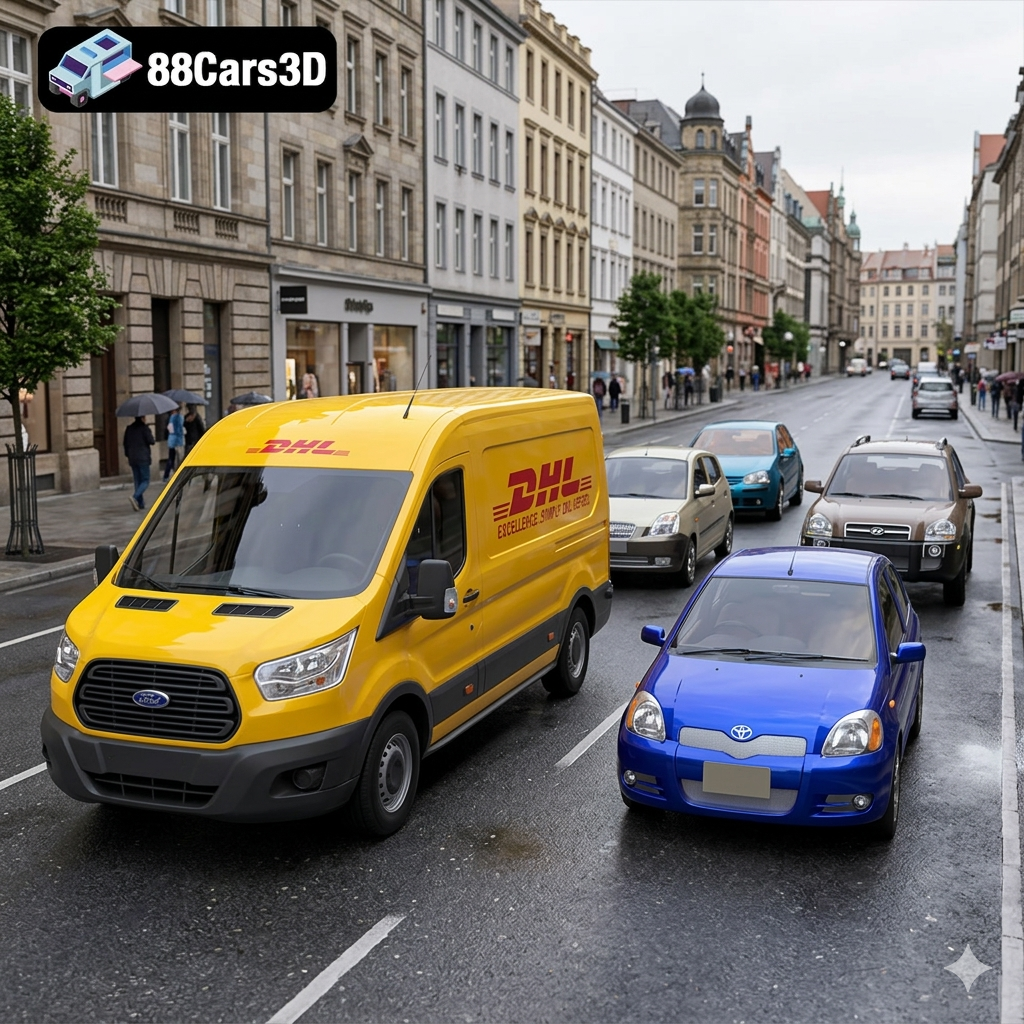
Download the Everyday City Traffic 3D Models Bundle. Includes the VW Golf, Kia Picanto, Hyundai Tucson, Toyota Yaris, and a DHL Ford Transit Van. Save big on this 5-in-1 pack, perfectly optimized for realistic ArchViz streets and game traffic.
Price: $99.99
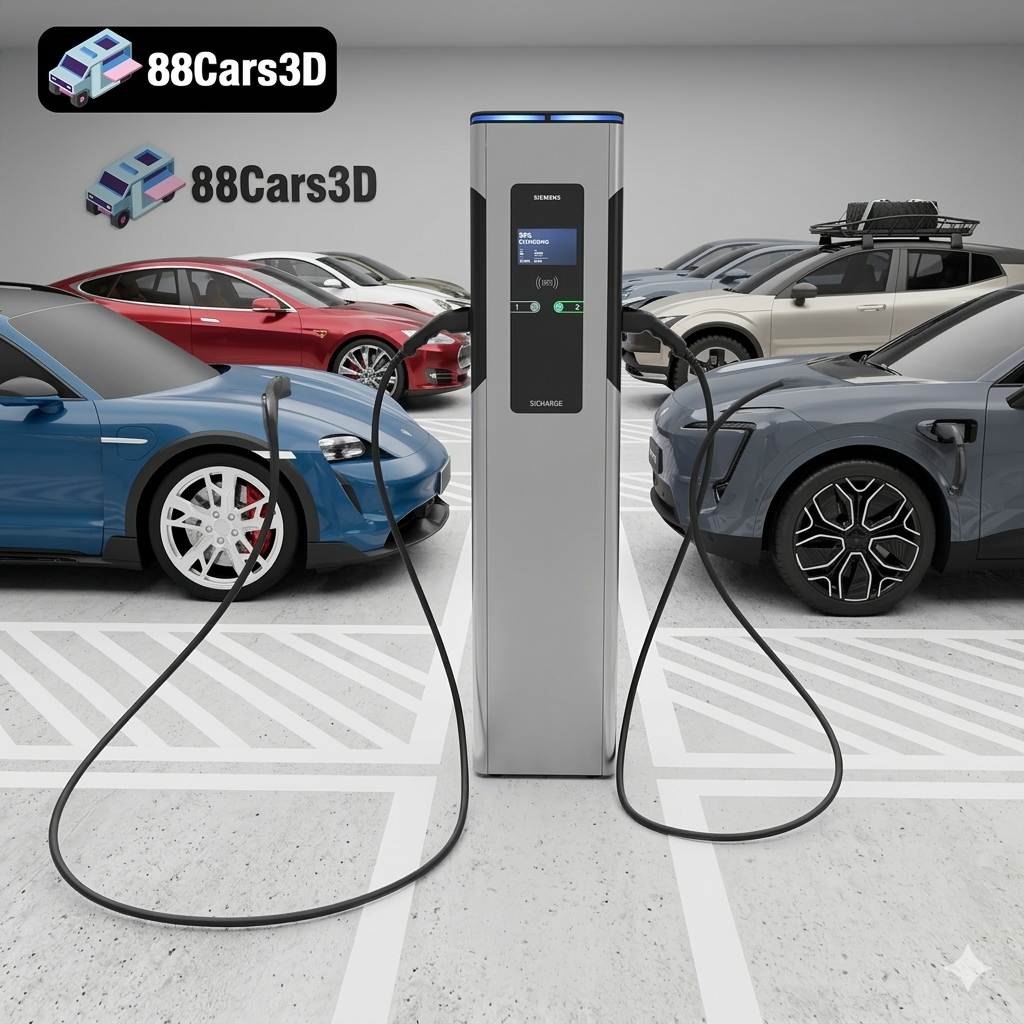
Download the Future of Mobility EV 3D Models Bundle. Includes the Volvo EX30, Tesla Model S, AVATR 11, Porsche Taycan, and a Siemens EV Charger. Save big on this highly optimized 5-in-1 pack for ArchViz and game development!
Price: $89.99

