Get 50% OFF All Premium 3D & STL Models!

In the dynamic realm of 3D visualization and digital content creation, the pursuit of realistic and iconic assets is paramount. From breathtaking automotive renders that blur the line between virtual and reality, to immersive game environments that transport players, the quality of a 3D model dictates the success of a project. Among the pantheon of celebrated vehicles, the Mercedes-Benz G-Class stands as an undisputed legend. Its distinctive silhouette, robust presence, and unwavering luxury have cemented its status as a timeless icon. For digital artists, game developers, architects, and product designers, bringing such an emblem to life in the virtual space requires a 3D model that captures every nuance with precision and technical excellence.
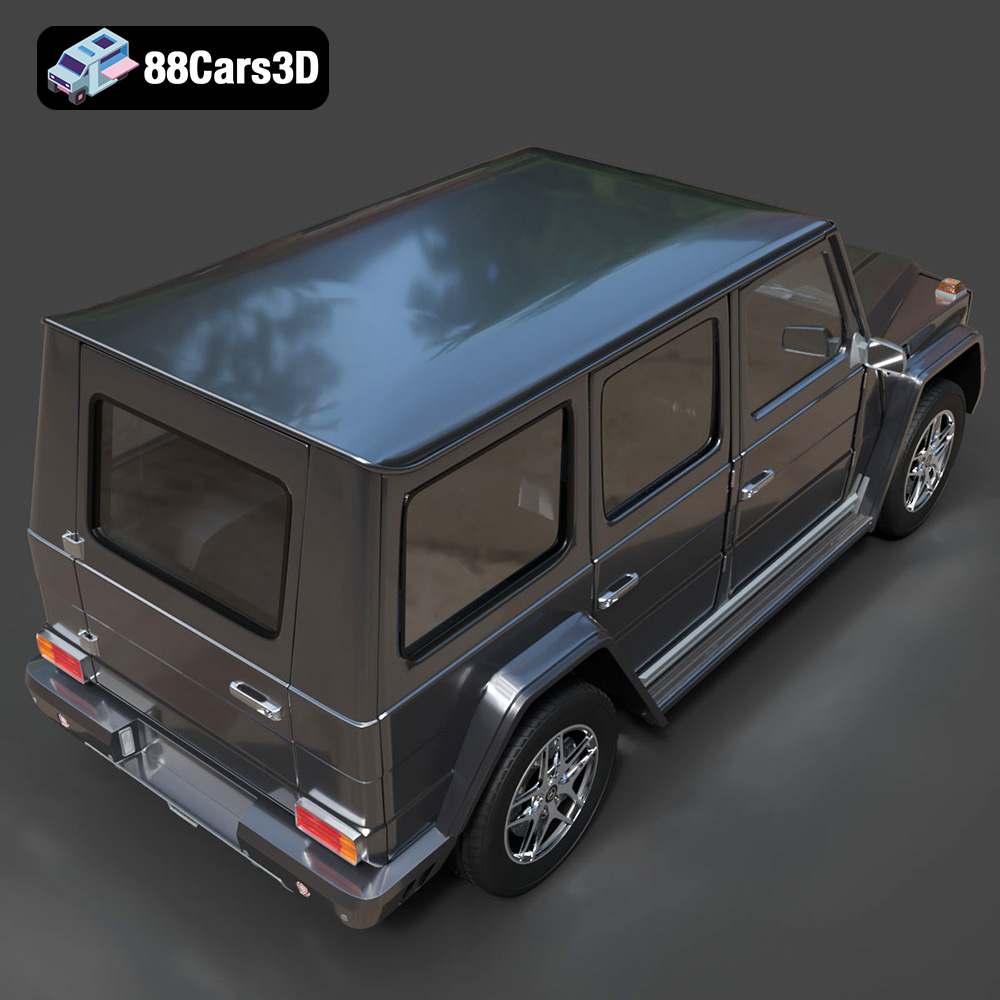
This is precisely where a high-fidelity asset like the Mercedes-Benz G Class 2013 3D Model distinguishes itself. Available on 88cars3d.com, this model offers a meticulously crafted digital recreation of the iconic luxury off-road SUV. It’s not just a static object; it’s a versatile foundation for a multitude of professional applications, including advanced automotive rendering, game asset development, augmented and virtual reality experiences, and even precise 3D printing for tangible collectibles. Let’s delve into the technical depth and creative potential this exceptional 3D model brings to the table.
The Mercedes-Benz G-Class, or G-Wagen, possesses an almost mythical status. Born from military necessity, it evolved into a symbol of rugged luxury, capability, and audacious design. The 2013 model year represents a sweet spot, blending its storied, utilitarian roots with refined interior comfort and advanced technology of its era. This unique blend makes it a highly sought-after subject for any digital project aiming for both prestige and performance.
The real-world G-Class is characterized by its unapologetically boxy design, external door hinges, and commanding stance. These elements contribute to an aesthetic that is both timeless and instantly recognizable. In a 3D model, capturing this essence goes beyond mere visual resemblance; it requires understanding the underlying proportions, the subtle curves within the sharp angles, and the precise placement of every component. The 2013 G-Class is a vehicle that commands attention, whether cruising through city streets or conquering challenging terrains, and its digital counterpart must evoke the same powerful presence.
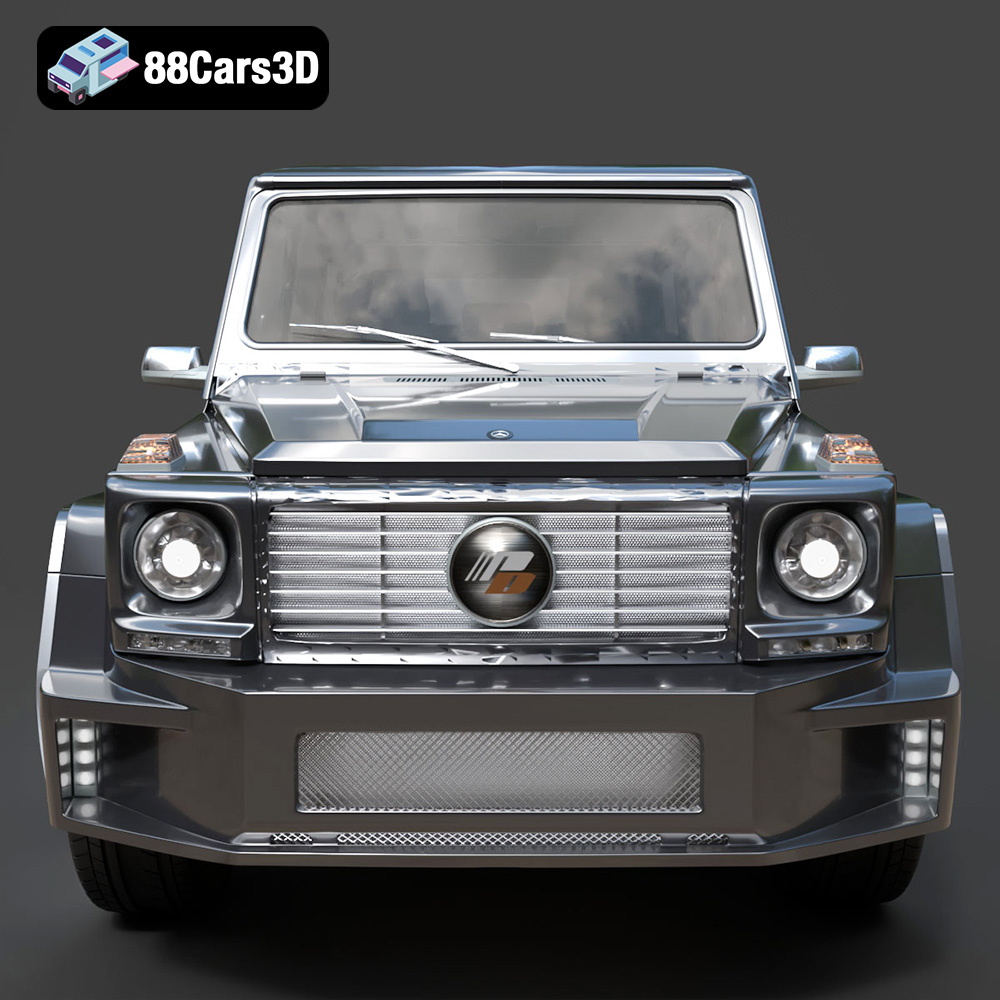
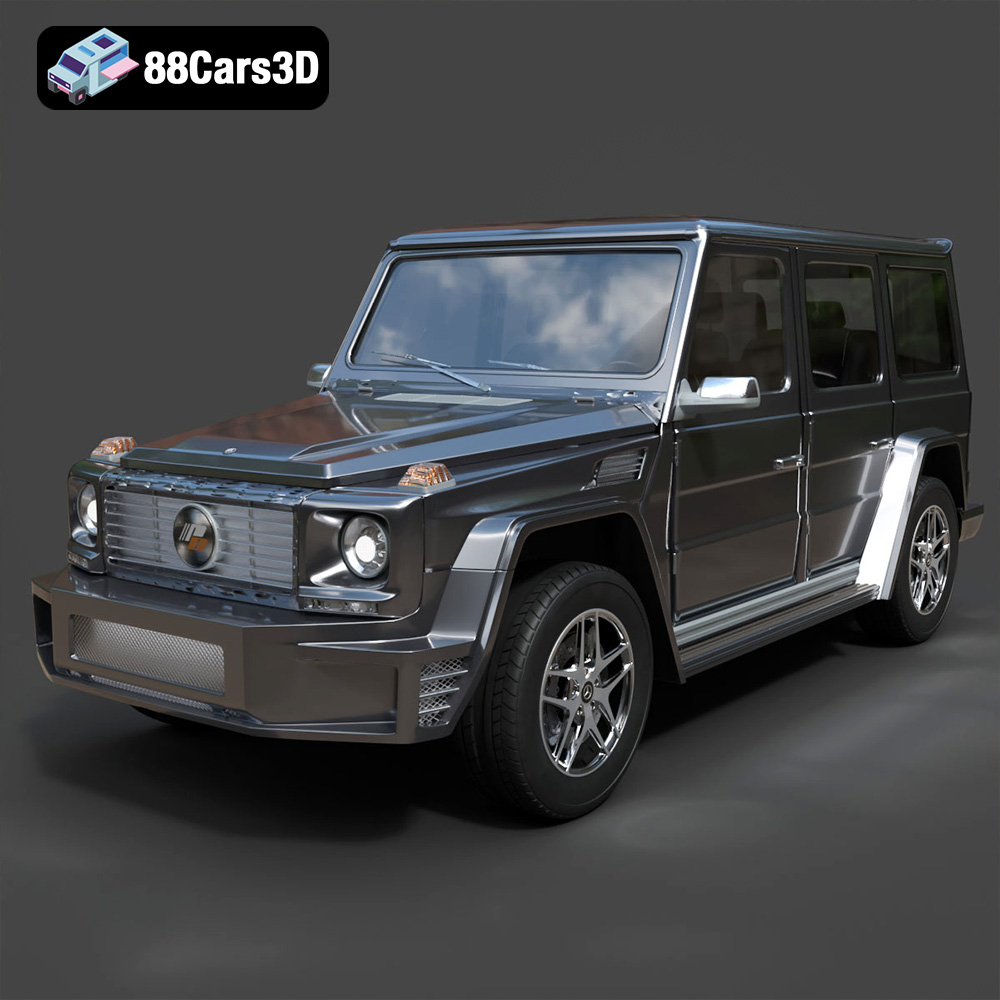
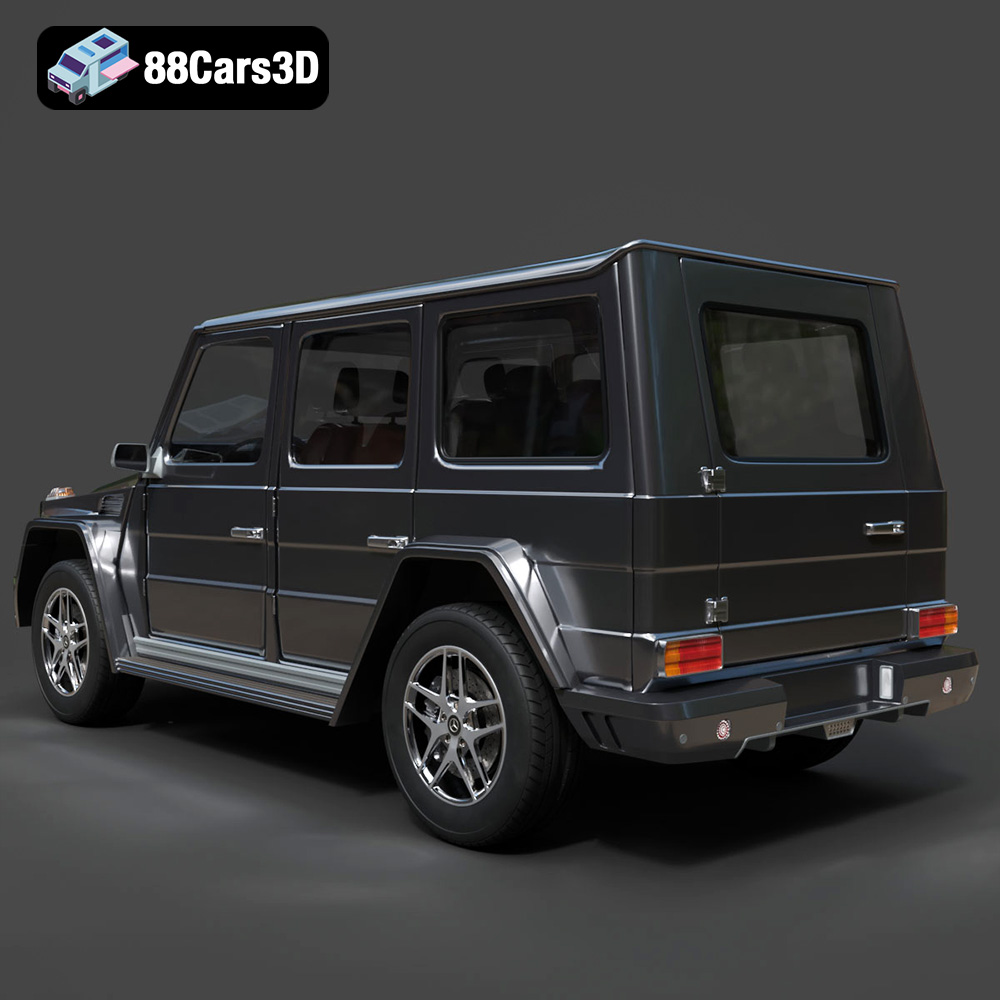
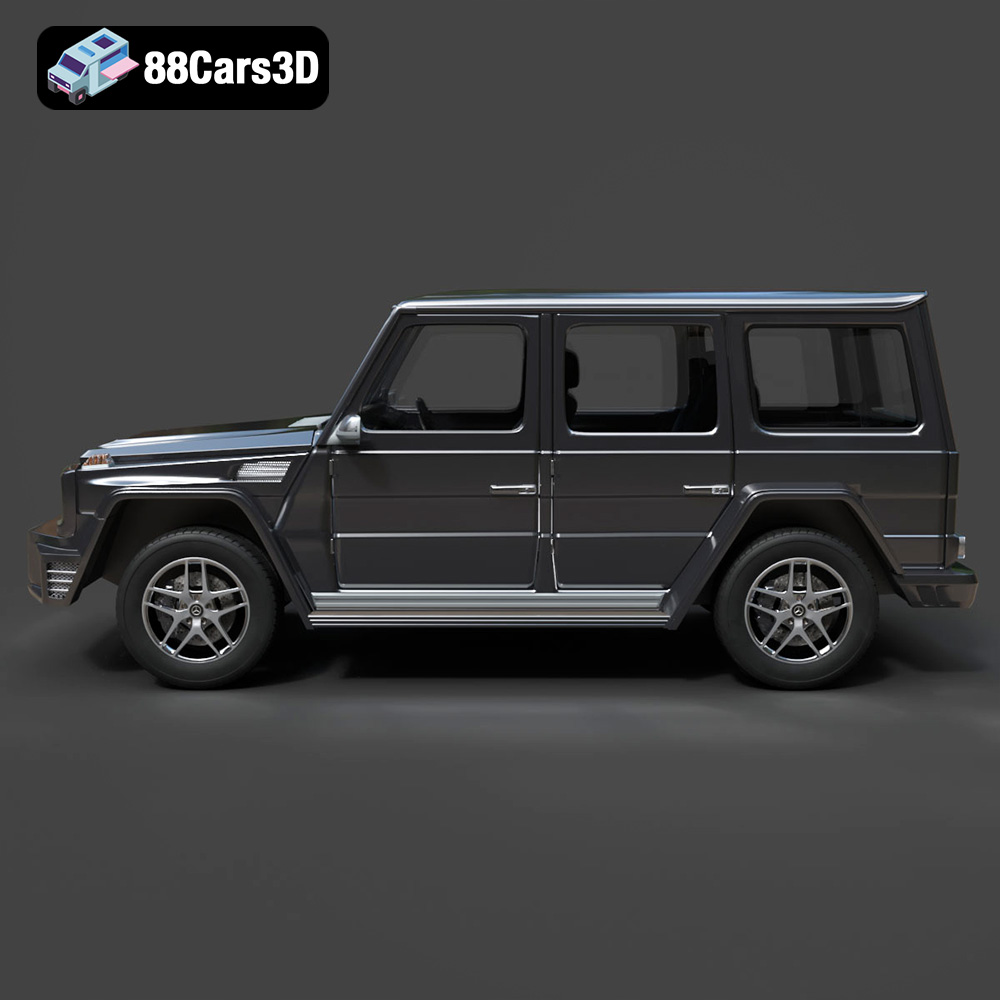
The Mercedes-Benz G Class 2013 3D Model excels in translating this authenticity into digital form. Its detailed product description highlights “accurate 2013 G-Class body proportions,” “signature boxy silhouette with sharp panel edges,” and “detailed front grille with emblem placement.” These aren’t just descriptive terms; they speak to the meticulous modeling process involved. For instance, the round headlights and indicator design are faithfully reproduced, along with the distinct rear-mounted spare wheel housing, side steps, and roof rail detailing. Crucially, separate wheels and steering components are included, which are essential for believable animation and realistic driving simulations in game environments.
The commitment to detail extends to the interior, featuring a “luxury dashboard with instrument cluster,” a “multifunction steering wheel,” and a “center console with infotainment layout.” Even the “seat geometry with stitching detail” is represented, ensuring that interior shots or first-person perspectives within games maintain a high level of realism. This comprehensive approach means that whether the model is viewed from afar in a wide landscape shot or up close in a virtual showroom, its quality remains consistently high.
The versatility of a 3D model often lies in the range of file formats it supports. Different formats are optimized for different stages of the 3D pipeline, from initial modeling and animation to real-time rendering and physical manufacturing. The Mercedes-Benz G Class 2013 3D Model provides an extensive suite of formats, ensuring maximum compatibility and utility across various professional applications. Understanding each format’s strengths is key to leveraging the model to its full potential.
The .blend format is the native file type for Blender, a powerful open-source 3D creation suite. A .blend file typically includes the entire scene data: geometry, materials, textures, lighting, cameras, animations, and even rigging. For users deeply integrated into the Blender ecosystem, this format offers the most flexibility. Artists can fully edit every aspect of the Mercedes-Benz G Class 2013 model, from modifying its topology and UVs to adjusting its PBR material properties within Cycles or Eevee, or even animating its components directly within Blender’s robust animation tools. It’s perfect for detailed customization, further development, or integration into existing Blender projects without any loss of data fidelity inherent in conversions.
.fbx (Filmbox) is a proprietary file format owned by Autodesk, widely recognized as a universal exchange format in the 3D industry. It is ideal for transferring 3D data, including models, animations, cameras, and lights, between different software applications like 3ds Max, Maya, Blender, Unreal Engine, and Unity. When the G-Class model is provided as an .fbx, it means it’s ready for smooth import into popular game engines and DCC (Digital Content Creation) tools. Technical advantages include robust support for animation and skeletal data, which is crucial for animating wheels and steering, and embedded texture information, streamlining the import process into real-time pipelines. For game developers or animators, .fbx is often the go-to choice for its reliability and widespread adoption.
The .obj (Wavefront OBJ) format is one of the oldest and most widely supported 3D file formats. It is primarily used to store 3D geometry data – vertices, normals, UV coordinates, and polygonal faces. Materials are typically defined in a companion .mtl (Material Template Library) file. The .obj format is highly universal, offering excellent cross-software compatibility. Nearly every 3D application can open and save .obj files, making it a reliable fallback for foundational mesh data. While it doesn’t support animation or complex scene data like .fbx, its simplicity makes it robust for importing pure geometry, ensuring that the clean topology of the Mercedes-Benz G Class 2013 is preserved across different platforms for static rendering or foundational modeling tasks.
.glb (GL Transmission Format Binary) is the binary version of glTF, a modern, royalty-free specification for 3D scenes and models. Often referred to as the “JPEG of 3D,” glTF and .glb are designed for efficient transmission and loading of 3D content in web-based applications, augmented reality (AR), and virtual reality (VR) experiences. A .glb file packages all necessary assets – geometry, materials, textures, animations – into a single binary file, making it incredibly convenient for distribution and deployment. For interactive product configurators or virtual showrooms featuring the G-Class in a browser, .glb is the most optimized format, offering fast loading times and a compact file size without compromising visual quality.
The .stl (Stereolithography) format is the industry standard for 3D printing. It represents 3D surfaces as a collection of unconnected triangular facets. The primary function of an .stl file is to describe the surface geometry of a 3D object without color, texture, or other CAD attributes. When the Mercedes-Benz G Class 2013 model is available in .stl, it means it has been prepared with manifold geometry, ensuring it’s a watertight mesh suitable for additive manufacturing. This is critical for users looking to bring the digital G-Class into the physical world as a collectible scale model or prototype, enabling precise layer-by-layer printing.
.ply (Polygon File Format) is another format for storing 3D data, typically from 3D scanners, and is often used in scientific or engineering applications for precise mesh data. It can store a wider range of properties than .obj, including color, transparency, and sometimes normal vectors per vertex. While less common for general 3D asset exchange, its inclusion suggests the model’s potential for detailed analysis or specific CAD workflows where high precision mesh data is paramount. For industrial design, reverse engineering, or specific simulation applications where dense point clouds or polygon meshes are preferred, .ply offers a robust solution.
The .unreal format signifies an asset specifically optimized and packaged for direct use within Unreal Engine. This often means the model has already been through an export/import pipeline tailored for Unreal, potentially including proper material setup, collision geometry, LODs (Levels of Detail), and possibly even basic blueprint configurations. For game developers and real-time visualization specialists using Unreal Engine, this format significantly reduces the setup time and ensures seamless integration, allowing them to focus immediately on scene composition, lighting, and interactive elements for the G-Class vehicle.
The .max format is the native file type for Autodesk 3ds Max, a leading software for 3D modeling, animation, rendering, and compositing. Similar to .blend for Blender, a .max file encapsulates the complete 3ds Max scene, including geometry, materials, textures, lighting, cameras, modifiers, and animation data. For professionals using 3ds Max for high-end rendering with V-Ray or Corona Renderer, or for complex animation sequences, having the G-Class model in .max format provides maximum editing flexibility. It allows for advanced material shader tweaks, detailed rigging, and seamless integration into existing 3ds Max projects, offering unparalleled control over the model’s appearance and behavior.
The comprehensive range of file formats available for the Mercedes-Benz G Class 2013 3D Model underscores its adaptability, ensuring it can be integrated into virtually any professional 3D workflow, whether for visualization, game development, AR/VR, or physical production.
A high-quality 3D car model is more than just pretty polygons; it’s a strategic asset that streamlines and enhances professional workflows across various industries. The Mercedes-Benz G Class 2013 3D Model, with its detailed construction and versatile file formats, is an invaluable tool for designers, artists, and developers alike.
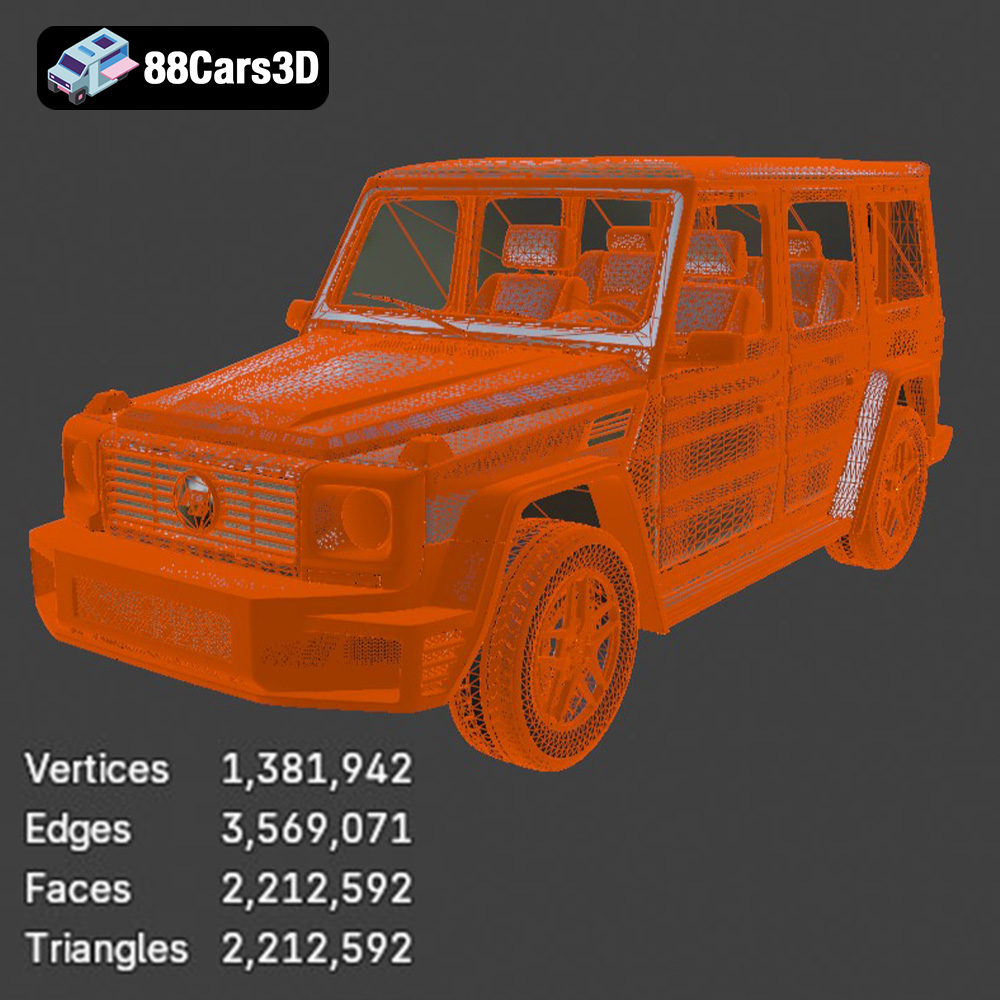
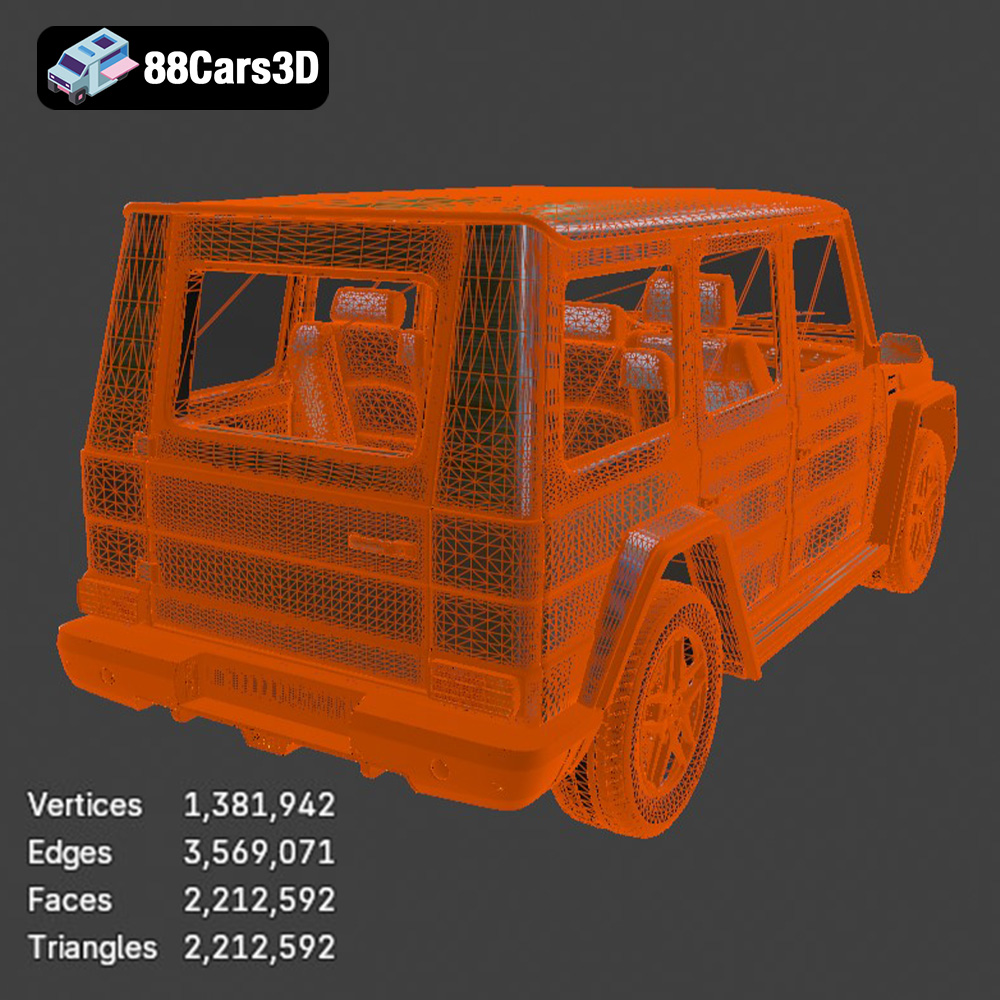
For automotive visualization and marketing, photorealistic rendering is non-negotiable. Imagine a high-profile advertising campaign showcasing the rugged luxury of the G-Class against a backdrop of sweeping desert dunes or an urban metropolis. Artists utilizing 3ds Max (with .max format) or Blender (with .blend format) can import the model, leverage its “clean and well-organized mesh structure,” and apply sophisticated PBR (Physically Based Rendering) materials. This involves setting up realistic paint shaders, chrome reflections, glass refraction, and intricate tire textures. Advanced lighting setups, volumetric effects for atmosphere, and carefully composed camera angles transform the digital asset into a stunning visual masterpiece. The model’s “optimized polygon flow for performance and realism” ensures that even with complex rendering engines like V-Ray, Corona, or Cycles, render times remain manageable while delivering exceptional quality. This attention to detail makes it ideal for luxury automotive marketing and dealership visuals.
The demand for immersive gaming experiences means game assets must be meticulously crafted for both visual fidelity and real-time performance. The Mercedes-Benz G Class 2013 3D Model, with its .fbx and .unreal formats, is perfectly suited for modern game engines like Unreal Engine and Unity. Game developers can import the model, set up custom collision meshes, and implement LOD (Levels of Detail) to ensure optimal performance across varying distances, from close-up player views to distant background vehicles. The “proper pivot setup for steering and wheel rotation” is critical here, allowing for realistic vehicle physics and animation directly within the engine. From open-world driving games and off-road simulators to premium SUV environments, this model provides a solid foundation, saving countless hours of modeling and optimization.
Augmented Reality (AR) and Virtual Reality (VR) are revolutionizing how we interact with products and environments. A virtual showroom where potential buyers can explore the G-Class in full 3D, or an interactive off-road demonstration, becomes highly compelling with a high-quality model. The .glb format is particularly advantageous for AR/VR, especially for web-based experiences, due to its optimized file size and single-file packaging. Developers can integrate the Mercedes-Benz G Class 2013 3D Model into platforms like WebXR or Unity/Unreal-based VR apps, allowing users to inspect the vehicle from all angles, change colors, or even “sit” inside through an immersive headset. The model’s “optimized geometry” ensures smooth frame rates, crucial for a comfortable and believable AR/VR experience.
Beyond digital screens, the Mercedes-Benz G Class 2013 3D Model offers a unique pathway to tangible creation through 3D printing. The ability to transform a digital design into a physical object opens up exciting possibilities for collectors, hobbyists, and automotive enthusiasts.
The inclusion of the .stl format is a direct invitation to the world of 3D printing. This format specifically prepares the model for additive manufacturing, ensuring a “watertight” mesh that printers can interpret layer by layer. Imagine holding a perfectly scaled miniature of the iconic G-Class on your desk or incorporating it into a diorama. The product description provides highly specific 3D print settings, which are invaluable for achieving optimal results. Recommended scales like 1:32, 1:24, 1:18, or 1:14 offer flexibility depending on the desired level of detail and printer capabilities. A layer height of 0.10–0.18 mm, for instance, suggests a balance between print speed and surface finish, while a wall thickness of 1.5–2.5 mm ensures structural integrity. Infill recommendations (15–25%) optimize material usage and strength.
3D printing a complex object like a car model requires careful consideration of overhangs and intricate details. The instructions advise that “supports are required for mirrors, spare wheel housing, and underbody details,” which is a practical guide for preparing the print job. Furthermore, the suggestion for “body printed angled for smooth surface finish; wheels printed separately” demonstrates an understanding of FDM (Fused Deposition Modeling) printing best practices, minimizing visible layer lines on prominent surfaces and allowing for higher detail on the wheels. Post-processing steps like “sanding, primer, gloss or matte finish, chrome detailing optional” are crucial for achieving a professional, factory-finished look, truly bringing the digital Mercedes-Benz G-Class to life as a high-quality collectible. This functionality highlights the multifaceted utility of 3D car models available at 88cars3d.com, extending their value beyond purely digital applications.
The true power of a well-structured 3D model lies not just in its initial fidelity, but in its adaptability. The Mercedes-Benz G Class 2013 3D Model is designed with customization in mind, empowering artists and developers to tailor it precisely to their creative vision or project requirements.
The listed customization options provide a clear roadmap for creative exploration. The ability to “change body color and trim accents” is fundamental, allowing for endless color schemes, from classic black or silver to vibrant custom hues for game assets or bespoke client renders. “Add off-road accessories or roof attachments” opens up possibilities for creating specialized versions, such as an expedition vehicle, a desert rally car, or a sophisticated urban explorer, complete with roof racks, spotlights, or even custom bumpers. Modifying “wheel style and tire type” dramatically alters the vehicle’s character, shifting it from a street-focused luxury SUV to an aggressive off-road beast. Adjusting “suspension height for rugged stance” further enhances this customization, providing visual cues for different terrains or performance profiles. Finally, configuring “lighting for city, mountain, or desert scenes” allows for dynamic visual storytelling, adapting the vehicle’s illumination to match its environment and mood. These options transform the model from a generic asset into a specific, purpose-built vehicle for any scene.
While commonly associated with rendering and games, the versatility of this 3D car model extends to a variety of niche applications. In simulation and training, the G-Class model can be integrated into virtual driving simulators for realistic driver training, scenario planning, or even autonomous vehicle research, leveraging its accurate real-world scale and pivot setups for realistic vehicle dynamics. For cinematic projects and virtual production, the model serves as a high-fidelity prop, enabling directors and VFX artists to place the iconic SUV into any virtual scene with complete control over its appearance and animation, without the logistical challenges of shooting with a physical vehicle. Its robust construction makes it a dependable asset for any project that demands a premium, high-performance vehicle.
The landscape of 3D content creation is constantly evolving, but the core need for high-quality, versatile assets remains constant. The Mercedes-Benz G Class 2013 3D Model stands as a testament to meticulous craftsmanship and technical foresight, offering an unparalleled digital representation of an automotive icon. From its accurate exterior and interior details to its clean topology and broad file format compatibility, this model is engineered to meet the rigorous demands of professional workflows.
Whether your goal is to produce stunning automotive rendering for a luxury brand, develop immersive game assets for the next big open-world title, create interactive AR/VR experiences, or even bring the G-Class to life as a tangible 3D-printed collectible, this model provides the essential foundation. Its thoughtful design, comprehensive feature set, and availability in multiple industry-standard formats ensure that it will be a valuable asset in your digital toolkit. Explore the possibilities and elevate your projects with premium 3D car models like the Mercedes-Benz G Class 2013 by visiting 88cars3d.com, your destination for high-fidelity automotive assets.
The Mercedes-Benz G Class 2013 3D Model is a high-detail digital recreation of the iconic luxury off-road SUV known for its boxy design, rugged capability, and premium craftsmanship. The 2013 G-Class blends military-inspired durability with refined interior comfort, making it a timeless symbol of performance and prestige. This 3D model accurately represents the distinctive squared body shape, bold front grille, round headlights, exposed door hinges, roof rails, spare wheel rear mount, and elevated ground clearance. Designed with clean topology and real-world scale accuracy, it is ideal for rendering, animation, automotive visualization, game development, and AR/VR experiences. Perfect for urban luxury scenes, off-road environments, desert simulations, cinematic projects, and SUV driving games.
$60