Get 50% OFF All Premium 3D & STL Models!

In the expansive world of 3D design, where photorealism and efficiency reign supreme, the choice of a high-quality 3D model can significantly impact a project’s success. Whether you’re an automotive visualization artist, a game developer crafting intricate open worlds, or an architect populating a sprawling urban scene, the demand for authentic and versatile digital assets is constant. Today, we’re diving deep into an iconic yet humble vehicle that has transcended its utilitarian roots to become a cultural touchstone: the Suzuki Super Carry 1000 Microvan. Specifically, we’re exploring a meticulously crafted 3D model of this legendary compact workhorse, available on 88cars3d.com, and how it can elevate diverse professional applications.
The Suzuki Super Carry 1000 Microvan, particularly the SK410 generation from the 1980s and 1990s, is more than just a vehicle; it’s a symbol of rugged simplicity and ingenious space efficiency. Its distinctive cabover design, flat front fascia, and practical proportions have made it a global icon of urban logistics and everyday transport. This particular 3D model captures that essence with remarkable fidelity, offering a dense, clean topology that promises premium visual quality for close-up rendering, retro urban environment visualization, animation, indie game development, and immersive AR/VR experiences. From its authentic 12-inch steel wheels to its minimalist analog dashboard, every detail has been considered to deliver a truly versatile asset.
There’s an undeniable allure to vehicles that prioritize function over flash, and the Suzuki Super Carry 1000 Microvan embodies this principle perfectly. Its design narrative is one of practicality, yet it possesses a character that resonates across cultures and eras. Translating such an iconic, no-frills aesthetic into a digital format requires a deep understanding of its real-world counterpart and meticulous 3D modeling techniques.
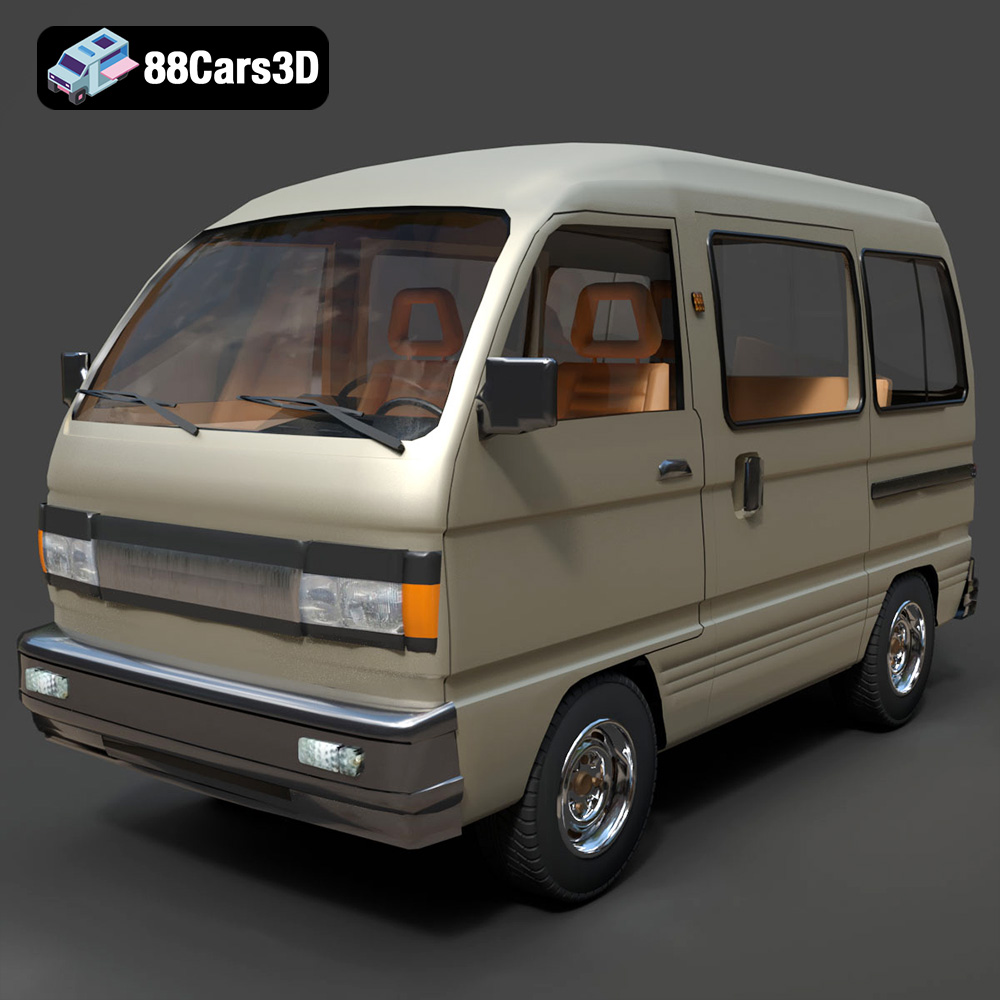
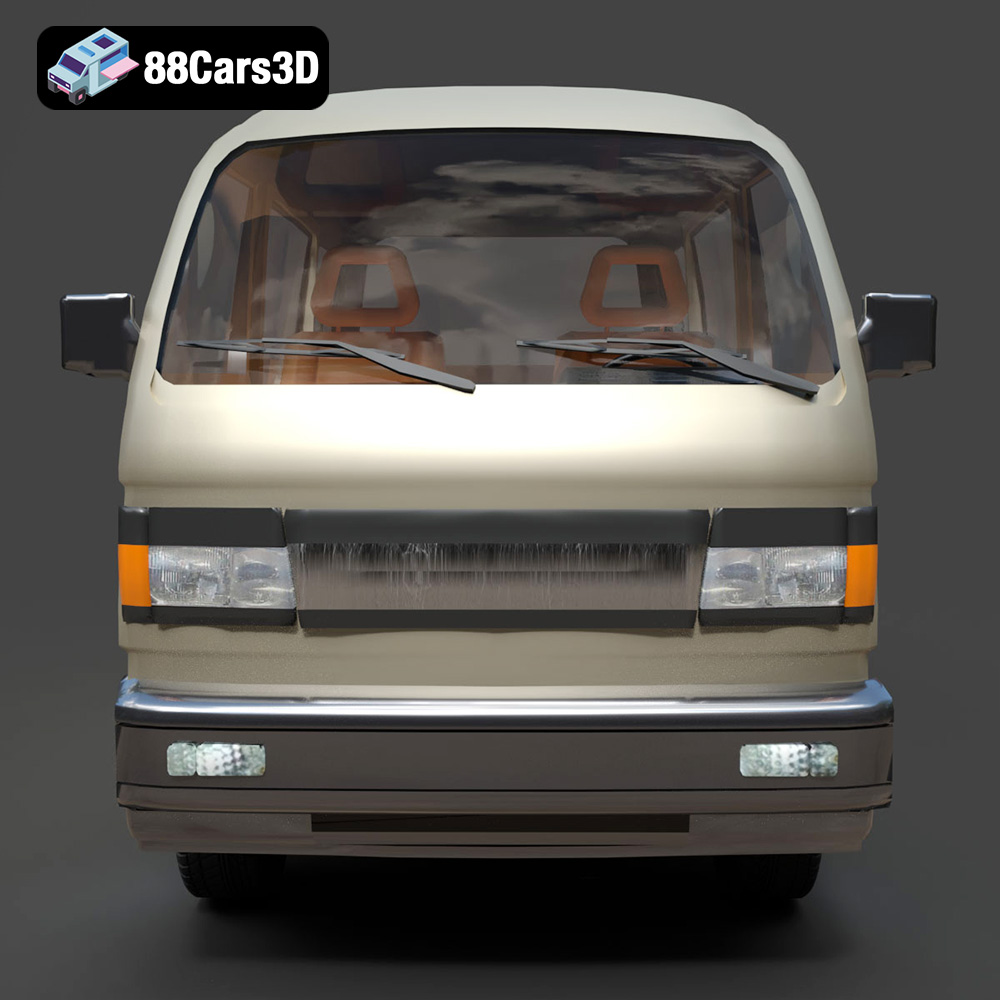
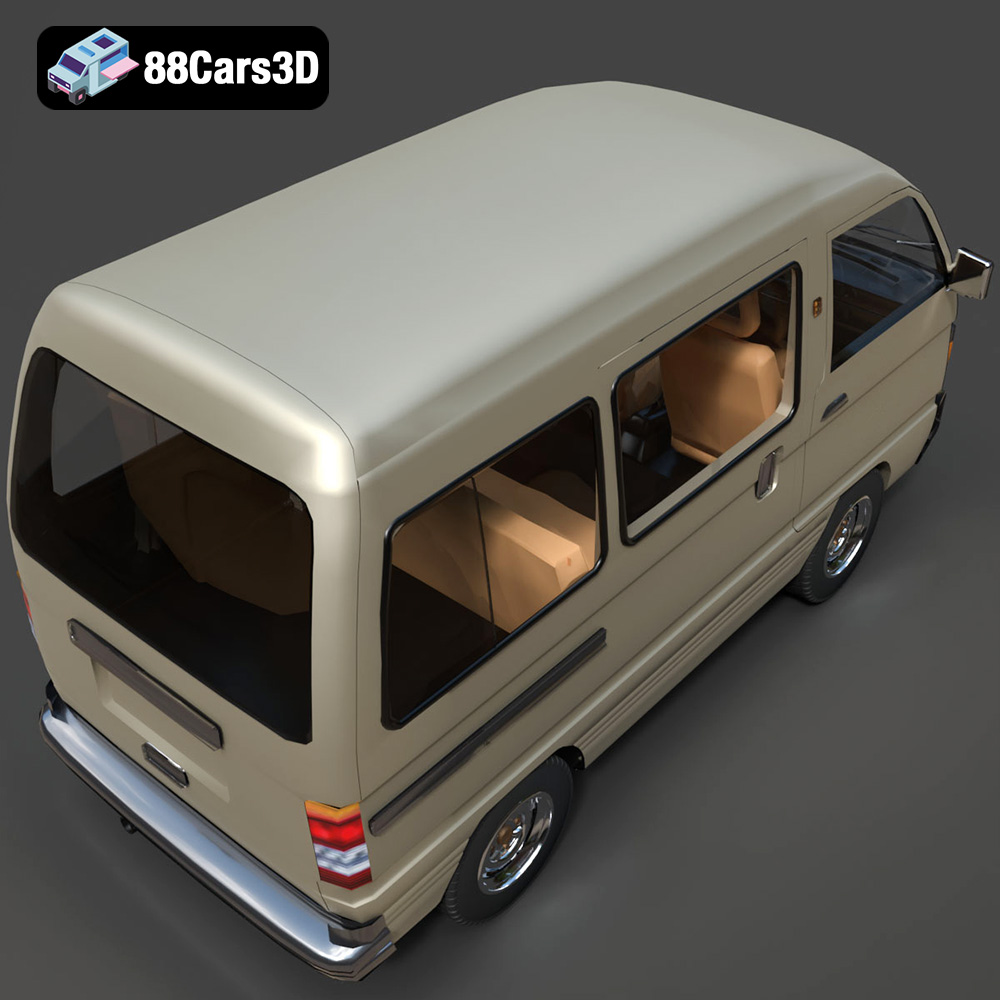
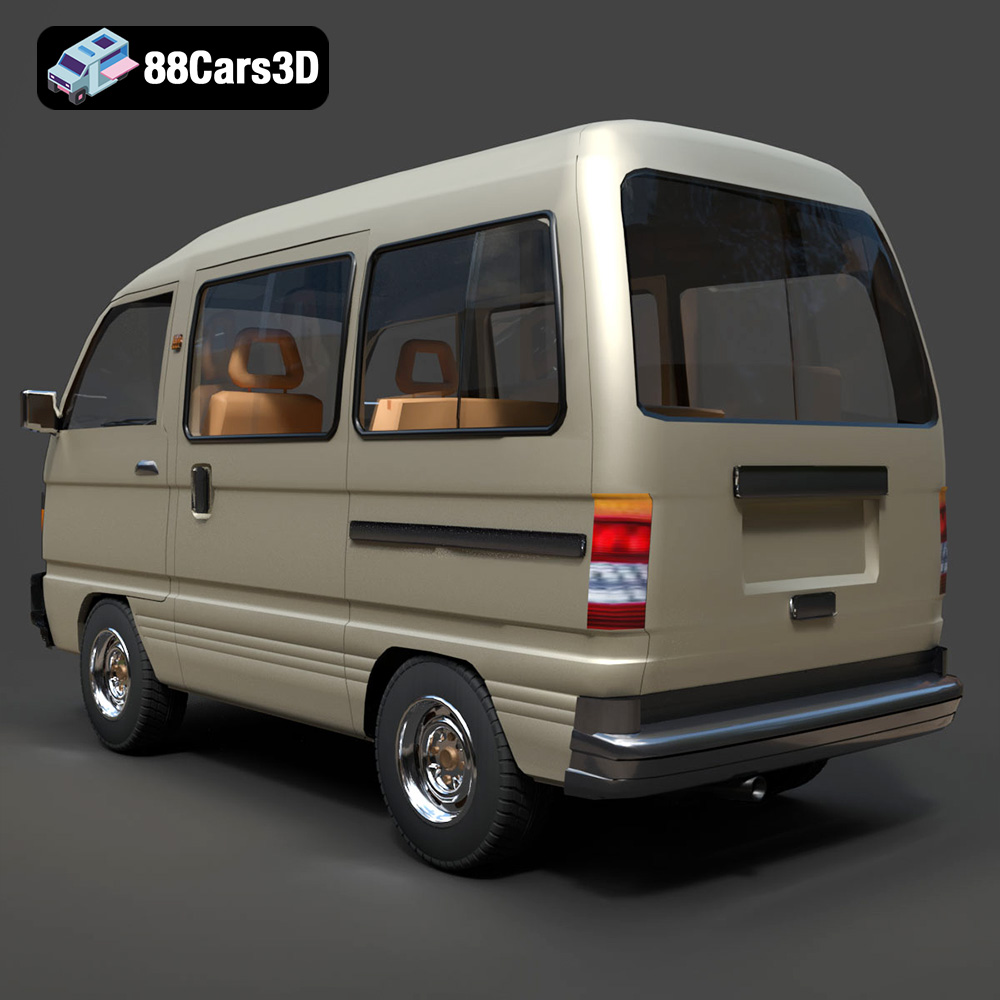
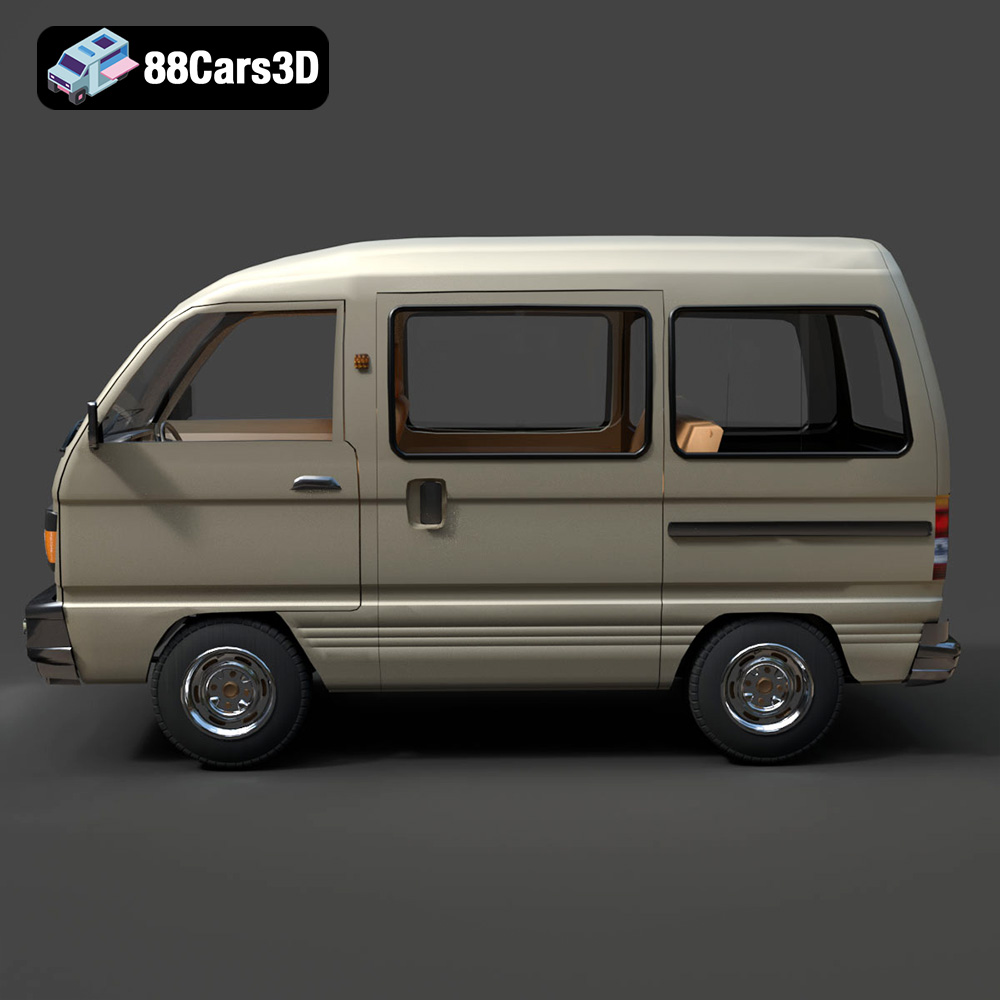
The exterior of the Suzuki Super Carry 1000 Microvan 3D Model is a testament to accurate replication. It faithfully reproduces the classic cabover design, a hallmark of compact vans that maximizes cargo space by positioning the driver directly over the front axle. The flat front fascia and simple plastic grille, paired with detailed rectangular headlight housings and period-correct taillights, immediately transport viewers to the 80s and 90s. The model includes functional period-correct side mirrors, door handles, and basic trim, all contributing to its authentic utilitarian appeal. Crucially, elements like separate wheels, steering components, and dual sliding side doors are independently modeled, ensuring the asset is fully prepared for animation and interactive scenarios. This level of detail makes the model ideal for creating historically accurate street scenes or commercial fleet renders that demand a touch of retro charm.
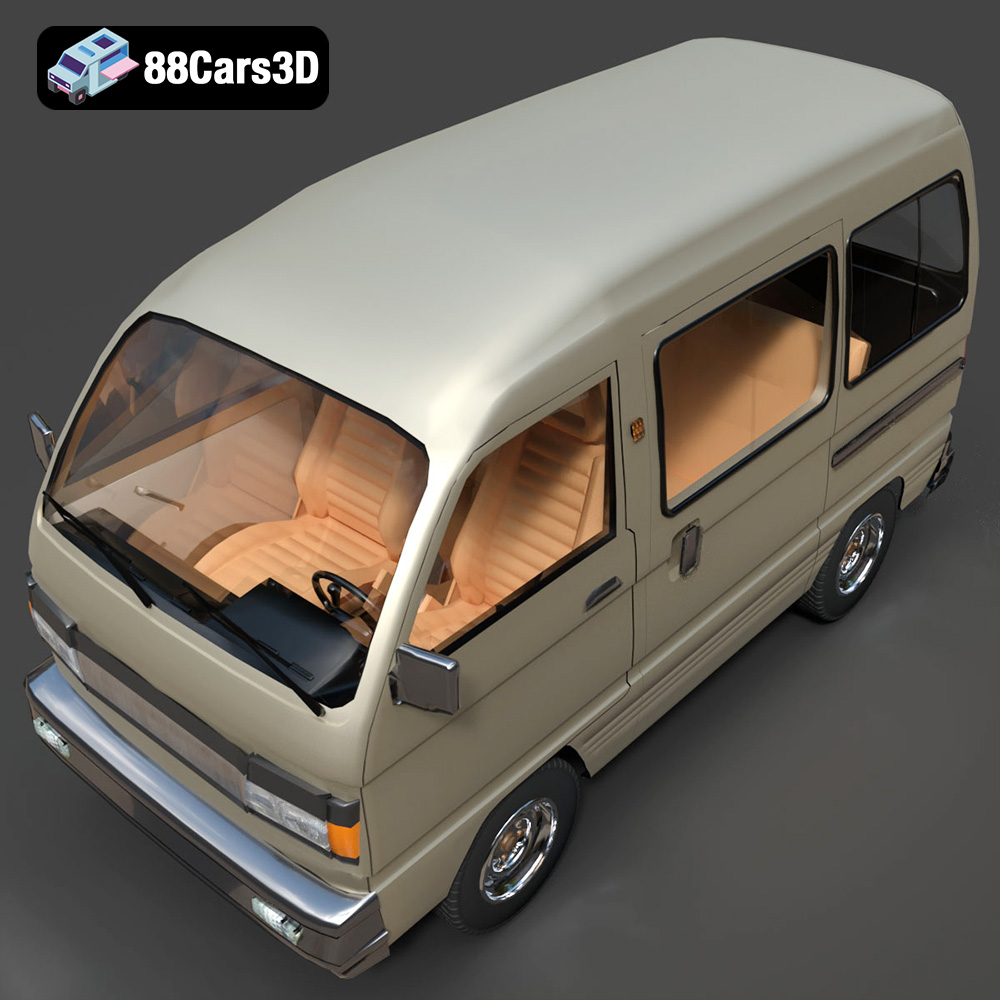
While often overlooked in favor of exteriors, a well-modeled interior significantly enhances the realism and versatility of a 3D vehicle asset. The Suzuki Super Carry 1000 Microvan 3D Model provides an equally detailed glimpse into its utilitarian front cabin. The seats are authentically mounted over the front axle, reflecting the vehicle’s unique layout. A spacious, flat-folding rear utility cargo area is represented, offering flexibility for configurable passenger seating or various cargo setups in renders. The retro, minimalist analog dashboard and simple two-spoke steering wheel capture the era’s design ethos, complemented by basic cloth or vinyl upholstery representation with realistic seam lines. The manual gear shifter and utilitarian center console details further enhance the fidelity. This optimized geometry is perfectly suitable for interior close-up rendering, allowing artists to create compelling narratives even within the van’s confined space.
One of the most critical aspects of working with 3D models in a professional capacity is understanding the various file formats available. Each format is designed with specific use cases and compatibilities in mind, and choosing the right one can significantly streamline your workflow. The Suzuki Super Carry 1000 Microvan 3D Model from 88cars3d.com is provided in a comprehensive array of formats, ensuring maximum flexibility for any project. Let’s delve into the technical details and applications of each:
The .blend format is the native file type for Blender, the powerful open-source 3D creation suite. When you download a .blend file, you’re getting a fully editable Blender scene. This means it includes all geometry, materials, textures, lighting setups, cameras, animation data, and even modifiers and rigging. For artists primarily working in Blender, this format offers the most flexibility for customization, tweaking shaders, adjusting topology, or incorporating the model directly into an existing Blender project without any conversion losses. It’s perfect for detailed rendering and animation work within Blender’s ecosystem.
.fbx (Filmbox) is arguably the most widely used proprietary 3D file format for exchanging models between different software applications. Developed by Autodesk, it excels at preserving complex scene data, including meshes, materials, textures, animations, and skeletal data. It is the ideal format for transferring assets to game engines like Unreal Engine and Unity, as well as major DCC applications like 3ds Max, Maya, and Cinema 4D. For real-time pipelines, .fbx is often preferred due to its robust support for animation and instances, making the Suzuki Super Carry model easily integrated into a game environment or an animated sequence.
The .obj (Wavefront Object) format is a universal standard, renowned for its broad compatibility across almost all 3D software. It primarily stores geometric data (vertices, normals, texture coordinates, and faces) and can reference external .mtl (Material Template Library) files for basic material definitions. While .obj doesn’t typically store advanced scene data like animation or rigging, its simplicity and widespread support make it excellent for static mesh transfers between different programs. If you need a reliable, no-frills mesh for sculpting, texturing, or rendering in an application that might not support .fbx as robustly, .obj is a solid choice for the Suzuki Super Carry.
.glb (GL Transmission Format Binary) is a modern, compact, and efficient format designed for web-based 3D applications, AR, and VR. It’s the binary version of glTF, embedding all asset data (model, textures, animations) into a single file, making it incredibly easy to share and load. .glb files are optimized for fast loading and rendering in browsers and mobile devices, making them perfect for interactive 3D viewers, AR/VR product showcases, or integration into webGL experiences. The Suzuki Super Carry 3D Model in .glb format is ready for cutting-edge immersive classic vehicle showcases.
.stl (Stereolithography) is the standard file format for 3D printing. It represents a 3D model as a collection of unconnected triangular facets, defining only the surface geometry without color or texture information. For the Suzuki Super Carry 1000 Microvan 3D Printable STL, this format is crucial. It ensures the model has “manifold geometry” – a solid, watertight mesh required for successful 3D printing. Hobbyists and professionals alike will use this to bring the digital model into the physical world as a miniature car or scale model.
.ply (Polygon File Format) is a versatile format for storing 3D data, particularly useful for scanned data, point clouds, and mesh data from scientific or engineering applications. It can store various properties beyond just geometry, such as color, transparency, normals, texture coordinates, and even reliability information for each vertex or face. While not as common for general asset exchange as .fbx or .obj, .ply provides a high degree of precision and detail, making it suitable for CAD, reverse engineering, or analytical purposes where the Suzuki Super Carry model might be used for measurements or simulations.
The inclusion of a .unreal file (or an asset specifically optimized and packaged for Unreal Engine) means the Suzuki Super Carry 1000 Microvan 3D Model is pre-configured for direct import and use within Unreal Engine. This often implies proper material setup, collision meshes, LODs (Levels of Detail), and potentially even basic blueprints for functionality. This format saves significant time for game developers and real-time visualization artists by providing an “engine-ready” asset, reducing the need for extensive post-import optimization.
Similar to .blend for Blender, .max is the native project file format for Autodesk 3ds Max, a leading software in architectural visualization, animation, and game development. A .max file contains the complete scene, including all models, lights, cameras, materials, textures, modifiers, and animation data. For users of 3ds Max, this provides the highest level of control and editability, allowing for seamless integration into existing 3ds Max projects and leveraging its powerful rendering engines like V-Ray or Corona. The Suzuki Super Carry model in .max format is ideal for detailed animation and high-resolution commercial visualization projects.
Beyond the aesthetic appeal, the true measure of a high-quality 3D model lies in its technical specifications. Professional workflows demand assets that are not only visually appealing but also efficient, well-organized, and robust. The Suzuki Super Carry 1000 Microvan 3D Model stands out in this regard, offering a strong technical foundation.
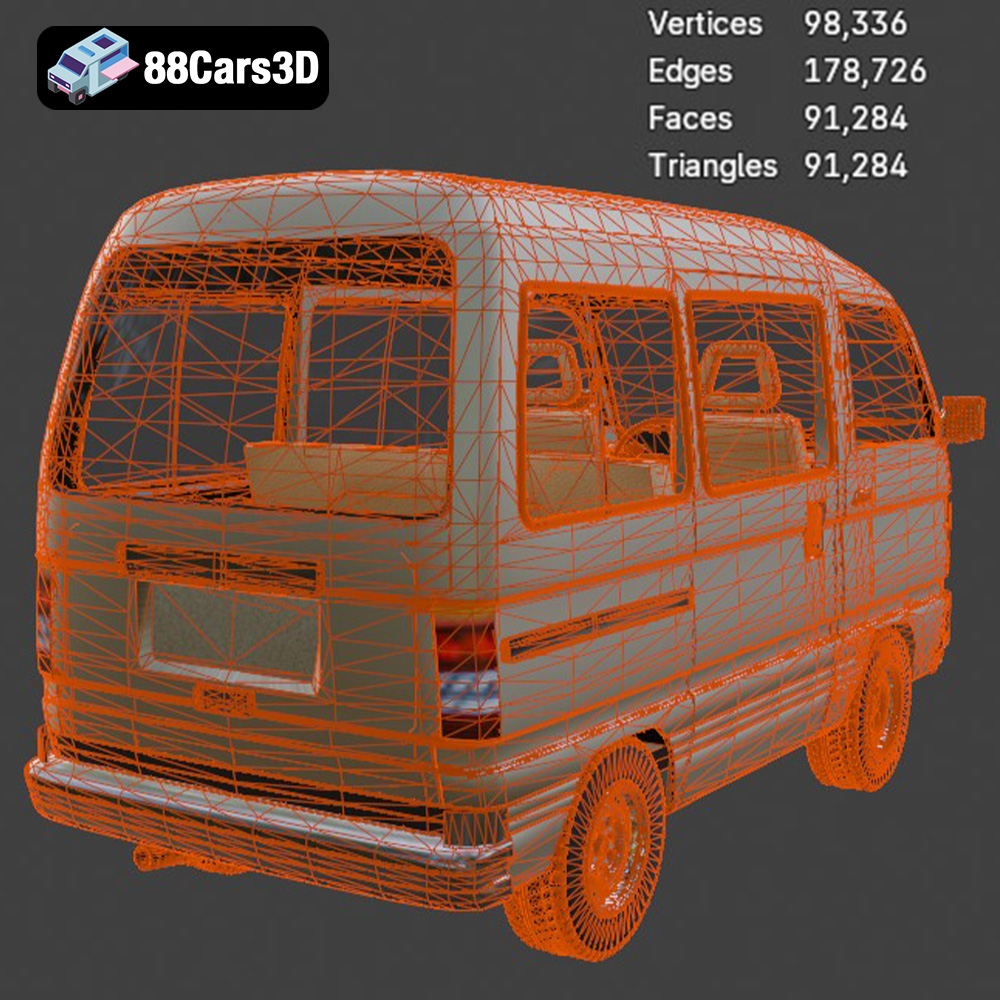
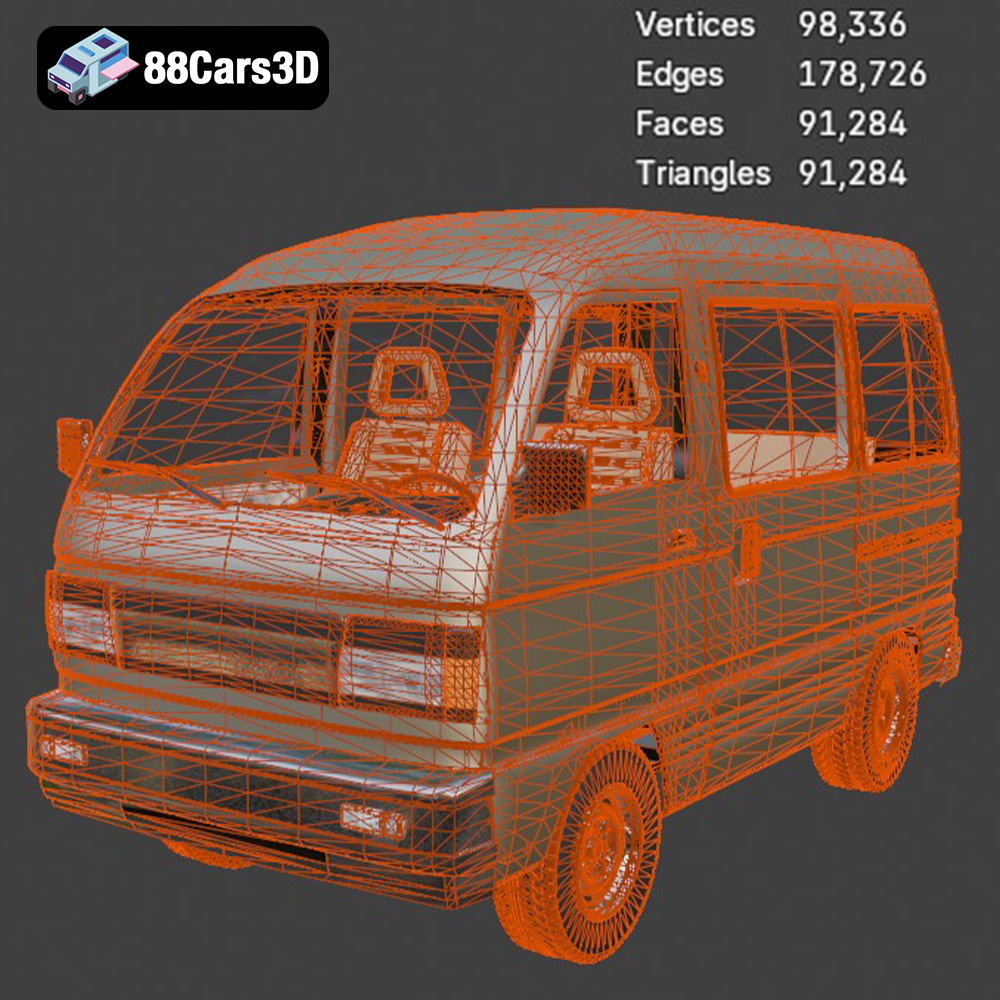
The Suzuki Super Carry model boasts a high-poly, well-organized mesh structure designed for maximum realism. With approximately 985,400 vertices, 1,950,200 edges, and 965,800 faces/polygons (or 965,800 triangles), it provides exceptional detail without being overly burdensome for modern rendering pipelines. This dense yet clean topology ensures smooth curves and sharp edges, crucial for close-up renders and maintaining fidelity even at high resolutions. The mesh is carefully constructed, minimizing non-quads where appropriate and ensuring efficient subdivision if needed. This balance of detail and clean geometry is vital for both high-end visualization and adaptability for real-time applications where optimization techniques like baking normals from high-poly to low-poly models are common.
Accuracy in 3D modeling extends to real-world scale, which is paramount for architectural visualization, product design, and simulation. The Suzuki Super Carry 3D Model adheres to real-world scale, ensuring it integrates seamlessly into scenes without requiring tedious resizing. Furthermore, the model exhibits proper pivot setup for crucial components such as steering, wheel rotation, and the iconic sliding door mechanisms. This meticulous organization saves artists invaluable time, allowing for immediate animation and interaction without having to manually adjust pivot points or re-parent objects. Such attention to detail reflects a professional approach to asset creation.
The product description confirms the inclusion of textures and materials, which are essential for achieving photorealistic results. High-quality PBR (Physically Based Rendering) materials are typically employed for professional automotive 3D models. These materials accurately simulate how light interacts with surfaces in the real world, accounting for properties like diffuse color, roughness, metallicness, normal mapping, and reflectivity. For the Suzuki Super Carry, this means realistic representations of its utilitarian body paint (e.g., Commercial White, Pastel Blue), the texture of the steel wheels, the gloss of glass, and the subtle variations in its plastic and rubber components. The textures are usually high-resolution (e.g., 2K, 4K, or even 8K) and properly UV-unwrapped, ensuring seamless application and avoiding stretching or distortion. This comprehensive material and texture setup is crucial for rendering the microvan with premium visual fidelity in any environment.
The true power of a versatile 3D asset like the Suzuki Super Carry 1000 Microvan 3D Model lies in its adaptability across various professional industries. Its comprehensive file format support and robust technical specifications make it a valuable addition to numerous creative pipelines.
For rendering artists and architectural visualization studios, authenticity is key. The Suzuki Super Carry model is ideal for populating retro urban street scenes, commercial fleet presentations, and architectural visualizations set in developing markets or specific historical periods. Its detailed exterior and interior allow for close-up renders that capture the character of the environment. Imagine it parked in front of a vintage shop, cruising down a bustling city street, or serving as a delivery vehicle in an arch-viz project. With compatibility for renderers like V-Ray, Corona, and Cycles (via .blend, .max, .fbx formats), artists can achieve breathtaking photorealistic results, adjusting lighting for sunny urban streets or moody, rain-slicked neon alleys, as suggested in the customization options.
Game developers constantly seek unique and well-optimized assets to enrich their virtual worlds. The Suzuki Super Carry 1000 Microvan 3D Model, with its .fbx and .unreal formats, is perfectly suited for game development. It can be integrated into historically set open-world games, indie simulators, or urban traffic vehicle packs. While its high poly count makes it ideal for cinematic cutscenes or main player vehicles, it can also serve as a base for creating optimized lower-poly versions using retopology and texture baking techniques, ensuring performance across various platforms. Its proper pivot setup for steering and wheel rotation makes it game-ready for interactive driving mechanics, adding a touch of period realism to virtual environments.
The burgeoning fields of Augmented Reality (AR) and Virtual Reality (VR) demand efficient, high-quality 3D assets for immersive experiences. The .glb format, included with the Suzuki Super Carry model, is specifically optimized for these platforms. This means developers can easily incorporate the microvan into interactive virtual retro vehicle showcases, allowing users to explore its details up close. Imagine a virtual garage where you can walk around the Super Carry, open its sliding doors, or even configure a quirky camper conversion in real-time. This model offers an excellent base for creating engaging, interactive content that pushes the boundaries of digital immersion.
One of the most exciting aspects of modern 3D modeling is the ability to bridge the gap between the digital and physical worlds through 3D printing. The Suzuki Super Carry 1000 Microvan 3D Model comes with a 3D Printable STL format, opening up a world of possibilities for hobbyists, collectors, and prototyping enthusiasts.
The inclusion of the .stl format is crucial for 3D printing. This format simplifies the complex polygonal mesh into a series of triangles, creating a “manifold” or watertight model that 3D printers can interpret to build layer by layer. The Suzuki Super Carry model’s geometry is designed to be manifold, ensuring a successful print without holes or inverted normals that could cause errors. This capability allows enthusiasts to create display-scale retro diecast models or unique automotive collectibles for tabletop display. The detailed geometry, even without textures, translates well into physical form, capturing the van’s distinctive silhouette.
To achieve the best results when 3D printing the Suzuki Super Carry, adhering to recommended settings is vital. The model suggests scales like 1:32, 1:24, or 1:18 for FDM printing, and smaller scales like 1:43 or even 1:64 often benefit from resin (SLA) printing for finer details, especially for elements like the headlights or small trim pieces. A layer height of 0.08–0.16 mm for FDM (or 0.04-0.12mm for resin) ensures a smooth surface finish. Wall thickness between 1.2–2.0 mm and an infill of 15–25% provide a good balance of strength and material efficiency. Supports will be required for overhangs such as side mirrors, bumpers, and wheel arches. For optimal aesthetic quality, printing the body angled for a smooth finish and printing wheels separately is recommended. After printing, post-processing steps like sanding, priming, and painting are essential. Artists can choose commercial white, retro pastel blue, or classic post-office red paint finishes to authentically replicate the van’s real-world livery, creating truly unique physical collectibles from a digital asset found on 88cars3d.com.
A truly professional 3D model offers more than just fidelity; it provides a flexible foundation for creative expression and adaptation. The Suzuki Super Carry 1000 Microvan 3D Model excels in this area, offering numerous customization options to tailor it to specific project needs.
Artists can easily change the exterior color of the microvan to suit a particular scene or branding. Common factory colors like Commercial White, Pastel Blue, Forest Green, or Bright Red offer a range of authentic options. Beyond color, the interior configuration can be modified to reflect different use cases – from an empty cargo van perfect for logistics simulations to a multi-seat passenger layout for family scenes or public transport scenarios. The wheel design can also be adjusted, switching between the standard utilitarian steelies and retro aftermarket alloys to instantly alter the vehicle’s character. Such flexibility allows the model to blend seamlessly into a wide array of visual narratives, from gritty urban realism to whimsical artistic interpretations.
The Suzuki Super Carry model isn’t just an isolated asset; it’s a powerful tool for scene population and storytelling. Its presence in a scene can instantly convey a sense of time, place, and character. Imagine it as part of a bustling market scene, a derelict van in a post-apocalyptic game, or even a cherished, customized vehicle embarking on an adventure. The ability to add custom decals or business branding to its flat side panels further enhances its utility, allowing artists to create unique company vehicles, food trucks, or mobile workshops. This adaptability encourages creativity, transforming a simple vehicle model into a dynamic element within a broader narrative, making it an invaluable addition to any artist’s library from 88cars3d.com.
The Suzuki Super Carry 1000 Microvan 3D Model is far more than just a digital representation of a classic vehicle; it’s a meticulously crafted, technically robust, and exceptionally versatile asset designed to meet the rigorous demands of professional 3D workflows. From its faithful reproduction of the iconic cabover design and utilitarian interior to its comprehensive range of file formats and optimized technical specifications, this model is built for performance and realism.
Whether you are an automotive rendering specialist creating stunning visualizations, a game developer building immersive worlds, an AR/VR innovator crafting interactive experiences, or a 3D printing enthusiast bringing digital designs to life, this Suzuki Super Carry model offers unparalleled value. Its blend of historical accuracy, technical precision, and creative flexibility makes it an indispensable tool for anyone looking to add authentic character and high fidelity to their projects. Discover the full potential of this exceptional 3D car model and elevate your creations by visiting 88cars3d.com today.
The Suzuki Super Carry 1000 Microvan 3D Model is a high-detail digital recreation of the legendary compact utilitarian workhorse from the 1980s and 1990s. Known for its incredible space efficiency and rugged simplicity, the Super Carry (often associated with the SK410 generation) combines a classic cabover design with highly practical proportions, making it a global icon of urban logistics and everyday transport. This 3D model accurately represents the iconic boxy silhouette, flat front fascia, classic headlight housings, dual sliding side doors, rear liftgate, and tiny but functional 12-inch steel wheels. Built with dense, clean topology for premium visual fidelity and real-world scale accuracy, it is ideal for close-up rendering, retro urban environment visualization, animation, indie game development, and AR/VR classic vehicle showcases.
$39.99
.automotive
.blend
.cabover
.fbx
.obj
.rendering
.stl
.suzuki
1000cc
3d printing
car-3d-model
game asset
high poly
kei-van
microvan
retro-van
super-carry
utility-vehicle