Get 50% OFF All Premium 3D & STL Models!

The pursuit of photorealism in real-time rendering has always been a demanding frontier, especially within the high-stakes world of automotive visualization. From showcasing concept cars to creating immersive virtual showrooms, every curve, reflection, and material nuance must be perfect. For years, the Physically Based Rendering (PBR) material system in Unreal Engine has served as the industry standard, enabling incredible fidelity. However, as hardware capabilities advance and expectations for visual realism soar, even PBR has begun to show its limits when dealing with complex, multi-layered materials like advanced car paints, iridescent metals, and intricate glass. Enter Substrate, Unreal Engine’s revolutionary new material system, poised to redefine what’s possible in real-time shading.
Substrate isn’t merely an upgrade; it’s a fundamental reimagining of how materials are constructed and rendered. It offers artists and developers unparalleled flexibility, accuracy, and control, moving beyond the monolithic PBR model to a modular, layered approach. For those working with high-quality 3D car models – whether sourced from platforms like 88cars3d.com or created in-house – Substrate promises to unlock new levels of visual authenticity. This comprehensive guide will deep dive into Substrate, exploring its core principles, practical implementation for automotive assets, performance considerations, and how it integrates with other cutting-edge Unreal Engine features to deliver truly next-generation real-time visuals.
For a long time, Physically Based Rendering (PBR) has been the cornerstone of realistic rendering in Unreal Engine. PBR revolutionized the industry by introducing a framework where materials behave consistently under various lighting conditions, based on real-world physical properties like albedo, roughness, and metallic values. This consistency was a massive leap forward, making it easier for artists to achieve plausible results across diverse scenes. However, PBR, in its traditional implementation, operates on a relatively simple, monolithic model. Each pixel typically represents a single surface with a single set of PBR parameters. While excellent for many common materials like wood, stone, or plastics, this single-layer approach often struggles with the intricate optical phenomena characteristic of advanced automotive finishes.
Imagine a modern car paint: it’s not just a single, opaque layer. It typically consists of a base color coat, often with metallic flakes or pearl effects, covered by multiple layers of clear coat that add gloss, depth, and protection. Traditional PBR attempts to simulate this complexity by baking these effects into textures or through clever hacks, but it rarely achieves the true physical interaction of light with these distinct layers. Substrate addresses this by introducing a truly layered and modular material architecture. Instead of a single PBR shader per pixel, Substrate allows for the stacking and blending of multiple material “slabs” or layers, each with its own physical properties and shading model. This means you can accurately simulate transparent top coats over metallic bases, intricate woven fabrics, or even complex subsurface scattering materials with unprecedented fidelity and flexibility within the Material Editor itself. The shift from a single-layer paradigm to a multi-layered, physically accurate representation is the fundamental reason why Substrate marks such a significant evolution for high-fidelity rendering.
While PBR brought realism, its constraints became apparent when pushing the boundaries for automotive visualization. One major limitation is the difficulty in representing complex surface interactions like a clear coat over a metallic base with accurate light absorption and refraction through the top layer. Traditional PBR often resorts to faking these effects or requiring complex, custom shader code, which can be challenging to manage and optimize. For instance, achieving realistic car paint required intricate texture work for metallic flakes and relied heavily on reflections, often struggling with subtle depth and layered specular highlights. Similarly, advanced materials like iridescent paints, anisotropic brushed metals, or multi-layered glass with varying refractive indices were often compromises rather than true physical simulations. The blending of different material types – imagine water droplets on a dusty car or peeling paint – also presented challenges, often leading to less convincing transitions. These limitations meant that achieving “showroom quality” renders often required extensive rendering time in offline renderers, a luxury not afforded in real-time applications.
Substrate’s core philosophy is built upon a layered, energy-conserving material model, enabling unprecedented physical accuracy and artistic control. At its heart, Substrate introduces a concept of “Material Slabs” which can be stacked, blended, and combined to form complex materials. Each slab represents a fundamental material type (e.g., standard PBR, clear coat, dielectric, metallic, hair, cloth) and contributes to the final shading outcome. Critically, Substrate ensures energy conservation across these layers, meaning light interactions are physically plausible regardless of how many layers are stacked. This modularity empowers artists to construct materials like a digital Lego set, combining base layers with various clear coats, dust, water, or even subsurface scattering effects, all within a unified, intuitive graph. The system handles the complex light transport between these layers, from transmission through transparent coats to absorption and scattering, removing much of the guesswork and artistic fudging previously required. This level of granular control, combined with physical accuracy, is what makes Substrate a transformative force for anyone striving for the ultimate in real-time visual fidelity, especially when showcasing intricate assets like high-quality 3D car models.
Understanding Substrate requires a shift in how you think about material creation. Instead of defining a single set of material properties, you’ll be working with a stack of “layers” or “slabs.” The Material Editor, while familiar in its layout, introduces new nodes specifically designed for Substrate’s layered architecture. At the top of your material graph, you’ll see a new ‘Substrate Material’ output node, which is significantly different from the traditional PBR output. This node accepts connections from Substrate’s new ‘MakeMaterialAttributes’ node, which itself takes inputs from various ‘Substrate Layer’ nodes. Each layer node defines a specific material type and its properties – for instance, a ‘Substrate_Standard_PBR’ layer for your base paint, followed by a ‘Substrate_ClearCoat’ layer for the glossy finish. These layers are then combined using ‘Substrate_Add’ or ‘Substrate_Blend’ nodes, allowing you to define how they interact, whether one is on top of another, or if they blend based on a mask.
This architectural change is profound. It means that the Material Editor is no longer just for simple parameter manipulation but becomes a powerful visual programming environment for constructing physically complex shaders. You can encapsulate entire material compositions into reusable Material Functions, creating libraries of sophisticated car paints, glass types, or metal finishes that can be easily applied and customized across multiple car models. For instance, a complex car paint could be a Material Function that takes parameters for base color, flake size, clear coat roughness, and dirt intensity, all managed through Substrate layers. This modularity not only simplifies workflow but also ensures consistency and performance. Epic Games provides comprehensive documentation on Substrate’s architecture and nodes at https://dev.epicgames.com/community/unreal-engine/learning, which is an invaluable resource for deeper technical dives.
The core of Substrate is its layered material model, where multiple “Material Slabs” are combined to form the final material. Unlike traditional PBR, where a single shader is calculated per pixel, Substrate processes light interactions through a stack of distinct material layers. This is achieved using a new set of Material Expressions. Key among these are the ‘Substrate_MakeMaterialAttributes’ node, which consolidates all the base properties of a material, and the various ‘Substrate_Layer’ nodes (e.g., `Substrate_Standard_PBR`, `Substrate_ClearCoat`, `Substrate_Anisotropic`, `Substrate_ThinFilm`). Each of these layer nodes defines a specific shading model and its associated parameters. For example, a `Substrate_ClearCoat` layer will have inputs for Roughness, Normal, and Thickness, allowing you to control the properties of a clear, transparent coating. To combine these, you’ll use nodes like `Substrate_Add` (for stacking layers, where light goes through one layer and hits the next) or `Substrate_Blend` (for interpolating between two materials based on a mask). This modularity allows for incredibly intricate materials, such as a metallic base coat, covered by a clear coat, with dirt and water droplets on top, all defined within a single material graph. The energy-conserving nature of these layers ensures that even complex stacks remain physically accurate, providing realistic light absorption, reflection, and refraction through each element.
Let’s outline a simplified process for creating a basic car paint using Substrate. This provides a practical starting point for artists.
This simple setup already demonstrates the power of Substrate, allowing for distinct physical properties for each layer, something that was far more complex to achieve with traditional PBR.
For automotive visualization, Substrate is nothing short of revolutionary. The intricate surfaces of vehicles—from the multi-layered depth of their paint to the complex refractions of their glass and the unique sheen of various metals—have always been a significant challenge for real-time rendering. Substrate directly addresses these complexities by providing the tools to simulate these materials with unprecedented physical accuracy. No longer will artists have to rely on approximations or clever texture tricks to convey the richness of a metallic flake paint or the subtle distortions through a curved windshield. With Substrate, each optical phenomenon can be explicitly defined and stacked, leading to results that rival offline renderers.
Consider the delicate interplay of light on a car’s surface. A pristine clear coat doesn’t just reflect light; it also allows some light to pass through, hit the base coat (which might be metallic or pearlescent), and then reflect back through the clear coat, undergoing subtle refractions and absorptions along the way. Substrate makes building such layered shaders intuitive. This capability is paramount for creating compelling product visualizations, where every detail can influence a purchasing decision. Whether you’re designing a high-end virtual configurator or producing cinematic trailers, the ability to accurately reproduce real-world materials elevates the perceived quality and realism of your automotive assets, making high-quality base models from marketplaces like 88cars3d.com even more valuable as a foundation for your Substrate-powered creations.
Achieving realistic car paint is where Substrate truly shines. Modern car paints are a complex symphony of layers: a base coat (often metallic or pearlescent), followed by several layers of clear coat. With Substrate, we can accurately simulate this.
This layered approach allows for physically accurate light interaction, with reflections occurring on both the clear coat and the base coat, contributing to a truly rich and deep appearance.
Glass in automotive visualization is another area where Substrate offers significant improvements. No longer are we limited to simple transparency and roughness.
The ability to define precise IOR and absorption properties for glass, combined with the flexibility for thin-film effects and anisotropic reflections, pushes the realism of automotive materials significantly, making every reflection and refraction contribute to an immersive experience.
Integrating Substrate into your Unreal Engine projects requires understanding both its setup and its potential impact on performance. While Substrate offers unparalleled visual fidelity, it is an experimental feature and can be more computationally intensive than traditional PBR. This means careful consideration of your target platform and optimization strategies are crucial. The beauty of Unreal Engine, however, is its suite of optimization tools and features designed to help you balance visual quality with real-time performance. For instance, the combination of Substrate with Nanite and Lumen can unlock breathtaking realism, but it also demands a strategic approach to ensure smooth frame rates, especially for interactive experiences or high-resolution virtual production.
When working with high-quality assets, such as the optimized 3D car models from 88cars3d.com, Substrate can elevate them to new visual heights. However, even with pre-optimized geometry, the complexity introduced by layered materials requires diligence. Understanding how to profile your materials, reduce unnecessary layer complexity, and leverage Unreal Engine’s built-in performance monitoring tools will be key to harnessing Substrate’s power without compromising interactivity. As with any cutting-edge technology, there’s a learning curve, but the visual rewards for mastering Substrate in an optimized workflow are immense, opening doors to truly next-generation real-time automotive visualization.
Before diving into Substrate material creation, you must enable it in your Unreal Engine project. Since it’s still an experimental feature in current stable releases (as of Unreal Engine 5.3/5.4), a few steps are required:
Once restarted, you will find new options when creating or modifying materials, specifically the “Material Domain” dropdown will now include “Substrate,” and the Material Editor will have access to the new Substrate-specific nodes. It’s advisable to back up your project before enabling experimental features, though Substrate has shown increasing stability. Ensure your graphics drivers are up to date, as Substrate leverages modern rendering APIs and features.
While visually stunning, Substrate materials can be more demanding than traditional PBR. Each layer adds computation, especially for complex light interactions. Here are key optimization strategies:
Balancing visual quality with performance is an ongoing process. Regularly profiling and making informed decisions about material complexity will ensure your Substrate-powered automotive scenes run smoothly.
The true power of Unreal Engine, especially when combined with the visual fidelity of Substrate, extends far beyond static renders. For the automotive industry, creating interactive experiences is paramount. Imagine a customer configuring their dream car in real-time, instantly seeing how different paint finishes, interior leathers, or rim materials interact with realistic lighting. Or picture a marketing team creating dynamic, cinematic sequences for product launches, showcasing every meticulous detail of a new vehicle with breathtaking realism. Substrate’s layered architecture and parameter-driven nature make it a perfect fit for these interactive applications, allowing developers to craft responsive, visually rich user experiences without sacrificing physical accuracy. When paired with Unreal Engine’s robust Blueprint visual scripting system and powerful cinematic tools like Sequencer, Substrate materials become key components in building compelling, immersive automotive visualizations that engage users and deliver impactful narratives.
The high-quality 3D car models available from marketplaces such as 88cars3d.com provide an excellent foundation for these advanced interactive experiences. With clean topology and UV mapping, these models are ready to receive the sophisticated Substrate materials and be integrated into complex Blueprint systems. This synergy between high-fidelity assets and powerful engine features empowers designers to build not just pretty pictures, but fully functional, visually stunning applications that push the boundaries of real-time automotive visualization, from virtual reality showrooms to interactive training simulations and virtual production pipelines.
Substrate materials can be dynamically controlled via Blueprint, opening up endless possibilities for interactive automotive configurators and simulations. The parameterization of your Substrate materials is key here.
Example: Changing Car Paint Color:
A simple UI button could trigger an event. On button press, get the MID of the car body. Use “Set Vector Parameter Value” with the parameter name “BaseColor” and feed it a new `LinearColor` value chosen by the user. This will instantly update the car’s color while retaining all the complex Substrate layering (clear coat, metallic flakes, etc.). You can extend this to swap out entire material functions for different paint types (matte, glossy, pearlescent) or to blend in damage effects based on game state.
Sequencer, Unreal Engine’s powerful non-linear cinematic editor, combined with Substrate, allows for the creation of stunning automotive animations and cinematic sequences in real-time.
This integration provides filmmakers and marketing professionals with unprecedented tools to produce studio-quality automotive content rapidly and interactively.
Substrate represents a pivotal shift, not just in how materials are rendered, but in the entire pipeline for high-fidelity real-time visualization. For the automotive industry, this means moving beyond static images and pre-rendered animations towards fully interactive, photorealistic experiences that can be deployed across a multitude of platforms. The ability to simulate complex, physically accurate materials like multi-layered car paints, advanced glass, and intricate interior fabrics within a real-time engine dramatically shortens the gap between conceptual design and final presentation. This accelerates iteration cycles for designers, empowers marketers with incredibly compelling visual assets, and offers customers an unprecedented level of immersion in virtual configurators or showrooms.
As Substrate matures and becomes a core component of Unreal Engine, its integration with features like Nanite, Lumen, and Niagara will only deepen, paving the way for even more sophisticated virtual worlds. The future of automotive visualization is one where digital twins are indistinguishable from their physical counterparts, where vehicles can be explored in virtual reality with absolute fidelity, and where cinematic content is rendered in real-time without compromise. Substrate is a foundational technology driving this future, ensuring that the visual quality of 3D car models, whether they originate from high-end design studios or optimized marketplaces like 88cars3d.com, will always be at the cutting edge of realism.
Substrate’s ability to render highly realistic automotive materials is a game-changer for virtual production, particularly when utilizing LED volumes.
This level of visual fidelity and interactive control streamlines the production process and enables new creative possibilities previously unachievable in real-time.
Bringing Substrate’s visual power to AR/VR for automotive applications requires a careful balance of quality and performance, but the benefits for immersion are immense.
By intelligently applying Substrate and leveraging UE’s optimization tools, developers can create truly immersive and visually stunning AR/VR automotive experiences.
The introduction of Substrate marks a significant leap forward in the quest for photorealism in real-time rendering, particularly for the demanding field of automotive visualization. By moving beyond the limitations of traditional PBR, Substrate empowers artists and developers to craft materials with an unprecedented level of physical accuracy, layering, and artistic control. From the intricate depth of multi-layered car paints to the realistic refractions of glass and the subtle sheen of specialized metals, Substrate ensures that every detail of your 3D car models contributes to a truly immersive and visually compelling experience.
As we’ve explored, integrating Substrate requires an understanding of its layered architecture, careful optimization for performance, and a strategic approach to leveraging its capabilities alongside other powerful Unreal Engine features like Nanite, Lumen, Blueprint, and Sequencer. The visual rewards, however, are immense, opening new frontiers for interactive automotive configurators, stunning real-time cinematics, and seamless integration into virtual production workflows. The future of automotive visualization is here, and it’s built on the foundation of physically accurate, modular materials. We encourage you to start experimenting with Substrate in your own projects. For those seeking the perfect starting point, remember that high-quality, optimized 3D car models from platforms like 88cars3d.com provide the ideal canvas for unleashing the full potential of this revolutionary material system. Dive in, push the boundaries, and redefine what’s possible in real-time automotive rendering.

Texture: Yes | Material: Yes | 3D Printable: Yes. Download the Italian Thoroughbreds Bundle featuring 5 iconic 3D models: Lamborghini Huracán Performante, Ferrari 458 Italia, Lamborghini Urus, Diablo SV, and Maserati GT. Optimized for 4K rendering and 3D printing (STL included). Save 50% with this ultimate Italian vehicle collection.
Price: $199.99

Download the Elite Future Mobility Bundle featuring 4 highly optimized 3D models: Tesla Model S, Avatr 11, Li L9, and Zoox Robotaxi. Perfect for ArchViz, Smart City renders, and game dev. Optimized for Unreal Engine and Blender. Includes .fbx, .obj, and .max formats.
Price: $99

🚗 5 Iconic German Cars (BMW M4 G82, M5 CS, X3, 1 Series & Mercedes E-Class). ✅ Optimized for ArchViz: Ready for Corona & V-Ray. 💰 Save €71 with this limited-time collection! 🚀 Instant Download after purchase.
Price: $119

Download the Extreme Off-Road & Survival 3D Models Bundle! Includes the Brabus 800 Adventure, Dodge Ram Bigfoot, Spec Truck, and a Caravan. Save over €210 on this premium 4-in-1 off-grid vehicle pack for ArchViz and game development.
Price: $149.99

Download the Heavy Duty & Commercial Logistics 3D Models Bundle! Includes the Ford Sterling, Caterpillar CT680, Mercedes Citaro Bus, and Vito Van. Save over €130 on this massive, game-ready 4-in-1 industrial vehicle pack.
Price: $109.99

Download the Ultimate Custom Motorcycles 3D Models Bundle. Includes a Custom Chopper, Ducati 916 Café Fighter, Harley XR1200X, and BMW K100. Perfect premium props for luxury ArchViz garages. Save over €250 today!
Price: $159.99

Download the ultimate JDM Street Racing 3D Models Bundle! Includes the Nissan GT-R, Toyota Supra, Mazda RX-7, Lancer Evo IX, and Honda NSX. Save big on this highly optimized, game-ready 5-in-1 Japanese legend car pack.
Price: $129.99

Download the ultimate American Muscle & Cinematic Classics 3D Models Bundle! Includes the Dodge Charger ’68, Mustang Eleanor GT500, Camaro Z28 ’79, and a custom ’69 Mustang. Save over €240 on this game-ready, premium 4-in-1 pack.
Price: $149.99

Download the Everyday City Traffic 3D Models Bundle. Includes the VW Golf, Kia Picanto, Hyundai Tucson, Toyota Yaris, and a DHL Ford Transit Van. Save big on this 5-in-1 pack, perfectly optimized for realistic ArchViz streets and game traffic.
Price: $99.99
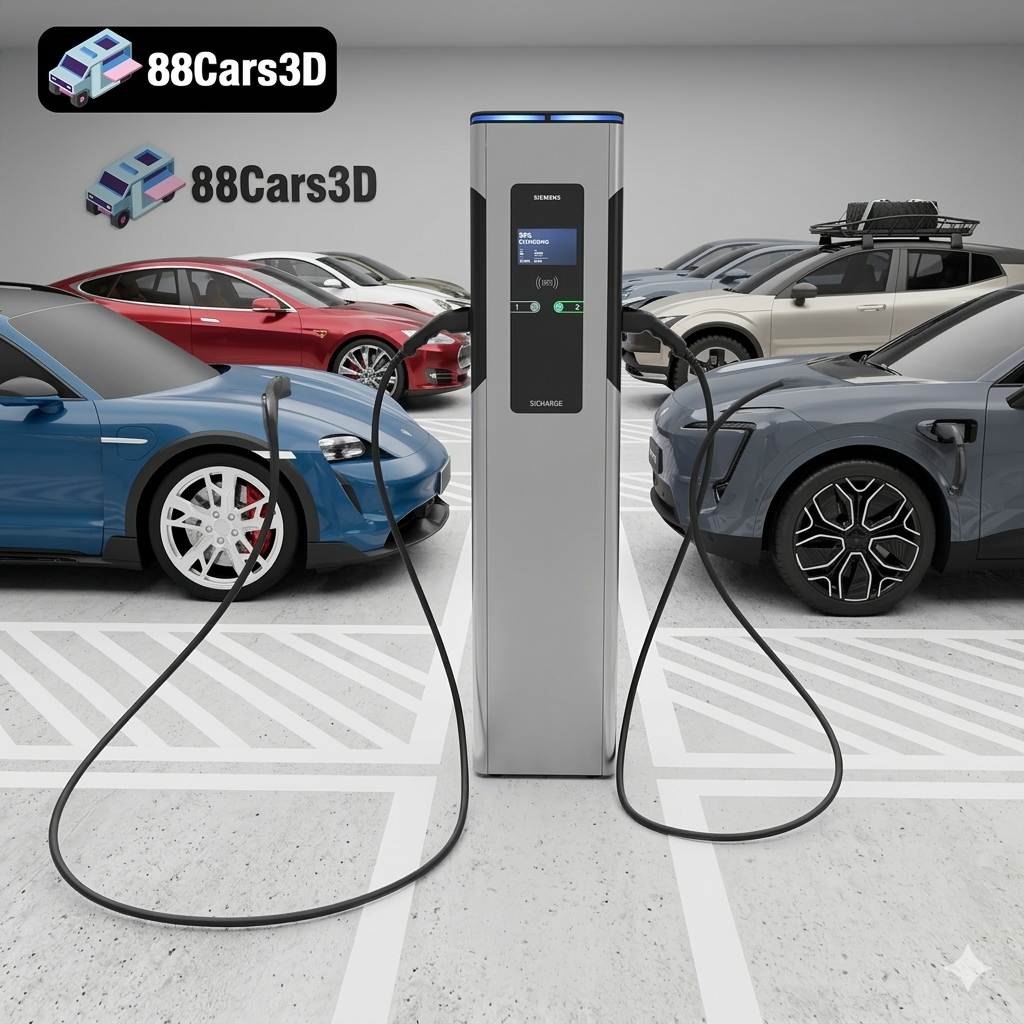
Download the Future of Mobility EV 3D Models Bundle. Includes the Volvo EX30, Tesla Model S, AVATR 11, Porsche Taycan, and a Siemens EV Charger. Save big on this highly optimized 5-in-1 pack for ArchViz and game development!
Price: $89.99

