Get 50% OFF All Premium 3D & STL Models!

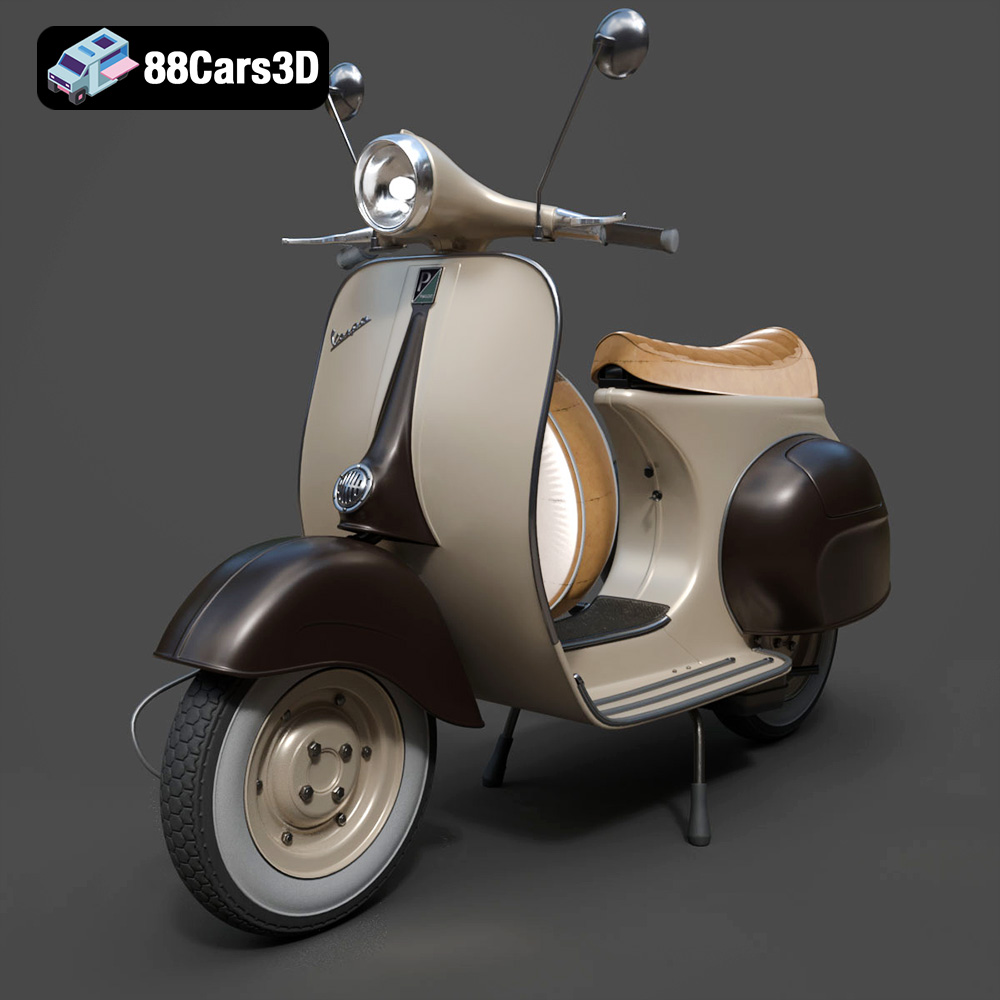
In the vibrant tapestry of automotive history, certain vehicles transcend mere transportation to become cultural icons. The Vespa VNB 125 is undeniably one such legend, a scooter that perfectly encapsulates the elegance, freedom, and post-war optimism of 1960s Italy. Its distinctive curves, practical design, and undeniable charisma have cemented its place in hearts worldwide. For 3D artists, game developers, architects, and designers, bringing such an emblem into the digital realm presents a unique opportunity – and a significant challenge to capture its essence accurately.
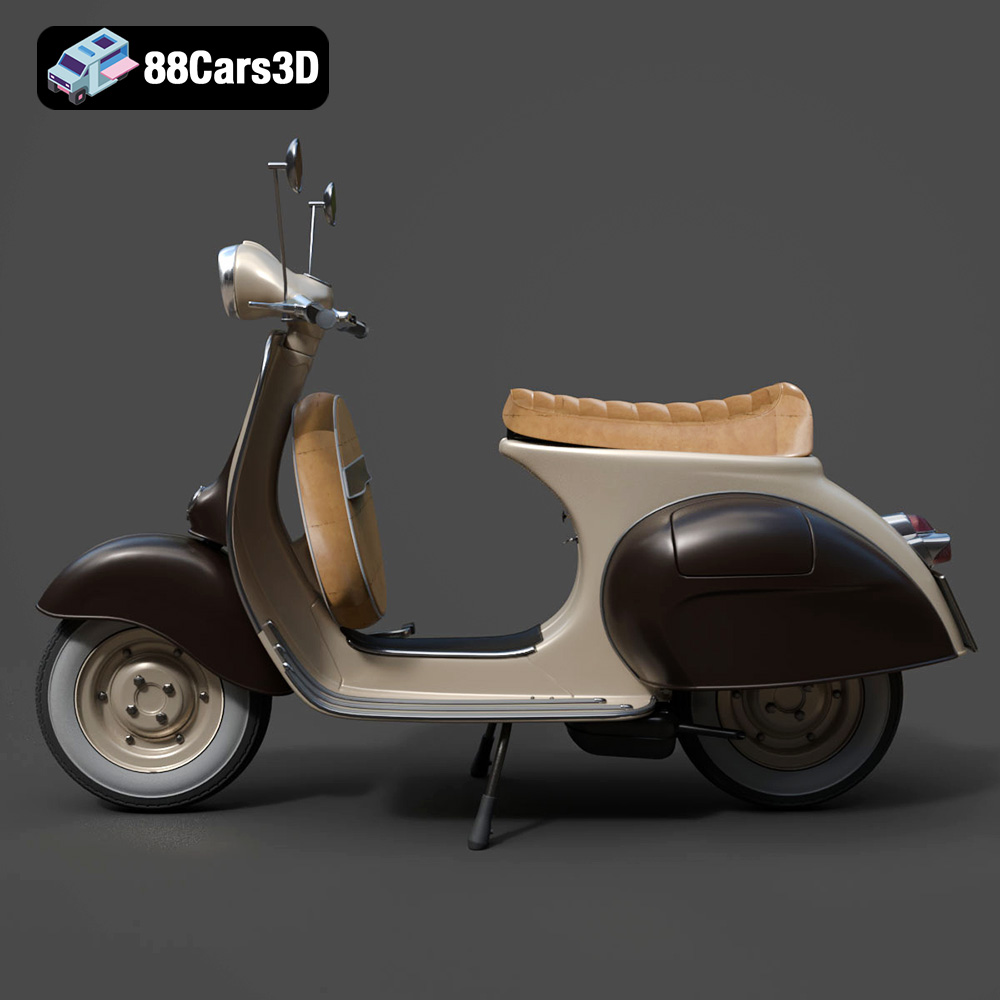
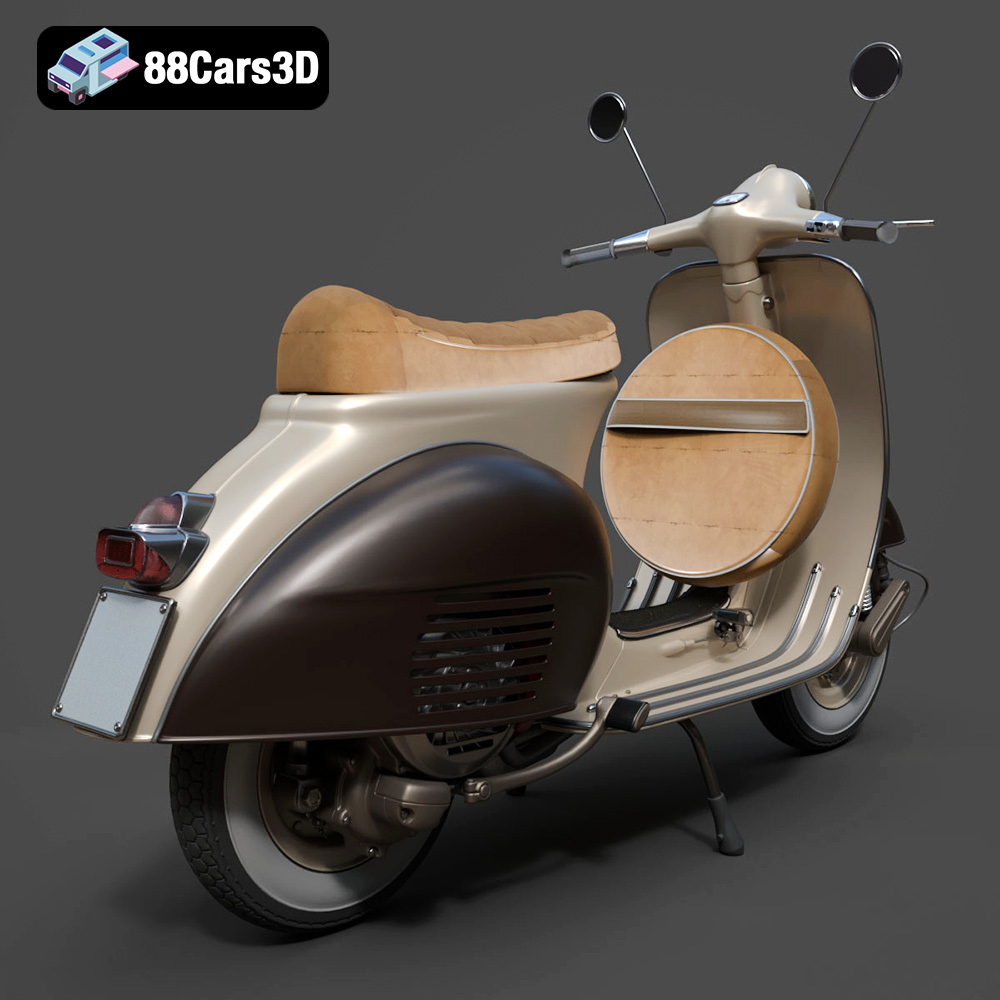
Enter the Vespa VNB 125 3D Model, a meticulously crafted digital recreation that allows professionals and enthusiasts alike to integrate this vintage masterpiece into their projects. Whether you’re aiming for breathtaking automotive rendering, building immersive game environments, or visualizing historical scenes in AR/VR, this model, available on 88cars3d.com, offers the fidelity and versatility required. It’s more than just a model; it’s a gateway to infusing your creations with genuine retro charm and technical precision.
Classic vehicles hold a special place in our collective imagination. They evoke a sense of nostalgia, masterful engineering, and an aesthetic that often stands in stark contrast to modern designs. Translating this appeal into the digital world requires not just technical skill, but a deep appreciation for the subject matter.
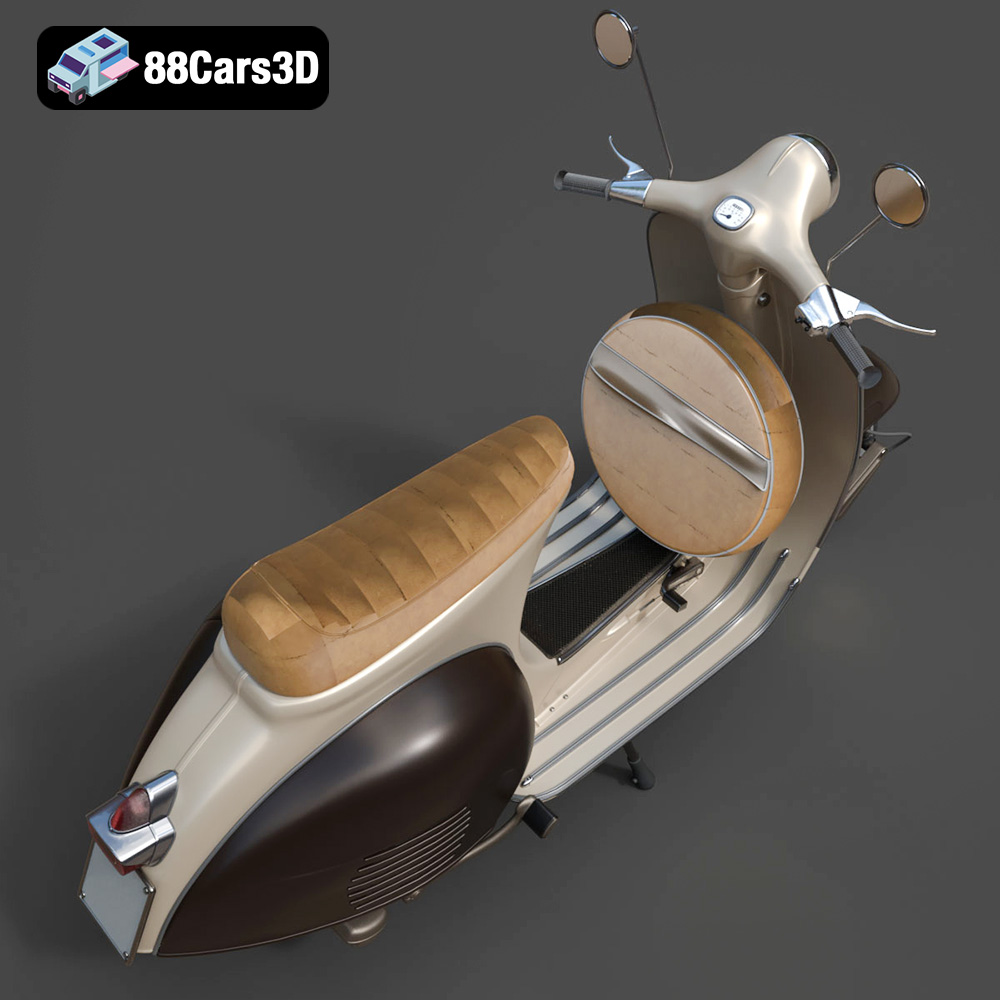
Recreating classic vehicles like the Vespa VNB 125 in 3D is an act of digital preservation. It allows designers to study the intricate forms, material characteristics, and subtle design philosophies that defined an era. A high-quality 3D model goes beyond simple geometry; it strives to convey the texture of the paint, the gleam of chrome, and the ergonomic thoughtful design of the original. For the Vespa VNB 125 3D Model, this means accurately representing its monocoque steel body, the signature circular headlamp, and the precise detailing of its handlebar assembly. Such attention to detail is crucial for projects where historical accuracy is paramount, from documentary visualizations to period-specific film productions.
While nostalgia is a powerful driver, the utility of classic vehicle 3D models extends far beyond sentimental value. They serve as invaluable assets in contemporary professional workflows. From automotive rendering for advertising campaigns that seek a retro aesthetic, to populating open-world game environments set in past decades, these models provide a ready-made solution that saves countless hours of development time. The Vespa VNB 125, with its distinctive silhouette, is perfect for adding character to city streets, beach promenades, or café scenes, instantly establishing a specific time and place within a digital landscape.
One of the most critical aspects of working with 3D models, especially those intended for diverse applications, is understanding the various file formats. Each format has its strengths, weaknesses, and intended use cases, making the choice of format pivotal for project success. The Vespa VNB 125 3D Model comes with a comprehensive suite of formats, ensuring maximum compatibility and flexibility for professionals across different platforms.
The .blend format is Blender’s native file type. It encapsulates an entire Blender scene, including all mesh data, materials, textures, lighting, camera setups, animations, and even physics simulations. Its primary advantage is retaining full editability within Blender, making it ideal for artists who primarily work within this powerful open-source 3D suite. When you download the Vespa VNB 125 in .blend format, you get a complete, ready-to-tweak scene, allowing for deep customization and iteration without losing any project data or quality. This is especially useful for setting up custom renders or integrating the scooter into a larger Blender-based scene.
.fbx (Filmbox) is an industry-standard format for 3D data interchange, owned by Autodesk. It’s highly versatile, supporting geometry, materials, textures, animations, and even rigging. It’s particularly favored in game development (Unreal, Unity) and film production due to its robust support for animation and hierarchal data. When importing the Vespa VNB 125 .fbx into Unreal or Unity, you can expect its pivot points, material assignments, and potentially even basic animations (like wheel rotation) to transfer cleanly. It’s an excellent choice for real-time pipelines where consistent data exchange is paramount.
.obj (Wavefront Object) is another widely adopted universal format, known for its simplicity and broad compatibility. It primarily stores geometry (vertices, normals, UVs) and can reference external .mtl (material) files for basic material properties. While .obj doesn’t support animation or complex hierarchies like .fbx, its widespread support across virtually all 3D software makes it a reliable choice for pure mesh data exchange. If your primary need is the geometric representation of the Vespa VNB 125 without animations, .obj offers excellent cross-software compatibility for rendering or static scene assembly.
.glb (GL Transmission Format Binary) is quickly becoming the standard for 3D models on the web, in AR/VR applications, and mobile platforms. It’s a single-file, self-contained asset that includes geometry, materials (PBR), animations, and cameras, all optimized for efficient transmission and loading. For interactive historical vehicle showcases or embedding the Vespa VNB 125 into a web-based configurator, .glb provides an efficient, high-quality solution.
.stl (Stereolithography) is the dominant file format for 3D printing. It represents a 3D model as a series of connected triangles (a triangular mesh) and does not store color, texture, or material information. Its strength lies in describing the surface geometry for physical fabrication. The Vespa VNB 125 3D Printable STL is specifically prepared for this purpose, allowing users to create tangible collectible scale models or decorative miniatures, as detailed in its recommended 3D print settings.
.ply (Polygon File Format) is a versatile format for storing 3D data, particularly useful for scanned data, but also for precision meshes. It can store various properties beyond just geometry, such as color, normals, transparency, and even material properties per vertex or face. While less common for general asset exchange than .fbx or .obj, its ability to store detailed mesh data makes it suitable for CAD, scientific visualization, or specific applications requiring high-fidelity polygonal information of the Vespa VNB 125.
The .unreal format signifies an asset specifically prepared or exported for the Unreal Engine ecosystem. This often means it comes with optimized mesh data, collision geometry, LODs (Levels of Detail), and appropriate material setups for direct import and use within Unreal Engine projects. For game developers leveraging the powerful rendering capabilities of Unreal, having an engine-ready Vespa VNB 125 asset streamlines the integration process significantly.
Finally, .max is the native file format for Autodesk 3ds Max. Similar to .blend, it contains an entire 3ds Max scene, including geometry, modifiers, materials, textures, lighting, cameras, and animations. For professionals working in architectural visualization, high-end rendering, or animation within the 3ds Max environment, the .max version of the Vespa VNB 125 3D Model provides full editability and control over every aspect of the scene.
Creating a compelling 3D model of an iconic vehicle like the Vespa VNB 125 goes beyond simply replicating its shape. It involves a meticulous understanding of 3D modeling principles, ensuring the asset is not only visually accurate but also technically robust for various professional applications.
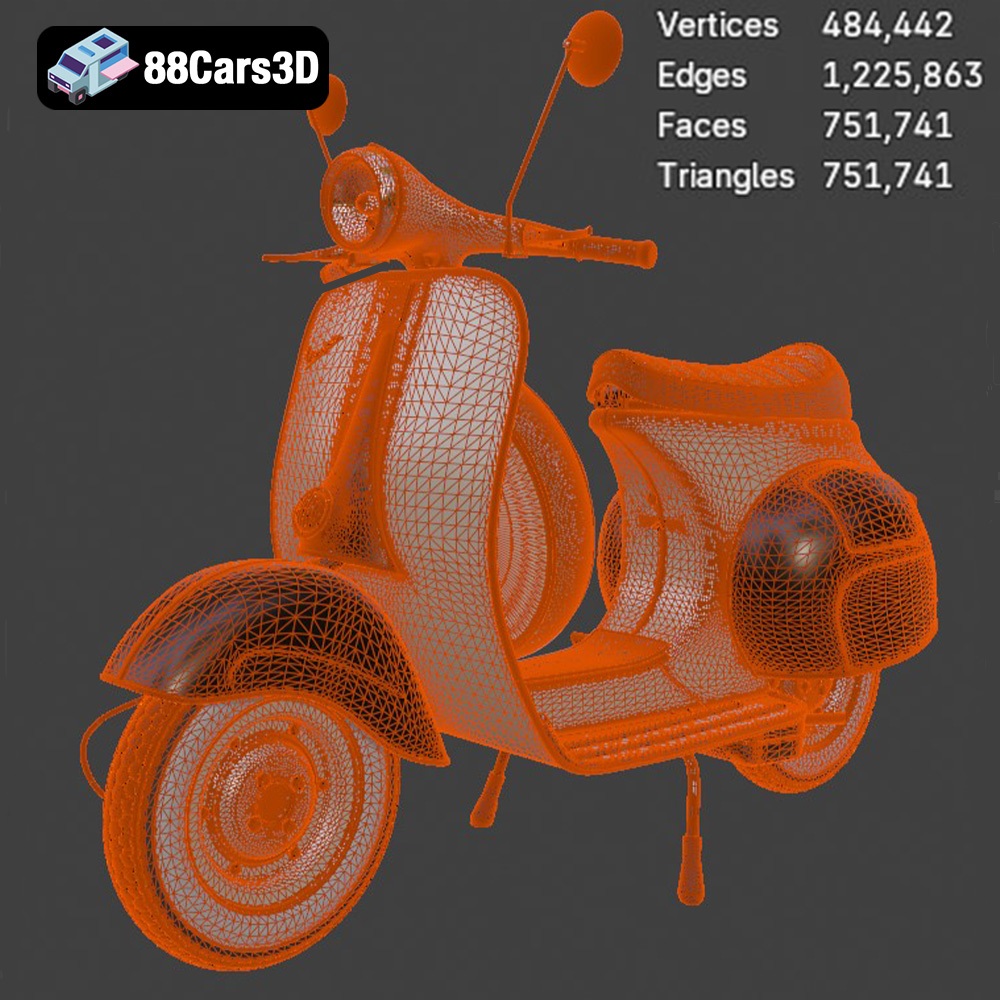
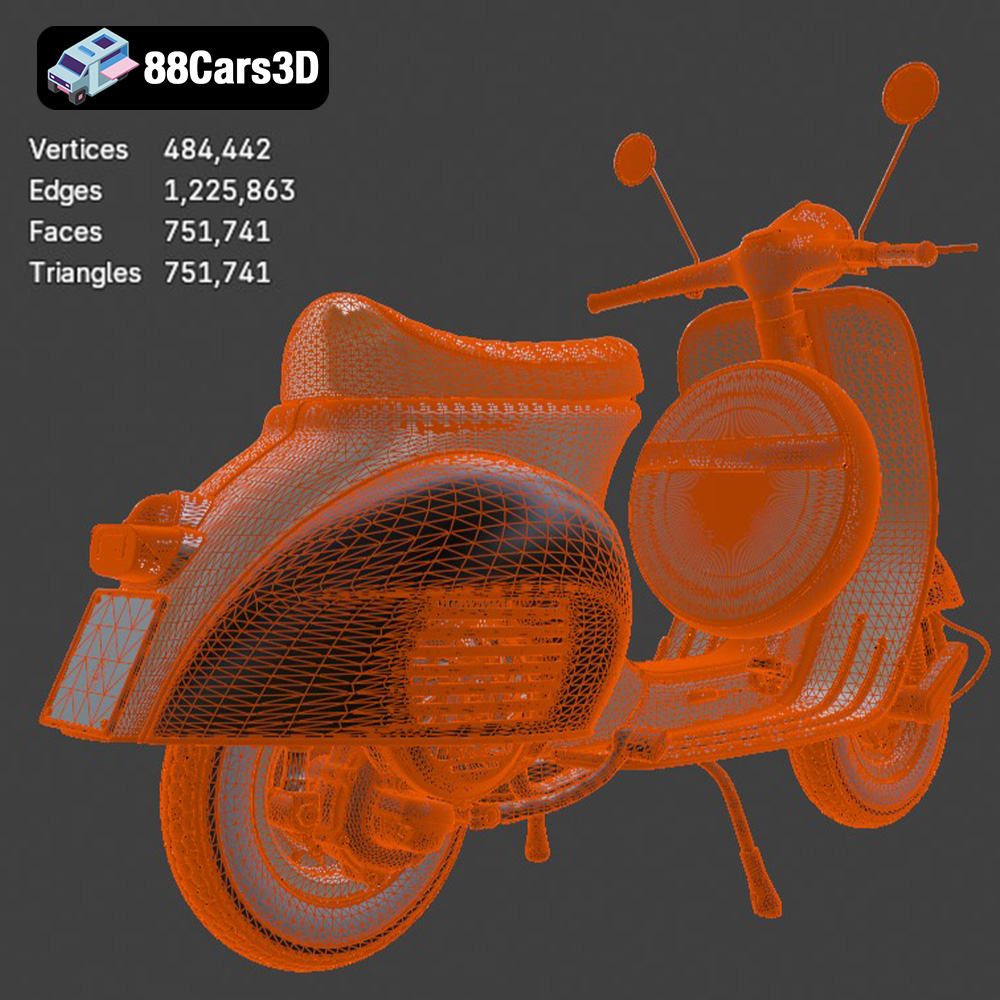
A “clean and well-organized mesh structure” is the bedrock of a high-quality 3D model. This means utilizing efficient quad-based topology, where polygons are predominantly four-sided, which allows for smoother subdivision, easier UV mapping, and better deformation during animation. The Vespa VNB 125 3D Model boasts optimized polygon flow, striking a balance between detail and performance. For rendering, this ensures smooth curves without noticeable facets. For real-time applications like game development, an optimized mesh translates to faster render times and less strain on system resources, while still maintaining the distinct rounded leg shield and streamlined side panels. Proper edge loops are crucial around areas of high curvature or where components meet, allowing for crisp details and accurate light reflections.
Even the most perfectly modeled geometry will fall flat without proper texturing. UV mapping is the process of unfolding the 3D mesh into a 2D space, allowing textures to be painted or applied without distortion. A clean UV layout is essential for high-fidelity materials and efficient texture creation. The Vespa VNB 125 3D Model includes materials and textures, suggesting it leverages a PBR (Physically Based Rendering) workflow. PBR materials accurately simulate how light interacts with surfaces in the real world, producing realistic reflections, refractions, and diffuse lighting. This is vital for achieving the authentic look of painted metal, chrome trim, and rubber tires that characterize the classic scooter, ensuring stunning automotive rendering outcomes.
Accuracy in 3D modeling extends to real-world scale. Whether you’re integrating the Vespa into an architectural visualization scene or a game environment, it needs to fit proportionally. The Vespa VNB 125 3D Model is designed with “real-world scale accuracy,” meaning it will seamlessly blend into any scene built to standard units. Furthermore, “proper pivot setup for steering and wheel rotation” is a crucial technical advantage. This thoughtful articulation allows animators to easily create dynamic shots of the scooter in motion, without the need for time-consuming rigging adjustments. The separate wheels and steering assembly are pre-configured for animation, making it a truly production-ready game asset.
The versatility of the Vespa VNB 125 3D Model lies in its adaptability across a spectrum of professional digital content creation workflows. Its comprehensive file formats and optimized structure ensure it’s a valuable asset for various industries.
For those focused on creating visually stunning still images and animations, the .max and .blend formats offer deep integration with industry-leading rendering engines. In 3ds Max, artists can leverage powerful renderers like V-Ray or Arnold to achieve photorealistic results. This involves setting up complex lighting scenarios – perhaps a sun-drenched European alleyway or a dramatic studio shot – and fine-tuning material properties to capture the subtle nuances of the Vespa’s paint, chrome, and leather. Similarly, Blender users can utilize Cycles or Eevee to render the model, benefiting from its native .blend file for immediate access to scene settings and custom shaders. The Vespa VNB 125’s clean topology and accurate material setups make it a perfect candidate for showcasing product design, historical context, or lifestyle branding through exquisite automotive rendering.
Game developers demand performance without sacrificing visual quality. The .fbx and .unreal formats of the Vespa VNB 125 3D Model are specifically tailored for real-time engines like Unreal. Importing the .unreal asset ensures optimal integration, often with pre-configured LODs (Levels of Detail) to manage performance at varying distances, and potentially even simplified collision meshes for physics interactions. This means the scooter can be dropped directly into an open-world urban game set in the 1960s, serving as an interactive element or a background prop, contributing significantly to environmental storytelling. Its “optimized geometry for real-time engines” is a critical feature, allowing for smooth gameplay even with multiple instances of the vehicle.
The digital age is pushing boundaries beyond traditional screens. For AR/VR experiences, the .glb format is ideal. Imagine an interactive historical exhibit where users can virtually walk around, inspect, and even “sit” on a perfectly rendered Vespa VNB 125 in an immersive environment. The optimized nature of .glb ensures smooth performance in these demanding applications. Furthermore, the inclusion of an .stl format opens up a world of physical creation. Artists can 3D print the Vespa at recommended scales (1:18, 1:12, 1:10), creating tangible collectible scale models. This bridges the gap between digital asset and physical object, providing a unique dimension for prototyping, decorative miniatures, or even detailed components for classic vehicle restoration previews.
To illustrate the true power of a high-quality 3D asset like the Vespa VNB 125 3D Model, let’s explore a few hypothetical, yet entirely plausible, professional scenarios.
Imagine a high-end coffee brand launching a new blend inspired by classic Italian culture. Their marketing campaign requires a series of cinematic visuals featuring an iconic vehicle that embodies effortless style and European charm. The Vespa VNB 125 3D Model becomes the star. Using software like 3ds Max or Blender, animators can place the scooter in a beautifully lit, cobbled street scene. With its detailed body proportions, chrome trim, and period-correct wheel dimensions, the model provides the perfect anchor for a nostalgic narrative. Dynamic camera moves, realistic reflections off its smooth body, and subtle environmental effects combine to create compelling automotive rendering that transports the viewer directly to a sun-drenched Italian piazza. The model’s “separate wheels and steering assembly for animation” would allow for realistic movement, even a subtle lean into a turn, enhancing the overall cinematic quality.
Consider a new open-world adventure game set in a fictionalized version of Rome during the swinging sixties. The game developers need a range of vehicles that accurately reflect the era. The Vespa VNB 125 3D Model, as a ready-to-use game asset, would be an invaluable addition. Imported as an .fbx or .unreal file, it can be quickly integrated into the game engine. Its “optimized geometry for real-time engines” ensures it performs well even when hundreds of other vehicles and characters populate the scene. Players could encounter these scooters parked along scenic routes, drive them through bustling markets, or even use them as part of a mission, experiencing the authentic vibe of the period. The model’s “proper pivot setup” would be essential for responsive and believable in-game handling.
A designer specializing in unique collectible figures wants to launch a line of historically accurate miniature vehicles. The Vespa VNB 125 is an obvious choice. Leveraging the provided .stl format and following the recommended 3D print settings (e.g., specific layer heights, wall thickness, and support structures), they can precisely replicate the scooter. Resin printing could be used for finer details, producing highly accurate physical models suitable for painting and display. Furthermore, a classic vehicle restoration workshop might use the 3D model for prototyping custom parts or visualizing modifications before committing to physical fabrication, utilizing the .ply format for detailed surface analysis. This showcases how the digital Vespa can inform and facilitate tangible creation, bridging the gap between virtual and real.
Beyond its inherent quality, the Vespa VNB 125 3D Model offers significant scope for customization, making it an incredibly versatile asset for any creative endeavor.
The product description highlights “customization options” such as changing body color with classic pastel finishes. This is a powerful feature for artists looking to match specific brand palettes or historical references. Imagine a vibrant aqua Vespa for a beach scene, or a sophisticated cream one for a high-fashion editorial. The ability to “add vintage decals or country license plates” further enhances its realism and contextualization. Adding a rear luggage rack or a spare wheel can transform its appearance, lending it either a practical, commuter look or a more adventurous, touring aesthetic. These small details significantly impact the storytelling potential of the model.
The Vespa VNB 125 3D Model is built for animation, with “separate wheels and steering assembly” and “proper pivot setup.” This means it’s not a static prop but a dynamic element. Animators can create captivating sequences: the scooter weaving through city traffic, parked elegantly outside a cafe with its kickstand down, or being ridden by a character. Adjusting lighting for “daytime city or sunset promenade scenes” can dramatically alter the mood, from energetic and lively to romantic and tranquil. This inherent dynamism ensures the model remains relevant and impactful across a multitude of animated projects, from advertising spots to cinematic game cutscenes.
The Vespa VNB 125 3D Model is far more than just a digital object; it’s a meticulously crafted, technically robust, and historically accurate asset designed to empower creators across diverse fields. From high-fidelity automotive rendering and immersive game development to practical AR/VR applications and 3D printing, its versatility is unmatched. The thoughtful inclusion of multiple industry-standard file formats – from .blend and .max for full editability in professional suites, to optimized .fbx, .glb, and .unreal for real-time engines and web, and .stl for physical fabrication – ensures that this iconic scooter seamlessly integrates into any workflow.
By leveraging the precision of its topology, the fidelity of its materials, and its inherent animation readiness, artists and developers can infuse their projects with the timeless charm and undeniable character of the classic Vespa. This model represents a smart investment for anyone looking to elevate their digital creations with high-quality 3D car models and game assets. Discover this exceptional piece of digital craftsmanship and many other premium assets by visiting 88cars3d.com, where quality meets creative potential.
The Vespa VNB 125 3D Model is a high-detail digital recreation of the iconic Italian scooter produced during the early 1960s. Known for its elegant curves, monocoque steel body, and lightweight urban practicality, the VNB 125 represents the golden era of classic European scooter design. This 3D model accurately captures the rounded front leg shield, signature circular headlamp, streamlined side panels, single-seat or dual-seat configuration, exposed handlebar assembly, and period-correct wheel styling. Designed with clean topology and real-world scale accuracy, it is ideal for rendering, animation, game development, AR/VR environments, and historical vehicle visualization. Perfect for retro city streets, European alleyways, beach promenades, café scenes, and cinematic vintage productions.
$19.88