Get 50% OFF All Premium 3D & STL Models!

In the fast-evolving landscape of digital content creation, the demand for high-fidelity 3D car models has never been greater. From cinematic automotive commercials to immersive virtual showrooms and hyper-realistic video games, a meticulously crafted vehicle asset forms the backbone of compelling visual experiences. These aren’t just pretty pictures; they are complex digital blueprints engineered for precision, performance, and versatility across a myriad of platforms and applications.
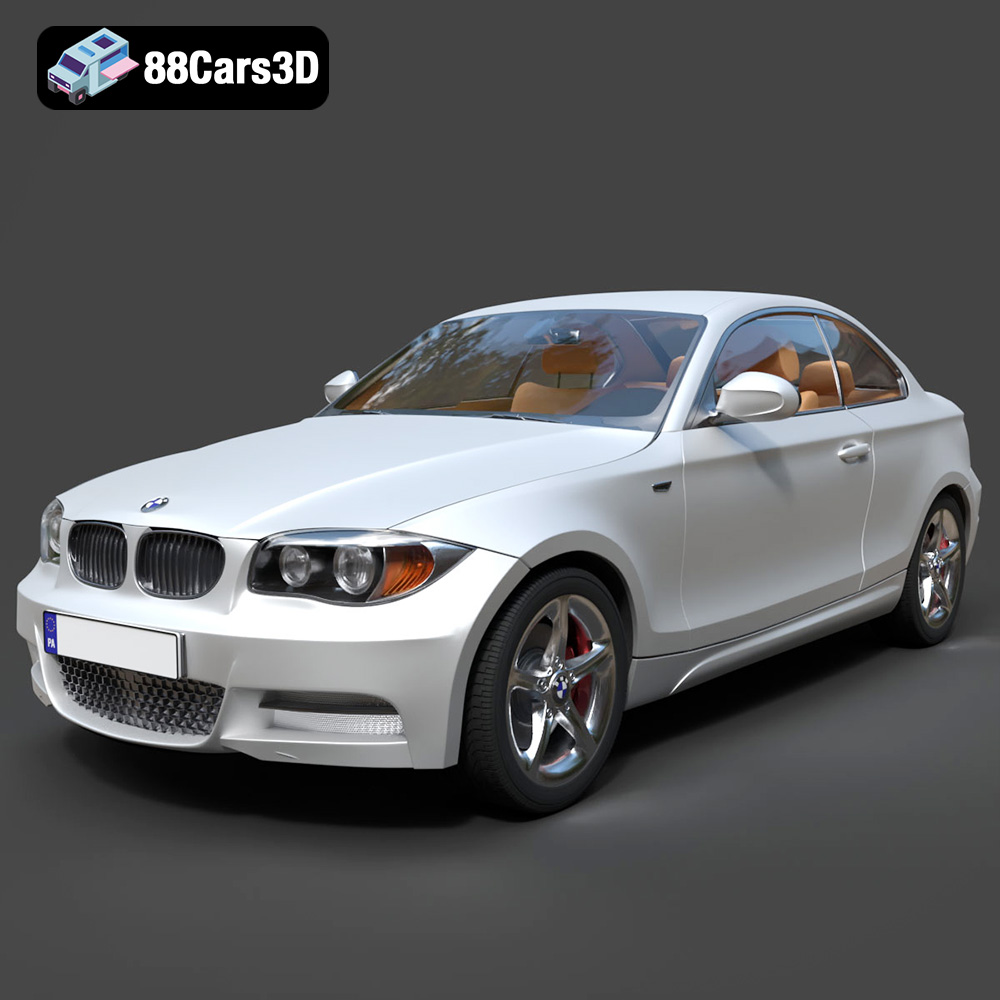
Today, we delve into the intricate world of automotive 3D modeling by focusing on an exceptional example: the BMW 1 Series Coupe 2009 3D Model. This asset, available on 88cars3d.com, is far more than just a static representation. It’s a testament to the dedication required to capture the essence of an iconic vehicle, blending the distinctive aesthetics of BMW’s compact premium sports coupe with the technical specifications necessary for professional-grade utilization. Its balanced chassis, rear-wheel-drive dynamics, and unique styling cues are all accurately translated into a digital form, ready to accelerate your projects.
Whether you’re an automotive designer seeking realistic visualization, a game developer building an open-world environment, or an architect integrating vehicles into a scene, understanding the technical depth and potential applications of such a model is crucial. Join us as we explore the technical advantages, diverse applications, and detailed workflows that make the BMW 1 Series Coupe 2009 3D Model an invaluable asset for any creative professional.
The choice of file format for a 3D car model is not merely a preference; it’s a critical decision that dictates compatibility, functionality, and performance across different software and platforms. The BMW 1 Series Coupe 2009 3D Model, recognizing this necessity, offers a comprehensive suite of formats to cater to virtually any professional workflow. Each format serves a specific purpose, optimized for particular stages of the production pipeline, from initial design to final rendering and real-time deployment.
The .blend format is native to Blender, the powerful open-source 3D creation suite. When you acquire a .blend file, you’re getting a fully editable scene, often complete with materials, textures, lighting setups, and even animation rigs. For artists heavily invested in Blender’s ecosystem, this format offers unparalleled flexibility. It allows for direct manipulation of mesh geometry, non-destructive modifiers, node-based material adjustments (PBR materials are standard), and integration into Blender’s Cycles or Eevee renderers without any translation layers. This is ideal for deep customization, tweaking details, or re-rigging components like separate wheels and steering for unique animations within Blender.
.fbx (Filmbox) is a proprietary file format owned by Autodesk, widely adopted as the industry standard for exchanging 3D data between various applications. Its strength lies in its ability to encapsulate not just geometry but also materials, textures, animations, skinning information, and camera data in a single file. This makes it ideal for game engines like Unreal Engine and Unity, as well as digital content creation (DCC) tools such as Maya, 3ds Max, and Cinema 4D. For the BMW 1 Series Coupe 2009, an .fbx export ensures that its clean topology, proper pivot setup for steering and wheel rotation, and optimized polygon flow are preserved when moving into a real-time pipeline or a different rendering package.
.obj (Wavefront OBJ) is one of the oldest and most universal 3D file formats. While it primarily stores geometric data (vertices, normals, texture coordinates, and faces), it’s highly compatible across almost all 3D software. Materials and textures are typically referenced through an accompanying .mtl (material template library) file. Its simplicity makes it a reliable choice for cross-software compatibility when the primary concern is mesh geometry, though it may require re-setting up materials in the destination software. For archival purposes or basic mesh transfers, .obj remains a steadfast option.
.glb (GLB, the binary version of glTF) is an increasingly popular format, particularly optimized for web-based 3D, augmented reality (AR), virtual reality (VR), and browser-based display. It’s designed for efficient transmission and loading of 3D scenes and models, containing all necessary data (geometry, materials, textures, animations) in a single, self-contained binary file. This makes the BMW 1 Series Coupe 2009 3D Model in .glb format perfect for interactive virtual showrooms, product configurators on websites, or lightweight AR applications where quick loading and broad compatibility are paramount.
.stl (STereoLithography) is the de facto standard file format for 3D printing. It represents a 3D model as a collection of unconnected triangular facets, defining only the surface geometry without color, texture, or material information. The BMW 1 Series Coupe 2009 3D Model’s availability in .stl highlights its suitability for physical production, allowing users to convert the digital asset into collectible scale models or display miniatures. Designers rely on this format to transfer their creations from the digital realm to FDM, SLA, or resin printers, focusing purely on manifold geometry for a successful print.
.ply (Polygon File Format) is often used for storing 3D data from 3D scanners, CAD systems, or for applications requiring precise mesh information, often including color information per vertex or face. It can store various properties beyond just geometry, such as normals, texture coordinates, and even reliability information. While less common for general 3D model exchange compared to .fbx or .obj, its inclusion with the BMW 1 Series Coupe 2009 model signals its potential for engineering analysis, reverse engineering workflows, or integration into specialized scientific and technical visualization tools.
The .unreal format implies a package specifically prepared for the Unreal Engine, a leading platform for game development, architectural visualization, and real-time cinematics. While Unreal typically imports .fbx, an .unreal file suggests a pre-optimized asset, potentially with collision meshes, LODs (Levels of Detail), and a basic material setup already configured within an Unreal project structure. This significantly streamlines the integration process for developers, allowing them to drop the BMW 1 Series Coupe 2009 directly into their scenes with minimal setup, maximizing efficiency for real-time environments.
Finally, the .max format is native to Autodesk 3ds Max, one of the most widely used 3D software packages in architectural visualization, automotive rendering, and animation. A .max file provides an editable 3ds Max project, retaining all scene information including cameras, lights, modifiers, animation curves, and complex material setups (e.g., V-Ray, Corona). For professionals working within 3ds Max, this offers the most comprehensive control over the BMW 1 Series Coupe 2009 3D Model, enabling intricate customization, detailed rendering, and integration into complex animation sequences.
By providing such a diverse range of formats, the BMW 1 Series Coupe 2009 3D Model from 88cars3d.com demonstrates a deep understanding of professional requirements, ensuring seamless integration into virtually any production pipeline.
Creating a high-quality 3D car model is a blend of artistic skill and technical precision. It goes beyond merely replicating an object; it’s about capturing its soul, its engineering nuances, and its aesthetic appeal in a digital medium. The BMW 1 Series Coupe 2009 3D Model exemplifies this fusion, showcasing meticulous attention to detail from its overall proportions down to the intricate components.
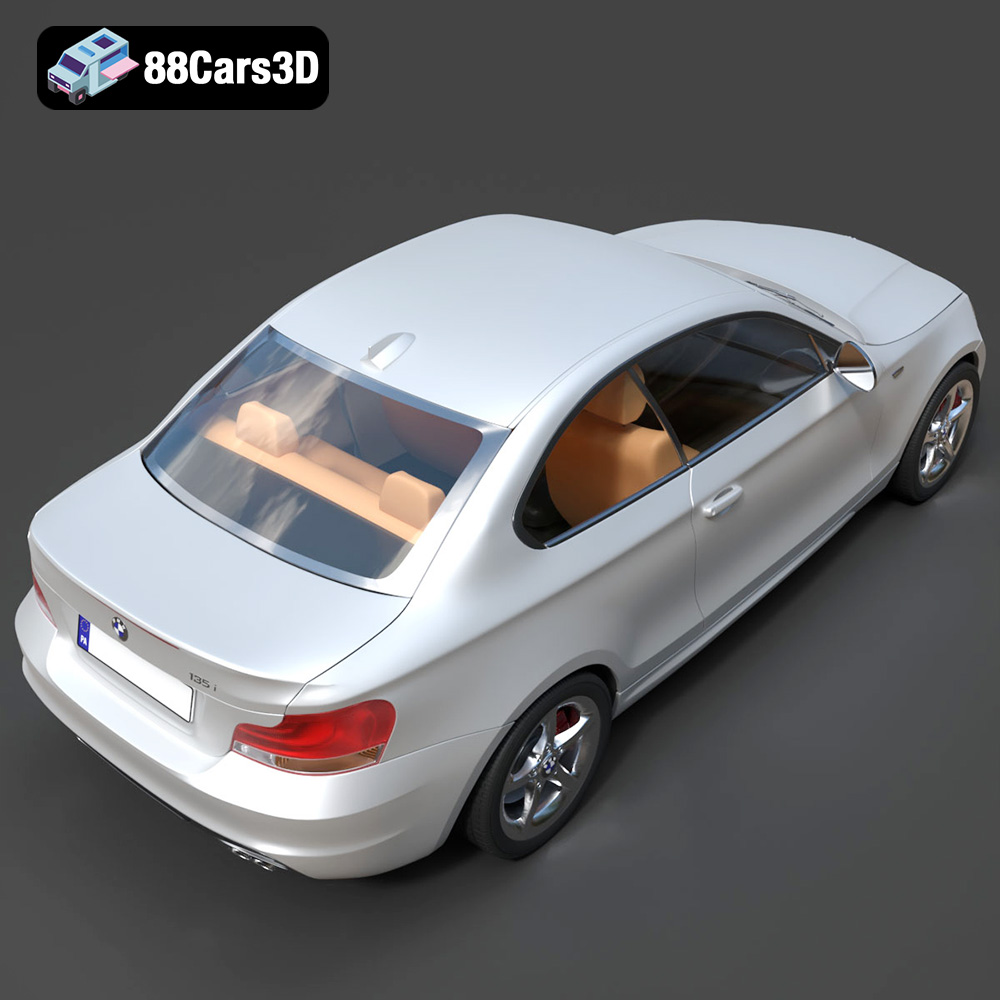
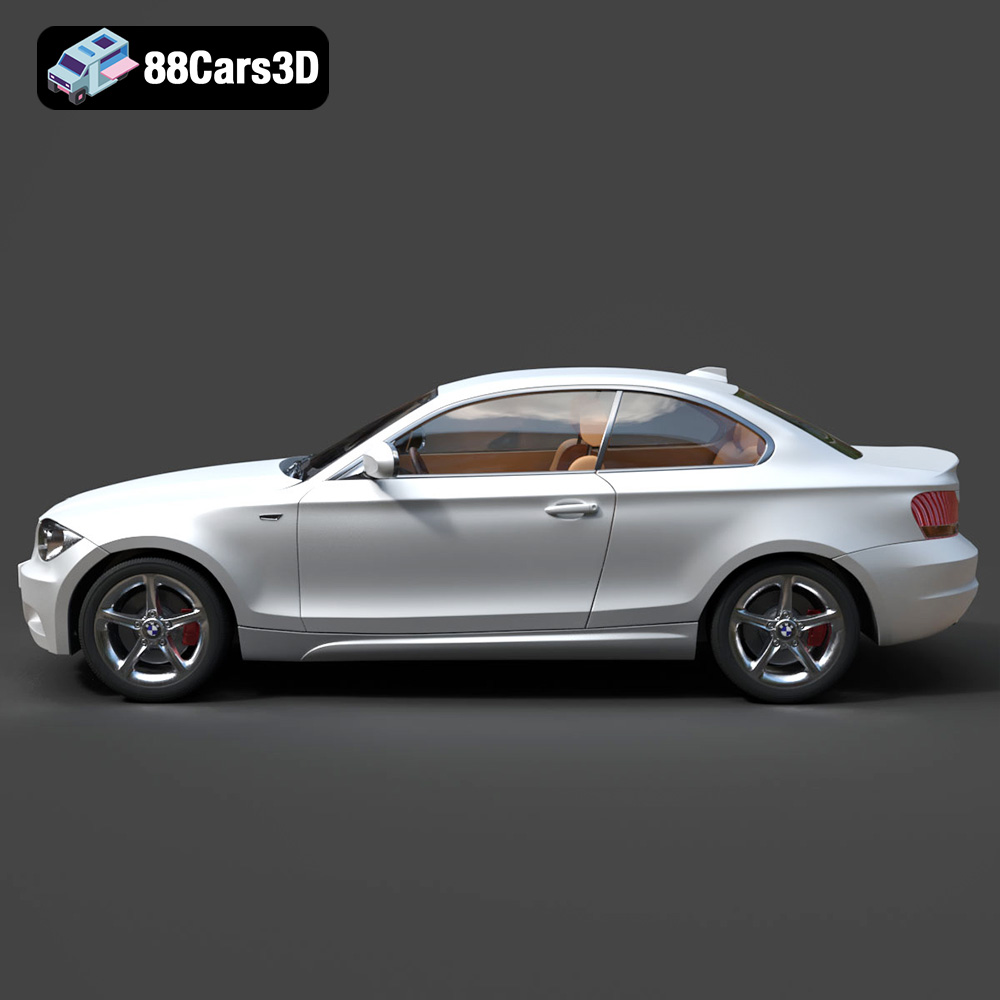
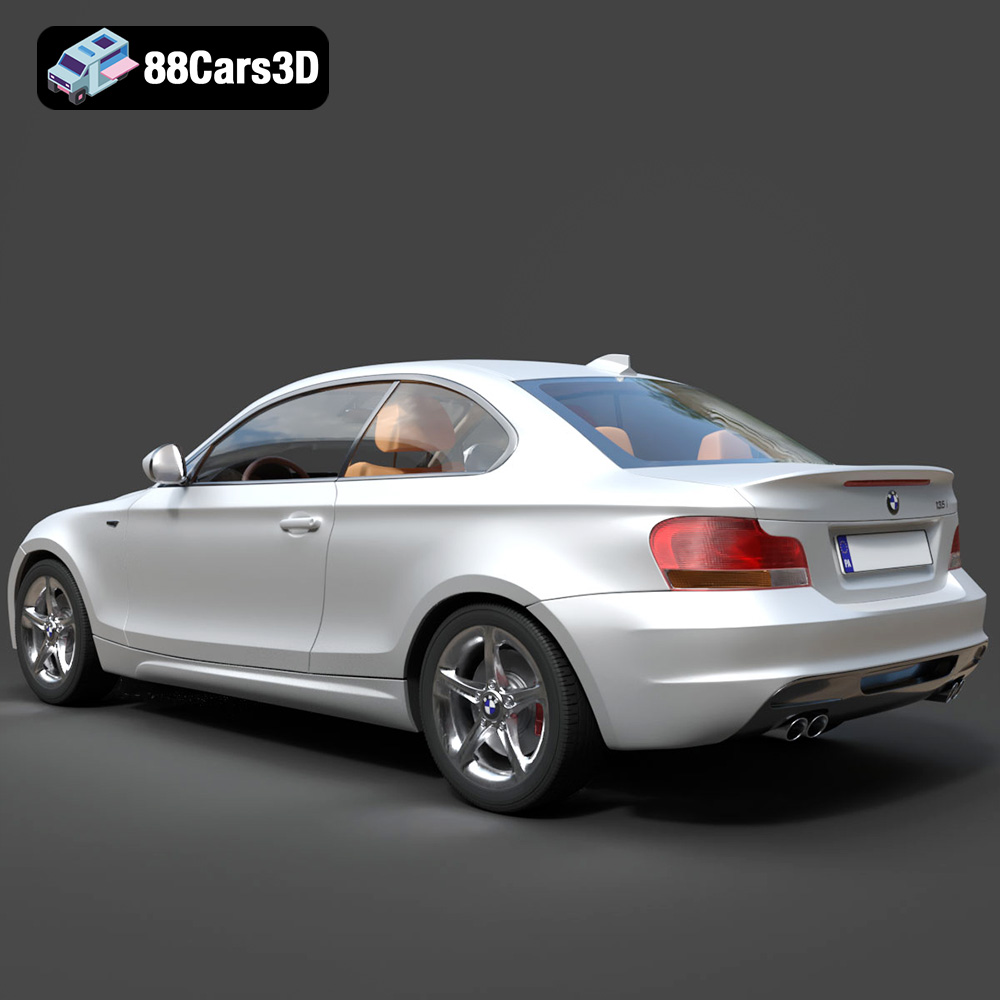
The exterior of any car is its most recognizable feature, and for the BMW 1 Series Coupe 2009, this means accurately translating its signature kidney grille, dual headlight design, and sculpted hood lines. A professional model achieves this through a process of careful blueprint matching and reference image analysis. The clean topology and real-world scale accuracy of this model ensure that every curve and panel gap aligns with the real vehicle. This is critical not just for visual fidelity but also for ensuring correct reflections and highlights in rendering. The sporty coupe roofline, rear trunk layout, and detailed alloy wheels with brake components are all individually modeled, providing the depth and realism necessary for close-up shots and dynamic animations. Furthermore, transparent glass materials and mirror geometry are not merely placeholders but actual geometric representations, allowing for accurate light refraction and reflections, essential for photorealistic automotive rendering.
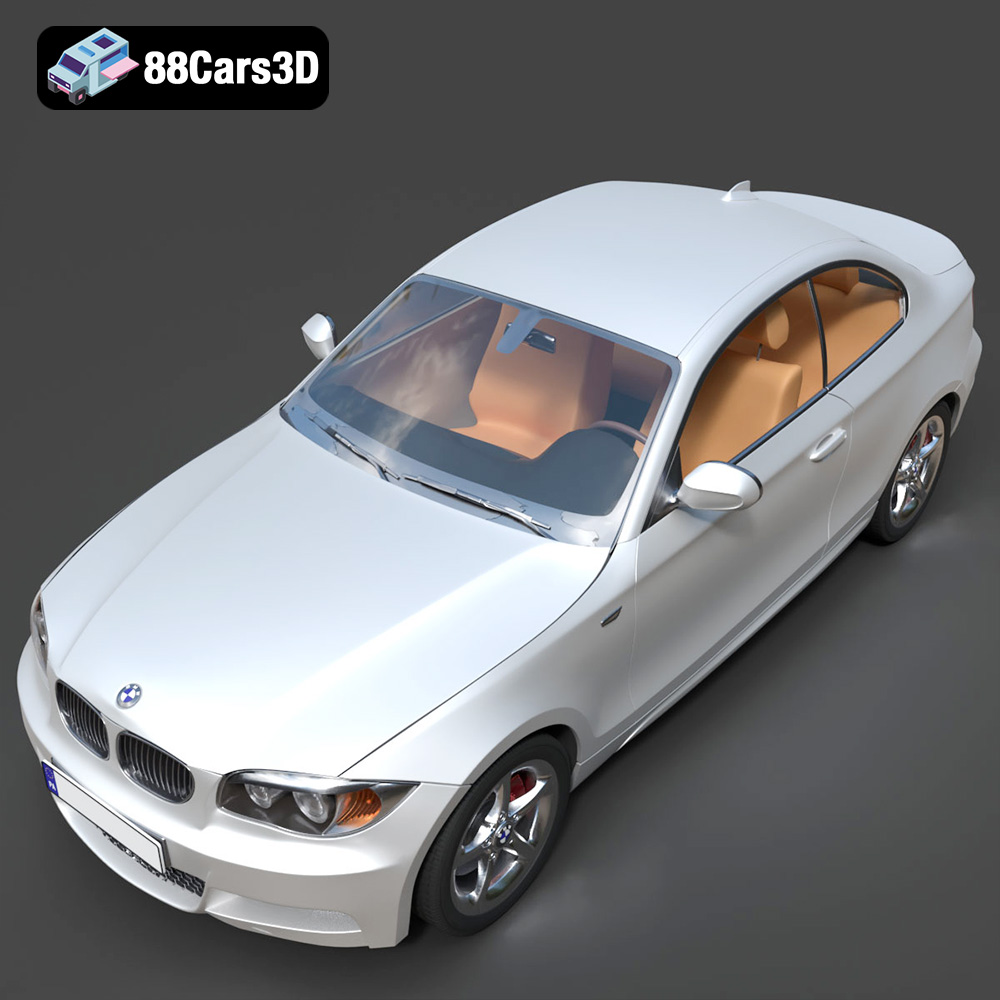
While often secondary to exterior shots, a detailed interior significantly elevates the versatility and quality of a 3D car model. The BMW 1 Series Coupe 2009 3D Model includes a dashboard with an analog instrument cluster, a multifunction steering wheel, and a center console with infotainment layout. These aren’t just low-poly approximations; they feature optimized geometry for both real-time engines and high-quality renders. Elements like front sport seat geometry, gear shifter, pedal detailing, door panels, and trim representation ensure that even interior shots maintain a high level of realism. This allows for applications like virtual walkthroughs, driver’s perspective simulations, or even cinematic camera passes through the cabin, adding immense value for projects in AR/VR or game development.
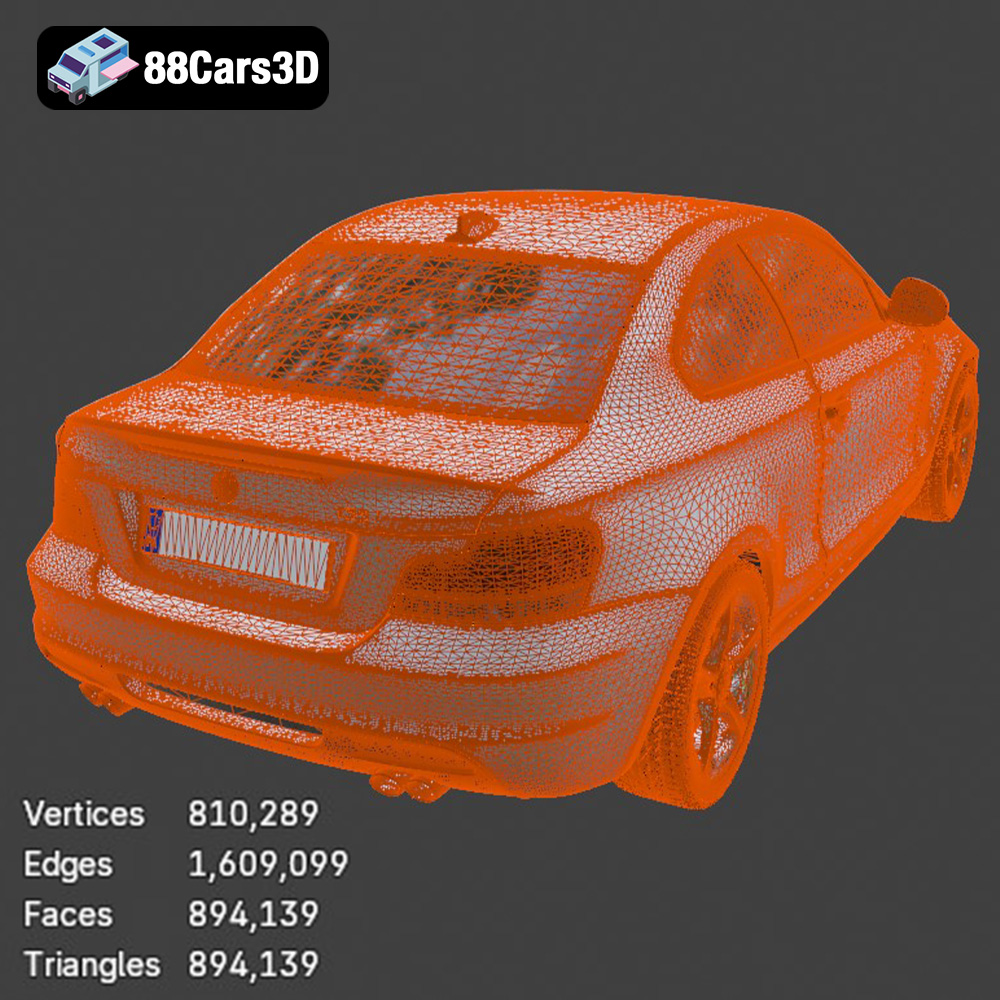
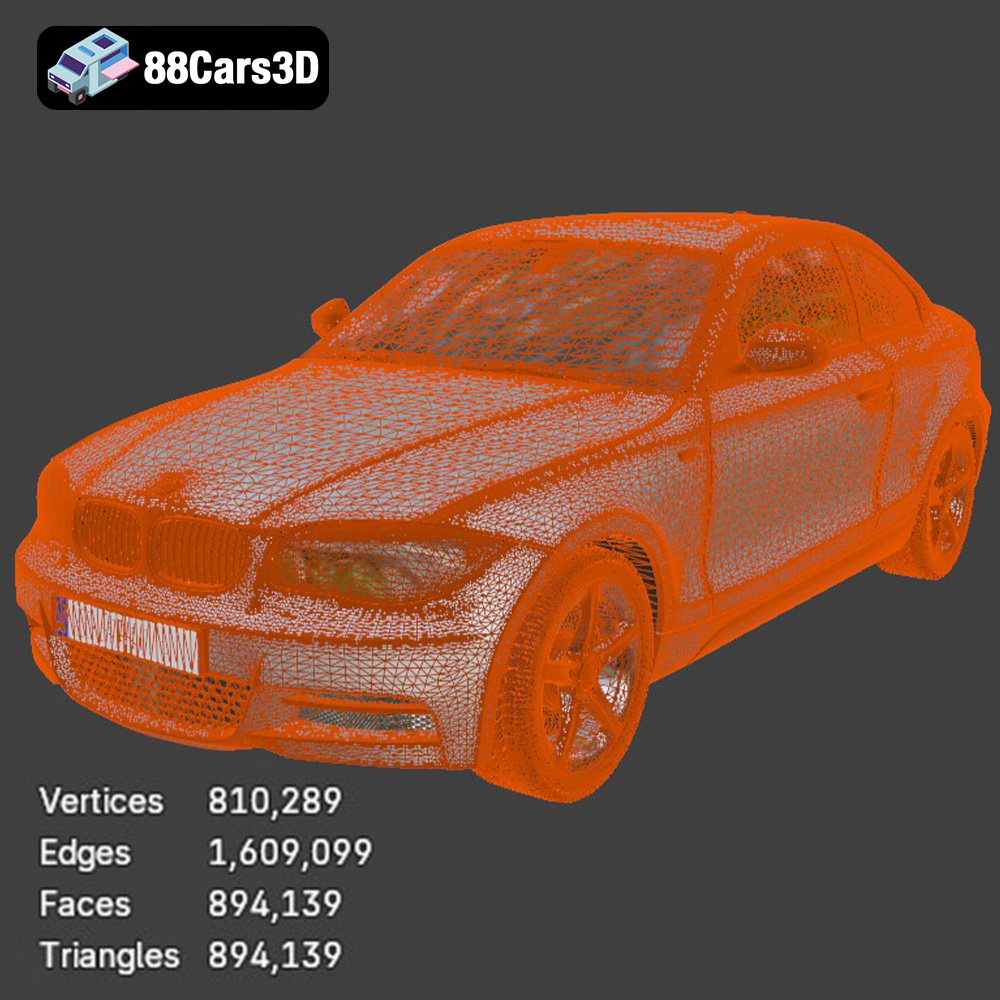
Underneath the stunning aesthetics lies a robust technical foundation. The BMW 1 Series Coupe 2009 3D Model boasts a clean and well-organized mesh structure, typically meaning quad-dominant topology that facilitates smooth subdivision and deformation. This is crucial for animation, where components like separate wheels and steering require proper pivot setup for realistic rotation. Optimized polygon flow is another key technical advantage, balancing performance for real-time applications with sufficient detail for high-resolution renders. This careful optimization means the model can perform efficiently in a game engine without sacrificing visual quality when rendered in a ray-tracing application, offering true flexibility for professionals across disciplines.
The true power of a high-quality 3D car model like the BMW 1 Series Coupe 2009 comes to fruition in rendering and visualization. This is where artists transform raw digital data into breathtaking images and animations, leveraging sophisticated software and techniques to achieve photorealism.
For professionals using industry-standard tools, the BMW 1 Series Coupe 2009 3D Model seamlessly integrates into leading rendering workflows. In 3ds Max, artists can import the .max or .fbx file, ready for advanced rendering engines like V-Ray or Corona Renderer. The model’s clean topology and accurate scale are perfect for setting up studio lighting environments, applying physically based rendering (PBR) materials, and crafting intricate reflections on the bodywork. The ability to customize body color, add sport package elements, or configure lighting for city, track, or showroom scenes is invaluable for automotive marketing and dealership visuals.
Similarly, Blender users benefit from the native .blend file, which often comes with PBR materials pre-configured for Cycles or Eevee. This allows for immediate high-quality renders with minimal setup. Artists can leverage Blender’s comprehensive toolset to add environmental details, animate camera paths around the car, and generate stunning promotional materials. Both 3ds Max and Blender workflows emphasize iterative refinement, allowing designers to experiment with various finishes, lighting scenarios, and camera angles to perfectly showcase the BMW 1 Series Coupe 2009.
Beyond static images, the BMW 1 Series Coupe 2009 3D Model is engineered for dynamic animations and cinematic projects. With separate wheels and steering components, it’s possible to create realistic driving sequences, car commercials, or even detailed simulations of suspension movements. The proper pivot setup for these components ensures smooth, believable animation. Storytellers can place the BMW in urban driving scenes, execute dramatic camera sweeps, or integrate it into complex visual effects shots. The detailed interior further expands possibilities, allowing for first-person perspective driving footage or close-up shots of the dashboard and controls, enriching any narrative with a sense of immersion and realism.
The performance and fidelity requirements for game assets and AR/VR experiences are distinctly different from those for offline rendering. Real-time environments demand efficiency, carefully optimized geometry, and robust material pipelines. The BMW 1 Series Coupe 2009 3D Model is explicitly designed to excel in these demanding scenarios.
Game developers will find the BMW 1 Series Coupe 2009 3D Model an invaluable asset for open-world driving games, racing simulations, and city environments. The inclusion of .fbx and .unreal formats significantly streamlines the integration process into engines like Unreal Engine and Unity. When importing into Unreal, for instance, the .fbx file typically brings in the geometry, UVs, and often basic material assignments. Developers can then create advanced PBR materials within Unreal, utilizing the engine’s powerful material editor to achieve photorealistic finishes optimized for real-time performance. This involves setting up base color, metallic, roughness, normal, and ambient occlusion maps. For performance, Level of Detail (LOD) meshes can be generated, and collision geometry created, ensuring the car behaves realistically within the game world.
The optimized polygon flow mentioned in the product description is crucial here. It means the model balances visual detail with poly count, preventing performance bottlenecks in large open-world simulations. Developers can easily configure the separate wheels and steering for in-game physics and animation systems, allowing players to drive and interact with a truly authentic BMW experience. Whether populating virtual cities or serving as a player’s primary vehicle, this model provides a solid foundation for immersive gameplay.
Augmented Reality (AR) and Virtual Reality (VR) represent the frontier of immersive experiences, and high-quality 3D car models are central to their success. The BMW 1 Series Coupe 2009 3D Model is perfect for virtual showrooms, interactive driving experiences, and even automotive design reviews in AR/VR. The .glb format is particularly beneficial for these applications, as it is optimized for efficient loading and display on various AR/VR platforms and web browsers.
Imagine a virtual showroom where customers can walk around the BMW 1 Series Coupe 2009, open its doors, and even sit inside, all rendered in real-time. The detailed interior geometry makes this possible, offering an interactive experience far beyond static images. For AR, the model can be projected onto a real-world environment, allowing users to visualize the car in their driveway or garage, changing colors and configurations interactively. The real-world scale accuracy is paramount here, ensuring the digital car feels natural and grounded in the physical space, enhancing the sense of presence and immersion. This model’s versatility makes it an ideal choice for businesses looking to create cutting-edge, interactive automotive experiences.
While much of the discussion around 3D car models revolves around digital rendering and real-time applications, the advent of affordable 3D printing has opened up an entirely new dimension: bringing these digital assets into the physical world. The BMW 1 Series Coupe 2009 3D Model is not only a digital marvel but also a meticulously prepared asset for tangible creation.
The inclusion of the .stl format is a clear indicator that this model is designed with 3D printing in mind. An .stl file converts the intricate surface geometry into a triangulated mesh, the universal language of 3D printers. This allows enthusiasts and professionals alike to produce physical replicas, scale models, or even prototypes of the iconic 2009 1 Series Coupe. The process typically begins by importing the .stl file into a slicer software (like Cura, PrusaSlicer, or Chitubox), which translates the 3D model into layer-by-layer instructions for the 3D printer.
The product description provides crucial 3D print settings, which are vital for a successful print. Recommended scales like 1:32, 1:24, 1:18, and 1:12 allow for a range of collectible sizes. Parameters such as layer height (0.08–0.16 mm), wall thickness (1.2–2.0 mm), and infill (15–25%) are carefully specified to ensure structural integrity and a smooth surface finish. A finer layer height is especially beneficial for capturing the subtle curves and details of the BMW’s bodywork. Furthermore, specific recommendations for supports (mirrors, bumper overhangs, underbody details) and print orientation (body printed angled, wheels separately) highlight the forethought put into optimizing this model for physical output. These guidelines are invaluable for achieving high-quality results whether using FDM or resin (SLA/DLP) printers.
Achieving a showroom-quality physical model often extends beyond the printing process itself. Post-processing is key to transforming a raw 3D print into a polished miniature. The recommendations for sanding, primer application, and a gloss automotive paint finish are professional best practices that significantly enhance the final appearance. Sanding removes layer lines and imperfections, primer creates an even base for paint, and a high-quality automotive paint replicates the real car’s lustrous finish. Optional sport trim detailing can be added to further customize the physical model, mirroring the digital customization options.
This capability to transition from a digital 3D car model to a tangible object expands the utility of the BMW 1 Series Coupe 2009 beyond screens. It opens doors for collectors, hobbyists, product designers creating prototypes, or even educational institutions using models for automotive engineering studies. The dual utility—digital and physical—makes this asset exceptionally versatile.
A truly versatile 3D car model isn’t just about initial quality; it’s about its adaptability and longevity within your creative projects. The BMW 1 Series Coupe 2009 3D Model is designed with customization and future-proofing in mind, ensuring it remains a valuable asset for years to come.
The ability to customize a 3D model is paramount for designers and artists who need to tailor assets to specific project requirements. With the BMW 1 Series Coupe 2009 model, users can easily change the body color and trim accents to match brand guidelines, personal preferences, or scene aesthetics. Imagine integrating the car into a moody night scene with custom neon accents, or showcasing it in a vibrant commercial with a unique metallic paint job. Beyond color, the model allows for adding sport package elements or performance wheels, subtly altering its character from a refined compact coupe to a more aggressive track-ready machine. Modifying ride height or stance can dramatically change the vehicle’s presence, while adding custom license plates provides an extra layer of realism and localization for specific markets or fictional settings. Furthermore, configuring lighting for city, track, or showroom scenes goes beyond simple illumination; it’s about setting the mood and highlighting the vehicle’s features in the most flattering way. This level of flexibility ensures the BMW 1 Series Coupe 2009 3D Model can be a dynamic element in any visualization.
Investing in a high-quality 3D car model from a reputable source like 88cars3d.com is a strategic decision for any professional. Such assets come with guaranteed clean and well-organized mesh structures, real-world scale accuracy, and proper pivot setups, significantly reducing the time and effort typically spent on asset preparation. This “production-ready” quality means less time fixing topology or adjusting pivots, and more time focusing on creative execution. The comprehensive file format support, from .blend and .max for native software use to .fbx and .unreal for engine integration, and .stl for 3D printing, ensures maximum compatibility across diverse workflows. This foresight prevents compatibility headaches down the line and future-proofs your investment, making the BMW 1 Series Coupe 2009 3D Model a reliable choice for long-term projects and evolving technologies.
The journey through the technical intricacies and creative possibilities of the BMW 1 Series Coupe 2009 3D Model underscores its value as a premier digital asset. From its meticulous exterior and interior detailing to its optimized mesh structure and comprehensive file format support, every aspect of this model is crafted for professional application. Whether your focus is on photorealistic automotive rendering, dynamic game assets for real-time engines, immersive AR/VR experiences, or even tangible 3D printed collectibles, this model provides the foundation for exceptional results.
The diverse array of included formats—.blend, .fbx, .obj, .glb, .stl, .ply, .unreal, and .max—ensures seamless integration into virtually any production pipeline, empowering artists and developers with unparalleled flexibility. Its clean topology, real-world scale, and attention to the distinctive features of the 2009 1 Series Coupe make it an authentic and powerful tool for bringing your digital visions to life. When you choose a high-quality model like this from 88cars3d.com, you’re not just buying a file; you’re investing in a cornerstone asset that will elevate the realism, performance, and impact of your creative projects.
Embrace the precision, versatility, and sheer quality that the BMW 1 Series Coupe 2009 3D Model offers, and let it drive your next project to new heights of digital excellence.
The BMW 1 Series Coupe 2009 3D Model is a high-detail digital recreation of the compact premium sports coupe known for its balanced chassis, rear-wheel-drive dynamics, and distinctive BMW styling. The 2009 1 Series Coupe blends everyday practicality with sporty performance, making it a popular choice among driving enthusiasts. This 3D model accurately represents the signature kidney grille, dual headlight design, sculpted hood lines, compact coupe proportions, sporty side profile, rear trunk layout, and alloy wheel detailing. Built with clean topology and real-world scale accuracy, it is ideal for rendering, animation, automotive visualization, game development, and AR/VR experiences.
$39.99
.1series
.arvr
.automotive
.blend
.bmw
.bmw2009
.car3dmodel
.compactcoupe
.fbx
.gameasset
.glb
.max
.obj
.ply
.rendering
.simulation
.sportcoupe
.stl
.unreal