Get 50% OFF All Premium 3D & STL Models!

In the dynamic world of digital content creation, the demand for highly detailed, accurately represented 3D models is ever-growing. From hyper-realistic automotive rendering to immersive game development and sophisticated industrial simulations, the bedrock of any successful project is the quality of its foundational assets. Professionals across various sectors constantly seek models that not only look authentic but are also technically optimized for diverse applications.
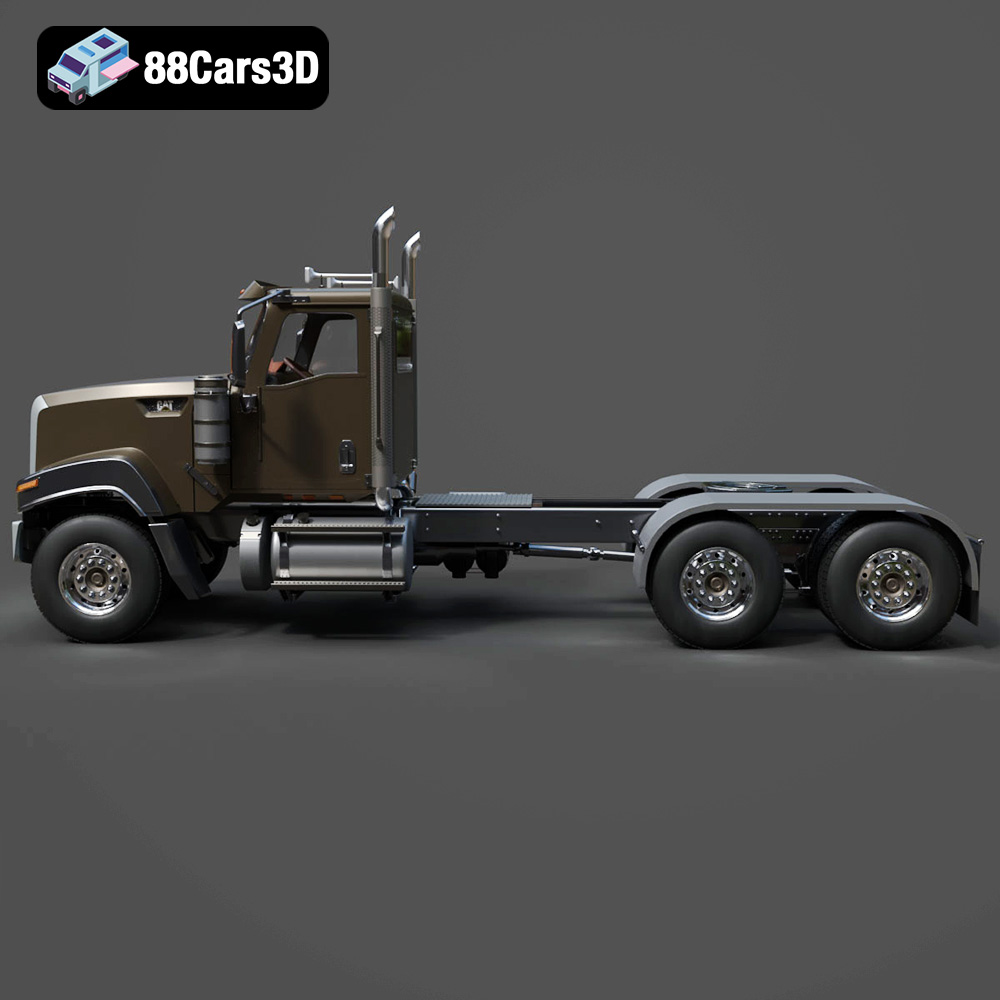
Today, we delve into the intricacies of integrating a truly exceptional asset into your workflow: the Caterpillar CT680 Tractor Truck 2015 3D Model. This isn’t just a static representation; it’s a meticulously crafted digital twin of Caterpillar Inc.’s heavy-duty vocational tractor, designed to elevate any project it becomes a part of. Whether your goal is to showcase logistical prowess, build a sprawling virtual construction site, or create compelling marketing visuals, this model from 88cars3d.com offers an unparalleled blend of detail, performance, and versatility.
Join us as we explore the technical specifications, diverse applications, and workflow advantages that make premium 3D car models like the Caterpillar CT680 an indispensable tool for modern digital artists and developers.
The journey of a 3D model, from its creation to its final deployment in a render, game engine, or 3D print, is heavily influenced by its file format. Each format serves a specific purpose, offering unique advantages in terms of compatibility, data retention, and optimization. Understanding these differences is crucial for any professional working with 3D car models, especially when acquiring a comprehensive asset like the Caterpillar CT680 Tractor Truck 2015 3D Model, which is available in a wide array of formats from 88cars3d.com.
The .blend format is the native file type for Blender, a powerful open-source 3D creation suite. When you receive a .blend file, you’re getting a complete Blender scene, often including the model’s geometry, materials, textures, lighting setups, cameras, animation data, and even physics simulations. This makes it ideal for users who primarily work within Blender, as it preserves all aspects of the original artist’s setup. For the Caterpillar CT680, a .blend file allows for full editability, giving artists the freedom to inspect and modify the mesh, fine-tune materials, or integrate the truck seamlessly into an existing Blender scene with minimal effort.
Arguably one of the most widely used interchange formats, .fbx (Filmbox) is developed by Autodesk and serves as a robust bridge between various 3D software applications and game engines like Unreal Engine and Unity. It excels at transferring not just geometry, but also materials, textures, animations, skinning, and even camera and light data. For complex animated 3D car models, .fbx is often the go-to format due to its comprehensive data support and widespread adoption. When working with the Caterpillar CT680, the .fbx version ensures a smooth transition into real-time environments or other 3D packages for advanced automotive rendering.
The .obj (Wavefront Object) format is a universal standard known for its simplicity and broad compatibility. It primarily stores geometric data – vertices, normals, UV coordinates, and faces – making it excellent for transferring static mesh models. While it handles basic material assignments, it typically references external .mtl (material library) files for color and texture information. The .obj format for the Caterpillar CT680 ensures that the core mesh data can be imported into virtually any 3D software, providing a reliable foundation for further texturing and rendering in your preferred environment.
The .glb (GL Transmission Format Binary) format is optimized for efficient transmission and loading of 3D scenes and models, particularly in web-based applications, augmented reality (AR), and virtual reality (VR) experiences. It packages 3D model data – geometry, materials, textures, and animation – into a single, compact binary file. Its focus on efficiency makes it perfect for displaying interactive 3D car models directly in browsers or on mobile devices. For the Caterpillar CT680, the .glb format is invaluable for creating immersive fleet demonstrations or interactive industrial simulations that are accessible on a wide range of platforms.
The .stl (STereoLithography) format is the industry standard for 3D printing. It represents a 3D model as a series of connected triangles, defining only the surface geometry without color, texture, or material information. While simple, its universal acceptance by 3D printers makes it indispensable for physical manufacturing. The Caterpillar CT680’s .stl output is perfect for creating scale truck models or display miniatures, as highlighted by its dedicated 3D print settings. The .ply (Polygon File Format), or Stanford Triangle Format, is similar to .obj but can store additional information like color, transparency, and range data, often used in scientific and CAD applications for precision mesh analysis.
The .unreal format refers to assets specifically configured and optimized for direct import into Unreal Engine projects. These assets typically come with pre-set materials, collision meshes, and LODs (Levels of Detail) tailored for the engine’s real-time rendering capabilities. This significantly streamlines the process for game development or high-fidelity visualization projects. Lastly, .max is the native file format for Autodesk 3ds Max, a leading software for 3D modeling, animation, and rendering. Like .blend, a .max file contains the complete scene, offering full editability and allowing artists to leverage 3ds Max’s powerful tools for advanced animation and rendering of the Caterpillar CT680.
The inclusion of such a comprehensive suite of file formats for the Caterpillar CT680 Tractor Truck 2015 3D Model underscores its versatility and the foresight of its creators. This multi-format availability ensures that regardless of your software ecosystem or project requirements, you have an engine-ready or highly editable asset at your fingertips.
The creation of a high-fidelity 3D model like the Caterpillar CT680 is a testament to meticulous craftsmanship and technical expertise. It’s a process that goes far beyond simply replicating shapes; it involves a deep understanding of real-world proportions, material science, and optimization techniques. The goal is to produce a digital asset that is both visually convincing and functionally robust across various applications, from static renders to dynamic simulations.
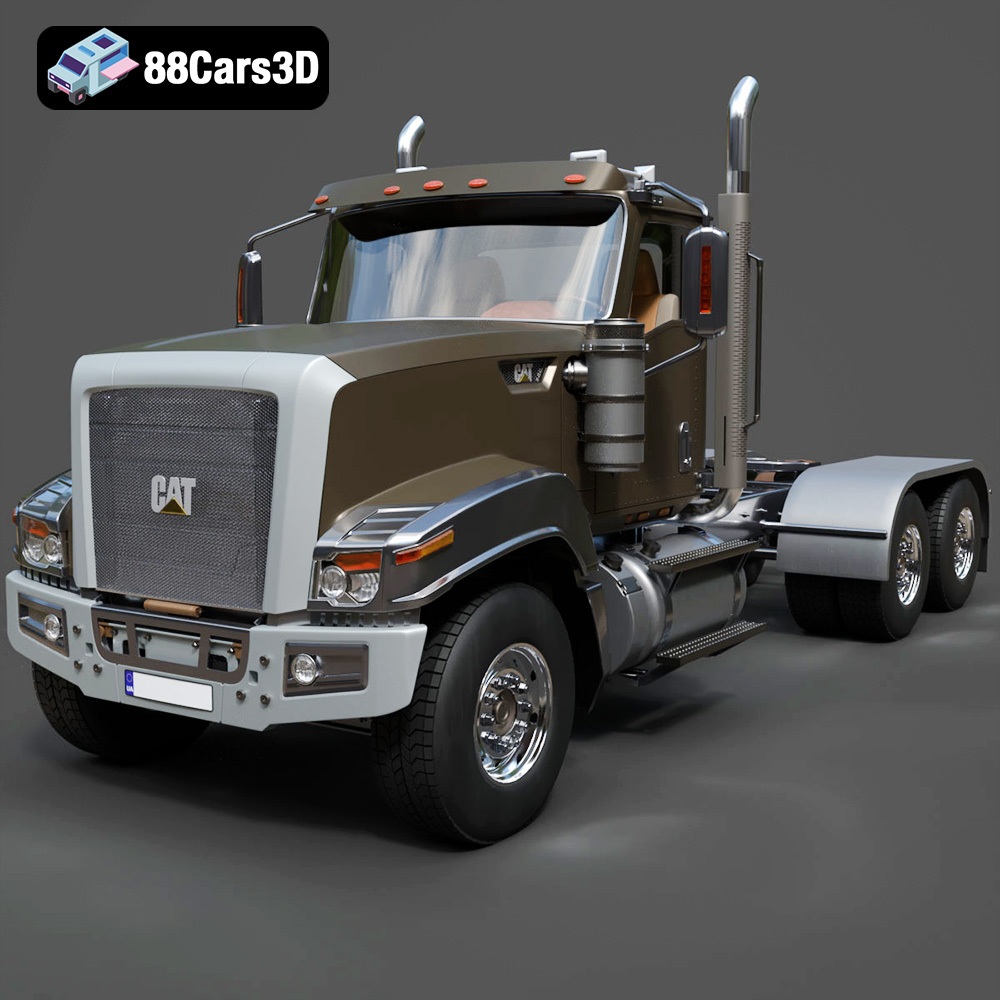
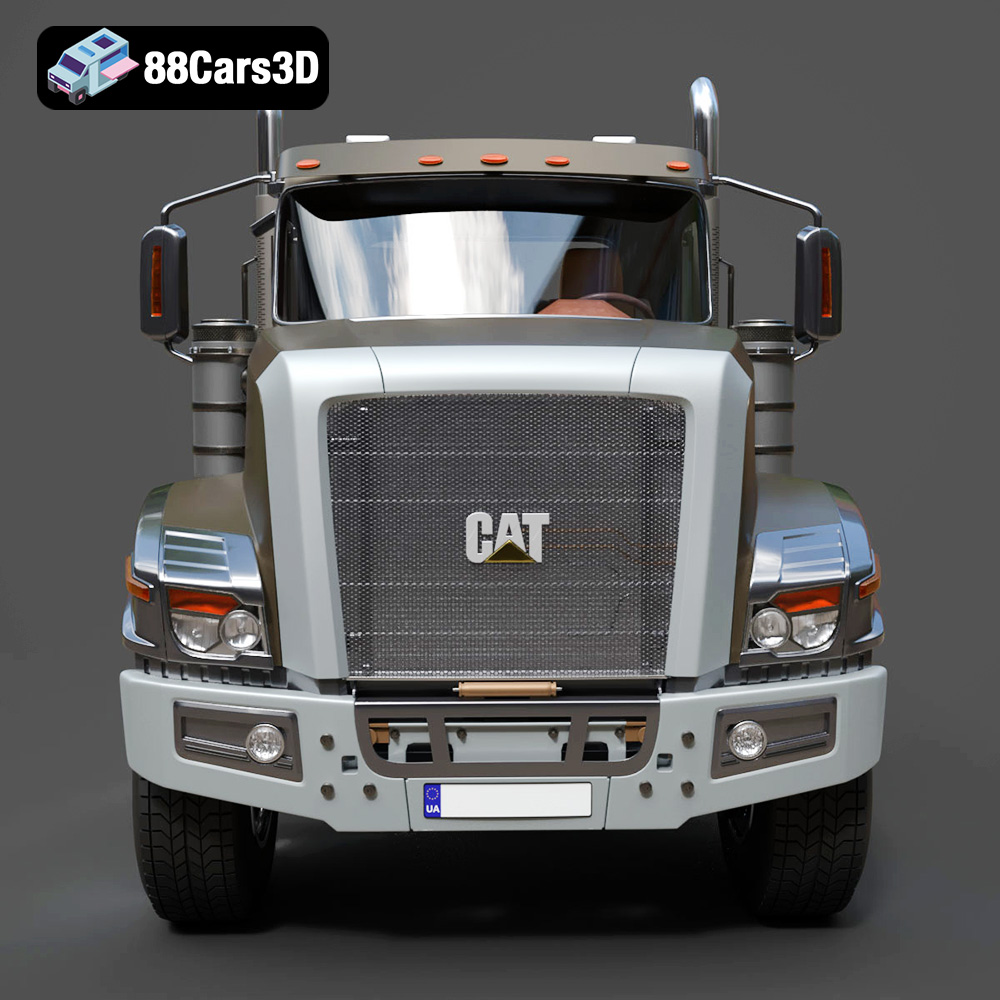
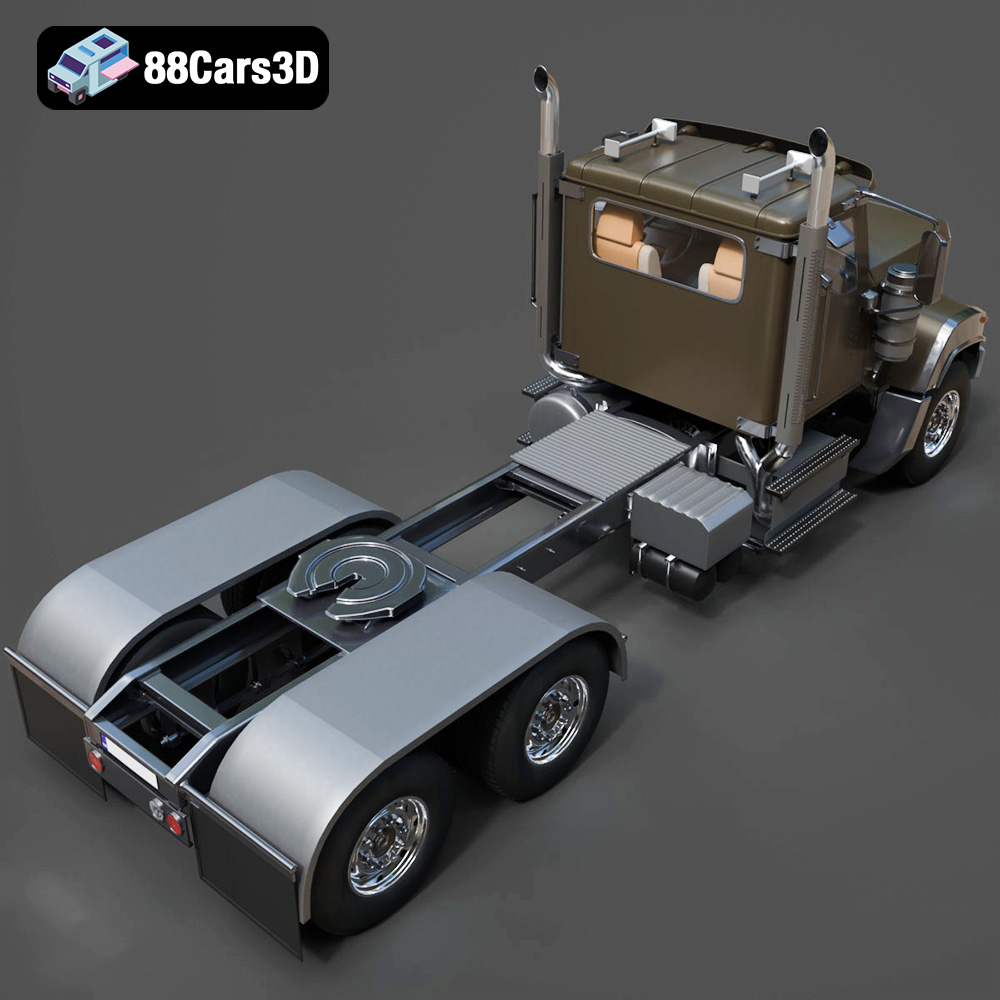
Achieving realistic automotive rendering hinges on precise modeling. For the Caterpillar CT680, this means capturing every subtle curve of its aerodynamic hood, the industrial strength of its reinforced bumper, and the intricate details of its bold grille design. The model’s accurate Caterpillar CT680 2015 body proportions are paramount, ensuring that when placed in any scene, it communicates authenticity. This level of detail extends to functional components such as the fifth-wheel plate for trailer attachment and separate wheels and steering components, crucial for realistic animation setups. Every headlight, indicator, and even the exhaust system is modeled to reflect the real truck, offering a truly immersive digital experience.
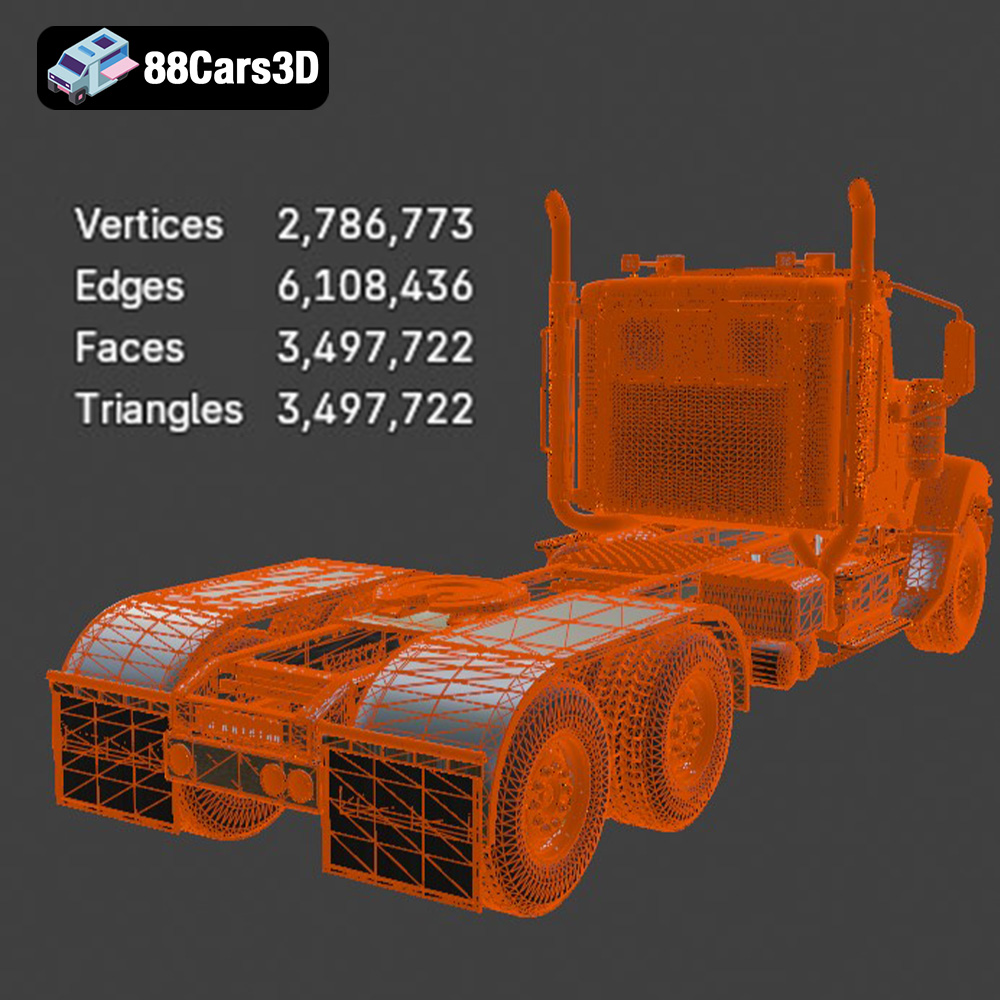
A beautiful model is only truly valuable if it performs well. This is where clean topology and optimized polygon flow come into play. The Caterpillar CT680 3D model boasts a well-organized mesh structure, which means polygons are distributed efficiently, avoiding unnecessary density while maintaining crucial detail. This makes the model lightweight enough for real-time engines, preventing performance bottlenecks in game development or AR/VR, yet detailed enough for high-quality renders without visual compromises. Real-world scale accuracy is another critical technical advantage, ensuring the model fits seamlessly into any environment without requiring tedious resizing and recalibration.
While the product description primarily emphasizes geometric detail, the mention of “real-world materials” (implied by the inclusion of formats like .blend, .max, .unreal which typically embed or link material data) highlights the importance of surface properties. High-quality PBR (Physically Based Rendering) materials are essential for achieving photorealistic results. These materials accurately simulate how light interacts with different surfaces, from the metallic sheen of the truck’s body paint to the rough texture of its tires and the reflective glass of its mirrors. The clean UV mapping (implied by “clean topology” and “optimized polygon flow”) ensures that textures are applied without distortion, enhancing the overall realism of the Caterpillar CT680 Tractor Truck 2015 3D Model.
The utility of a premium 3D model extends far beyond creating beautiful still images. For the Caterpillar CT680, its design makes it perfectly suited for dynamic and interactive environments, catering to diverse professional needs in everything from automotive rendering to advanced simulations.
The detailed chassis frame, separate wheels, and proper pivot setup for steering and wheel rotation make the Caterpillar CT680 Tractor Truck 2015 3D Model an exceptional asset for game development. Imagine this truck traversing open-world logistics games, serving as a key vehicle in truck simulators, or integrated into heavy transport systems. Its optimized geometry ensures smooth performance in real-time engines like Unreal Engine and Unity, allowing developers to create engaging and fluid gameplay. For industrial training and simulation, the accuracy of the model provides a realistic platform for vocational training, allowing users to practice driving, loading, and maintenance procedures in a safe, virtual environment.
When it comes to architectural visualization or industrial presentations, context is everything. Placing a meticulously detailed Caterpillar CT680 in a scene instantly adds a layer of realism and scale. Think of it in a logistics yard scene, a bustling construction environment, or as part of a commercial fleet presentation. The model’s high fidelity makes it ideal for creating stunning marketing visuals, illustrating operational workflows, or showcasing proposed infrastructure projects with unparalleled realism. This level of detail helps convey complex information effectively and makes any visualization more impactful.
Augmented Reality (AR) and Virtual Reality (VR) are transforming how industries interact with digital content. The Caterpillar CT680 3D model is perfectly poised for these emerging applications. Its optimized geometry and comprehensive file format support, including .glb and .unreal, enable the creation of interactive fleet demonstrations where potential buyers can virtually walk around, inspect, or even “drive” the truck. In immersive industrial simulations, technicians could train on virtual maintenance tasks or visualize complex logistical scenarios, all powered by the realistic representation of the CT680. This pushes the boundaries of engagement and understanding.
While the digital realm offers boundless possibilities, there’s a unique satisfaction in seeing a virtual creation manifest in the physical world. The Caterpillar CT680 Tractor Truck 2015 3D Model is not just for screens; it’s also designed with 3D printing in mind, opening up avenues for physical prototyping, scale models, and collectible miniatures. The inclusion of the .stl file format is a clear indicator of this versatility, enabling users to transform the digital into the tangible.
Converting a complex digital model into a watertight, manifold mesh suitable for 3D printing requires specific considerations. The Caterpillar CT680’s clean topology forms an excellent foundation for this. For 3D printing, the model needs to be a solid, enclosed volume without any gaps or intersecting geometry. The provided .stl format typically ensures this integrity. Users can then utilize slicing software to prepare the model, considering factors like print orientation, infill percentage, and the necessity of support structures to prevent overhangs from collapsing during the printing process.
The recommended print scales of 1:32, 1:24, 1:18, and 1:14 for the Caterpillar CT680 demonstrate its adaptability for various physical model sizes. These scales allow for different levels of detail to be captured effectively. For larger scales, more intricate features can be preserved, while smaller scales might require some simplification or the use of higher-resolution printing technologies like resin (SLA/DLP) for finer details. The recommendation to print wheels separately ensures maximum detail and easier post-processing, allowing for precise painting and assembly.
3D printing is often just the first step. The provided post-processing guidelines – sanding, primer, industrial paint finish, and optional decals – are crucial for achieving a professional, factory-fresh appearance. This level of attention to detail in the physical output mirrors the precision of the digital model itself. Whether creating a desktop display model, a component for an architectural model, or a custom toy, the ability to produce a high-quality physical asset from a digital one adds significant value and expands the product’s application range considerably.
The true power of a versatile 3D asset lies in its seamless integration into various professional pipelines. The Caterpillar CT680 Tractor Truck 2015 3D Model is engineered for compatibility, offering multiple avenues for deployment, whether your preference is for real-time engines, advanced rendering suites, or bespoke creative workflows.
For game developers and real-time visualization specialists, importing the Caterpillar CT680 into Unreal Engine is a straightforward process, especially with the included .fbx and .unreal formats. The .fbx can be imported with textures and materials, often requiring minor adjustments to shaders to achieve desired photorealism within Unreal’s PBR workflow. For an even more streamlined experience, a .unreal file would be ready to drag-and-drop, potentially with pre-configured collision meshes, LODs, and proper pivot points for animation. Once in Unreal, artists can utilize the engine’s robust lighting, particle systems, and blueprint scripting to create interactive simulations, driving experiences, or complex industrial scenes featuring the CT680 as a central element. Imagine animating its steering, wheel rotation, and even a fifth-wheel coupling action within the engine.
For those focused on high-quality cinematic renders and complex animations, the .blend and .max files offer complete control. In Blender, the Caterpillar CT680 model can be immediately leveraged in Cycles or Eevee, taking advantage of Blender’s node-based material system to create custom shaders, intricate paint effects, and realistic environmental lighting. Similarly, in 3ds Max, the .max file allows full access to the model’s hierarchy, enabling artists to rig the chassis, wheels, and steering components for sophisticated animations using tools like MassFX or custom character animation systems. Both platforms excel at creating breathtaking automotive rendering sequences, product showcases, or dynamic marketing animations that highlight the truck’s features in unparalleled detail.
The technical advantages of the Caterpillar CT680 3D model, such as its clean mesh and separated components, lend themselves well to extensive customization. Artists can easily change body colors and fleet branding, applying custom decals or company logos to adapt the truck to specific client requirements. Modifying wheel configurations, adding specialized attachments, or even integrating it with other compatible trailer models from 88cars3d.com can transform the base model into a unique asset. Adjusting lighting setups for day, night, or specific industrial scenes further enhances its versatility, ensuring the model can fit into virtually any narrative or visual context.
In a saturated market of digital assets, choosing reliable, high-quality 3D car models is a strategic decision for any professional. The Caterpillar CT680 Tractor Truck 2015 3D Model from 88cars3d.com exemplifies the benefits of investing in premium assets, saving valuable production time and ensuring a polished final product.
Time is a critical resource in any project. Starting with a pre-optimized model like the Caterpillar CT680 eliminates the need for extensive cleanup, remodeling, or manual optimization. Its clean and well-organized mesh structure, real-world scale accuracy, and proper pivot setup mean less time spent on technical corrections and more time dedicated to creative iteration and project development. This efficiency translates directly into cost savings and faster project turnaround, a significant advantage in competitive industries.
The comprehensive list of included file formats (.blend, .fbx, .obj, .glb, .stl, .ply, .unreal, .max) speaks volumes about the model’s versatility. This broad compatibility ensures that users can confidently integrate the Caterpillar CT680 into their preferred software and engine, minimizing potential workflow disruptions. Furthermore, purchasing from a reputable source like 88cars3d.com provides assurance of asset quality and typically includes support for any technical inquiries, making the investment a secure one for long-term project success.
The Caterpillar CT680 Tractor Truck 2015 3D Model stands as a prime example of a meticulously crafted digital asset, designed to meet the rigorous demands of professional 3D artists and developers. Its authentic representation, combined with technical optimization and comprehensive file format support, makes it an invaluable tool for a wide array of applications – from stunning automotive rendering and immersive game development to precise industrial visualization and tangible 3D prints.
By leveraging such a high-quality 3D car model, creators can streamline their workflows, enhance visual fidelity, and deliver impactful experiences across various media. Whether you’re a game developer seeking realistic heavy machinery, an architect visualizing a new logistics hub, or an industrial designer creating scale prototypes, the Caterpillar CT680 offers the precision and performance you need. Explore this exceptional model and many more premium 3D car models at 88cars3d.com to elevate your next project.
The Caterpillar CT680 Tractor Truck 2015 3D Model is a high-detail digital recreation of the heavy-duty vocational tractor developed by Caterpillar Inc.. Built for durability and on-highway performance, the CT680 combines industrial strength with aerodynamic efficiency, making it a popular choice for logistics, construction, and long-haul transport operations. This 3D model accurately represents the truck’s aerodynamic hood, bold grille design, reinforced bumper, extended mirrors, exposed chassis frame, and fifth-wheel coupling system. Designed with clean topology and real-world proportions, it is ideal for rendering, animation, simulation, game development, and AR/VR industrial visualization. Perfect for highway scenes, logistics yards, construction environments, freight simulations, and commercial fleet presentations.
$59.90
.arvr
.blend
.caterpillar
.ct680
.fbx
.gameasset
.glb
.heavydutytruck
.industrialvehicle
.logisticsvehicle
.max
.obj
.ply
.rendering
.simulation
.stl
.tractortruck
.truck3dmodel
.unreal